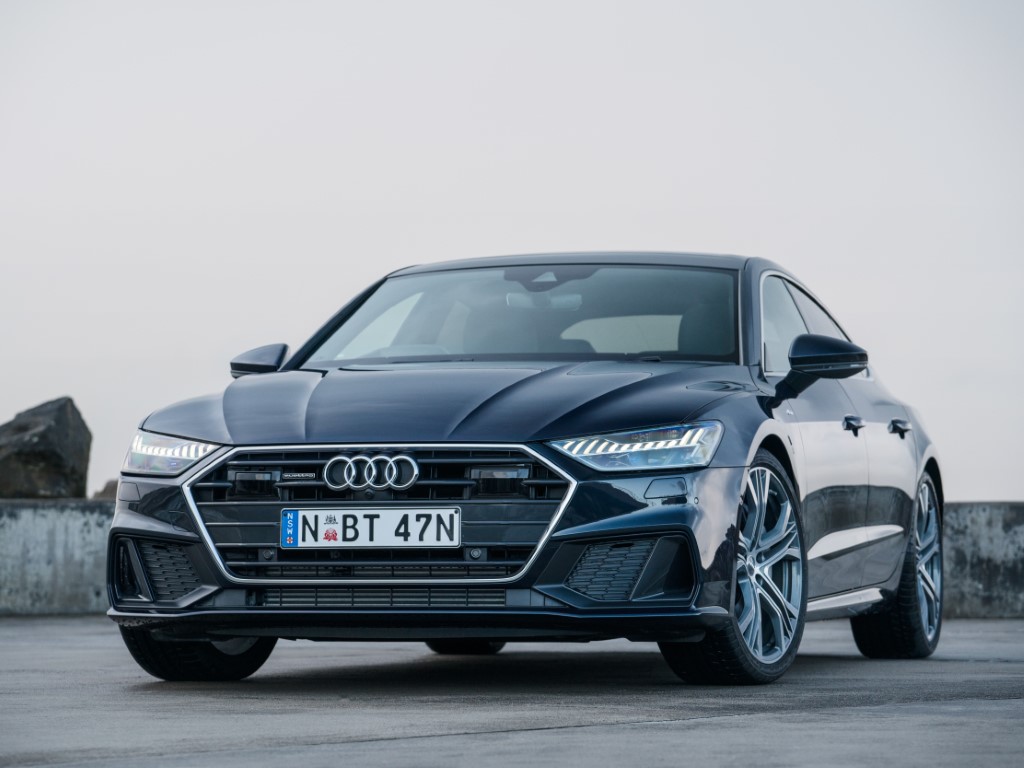
The official launch of the production Audi A7 Sportback took place in July 2010, at the Pinakothek
der Moderne in Munich, a location deliberately chosen to associate the vehicle with contemporary art and
functional design. Built on the modular MLB (Modular Longitudinal Matrix) platform, shared with the fourth
generation of the A6 (C7), the A7 differentiated itself through the intensive use of lightweight materials
and a distinct chassis calibration, focused on a more engaging driving experience.
Exterior Design and Aerodynamics
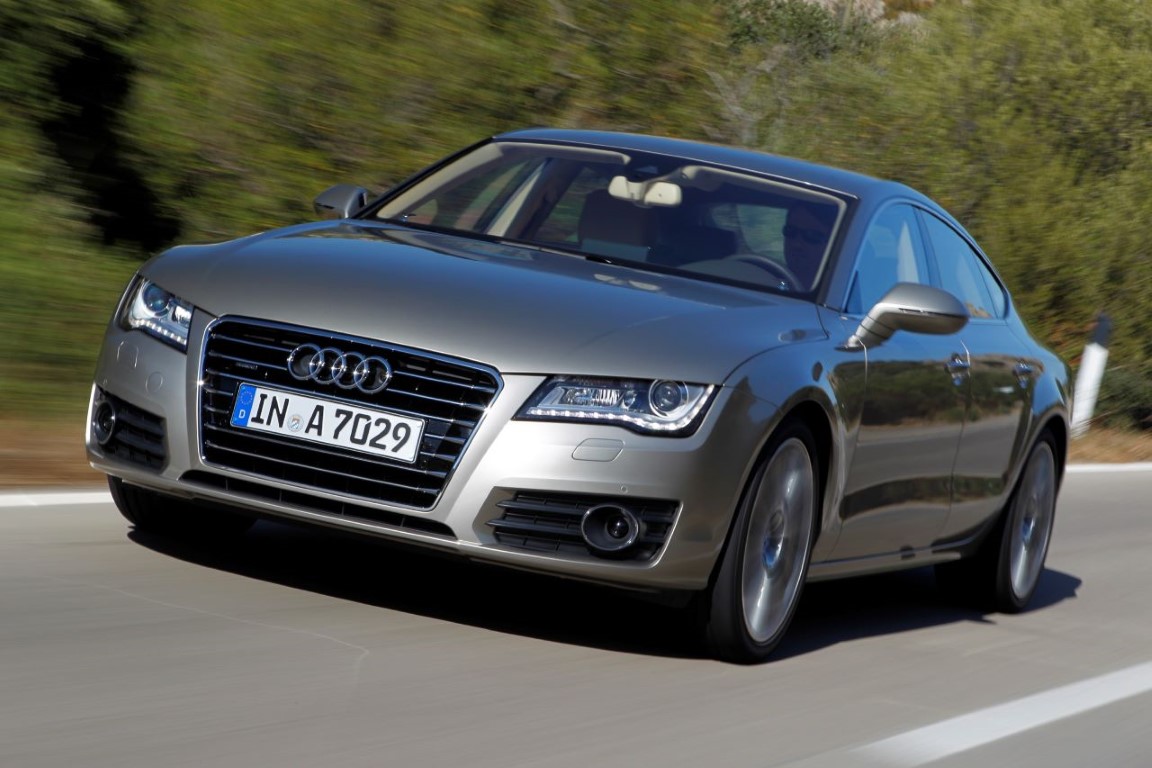
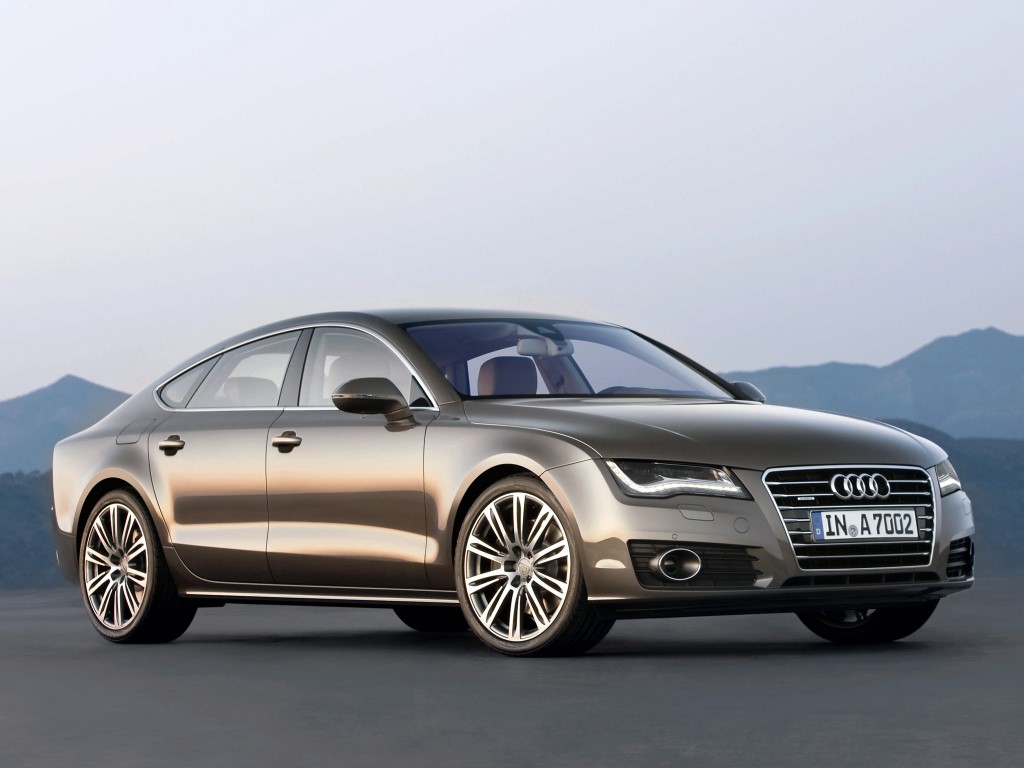
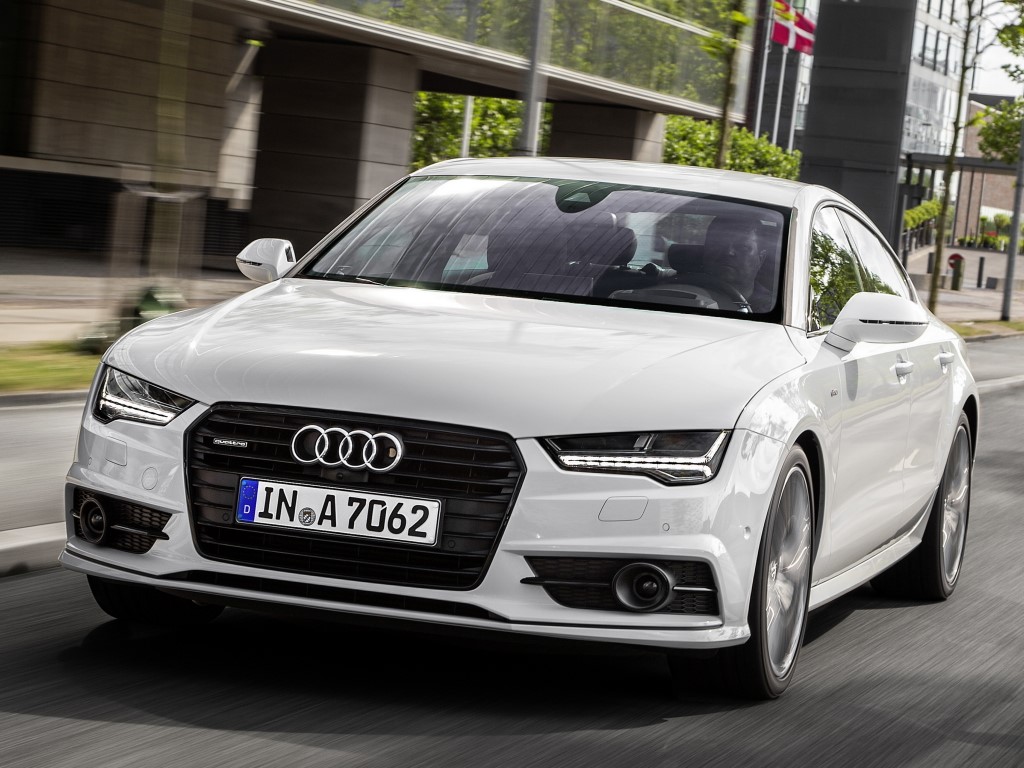
The design of the first generation (internal code 4G8) is characterized by its fluid and minimalist
silhouette. At 4.97 meters long and 1.91 meters wide, but only 1.42 meters high, the A7 projected an image
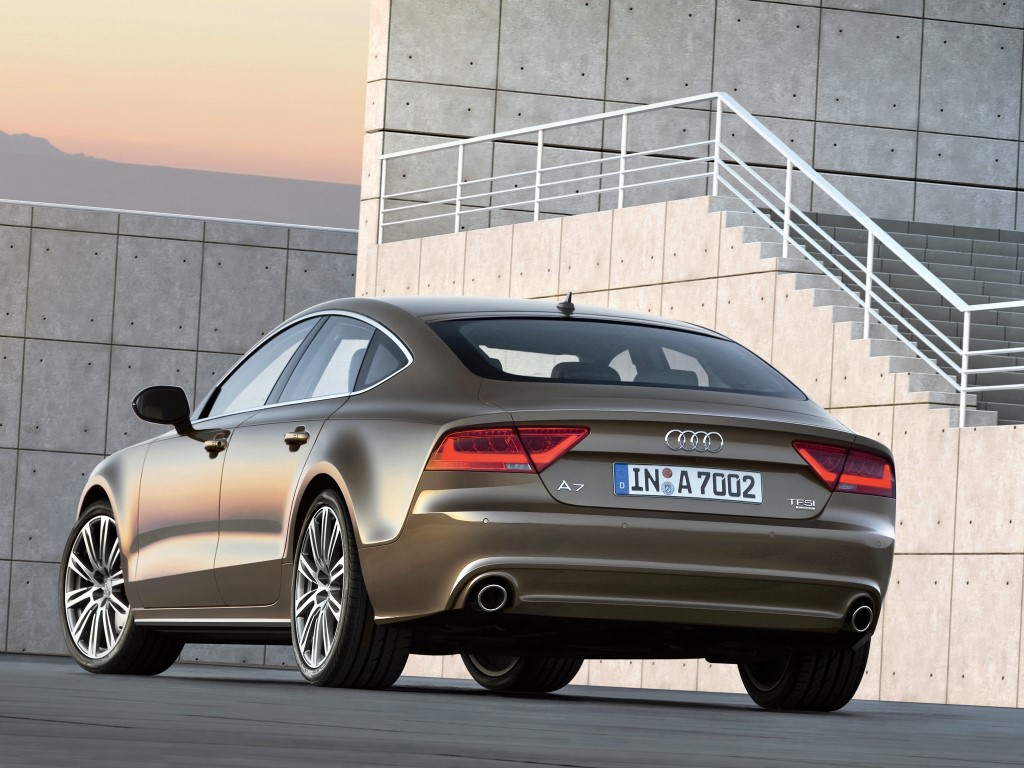
of width and stability. The most controversial and distinct element of the design was the "Kammback" rear —
an abrupt vertical cut at the rear that improves aerodynamic efficiency by reducing the turbulence of the
air detaching from the vehicle. The drag coefficient (Cd) of 0.28 was a benchmark for the class at the time.
A crucial technical innovation to maintain the purity of the lines was the implementation of an
active rear spoiler. Invisibly integrated into the trunk lid when at rest, the spoiler
automatically extended upon reaching 130 km/h (and retracted when slowing down to 80 km/h). This engineering
solution made it possible to generate the necessary downforce on the rear axle to ensure stability at high
speeds — a critical requirement for the German Autobahns — without compromising the elegance of the car's
profile with a permanent fixed wing.
The frameless windows were another design signature inherited from classic coupes. To make this
feature viable without sacrificing the acoustic insulation expected of a luxury car, Audi developed
multi-layer sealing systems and used thicker laminated glass, ensuring that the silence on board was
comparable to that of the A8 sedan.
Body Engineering: Audi Ultra
The A7 C7 was one of the pioneers in applying the "Audi Ultra" lightweight construction strategy. The
bodywork utilized an intelligent hybrid construction, comprising about 20% aluminum and the remainder in
high and ultra-high-strength steels.
- Aluminum Components: The hood, front fenders, doors, and the massive rear
tailgate were made of aluminum. In addition to reducing the overall weight (the A7 weighed about 1,770
kg in its base configuration, light for the segment), this material distribution helped to centralize
the vehicle's mass, improving cornering dynamics.
- Torsional Rigidity: The use of hot-stamped steels in the survival cell
ensured exceptional torsional rigidity, fundamental for suspension precision and the absence of
parasitic noises in the cabin over time.
Interior and Embedded Technology
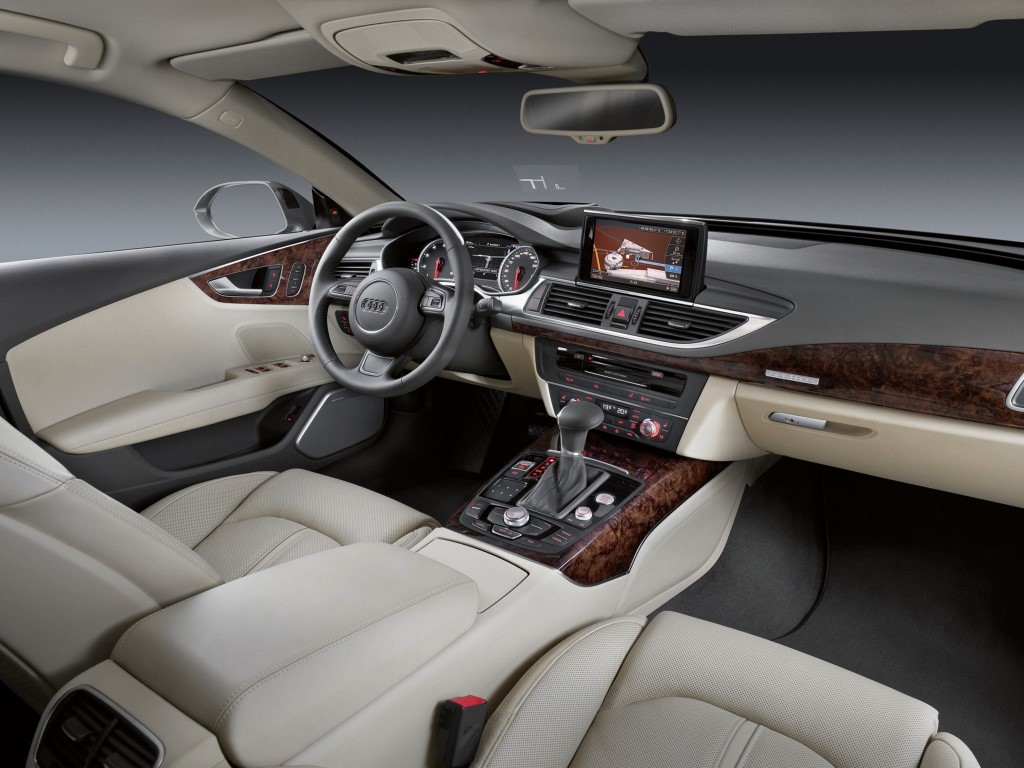
The interior of the A7 introduced the "wrap-around" concept, a continuous horizontal line that
enveloped the driver and passenger, creating a sensation of a secure and integrated cockpit. The dashboard
was slightly tilted towards the driver, reinforcing the sporty vocation.
The core technology was the MMI (Multi Media Interface) Navigation Plus system. In the C7 generation,
the system introduced a significant innovation: the MMI Touch. This was a sensitive
touchpad located on the center console, where the driver could "write" letters and numbers with their finger
to input GPS destinations or dial phone numbers, without taking their eyes off the road. This haptic
interface was widely praised for its intuitiveness and ergonomic safety.
Another technological highlight was the optional Head-Up Display (HUD), which projected speed and
navigation information directly onto the windshield, virtually floating about 2 meters ahead of the hood.
The Night Vision Assistant system utilized a thermal camera in the front grille to detect pedestrians and
large animals up to 300 meters away, highlighting them in yellow or red on the digital instrument cluster,
depending on the risk of collision.
Powertrain and Transmission (Phase 1: 2010–2014)
The engine range of the first phase focused on high-efficiency and high-power V6 units, featuring
direct injection and thermal energy recovery.
- 2.8 FSI: The entry-level engine (not available in all markets), a naturally
aspirated V6 with the Valvelift system, delivered 204 hp and focused on smooth operation.
- 3.0 TFSI: The most popular gasoline option globally (and the primary one in
Brazil and the US). It was a 3.0-liter V6 supercharged by a mechanical compressor, not a turbo. The
compressor, housed in the "V" of the engine, guaranteed an instantaneous throttle response, eliminating
any delay (turbo lag). It produced 300 hp (later 310 hp) and 440 Nm of torque, taking the A7 from 0 to
100 km/h in 5.6 seconds.
- 3.0 TDI: The diesel lineup was vast, crucial for the European market. It
started with an efficient 204 hp version and culminated in the powerful 3.0 BiTDI (biturbo diesel),
which delivered 313 hp and a massive 650 Nm of torque.
Technical Note on Transmissions: Most quattro models utilized the 7-speed S tronic
dual-clutch transmission (code DL501). However, the BiTDI model produced so much torque (650 Nm) that it
exceeded the safe capacity of the S tronic of that era. Therefore, Audi equipped the BiTDI with a
conventional 8-speed Tiptronic torque converter automatic transmission (ZF 8HP), known for its robustness.