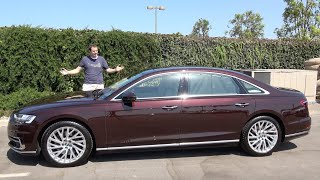
D2
(1994 - 1999)
4.2 V8
300 cv

Technical specifications, versions, and history for the Audi A8.
Select a generation to see available versions
(1994 - 1999)

(2000 - 2002)

(2003 - 2005)
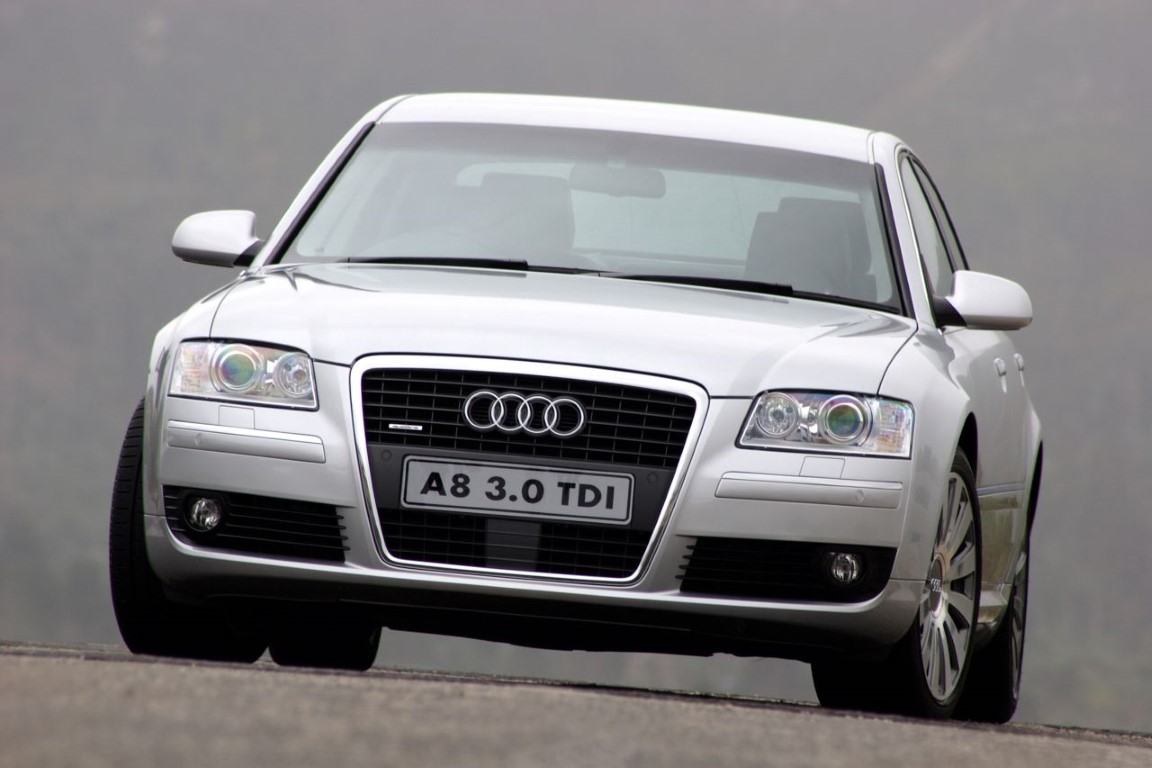
(2006 - 2010)

(2011 - 2014)
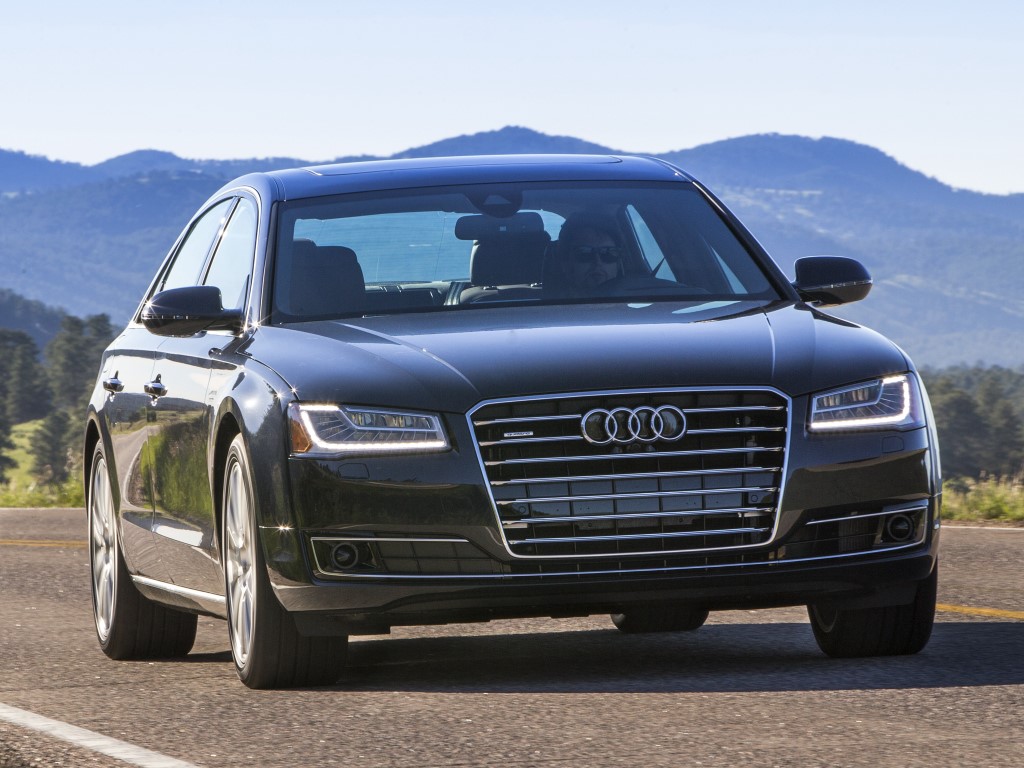
(2015 - 2017)
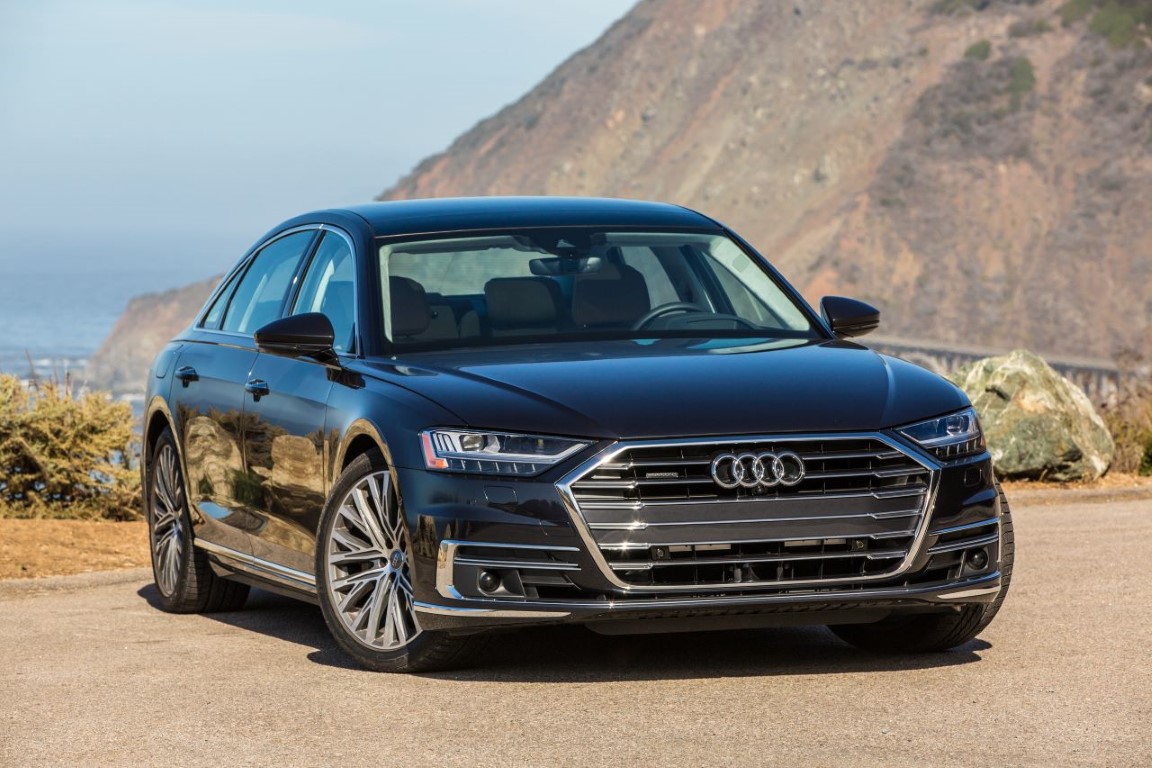
(2018 - 2021)

(2022-)
The history of the luxury automobile at the end of the 20th century is, largely, a narrative of undisputed dominance by two forces: Mercedes-Benz, with its unshakable S-Class, and BMW, with the dynamic 7 Series. However, in 1994, this duality was irrevocably altered by the arrival of a third competitor that not only entered the game, but rewrote the rules of automotive construction. The Audi A8 was not just a new model; it was Audi's declaration of independence, transforming it from an aspiring premium brand into a full-fledged technological powerhouse.
To understand the magnitude of the Audi A8, it is necessary to go back to its spiritual predecessor, the Audi V8 (1988–1993). Although the V8 was a competent vehicle, it was fundamentally derived from the stretched platform of the Audi 100/200. It proved that Audi could offer all-wheel drive (quattro) in an executive sedan, but it lacked the exclusive architecture necessary to truly challenge the elite of Stuttgart and Munich. Under the technical and visionary leadership of Ferdinand Piëch, Audi decided that the successor to the V8 could not just be an evolution; it had to be a material revolution.
This revolution manifested itself in the audacious decision to abandon steel — the standard material of the automotive industry for almost a century — in favor of aluminum. The result was the launch of the A8 in 1994, the world's first mass-produced car with a chassis made entirely of aluminum, known as the Audi Space Frame (ASF).
This report details the complete trajectory of this automotive icon, dissecting the four generations (D2, D3, D4, and D5), analyzing the evolution of its engines, the nuances of its design, the production volumes, and the technological impact that each iteration had on the global market.
The development of the first generation of the A8, internally designated as D2 (Typ 4D platform), was an undertaking of calculated risk and astronomical cost. While Ford spent about a billion dollars to develop the Mondeo (a global volume car), Audi invested about 700 million dollars specifically to create the technology and the production line for the A8, a niche vehicle.
The core of this generation was the Audi Space Frame (ASF) structure, developed in partnership with the aluminum giant Alcoa. The fundamental problem with luxury cars of the time was weight: the increase in comfort features, acoustic insulation, and passive safety made cars excessively heavy, which impaired fuel consumption and agility.
Audi's solution was radical. The chassis of the A8 D2 weighed only 249 kg, which represented a reduction of approximately 40% compared to an equivalent structure made of conventional steel. This aluminum "skeleton" was not only light; it offered exceptional torsional rigidity, which translated into a more precise and quieter ride, as the body twisted less in corners or on uneven roads. Thanks to this rigorous diet, the A8 equipped with quattro all-wheel drive weighed less than its rear-wheel-drive competitors, nullifying the historical weight disadvantage of AWD (All-Wheel Drive) systems.
Launched at the 1994 Geneva Motor Show, the design of the A8 D2 was a deliberate antithesis to its main rival, the Mercedes-Benz S-Class (W140). While the rival was known for its monumental proportions and intimidating presence, the A8 bet on discretion.
The lines were clean, straight, and functional, following the Bauhaus design school. The front featured a contained rectangular grille, flanked by simple horizontal headlights. The side was characterized by a high beltline and smooth surfaces, without unnecessary creases or excess chrome. To many observers, the car looked like an enlarged Audi A4, which was both a criticism and a compliment to the brand's visual consistency.
Audi offered an extensive range of engines for the D2, ensuring that the model could serve both as an efficient executive car and as a high-speed cruiser on the German Autobahns.
Gasoline Engines (Otto Cycle)
The gasoline lineup was dominated by V6 and V8 engines, with the exotic W12 appearing only at the end of the cycle.
Diesel Engines (TDI)
Audi was a pioneer in legitimizing diesel in the ultra-luxury segment, arguing that the high torque and extended range were ideal for long trips.
The Exotic W12 (2001–2002)
In the twilight of the D2 generation, Audi introduced the 6.0-liter W12 engine. This engine was, essentially, the fusion of two VR6 engines onto a single crankshaft. With 420 hp, the A8 W12 D2 was produced in extremely limited numbers (estimated at less than 1000 global units, with some sources citing 750), serving as a demonstration of technical strength and a test for the next generation.
In 1996, Audi launched the S8, the high-performance version. Unlike the "S" models from Mercedes (which focused on extreme comfort with brute power), the S8 focused on agility. The suspension was lowered and stiffened, the brakes enlarged, and the 4.2L V8 engine was tuned to produce 340 hp (and later 360 hp and 430 Nm of torque).
The S8 D2 gained cult status after starring in the movie Ronin (1998), where it was used in real chase scenes (without CGI) that demonstrated the stability of the quattro system under extreme conditions. A notable technical curiosity is that the S8 D2 was one of the only limousines in the world to be offered with a 6-speed manual transmission in Europe, making it today one of the most sought-after modern classics by collectors.
In 1999, Audi applied a significant update to the D2. Although the visual changes were subtle — new headlights with clear lenses, redesigned door handles, and a slightly altered front grille — the mechanical changes were profound.
The aluminum front suspension was redesigned to reduce unsprung mass, further improving steering response. The V8 engines were upgraded to 5-valve per cylinder heads (totaling 40 valves), improving the engine's "breathing" at high RPMs and combustion efficiency.
Production of the A8 D2 officially ended on August 4, 2002. The total number of units produced was exactly 105,092 vehicles. This volume, although seemingly modest compared to popular sedans, was a resounding success for Audi's first attempt in this segment, proving the viability of aluminum construction on an industrial scale.
The second generation, codenamed D3 (Typ 4E), was introduced at the end of 2002 and reached the market in 2003 (2004 model year in the US). If the D2 was about materials engineering, the D3 was about design and electronics.
The D3 grew in all dimensions to address the interior space criticism of the previous model. However, the most striking point in its visual history occurred in the middle of the life cycle. Originally launched with a split front grille (similar to the D2), the model received a transformative facelift in 2005 that introduced the Singleframe grille — a single, tall, trapezoidal piece that united the upper and lower air intakes.13 This grille became Audi's visual identity for the next 20 years, giving the A8 a much more imposing and aggressive road presence, necessary to compete with the controversial, but popular, design of the Bangle-era BMW 7 Series.
Multi Media Interface (MMI)
The D3 debuted Audi's MMI system. At a time when BMW was struggling with severe
criticism of its complex iDrive system, Audi presented a solution praised for its
ergonomics. The MMI used a central rotary knob surrounded by four function
keys, which corresponded to the four corners of the retractable screen that emerged from the
dashboard. The
logic was intuitive and set the UX (User Experience) standard for the
brand.
Adaptive Air Suspension
Another standard innovation was the Adaptive Air Suspension. Unlike conventional steel spring
suspensions, the A8 D3 used electronically controlled air bags on each
wheel. This allowed the car to adjust its height and stiffness in real time. The
driver could select modes like "Dynamic" (low and firm for corners), "Comfort"
(soft for highways), or "Lift" (high to overcome obstacles), solving the eternal
compromise between comfort and stability.
The D3's engine range was expanded and modernized, with the massive introduction of direct fuel injection (FSI).
| Engine | Configuration | Power (approx.) | Technical Notes |
|---|---|---|---|
| 3.0 V6 / 3.2 FSI | V6 Gasoline | 220 hp / 255 hp | Entry-level engines, popular in Europe. |
| 3.7 V8 | V8 Gasoline | 280 hp | Gradually replaced by the more powerful FSI V6s. |
| 4.2 V8 / 4.2 FSI | V8 Gasoline | 335 hp / 350 hp | The main engine. The FSI (direct injection) version brought more economy and response. |
| 5.2 V10 FSI | V10 Gasoline | 450 hp | Exclusive to the S8. Derived from the Lamborghini Gallardo, tuned for more low-end torque. |
| 6.0 W12 | W12 Gasoline | 450 hp | The pinnacle of luxury. Extremely smooth operation, focused on absolute silence. |
| 3.0 / 4.0 / 4.2 TDI | V6 and V8 Diesel | 233 hp to 326 hp | The 4.2 TDI V8 became the world's most powerful diesel in a production car at the time. |
The S8 of the D3 generation (launched in 2006) occupies a special place in automotive history. Audi, then owner of Lamborghini, used a version of the 5.2-liter V10 engine from the Gallardo to equip its sports sedan. Unlike the Italian supercar, the S8's engine was recalibrated to deliver more low-end torque and accommodate the Tiptronic automatic transmission. With 450 hp and an unmistakable exhaust sound, the D3 S8 is frequently cited as one of the most charismatic "super-sedans" ever made.
In 2007, the D3 received a second update focused on active safety. Audi Side Assist (radar-based blind spot monitoring) and Audi Lane Assist (camera-based lane departure warning) were introduced. The suspension and steering were also revised to offer a more direct response.
The D3 generation was a global commercial success, especially in the United States and China, markets that began demanding luxury sedans in higher volumes. In 2005, at the peak of this generation, Audi sold 5,430 units of the A8 in the US alone, a record that subsequent generations would struggle to match. The total production of this generation contributed significantly to the expansion of the Neckarsulm plant.
Launched in late 2009 as a 2010 model (and 2011 in the US), the third generation D4 (Typ 4H) marked the transition to the modular longitudinal platform (MLB) of the Volkswagen Group. The design, signed by Stefan Sielaff, introduced the "tornado line" — a prominent crease that ran along the entire side of the car, conferring dynamism and breaking up the visual mass of the vehicle.
The interior of the D4 was widely celebrated by critics as one of the best finished in the world. Audi introduced a gear selector shaped like a yacht throttle, which ergonomically served as a wrist rest when operating the MMI control panel, now capable of recognizing handwriting (touchpad) for entering destinations into the GPS.
The great technical innovation of the D4 occurred in the 2013/2014 facelift, with the introduction of the Matrix LED headlights.
The D4 generation marked the almost total abandonment of naturally aspirated engines in favor of the efficiency of forced induction (Downsizing).
| Engine | Type | Power | Details |
|---|---|---|---|
| 3.0 TFSI | V6 Supercharged | 333 hp | Became the global "standard" engine, offering the strength of an old V8 with V6 consumption. |
| 4.0 TFSI | V8 Biturbo | 420-435 hp | Replaced the naturally aspirated 4.2. Introduced "Cylinder on Demand" technology (cylinder deactivation) to save fuel when cruising. |
| S8 4.0 TFSI | V8 Biturbo | 520 hp | A powerhouse. Although smaller than the previous V10, it was much faster due to the turbos. |
| S8 Plus | V8 Biturbo | 605 hp | Launched at the end of the cycle, it transformed the A8 into a supercar hunter, with 0-100 km/h in about 3.8 seconds. |
| 6.3 W12 FSI | W12 Naturally Aspirated | 500 hp | The W12 engine grew to 6.3L and gained direct injection, focused exclusively on supreme comfort. |
| Hybrid | 4-cyl + Electric | 245 hp (comb.) | A timid attempt at hybridization using a 2.0 TFSI engine. Low sales and limited performance. |
The D4 generation maintained solid sales, especially driven by the growth of the Chinese market. In the US, peak sales occurred in 2013, with 6,300 units sold, boosted by the facelift and the introduction of new engines like the 3.0 TDI and the 4.0 TFSI. However, from 2015 onwards, numbers began to drop globally as the market migrated aggressively towards luxury SUVs like the Audi Q7. In 2017, the last full year of the D4, 15,854 units of the A8 model were produced globally.
The fourth and current generation, D5 (Typ 4N), was revealed in 2017 at the Audi Summit in Barcelona. The car was promoted not just as a vehicle, but as the world's first production car developed for Level 3 Autonomous Driving.
The system, called Traffic Jam Pilot, promised to allow the driver to take their hands off the wheel and eyes off the road in traffic jams up to 60 km/h on highways with physical barriers. The driver could legally read or watch videos. However, this technological promise collided with bureaucratic reality. The lack of a global legal framework to define liability in the event of an accident (the driver or the manufacturer?) led Audi to cancel the activation of this system. The A8 D5 remained as a Level 2+ car (advanced assistance, but hands on the wheel), and the Level 3 hardware (such as the LIDAR laser scanner in the grille) ended up underutilized.
Under the direction of Marc Lichte, the D5 adopted the "Prologue" design language. The Singleframe grille became wider and lower. Inside, the revolution was the almost total elimination of physical buttons. The center console came to house two touch screens with haptic feedback, where the upper screen controls infotainment and the lower one controls climate and comfort.
Recognizing that China is the world's largest market for the A8, Audi resurrected the historic Horch brand (the "H" in the former Auto Union) in 2021. The Audi A8 L Horch is a version exclusive to the Chinese market, with a wheelbase stretched by an extra 130 mm in relation to the already long A8 L, totaling 5.45 meters in length.
Competing directly with the Mercedes-Maybach, the Horch offers two-tone paint, classic logos on the wheels and C-pillar, and an interior focused exclusively on the rear passenger, with foot massage and exclusive diamond-pattern upholstery. Although considered for other markets, it remains primarily a Chinese phenomenon.
In the D5, the engine range was simplified and the nomenclature altered to numbers that indicate power bands (e.g., "55", "60").
In 2022, the D5 received a facelift. The grille was redesigned with new mesh patterns. The big technological news was the Digital OLED taillights. The driver can choose between different "signatures" (light designs) on the MMI screen. Furthermore, the lights have a safety function: if the A8 is stationary and another car approaches within 2 meters of the rear, all OLED segments light up at maximum brightness to alert the other driver.
The A8, being a high-value, niche car, never had production volumes comparable to the A4 or A6 models. Its production is centralized at the Neckarsulm plant, Germany, known for its expertise in aluminum and "Audi Sport" models.
The US has historically served as a barometer for the success of luxury sedans outside of Europe.
| Year | Sales (Units) | Life Cycle Context |
|---|---|---|
| 2005 | 5,430 | Peak of the D3 generation (historical high). |
| 2008 | 2,825 | Impact of the global financial crisis. |
| 2010 | 1,521 | Transition from D3 to D4 (low inventory). |
| 2013 | 6,300 | Peak of the D4 generation (post-facelift). |
| 2017 | 3,127 | End of the D4 cycle. |
| 2019 | 2,960 | First full year of the D5. |
| 2021 | 2,069 | Impact of the pandemic and semiconductor crisis. |
| 2023 | 1,487 | Drop in demand for sedans in favor of SUVs. |
| 2024 | 1,234 | Consolidated niche market. |
The annual reports of Volkswagen AG and Audi provide glimpses of total production:
The data above reveals a clear trend: although the A8 maintained its technical excellence, the global market shifted. Customers who previously bought an A8 now frequently opt for an Audi Q7, Q8 or, increasingly, the electric e-tron GT. The sales volume of 2024 (1,234 units in the US) is a fraction of what it was in 2013, reflecting not a failure of the car, but a change in consumer taste.
The Audi A8 is more than the sum of its aluminum, steel, and silicon parts. It represents the obstinacy of a brand in proving its worth.
While the future of large combustion sedans is uncertain, with Audi announcing the Grandsphere concept as the electric spiritual successor, the A8 will remain in history as the vehicle that transformed Audi from a maker of "good" cars to a creator of technological icons. For the used buyer or collector, the A8 offers, in any generation, a lesson in German engineering focused on logic, performance, and elegant discretion.