The Audi Space Frame (ASF) Revolution
The development of the first generation of the A8, internally designated as D2 (Typ 4D platform),
was an undertaking of calculated risk and astronomical cost. While Ford
spent about a billion dollars to develop the Mondeo (a global volume car),
Audi invested about 700 million dollars specifically to create the
technology and the production line for the A8, a niche vehicle.
The core of this generation was the Audi Space Frame (ASF) structure, developed in partnership
with the aluminum giant Alcoa. The fundamental problem with luxury cars of the time was
weight: the increase in comfort features, acoustic insulation, and passive safety made
cars excessively heavy, which impaired fuel consumption and agility.
Audi's solution was radical. The chassis of the A8 D2 weighed only 249 kg, which represented
a reduction of approximately 40% compared to an equivalent structure made of
conventional steel. This aluminum "skeleton" was not only light; it offered
exceptional torsional rigidity, which translated into a more precise and
quieter ride, as the body twisted less in corners or on uneven roads. Thanks to
this rigorous diet, the A8 equipped with quattro all-wheel drive weighed less than its
rear-wheel-drive competitors, nullifying the historical weight disadvantage of AWD (All-Wheel
Drive)
systems.
Design: The Aesthetics of Discretion
Launched at the 1994 Geneva Motor Show, the design of the A8 D2 was a deliberate antithesis to its
main rival, the Mercedes-Benz S-Class (W140). While the rival was known for
its monumental proportions and intimidating presence, the A8 bet on discretion.
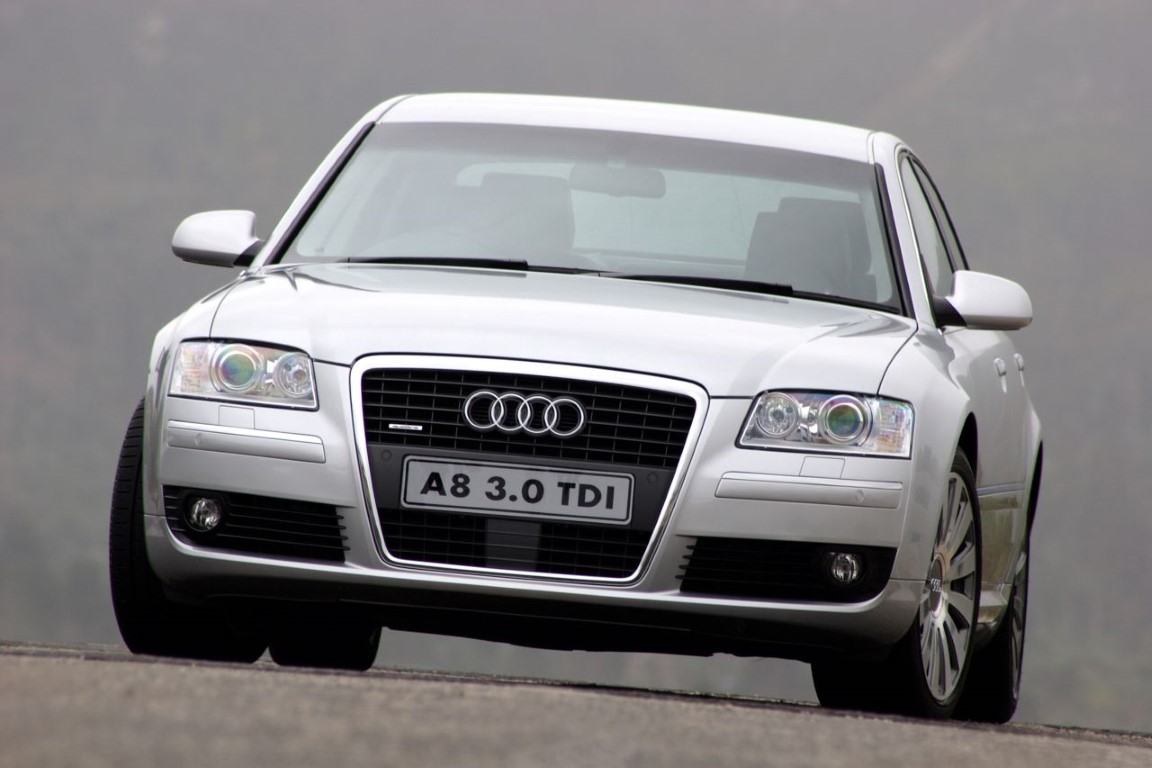
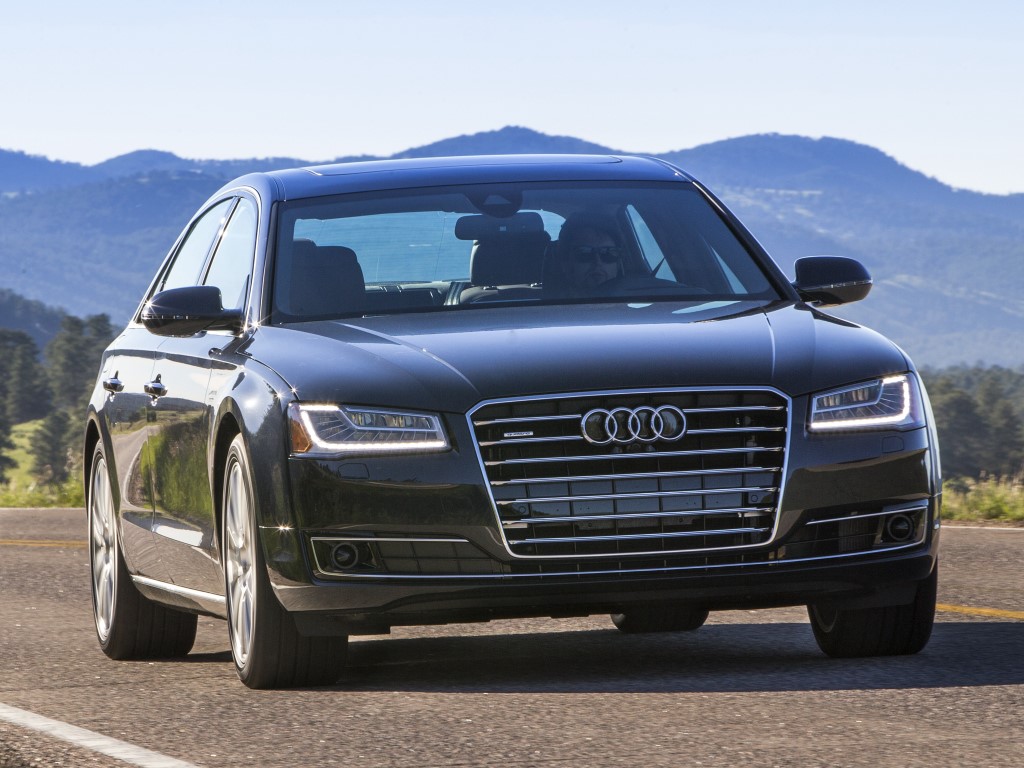
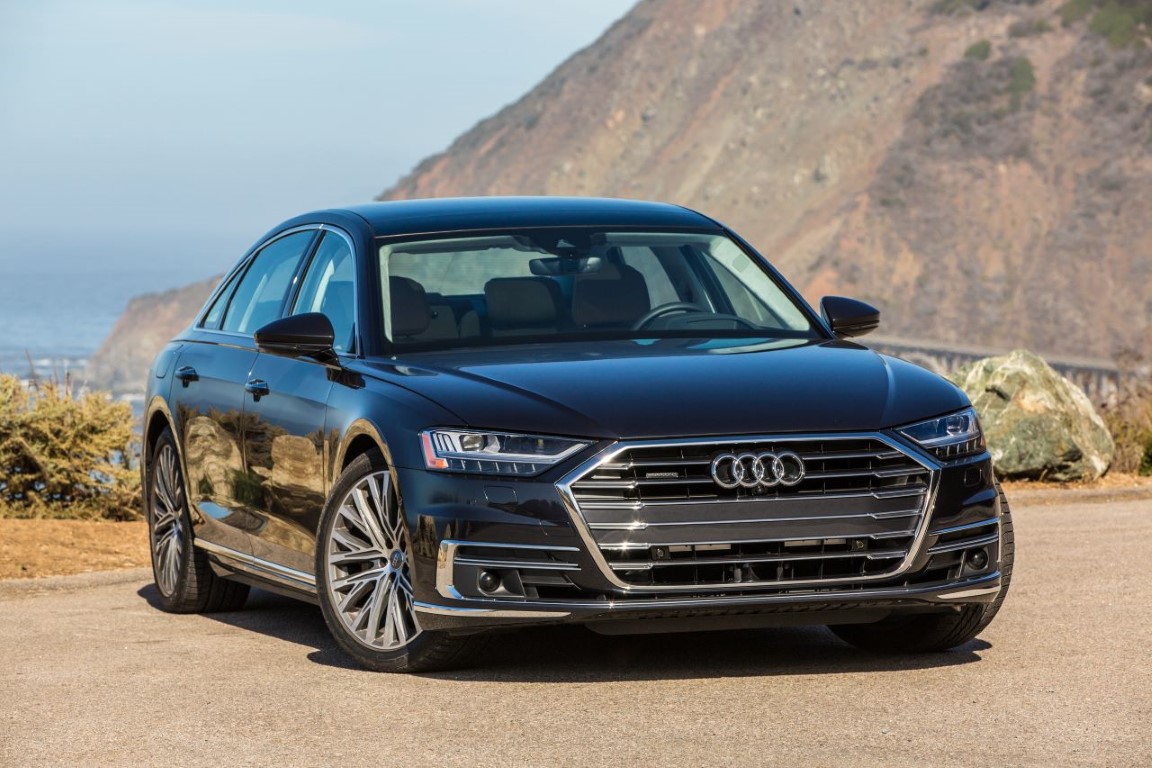
The lines were clean, straight, and functional, following the Bauhaus design school. The front
featured a contained rectangular grille, flanked by simple horizontal headlights. The
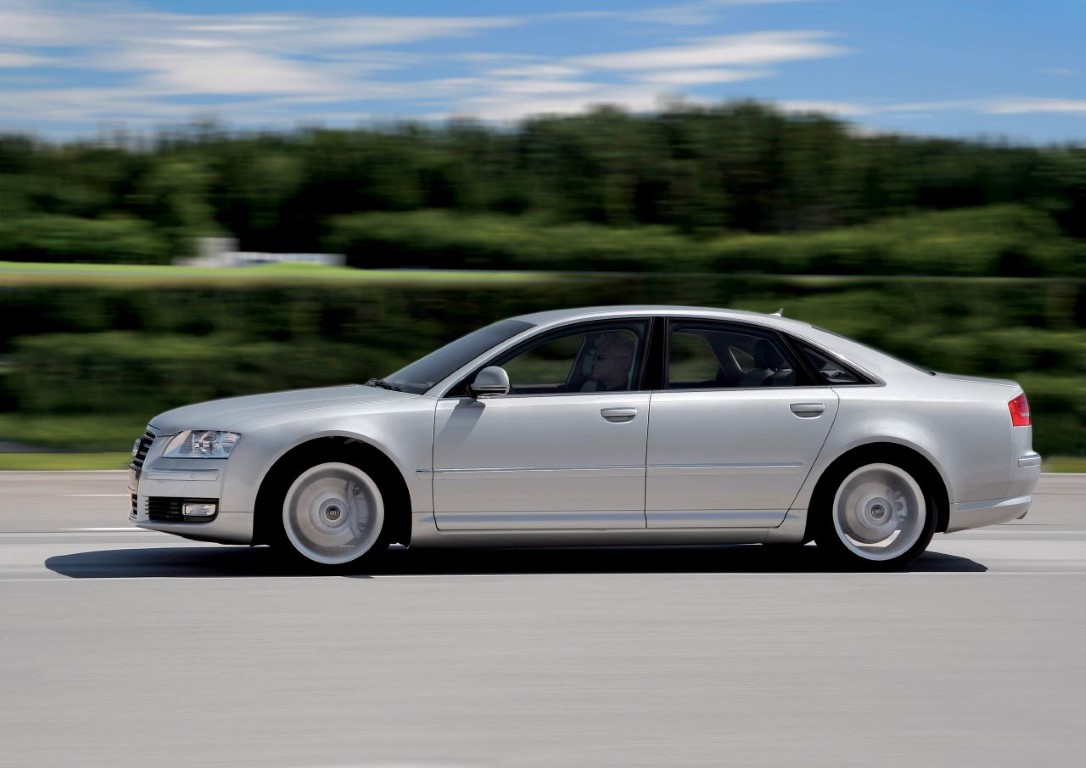
side was characterized by a high beltline and smooth surfaces, without unnecessary creases
or excess chrome. To many observers, the car looked like an enlarged Audi
A4, which was both a criticism and a compliment to the brand's visual consistency.
Powertrain and Versions of the D2 Generation
Audi offered an extensive range of engines for the D2, ensuring that the model could
serve both as an efficient executive car and as a high-speed cruiser on the
German Autobahns.
Gasoline Engines (Otto Cycle)
The gasoline lineup was dominated by V6 and V8 engines, with the exotic W12 appearing
only at the end of the cycle.
- 2.8L V6: The gateway to the A8 world. Initially, this
12-valve engine produced about 174 hp. In later updates, it received
30-valve cylinder heads (5 per cylinder), raising the power to 193 hp. Although
modest for a car of this size, the lightness of the aluminum body allowed for
adequate performance.
- 3.7L V8: A peculiar option, rarely seen in competitors,
intended to fill the gap between the V6 and the top-of-the-line V8. It delivered 230 hp
initially, rising to 260 hp in the post-facelift model.
- 4.2L V8: The definitive engine for most buyers. Launched
with 300 hp, this V8 transformed the A8 into a genuine sports sedan. Coupled with the
quattro drive, it allowed for acceleration and speed recoveries that challenged much
smaller cars.
Diesel Engines (TDI)
Audi was a pioneer in legitimizing diesel in the ultra-luxury segment, arguing that the
high torque and extended range were ideal for long trips.
- 2.5L V6 TDI: With outputs ranging from 150 hp to 180 hp, it focused
on extreme fuel economy for executive fleets.
- 3.3L V8 TDI: Introduced later in the life cycle (2000), this
biturbo engine delivered 225 hp and massive torque, anticipating the modern era of
high-performance diesels.
The Exotic W12 (2001–2002)
In the twilight of the D2 generation, Audi introduced the 6.0-liter W12 engine. This engine was,
essentially, the fusion of two VR6 engines onto a single crankshaft. With 420 hp, the A8
W12 D2 was produced in extremely limited numbers (estimated at less than 1000 global units,
with some sources citing 750), serving as a demonstration of technical strength
and a test for the next generation.
The Audi S8 D2: The "Ronin Car"
In 1996, Audi launched the S8, the high-performance version. Unlike the "S" models from
Mercedes (which focused on extreme comfort with brute power), the S8 focused on agility.
The suspension was lowered and stiffened, the brakes enlarged, and the 4.2L V8 engine was
tuned to produce 340 hp (and later 360 hp and 430 Nm of torque).
The S8 D2 gained cult status after starring in the movie Ronin (1998), where it was used in
real chase scenes (without CGI) that demonstrated the stability of the quattro system
under extreme conditions. A notable technical curiosity is that the S8 D2 was one of the only
limousines in the world to be offered with a 6-speed manual transmission in
Europe, making it today one of the most sought-after modern classics by collectors.
Mid-Life Update (1999 Facelift)
In 1999, Audi applied a significant update to the D2. Although the visual changes
were subtle — new headlights with clear lenses, redesigned door handles, and a slightly
altered front grille — the mechanical changes were profound.
The aluminum front suspension was redesigned to reduce unsprung mass,
further improving steering response. The V8 engines were upgraded to
5-valve per cylinder heads (totaling 40 valves), improving the engine's
"breathing" at high RPMs and combustion efficiency.
Production and Legacy of the D2
Production of the A8 D2 officially ended on August 4, 2002. The total number of
units produced was exactly 105,092 vehicles. This volume, although seemingly modest
compared to popular sedans, was a resounding success for Audi's first attempt
in this segment, proving the viability of aluminum construction on an industrial scale.