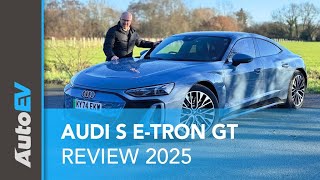
1st Generation
(2021 - 2024)
Electric (Two motors)
646 cv
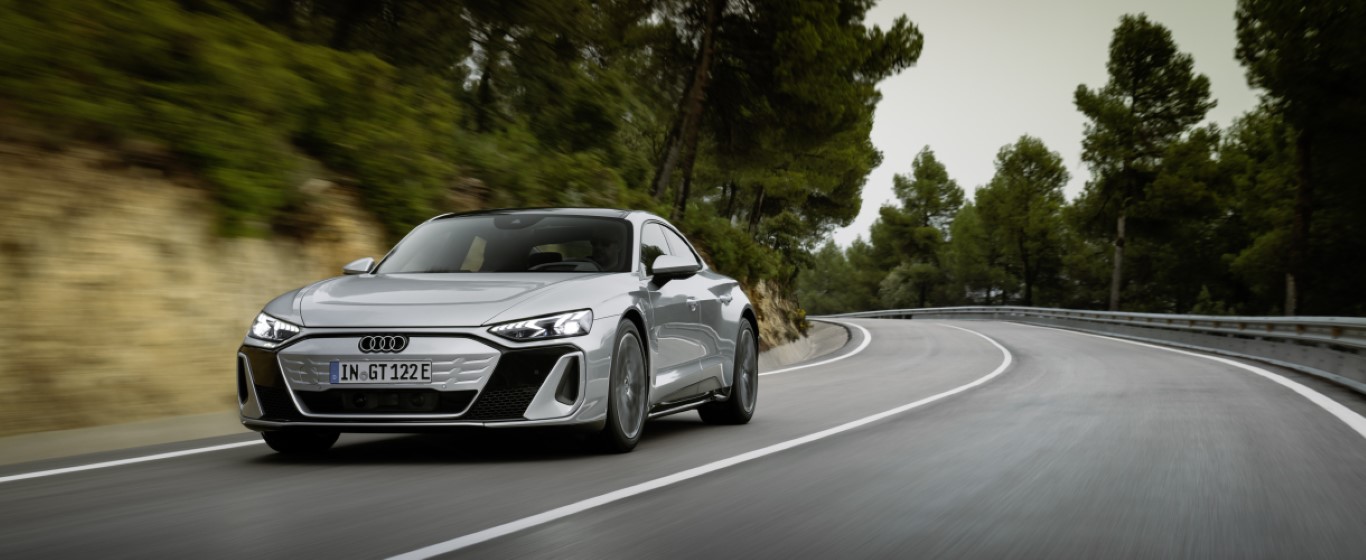
Technical specifications, versions, and history for the Audi e-Tron GT.
Select a generation to see available versions
(2021 - 2024)
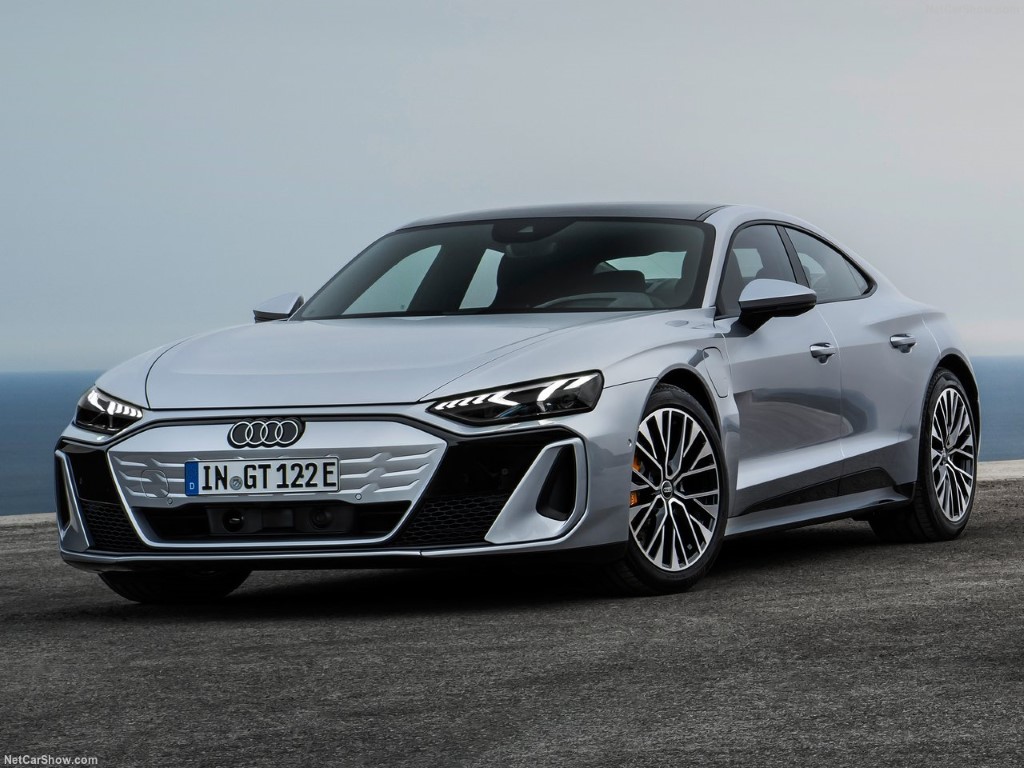
(2025-)
The Audi e-tron GT represents a watershed moment in the century-old trajectory of Audi AG. Officially launched on the market in 2021, this vehicle was not conceived just as another model in the brand's growing electric lineup, but rather as the "halo car" — the technological and emotional standard-bearer that would define the electromobility era for the Ingolstadt manufacturer. Its importance lies in demonstrating that the transition to electric motors would not require sacrificing performance, emotive design, or driving dynamics, fundamental pillars of Audi's identity.
The model falls into the luxury "Gran Turismo" (GT) segment, a category historically dominated by large-displacement internal combustion vehicles, designed to cross continents at high speed and in supreme comfort. The mission of the e-tron GT was to reinterpret this concept for the 21st century, combining sustainability with an aggressive aesthetic and an engineering platform shared with Porsche.
The trajectory of the e-tron GT is marked by two distinct phases: the introduction of the first generation (2021-2024), which established the technological baseline, and the profound technical update of 2025, which elevated the power and efficiency standards to supercar levels.
The public history of the e-tron GT began in November 2018, at the Los Angeles Auto Show, where Audi presented the Audi e-tron GT Concept. The prototype was met with universal enthusiasm, largely due to the proportions designed under the supervision of Marc Lichte, Audi's head of design. The low, wide, and elongated silhouette of the concept was transferred almost entirely to the production model, a rarity in the automotive industry.
The initial marketing strategy was aggressive and focused on pop culture, with the vehicle making its cinematic debut in the Marvel Studios film "Avengers: Endgame" (Avengers 4) in the summer of 2019, driven by the character Tony Stark. This association reinforced the car's image as a pinnacle of futuristic technology.
To make a project of this magnitude and cost viable, Audi resorted to synergies within the Volkswagen Group. The e-tron GT was built on the J1 platform, a high-performance architecture developed primarily by Porsche for the Taycan model.
This collaboration was profound but carefully managed to avoid "cannibalization" of sales between the brands. Audi and Porsche engineers met quarterly during development to ensure that, although the "bones" (chassis, battery, motors) were shared, the "soul" of the cars remained distinct.
One of the most critical innovations inherited from the J1 platform was the 800-volt electrical architecture, twice the voltage used by most electric vehicles of the time (400 volts).
The exclusivity of the e-tron GT is underlined by its production location. Unlike Audi's mass-market models, this vehicle is manufactured at Audi Böllinger Höfe, a specialized facility located in Neckarsulm, Germany.
Böllinger Höfe was originally created for the production of the Audi R8 supercar. The introduction of the e-tron GT to this line marked an unprecedented feat in the Volkswagen Group: the assembly of two technically opposite vehicles (a mid-engine V10 combustion supercar and a fully electric sedan) on the same physical assembly line.
To accommodate the e-tron GT, the assembly line was expanded from 16 to 36 cycles. The process uses automated guided vehicles (AGVs) and an electric monorail system to transport the bodies and components, allowing for total logistical flexibility between the two models.
The e-tron GT was the first Audi model whose production was planned entirely without the use of physical prototypes. Using 3D scanners and virtual reality (VR) applications, engineers mapped the entire facility and tested the assembly processes digitally. This allowed them to optimize worker ergonomics and parts flow months before the first metal was cut, saving significant resources.
The construction of the bodywork combines heavy automation with manual finishing. The body line stands out for the use of a two-way framer, where ten robots work simultaneously to join the inner and outer panels of the side structure. This technique allows for millimeter precision in the joints, essential for the perceived quality of a vehicle at this price point. An in-line measurement system checks every body produced, detecting minimal deviations without the need for complex manual correlation.
Production at Böllinger Höfe is certified as carbon neutral. The factory uses electricity from renewable sources and heat generated by a biogas cogeneration plant. Emissions that cannot be technically avoided are offset through certified carbon credits, aligning the manufacturing process with the ecological philosophy of the final product. Furthermore, the factory has implemented closed-loop recycling cycles for aluminum and polymers, where offcuts are returned to the suppliers to be reprocessed into new sheets.
Commercially launched in the spring of 2021, the first phase of the e-tron GT established the foundations of what Audi's electric performance would be.
In this initial phase, the range consisted of two main variants:
Both models used a dual-motor configuration (one per axle), ensuring electric all-wheel drive.
Motors and Transmission The motors are permanently excited synchronous machines (PSM), known for their high efficiency and power density. A distinctive technical feature, inherited from the Porsche Taycan and rare in electric vehicles, is the two-speed transmission mounted on the rear axle:
Performance Table (2021-2024 Generation):
| Specification | Audi e-tron GT quattro | Audi RS e-tron GT |
|---|---|---|
| Base Power | 350 kW (469 hp) | 440 kW (590 hp) |
| Boost Power (Launch Control) | 390 kW (522 hp) | 475 kW (637 hp) |
| Maximum Torque (with Boost) | 640 Nm | 830 Nm |
| 0-100 km/h Acceleration | 4.1 seconds | 3.3 seconds |
| Top Speed | 245 km/h | 250 km/h (limited) |
Thermal Management and Repeatability One of the great challenges for EVs is maintaining performance under heavy use. Audi implemented four separate cooling circuits that can be interconnected as needed. This allows the battery and motors to be kept at the ideal temperature, ensuring that the driver can perform multiple consecutive maximum accelerations without power loss ("derating"), something that differentiated the e-tron GT from competitors like early Tesla models.
The three-chamber adaptive air suspension (standard on the RS) allowed for adjusting ride height and stiffness. The all-wheel steering system (optional) turned the rear wheels by up to 2.8 degrees: in the opposite direction to the front ones at low speeds (for agility) and in the same direction at high speeds (for stability). The brakes offered three options: standard steel discs, tungsten carbide-coated discs (which reduce brake dust and don't rust, standard on the RS in the US), and carbon-ceramic discs for extreme use.
In 2024, Audi presented the 2025 lineup (facelift), a profound update motivated by the need to keep up with the rapid evolution of battery technologies and competition in the luxury segment.
The model hierarchy was redefined to reflect an overall increase in power. The base "quattro" model was discontinued in favor of a new "S" nomenclature:
Although the physical size of the battery pack remained similar, the internal technology was completely overhauled.
The new electric motors use optimized hairpin windings and lighter rotors. The rear motor was completely redesigned to reduce weight and increase power density.
The biggest dynamic innovation for 2025 is the introduction of an active suspension system, technologically similar to "Porsche Active Ride".
To maintain the model's appeal and celebrate specific milestones, Audi launched several limited editions with unique visual configurations.
This edition was exclusive to the United States market and limited to just 75 units. The name "Project_513/2" refers to the internal development code used by the engineers during the car's creation.
Inspired by the GP Ice Race event in Zell am See (Austria), this edition was limited to 99 units for the European market.
With the arrival of the 2025 model, Audi announced a series limited to 299 global units to showcase the capabilities of the Audi Exclusive personalization program. Available in rare colors like matte "Arabica Grey" or "Neodymium Gold", with highly customized interiors using anthracite eucalyptus wood and exclusive combinations of sustainable fabrics and leather.
The commercial trajectory of the e-tron GT reflects the challenges of the luxury EV market, including component shortages and fluctuating demand.
An analysis of the annual reports of Volkswagen AG and Audi allows us to trace the volume of production and deliveries. It is important to note that the model is a niche product, with volumes much lower than the brand's SUVs.
| Year | Context and Available Data | Trend Analysis |
|---|---|---|
| 2021 | Launch. Combined production of the e-tron family (SUV + GT) was high, but the GT represented a fraction. US Sales: 1,226 units. Europe Sales: ~5,000 units. | The start was strong, limited by initial production capacity and launch logistics. |
| 2022 | First full year. Production reached 12,674 units. | This was the peak production for the model, coinciding with high post-pandemic demand and the prioritization of chips for luxury models. |
| 2023 | Global deliveries fell to 10,045 units. | Start of the slowdown, common after the novelty effect wears off and with the increase in competition. |
| 2024 | Sharp decline. US sales fell to 2,894 units. Global deliveries of Audi EVs came under pressure. | The market was awaiting the 2025 facelift. The depreciation of used EVs also impacted sales of new ones. |
| 2025 | Transition year to the new model. US sales registered only 1,195 units (partial/projected data). | Numbers are expected to recover with the full arrival of the S and RS Performance versions to dealerships later in the year. |
During the global semiconductor crisis (2021-2022), Audi made the strategic decision to divert chips from lower-margin models to ensure the production of the e-tron GT and the R8 at the Böllinger Höfe factory. This explains why, even in years of crisis in the industry, the e-tron GT maintained relatively stable production numbers compared to mass-market models like the A3 or A4.
Although mechanically identical, the Porsche Taycan consistently sold more units than the e-tron GT (often double or triple). This is due to several factors:
The Audi e-tron GT fulfilled its mission of being the ambassador of Audi's new era. More than generating massive sales volumes, its role was to transform the brand's perception, proving that Audi could build an electric car capable of arousing passion.
The 2025 update, with the introduction of new chemistry batteries and active suspension, ensures that the model remains relevant against competitors like the Tesla Model S Plaid and the Lucid Air Sapphire. However, the long-term future of the model will depend on Audi's transition to the new PPE (Premium Platform Electric) platform, which will serve as the basis for the upcoming A6 and Q6 e-tron. The e-tron GT, in its current form based on the J1 platform, will remain an exclusive transitional model, a future classic that united the best of Porsche engineering with the characteristic design and comfort of Audi.
With the end of production of the R8's V10 engine, the e-tron GT now assumes, single-handedly, the title of the most powerful and technologically advanced car to roll off the assembly line at Böllinger Höfe, carrying the weight and responsibility of defining the sporting future of the brand with the four rings.