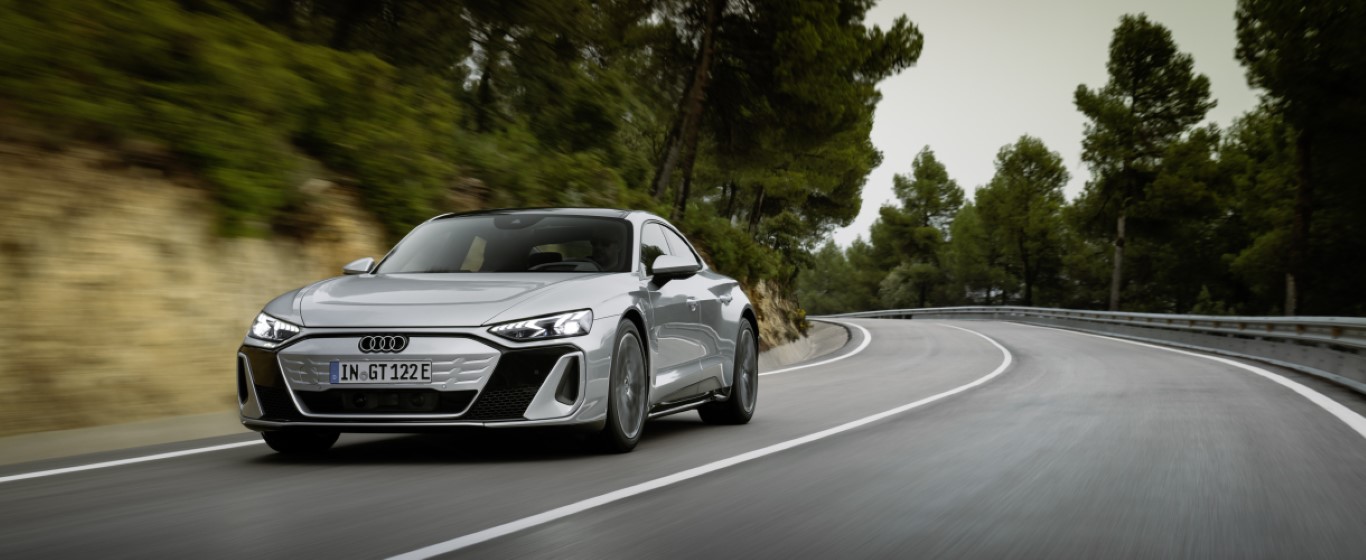
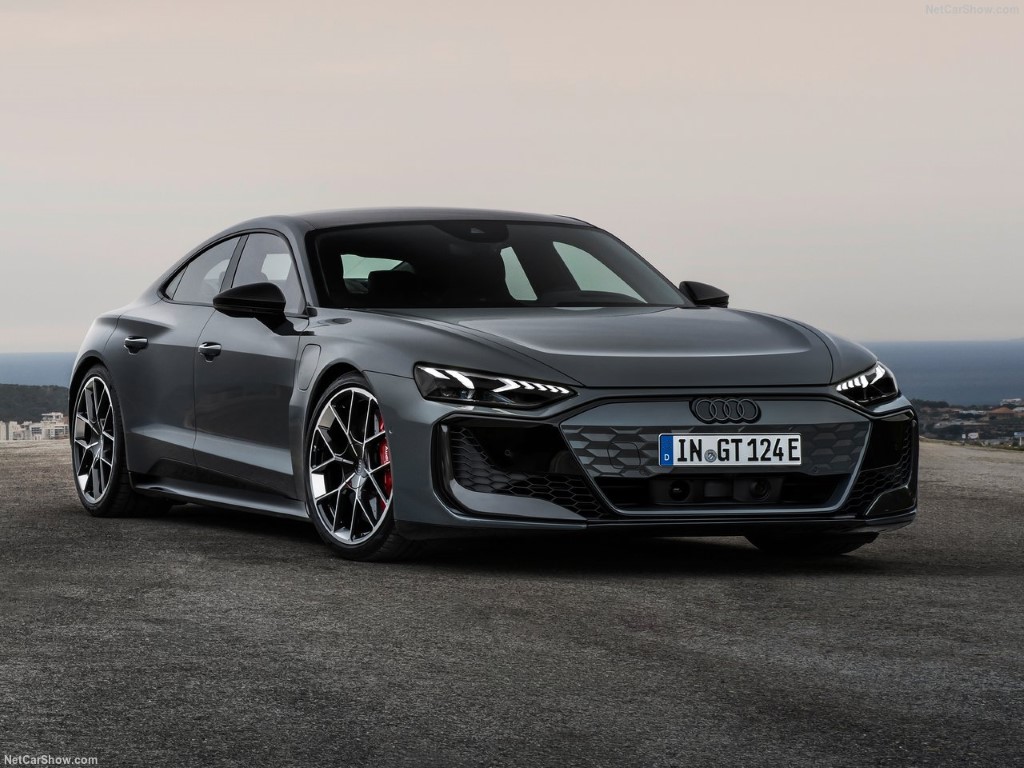
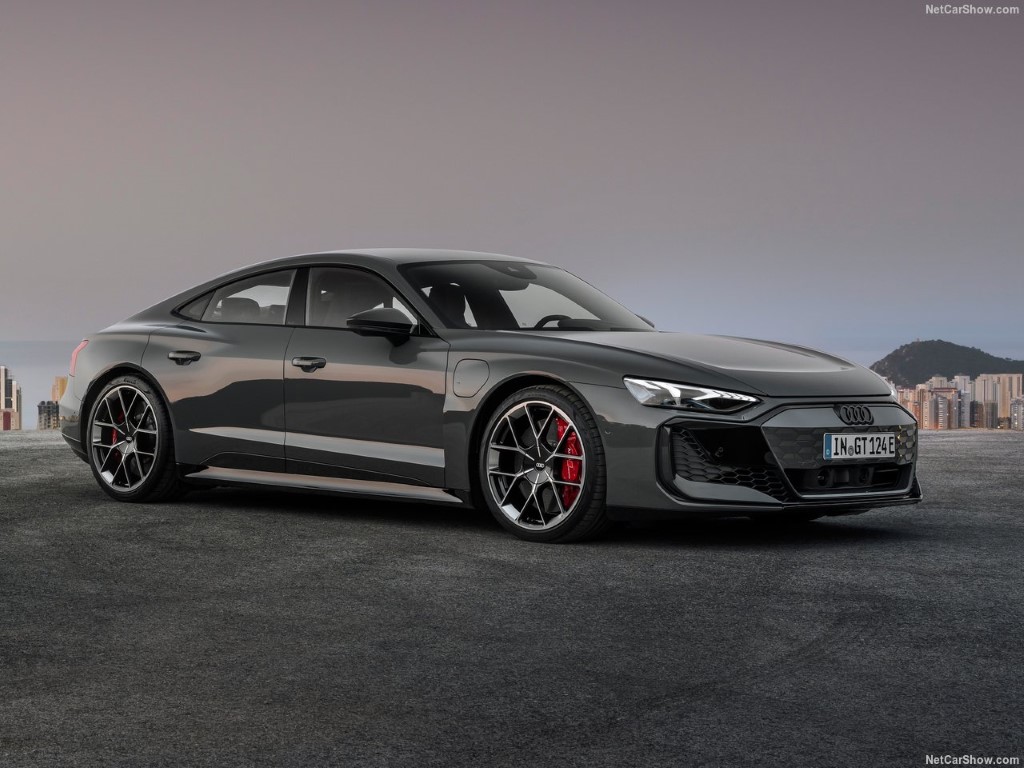
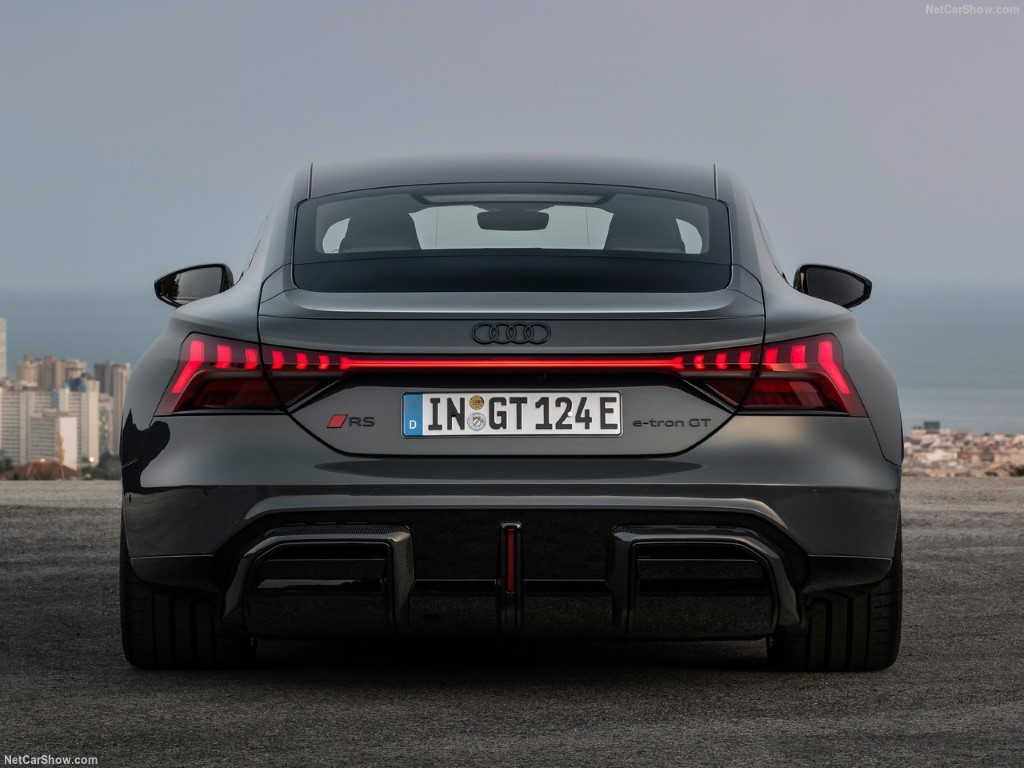
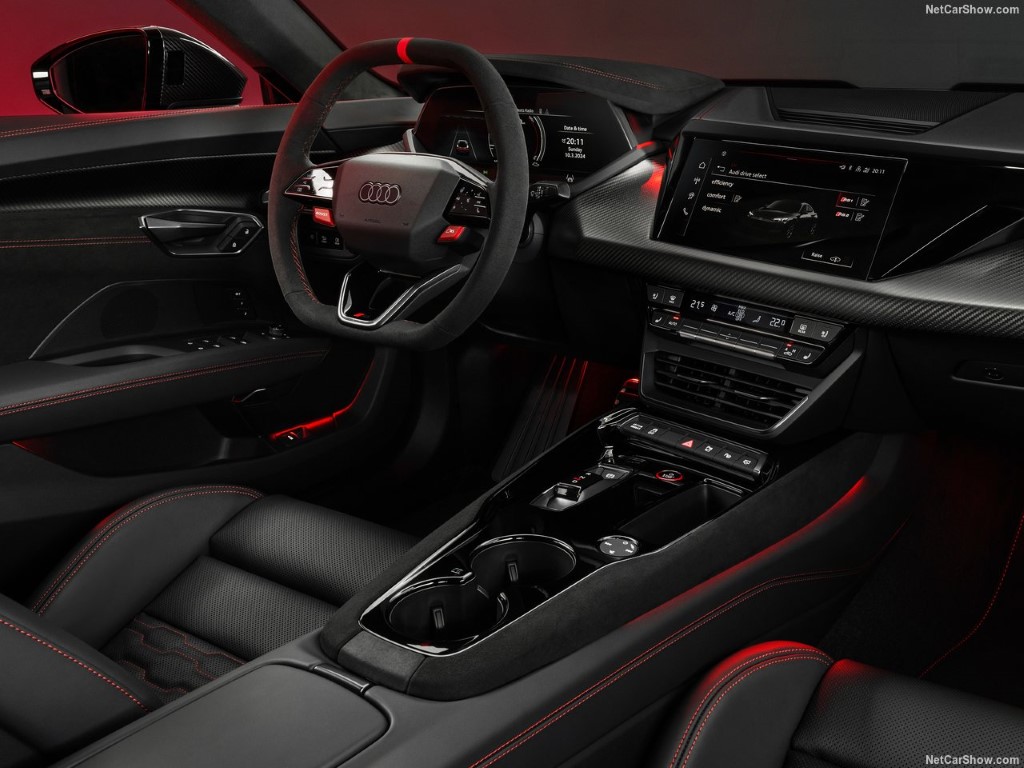
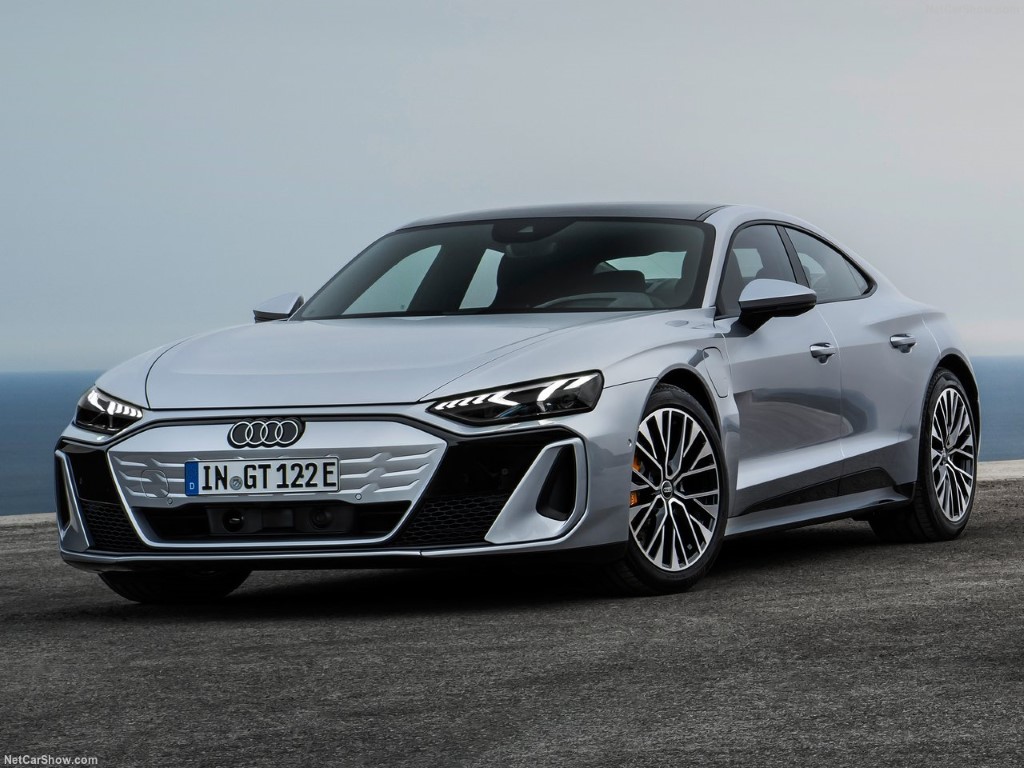
The exclusivity of the e-tron GT is underlined by its production location. Unlike Audi's
mass-market models, this vehicle is manufactured at Audi Böllinger Höfe, a
specialized facility located in Neckarsulm, Germany.
Integration with the Audi R8
Böllinger Höfe was originally created for the production of the Audi R8 supercar. The
introduction of the e-tron GT to this line marked an unprecedented feat in the Volkswagen Group:
the
assembly of two technically opposite vehicles (a mid-engine V10 combustion supercar and a
fully electric sedan) on the same physical assembly line.
To accommodate the e-tron GT, the assembly line was expanded from 16 to 36 cycles. The
process uses automated guided vehicles (AGVs) and an electric monorail system
to transport the bodies and components, allowing for total logistical
flexibility between the two models.
Virtual Planning and Augmented Reality
The e-tron GT was the first Audi model whose production was planned entirely without the
use of physical prototypes. Using 3D scanners and virtual reality
(VR) applications, engineers mapped the entire facility and tested the assembly processes
digitally. This allowed them to optimize worker ergonomics and parts flow
months before the first metal was cut, saving significant resources.
Bodywork and Precision (Body Shop)
The construction of the bodywork combines heavy automation with manual finishing. The body
line stands out for the use of a two-way framer, where ten
robots work simultaneously to join the inner and outer panels of the side structure.
This technique allows for millimeter precision in the joints, essential for the
perceived quality of a vehicle at this price point. An in-line measurement system checks
every body produced, detecting minimal deviations without the need for complex manual
correlation.
Sustainability in Production
Production at Böllinger Höfe is certified as carbon neutral. The factory uses
electricity from renewable sources and heat generated by a biogas cogeneration plant.
Emissions that cannot be technically avoided are offset
through certified carbon credits, aligning the manufacturing process with the
ecological philosophy of the final product. Furthermore, the factory has implemented closed-loop
recycling cycles for aluminum and polymers, where offcuts are returned to the
suppliers to be reprocessed into new sheets.