

8U
(2012 - 2015)
2.0 Turbo
211 cv

Technical specifications, versions, and history for the Audi Q3.
Select a generation to see available versions
(2012 - 2015)

(2016 - 2019)
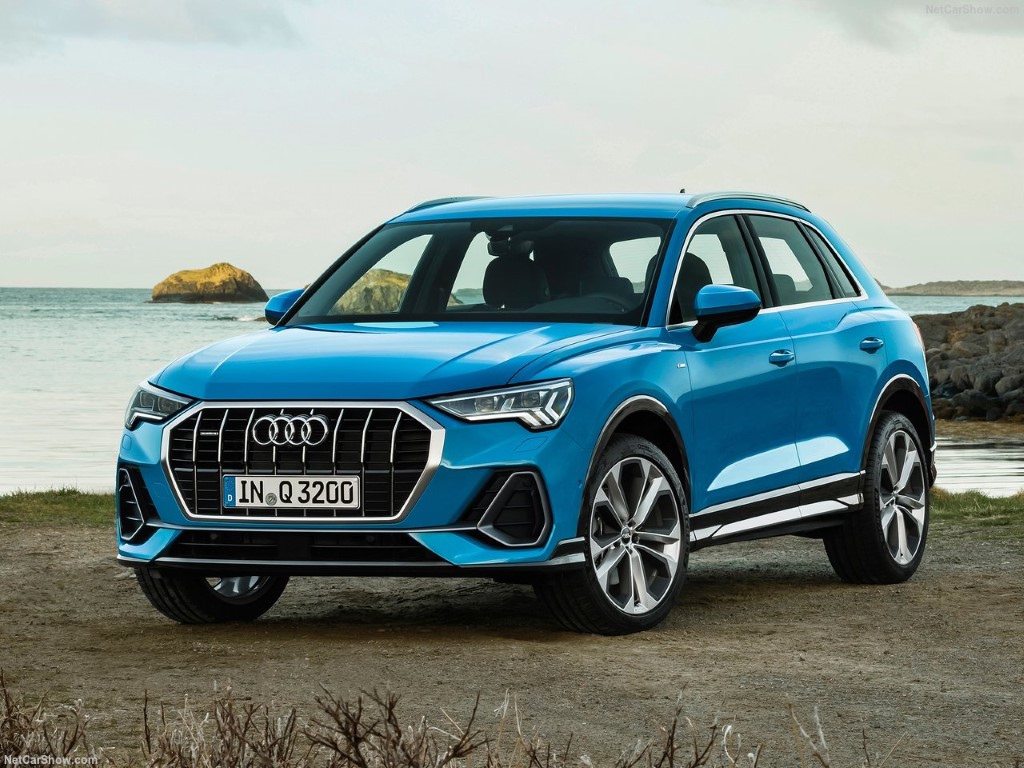
(2020 - 2025)
The global automotive sector witnessed, in the early 2010s, a radical transformation in consumer preferences, marked by the massive migration from mid-size sedans and hatchbacks to Sport Utility Vehicles (SUVs). In this context, Audi AG, the luxury subsidiary of the Volkswagen Group, identified a strategic gap in its portfolio. While the Q7 and Q5 models were already established in the large and mid-size segments, respectively, there was a latent demand for a vehicle that offered the elevated driving position and visual robustness of an SUV, but with dimensions compatible with increasingly congested urban centers. The response to this demand was the Audi Q3, a model that not only filled this gap but became one of the pillars of the brand's financial sustainability in emerging and mature markets.
This report analyzes the history of the Audi Q3 from a technical and marketing perspective, dissecting its two generations (Typ 8U and Typ F3), its body variants (SUV and Sportback), the evolution of its propulsion engineering — from the EA888 gasoline engines to the Flex fuel adaptations exclusive to Brazil — and the legendary RS line with its five-cylinder engines. Furthermore, it deeply examines the model's industrial operation in Brazil, marked by cycles of importation, nationalization, interruption, and productive resumption, reflecting the volatilities and opportunities of the Brazilian automotive industrial policy.
The materialization of the Q3 did not occur abruptly. Audi prepared the ground in 2007, during the Shanghai Motor Show, with the presentation of the Audi Cross Coupé quattro concept. This prototype was fundamental to test the public's receptivity to an SUV with lower and sportier rooflines, anticipating a trend that, years later, would result in the "Coupe SUV" category. The design, penned by Julian Hönig, proposed an aesthetic that blended the typical robustness of an off-roader with the dynamic elegance of a sports car, utilizing a prominent Singleframe grille and a wraparound rear.
When the production version (internal code Typ 8U) was finally revealed in 2011, also in Shanghai, Audi's engineering strategy became clear: the leveraging of Volkswagen Group synergies. Unlike its larger siblings, Q5 and Q7, which utilized the MLB (Modularer Längsbaukasten) platform with longitudinal engines, the Q3 was built on the PQ35 platform.
This architecture, shared with the Volkswagen Tiguan of the time and the fifth generation of the Volkswagen Golf, dictated a transverse engine layout. This technical choice brought direct implications for the vehicle's dynamics and design:
Initial production was concentrated at the SEAT plant in Martorell, Spain, a decision aimed at optimizing idle capacity at the group's plants in Southern Europe. The model reached the European market in June 2011 and was subsequently introduced in other global markets.
In Brazil, the Q3 arrived in 2012 as an imported model. Its arrival was strategic to combat the BMW X1, which dominated the premium compact SUV segment. Initially, the model was offered with 2.0 TFSI engines in different power calibrations, positioning Audi competitively in a price range that attracted both customers ascending from mid-size sedans and owners of generalist brand SUVs seeking the status of a German premium brand.
A watershed milestone in the history of the Q3 in Brazil was its nationalization. In response to the Inovar-Auto program, which imposed heavy surcharges on imported vehicles and offered tax incentives for local manufacturers, Audi decided to produce the Q3 at the São José dos Pinhais plant in Paraná. This plant, which had already produced the first generation of the A3 (1999-2006), received significant investments to modernize the assembly line.
National production began in 2016, bringing a crucial technological innovation: the 1.4 TFSI Flex engine. This powertrain represented a considerable engineering challenge. Turbocharged engines with high-pressure direct injection require precise control of detonation and lubrication. Adaptation for ethanol (E100) required:
During its national phase, the Typ 8U Q3 was sold in three main trim versions, creating a clear hierarchy of equipment and motorization. Understanding these versions is vital to grasp the model's market positioning.
Audi Q3 Attraction (Entry-level) The Attraction version was the volume seller, intended to be the gateway to Audi's SUV world.
Audi Q3 Ambiente (Intermediate) Considered the "sweet spot" of the range, the Ambiente version offered the best balance between cost and comfort technologies.
Audi Q3 Ambition (Top of the Line) The Ambition version was the technological showcase, focused on performance.
Table 1: Comparative Technical Specifications - 1st Generation (Typ 8U)
| Characteristic | Q3 1.4 TFSI Flex (Attraction/Ambiente) | Q3 2.0 TFSI quattro (Ambition) |
|---|---|---|
| Engine Code | EA211 | EA888 |
| Displacement | 1,395 cm³ | 1,984 cm³ |
| Power | 150 hp @ 5,000 rpm | 180 / 220 hp @ 4,500-6,200 rpm |
| Torque | 25.5 kgf.m @ 1,500 rpm | 32.6 kgfm / 35.7 kgfm |
| Traction | Front-wheel drive (4x2) | quattro all-wheel drive (on-demand) |
| Gearbox | 6-speed S-tronic (DQ250) | 7-speed S-tronic (DQ500) |
| 0-100 km/h Acceleration | 8.9 seconds | 6.4 - 7.6 seconds |
| Top Speed | 204 km/h | 212 - 233 km/h |
| Curb Weight | 1,405 kg | 1,540 - 1,640 kg |
| Trunk | 460 Liters | 460 Liters |
The second generation of the Q3, launched globally in July 2018 (code Typ F3), represented a complete technical break with its predecessor. The model abandoned the old PQ35 platform in favor of the omnipresent and modern MQB (Modularer Querbaukasten) modular matrix of the Volkswagen Group. This change was not trivial; it allowed correcting the main criticism made of the first generation: limited internal space.
With MQB, the Q3 grew significantly:
The interior of the Q3 F3 marked the end of the analog era in Audi's compact SUVs. The instrument panel with physical pointers was replaced, right from the basic versions, by digital screens.
Following the trend inaugurated by rival brands, Audi introduced the Q3 Sportback variant. Technically identical to the SUV in mechanics and chassis, the Sportback differentiates itself from the B-pillar (center) backward. The roof describes a sharp downward curve towards the rear, culminating in an integrated spoiler and a more sloped rear window.
The trajectory of the second generation in Brazil is complex and reflects the economic instabilities of the period.
The current range (post-2022) of the national Q3 is composed of versions that share the same mechanical assembly (2.0 Engine + 8-speed Tiptronic Gearbox + quattro Traction), differentiating themselves only by the equipment and finish package.
Audi Q3 Prestige 2.0 quattro The access version, but far from basic.
Audi Q3 Performance 2.0 quattro The intermediate version that adds the premium consumer's desired items.
Audi Q3 Performance Black 2.0 quattro The top of the regular range, with sporty appeal.
Special Series: Anniversary Edition and Performance Black Plus To celebrate one year of resuming production in Paraná (2023), Audi launched the Anniversary Edition. It was differentiated by body-color paint on the wheel arch moldings (which are normally matte black plastic), giving it a more urban and sophisticated look. In 2024, the Performance Black Plus version permanently integrated these aesthetic improvements into the lineup, adding to new customizable internal ambient lighting patterns.
Table 2: Technical Specifications - National 2nd Generation (2022-Present)
| Characteristic | Q3 2.0 TFSI (SUV & Sportback) |
|---|---|
| Platform | MQB-A2 |
| Engine | 2.0 Liter Turbo, 4 Cylinders (EA888 Gen 3B) |
| Maximum Power | 231 hp @ 5,000-6,000 rpm |
| Maximum Torque | 34.7 kgf.m @ 1,700-4,500 rpm |
| Gearbox | 8-Speed Tiptronic (Torque Converter) |
| Traction | Permanent quattro All-Wheel Drive |
| 0-100 km/h Acceleration | 7.0 seconds |
| Top Speed | 240 km/h |
| Trunk | 530 Liters (expandable to 1,525 L) |
| Fuel Tank | 60 Liters |
| Weight | Approx. 1,776 kg |
Important Technical Note: The replacement of the 7-speed S-tronic (dual-clutch) gearbox with the 8-speed Tiptronic (torque converter) in the national 2.0 version aims for greater comfort in urban use and robustness, being an extremely smooth transmission, although slightly less quick in sporty shifts than the dual-clutch.
The history of the Q3 would be incomplete without mentioning its high-performance variant, the RS Q3, developed by the sports division Audi Sport GmbH. This model is the guardian of one of Audi's most sacred traditions: the five-cylinder engine.
The 2.5 TFSI engine is a technical homage to the Group B rally cars of the 1980s (like the Audi Sport Quattro). With a 1-2-4-5-3 firing order, this engine produces an unmistakable hoarse and syncopated sound. It won the "International Engine of the Year" award in its category nine consecutive times.
Besides the engine, the RS Q3 features:
The Q3 is a volume phenomenon. The Győr plant, Hungary, celebrated the production of 1 million units (combining generations) in mid-2025, proving the product's global acceptance.
In Brazil, sales performance reflects product availability:
Table 3: Selected Sales History (Brazil) - Units/Year
| Year | Approx. Sales | Position in Segment | Factory Status |
|---|---|---|---|
| 2013 | ~1,500 | Growing | Imported |
| 2015 | > 3,000 | Leader | Imported/National |
| 2017 | 4,137 | Vice-Leader (behind X1) | National (Typ 8U) |
| 2021 | 1,903 | 2nd Place | Imported (Typ F3) |
| 2023 | ~1,617 | Top 3 | National (Typ F3) |
In an announcement that reaffirms its long-term commitment to Brazil, Audi confirmed that the third generation of the Q3 will be produced at the São José dos Pinhais plant starting in 2026.
The Audi Q3 is more than just a product in the brand's portfolio; it is a case study in adaptation and evolution. It started as a bet on an emerging niche and evolved to become a global car, adapting to local needs (like the Flex engine in Brazil) without losing its global identity of German engineering. The transition from the PQ35 platform to the MQB in the second generation demonstrated Audi's ability to listen to the market and correct flaws (internal space), while maintaining the RS line with the 5-cylinder engine preserves the company's passionate soul. With the production of the third generation guaranteed in Brazil for 2026, the history of the Q3 is far from over, promising to lead the brand's transition to the hybrid era in the national market.