

8U
(2014-)
2.5 L5 20V Turbo
310 cv
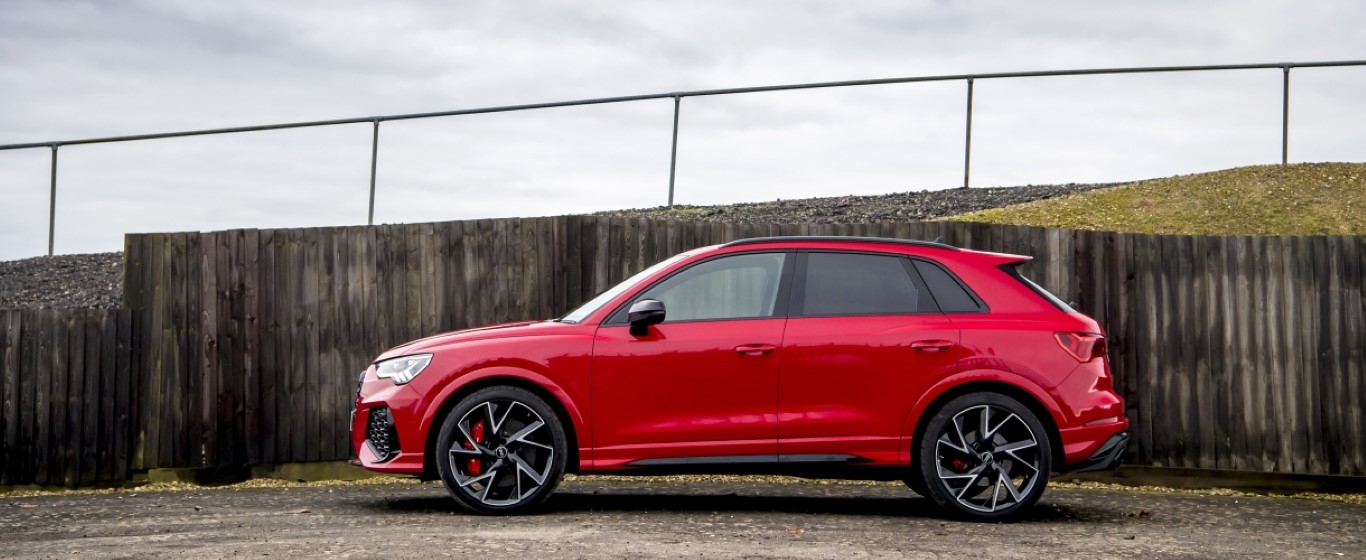
Technical specifications, versions, and history for the Audi RS Q3.
Select a generation to see available versions
(2014-)

(2015 - 2018)

(2019-)
The trajectory of the Audi RS Q3 is not just the narrative of a specific model, but rather a decisive chapter in the democratization of elite performance within the sports utility vehicle (SUV) segment. When the Audi Sport GmbH division — formerly known as quattro GmbH — decided to apply the "RS" (RennSport) badge to a compact SUV, it broke established paradigms that segregated high-performance vehicles from practical family vehicles. This report exhaustively examines the evolution of the model, from its conceptual roots to its consolidation as a dynamic benchmark, detailing the technical specifications of its generations, production volumes, and the particularities of its presence in the Brazilian market.
The importance of the RS Q3 lies, fundamentally, in its powertrain. It served as the modern guardian of the inline five-cylinder engine, a mechanical architecture that has defined Audi's identity since the glory days of Group B rallying in the 1980s. While competitors migrated to four-cylinder engines in search of efficiency, the RS Q3 kept the acoustic and dynamic heritage of the odd-numbered engines alive, creating a direct emotional connection between an urban crossover and motorsport legends like the Audi Sport Quattro S1.
Throughout two distinct generations — internally identified by the codes 8U and F3 — the model evolved from a niche experiment to a central sales pillar of the sports division, offering an entry point into the RS universe that combines the versatility of the MQB platform with supercar performance. The following analysis details each phase of this development, exploring how Ingolstadt engineering and manufacturing in Győr, Hungary, transformed the premium compact SUV segment.
The public history of the RS Q3 began before its arrival at dealerships, specifically at the Beijing Auto Show (Auto China) in April 2012. The choice of China for the concept's revelation was not accidental, reflecting the growing importance of the Asian market for luxury SUVs. Audi presented the "RS Q3 Concept", a vehicle that served as a laboratory to test public receptivity to a crossover with track pretensions.
The concept exhibited a visually aggressive aesthetic, painted in a matte color called "Ordos Blue", which mixed shades of blue with yellowish pigments, creating a distinct appearance under the show's lighting. Unlike the production model that would follow, the concept adopted radical solutions, such as the extensive use of Carbon Fiber Reinforced Polymer (CFRP) on the front spoilers, rearview mirror housings, and headlight trims, which were partially darkened to give the vehicle a more menacing "look".
Mechanically, the 2012 concept already anticipated the heart of the vehicle: the 2.5 TFSI engine. However, the calibration presented in the show car was surprisingly high for the time, promising 360 hp (265 kW). The suspension was lowered by 25 mm compared to the conventional Q3, and the body was widened with prominent wheel arches to accommodate wider tires, suggesting a chassis dynamics focused on lateral grip and high-speed stability. The front grille design introduced the three-dimensional deep "honeycomb" geometry, a signature that would become standard on all subsequent RS models, differentiating them from the horizontal lines of the S and A models.
The transition from concept to mass production culminated in the official launch of the RS Q3 in 2013. This was a historic milestone for Audi Sport, as it represented the first "Q" model to receive the full RS treatment. The decision was risky, as brand purists questioned whether the PQ35 platform — shared with the Volkswagen Golf Mk5 and the Audi A3 8P — had the rigidity and suspension geometry necessary to support the expected dynamics of an RS vehicle.
The production model, launched in Europe in 2013 and arriving in Brazil in the first half of 2014, took a slightly more conservative approach in terms of power than the concept suggested. The engineers opted to calibrate the 2.5 TFSI engine to deliver 310 hp (228 kW) and 42.8 kgfm (420 Nm) of torque. This strategic decision aimed to hierarchize the product line, preventing the SUV from cannibalizing sales of the RS 3 Sportback, which operated on the same platform but with less weight and a lower center of gravity.
Despite the reduction in power compared to the concept, the numbers were impressive for the segment at the time. The RS Q3 accelerated from 0 to 100 km/h in 5.5 seconds, with top speed electronically limited to 250 km/h. The chosen transmission was the seven-speed S tronic (dual-clutch), coupled to the quattro all-wheel-drive system. It is crucial to note that, due to the transverse layout of the engine, the quattro system used a hydraulic multi-plate clutch (fifth-generation Haldex) on the rear axle, instead of the Torsen center differential used in longitudinal engine models like the RS 4 and RS 6. The system operated primarily with front-wheel drive in cruising conditions to save fuel, instantly transferring torque to the rear axle upon detecting slip.
In the Brazilian market, the RS Q3 landed with a suggested price of approximately R$ 273,600. It occupied a solitary niche, as its direct rivals, like the Mercedes-Benz GLA 45 AMG, were still in the launch or consolidation phase. The Brazil package was generous in equipment, including a Bose sound system, panoramic sunroof, and the MMI Navigation Plus infotainment system, although the interface was still based on physical buttons and a retractable screen on the dashboard, characteristics of the electronic architecture of the time.
One of the most controversial design features of the first phase was the exhaust outlet. Contrary to the RS tradition of two large oval outlets, the original RS Q3 had only one oval outlet on the left side of the rear bumper. Audi justified this choice as a way to differentiate the entry-level models of the RS line from the larger models, but the decision was reversed in future generations due to customer demand for a more symmetrical and aggressive aesthetic.
The response from the competition, especially with the launch of the Mercedes-AMG GLA 45 that extracted 360 hp (and later 381 hp) from a 2.0 four-cylinder engine, forced Audi to quickly update the RS Q3. The facelift, presented in 2015 as a 2016 model, brought profound aesthetic and mechanical revisions that altered the car's character.
Aesthetically, the model received the new "Singleframe" grille with a frame that connected directly to the headlights, now with Full LED technology and a new daytime running light signature. The air intakes on the front bumper were enlarged to improve the cooling of the intercoolers and brakes. However, the true revolution occurred under the hood. Audi's engineering optimized the intake flow and turbo pressure, raising the power of the "standard" version to 340 hp (250 kW) and the torque to 45.9 kgfm (450 Nm). This update reduced the 0 to 100 km/h time to 4.8 seconds, making the car significantly more agile.
To close the lifecycle of the first generation demonstrating total technical mastery, Audi launched the RS Q3 Performance variant. This version represented the pinnacle of the 8U platform. The engine was pushed to the limit of its original configuration, delivering 367 hp (270 kW) and 47.4 kgfm (465 Nm) of torque. The S tronic transmission received new programming for even faster and more aggressive gear changes, allowing the SUV to reach 100 km/h in just 4.4 seconds. The top speed could be optionally unlocked to 270 km/h, territory previously exclusive to dedicated sports cars.
In Brazil, the Performance version arrived with a high price tag, surpassing the R$ 300,000 barrier, but it offered visual exclusivity through matte titanium finishes on the grille, window frames, rearview mirrors, and roof rails, as well as exclusive 20-inch wheels with a five twin-spoke "V" design. The interior gained seats with blue stitching and carbon fiber details with interwoven blue thread, reinforcing the special nature of the series.
| Technical Specification | RS Q3 (2013-2015) | RS Q3 (2016-2018) | RS Q3 Performance (2016-2018) |
|---|---|---|---|
| Model Code | 8U (Phase 1) | 8U (Phase 2) | 8U (Performance) |
| Engine | 2.5 TFSI (5 cyl) | 2.5 TFSI (5 cyl) | 2.5 TFSI (5 cyl) |
| Maximum Power | 310 hp @ 5200 rpm | 340 hp @ 5300 rpm | 367 hp @ 5550 rpm |
| Maximum Torque | 420 Nm | 450 Nm | 465 Nm |
| 0-100 km/h Acceleration | 5.5 s | 4.8 s | 4.4 s |
| Top Speed | 250 km/h | 250 km/h | 270 km/h |
| Weight (DIN) | ~1,730 kg | ~1,700 kg | ~1,730 kg |
The presentation of the second generation of the RS Q3 in 2019 marked a fundamental technological leap. The model migrated from the old PQ35 platform to the modern MQB A2 modular architecture. This change not only increased the vehicle's dimensions — the wheelbase grew by 77 mm, significantly improving interior space and directional stability — but also allowed the integration of a cutting-edge electronic architecture, essential for driver assistance systems and digital infotainment.
For the first time in the model's history, Audi decided to offer two body options simultaneously: the RS Q3 (conventional SUV) and the RS Q3 Sportback (SUV Coupe). The Sportback version, with its descending roofline that reduces the height by about 45 mm compared to the standard SUV, was designed to appeal to a younger audience focused on aesthetics, sacrificing a minimal fraction of rear-seat headroom in favor of a more dynamic silhouette.
The heart of the second generation is a profound evolution of the previous unit, internally designated as EA855 evo. The main structural change was the replacement of the compacted graphite iron block with an aluminum block, which resulted in a weight reduction of 26 kg in the engine alone. This mass reduction over the front axle was crucial to mitigate the tendency to understeer, a common characteristic in transverse-engine vehicles with Haldex-based all-wheel drive.
The engine now delivers 400 hp (294 kW) and 48.9 kgfm (480 Nm) of torque, available over a wide rev range that goes from 2,250 to 5,850 rpm. This elasticity ensures that the vehicle has power available in virtually any driving situation. The firing order 1-2-4-5-3 was maintained, preserving the sonic signature that alternates between bass and treble frequencies, creating an unmistakable exhaust note that became the car's main emotional selling point.
The transmission remains the seven-speed S tronic, but the quattro traction system received software updates to allow for faster and more precise torque distribution between the axles. The stability control system was also recalibrated, offering specific "RS1" and "RS2" driving modes, accessible via an "RS Mode" button on the steering wheel, which allow the driver to individually configure the engine response, steering, suspension, and exhaust sound.
Visually, the second generation adopted a much more aggressive stance. The wheel arches were widened by 10 mm on each side, creating "blisters" that visually hark back to the original Audi Quattro. The front grille lost its chrome frame in favor of a gloss black "frameless" design, and a horizontal slit was added between the grille and the hood, a design detail shared with the R8 and the new A1. At the rear, Audi addressed the criticism of the previous generation and installed an exhaust system with two gigantic oval tailpipes, integrated into a functional rear diffuser.
The production of the RS Q3 is centralized at the Audi Hungaria plant in Győr. This plant is a center of excellence for the brand, being responsible for the global manufacturing of the Q3 family and the assembly of the five-cylinder engines. In 2024, the plant celebrated the production of the millionth Q3, highlighting the platform's success. Although Audi does not disclose production numbers specifically segregated for the RS versions in its public quarterly reports, it is estimated that the RS variants represent an exclusive fraction of the total volume, typically between 2% and 5% of the line's production, which suggests a global annual volume in the range of a few thousand units for the RS Q3.
In Brazil, the RS Q3 has consolidated itself as an object of desire and a status symbol. The second generation arrived in the country between 2020 and 2021, with starting prices orbiting the range of R$ 430,000 to R$ 460,000. However, the inflationary escalation of the automotive sector and the currency devaluation pushed the prices of new and pre-owned units to the level of R$ 500,000 to R$ 600,000 in 2024/2025. Audi of Brazil's strategy focused heavily on the Sportback body style, which has greater visual appeal and accounts for the majority of imports and sales in the used market.
Competition in the Brazilian market is fierce, with the RS Q3 battling for buyers with the BMW X2 M35i (which has a 2.0 4-cylinder engine and 306 hp, being technically inferior in power) and the Mercedes-AMG GLA 45 S (which extracts 421 hp from 2.0 liters, surpassing the Audi in raw power, but losing in sonic charisma and smoothness of torque delivery). Audi's differential remains the five-cylinder engine, which offers a sensory experience that rival four-cylinder engines, no matter how efficient they are, cannot replicate.
Audi's management of special versions has occasionally generated confusion among consumers, especially in Brazil, where similar nomenclatures were used for distinct products. It is imperative to distinguish two recent limited editions:
Launched globally in October 2022 to celebrate the first decade of the RS Q3 model, this is the most exclusive and valuable version of the second generation.
In contrast, Audi of Brazil launched the "Anniversary Edition" in 2023/2024 for the conventional Q3 line. This version celebrated the first year of production of the Q3 line at the São José dos Pinhais (Paraná) plant and the brand's 30 years in the country.
To understand the technical supremacy of the RS Q3, it is necessary to dissect its most vital component: the five-cylinder engine.
The 2.5 TFSI engine operates with a displacement of 2,480 cm³. Its five-cylinder architecture results in ignition intervals of 144 degrees of crankshaft rotation. The 1-2-4-5-3 firing order means that the explosions alternate between adjacent and distant cylinders. This alternation generates a specific harmonic rhythm in the intake and exhaust, creating the characteristic "hoarse" sound that acoustically resembles a V10 engine (which is essentially two joined 5-cylinder engines).
The aluminum block uses plasma coating technology on the cylinder walls, eliminating the need for heavy steel liners and improving heat dissipation and friction. The turbocharger is oversized to handle high working pressures (up to 1.35 bar relative), and the injection system is dual: it uses direct injection into the combustion chamber for efficiency and power under high load, and indirect injection into the intake manifold at partial loads to reduce particulate emissions and keep the intake valves clean.
The S tronic dual-clutch transmission (code DQ500 in many applications in this torque range) is oil-bathed ("wet clutch"), which is vital to handle the 480 Nm torque and the thermal demands of Launch Control starts. The quattro traction system uses a Haldex clutch located in the rear differential to optimize weight distribution. In normal driving situations, the system decouples the rear axle to reduce mechanical drag and fuel consumption. However, the system is predictive: when accelerating aggressively or entering a corner dynamically, the electro-hydraulic pump presses the clutch plates together, connecting the rear axle in milliseconds and allowing for torque vectoring by braking (the inside wheels in a curve are slightly braked to help the car rotate).
The Audi RS Q3 closes this report not just as a commercially successful product, but as an engineering milestone. It proved possible to translate the soul of a rally car into the body of a family SUV, without compromising daily usability. The evolution from the first to the second generation demonstrated Audi's ability to listen to market feedback, correcting aesthetic flaws (such as the single exhaust) and improving dynamics with a stiffer and lighter platform.
For the Brazilian market, the model represents perhaps the "ultimate solution" for the enthusiast who needs to face the country's challenging road infrastructure. Its ride height and robust suspension allow for sporty driving on roads that would destroy the undercarriage or wheels of a low sports car like the TT RS or the R8.
With the regulatory horizon pointing towards the end of internal combustion engines in Europe and Audi's transition to a fully electric lineup starting in 2026/2033, the RS Q3 with its glorious five-cylinder engine was already born with guaranteed future classic status. It is very likely the last of its kind, a vibrant and sonic testimony to an era where mechanical emotion was the absolute priority of German automotive engineering.
| Final Comparison | Generation 1 (8U) Facelift | Generation 2 (F3) |
|---|---|---|
| Platform | PQ35 (Golf Mk5 Legacy) | MQB A2 (Modern Modular) |
| Base Power | 340 hp | 400 hp |
| 0-100 km/h | 4.8 s | 4.5 s |
| Trunk | 356 Liters | 530 Liters |
| Dashboard | Analog | Audi Virtual Cockpit (Digital) |
| Production | Discontinued (2018) | In Production (Expected End ~2026) |