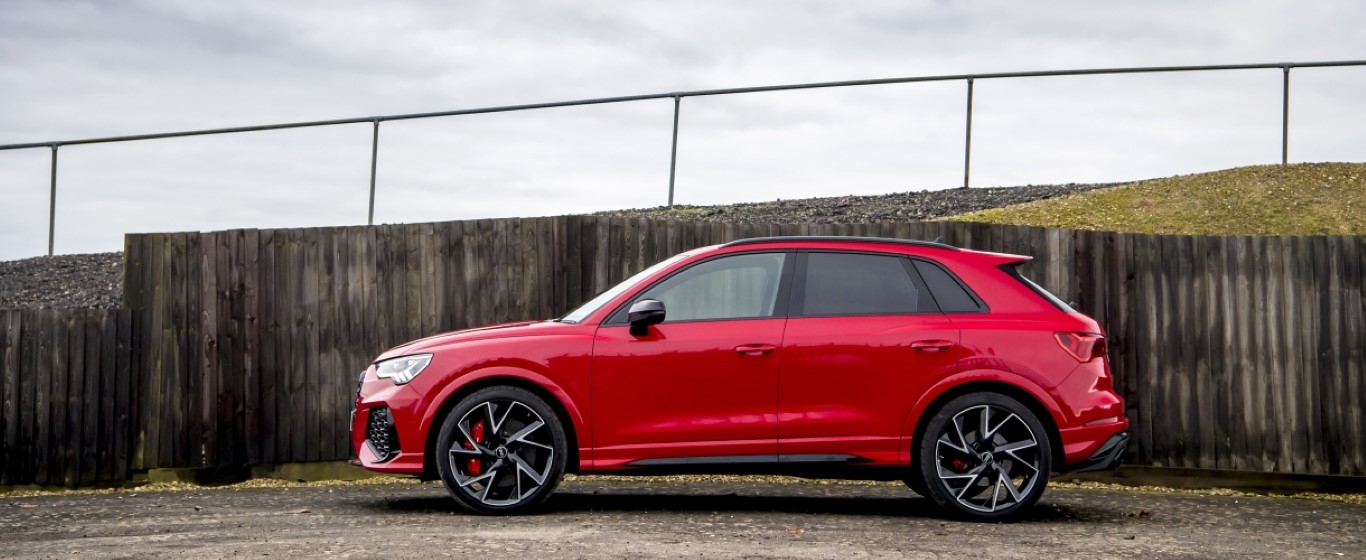
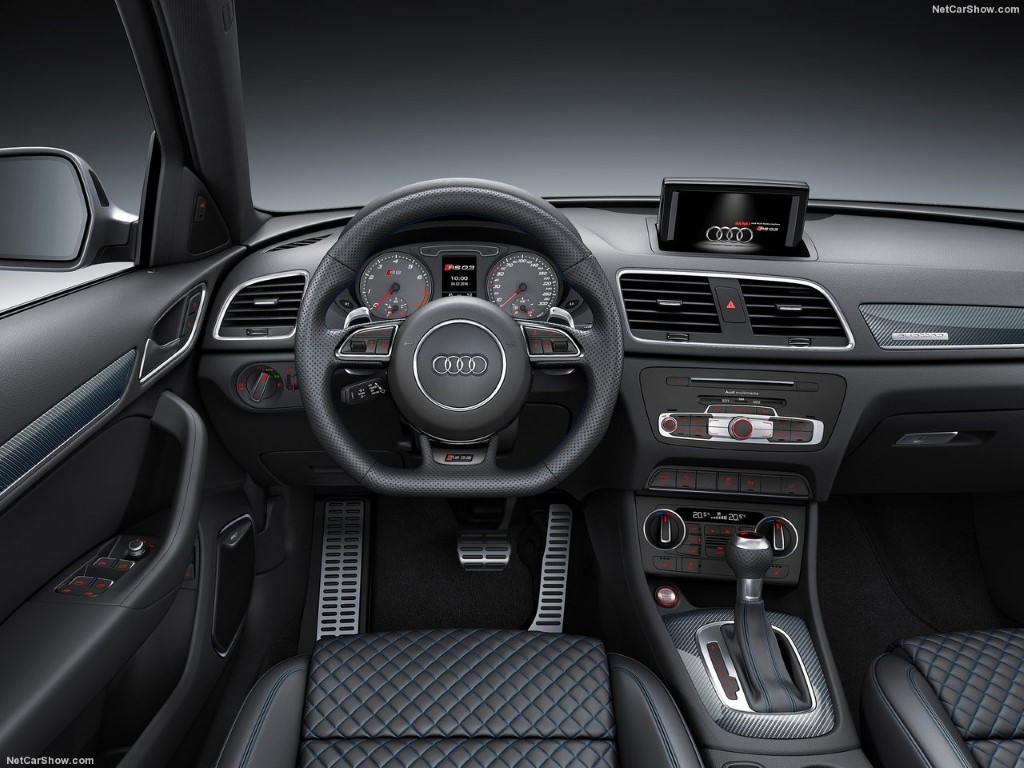
The transition from concept to mass production culminated in the official launch of the RS Q3
in 2013. This was a historic milestone for Audi Sport, as it represented the first
"Q" model to receive the full RS treatment. The decision was risky, as brand
purists questioned whether the PQ35 platform — shared with the Volkswagen Golf Mk5 and the
Audi A3 8P — had the rigidity and suspension geometry necessary to support the
expected dynamics of an RS vehicle.
Phase 1: Launch and Initial Specifications (2013–2015)
The production model, launched in Europe in 2013 and arriving in Brazil in the first half
of 2014, took a slightly more conservative approach in terms of power than
the concept suggested. The engineers opted to calibrate the 2.5 TFSI engine to
deliver 310 hp (228 kW) and 42.8 kgfm (420 Nm) of torque. This strategic decision aimed
to hierarchize the product line, preventing the SUV from cannibalizing sales of the RS 3
Sportback, which operated on the same platform but with less weight and a lower center
of gravity.
Despite the reduction in power compared to the concept, the numbers were impressive for the
segment at the time. The RS Q3 accelerated from 0 to 100 km/h in 5.5 seconds, with top
speed electronically limited to 250 km/h. The chosen transmission was the seven-speed
S tronic (dual-clutch), coupled to the quattro all-wheel-drive system. It
is crucial to note that, due to the transverse layout of the engine, the quattro system used
a hydraulic multi-plate clutch (fifth-generation Haldex) on the rear axle, instead
of the Torsen center differential used in longitudinal engine models like the RS 4 and RS
6. The system operated primarily with front-wheel drive in cruising conditions to
save fuel, instantly transferring torque to the rear axle upon
detecting slip.
In the Brazilian market, the RS Q3 landed with a suggested price of approximately R$
273,600. It occupied a solitary niche, as its direct rivals, like the Mercedes-Benz
GLA 45 AMG, were still in the launch or consolidation phase. The Brazil package was
generous in equipment, including a Bose sound system, panoramic sunroof, and the
MMI Navigation Plus infotainment system, although the interface was still
based on physical buttons and a retractable screen on the dashboard, characteristics of the
electronic
architecture of the time.
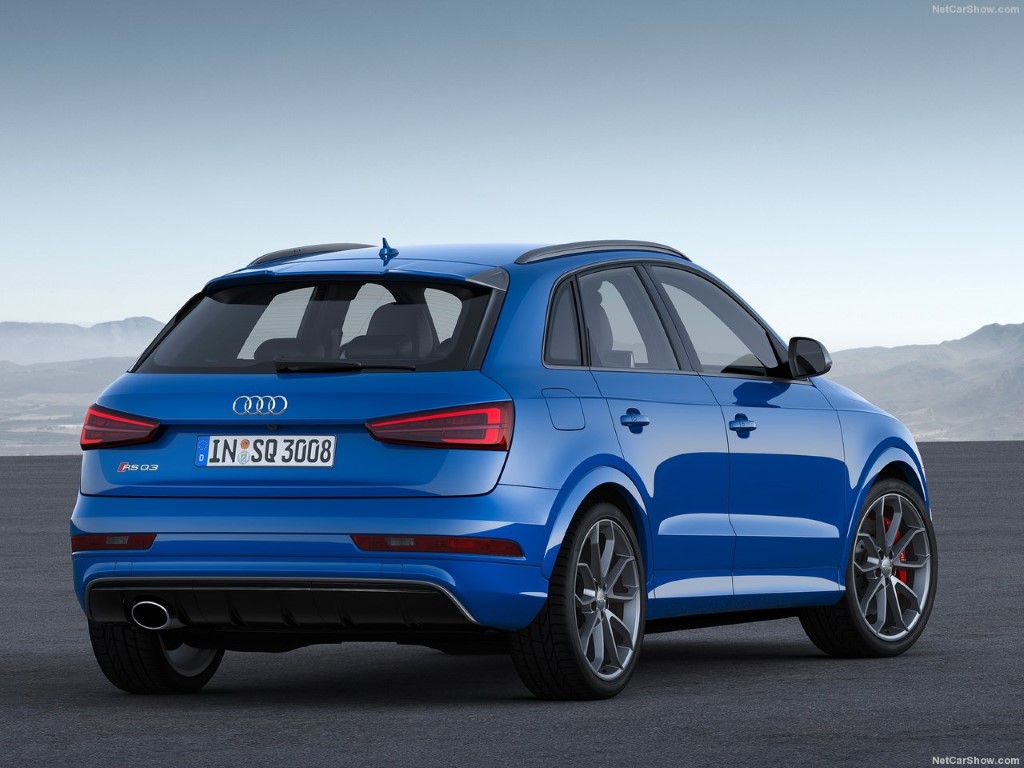
One of the most controversial design features of the first phase was the exhaust outlet.
Contrary to the RS tradition of two large oval outlets, the original RS Q3 had
only one oval outlet on the left side of the rear bumper. Audi justified this
choice as a way to differentiate the entry-level models of the RS line from the larger
models, but the decision was reversed in future generations due to customer demand
for a more symmetrical and aggressive aesthetic.
Phase 2: The Facelift and the Rise of Performance (2015–2018)
The response from the competition, especially with the launch of the Mercedes-AMG GLA 45 that
extracted 360 hp (and later 381 hp) from a 2.0 four-cylinder engine, forced
Audi to quickly update the RS Q3. The facelift, presented in 2015 as a 2016 model,
brought profound aesthetic and mechanical revisions that altered the car's character.
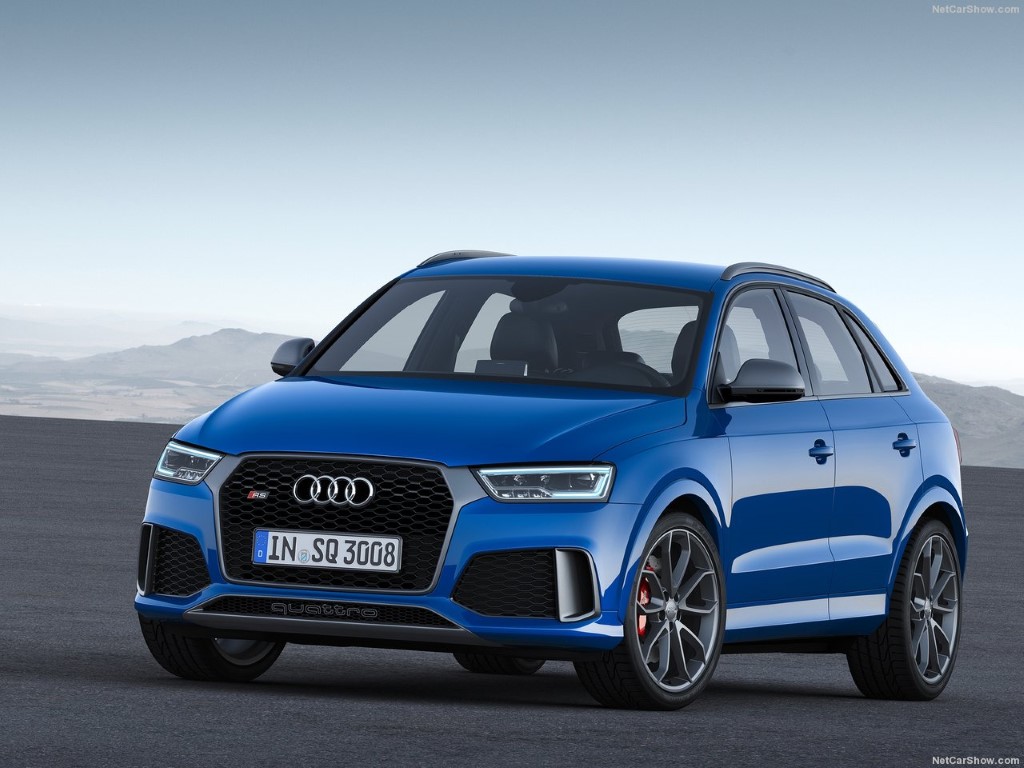
Aesthetically, the model received the new "Singleframe" grille with a frame that
connected directly to the headlights, now with Full LED technology and a new daytime
running light signature. The air intakes on the front bumper were enlarged to improve
the cooling of the intercoolers and brakes. However, the true revolution occurred under
the hood. Audi's engineering optimized the intake flow and turbo pressure, raising
the power of the "standard" version to 340 hp (250 kW) and the torque to 45.9 kgfm (450 Nm).
This update reduced the 0 to 100 km/h time to 4.8 seconds, making the car
significantly more agile.
The RS Q3 Performance Version
To close the lifecycle of the first generation demonstrating total technical mastery,
Audi launched the RS Q3 Performance variant. This version represented the pinnacle of the 8U
platform. The engine was pushed to the limit of its original configuration, delivering 367 hp
(270
kW) and 47.4 kgfm (465 Nm) of torque. The S tronic transmission received new programming
for even faster and more aggressive gear changes, allowing the SUV to reach
100 km/h in just 4.4 seconds. The top speed could be optionally
unlocked to 270 km/h, territory previously exclusive to dedicated sports
cars.
In Brazil, the Performance version arrived with a high price tag, surpassing the R$
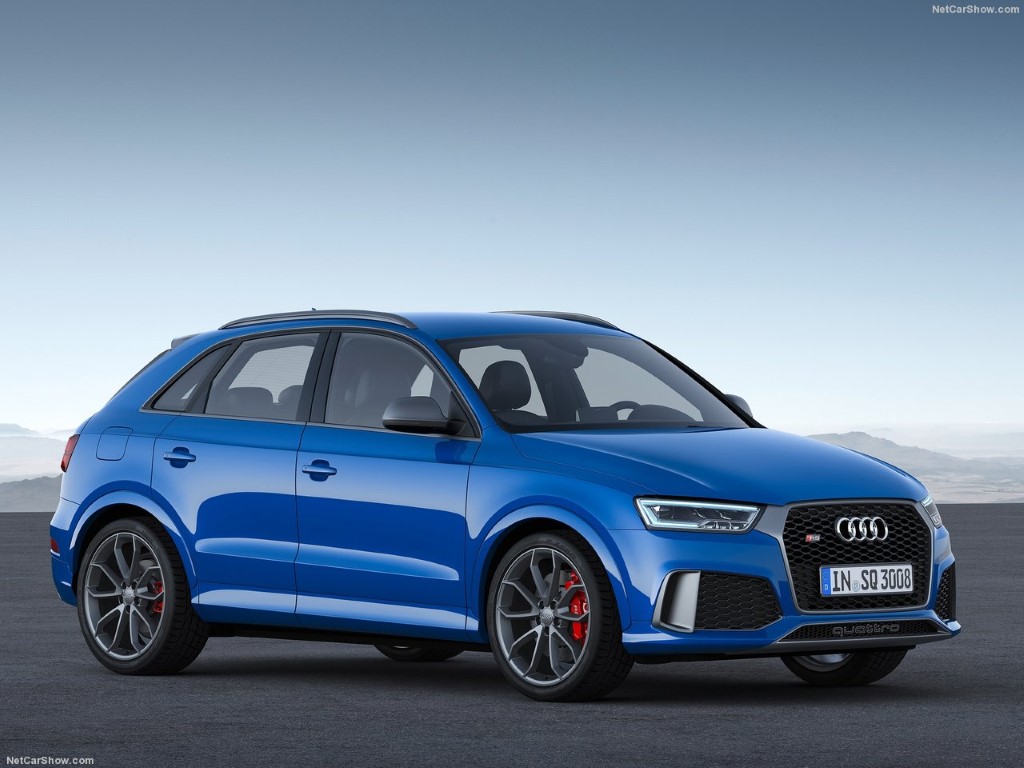
300,000 barrier, but it offered visual exclusivity through matte titanium finishes on the
grille, window frames, rearview mirrors, and roof rails, as well as exclusive
20-inch wheels with a five twin-spoke "V" design. The interior gained
seats with blue stitching and carbon fiber details with interwoven blue thread,
reinforcing the special nature of the series.
| Technical Specification |
RS Q3 (2013-2015) |
RS Q3 (2016-2018) |
RS Q3 Performance (2016-2018) |
| Model Code |
8U (Phase 1) |
8U (Phase 2) |
8U (Performance) |
| Engine |
2.5 TFSI (5 cyl) |
2.5 TFSI (5 cyl) |
2.5 TFSI (5 cyl) |
| Maximum Power |
310 hp @ 5200 rpm |
340 hp @ 5300 rpm |
367 hp @ 5550 rpm |
| Maximum Torque |
420 Nm |
450 Nm |
465 Nm |
| 0-100 km/h Acceleration |
5.5 s |
4.8 s |
4.4 s |
| Top Speed |
250 km/h |
250 km/h |
270 km/h |
| Weight (DIN) |
~1,730 kg |
~1,700 kg |
~1,730 kg |