Historical Context and Development
The late 1990s was a period of transformation for Audi. After the cult success of the RS2 Avant
(1994-1995), there was a vacuum in the brand's portfolio for a vehicle that would surpass the S4. quattro
GmbH, based in Neckarsulm, was tasked with developing a spiritual successor to the RS2, but with a crucial
difference: the project would be entirely managed by Audi, without external assembly by Porsche.
The goal was clear: to create the fastest and most sports-focused vehicle based on the "B" platform (in this
case, the B5), positioning itself above the S4. The decision to offer the model exclusively as an Avant
(station wagon) was a risky but calculated move to differentiate Audi from BMW (M3) and Mercedes-Benz
(C-Class AMG), which primarily focused on sedans and coupes.
Mechanical Engineering: The Partnership with Cosworth
The heart of the RS4 B5 is a piece of engineering that became legendary among enthusiasts and
mechanics. Although based on the 2.7-liter V6 engine of the Audi S4 (B5 platform), the modifications were so
extensive that it can be considered a distinct engine. To achieve the desired power levels with durability,
Audi collaborated with the renowned Cosworth Technology in England.
ASJ/AZR Engine Details
The 2.7-liter, 30-valve (5 valves per cylinder) V6 engine underwent a complete re-engineering:
- Casting and Block: Cosworth developed a new casting process for the engine
cylinder head, using a special aluminum alloy to withstand the extreme thermal and mechanical pressures
generated by the larger turbos. The engine block was also reinforced.
- Supercharging: Unlike the S4, the RS4 used two BorgWarner K04 turbochargers
mounted in parallel. These turbos were physically larger and capable of generating significantly higher
boost pressures.
- Airflow: The intake and exhaust ports were resized and flow-optimized. The
cross-sectional area of the air ducts was increased to ensure the engine "breathed" freely at high revs.
- Cooling System: Thermal management was critical. The engine oil was cooled
by a dual system consisting of an oil-water radiator and an oil-air radiator, ensuring the temperature
remained stable even under intense track or autobahn use.
Transmission and Drivetrain
All this power was sent to the four wheels through a six-speed manual transmission (code 01E),
coupled with a reinforced clutch and a model-specific flywheel. The drivetrain system was the legendary
quattro with a Torsen T-1 center differential.
- Torque Distribution: Under normal conditions, the system divided the torque
50:50 between the front and rear axles.
- Dynamic Capability: The system could automatically send up to 75% of the
power to either axle depending on available grip, providing "infinite" traction exiting corners, a
characteristic that became the model's signature.
Performance Data and Specifications (B5)
The table below summarizes the technical specifications that put the RS4 B5 at the top of the
automotive food chain in 2000.
| Specification |
Technical Detail |
| Engine |
2.7L Biturbo V6, 30 Valves (DOHC) |
| Maximum Power |
380 hp (376 bhp / 280 kW) at 6,100–7,000 rpm |
| Maximum Torque |
440 Nm (325 lb-ft) at 2,500–6,000 rpm |
| 0 to 100 km/h |
4.9 seconds |
| Top Speed |
250 km/h (electronically limited) - 262 km/h (actual) |
| Weight |
1,620 kg |
| Official Fuel Consumption |
~8.4 km/l (24 mpg combined) |
| Wheels/Tires |
18x8.5 inches (9-spoke design), 255/35 ZR18 tires |
It is important to note the flat torque curve: maximum torque was available from 2,500 rpm up to
6,000 rpm, offering an engine elasticity that few naturally aspirated competitors could match at the time.
Design and Aesthetic Modifications
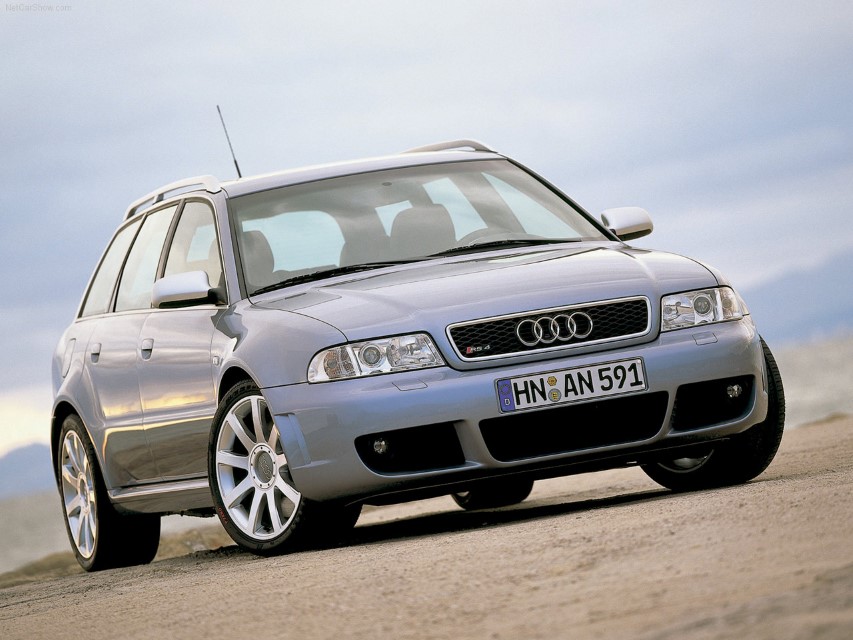
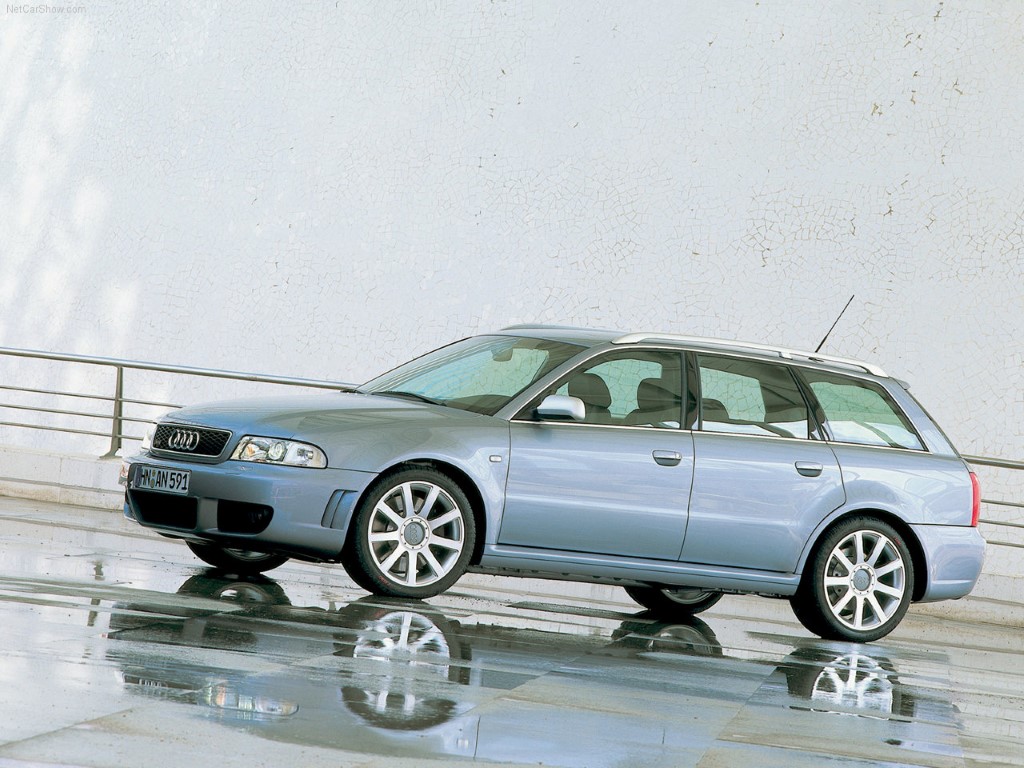
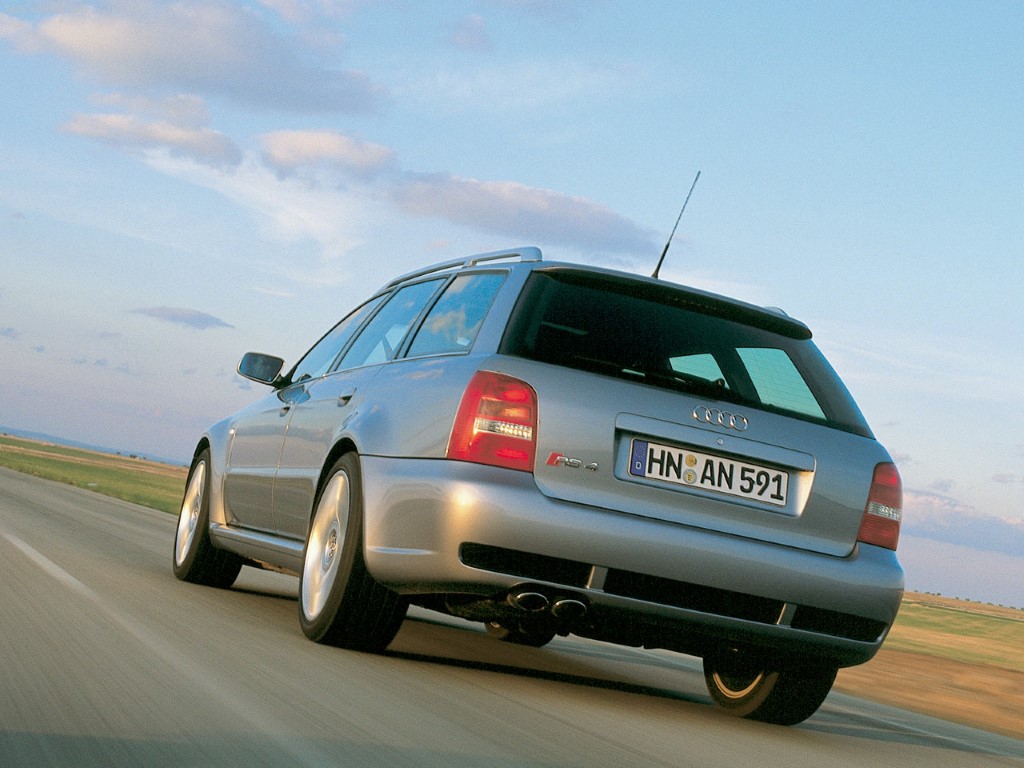
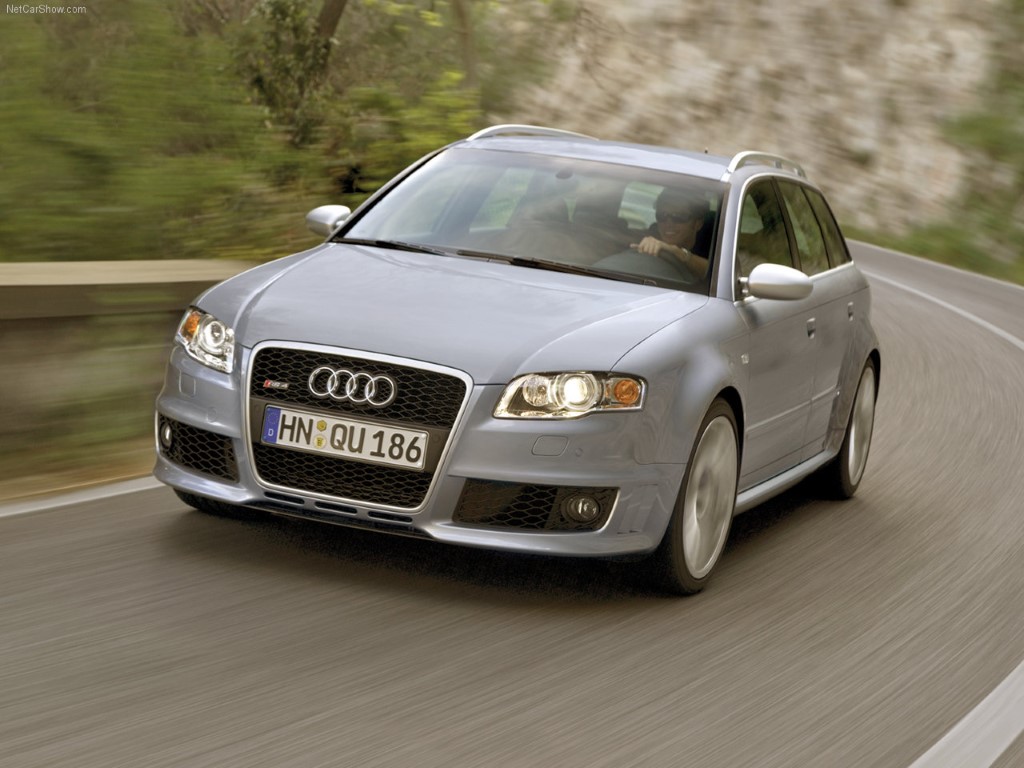
Visually, the RS4 B5 stood out for its functional aggressiveness. The bodywork was widened
("widebody") to accommodate the wider tracks and 18-inch wheels.
- Aerodynamics: The front bumper featured three large air intakes to feed the
intercoolers and radiators. The rear bumper and side skirts were designed to visually integrate the
widened wheel arches.
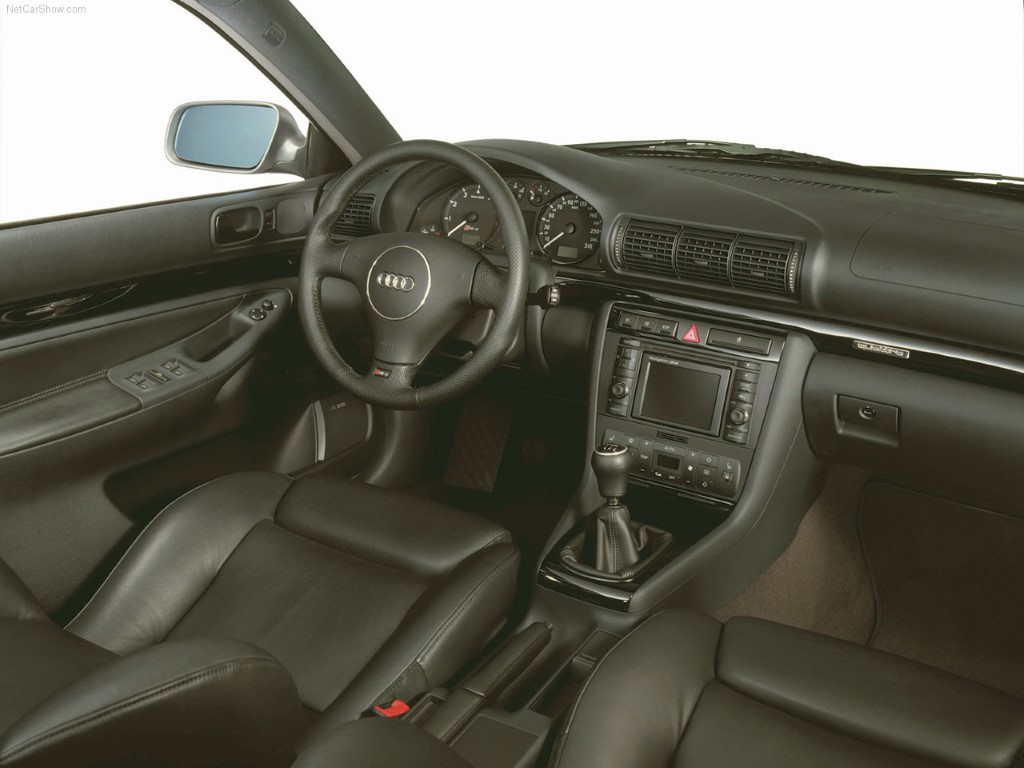
- Interior: The cabin received Recaro bucket seats, carbon fiber or piano
black trims, and RS4 logos on the instrument panel and door sills.
Production, Sales, and Legacy
Audi drastically underestimated the appeal of the RS4 B5. The original business plan foresaw the
production of only 3,000 units to ensure the project's profitability. However, market demand was
overwhelming.
- Production Period: May 2000 to September 2001.
- Total Produced: 6,030 units.
- Markets: The model was sold primarily in Europe and in some Asian markets
and Oceania.
- The US Case: The RS4 B5 was not officially sold in the United States, which
generated a mythical status among American enthusiasts. Currently, as the earliest models surpassed the
25-year mark in 2025, they became eligible for legal importation into the US, boosting the collector
market.
This commercial success was instrumental for Audi Sport (then quattro GmbH), proving that there was a
robust and profitable market for ultra-high-performance station wagons, paving the way for the future RS6
and subsequent generations of the RS4.