

Comprehensive Analysis of Generations, Engines, and Production
Developed by Audi's high-performance division in Neckarsulm (originally quattro GmbH and subsequently renamed Audi Sport GmbH), the Audi RS5 was created to position the German brand at the pinnacle of mid-size sports coupes and performance models[cite: 1]. Engineered to confront direct competitors such as the BMW M3/M4 and Mercedes-Benz C 63 AMG, the RS5 established a legacy shaped by continuous technical evolution: it began with a high-revving naturally aspirated V8 engine, transitioned to a twin-turbo V6 focused on linear torque and rapid response, and subsequently embraced plug-in hybrid electrification[cite: 1]. Parallel to powertrain advancements, the model diversified its body styles, encompassing the classic two-door Coupé, the open-top Cabriolet, and the versatile five-door Sportback[cite: 1].
First Generation (B8 / Type 8T, 2010–2012): Establishing the Identity and the Naturally Aspirated V8
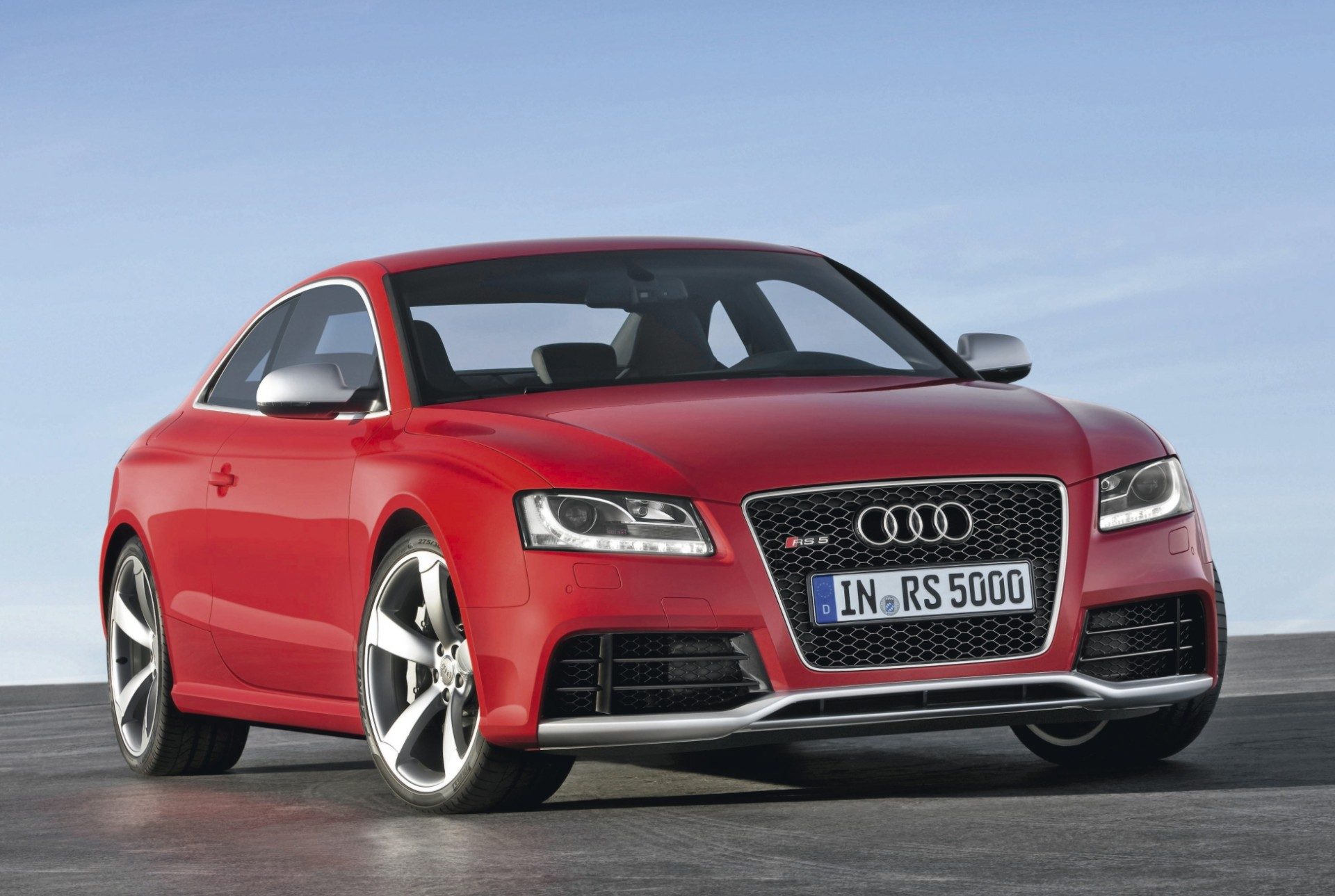
The first-generation Audi RS5 was introduced to the public at the Geneva Motor Show in March 2010, initially configured exclusively as a two-door coupe[cite: 1]. The model established the design language that would define RS models for years to come[cite: 1]. The bodywork featured flared, box-arched fenders inspired by the muscular lines of the classic 1980s Audi Ur-Quattro rally car[cite: 1]. The single-frame front grille showcased a glossy metallic honeycomb mesh, while the rear was characterized by dual oval exhaust tailpipes integrated into the diffuser and an active retractable rear spoiler programmed to automatically deploy at 120 km/h and retract below 80 km/h to balance downforce and high-speed stability[cite: 1].
The powertrain of the RS5 B8 utilized a 4.2 FSI naturally aspirated V8 engine (factory code CFSA), an engineering feat closely related to the 5.2 V10 found in the Audi R8 supercar[cite: 1]. With an aluminum-silicon alloy engine block and cylinder heads, high-pressure direct fuel injection, and continuous variable valve timing, the powerplant produced 450 hp at a lofty 8,250 rpm and 430 Nm of torque available between 4,000 and 6,000 rpm, extending its rev limit to an impressive 8,500 rpm[cite: 1]. The linear power delivery and distinctive acoustic signature made this engine a mechanical hallmark, standing as the final naturally aspirated V8 built by the brand[cite: 1].
Power was delivered through a 7-speed wet dual-clutch S tronic automated transmission (code DL501), calibrated for near-instant gear shifts and equipped with standard launch control[cite: 1]. Within the quattro permanent all-wheel-drive system, Audi debuted the crown-gear center differential on the RS5, replacing the older Torsen setup[cite: 1]. This compact mechanical unit distributed torque asymmetrically at 40% front and 60% rear under normal driving conditions, capable of instantly redirecting up to 70% of drive to the front axle or up to 85% to the rear upon detecting wheel slip[cite: 1]. On the rear axle, an active sport differential provided mechanical torque vectoring, channeling additional drive to the outside rear wheel during hard cornering to effectively neutralize understeer[cite: 1].
To control dynamic body motion, the manufacturer offered the optional cross-linked hydraulic Dynamic Ride Control (DRC) suspension system[cite: 1]. The setup eliminated complex electronic valving: diagonally opposed shock absorbers were interconnected via hydraulic lines to a central valve with an internal gas accumulator[cite: 1]. During hard braking or aggressive cornering, fluid pressure variations countered body roll and pitch almost instantaneously, delivering exceptional track composure without compromising ride compliance over normal road surfaces[cite: 1].
First Generation Facelift (B8.5, 2012–2015) and the Debut of the Cabriolet
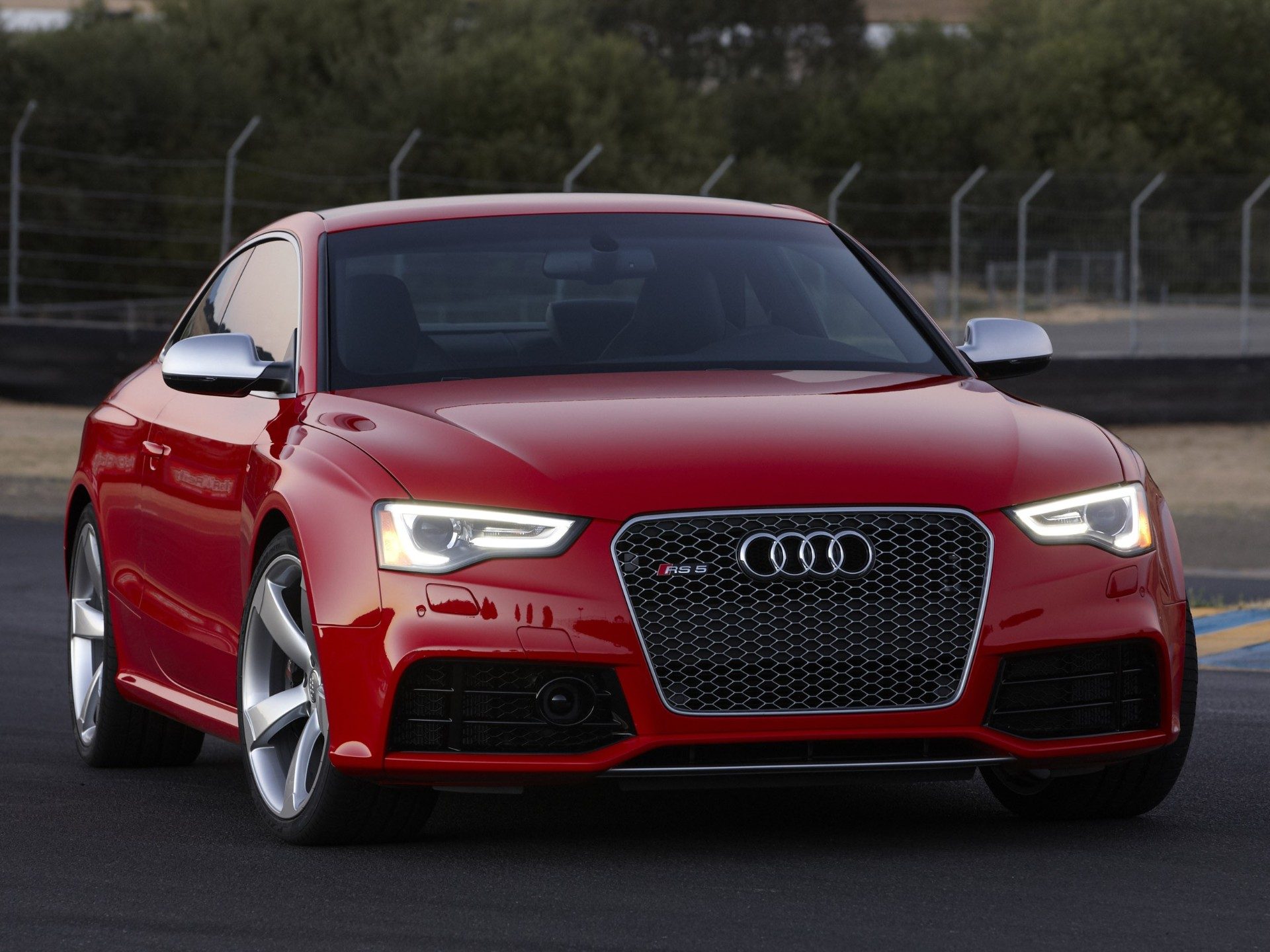
The mid-cycle update of the initial generation (technically designated B8.5) arrived in dealerships for the 2012 model year[cite: 1]. The refresh aligned the sports coupe's styling with the broader Audi lineup through refined exterior appointments and mechanical updates[cite: 1]. Up front, the headlights received beveled upper corners and continuous LED daytime running light light-guides, replacing the previous dotted individual LED design, accompanied by revised fog light surrounds and subtle updates to the front grille[cite: 1]. Inside, the cabin gained a redesigned flat-bottom multifunctional steering wheel, new matte carbon-fiber trim inlays, and simplified controls for the multimedia infotainment system[cite: 1].
Under the skin, the engine-driven hydraulic power steering was retired in favor of an electromechanical steering rack mounted directly to the subframe[cite: 1]. This change improved overall fuel efficiency and enabled seamless integration with driver-assistance systems and configurable dynamic drive profiles[cite: 1]. Engineers from the quattro division also retuned the front dampers and anti-roll bars, softening the initial batch's excessive stiffness to provide more progressive compliance over uneven pavement[cite: 1]. The 450 hp 4.2 V8 engine and 7-speed S tronic gearbox carried over with the same performance calibration[cite: 1].
The primary addition to this production cycle was unveiled at the 2012 Paris Motor Show with the debut of the Audi RS5 Cabriolet, marketed starting in the 2013 model year[cite: 1]. This marked the first four-seater convertible to carry the RS badge in the brand's mid-size class[cite: 1]. The model utilized an acoustically insulated multi-layer fabric soft-top that opened fully in 15 seconds and closed in 17 seconds, operated electro-hydraulically at speeds up to 50 km/h[cite: 1]. To compensate for the loss of the fixed metal roof and preserve the torsional rigidity demanded by the V8's power, the chassis received high-strength steel reinforcements in the floorpan, sills, and windshield pillars[cite: 1]. These structural modifications raised total curb weight to approximately 1,920 kg (around 200 kg heavier than the Coupé)[cite: 1]. Consequently, the 0 to 100 km/h acceleration time rose to 4.9 seconds, compared to the 4.5 seconds achieved by the closed-roof Coupé[cite: 1].
Second Generation (B9 / Type F5, 2017–2019): The Move to Twin-Turbo V6 Power and the Sportback
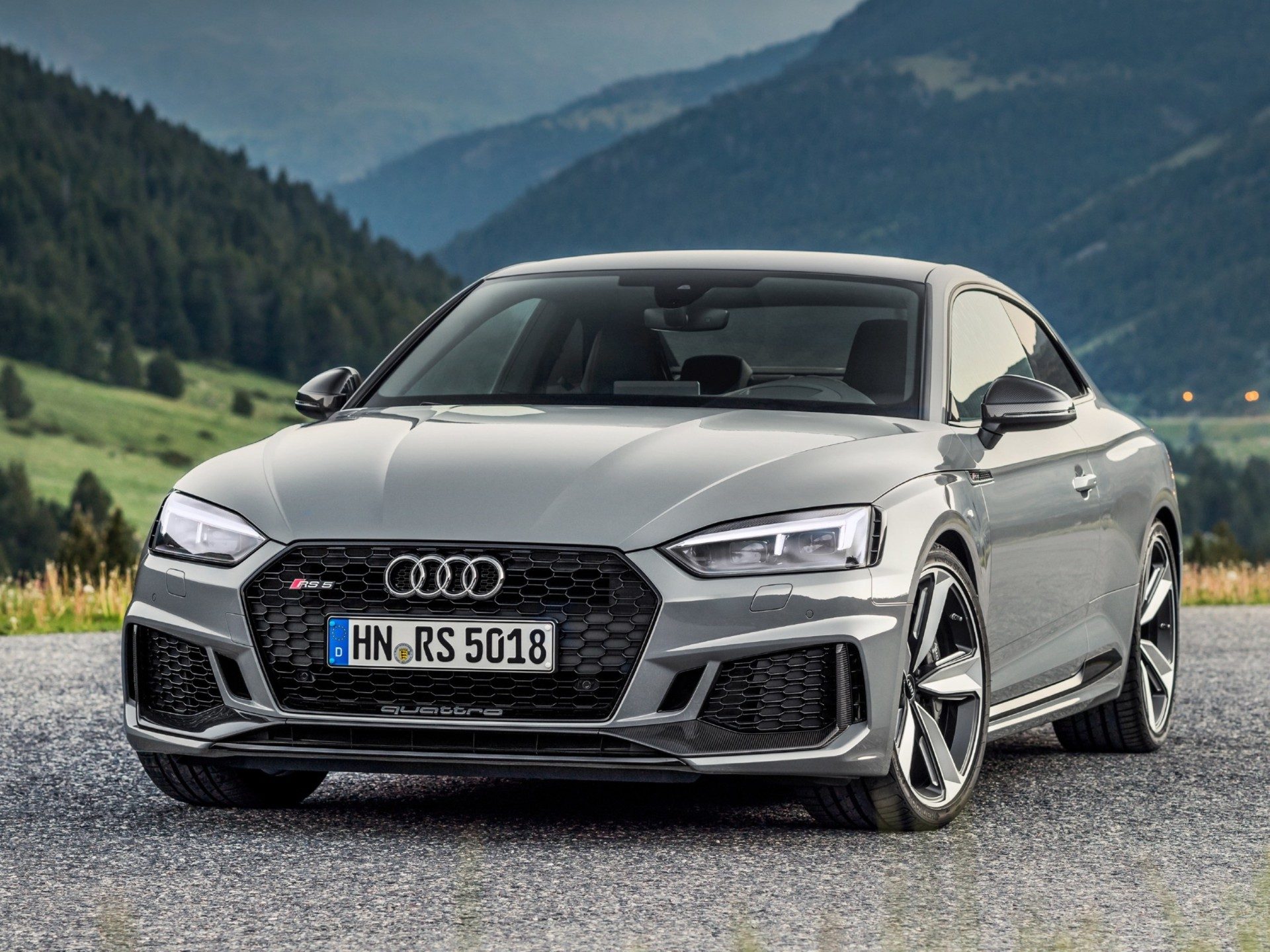
Unveiled at the 2017 Geneva Motor Show, the second-generation RS5 represented a comprehensive engineering transformation[cite: 1]. The model migrated to the modular MLB Evo platform, characterized by the extensive use of stamped aluminum and hot-formed high-strength steels[cite: 1]. The new architecture trimmed roughly 60 kg from the Coupé's body-in-white, increased torsional stiffness, and introduced a much faster, more advanced electronic architecture[cite: 1].
The major mechanical revolution was the departure from natural aspiration in favor of an all-new 2.9 TFSI twin-turbo V6 engine (project code EA839), co-developed with Porsche engineering[cite: 1]. Designed with a "hot-V" layout where the turbochargers are nestled inside the cylinder bank valley, the engine minimized thermal losses and virtually eliminated turbo lag[cite: 1]. While peak horsepower matched the outgoing generation (450 hp between 5,700 and 6,700 rpm), torque surged by 170 Nm to a massive 600 Nm, delivered broad and flat from 1,900 to 5,000 rpm[cite: 1]. The engine also incorporated the B-cycle combustion process, which shortens the intake stroke under partial load to improve fuel economy and lower emissions[cite: 1].
This massive influx of torque required a structural overhaul of the drivetrain[cite: 1]. The dual-clutch S tronic gearbox was replaced by an 8-speed torque-converter Tiptronic automatic transmission sourced from ZF[cite: 1]. This unit proved far more durable in handling sudden torque spikes during hard launches while offering smoother behavior in stop-and-go traffic, yet retaining rapid, crisp shifts in dynamic driving modes[cite: 1]. Official 0 to 100 km/h sprint times dropped to 3.9 seconds, with an electronically limited top speed of 250 km/h (optionally raised to 280 km/h with optional dynamic packages)[cite: 1].
Market reach expanded significantly with the unveiling of the RS5 Sportback at the 2018 New York International Auto Show[cite: 1]. With the Cabriolet retired for the B9 generation, Audi created a performance car that unified family practicality with supercar pace[cite: 1]. The Sportback adopted a five-door liftback body with an extended wheelbase and comfortable rear seating[cite: 1]. The stretched profile preserved the coupe's exceptional torsional rigidity while adding only 35 kg to the curb weight, broadening the appeal of high performance to executive and family buyers[cite: 1].
Second Generation Facelift (B9.5, 2020–2024) and the Competition Package
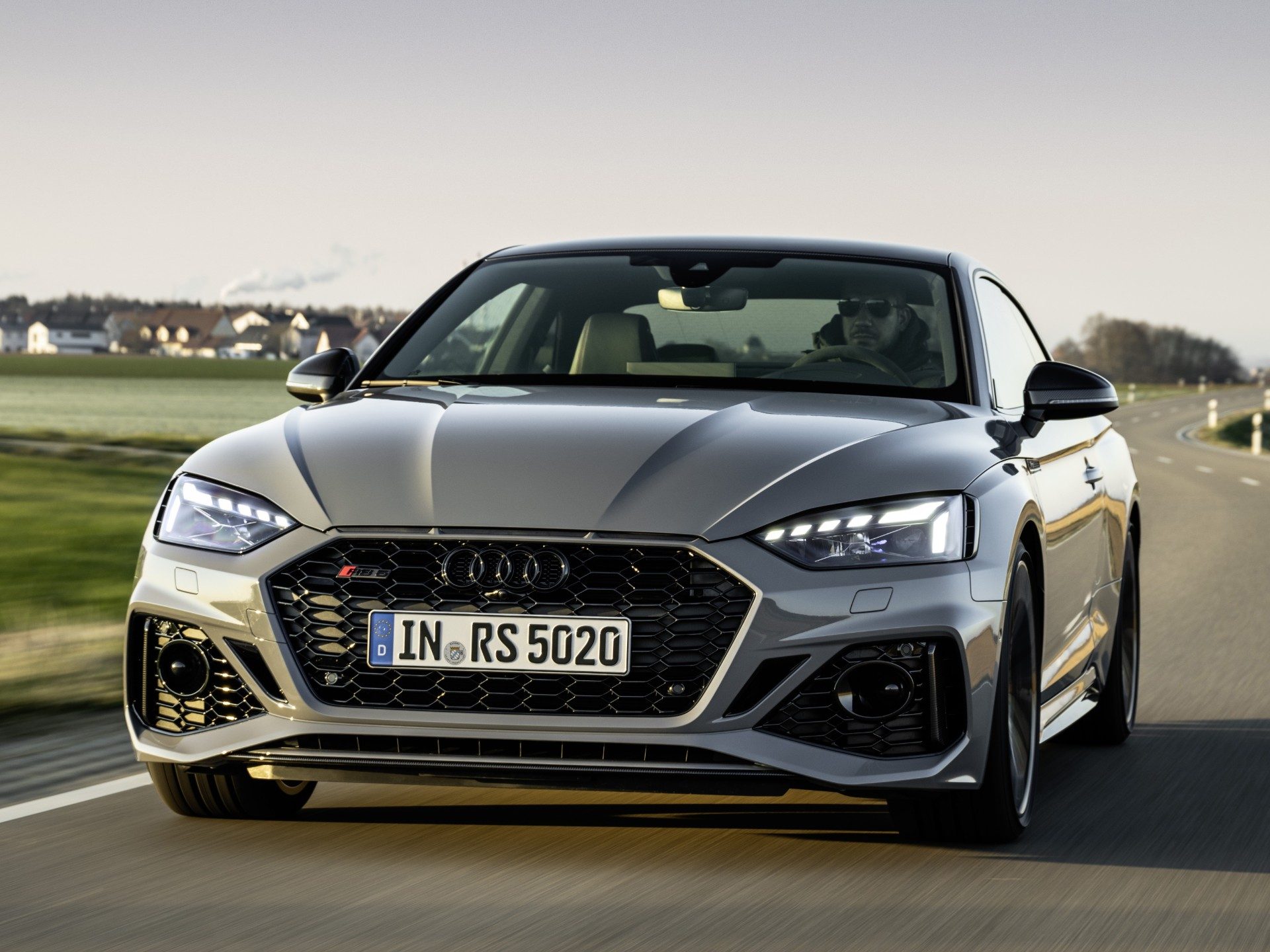
In late 2019, Audi revealed a styling and technological update across the lineup, entering showrooms for 2020 as the B9.5 generation[cite: 1]. The visual revisions took inspiration from the larger RS6 Avant and RS7 Sportback[cite: 1]. The Singleframe front grille became wider and flatter, crowned by subtle air vents paying tribute to the historic 1984 Audi Sport Quattro rally homologation special[cite: 1]. The headlights featured darkened housings with Matrix LED elements and optional integrated laser lighting technology[cite: 1]. At the rear, revised taillight signatures and a wider diffuser finished in gloss black completed the exterior redesign[cite: 1].
The interior received connectivity and infotainment upgrades[cite: 1]. The traditional MMI rotary control wheel on the center console was removed to make way for a 10.1-inch touchscreen interface powered by a faster modular infotainment platform[cite: 1]. The 12.3-inch Audi virtual cockpit digital display gained RS-specific performance graphics, displaying track telemetry metrics such as g-force, boost pressure, and engine oil temperature[cite: 1]. On the steering wheel, the new RS Mode button allowed drivers to switch instantly between two individually configurable driving profiles covering steering, exhaust, suspension, and quattro tuning[cite: 1].
To conclude the generation and challenge track-oriented rivals, Audi Sport unveiled the RS Competition package (and its Competition Plus sibling) in late 2022 for both the Coupé and Sportback[cite: 1]. Retaining the 450 hp factory output, engineers focused strictly on dynamic precision and weight optimization[cite: 1]. Sound deadening between the engine bay and cabin was reduced by 8 kg, enhancing the mechanical bark of the redesigned RS sports exhaust[cite: 1]. An adjustable coilover suspension lowered the ride height by 10 mm from the factory, offering an additional 10 mm of manual adjustment[cite: 1].
The package also added a sport rear differential remapped for rear-axle bias, quicker-shifting transmission software for the Tiptronic gearbox, a fixed-ratio dynamic steering rack, and track-focused high-performance tires wrapped around forged milled alloy wheels[cite: 1]. These upgrades reduced the 0 to 100 km/h sprint time to 3.8 seconds and raised the factory speed limiter to 290 km/h (180 mph)[cite: 1].
The Next Chapter: Transition to the B10 Generation and Hybrid Electrification
A systematic realignment of Audi's model nomenclature established that even-numbered designations would be reserved exclusively for battery-electric vehicles, while odd-numbered nameplates would house internal combustion and advanced hybrid powertrains[cite: 1]. Consequently, the A4/S4/RS4 family merged into the A5/S5/RS5 model range[cite: 1].
Under the B10 architecture, traditional two-door offerings (Coupé and Cabriolet) were retired permanently[cite: 1]. The new RS5 adopted Sedan (fastback-profile four-door) and Avant (traditional performance estate) body configurations, built around an ultra-high-output plug-in hybrid powertrain engineered in Neckarsulm[cite: 1]. The mechanical assembly pairs a recalibrated 2.9-liter twin-turbo V6 internal combustion engine developing 510 hp with an integrated synchronous electric motor producing 130 kW (177 hp), delivering a combined output of 639 hp and 825 Nm of instantaneous torque[cite: 1]. The setup accelerates from 0 to 100 km/h in 3.6 seconds and reaches a top speed of 285 km/h, supported by a 25.9 kWh traction battery providing pure-electric driving capability in urban environments[cite: 1].
Technical and Performance Comparison Across Generations and Facelifts
The following breakdown summarizes engineering parameters, factory specifications, and performance benchmarks across each evolutionary stage of the Audi RS5[cite: 1].
| Model and Generation | Body Styles Offered | Engine and Displacement | Maximum Power | Peak Torque | Transmission and Drivetrain | 0–100 km/h Acceleration | Top Speed | Curb Weight |
|---|---|---|---|---|---|---|---|---|
| RS5 B8 (2010–2012) | Coupé | 4.2L Naturally Aspirated V8 FSI (4,163 cc) | 450 hp @ 8,250 rpm | 430 Nm @ 4,000–6,000 rpm | 7-speed S tronic; Crown-gear quattro | 4.6 s | 250 km/h (opt. 280 km/h) | ~1,725 kg |
| RS5 B8.5 (2012–2015) | Coupé and Cabriolet | 4.2L Naturally Aspirated V8 FSI (4,163 cc) | 450 hp @ 8,250 rpm | 430 Nm @ 4,000–6,000 rpm | 7-speed S tronic; Crown-gear quattro | 4.5 s (Coupé) / 4.9 s (Cabriolet) | 250 km/h (opt. 280 km/h) | ~1,715 kg (Coupé) / ~1,920 kg (Cabriolet) |
| RS5 B9 (2017–2019) | Coupé and Sportback | 2.9L Twin-Turbo V6 TFSI (2,894 cc) | 450 hp @ 5,700–6,700 rpm | 600 Nm @ 1,900–5,000 rpm | 8-speed Tiptronic (ZF); Permanent quattro | 3.9 s (Coupé / Sportback) | 250 km/h (opt. 280 km/h) | ~1,655 kg (Coupé) / ~1,720 kg (Sportback) |
| RS5 B9.5 (2020–2024) | Coupé and Sportback | 2.9L Twin-Turbo V6 TFSI (2,894 cc) | 450 hp @ 5,700–6,700 rpm | 600 Nm @ 1,900–5,000 rpm | 8-speed Tiptronic; Permanent quattro | 3.9 s (Coupé / Sportback) | 250 km/h (opt. 280 km/h) | ~1,707 kg (Coupé) / ~1,742 kg (Sportback) |
| RS5 Competition (2022–2024) | Coupé and Sportback | 2.9L Twin-Turbo V6 TFSI (2,894 cc) | 450 hp @ 5,700–6,700 rpm | 600 Nm @ 1,900–5,000 rpm | 8-speed Tiptronic (recalibrated); Permanent quattro | 3.8 s (Coupé / Sportback) | 290 km/h (180 mph) | ~1,699 kg (Coupé) / ~1,734 kg (Sportback) |
| RS5 B10 (2026 onwards) | Sedan and Avant | 2.9L Twin-Turbo V6 + Electric Motor (PHEV) | 639 hp combined (510 hp ICE + 177 hp electric) | 825 Nm combined | 8-speed hybrid Tiptronic; Dynamic Torque Control quattro | 3.6 s (Sedan / Avant) | 285 km/h | Final homologation pending |
Production Volumes, Market Trends, and Special Editions
Audi does not routinely release individual chassis breakdown figures for standard volume series, bundling most statistics into overarching A5 and S5 totals[cite: 1]. However, historical end-of-lifecycle reports, national licensing records, and production allocations for special editions provide an accurate picture of production scale and variant rarity[cite: 1].
Across the complete lifecycle of the first generation (B8 and B8.5, spanning 2010 to 2015), manufacturer releases indicated a global sales figure exceeding 13,000 units[cite: 1]. The Coupé accounted for the vast majority of registrations[cite: 1]. The RS5 Cabriolet, built for only three model years (2013 to 2015) at a significantly higher price point, saw very low build numbers[cite: 1]. In the United Kingdom—traditionally one of Audi Sport's strongest markets—only several dozen Cabriolets were ever registered, making the soft-top the rarest production variant of the RS5 family[cite: 1].
In the second generation (B9 and B9.5), customer buying patterns shifted dramatically with the introduction of the five-door Sportback[cite: 1]. The practical liftback design and generous cargo volume heavily cannibalized sales of the two-door coupe[cite: 1]. In the United States, the sales mix settled at an average ratio of roughly four Sportbacks sold for every single Coupé[cite: 1]. In 2023, for instance, Audi delivered 834 RS5 Sportbacks in the US compared to just 212 RS5 Coupés, reflecting an 80% preference for the five-door model[cite: 1]. This structural shift led Audi to officially retire the RS5 Coupé at the end of the 2024 model year, keeping only the Sportback in production until the platform ran its course[cite: 1].
In the United Kingdom, registration data reveals that between 2010 and 2025, a total of 3,403 units of the RS5 family were licensed for road use across both naturally aspirated V8 and twin-turbo V6 generations[cite: 1].
| Edition or Variant | Availability Window | Production Volume / Allocation | Notable Attributes |
|---|---|---|---|
| B8 / B8.5 Generation (Global) | 2010–2015 | Over 13,000 units (worldwide total) | Coupés and Cabriolets powered by the 4.2 FSI V8 |
| RS5 Cabriolet B8.5 | 2013–2015 | Restricted volume (~10% to 15% of Gen 1 total) | Fabric soft-top variant; highest collector rarity |
| RS5 Sportback vs. Coupé Mix (B9/B9.5) | 2018–2024 | ~80% Sportback and ~20% Coupé globally | Overwhelming preference for five doors ended the Coupé |
| Audi Sport Edition (UK) | 2019 | 250 Coupés and 250 Sportbacks | 20-inch anthracite wheels, sports exhaust, Black Styling pack |
| RS5 Panther Edition (USA) | 2021 | 100 units (75 Sportbacks and 25 Coupés) | Panther Black crystal-effect paint, Alcantara steering wheel |
| ABT RS5-R (Homologated Tuner Series) | 2018–2019 | 130 individually numbered units worldwide | Tuned to 530 hp, bespoke aero package, carbon-fiber components |
Historical Summary and Legacy of the RS5
The history of the Audi RS5 highlights over a decade and a half of engineering adaptation to regulatory shifts and enthusiast expectations[cite: 1]. In its initial chapter, the car prioritized acoustic drama and high-rpm precision with its 8,500 rpm V8, underpinned by a crown-gear quattro system that established new standards for all-weather traction[cite: 1]. As efficiency standards tightened, the second generation redefined the car's dynamic character with the introduction of the twin-turbo V6 and 8-speed Tiptronic transmission, providing explosive low-end acceleration and daily usability, while establishing the Sportback as the customer favorite[cite: 1].
Concluding the era of purely internal combustion two-door sports models to make way for 600+ hp plug-in hybrid Sedan and Avant configurations, the RS5 lineage endures as one of the most prominent symbols of engineering innovation, all-weather performance, and chassis dynamics in the history of the four rings[cite: 1].