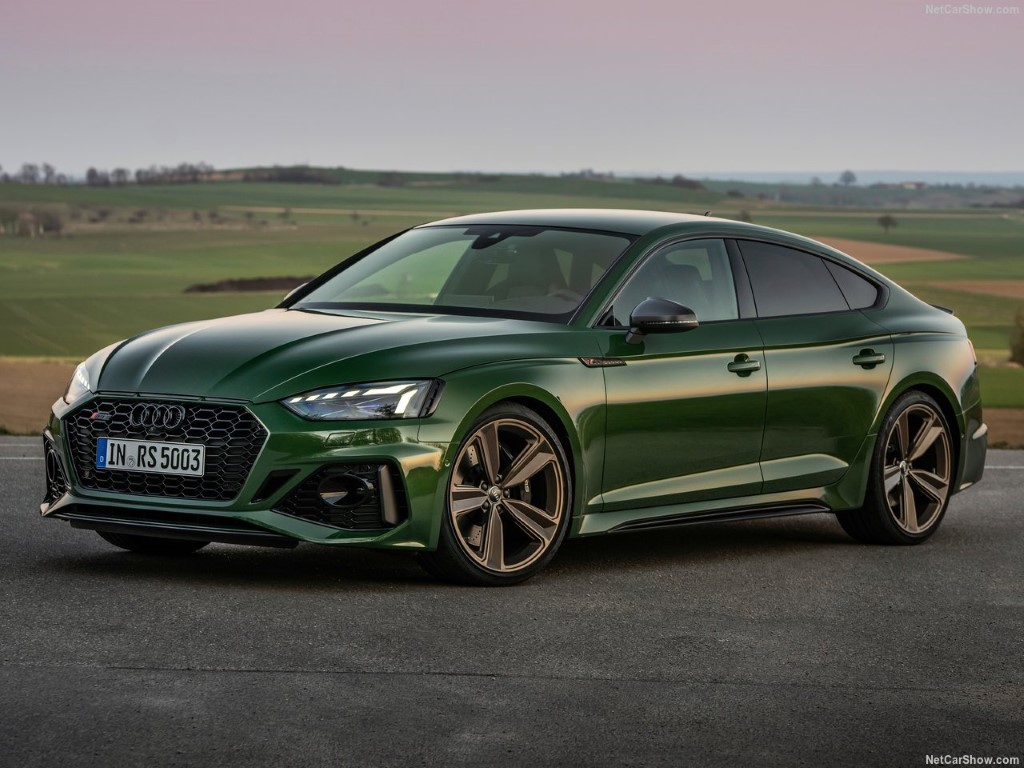
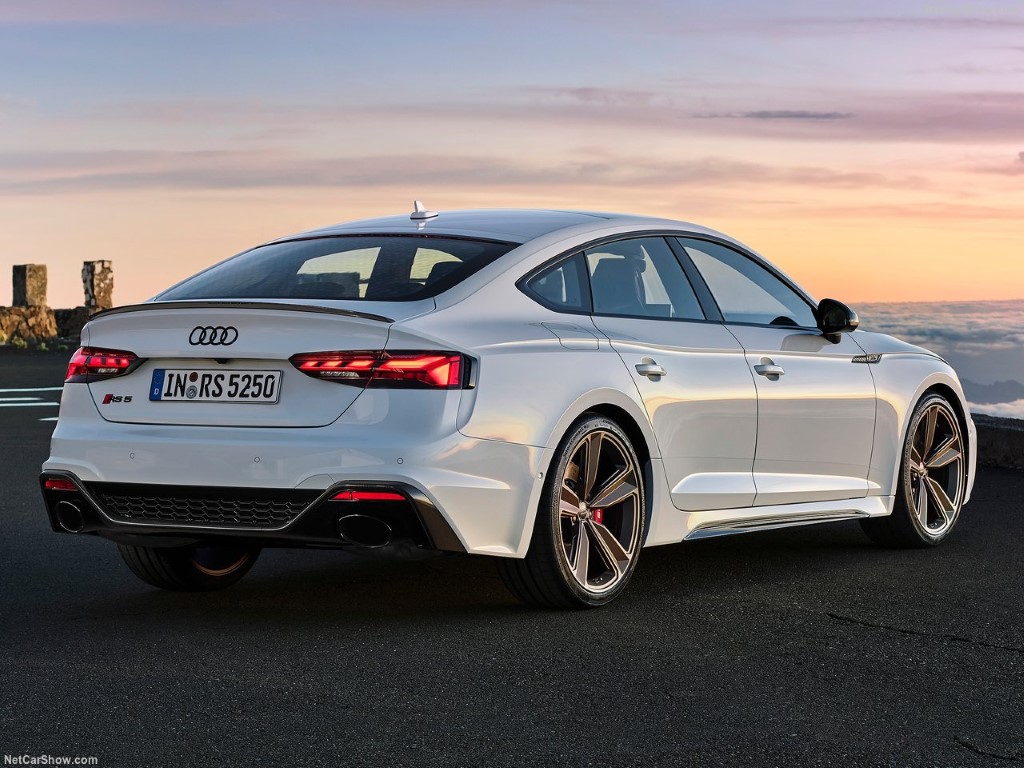
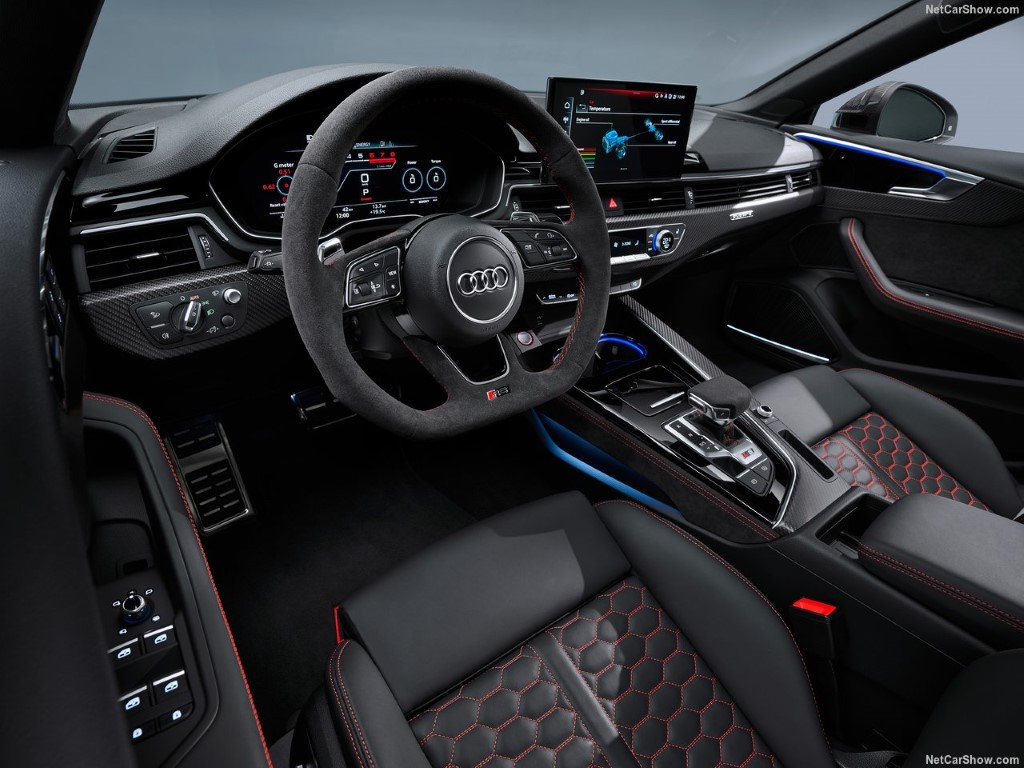
The launch of the Audi A5 in 2007 marked Audi's return to the mid-size touring coupe market, a
territory the brand had left vacant since the Audi Coupé of the 1990s. Designer Walter de Silva considered
the A5 his masterpiece, and it was upon this acclaimed aesthetic foundation that Audi Sport began to develop
its most radical version. Unlike the S5 models, which served as a bridge between ordinary cars and high
performance, the RS5 was designed to be an elite athlete.
The First Generation (B8): The Naturally Aspirated V8 Heart
The first generation of the RS5, built on the B8 platform, was introduced to the international market
in 2010. However, its arrival in specific markets, such as the United States, only occurred in the 2013
model year, already incorporating the mid-life aesthetic updates (facelift). The defining element of this
generation is, unquestionably, its engine.
4.2 FSI Engine Engineering (Code CFSA)
The RS5 B8 is powered by a naturally aspirated 4.2-liter FSI (Fuel Stratified Injection) V8 engine.
It is fundamental to distinguish this engine from the V8s used in the Audi S4 or S5 of the same era. While
the pre-2013 S5 utilized a torque-focused V8, the RS5's engine was developed based on the V10 from the
Lamborghini Gallardo and the Audi R8 V10. Audi engineers essentially removed two cylinders from the V10
block to create this high-revving unit.
This powerplant delivers 450 horsepower (444 hp) at a dizzying 8,250 revolutions per minute (rpm).
The maximum torque of 430 Nm (317 lb-ft) is available between 4,000 and 6,000 rpm. The nature of this engine
requires the driver to actively explore the upper rev range to extract performance, a characteristic that
drastically differentiates it from modern turbocharged engines that deliver immediate power at low revs.
Each unit of this engine was hand-assembled at the Audi plant in Győr, Hungary, ensuring precise tolerances
to withstand the high mechanical loads.
Transmission and the Crown Gear Quattro System
Power transmission in the RS5 B8 is managed exclusively by the 7-speed S tronic gearbox (code DL501).
This is an oil-bathed dual-clutch transmission designed for gear changes in the order of milliseconds. The S
tronic provides a direct mechanical connection between the engine and the wheels, resulting in a visceral
driving experience, although it can exhibit jerky behavior at low urban speeds.
The greatest technical innovation of the RS5 B8, however, was the debut of the "Crown Gear" center
differential. Until the launch of this model, Audi predominantly used Torsen differentials. The new crown
gear differential was more compact and about 2 kg lighter. Under normal driving conditions, it maintains a
40:60 (front/rear) torque distribution, preserving the rear-wheel-drive characteristic preferred by
enthusiasts. However, the system is capable of varying this distribution instantaneously, sending up to 70%
of the power to the front axle or up to 85% to the rear axle, depending on available grip. This mechanical
flexibility allowed the RS5 B8 superior traction levels compared to its predecessors.
To complement the mechanical system, Audi introduced electronic torque vectoring on all four wheels
and offered the Sport Rear Differential as an option (or standard on certain versions). This active
component can accelerate the outer rear wheel during a turn, helping to "push" the car's nose into the
trajectory and mitigating the natural understeer (pushing forward) tendency of all-wheel-drive vehicles.
The B8.5 Update (2013–2015): The Facelift
The distinction between the B8 (2010–2012) and B8.5 (2013–2015) models is crucial for collectors and
buyers. Although the engine mechanics remained unchanged, there were significant changes in aesthetics and
auxiliary systems.
| Characteristic |
B8 (Pre-Facelift) |
B8.5 (Facelift) |
| Headlights |
Individual dotted LED DRLs |
Continuous LED strip ("light tube") |
| Front Grille |
Rounded upper corners |
Chamfered upper corners (hexagonal) |
| Steering |
Hydraulic Assistance |
Electromechanical Assistance |
| Interior |
Old standard steering wheel and shift knob |
Updated flat-bottom steering wheel, new shift knob |
The most controversial change was the transition from hydraulic to electromechanical steering. Audi justified
the change with fuel efficiency and the ability to integrate driver assistance systems, such as lane
keeping. However, many purists argue that the old hydraulic steering offered superior and more natural
"feedback" (road feel).
The RS5 Cabriolet
Introduced in the B8.5 cycle, the RS5 Cabriolet brought the V8 engine experience to the open air. The
model used a high-quality acoustic fabric soft top that could be opened in 15 seconds at speeds up to 50
km/h. The engineering challenge of the convertible was structural rigidity; to compensate for the absence of
a fixed roof, the chassis received heavy reinforcements, adding about 200 kg to the vehicle's total weight
compared to the Coupé. This resulted in slightly slower acceleration (0-100 km/h in 4.9 seconds versus the
Coupé's 4.5), but the auditory appeal of the unfiltered exhaust note compensated for the marginal loss of
performance for many buyers.