

8V
(2014 - 2016)
2.0 Turbo
300 cv
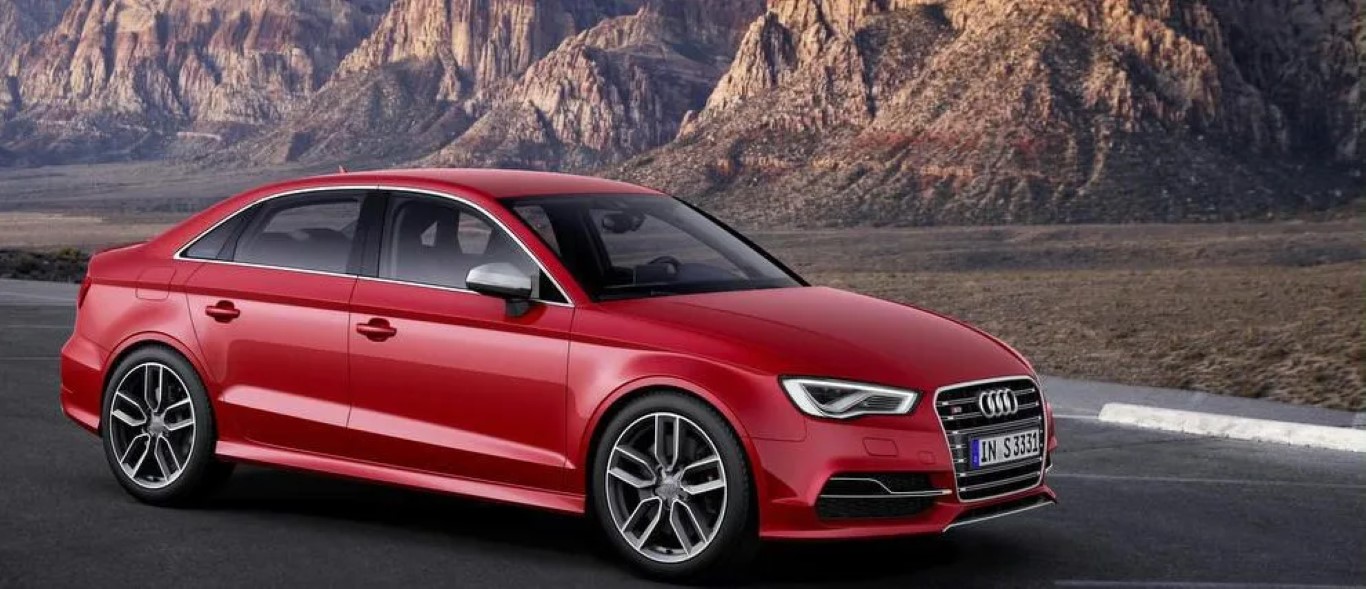
Technical specifications, versions, and history for the Audi S3 Sedan.
Select a generation to see available versions
(2014 - 2016)

(2017 - 2020)

(2020 - 2024)

(2024-)
Select a powertrain to view full technical specifications
The automotive landscape of the late 1990s was undergoing a significant transformation. While luxury segments were well established with large sedans and limousines, there was a notable gap in the market for compact vehicles that offered the same level of refinement, technology, and performance as their larger siblings. Audi, seeking to rejuvenate its image and attract a younger and more enthusiastic demographic, launched the A3 in 1996, based on the PQ34 platform. However, it was in 1999 that the Ingolstadt brand redefined the rules of the game with the launch of the Audi S3.
The S3 was not just a more powerful version of the A3; it represented the democratization of high-level performance combined with the safety of quattro all-wheel drive and premium build quality. This report examines, in exhaustive depth, the trajectory of this automotive icon through its four generations (8L, 8P, 8V, 8Y), detailing its technical specifications, production nuances, body style variations, and its specific reception in the Brazilian market. The analysis transcends the mere spec sheet to explore how each generation reflected and influenced global automotive engineering trends.
The first generation of the S3, internally designated as Typ 8L, hit the market in 1999, three years after the launch of the conventional A3. Audi's goal was clear: to create a "hot hatch" that was not only fast but also sophisticated, distancing itself from mainstream competitors like the Volkswagen Golf GTI or the Ford Escort RS Cosworth, which focused purely on raw performance or cost-benefit.
The design of the S3 8L followed the Bauhaus school of functionality and minimalism, but with added muscle. Unlike the A3, the S3 featured widened fenders to accommodate wider tracks, discreet yet assertive side skirts, and redesigned bumpers to house the dual intercoolers (a technical necessity that became a visual trait). Available exclusively as a 3-door hatchback, the model communicated a sporting purity and structural rigidity that the 5-door version (launched later for the regular A3) could not convey at the time.
The heart of the S3 8L is a fundamental piece in the history of compact internal combustion engines. It is a 1.8-liter, inline 4-cylinder engine with a turbocharger and a cylinder head featuring the distinct configuration of 5 valves per cylinder (3 intake and 2 exhaust), totaling 20 valves. This exotic configuration aimed to maximize volumetric efficiency at high RPMs, allowing the engine to "breathe" better.
The evolution of this engine during the 8L's lifecycle is divided into two distinct phases, crucial for collectors and enthusiasts:
The first models left the factory with engines calibrated to deliver 210 hp (154 kW) and 270 Nm of torque.
In a mid-life update, Audi introduced significant improvements. The engine received the BAM code, which would become legendary in the tuning community.
Unlike Audi's larger models (A4, A6), which used longitudinal engines and the purely mechanical Torsen center differential, the S3 8L had a transverse engine (due to the platform shared with the VW Golf). This required an innovative solution for all-wheel drive: the 1st Generation Haldex system.
This system was based on an oil-bathed multi-plate clutch located next to the rear differential. Under normal grip conditions, the S3 8L behaved predominantly as a front-wheel-drive car (approximately 95% of torque to the front axle). Upon detecting a rotation difference between the axles (wheel slip), a mechanical hydraulic pump generated pressure to close the clutch and transfer torque to the rear wheels. While effective for traction on slippery surfaces, the system was "reactive" — it required the slip to occur before correcting it.
The arrival of the S3 in Brazil was a milestone of status. Officially imported, the model consolidated the brand's premium image, which was already manufacturing the domestic A3 in Paraná. Brazilian units were typically "top of the line", equipped with electric Recaro seats, sunroof, and a Bose sound system. The 225 hp model (BAM engine) arrived in the country in its final years of production (2002-2003) and is extremely highly valued today by collectors due to its rarity and potential for mechanical tuning.
After a three-year hiatus without an "S" model in the A3 lineup (between 2003 and 2006), the second generation of the S3 (Typ 8P) was launched. The wait was justified by the complexity of the new PQ35 platform. This base brought massive structural advances, including laser welding of the bodywork for greater rigidity and, crucially, a four-link independent rear suspension. This resolved one of the main criticisms of the previous generation (which used a torsion beam on the base A3 and an adapted system on the S3), allowing for much more precise wheel control and superior ride comfort.
The S3 8P abandoned the 5 valves per cylinder in favor of direct fuel injection (FSI) with a turbocharger, configuring the 2.0 TFSI engine. It is vital to note the technical distinction here: while the regular A3 migrated to the EA888 engine family (with a timing chain) late in the decade, the S3 8P remained loyal to the EA113 family (with a timing belt) until the end of its production.
Initially launched only as a 3-door in 2006, Audi noticed a shift in consumer behavior. In 2008/2009, alongside the facelift, the S3 Sportback (5 doors) was introduced.
The 2008 update brought the redesigned "Singleframe" grille and headlights with the LED signature (DRL), which would become Audi's visual identity. Mechanically, the big news was the update to the 4th Generation Haldex system. Unlike Gen 1, Gen 4 abandoned the mechanical pump for an electric pre-pressure pump. This allowed the system to "arm" the rear-wheel drive even before the car moved, almost entirely eliminating initial wheel slip and improving corner-exit dynamics.
Although exact numbers are kept under corporate secrecy aggregated with the A3, it is known that the introduction of the Sportback more than doubled the sales volume of the S3 model globally. Special versions like the "Black Edition" began appearing late in the lifecycle, offering gloss black finishes on the grille and window surrounds, along with exclusive titanium "Rotor" design wheels.
The third generation represented a quantum leap in engineering. Based on the MQB platform (Modular Transversal Matrix), the S3 8V managed to reduce its weight by up to 60-70 kg compared to its predecessor, despite having grown in dimensions and safety equipment. The MQB allowed the engine to be positioned slightly further back and tilted backwards, improving weight distribution.
For the first time, the S3 lineup became a complete family of global models:
The S3 8V debuted the third generation of the 2.0 TFSI engine (CJX code). This engine was redesigned from scratch:
In Brazil, the launch of the S3 Sedan (August 2014) brought a technical specificity. Due to climatic conditions and possibly fuel quality or homologation strategies for "tropicalization," the engine was calibrated to deliver 280 hp (maintaining the 380 Nm of torque). Despite the nominal 20 hp reduction compared to the European model, practical performance remained brutal, achieving 0-100 km/h in 4.9 seconds. Later, with the facelift and the improvement of premium fuels in the country, the updated versions aligned more closely with the global numbers.
The interior of the 8V set new standards for minimalism and quality. The MMI system with a retractable electric screen cleared the dashboard when not in use. With the 2016 facelift, Audi introduced the Virtual Cockpit, a 12.3-inch digital instrument cluster.
The all-wheel-drive system evolved to the 5th Generation Haldex. Lighter and more compact than Gen 4 (without the pressure accumulator), it continued to offer traction on demand with millimeter reactions, although purists still criticized the tendency to understeer (pushing wide) at the limit of grip.
Launched in 2020, the 8Y generation broke with the discreet elegance of the 8V, adopting an aggressive stance inspired by RS models and even elements from Lamborghini (a sister brand within the group). The lines became sharp, the widened fenders ("Quattro Blisters") were emphasized, and the front grille adopted a massive honeycomb pattern. The body style offerings were streamlined to only Sportback and Sedan.
The cockpit underwent a radical transformation. Physical buttons were nearly eliminated. The 10.1-inch central screen with haptic feedback was integrated into the dashboard (no longer retractable). The traditional gear selector was replaced by a small shift-by-wire shifter (compact lever), freeing up space on the center console. This change sparked debates over tactile ergonomics versus visual modernity.
Initially, the S3 8Y (2020-2023) maintained the final 8V powertrain: 310 hp and 400 Nm, with Haldex Gen 6. However, the 2024 update (2025 model year) brought the biggest dynamic change in the model's history.
The 2024 facelift replaced the conventional Haldex rear differential with the Torque Splitter, a technology inherited from the RS3.
In the updated version (8.5Y), power was bumped to 333 hp (245 kW) and torque to 420 Nm. The DSG gearbox was also recalibrated for faster shifts under load, and the engine received a turbo "pre-loading" tweak in sports driving, keeping the turbine spinning at a constant speed even when the accelerator is momentarily lifted, ensuring instant response when accelerating again.
In the Brazilian market, the S3 8Y initially arrived with the 310 hp configuration. The Sedan version continues to be the preferred choice, fiercely competing with the BMW M235i Gran Coupé and the Mercedes-AMG A35. The arrival of the updated version with the Torque Splitter is strategic to differentiate the S3 as the option with the best driving dynamics in the segment, moving away from the image of "just a fast car in a straight line."
The following table presents a direct evolution of key specifications across generations, allowing for a clear visualization of Audi's engineering progress.
| Characteristic | S3 8L (Phase 1) | S3 8L (Phase 2) | S3 8P | S3 8V (Pre) | S3 8V (Post) | S3 8Y (Initial) | S3 8Y (Facelift 2024) |
|---|---|---|---|---|---|---|---|
| Years | 1999-2001 | 2001-2003 | 2006-2012 | 2013-2016 | 2016-2020 | 2020-2023 | 2024-Present |
| Engine | 1.8T 20V (APY/AMK) | 1.8T 20V (BAM) | 2.0 TFSI (BHZ/CDL) | 2.0 TFSI (CJX) | 2.0 TFSI (DJH) | 2.0 TFSI | 2.0 TFSI Evo4 |
| Power | 210 hp | 225 hp | 265 hp | 300 hp (280 BR) | 310 hp | 310 hp | 333 hp |
| Torque | 270 Nm | 280 Nm | 350 Nm | 380 Nm | 400 Nm | 400 Nm | 420 Nm |
| 0-100 km/h | 6.8s | 6.6s | 5.7s (Manual) | 4.9s | 4.6s | 4.8s | 4.7s |
| Drive | Haldex Gen 1 | Haldex Gen 1 | Haldex Gen 2/4 | Haldex Gen 5 | Haldex Gen 5 | Haldex Gen 6 | Torque Splitter |
| Gearbox | 6-speed Manual | 6-speed Manual | 6-spd Manual / 6-spd S-Tronic | 6-speed S-Tronic | 7-speed S-Tronic | 7-speed S-Tronic | 7-speed S-Tronic |
Audi does not routinely disclose S3 production numbers separately from the A3 lineup in its annual shareholder reports. However, analyzing registration data (such as in the UK, one of the largest markets for "S" models) reveals clear trends:
In Brazil, the S3 occupies a unique position. It serves as the gateway to the brand's high-performance lineup (sitting below the RS models).
The Audi S3 has come a long way since 1999. It started as a bold bet that the market would accept a small hatchback with the price tag of a large car, provided the engineering justified the cost. Four generations later, the bet proved correct. The S3 defined the segment, forced rivals like BMW and Mercedes-Benz to respond (with the M135i/M140i and the A35/A45 AMG), and democratized technologies such as direct-injection turbos and dual-clutch transmissions.
With the updated 8Y generation (8.5Y) adopting the Torque Splitter, the S3 finally resolves its most enduring criticism — the safe yet sterile driving dynamics — delivering a genuinely sporty experience. As the industry moves toward full electrification, current iterations of the S3, with their highly efficient and complex combustion engines, likely represent the pinnacle of this technology, ensuring its place in history as one of the most complete and competent cars ever produced.
Images of the Audi S3 Sedan