

B5
(1997 - 2002)
2.7 V6 twin-turbo
265 cv
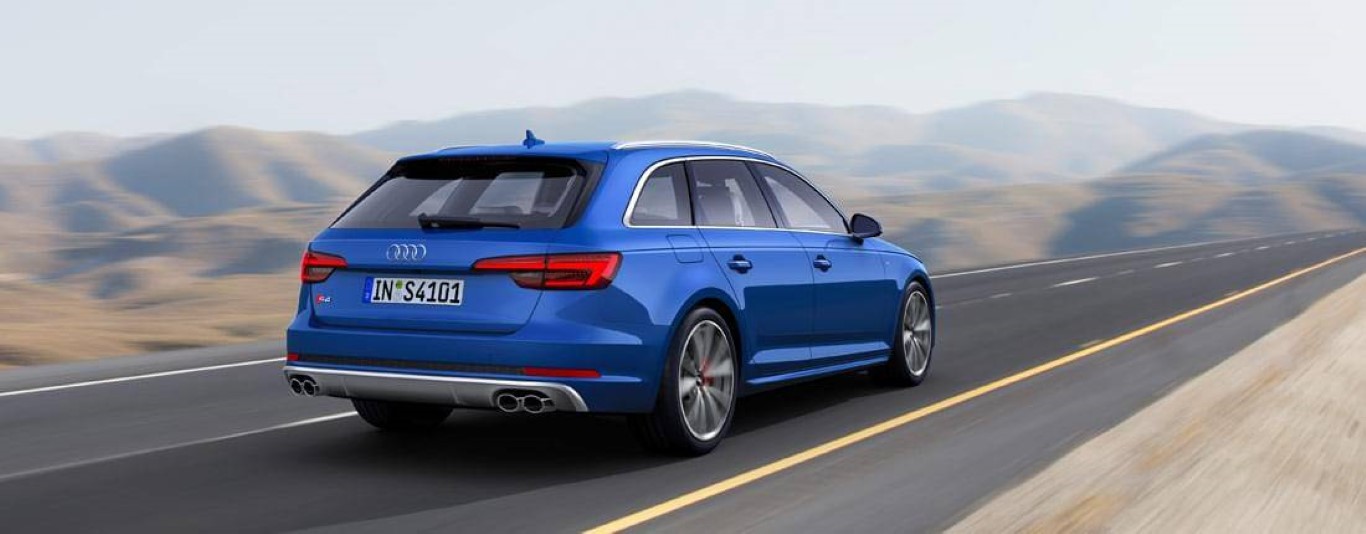
Technical specifications, versions, and history for the Audi S4 Avant.
Select a generation to see available versions
(1997 - 2002)

(2003 - 2005)

(2006 - 2008)

(2009 - 2011)

(2012 - 2017)
Select a powertrain to view full technical specifications
The trajectory of the Audi S4 is not just the chronological record of an automobile, but the reflection of Audi's own transformation from a niche brand to a global powerhouse in the premium segment. Strategically positioned between the rationality of the A4 line and the track-focused brutality of the RS (RennSport) line, the S4 carries the responsibility of being the sports car usable on a daily basis. The design philosophy that permeates all its generations is that of understatement — the visual discretion that hides an aggressive mechanical engineering, capable of rivaling supercars of their respective eras.
Since the early 1990s, the S4 badge has served as a rolling laboratory for the most crucial innovations of the Ingolstadt brand. It was through this model that Audi popularized the five-cylinder engine in luxury sedans, defied physics by installing V8 engines in compact engine bays, led the return to forced induction via mechanical superchargers, and, more recently, introduced mild hybridization and high-performance diesel propulsion.
This report exhaustively analyzes the S4 lineage, from its genesis on the C4 platform to the complex technological iterations of the B9.5 platform, detailing specifications, production numbers, and the nuances that define each generation in the global and Brazilian markets.
The first vehicle to bear the S4 badge was launched in August 1991. Known by purists and historians as the "Ur-S4" (from the German Ursprünglich, meaning original or primordial), this model was not derived from the Audi A4, which did not yet exist. It was, in fact, the high-performance version of the large Audi 100 sedan (C4 platform).
The Ur-S4's mission was to replace the Audi 200 Turbo Quattro and compete directly with the icons of the time: the BMW M5 (E34) and the Mercedes-Benz 500E. Audi's great strategic advantage lay in the Quattro all-wheel drive, offered as standard equipment, while its rivals relied exclusively on rear-wheel drive, making the S4 a superior option in adverse climates and winding roads.
Audi offered two distinct powertrains during the short lifecycle of the C4, creating an interesting bifurcation in the model's history.
The Legendary 5-Cylinder (AAN)
The most emblematic configuration used the 2.2-liter inline 5-cylinder engine with 20 valves and a turbocharger, designated by the code AAN. This engine was a direct evolution of the competition units that consecrated Audi in Group B rallying.
The Naturally Aspirated V8 (ABH)
In October 1992, aiming to attract the North American consumer and offer a more linear alternative to the turbo, Audi introduced the 4.2-liter V8 engine.
The Ur-S4 used a first-generation Quattro traction system with a Torsen (torque-sensing) center differential, capable of automatically varying the force between the front and rear axles. A rear differential with manual lock was standard equipment, allowing the driver to lock the rear axle via a button on the console for situations of getting stuck or deep snow — the system automatically disengaged above 25 km/h. Gearbox options included 5- or 6-speed manuals and a 4-speed automatic.
A frequent point of historical confusion occurs in 1994. Audi reorganized its nomenclature: the Audi 80 became the A4 and the Audi 100 became the A6. The C4 sports model, therefore, underwent slight aesthetic alterations and was renamed the Audi S6. Technically, the C4 S4 did not "die", but changed its name, leaving the "S4" nomenclature free to be reused three years later in the lower class.
The Ur-S4 production numbers are low, guaranteeing its current status as a collectible classic.
| Body Style | Production Period | Units Produced (Global) |
|---|---|---|
| Sedan | 1991 – 1994 | 9,286 |
| Avant | 1991 – 1994 | 4,654 |
| Total | 1991 – 1994 | ~13,940 |
Source: Data compiled from historical records.
After a hiatus, the S4 returned in 1997 based on the Audi A4's B5 platform. This change repositioned the car from the "large" segment to the "compact executive" segment, placing it in direct competition with the BMW M3 (E36 and later E46) and the Mercedes-Benz C36/C43 AMG. It was in this generation that the S4 cemented its global reputation as an extremely robust tuning platform.
Audi abandoned the five cylinders in favor of a 2.7-liter V6, equipped with two parallel turbochargers (one dedicated to each cylinder bank).
This flat torque curve ("torque table") differentiated the S4 from the M3, which required high revs to deliver performance. The S4 offered immediate power in any gear, making urban driving easier.
Originally, the B5 S4 accelerated from 0 to 100 km/h in 5.6 seconds (Manual Sedan). However, the 2.7T engine proved to be capable of handling double or triple the original power without opening the block.
Maintenance Challenge: The B5's engine bay is notoriously cramped. Replacing the turbos requires completely removing the engine from the chassis, a labor-intensive and expensive procedure.
Production of the B5 S4 Sedan ended in September 2001, although remaining sales occurred until 2002 in the US.
Special Colors: The model is famous for vibrant colors like Nogaro Blue (solid blue) and Imola Yellow. Colors like Pearl White, Cactus Green, and Hibiscus Red are extremely rare, representing less than 5% of total production.
Estimated Production (American Market - Sample):
In 2003, Audi responded to criticisms about the complexity and "turbo lag" of the V6 by introducing a naturally aspirated 4.2-liter V8 engine into the compact body of the B6. This decision transformed the car's character, giving it instant throttle response and a deep sound, typical of muscle cars.
To fit a V8 into the A4's short front overhang, Audi developed the BBK code engine, which was 52mm shorter than the brand's previous V8s.
Critical Maintenance Point: The rear location of the timing chain became the model's "Achilles' heel". When the chain guides or tensioners wear out (usually above 150,000 km), the engine must be removed from the car for repair, generating high labor costs.
The B6 expanded the versatility of the S4 line, being offered in three formats:
The S4 B7, launched in 2005, was not an entirely new design ("clean sheet"), but rather a profound restyling of the B6. The unibody structure and the 4.2L V8 engine (BBK) were maintained, but Audi focused on correcting the dynamic criticisms of the previous generation.
Visually, the B7 introduced the "Singleframe" front grille (single vertical frame), which would become the brand's visual signature for the following decades. The rear received split horizontal taillights and quadruple exhaust outlets.
The biggest technical change occurred "under the skin". In the B7 models (especially from 2006 onwards and in the 25quattro edition), Audi replaced the Torsen T-2 center differential (which split torque 50:50) with the new Torsen T-3.
To celebrate 25 years of Quattro traction, Audi launched an extremely limited edition in the US.
Important Note: Not to be confused with the "A4 DTM Edition", which was a 2.0 Turbo model with a similar look. The S4 25quattro had the V8 engine.
In 2009, the S4 migrated to the new MLP (Modular Longitudinal Platform) architecture. This architecture allowed the engine to be moved further back relative to the front axle, significantly improving weight distribution and dynamic balance. The V8 was retired in favor of a lighter and more efficient V6.
Despite the "T" badge on the fenders and the TFSI nomenclature, this engine is not a turbo. It uses a Roots-type mechanical supercharger (Eaton TVS) housed in the "V" of the engine.
The B8 marked the introduction of the 7-speed dual-clutch transmission (S-Tronic DL501), capable of shifting in milliseconds.
Sport Differential: A crucial option in this generation was the rear Sport Differential. Unlike passive systems, this differential actively vectors torque, accelerating the outer rear wheel in the corner to "push" the car's nose into the apex, eliminating almost all residual understeer.
The mid-life update (facelift) brought sharper headlights with continuous LED tubes and a new hexagonal grille.
Controversial Change: The hydraulic steering of the B8 was replaced by an electromechanical system in the B8.5. Although it saves fuel and allows for parking assistants, many enthusiasts criticized the loss of road feel (feedback).
Transmission: The mechatronic unit of the S-Tronic gearbox was revised, making the B8.5 significantly more reliable than the early B8s (2009-2010), which suffered from electronic gearbox failures.
At the end of production, Audi launched the Nogaro Selection version, paying homage to the RS2 and the B5 S4. These cars came in Nogaro Blue with a matching blue Alcantara interior and are highly valued on the used market today.
The S4 B9 abandoned the mechanical supercharger and returned to the turbocharger, adopting a new 3.0-liter V6.
Audi replaced the dual-clutch with a conventional 8-speed automatic transmission with a torque converter (ZF 8HP). The justification was smoothness at low speeds and the ability to handle the massive and immediate torque of the new turbo engine, which was at the tolerance limit of the old DSG gearbox.
The B9 debuted the Audi Virtual Cockpit, a fully configurable 12.3-inch digital dashboard that set the industry standard for instrumentation. The interior design became horizontal and minimalist.
In a surprising post-"Dieselgate" scandal maneuver, Audi decided to equip the S4 models sold in Europe with Diesel engines.
Outside Europe, the S4 kept the B9's V6 Turbo gasoline (TFSI) engine, receiving only the B9.5 facelift aesthetic updates: a new grille inspired by the classic Sport Quattro (with slits above the grille), new bumpers, and a touchscreen multimedia display, eliminating the rotary knob from the center console.
The history of the S4 in Brazil is intertwined with the figure of Ayrton Senna. Senna Import began official Audi operations in the country in 1994. The Ur-S4 (C4) was one of the image cars brought over to challenge the hegemony of BMW and Mercedes-Benz. There are records that Senna personally tested and approved the dynamics of the S line at Interlagos, helping to establish the brand's "technology and performance" image in the country.
The table below summarizes the technical evolution of the main S4 generations (Sedan version).
| Generation | Period (Global) | Engine | Type | Power (hp) | Torque (Nm) | 0-100 km/h | Main Gearbox |
|---|---|---|---|---|---|---|---|
| C4 (Ur-S4) | 1991–1994 | 2.2L I5 (AAN) | Turbo | 230 | 350 | 6.8s | Manual 5/6, Auto 4 |
| B5 | 1997–2001 | 2.7L V6 (AGB) | Bi-Turbo | 265 | 400 | 5.6s | Manual 6, Tip 5 |
| B6 | 2003–2005 | 4.2L V8 (BBK) | Naturally Aspirated | 344 | 410 | 5.0s | Manual 6, Tip 6 |
| B7 | 2005–2008 | 4.2L V8 (BBK) | Naturally Aspirated | 344 | 410 | 4.8s | Manual 6, Tip 6 |
| B8 / B8.5 | 2009–2016 | 3.0L V6 (CAKA) | Supercharged | 333 | 440 | 4.9s | S-Tronic 7 (DSG) |
| B9 | 2017–2019 | 3.0L V6 (CWGD) | Turbo (Hot-V) | 354 | 500 | 4.7s | ZF Auto 8 |
| B9.5 (EU) | 2020–Pres. | 3.0L V6 TDI | Diesel MHEV | 347 | 700 | 4.8s | ZF Auto 8 |
| B9.5 (BR) | 2020–Pres. | 3.0L V6 TFSI | Turbo | 354 | 500 | 4.4s | ZF Auto 8 |
The Audi S4 has consolidated itself as the paradigm of the "all-weather" sports sedan. While competitors focused purely on dry track lap times, the S4 prioritized traction and real-world usability. The evolution of its engines — from the charisma of the 5-cylinder to the massive torque of the modern Diesel, passing through the golden era of the V8 — demonstrates Audi's ability to reinvent itself technologically without losing the discreet and efficient identity that defines the S line. For the Brazilian market, the model remains one of the rare sports cars capable of handling the local infrastructure without sacrificing elite performance.
Images of the Audi S4 Avant