The Nomenclature Context: From 100 to A6
The history of the S6 begins in a period of profound restructuring of Audi's identity. In
1994, the brand decided to abandon the numerical nomenclature based on power or series
(such as Audi 80, 100) in favor of the "A" alphanumeric structure (A4, A6, A8). The Audi 100, a
pillar of the brand, was renamed the Audi A6. Consequently, the sporty version of the Audi
100, which since 1991 had been sold as the "Audi S4" (known by purists as the "Ur-S4" or
original S4), needed a new name to align with the new A6 series. Thus
the first Audi S6 was born.
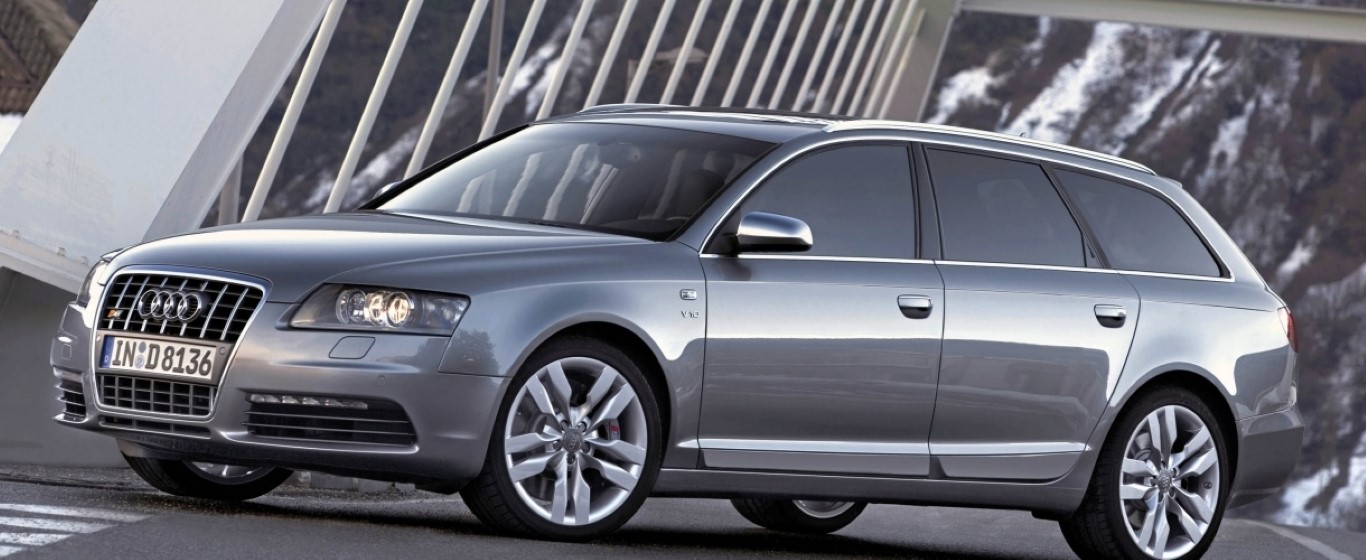
It is crucial to understand that the C4 S6 was not an entirely new car, but rather a technical
and aesthetic evolution of the C4 S4. The visual changes were subtle, removing the
black trim from the bumpers in favor of full body-color paint,
altering the headlights, and introducing new badges. However, under the skin,
the engineering continued to reflect the excessive robustness typical of Audi in the early
90s.
Engine Engineering: The Battle Between 5 and 8 Cylinders
The C4 generation of the S6 is unique in the model's history for offering two distinct
engine options, each with a radically different character, defining two subcultures
within the enthusiast community.
The Legendary Inline 5-Cylinder (AAN Code)
The most iconic and numerous powertrain of this period was the 2.2-liter, inline 5-cylinder,
20-valve, turbocharged engine, designated by the internal code "AAN".
This engine is a legend in mechanical engineering due to its direct connection with the engines
of Audi's Group B rally cars.
- Technical Specifications: The AAN produced 230 horsepower (169 kW) at
5,900 rpm and 350 Nm of torque at 1,950 rpm. The engine utilized a KKK
K24 turbocharger, a side-mounted intercooler, and a fully electronic Bosch
Motronic engine management system, advanced for the time.
- Dynamic Behavior: Power delivery was characterized by
noticeable "turbo lag" followed by an intense wave of torque. The engine sound,
a 1-2-4-5-3 firing sequence, produced a distinct guttural noise that became
Audi's auditory signature.
- Durability: The cast-iron block of the AAN engine is known to
withstand more than double its original power output without the need to reinforce the
internal components (pistons and connecting rods), making it extremely desirable in the
tuning market.
The Naturally Aspirated V8 (AEC Code)
To compete with the refinement of BMW (5 Series V8) and Mercedes-Benz (E-Class
V8) rivals, Audi also offered the S6 with a 4.2-liter V8 engine (AEC code).
- Differences: Unlike the explosive character of the turbo, the V8
offered a smooth and linear delivery of 290 horsepower (213 kW). It was the preferred
choice
for the executive client who prioritized autobahn comfort over
sporty aggressiveness. This engine was frequently coupled with a
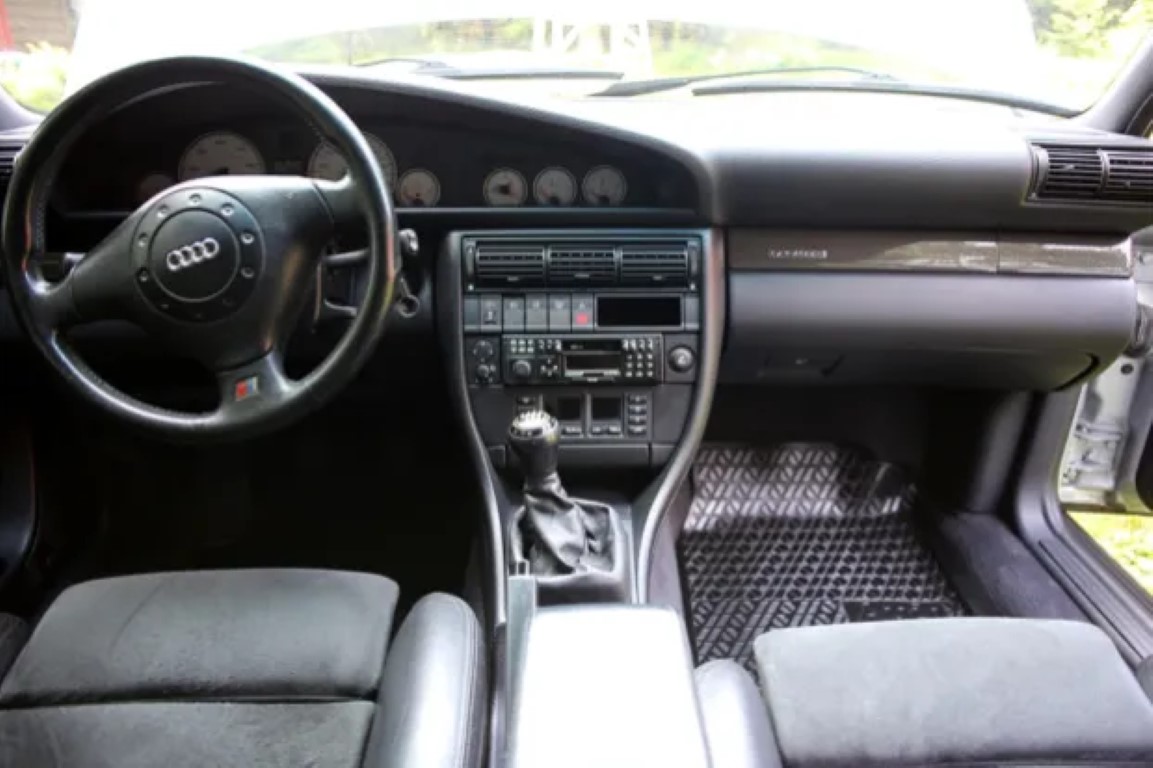
4-speed automatic transmission, although a 6-speed manual gearbox
was an option.
The Quattro Drivetrain and Transmission
Quattro permanent all-wheel drive was mandatory standard equipment. In this generation,
the system utilized a Type 1 or Type 2 Torsen (Torque Sensing) center differential,
depending on the year of manufacture. This purely mechanical system had the ability to
vary torque distribution between the front and rear axles instantaneously,
based on available grip, without the latency of Haldex clutch-based electronic
systems that would later equip smaller Audi models.
The 6-speed manual transmission (code 01E) is famous for its industrial robustness.
The first gear was short for quick launches, while the sixth gear served as an
"overdrive" for high-speed fuel economy.
The Historical Rarity: The Audi S6 Plus
At the end of the C4 platform's life cycle (1996-1997), Audi produced a final farewell
version, developed not by the main assembly line, but by its
high-performance subsidiary, quattro GmbH (precursor to today's Audi Sport GmbH).
This model was named the S6 Plus.
- AHK Engine: The S6 Plus received a highly modified version of the 4.2-liter
V8, raising power to 326 horsepower (240 kW). This was achieved
through new camshafts, larger intake valves, and a higher compression
ratio (11.6:1).
- Exclusivity: The S6 Plus was sold only with a 6-speed manual transmission
featuring shorter ratios in the upper gears to maximize
acceleration.
- Limited Production: Production numbers are extremely low,
making it one of the rarest Audis in history.
- Total: 952 units.
- Avant: 855 units.
- Sedan: 97 units.
The disparity between Avant and Sedan production clearly demonstrates the historical
S6 buyer's preference for the versatility of the station wagon body style, a trend that
would continue in future generations.
Estimated Production Table: C4 Generation
| Model |
Period |
Body Style |
Units Produced (approx.) |
| S4 (C4) |
1991–1994 |
Sedan |
9,286 |
| S4 (C4) |
1991–1994 |
Avant |
4,654 |
| S6 (C4) |
1995–1997 |
Sedan |
3,231 |
| S6 (C4) |
1995–1997 |
Avant |
3,724 |
| S6 Plus |
1996–1997 |
Sedan |
97 |
| S6 Plus |
1996–1997 |
Avant |
855 |