D2
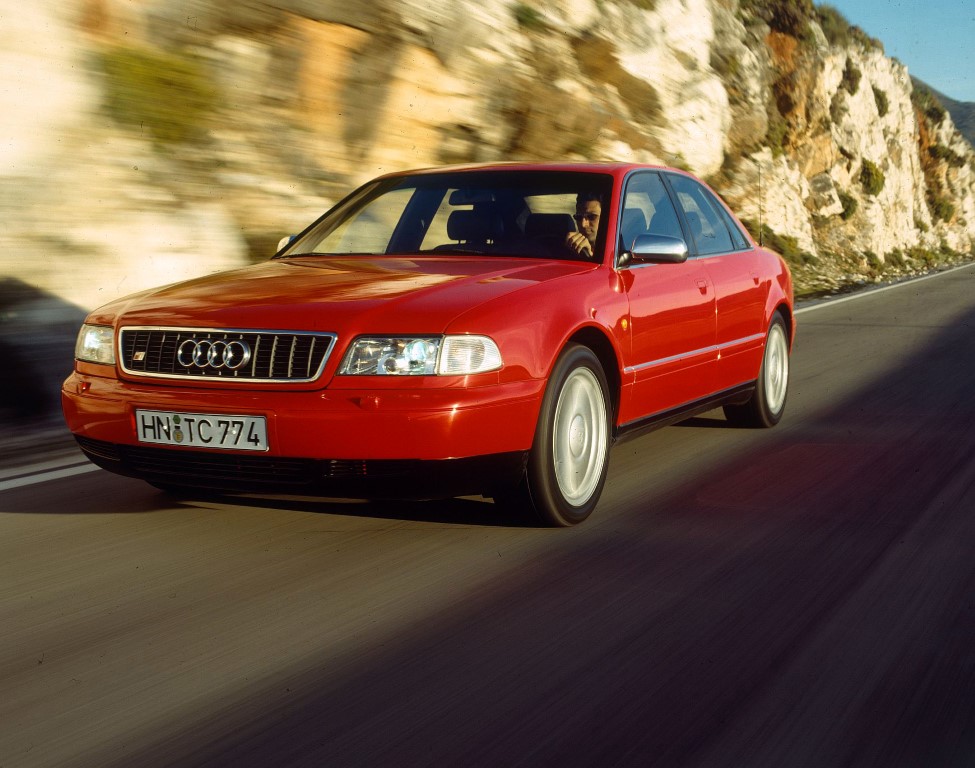
(1996 - 1999)
4.2 V8
340 cv

Technical specifications, versions, and history for the Audi S8.
Select a generation to see available versions
(1996 - 1999)

(1999 - 2002)
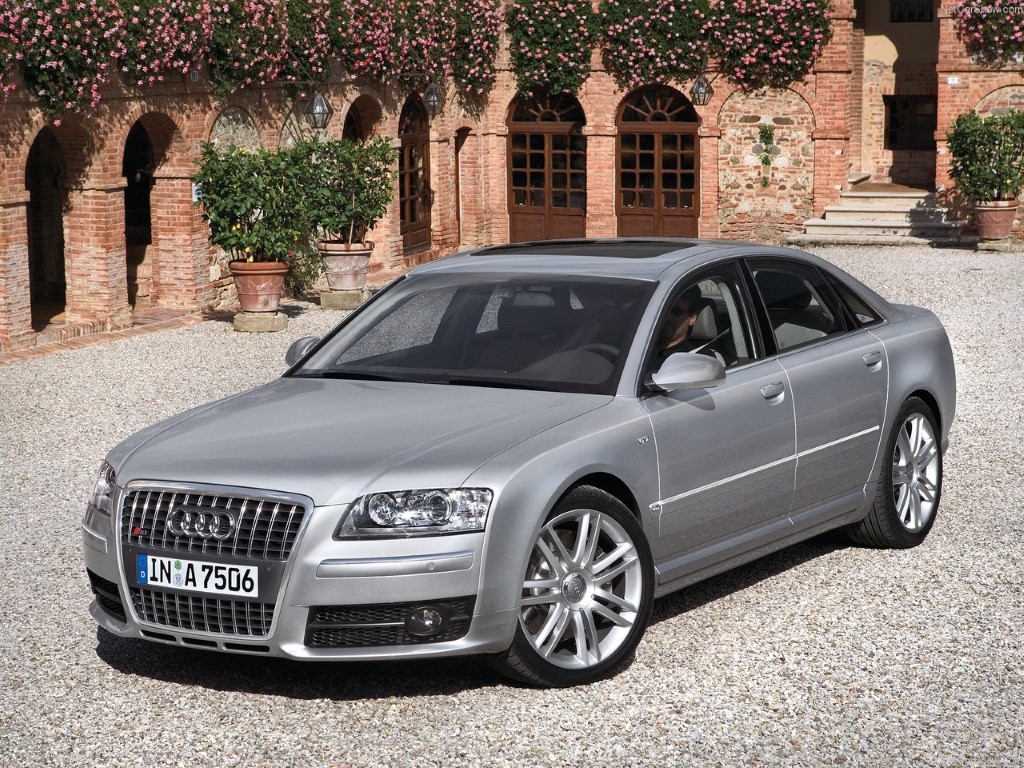
(2005 - 2008)
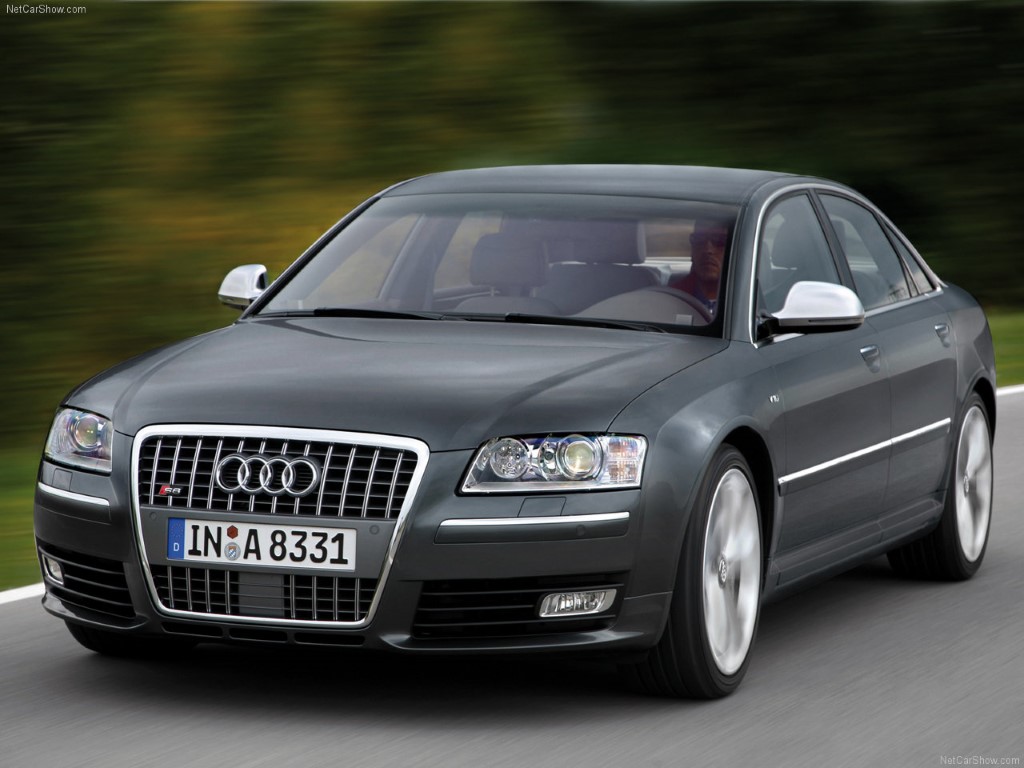
(2008 - 2011)
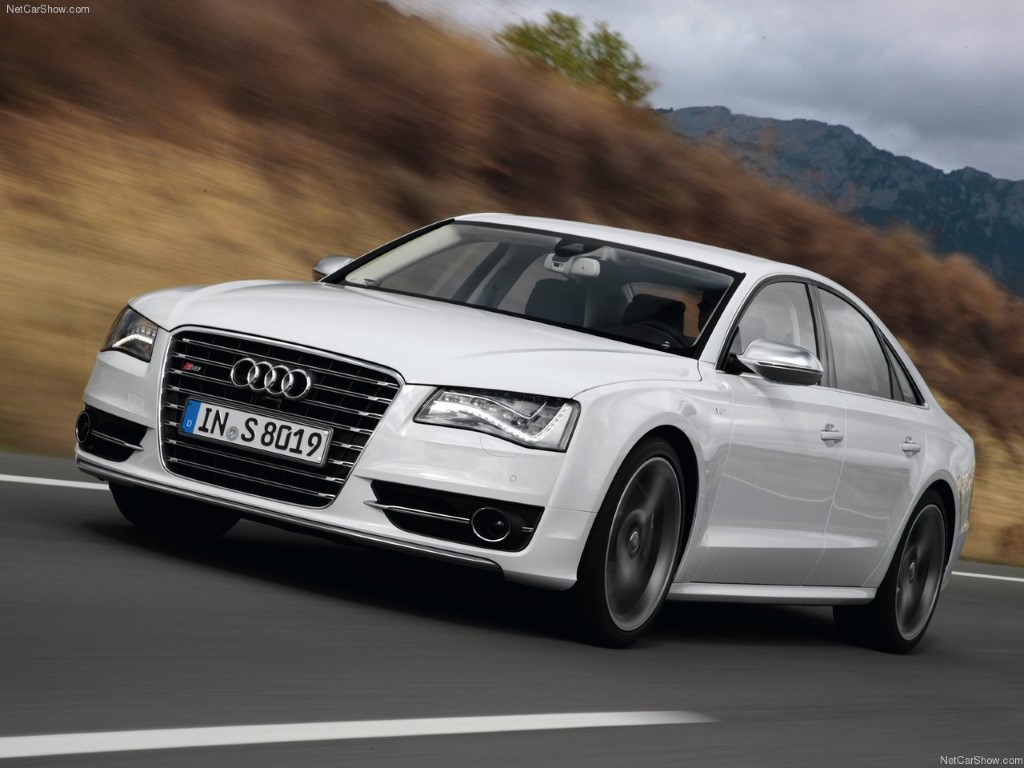
(2012 - 2013)
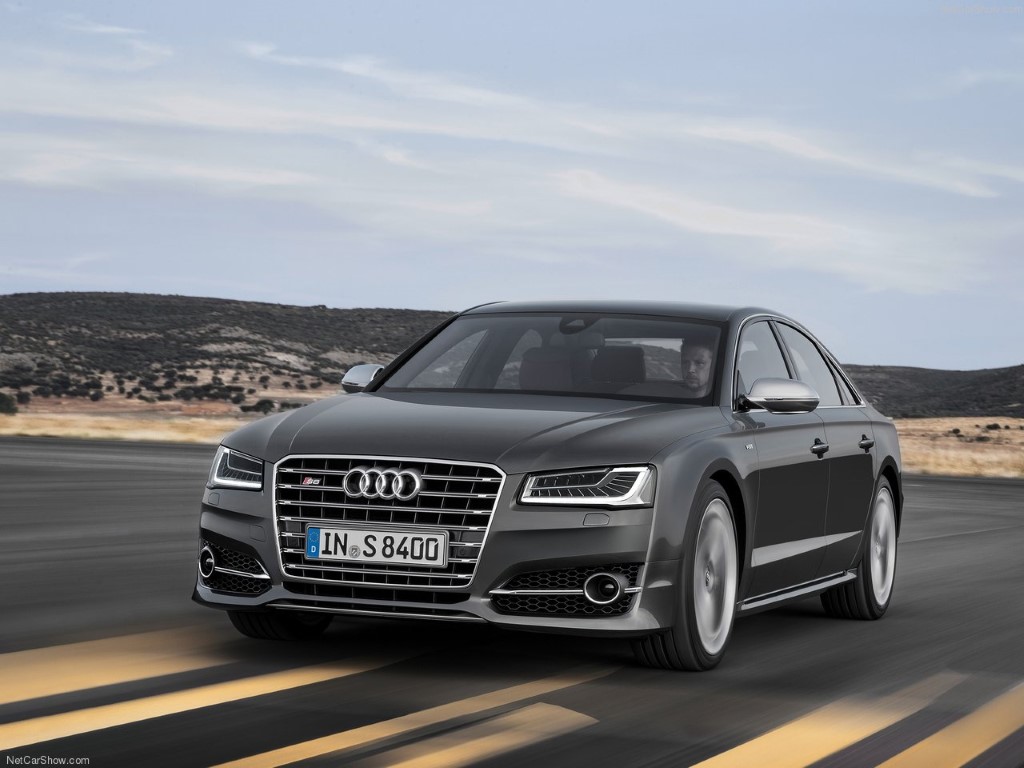
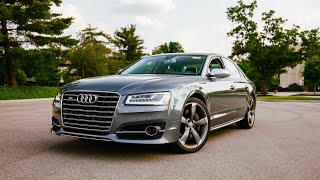
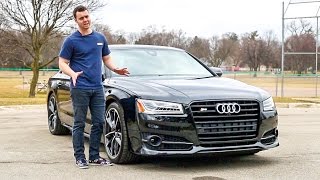
(2014 - 2017)

(2019 - 2021)
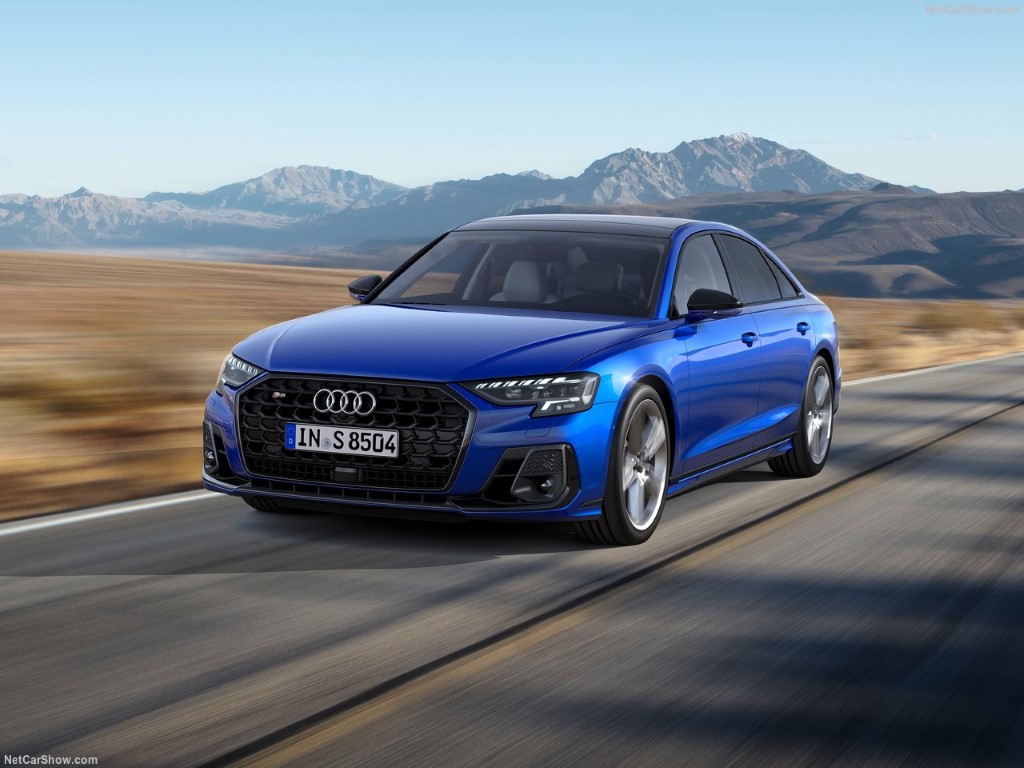
(2022-)
The history of the luxury automobile at the end of the 20th century was marked by a clear dichotomy: on one side, the supreme comfort and isolation offered by traditional brands; on the other, the raw performance of sports vehicles. Audi, in a strategic attempt to redefine its position in the global prestige market, challenged this separation with the launch of the S8 line. This report analyzes the trajectory of this iconic model, which not only served as the engineering standard-bearer for the Ingolstadt brand, but also introduced fundamental technologies that would shape the industry, such as the Audi Space Frame (ASF) construction and direct injection in high-displacement engines.
The S8 was not conceived merely as a more powerful version of the A8 sedan. It was an engineering exercise focused on solving the inherent problem of large luxury sedans: weight. While Mercedes-Benz (S-Class) and BMW (7 Series) relied on conventional steel and massive displacement engines to guarantee performance, Audi opted for an approach of "intelligent lightweighting". The extensive use of aluminum, combined with the quattro all-wheel-drive system, created a unique value proposition — a car capable of transporting executives with maximum comfort, but with the agility and grip of a rally vehicle on winding roads.
This document dissects the four generations of the model (D2, D3, D4, and D5), exploring the mechanical nuances, design decisions, production numbers, and the cultural impact of each iteration. The analysis is based on technical data, sales reports, and expert reviews to provide a comprehensive overview of the S8's evolution.
The launch of the original Audi S8 in 1996 (1997 model year in some markets) was the culmination of more than a decade of research and development initiated by Ferdinand Piëch. The basis of the S8, the D2 platform, was the first mass-production application of the Audi Space Frame technology. Unlike traditional steel monocoque construction, where stamped panels bear the load, the ASF uses a structure of extruded and die-cast aluminum beams and nodes, to which the body panels are then attached.
This architecture gave the S8 D2 exceptional torsional rigidity for its time, fundamental for dynamic behavior and acoustic isolation. More importantly, it allowed for a drastic weight reduction. The S8 D2 weighed approximately 1,730 kg. To put this number into perspective, its contemporary competitors equipped with V8 engines and rear-wheel drive (without the additional weight of front and center differentials) frequently weighed the same or more. This weight advantage was crucial to offset the mass of the quattro all-wheel-drive system, allowing the S8 to maintain an agility that belied its dimensions of more than 5 meters.
The heart of the S8 D2 was always a naturally aspirated 4.2-liter V8 engine, but its technical configuration evolved significantly during the model's lifecycle, dividing production into two distinct phases.
In the early years of production, the S8 was equipped with the AHC or AKH code engine. This aluminum block used a four-valve-per-cylinder configuration (32 valves in total) and dual overhead camshafts (DOHC).
In 1999, coinciding with a visual facelift, the engine received a profound technical update. Audi introduced cylinder heads with five valves per cylinder (three intake and two exhaust), totaling 40 valves. This motorsport-derived technology aimed to improve the engine's 'breathing' at high RPMs and combustion efficiency.
The fourth-generation quattro system used in the S8 D2 was based on a Torsen (torque-sensing) center differential. Under normal grip conditions, the power distribution was 50:50 between the front and rear axles. This mechanical and permanent configuration provided unwavering safety in adverse weather conditions, a significant competitive advantage against rear-wheel-drive rivals from BMW and Mercedes-Benz, which at the time relied heavily on intrusive electronic traction controls.
The S8's suspension was lowered by 20 mm compared to the standard A8 and equipped with 30-40% stiffer springs and shock absorbers. Thicker anti-roll bars reduced body roll in corners. The result was a 'large sedan' that behaved like a compact sports car. The steering, although sometimes criticized for being too light at low speeds (a characteristic of the Servotronic assistance of the time), gained weight and precision with speed.
The design of the S8 D2 is frequently cited as one of the high points of Audi aesthetics. Under the direction of Hartmut Warkuss, the lines were clean, without unnecessary adornments. The differentiation of the S8 model was subtle, known internally as the 'Wolf in Sheep's Clothing' principle:
One of the most unique aspects of the S8 D2 is the existence of a version with a 6-speed manual transmission.
It is impossible to narrate the history of the S8 D2 without mentioning the film Ronin (1998), directed by John Frankenheimer. The film presented the S8 as the ultimate getaway vehicle in one of the most realistic car chases in cinema history. The scenes demonstrated the S8's ability to maneuver through narrow Paris streets and dirt roads, cementing its reputation for durability and performance. The director specifically chose the car for its ability to gain traction on slippery surfaces where other rear-wheel-drive cars would fail.
Production of the S8 D2 ended in September 2002, although sales continued into 2003 in some markets to clear stock. The total production volume of the D2 chassis (A8 and S8 combined) surpassed 100,000 units, but the S8 represented a high-performance niche, with estimated numbers in the low tens of thousands globally over 7 years.
After a three-year hiatus, the successor to the S8 arrived in 2006 with a different mission. The market had changed; competitors like the BMW M5 (E60) had adopted Formula 1-inspired V10 engines. Audi, now the owner of Lamborghini, decided to leverage this synergy to create an engine that would define the D3 generation.
The engine of the S8 D3 is often called the "Gallardo engine", a simplification that hides a fascinating and distinct engineering.
Crucial Differences:
Unlike the D2, which used conventional coil springs, the S8 D3 adopted Adaptive Air Suspension as standard. However, for the S model, Audi developed a specific "Sport" calibration.
The D3 introduced the deep trapezoidal "Singleframe" grille that became the face of modern Audi. On the S8, this grille featured dual vertical chrome bars ("platinum grey"), distinguishing it from the A8.
The S8 D3 was produced between 2006 and 2010. US sales data shows that the best years for the A8/S8 family in this generation were 2006 and 2007, with about 5,000 to 3,800 units sold annually (range total). The S8, being the top of the line (only below or alongside the W12 in price), represented a smaller slice, making it a relatively exclusive vehicle. The complexity of the V10 engine and the associated maintenance costs kept this model as a choice for connoisseurs, limiting its massification in the used market.
With the tightening of global emissions standards and the need for greater fuel efficiency, the era of large naturally aspirated engines came to an end. For the D4 generation, launched in 2012, Audi replaced the 5.2 V10 with a 4.0-liter Biturbo V8 engine (TFSI).
Although smaller in displacement, this engine was technologically superior in all practical aspects:
The S8 D4 redefined what was expected of a sedan's acceleration. Thanks to the 8-speed automatic transmission (ZF 8HP) and the instantaneous torque of the turbos (located in the "V" of the engine to reduce lag, a configuration known as "Hot V"), the car accelerated from 0 to 100 km/h in an official 4.1 seconds. Independent tests frequently recorded times in the 3.5-second range, putting it side-by-side with dedicated supercars.
In 2015, the lineup received an aesthetic update (new Matrix LED headlights with dynamic turn signals). But the big news was the introduction of the Audi S8 Plus in 2016, which effectively replaced the standard S8 in many markets.
Despite the staggering performance, the D4 presented specific maintenance challenges documented by experts.
The current S8 (D5) was launched as a 2020 model and represents the total integration of digitalization in the automobile. The interior abandoned almost all physical buttons in favor of a dual touchscreen system with haptic feedback.
A crucial change in this generation was the body style strategy. For the first time, in key markets such as the United States and China, the S8 began to be sold exclusively in the long-wheelbase (LWB) version, recognizing that the buyer profile had shifted from "enthusiast driver" to "executive who occasionally drives". In Europe, the short-wheelbase version remained available, maintaining the sporty tradition.
The 4.0 TFSI V8 engine was retained but profoundly revised.
The great technical differentiator of the S8 D5 is the Predictive Active Suspension.
To compensate for the increase in size (especially in the long version), the S8 D5 comes equipped as standard with Dynamic All-Wheel Steering. At low speeds, the rear wheels turn in the opposite direction to the front wheels, reducing the turning radius and making parking easier. At high speeds, they turn in the same direction, increasing stability during lane changes.
2022 Facelift: The model received a new front grille with "L"-shaped elements, new Matrix LED digital light signatures, and OLED taillights that change design according to the selected driving mode (Dynamic, Comfort, etc.).
The Future: Reports indicate that the 2025 or 2026 model year will mark the end of the internal combustion engine S8. Audi has announced that it will not develop new V8 engines, and the D-segment successor (possibly called A8 e-tron or similar) will be fully electric, ending a lineage of almost 30 years of gasoline V8 and V10 engines.
Audi does not disclose isolated production numbers for the S8 variant, integrating them into the A8 family reports. However, analyzing US sales data allows us to infer the model's exclusivity:
The following table summarizes the technical evolution of the model, allowing a direct comparison of performance and engineering metrics.
| Characteristic | Generation D2 (1996-2003) | Generation D3 (2006-2010) | Generation D4 (2012-2018) | Generation D5 (2019-Present) |
|---|---|---|---|---|
| Engine | 4.2L V8 (32v / 40v) | 5.2L FSI V10 | 4.0L TFSI Biturbo V8 | 4.0L TFSI MHEV V8 |
| Power | 340 hp / 360 hp | 450 hp | 520 hp / 605 hp (Plus) | 571 hp |
| Torque | 410 Nm / 430 Nm | 540 Nm | 650 Nm / 750 Nm (Plus) | 800 Nm |
| 0-100 km/h | 6.2s / 5.4s (Manual) | 5.1s | 4.1s / 3.8s (Plus) | 3.8s |
| Weight (approx.) | 1,730 kg | 1,940 kg | 2,065 kg | 2,230 kg |
| Transmission | 5-Spd Auto / 6-Spd Manual | 6-Spd Tiptronic | 8-Spd Tiptronic | 8-Spd Tiptronic |
| Suspension | Sport Coil Springs | Adaptive Air (Sport) | Adaptive Air (Sport) | Predictive Active |
| Chassis | Aluminum (ASF) | Aluminum (ASF II) | Aluminum (ASF III) | Aluminum + Steel + Magnesium |
The history of the Audi S8 is the chronicle of the evolution of German engineering. The model began (D2) as a demonstration of mechanical purity and lightness, proving that aluminum was the future. It evolved (D3) to embrace exoticism and multi-cylinder complexity in an era of economic excess. It adapted (D4) to the need for efficiency through turbo technology, reaching performance levels that defied physics. And, finally (D5), it transformed into a computer on wheels, where predictive suspension and hybridization define the experience.
For the enthusiast or collector, each generation offers a distinct value proposition. The D2 is the analog classic; the D3 is the mechanical symphony; the D4 is the highway missile; and the D5 is the technological sanctuary. With the imminent end of internal combustion in Audi's top lineup, the S8 will remain as a lasting testament to an era when a limousine could legitimately be called a sports car.