The Audi Space Frame (ASF) Concept
The launch of the original Audi S8 in 1996 (1997 model year in some markets) was the culmination of
more than a decade of research and development initiated by Ferdinand Piëch. The basis of the S8, the D2
platform, was the first mass-production application of the Audi Space Frame technology. Unlike traditional
steel monocoque construction, where stamped panels bear the load, the ASF uses a structure of extruded and
die-cast aluminum beams and nodes, to which the body panels are then attached.
This architecture gave the S8 D2 exceptional torsional rigidity for its time, fundamental for dynamic
behavior and acoustic isolation. More importantly, it allowed for a drastic weight reduction. The S8 D2
weighed approximately 1,730 kg. To put this number into perspective, its contemporary competitors equipped
with V8 engines and rear-wheel drive (without the additional weight of front and center differentials)
frequently weighed the same or more. This weight advantage was crucial to offset the mass of the quattro
all-wheel-drive system, allowing the S8 to maintain an agility that belied its dimensions of more than 5
meters.
Evolution of the 4.2-Liter V8 Engine
The heart of the S8 D2 was always a naturally aspirated 4.2-liter V8 engine, but its technical
configuration evolved significantly during the model's lifecycle, dividing production into two distinct
phases.
Phase 1: The 32-Valve Engine (1996–1999)
In the early years of production, the S8 was equipped with the AHC or AKH code engine. This aluminum
block used a four-valve-per-cylinder configuration (32 valves in total) and dual overhead camshafts (DOHC).
- Performance: It produced 340 hp (250 kW; 335 bhp) and required high revs to
deliver its maximum potential.
- Behavior: The power delivery was linear, but critics noted that the engine
needed to be 'worked' above 4,000 rpm to clearly distinguish itself from the standard A8 4.2 V8.
- Transmission: During this period, the car was available with a 5-speed ZF
automatic transmission (Tiptronic) or, in the European market, with a 6-speed manual gearbox.
Phase 2: The 40-Valve Engine (1999–2003)
In 1999, coinciding with a visual facelift, the engine received a profound technical update. Audi
introduced cylinder heads with five valves per cylinder (three intake and two exhaust), totaling 40 valves.
This motorsport-derived technology aimed to improve the engine's 'breathing' at high RPMs and combustion
efficiency.
- Power Gains: Power rose to 360 hp (265 kW; 369 PS) in Europe, with a
corresponding increase in throttle response.
- Acceleration: The 0 to 100 km/h time dropped significantly. The manual
version, now even more desirable, could hit the mark in about 5.4 to 5.5 seconds, while the automatic
recorded 6.6 seconds in conservative measurements or 5.6 seconds in updated ideal conditions.
- Reliability: This 40-valve engine proved to be robust, capable of
withstanding high mileages (over 300,000 km) if the maintenance of the timing belts and tensioners was
rigorous.
The Drivetrain System and Driving Dynamics
The fourth-generation quattro system used in the S8 D2 was based on a Torsen (torque-sensing) center
differential. Under normal grip conditions, the power distribution was 50:50 between the front and rear
axles. This mechanical and permanent configuration provided unwavering safety in adverse weather conditions,
a significant competitive advantage against rear-wheel-drive rivals from BMW and Mercedes-Benz, which at the
time relied heavily on intrusive electronic traction controls.
The S8's suspension was lowered by 20 mm compared to the standard A8 and equipped with 30-40% stiffer springs
and shock absorbers. Thicker anti-roll bars reduced body roll in corners. The result was a 'large sedan'
that behaved like a compact sports car. The steering, although sometimes criticized for being too light at
low speeds (a characteristic of the Servotronic assistance of the time), gained weight and precision with
speed.
Exterior and Interior Design: Discretion as a Virtue
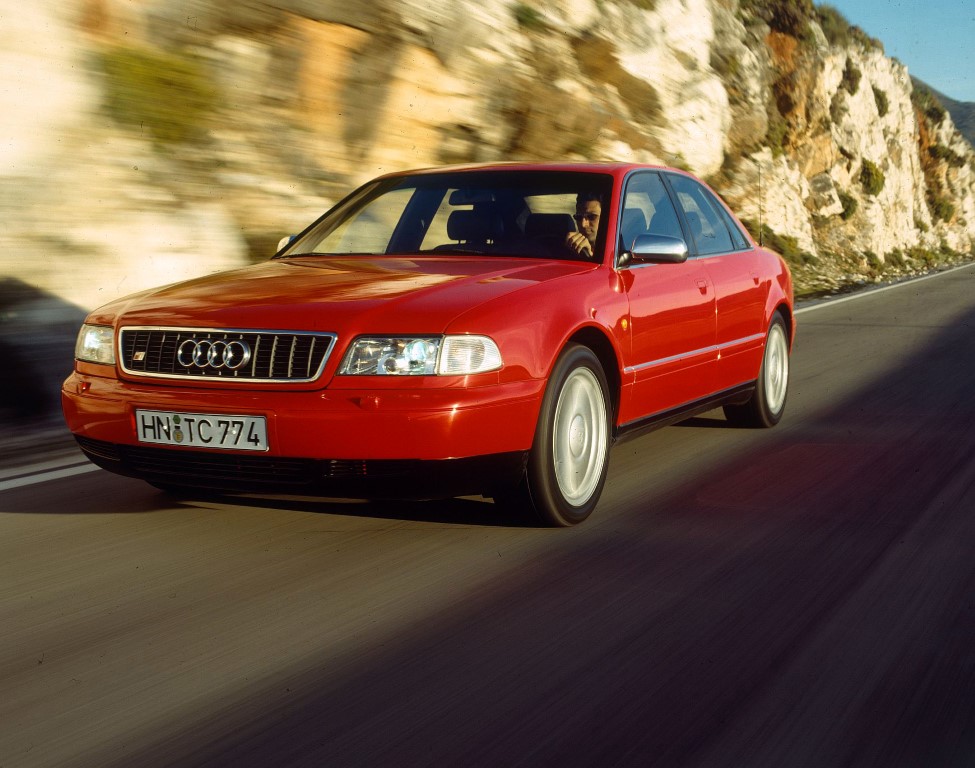
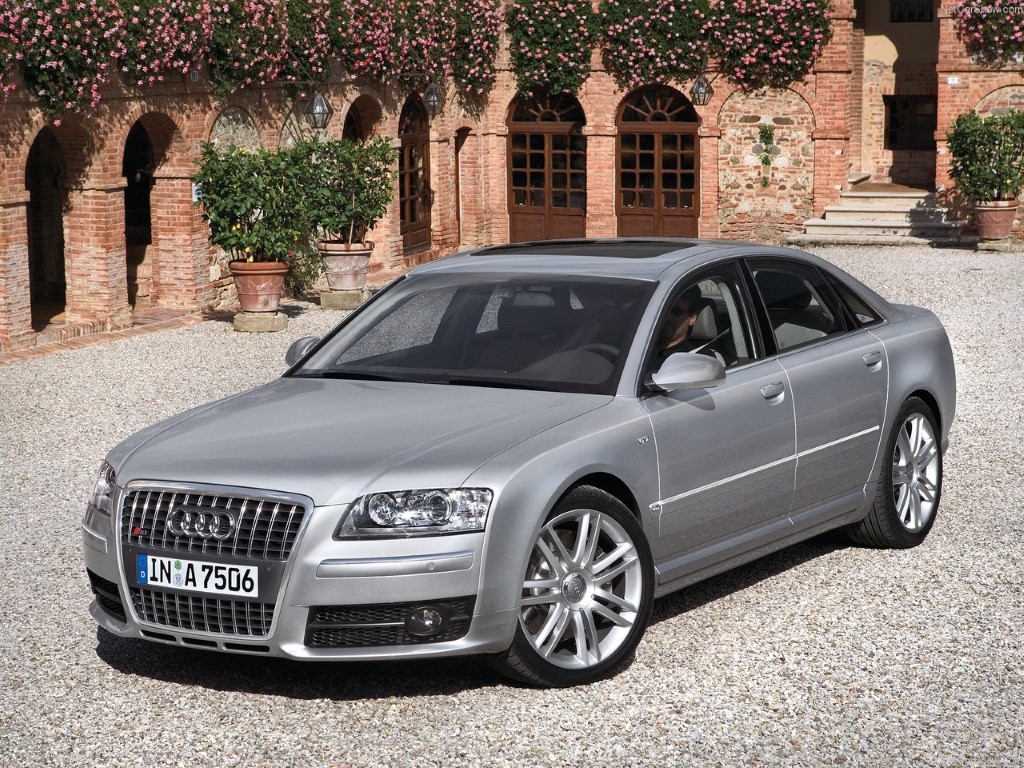
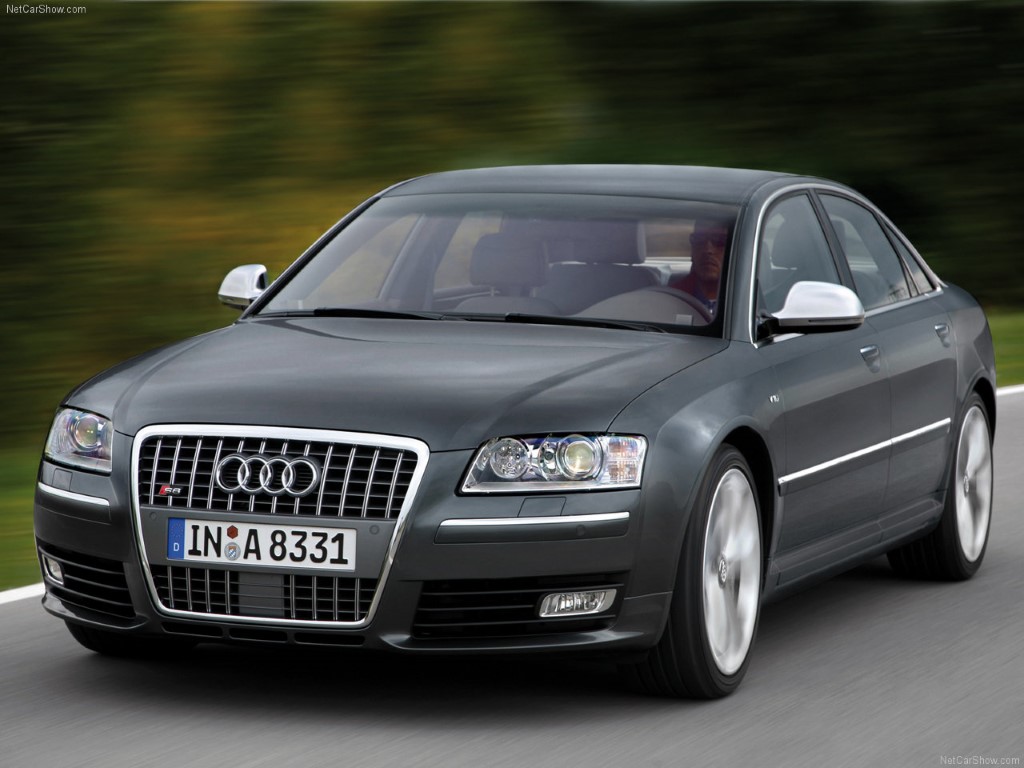
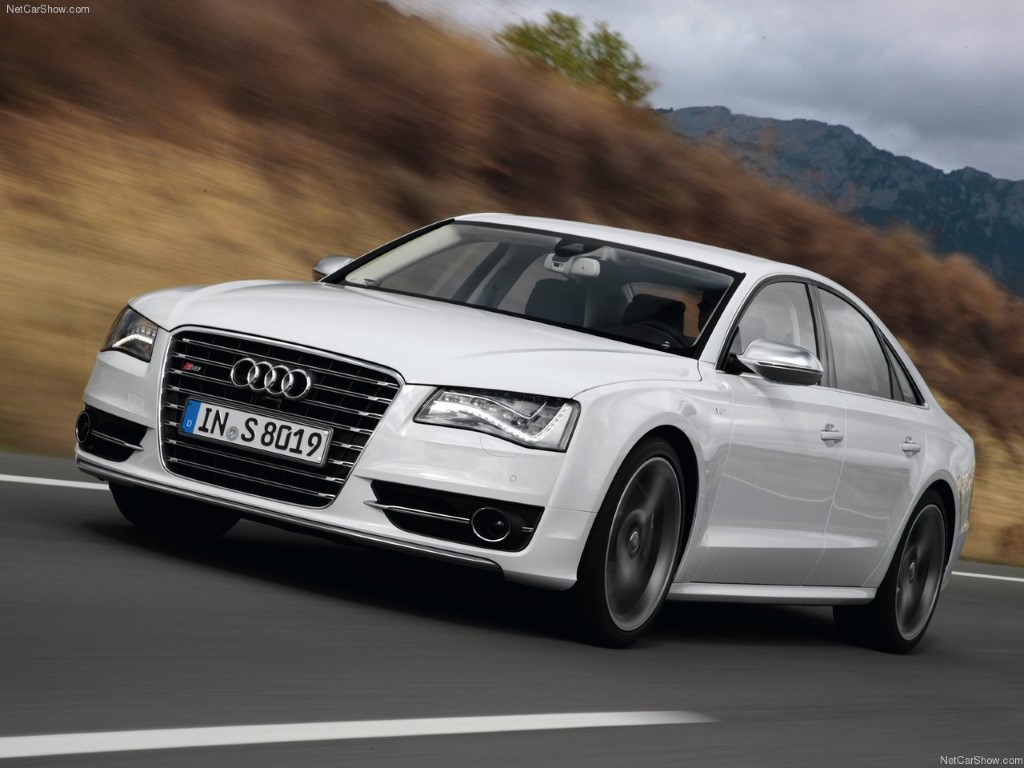
The design of the S8 D2 is frequently cited as one of the high points of Audi aesthetics. Under the
direction of Hartmut Warkuss, the lines were clean, without unnecessary adornments. The differentiation of
the S8 model was subtle, known internally as the 'Wolf in Sheep's Clothing' principle:
- Aluminum Mirrors: The solid aluminum rearview mirror caps (not painted
plastic in the early units) became an immediate visual signature of the S and RS line.
- Avus Wheels: The 18-inch six-spoke alloy wheels ('Avus' style) were
exclusive and became iconic.
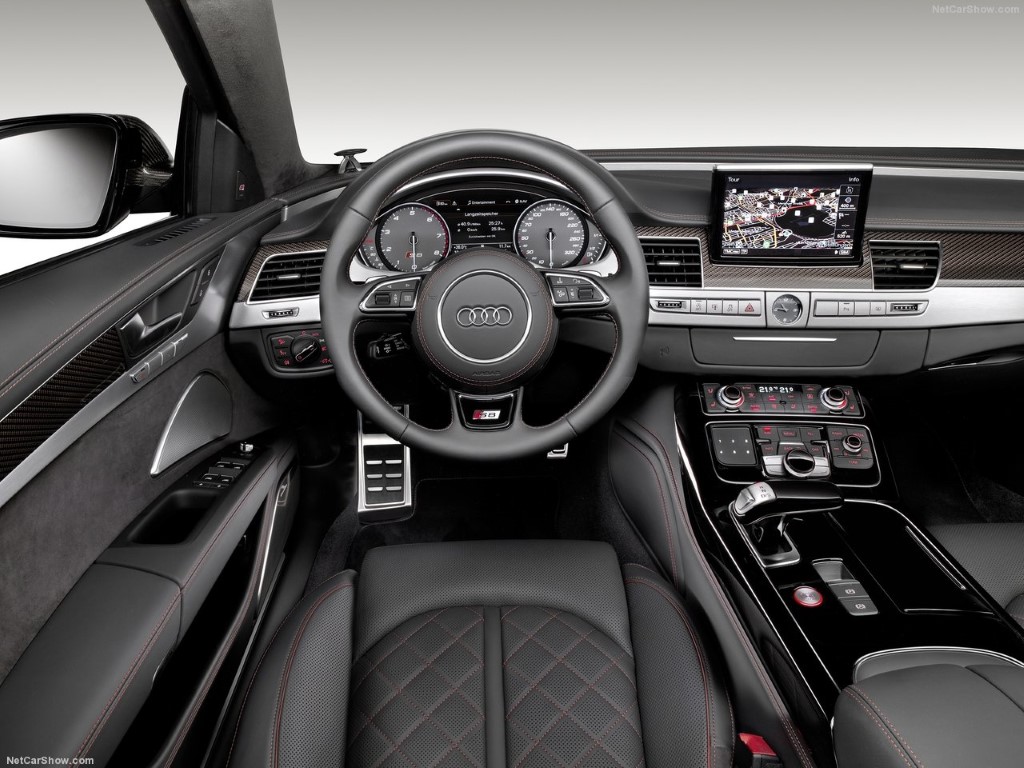
- Interior: The cabin focused on ergonomics and material quality. Recaro
sports seats with multiple power adjustments, a three-spoke sports steering wheel, and carbon fiber or
high-density wood trims were standard. The instrument panel maintained analog clarity, with the red
lighting characteristic of Audi Sport.
The Manual Transmission: The Production 'Unicorn'
One of the most unique aspects of the S8 D2 is the existence of a version with a 6-speed manual
transmission.
- Availability: This option was offered almost exclusively in European
markets. North America (USA and Canada) received only the 5-speed Tiptronic automatic transmission.
- Driving Experience: The manual gearbox radically transformed the character
of the car. It allowed the driver to explore the V8's rev range up to the 7,000 rpm limiter and offered
direct control over the vehicle's mass transfer. Today, these units represent a minuscule fraction of
the used market and command significant premium prices.
- Numbers: Although Audi does not publish the exact breakdown, enthusiast
estimates and club records suggest that manual versions account for less than 10-15% of total S8 D2
production, making them extremely rare.
Cultural Impact: The Ronin Effect
It is impossible to narrate the history of the S8 D2 without mentioning the film Ronin (1998),
directed by John Frankenheimer. The film presented the S8 as the ultimate getaway vehicle in one of the most
realistic car chases in cinema history. The scenes demonstrated the S8's ability to maneuver through narrow
Paris streets and dirt roads, cementing its reputation for durability and performance. The director
specifically chose the car for its ability to gain traction on slippery surfaces where other
rear-wheel-drive cars would fail.
Production and Market Summary (D2)
Production of the S8 D2 ended in September 2002, although sales continued into 2003 in some markets
to clear stock. The total production volume of the D2 chassis (A8 and S8 combined) surpassed 100,000 units,
but the S8 represented a high-performance niche, with estimated numbers in the low tens of thousands
globally over 7 years.