8N
(2000-2002)
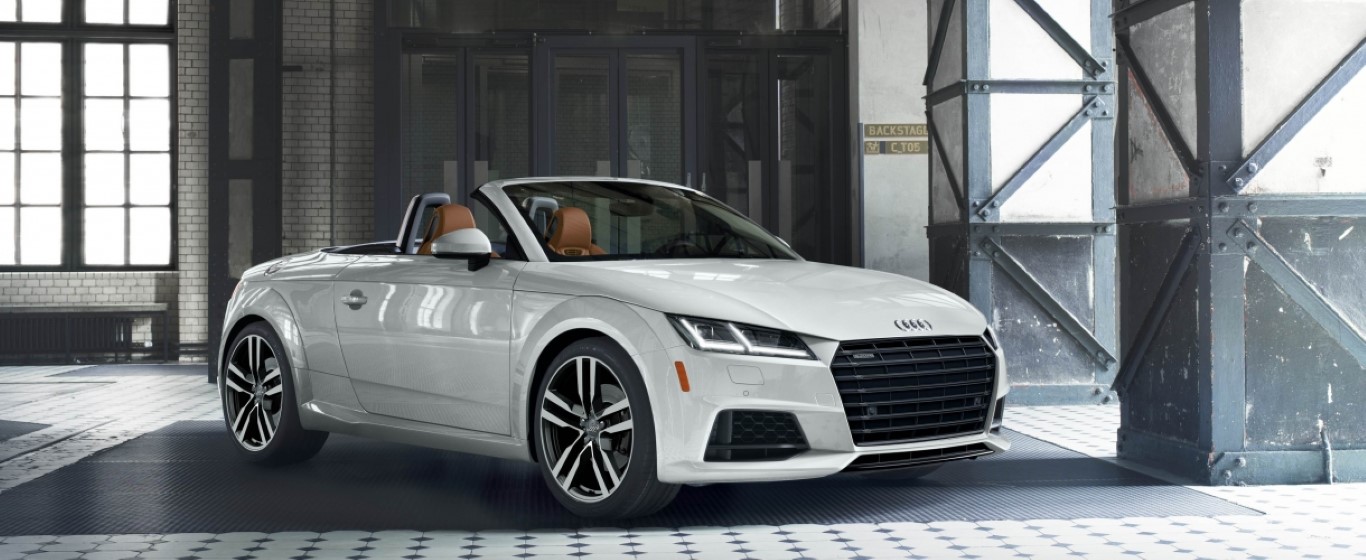
Wind and precision: the roadster that joined open-air freedom with Audi’s all-wheel-drive engineering.
Select a generation to see available versions
(2000-2002)
(2003-2006)
(2007-2010)
(2011-2014)
(2015-2019)
(2020-2023)
Select a powertrain to view full technical specifications
The history of the automotive industry is punctuated by rare moments when a single model manages to alter the global perception of a brand. The Audi TT is, unequivocally, one of these milestones. Before its launch, Audi was respected for its engineering and quattro all-wheel drive, but it was frequently seen as a conservative and sober choice in comparison to rivals from Munich (BMW) and Stuttgart (Mercedes-Benz). The launch of the TT not only introduced a new sports car to the market; it democratized avant-garde design and injected a dose of pure emotion into the DNA of the Ingolstadt manufacturer.
This report compiles an exhaustive analysis of the Audi TT's trajectory, ranging from the first sketches influenced by the Bauhaus school in the mid-1990s to the last unit produced at the Győr plant in Hungary in November 2023. Over three distinct generations — Mk1 (Type 8N), Mk2 (Type 8J), and Mk3 (Type 8S) — the model served as a technological laboratory for Audi, debuting innovations such as the dual-clutch transmission (DSG) and the Virtual Cockpit digital dashboard.
The following analysis details the technical specifications, production nuances, safety controversies that marked the beginning of its life, and the evolution of the engines that varied from efficient four-cylinders to powerful turbocharged five-cylinders. The focus remains on clarity and technical depth, avoiding unnecessary jargon while exploring every facet of this automotive icon.
The development of the Audi TT began at Audi's design studio in Simi Valley, California, in 1994. The team, led by visionary Freeman Thomas under the supervision of head of design Peter Schreyer, sought inspiration outside the traditional automotive world. Instead of imitating the organic and complex lines that dominated 90s design, they turned to the purism of German architecture and the Bauhaus style of the 1920s and 1930s.
The central philosophy of Bauhaus is "form follows function". In the context of the TT, this translated into an aesthetic dominated by circles and arches. The design was a celebration of geometry: the wheel arches were perfectly rounded, the roofline formed a continuous and uninterrupted arch from front to rear, and the interior replicated this theme with circular air vents, gear knobs, and buttons. The goal was to create what the designers called a "sculpture in motion".
The Audi TT Coupé concept was revealed to the world at the Frankfurt Motor Show (IAA) in 1995. The reception was immediate and overwhelming. The press and the public were astonished by the audacity of the clean lines, the absence of conventional protruding bumpers, and the monolithic appearance, as if the car had been carved from a single block of aluminum. Shortly after, at the Tokyo Motor Show of the same year, Audi presented the TT Roadster concept, confirming the intention to produce a family of sports cars.
The name "TT" was chosen as a tribute to the legendary Tourist Trophy motorcycle race on the Isle of Man, an event where Audi's predecessor brands, DKW and NSU, celebrated great victories in the past. Furthermore, the name evoked the NSU TT, a small and agile sports car from the 1960s, connecting the new model to the company's sporting heritage.
One of the biggest challenges in the automotive industry is maintaining the integrity of a concept car when it moves to mass production. Safety regulations, manufacturing costs, and ergonomics usually dilute the original design. However, the Audi TT is frequently cited as a rare exception.
Torsten Wenzel, the exterior designer responsible for taking the study to production, noted that the highest compliment received was the perception that "almost nothing changed" from the 1995 concept to the 1998 production model. In reality, technical adjustments were necessary: the proportions were subtly altered to accommodate the mechanics and, most notably, a small rear side window was added to the Coupé. This window did not exist on the concept but was integrated to visually lengthen the car's profile and improve visibility, without breaking the harmony of the roof arch.
Mass production of the Audi TT Coupé began in 1998, followed by the Roadster in 1999. Despite its exotic appearance, the Mk1 TT was built on a pragmatic and proven base: the Volkswagen Group's PQ34 platform. This same platform served as the basis for the Volkswagen Golf Mk4 and the first generation of the Audi A3.
The use of this platform dictated the fundamental configuration of the car: transversely mounted front engine. This differentiated the TT from larger Audi sedans, which used longitudinal engines. For front-wheel-drive versions, the rear suspension was a simple torsion beam, while versions with quattro all-wheel drive used a more sophisticated multi-link rear suspension to accommodate the rear differential.
The quattro all-wheel-drive system on the TT was also distinct. Due to the transverse engine mounting, the TT could not use Audi's traditional Torsen (mechanical) center differential. Instead, it adopted the Haldex system. This system uses an electronically controlled hydraulic multi-plate clutch. Under normal driving conditions, torque is sent almost entirely to the front wheels. If the system detects a loss of grip, the clutch closes in milliseconds, transferring power to the rear axle. Although purists criticized the system for being "reactive", it offered exceptional safety and traction in adverse weather.
The beginning of the TT's life was marked by a significant controversy that almost derailed the model's success. Shortly after the launch, reports began to emerge in Germany of serious accidents on highways (autobahns) at very high speeds, frequently above 180 km/h. Some of these accidents resulted in fatalities.
The investigation revealed that the pure aerodynamic shape of the car, specifically the smooth curvature of the rear, worked similarly to an airplane wing, generating lift on the rear axle at high speeds. This made the rear of the car extremely light. In situations of sudden lane changes or fast downhill corners, the car exhibited a sudden and hard-to-control tendency to oversteer (the rear would slide out of the corner), catching drivers by surprise.
Audi's response was a comprehensive and costly recall in late 1999 and early 2000. The corrective measures altered both the aesthetics and the mechanics of the car:
These changes resolved the stability issues and the TT continued to be a sales success, proving the brand's resilience.
The first generation of the TT was primarily powered by the robust 1.8 Turbo 4-cylinder, 20-valve (5 valves per cylinder) engine, an engineering marvel of the time that combined good low-end torque with high-end power. Later, a V6 engine was added to the lineup.
| Version | Engine | Power | Torque | Drivetrain | Transmission | Technical Details |
|---|---|---|---|---|---|---|
| TT 180 | 1.8 T | 180 hp | 235 Nm | FWD / Quattro | 5/6-speed manual or Auto | Smaller K03 turbocharger. Volume model. |
| TT 225 | 1.8 T | 225 hp | 280 Nm | Quattro (Standard) | 6-speed manual | Larger K04 turbocharger, dual intercoolers (one on each side), reinforced engine internals. |
| TT 3.2 | 3.2 VR6 | 250 hp | 320 Nm | Quattro (Standard) | 6-speed DSG | Narrow-angle V6 engine (15 degrees), throaty sound, immediate throttle response. |
| Quattro Sport | 1.8 T | 240 hp | 320 Nm | Quattro (Standard) | 6-speed manual | Limited special edition (detailed below). |
The DSG Revolution (2003): The Audi TT 3.2 VR6 holds a special place in automotive history as one of the world's first mass-produced cars to be equipped with the Direct-Shift Gearbox (DSG) dual-clutch transmission. Unlike conventional automatic transmissions with a torque converter, the DSG used two oil-bathed clutches: one engaged the odd gears and the other the even ones. This allowed the next gear to always be pre-selected, resulting in gear changes made in milliseconds with no noticeable interruption in power delivery.
To celebrate the 25th anniversary of the original quattro system and mark the end of Mk1 production, Audi's sports division (quattro GmbH) launched the TT Quattro Sport. This version was purely focused on driving performance:
The Mk1 TT Roadster maintained the iconic design with fixed chrome roll hoops behind the seats. An important detail for owners and collectors concerns the soft-top mechanism. In the early versions and manual models, operation required significant physical intervention: the driver had to turn a central lever at the top of the windshield to unlock the roof before it could be retracted (electrically or manually). The roof folded in a "Z" shape and was not hidden under a hard cover, but rather exposed, and could be covered by a manually installed vinyl cover (tonneau cover) for a cleaner look.
The second generation, launched in 2006, represented significant technical maturation. The design, signed by Walter de Silva, became more aggressive and sharper, losing a bit of the Mk1's pure geometry in favor of more efficient aerodynamics and a look more integrated into the Audi family of the time.
The major innovation was in the structure. The Mk2 utilized hybrid Audi Space Frame (ASF) technology. The front part of the chassis was made predominantly of aluminum (about 69% of the body structure), while the rear part used steel. This engineering choice had two benefits: it reduced the overall weight of the car and helped balance the weight distribution between the axles. Since the engine and transmission were at the front (the heaviest component), having a steel rear end helped move the center of gravity slightly backward, improving agility in corners.
To definitively resolve the aerodynamic issues without compromising the design, the Mk2 introduced an active rear spoiler. This wing remained flush with the trunk lid at low speeds, preserving the clean lines, and automatically deployed upon reaching 120 km/h to generate downforce (downward aerodynamic pressure). It retracted again when the speed dropped below 80 km/h.
The Mk2 offered as an option (and standard on the TTS) the Audi Magnetic Ride system. This is an adaptive damping system that uses a magnetorheological fluid inside the shock absorbers. This fluid contains microscopic magnetic particles. When an electrical current passes through coils inside the shock absorber, it creates a magnetic field that aligns these particles, instantly increasing the fluid's viscosity and stiffening the suspension. This allowed the driver to switch between a "Normal" (comfortable) and "Sport" (stiff for cornering control) mode at the touch of a button.
The engine offering in the Mk2 was expanded to include diesel options and the return of an Audi legend.
TTS (2008): This version filled the gap between the base model and the future RS. The 2.0 TFSI engine was heavily modified (larger turbo, reinforced internals) to produce 272 hp (265 hp in the US). It came standard with the Magnetic Ride suspension and quattro all-wheel drive, accelerating from 0 to 100 km/h in just over 5 seconds.
TT RS (2009): The pinnacle of Mk2 performance. Audi developed an entirely new engine: a 2.5-liter turbocharged inline 5-cylinder. This engine configuration is historical for Audi, harking back to the Group B rally cars of the 80s. The Mk2 TT RS delivered 340 hp (and 360 hp in the TT RS Plus version), with a distinct and unmistakable exhaust sound. Initially available only with a 6-speed manual gearbox, it later received the 7-speed S tronic option. With this setup, the car entered supercar territory, doing 0-100 km/h in about 4 seconds.
In 2010, the Mk2 received a mid-life update. Visually, the changes were subtle: new bumpers, a gloss black front grille, and the introduction of LED daytime running lights at the base of the headlights, which would become a visual signature. The biggest change was mechanical, with the replacement of the older 2.0 TFSI engine (EA113) with the new engine (EA888) featuring Valvelift technology, improving both performance and fuel efficiency.
The third and final generation of the TT was launched in 2014, built on the ubiquitous Volkswagen Group MQB (Modular Transverse Matrix) platform. This platform allowed for an additional weight reduction of approximately 50 kg compared to the Mk2, thanks to the intensive use of ultra-high-strength steels and aluminum in the body panels.
The exterior design became more taut, angular, and technological. The Singleframe front grille became wider and flatter. An important detail for enthusiasts was the relocation of the four rings (Audi logo) from the grille to the hood, a styling cue reserved only for the R8 supercar, signaling the serious sporty positioning of the TT.
However, the true revolution of the Mk3 was on the inside. Audi completely eliminated the central "infotainment" screen that had become standard in all modern cars. In its place, it introduced the Audi Virtual Cockpit: a high-resolution 12.3-inch TFT screen located directly behind the steering wheel, replacing the traditional analog dials.
This system, powered by advanced graphics processors (frequently Nvidia), allowed the driver to configure the display in two main modes:
To complement this minimalist interior, the climate controls were ingeniously integrated directly into the center of the circular dashboard air vents, eliminating the need for a button-cluttered center console.
The Mk3 TT was a pioneer in lighting technology. It was one of the first production cars to offer taillights with OLED (Organic Light Emitting Diode) technology as an option on the TT RS. Unlike common LEDs, OLEDs are surface light sources that allow for complex three-dimensional designs, high contrast, and do not require reflectors, enabling an extremely thin and sophisticated light design.
The Mk3's engine lineup focused on efficiency and turbocharged power.
Throughout the life of the Mk3, several special editions were launched:
A fascinating fact about the Audi TT is its transnational production. From the first generation, the TT was a product of collaboration between the headquarters in Ingolstadt (Germany) and the plant in Győr (Hungary).
In the Mk1 and Mk2, the bodies were stamped and painted in Germany. Then, they were transported via railway overnight to Hungary, where the final assembly (mating the chassis with the engine and interior) took place.
For the Mk3, the Győr plant became a full production facility, carrying out the entire manufacturing process on site.
Over 25 years (1998–2023), exactly 662,762 units of the Audi TT were produced. Production was officially ended in November 2023.
| Generation | Production Period | Approximate Units |
|---|---|---|
| Mk1 (8N) | 1998 – 2006 | ~270,000 (with ~178k Coupés and ~90k Roadsters) |
| Mk2 (8J) | 2006 – 2014 | Data aggregated in the total |
| Mk3 (8S) | 2014 – 2023 | Data aggregated in the total |
| TOTAL | 1998 – 2023 | 662,762 |
Brazil received the Audi TT from the very first generation, where the car quickly became a status symbol and an object of desire among enthusiasts.
The end of Audi TT production in 2023 marked the close of a vibrant chapter in Audi's history. The model was not discontinued for lack of merit, but due to the seismic shift in the automotive industry towards SUVs and full electrification.
The legacy of the TT is multifaceted.
For the collector or enthusiast, each generation offers a distinct experience: the Mk1 is the pure and historic design piece; the Mk2 is the ideal balance between daily usability and refined dynamics; and the Mk3 is the technological precision machine. The Audi TT leaves the production line, but remains in history as the car that dared to be a "sculpture in motion".
Images of the Audi TT Roadster 1.8 Turbo 180CV AWD