

8J
(2009 - 2010)
2.0 Turbo
272 cv

Technical specifications, versions, and history for the Audi TTS.
Select a generation to see available versions
(2009 - 2010)
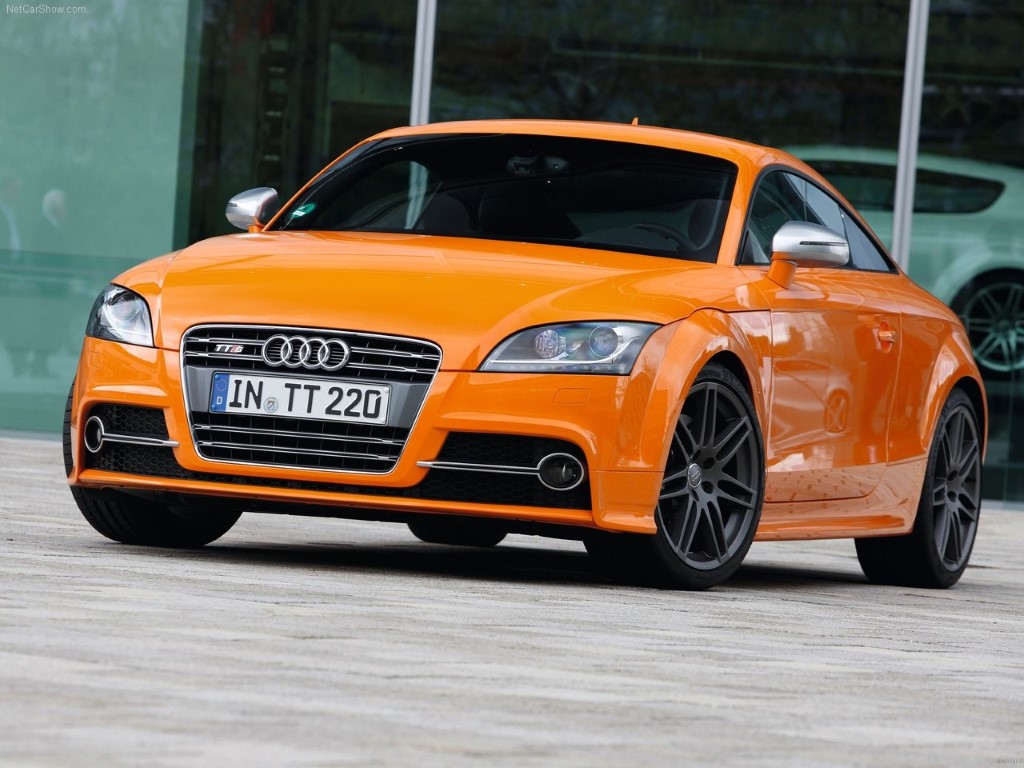
(2011 - 2014)
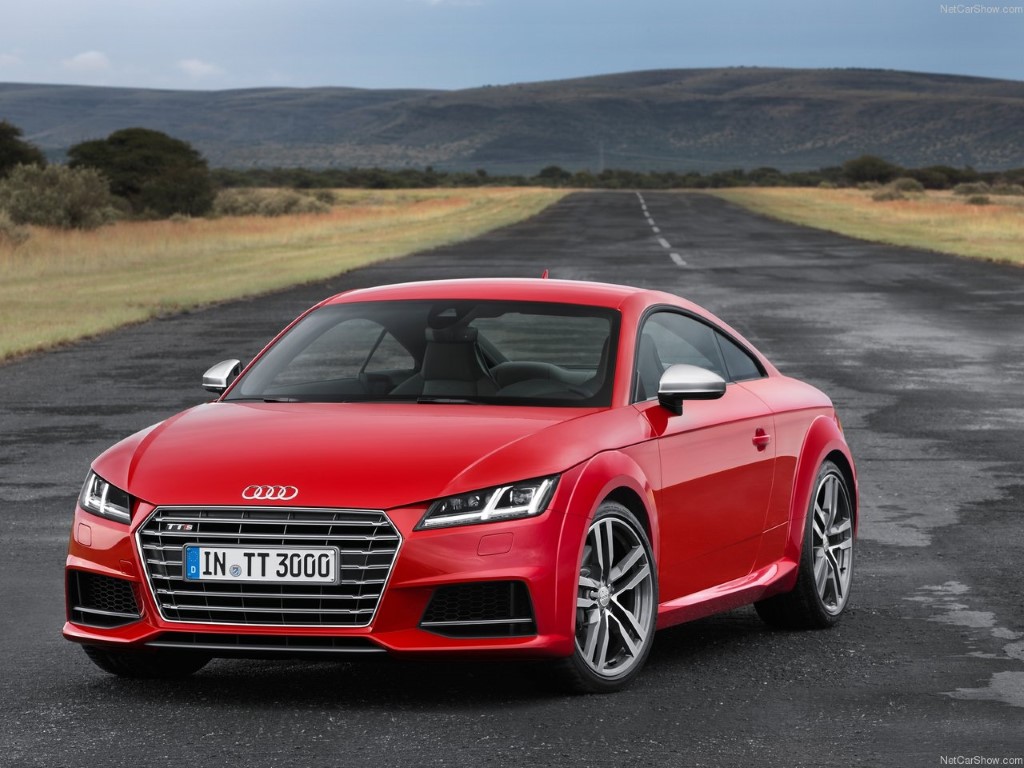
(2015 - 2019)

(2020 - 2023)
The history of the automobile is punctuated by models that transcend their utilitarian function to become landmarks of design and engineering. The Audi TT is, unquestionably, one of these landmarks. However, within the hierarchy of this iconic model, the TTS (Tourist Trophy "S") variant occupies a crucial pivotal position. It is not just a more powerful version; it is the crystallization of Audi's philosophy of democratizing elite sports car performance, combining daily usability with dynamic capability that challenges competitors of higher price and pedigree.
To understand the TTS, it is imperative to first understand the lineage from which it comes. The name "TT" derives from the legendary Tourist Trophy motorcycle race on the Isle of Man, an event dating back to 1907 and known for its extreme demand and inherent danger. The choice of this name was not accidental; it was a deliberate homage to the historic victories of the NSU and DKW brands — precursors to Auto Union and, later, Audi — in this competition. Thus, from its baptism, the car carried the expectation of performance and endurance.
When the original TT concept was presented at the 1995 Frankfurt Motor Show, it shocked the world with its Bauhaus aesthetics, where pure geometric shapes — the circle and the arch — dominated the design. Production of the first generation (Mk1 or 8N) began in 1998, but it was only in the second generation (Mk2 or 8J) that Audi decided the TT chassis had matured enough to support a dedicated "S" version. The launch of the TTS in 2008 was not just an addition to the range; it was a statement that the TT had evolved from a "style icon" to a genuine "driver's car".
This report details the technical, commercial, and cultural trajectory of the Audi TTS, covering everything from the structural innovations in aluminum to the digital revolution of the cockpit, culminating in the end of its production in November 2023. The engineering nuances, the specificities of the Brazilian market, and the production data that define the legacy of this model will be analyzed.
The evolution of the TTS is intrinsically linked to the evolution of the Volkswagen Group's platforms, but with specific Audi adaptations that guaranteed the model a unique identity. While the original TT used the PQ34 platform (shared with the Golf Mk4), which was fundamentally made of steel and had dynamic limitations, the TTS was born in the era of material specialization.
The launch of the second generation of the TT (Mk2), the basis for the first TTS, brought with it the Audi Space Frame (ASF) technology in an innovative hybrid configuration. Unlike the A8 sedan, which was entirely made of aluminum, the Mk2 TTS used a strategic combination of materials to optimize weight balance.
The front structure of the vehicle was predominantly composed of aluminum (about 69% of the total body), while the rear section used high-strength steel (the remaining 31%). This engineering decision was not just aimed at reducing total mass, but rather weight distribution. In vehicles with a transverse front engine, there is a natural tendency for mass concentration over the front axle, which favors understeer (the car tends to push wide in corners). By using light aluminum at the front and heavier steel at the rear, Audi managed to shift the center of gravity backwards, bringing the weight distribution closer to a neutral ideal. This resulted in a much more agile and responsive dynamic behavior for the TTS, drastically differentiating it from its predecessor.
With the arrival of the third generation (Mk3) in 2014, the TTS migrated to the ubiquitous MQB (Modularer Querbau or Modular Transversal Matrix) platform. Although the MQB is known for its versatility in mass models like the Golf and the A3, in the TTS it was pushed to its sporting limit.
The use of hot-formed ultra-high-strength steels allowed the thickness of the panels to be reduced without compromising torsional rigidity. The hood, front fenders, roof, doors, and trunk lid remained aluminum. The result was a Mk3 TTS that, despite being more equipped and technologically dense than the Mk2, managed to keep weight under control (approx. 1,385 kg for the Coupe), ensuring a formidable power-to-weight ratio. Furthermore, the MQB architecture allowed the lowering of the center of gravity and the repositioning of the suspension mounting points, allowing for a more aggressive geometry.
The first Audi TTS was revealed to the world in January 2008 at the Detroit Auto Show, a choice of location that signaled the importance of the North American market for sports coupes. It hit European and North American streets (as a 2009 model) shortly after, positioned above the standard 2.0 TFSI and the 3.2 VR6 engine.
The great differentiator of the Mk2 TTS resided under the hood. While the "civilian" versions of the TT were already migrating to the new EA888 engine family, the TTS chose to refine the robust EA113 block, which had already proven its worth in the Audi S3.
This 2.0-liter (1,984 cc) engine with direct fuel injection (FSI) and a turbocharger received extensive modifications to withstand the higher thermal and mechanical load:
The result of this technical package was an output of 272 hp (200 kW) and a torque of 350 Nm (35.7 kgfm) available in a wide band from 2,500 to 5,000 rpm. These numbers allowed the TTS Coupe with S tronic transmission to accelerate from 0 to 100 km/h in just 5.2 seconds.
The transmission of power to the ground was managed by the quattro permanent all-wheel drive system, which in the case of the TTS (due to the transverse engine) used a hydraulic multi-plate clutch supplied by Haldex (Generation 4).
Unlike the purely mechanical Torsen systems used in larger Audis (A4, A6), the Haldex system of the TTS operated on proactive demand. Under normal cruising conditions, most of the torque (about 90-95%) was sent to the front wheels to save fuel. However, upon detecting the slightest difference in rotation between the axles — or even anticipating the need by reading the throttle position — the electro-hydraulic pump pressurized the clutch plates on the rear axle, transferring up to 100% of the available torque to the rear wheels in milliseconds.
The Mk2 TTS offered two gearbox options:
The TTS visually distinguished itself from the standard TT through details that would become the signature of the "S" line.
In 2010, Audi applied a mid-life update to the Mk2. Although the power of the TTS remained unchanged (unlike the base model which gained the new engine with Valvelift), the TTS benefited from aesthetic and efficiency refinements.
The third generation, presented at the 2014 Geneva Motor Show, represented the full maturity of the TTS concept. The design became sharper, abandoning the smooth curves of the Mk2 in favor of sharp edges and taut lines that evoked the R8 supercar. An important symbolic change was the removal of the four rings from the front grille, repositioning them on the hood, a distinction reserved only for the brand's high-performance models (R8 and TTS/TTRS).
The most striking innovation of the Mk3 was not in the engine, but in the human-machine interface. The Mk3 TTS debuted the Audi Virtual Cockpit, completely eliminating the central infotainment screen and analog dials.
Everything was consolidated into a 12.3-inch high-resolution (1440 x 540 pixels) TFT screen located behind the steering wheel, powered by an NVIDIA Tegra 30 processor from the Tegra 3 series.
The cleanliness of the dashboard was taken to the extreme with the integration of the air conditioning controls (temperature, ventilation, and flow) directly into the centers of the circular air vents, a brilliant design solution that freed up space on the center console.
The Mk3 TTS adopted the third generation of the 2.0 TFSI engine (code CJX), bringing significant advances over the EA113:
Mk3 Performance Numbers (Pre-Facelift 2014-2018):
In 2019, coinciding with the 20th anniversary of the TT, the model received its last major update.
The choice between the Coupe and the Roadster defines the ownership experience, as the structural differences go beyond the simple absence of a fixed roof.
The Coupe is the purest expression of structural rigidity. The 2+2 configuration offers two small rear seats. Although homologated only for passengers up to 1.45m tall (children), these seats confer a massive practical advantage over strict two-seater rivals (like the Nissan 370Z or Porsche Cayman). They serve as extra luggage space accessible from inside the cabin. The 305-liter trunk is deep and accessible through a large rear door (hatchback), and with the seats folded down, the volume more than doubles, allowing for the transport of long objects like golf clubs or skis.
The Roadster sacrifices the rear seats to accommodate the soft top mechanism and structural reinforcements. Audi remained faithful to the fabric soft top for reasons of weight and center of gravity.
The TTS is defined by technologies that facilitate fast and safe driving, differentiating it from rear-wheel-drive sports cars that require more skill to control at the limit.
Standard on all TTS (Mk2 and Mk3), this adaptive damping system uses a synthetic hydrocarbon fluid containing microscopic magnetic particles.
In the Mk3, the electronic stability control (ESC) system works in conjunction with the quattro system to provide torque vectoring by braking. Upon entering a fast corner, the system applies imperceptible braking to the inside wheels of the curve. This transfers the torque to the outside wheels (which have more grip), helping to rotate the car into the corner and further mitigating understeer.
Ever since the stability problems of the early Mk1 units (which resulted in a famous recall for the installation of a spoiler), aerodynamics have been a focus. The TTS features a rear spoiler that automatically rises at 120 km/h.
The Audi Hungaria plant in Győr is the spiritual heart of the TT. Opened in 1993, initially just for engines, it expanded to assemble the TT. In the first two generations, the bodies were stamped and painted in Ingolstadt (Germany) and sent by train to Hungary for final assembly. In the third generation (Mk3), the Győr plant became a complete production facility, carrying out the entire process, from bodywork to final assembly.
Over 25 years, the TT established itself as a commercial success for a niche car:
The end of production was marked on November 10, 2023. The last vehicle to roll off the assembly line was an Audi TTS Coupe.
Last Car Specifications: Painted in Chronos Gray Metallic, with dark matte chrome details and matte bronze 20-inch wheels. This vehicle was not sold; it was immediately destined for Audi's historical collection (Audi Mobile museum) in Ingolstadt, preserving the final milestone of the lineage.
To mark the end, Audi launched several "Final Editions" in key markets:
Brazil has always had a special relationship with Audi, especially after the domestic production of the A3 in the 1990s. The TTS served as a fundamental image builder.
In Brazil, the TTS maintains low depreciation compared to other imported cars. The scarcity of units, combined with the quattro all-wheel drive (which is rare among sports cars sold in the country, where rear-wheel drive dominates the German rivals), makes the TTS highly sought after. The Mk2 is seen as the accessible entry point (with units in the range of R$ 130,000 - R$ 160,000 in 2024), while the Mk3 still commands prices above R$ 250,000 to R$ 300,000 depending on the year and condition, especially the latest imported units.
For the current or future owner of a TTS, technical knowledge of common failures is vital to avoid astronomical costs.
The most insidious failure in the TTS is the loss of rear-wheel drive due to the Haldex pump.
Where does the TTS fit into the automotive spectrum?
The "bigger brother" TT RS uses the legendary 2.5-liter 5-cylinder engine, with vastly superior sound and power (400 hp). However, the 5-cylinder engine is heavier and hangs entirely ahead of the front axle.
Verdict: The TT RS is faster in a straight line and has more sonic "drama". The TTS, being lighter at the front (the 4-cylinder engine is more compact), is often considered more balanced and agile upon entering tight corners. For urban use and road trips, the TTS is more rational, consuming less and being cheaper to maintain, delivering 90% of the dynamic fun on public roads.
This is the classic comparison. The Cayman (rear-wheel drive, mid-engine) is the gold standard for dynamics.
Differences: The Cayman offers more communicative steering and chassis purity. The TTS counters with all-wheel drive (safety in the rain), the front engine (which frees up a massive rear trunk for the category), and the superior digital cockpit. The TTS is the better "everyday sports car", while the Cayman is the better "weekend sports car".
The table below consolidates the essential technical data for quick comparison between the two TTS generations sold globally.
| Specification | TTS Mk2 (Typ 8J) | TTS Mk3 (Typ 8S) |
|---|---|---|
| Production Years | 2008 – 2014 | 2014 – 2023 |
| Engine Code | EA113 (CDLB) | EA888 Gen 3 (CJX) |
| Displacement | 1,984 cc (2.0L) | 1,984 cc (2.0L) |
| Maximum Power | 272 hp @ 6,000 rpm | 310 hp @ 5,800 - 6,200 rpm* |
| Maximum Torque | 350 Nm @ 2,500 - 5,000 rpm | 380-400 Nm @ 1,800 - 5,700 rpm |
| Transmission | 6-spd S tronic (DQ250) | 6-spd S tronic (up to 2018) / 7-spd (DQ381) |
| Traction | Quattro (Haldex Gen 4) | Quattro (Haldex Gen 5) |
| 0-100 km/h Acceleration | 5.2s (Coupe) / 5.4s (Roadster) | 4.6s (Coupe) / 4.9s (Roadster) |
| Top Speed | 250 km/h (Limited) | 250 km/h (Limited) |
| Weight (DIN) | ~1,395 kg (Coupe) | ~1,385 kg (Coupe) |
| Trunk Capacity | 290 Liters (Coupe) | 305 Liters (Coupe) |
| Technological Highlight | Hybrid Audi Space Frame | Audi Virtual Cockpit |
*Note: The power of the Mk3 varied between 286 hp, 306 hp, and 310 hp depending on the year of manufacture, market, and emission standards (WLTP).
The Audi TTS ends its journey not as an obsolete model, but as a product that reached its apex. It proved that a car based on a shared platform (Golf/A3) could, through brilliant engineering and inspired design, deliver a genuinely premium and sporty experience.
For Brazil, the TTS leaves a legacy of exclusivity. It is a car that combines the mechanical robustness necessary for our roads (thanks to the well-calibrated suspension and reasonable ride height for a sports car) with the prestige and performance expected of an "S" badge. With the end of production, the remaining units become guardians of an era where form, sound, and combustion mechanics united in an almost perfect package of design and emotion. The TTS was not just a car; it was, for 25 years, the proof that Audi knew how to dream.