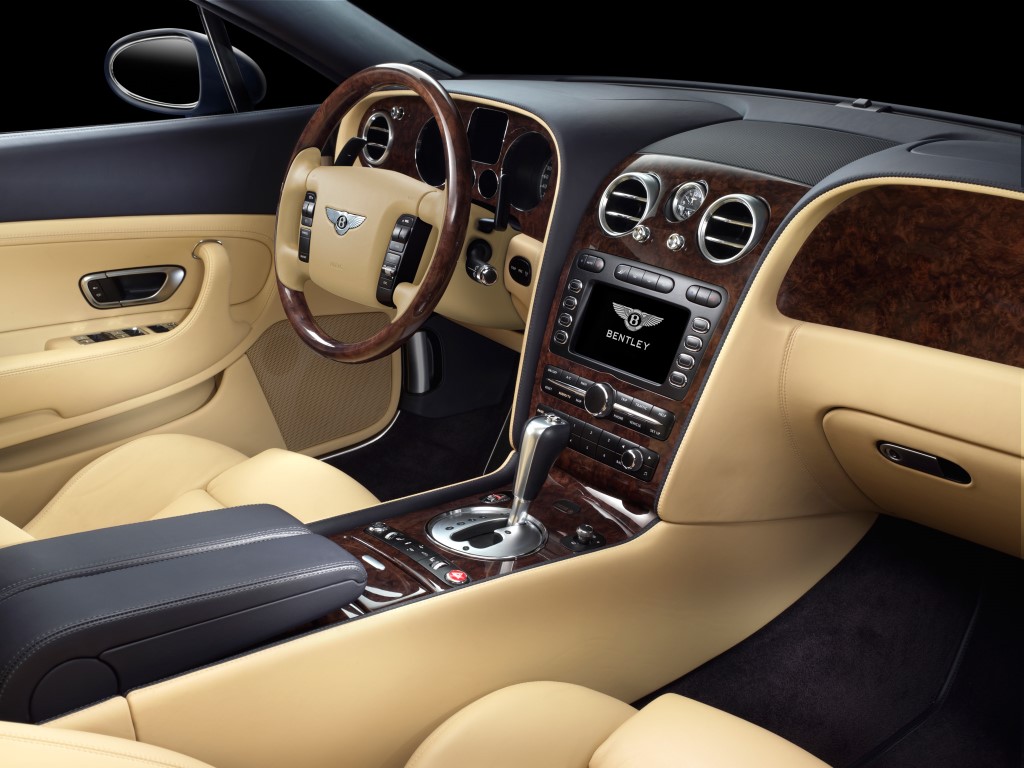
1st Generation
(2003-2007)
The gold standard of Grand Touring: an unrivaled union of raw W12 power and impeccable British craftsmanship.
Select a generation to see available versions
(2003-2007)
(2007-2011)
(2011-2014)
(2015-2018)
(2019-2024)
Select a powertrain to view full technical specifications
In the late 1990s, Bentley Motors, a brand synonymous with prestige and victories at Le Mans, found itself at a crossroads. Despite its revered heritage, the company was struggling, with global sales barely reaching 414 cars in 1998 and a production infrastructure in Crewe that was showing signs of aging. The acquisition by the Volkswagen Group in 1998 was more than a financial transaction; it was a strategic lifeline that promised a future. From this union of German engineering and British soul, a revolutionary project was born: the Continental GT.
Launched in 2003, the Continental GT was the first Bentley of the Volkswagen era, designed to revitalize and redefine the brand for the 21st century. It represented a radical shift in production philosophy, being the first Bentley to employ mass manufacturing techniques. This departure from the tradition of extremely low-volume, handcrafted construction was a bold but necessary step, executed with the care to preserve the exclusivity and handiwork that define a Bentley.
The choice of the name "Continental" was no accident. It was a deliberate decision to evoke the memory of the legendary 1952 R-Type Continental, an automobile that was not only the fastest four-seater car of its time but is widely considered the first "Grand Tourer" (GT) in history. This connection to a glorious past gave the new model instant legitimacy, positioning it as the heir to a legacy of performance, style, and the ability to cross continents in comfort and speed.
The Continental GT did not just compete in an existing segment; it created an entirely new category: the modern luxury Grand Tourer. It offered a previously unseen combination of supercar-worthy design, overwhelming performance, and surprising everyday usability. All this at a price that, while high, was significantly lower than previous Bentley models, which drastically expanded the brand's customer base and made it globally desired.
The success of the Continental GT can be attributed to a strategic formula brilliantly executed by Volkswagen. First, it leveraged the group's engineering, using the Volkswagen Phaeton's D1 platform as a base to accelerate development to just four years and optimize costs. Second, it invested massively in modernizing the historic Crewe factory. Third, and most importantly, it understood the need to preserve the brand's "DNA". Despite the shared foundation, the car was unmistakably a Bentley in its overwhelming power, courtesy of the new W12 engine; in its incomparable luxury, evident in the craftsmanship of the interior; and in its imposing presence, defined by a muscular and elegant design. This fusion of German efficiency with British soul was what transformed Bentley from a "cottage industry" into a global powerhouse in the luxury sector.
The first generation of the Continental GT marked the beginning of a new era, not only for Bentley but for the entire luxury car segment. It was a car that combined, with unprecedented success, brute force with handcrafted elegance.
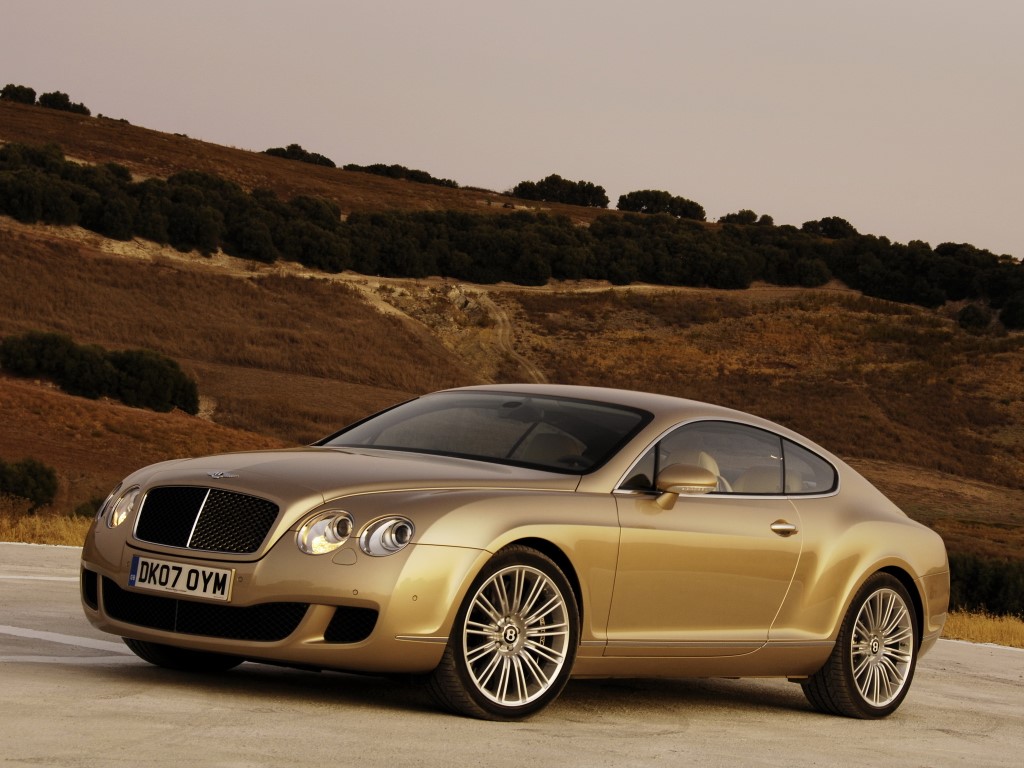
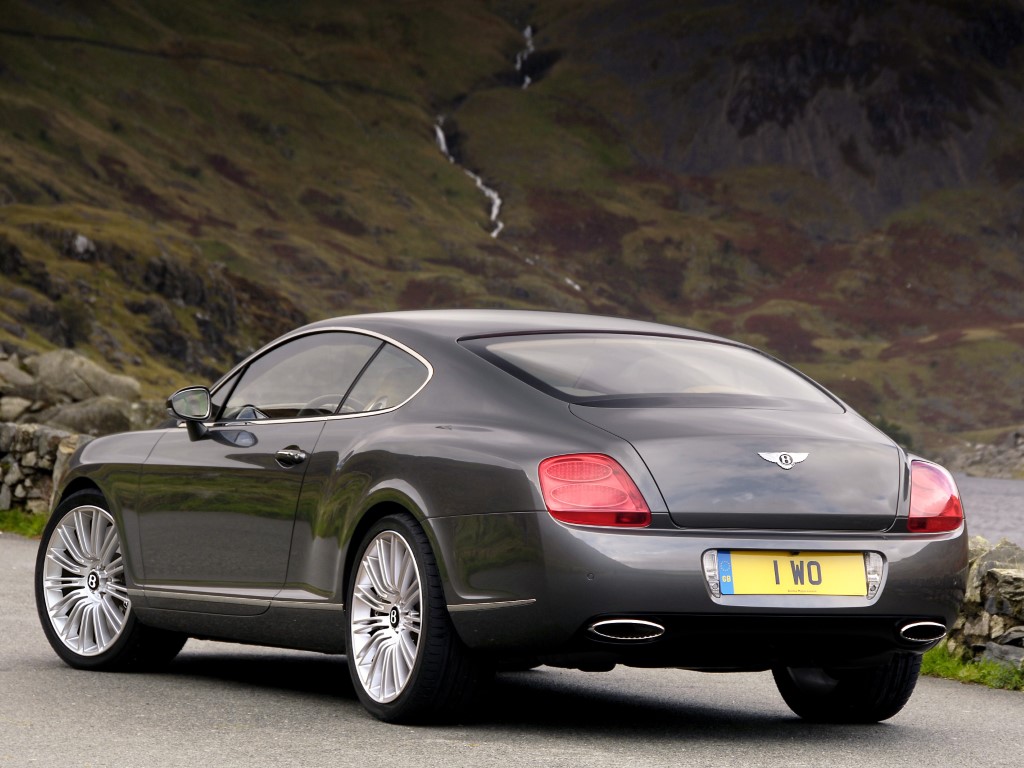
Presented to the world in 2003, the Continental GT was an automotive sculpture. Designed under the leadership of Dirk van Braeckel and Raul Pires, its design was simultaneously modern and reverent to the brand's history. The muscular lines, especially the "powerline" that flowed from the twin headlights to the wide rear haunches, were a clear homage to the iconic 1952 R-Type Continental, establishing a visual continuity with the past. The use of the Volkswagen Group's D1 platform was a fundamental pillar that made the project viable in record time.
The heart of this new machine was its engine, an engineering centerpiece that would become legendary: a 6.0-liter twin-turbo W12. Its unique configuration, essentially two compact VR6 engines sharing a single crankshaft, allowed it to be exceptionally short, improving weight distribution, while simultaneously providing immense smoothness and torque. In its initial version, it delivered an impressive 560 PS (552 bhp) of power and 650 Nm of torque, available from very low revs. These numbers translated into stunning performance for a luxury car weighing over 2,300 kg: acceleration from 0 to 100 km/h in just 4.8 seconds and a top speed of 318 km/h. To manage this power, the GT was equipped with a 6-speed ZF automatic gearbox and, crucially, a permanent all-wheel-drive system with a Torsen center differential, ensuring that the performance was usable and safe in all weather conditions.
The interior redefined expectations of luxury and personalization. From launch, customers could choose from a wide range of options, initially including six exterior colors, eight leather colors, and five types of wood veneers. Every detail was meticulously handcrafted in Crewe, from the leather stitching to the polishing of the wood veneers. One detail that became iconic was the analog clock in the center of the dashboard, manufactured by the prestigious Swiss brand Breitling, a symbol of the attention to detail and the partnership between two luxury brands.
Introduced in 2004, this optional package quickly became an almost mandatory choice for customers desiring an extra touch of sportiness and personalization. It included 20-inch wheels with a 7-spoke design, drilled alloy sports foot pedals, and a gear lever finished in knurled metal and leather. However, its most distinctive element, which would become a brand signature, was the diamond-quilted leather upholstery, applied to the seats, doors, and rear quarter panels.
The convertible version, the GTC, was unveiled in 2005 and hit the market in 2006. Its creation was not in Bentley's original plans, but the enormous demand from customers who fell in love with the coupe's design led the brand to develop the open-top variant, demonstrating a newfound agility and responsiveness to the market. The fabric roof, manufactured by specialist Karmann, was a work of engineering art. Composed of seven structural bows and three layers of material, it guaranteed exceptional thermal and acoustic insulation, making the GTC almost as quiet as the coupe when closed. The additional weight of the structural reinforcement and the roof mechanism slightly affected performance: the 0 to 100 km/h acceleration rose to 5.1 seconds, and the top speed was 314 km/h with the roof closed and 305 km/h with it open.
In 2007, Bentley resurrected the legendary "Speed" name, inspired by its high-performance models from the 1920s, to create a more focused version of the Continental GT. The W12 engine was uprated to deliver 610 PS (602 bhp) and 750 Nm of torque. With this extra power, the GT Speed was capable of accelerating from 0 to 100 km/h in 4.5 seconds and reaching a top speed of 326 km/h, making it the first production Bentley to break the 200 mph barrier. The improvements went beyond the engine: the suspension was lowered and stiffened, the anti-roll bars were uprated, and exclusive 20-inch wheels with high-performance Pirelli P-Zero tires were fitted. Visually, the Speed was distinguished by its front grille and lower air intakes with a dark-tinted chrome finish, giving it a more aggressive appearance.
The Supersports, launched in 2009, represented the pinnacle of the first generation's performance. It was designed to be the fastest and most powerful Bentley ever up to that date, a true supercar with the comfort of a GT. The power of the W12 engine was raised to a new level of 630 PS (621 bhp) and 800 Nm of torque, allowing acceleration from 0 to 100 km/h in just 3.9 seconds and a top speed of 329 km/h.
The focus on performance led to a drastic measure for a Bentley: weight reduction. The Supersports was 110 kg lighter than the GT Speed, a diet achieved by removing the rear seats, which were replaced by an elegant carbon fiber-reinforced storage deck, and installing carbon fiber racing front seats, although maintaining heating and the expected luxury. The Supersports was also a technological pioneer, being the first Bentley capable of running on E85 biofuel. As standard, it came equipped with carbon-ceramic brakes, which at the time were the largest brake discs fitted to any production car, ensuring braking capability to match its performance.
Launched in the same year as the Supersports, the Series 51 was a special edition celebrating Bentley's design legacy, paying homage to the year 1951, when the brand's first official styling studio was established. This version did not focus on performance, but rather on exclusive personalization. It offered three-tone exterior color and interior trim combinations, carefully selected by the design team and inspired by classic models. It was distinguished by "51" badges on the front fenders, 20-inch 14-spoke polished wheels, and unique interior finishes, such as Amboyna wood veneer.
The success of the Continental GT was resounding and immediate. Bentley's total sales skyrocketed from 1,017 units in 2003 to 6,576 in 2004, peaking at 10,014 units in 2007, a nearly tenfold increase in just four years. This model alone transformed Bentley from a niche manufacturer into a protagonist in the global luxury market. The most exclusive editions, like the Supersports, had limited production, with 1,207 coupe units and 583 convertibles, which increases their rarity and value today.
With the first generation, Bentley didn't just launch a car; it created an ecosystem of products. The base GT established the market. The GTC captured a new segment of customers who valued the open-air experience. The Speed appealed to those who desired more performance without sacrificing everyday luxury. The Supersports served as a "halo car," an image car that reinforced the performance credentials of the entire range, attracting the most hardcore enthusiasts. Together with the infinite personalization possibilities of Mulliner and special editions like the Series 51, Bentley created a "value ladder." This strategy allowed customers to spend progressively more to get more performance, exclusivity, or personalization, maximizing profitability and solidifying the brand's image as the undisputed leader in performance and luxury.
| Model (Year) | Engine | Power (hp) | Torque (Nm) | Acceleration 0-100 km/h (s) | Top Speed (km/h) |
|---|---|---|---|---|---|
| Continental GT (2003) | 6.0 W12 Twin-Turbo | 560 | 650 | 4.8 | 318 |
| Continental GTC (2006) | 6.0 W12 Twin-Turbo | 560 | 650 | 5.1 | 314 |
| Continental GT Speed (2007) | 6.0 W12 Twin-Turbo | 610 | 750 | 4.5 | 326 |
| Continental Supersports (2009) | 6.0 W12 Twin-Turbo | 630 | 800 | 3.9 | 329 |
If the first generation was a revolution that established a new paradigm, the second, launched in 2011, was a strategic consolidation. Bentley focused on refining the successful formula and, crucially, diversifying the range to broaden its appeal even further.
The second generation, which ran from 2011 to 2018, was a profound evolution of the original model, retaining the robust Volkswagen Group D1 platform. The exterior design was carefully updated; the lines became sharper and more defined, giving the car a more assertive and contemporary stance, highlighted by the introduction of headlights with LED daytime running light rings. Inside, the improvements were more substantial, focusing on ergonomics, increased storage space, and modernized technology, including a new touchscreen infotainment system and new audio options, such as the premium Naim system. The W12 engine was upgraded, with power increasing to 575 hp, and was mated to a new, more efficient 8-speed ZF automatic transmission, which allowed for faster and smoother shifts.
The most significant moment of the second generation arrived in 2012 with the introduction of a new engine option: a 4.0-liter twin-turbo V8, developed in partnership with Audi. This decision was a masterstroke. The V8 engine, with 507 PS (500 bhp) and 660 Nm of torque, offered a distinct driving experience. Being significantly lighter than the W12, especially over the front axle, it made the Continental GT more agile, responsive, and with sportier driving dynamics. Its character was also audible, with a more aggressive sound and a deep burble, highlighted by the "figure eight" dual exhaust tailpipes, which became its visual signature.
In addition to dynamic appeal, the V8 brought a crucial advantage: efficiency. Equipped with cylinder deactivation technology, the engine could run on just four of its eight cylinders under light load conditions, such as cruising speed, reducing fuel consumption by up to 40% compared to the W12, without the driver noticing the transition.
With two engine options, Bentley applied its strategy of creating even more powerful and focused versions for both.
The Speed version with the W12 engine was updated, with power rising to an impressive 625 hp. This allowed the car to reach a top speed of 330 km/h (205 mph), setting a new record for a production Bentley.
For customers who preferred the agility of the V8 but wanted more performance, Bentley launched the "S" version. Power was increased to 528 PS (521 bhp) and torque to 680 Nm. The V8 S also received a lowered and stiffer suspension, and a subtle aerodynamic kit that included a new front splitter, side sills, and a rear diffuser, improving high-speed stability.
Directly inspired by the successful Continental GT3 race car, the GT3-R version was a special edition strictly limited to 300 units worldwide. It was the most driving-dynamics-focused Bentley to date. It used a version of the V8 S engine tuned to 580 hp, with an overboost function that raised power to 592 hp for brief moments. The focus on performance included a 100 kg weight reduction, achieved by removing the rear seats and extensive use of carbon fiber and a titanium exhaust system. The result was a brutal acceleration from 0 to 100 km/h in just 3.8 seconds.
As the grand finale of the second generation, Bentley launched the 2017 Supersports, which became the fastest and most powerful production Bentley in history at the time. The W12 engine was pushed to its absolute limit, producing a colossal 710 PS (700 bhp) and 1,017 Nm of torque. Performance was supercar-worthy: 0 to 100 km/h in 3.5 seconds and a top speed of 336 km/h (209 mph). Production was limited to 710 units, a number that reflected its power output in metric horsepower (PS).
The second generation's diversification strategy was a resounding success. The introduction of the V8 attracted a new customer profile, more focused on driving dynamics and perhaps more conscious of running costs, without alienating W12 purists. The "S" and "Speed" versions created clear performance steps for both engines, while limited editions like the GT3-R and Supersports functioned as demonstrations of technical capability and marketing tools, keeping the brand in the headlines. This approach of offering "a Continental for every type of luxury customer" cemented the model's position as the undisputed leader of its segment, maintaining robust and consistent annual sales throughout the generation's life cycle.
| Year | Total Production (GT/Flying Spur Range) | Total Sales (Bentley) |
|---|---|---|
| 2011 | N/A | 7,003 |
| 2012 | 7,938 | 8,510 |
| 2013 | 9,759 | 10,120 |
| 2014 | 10,149 | 11,020 |
| 2015 | 9,873 | 10,100 |
| 2016 | 5,603 | 11,023 |
| 2017 | 5,108 | 11,089 |
| 2018 | 4,496 | 10,494 |
Note: The production data combine the Continental GT and Flying Spur models, which shared the platform and were counted together in many sources.
The third generation of the Continental GT, introduced in 2018, represented the most significant change in the model's history. It was not a mere evolution, but a complete reinvention that elevated the car to a new level of technology, luxury, and above all, driving dynamics.
The transformation started at the foundation. The new Continental GT abandoned the old D1 platform and adopted the modern MSB (Modularer Standardantriebs-Baukasten) architecture from the Volkswagen Group, a front-engine, rear/all-wheel-drive platform developed largely by Porsche and shared with the Panamera. This change was revolutionary. The new platform allowed engineers to mount the engine further back in the chassis and move the front axle forward, resulting in vastly superior weight distribution and sportier, more elegant proportions. More importantly, this architecture was designed from the ground up for high-performance luxury vehicles, allowing the integration of cutting-edge chassis technologies that completely transformed the car's dynamic behavior.
The design of the third generation, inspired by the acclaimed EXP 10 Speed 6 prototype, was visibly lower, wider, and more sculpted. Bentley utilized an aerospace industry technique called "Superforming," which consists of heating aluminum panels to 500 °C to shape them, allowing the creation of incredibly sharp and complex lines and creases that would be impossible with traditional methods.
Inside, the revolution was equally impressive, centered on a piece of technology and craftsmanship that became the hallmark of this generation: the Bentley Rotating Display. With the car turned off, the dashboard features a continuous surface of wood or other chosen material. Upon starting the engine, this central section glides and rotates silently to reveal one of three panels: a modern 12.3-inch high-resolution touchscreen, three classic analog dials, or the original wood surface. This innovation, which took over three years to develop and is comprised of 153 individual components, is the perfect fusion of digital technology and traditional craftsmanship.
The iconic 6.0-liter W12 engine was extensively revised, now delivering 635 hp and 900 Nm of torque. For the first time, it was mated to an 8-speed dual-clutch transmission, allowing significantly faster and more efficient gear changes. The 4.0-liter V8 engine was also updated, offering a robust 550 hp.
The new platform enabled the introduction of technologies that altered the car's behavior. The Bentley Dynamic Ride system, a 48V electric active roll control technology, uses motors in the anti-roll bars to counteract lateral cornering forces, keeping the body incredibly flat and stable, while simultaneously allowing for exceptional ride comfort in a straight line.
The Speed version of the third generation raised performance to a new level. The power of the W12 engine was increased to 659 hp. However, the big news was the introduction, for the first time in the Continental GT, of an all-wheel steering system and an electronic limited-slip differential (eLSD). Together, these technologies gave the car agility and cornering capability never before seen in a Bentley, transforming how this large GT behaves on winding roads.
Positioned as the pinnacle of luxury in the range, the Mulliner model combined the performance of the W12 engine with the maximum level of personalization and craftsmanship from Bentley's bespoke division. It was distinguished by exclusive details, such as the "Double Diamond" front grille, unique wheels, and interior finishes that represented the best that Crewe had to offer.
Sharing the MSB platform with the Porsche Panamera represented more than an engineering decision; it was a philosophical shift. Porsche's influence on the drastic improvement in driving dynamics is undeniable. The third generation of the Continental GT managed to integrate this new dynamic capability without compromising the luxury and comfort that are Bentley's trademark, finally proving that a Grand Tourer can be, at the same time, a supremely comfortable highway cruiser and a genuinely engaging and agile car.
| Feature | First Generation (2003) | Second Generation (2011) | Third Generation (2018) |
|---|---|---|---|
| Platform | Volkswagen Group D1 | Volkswagen Group D1 | Volkswagen Group MSB |
| Transmission | 6-speed Automatic | 8-speed Automatic | 8-speed Dual Clutch |
| Active Suspension | Air suspension | Improved air suspension | 48V active roll control |
| Center Screen | Basic navigation | 8-inch touchscreen | 12.3" Rotating Display |
The fourth generation of the Continental GT, introduced in 2024, marks the beginning of a new and bold chapter for Bentley. It represents not only a technological evolution but also the end of an era and the adaptation of the Grand Tourer concept to an electrified future.
This new model signals a historic moment: the end of production of the iconic W12 engine, the heart of Bentley for over two decades and a pillar of its modern identity. The decision, driven by increasingly stringent emissions regulations and the industry's inevitable transition to electrification, paves the way for a new performance philosophy.
The new heart of the Continental GT range is a high-performance plug-in hybrid (PHEV) system. This system combines a 4.0-liter twin-turbo V8 engine, already known for its efficiency and sporty character, with a powerful electric motor. The numbers resulting from this union are impressive: a combined power of 782 PS (771 bhp) and a monumental torque of 1,000 Nm, making this the most powerful road-going version in the history of the Continental GT.
The performance is that of a true supercar. The new GT Speed is capable of accelerating from 0 to 100 km/h in just 3.2 seconds and reaching a top speed of 335 km/h. At the same time, the battery with a capacity of 25.9 kWh allows for a purely electric range of about 80 km (50 miles), combining extreme performance with the ability to make urban journeys with zero local emissions.
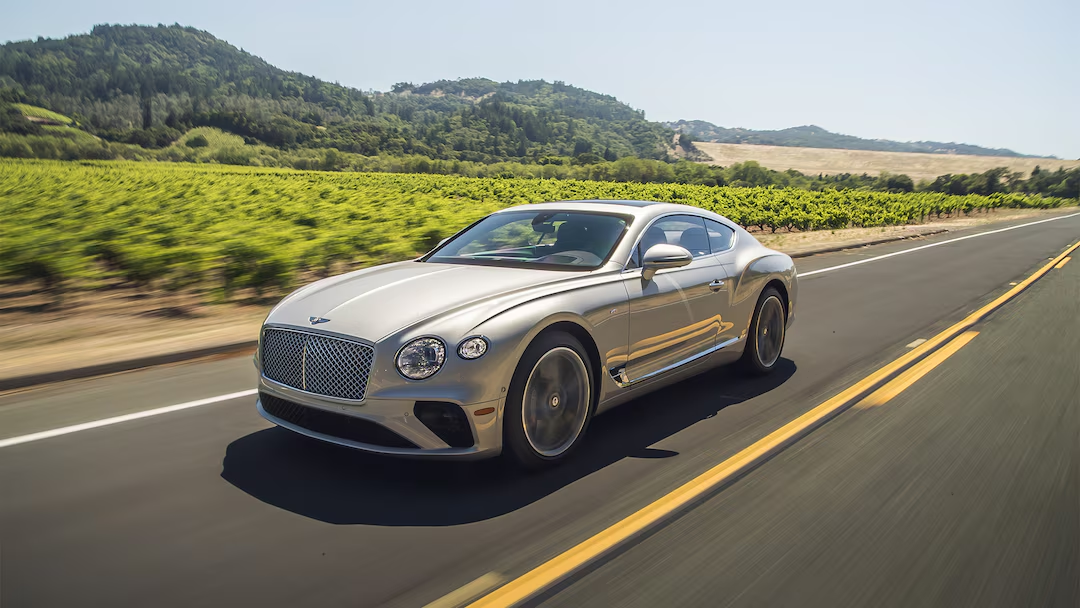
Although the classic, muscular silhouette of the Continental GT is maintained, the fourth generation introduces a significant reinterpretation of its front design. The most notable change is the replacement of the traditional twin headlights with a single oval optical element on each side. Inside this element, a new horizontal daytime running light signature gives the car a more aggressive and focused look, described by Bentley itself as being inspired by the "stare of a tiger". The rear section has also been redesigned, with new taillights and bumpers that accentuate the flowing lines and width of the vehicle.
With this new generation, Bentley is utilizing hybridization not just as a tool to meet regulations, but as a performance multiplier. The instant torque of the electric motor fills any potential lag from the combustion engine, resulting in even more visceral acceleration and immediate throttle response. This approach allows the Continental GT to maintain its identity as a "force of nature" while adapting to a new automotive paradigm. The challenge and genius of the fourth generation lie in proving that a Grand Tourer can simultaneously be more powerful, more efficient, and more relevant than ever, without losing the soul that has defined it for over twenty years.
Since its launch in 2003, the Bentley Continental GT has been much more than just a car; it was the catalyst that transformed Bentley. The model not only saved the company from an uncertain future, but catapulted it from a niche manufacturer to a market leader in the luxury segment, with over 80,000 units sold across its first three generations, an unprecedented number for the brand.
The Continental GT transcended the automotive world to become a cultural icon, a globally recognized symbol of success, luxury, and performance. Its history is a remarkable demonstration of continuous evolution. It started with the absolute power and smoothness of the W12 engine, diversified with the introduction of the agility and efficiency of the V8, made a quantum leap in technology and dynamics with the MSB platform, and now embraces the future with a high-performance hybrid powertrain.
Its legacy is not just that of a car, but of a platform that allowed Bentley to thrive and redefine what it means to be a Grand Tourer in the 21st century. With each new generation, the Continental GT not only responded to the demands of its time, but also set the standard by which all others are measured, securing its place in history as the definitive Grand Tourer.
Images of the Bentley Continental GT 6.0 W12