
1st Generation
(2023-)
4.4 V8 Twin-turbo Plug-in Hybrid
748 cv
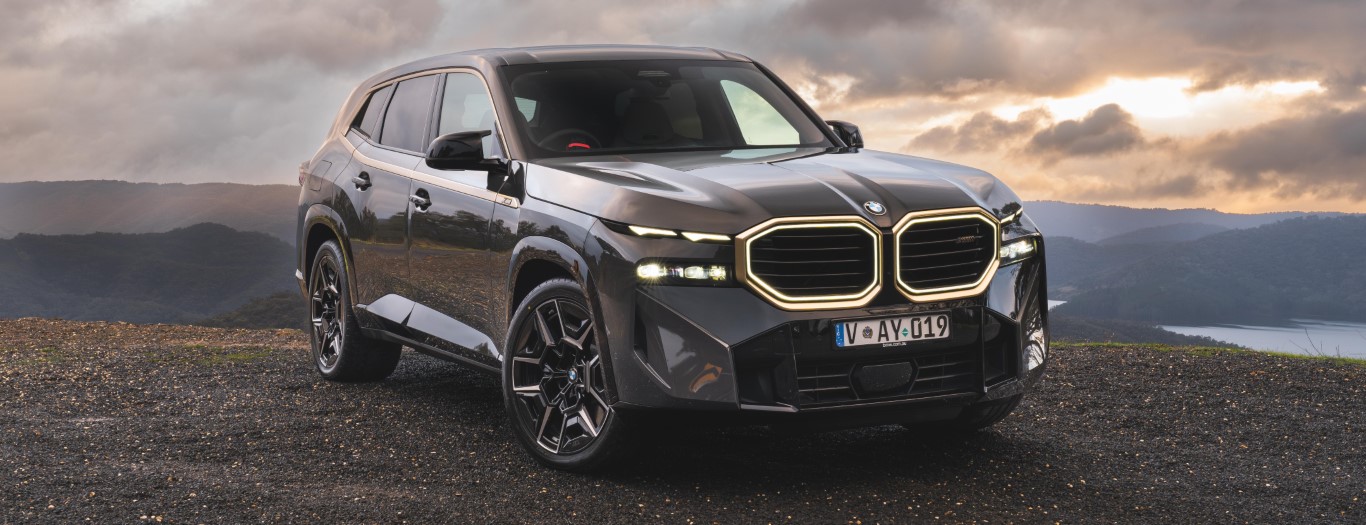
The rebel giant: raw V8 power joined with electrification in a design that makes no apologies for being noticed.
Select a generation to see available versions
(2023-)
The BMW XM represents one of the most significant and polarizing launches in the history of BMW M. Introduced as the first standalone and exclusive model developed entirely by the M division since the iconic M1 supercar of 1978, the XM establishes a new paradigm for the high-performance brand. However, the comparison with its spiritual predecessor ends there. While the M1 was a mid-engine sports car, lightweight and focused on driving purity, the XM is a large SUV (Sports Activity Vehicle), weighing over 2,700 kg, with a complex plug-in hybrid propulsion system.
This fundamental dissonance is not accidental. BMW M positioned the XM as a gift and a statement of intent for its 50th-anniversary celebration in 2022. The development, known internally as "Project Rockstar," signals a monumental shift in the identity of the M division. The marketing link to the M1 does not seek a succession in form, but rather in function: the M1 defined the first era of M, based on the purity of motorsport; the XM was conceived to define its new era, marked by high-performance electrification, extravagant luxury, and a focus on high-profit-margin segments. It is a provocative redefinition of what a "standalone M car" can be in the 21st century.
Production of the model began in late 2022 at the BMW Group plant in Spartanburg, South Carolina, in the United States. This location is strategic, as the plant is the global hub for BMW's large SUVs and the largest exporter of automobiles from the US by value, reinforcing the XM's focus on the North American market.
Before the production model, the world was introduced to the BMW Concept XM at the Art Basel event in Miami. This prototype was a clear and bold harbinger of what was to come, with BMW stating that the production version would retain about 90% of the concept's design.
The concept already established the key elements that would become the visual signature and the source of much of the XM's controversy. The immense kidney grille with illuminated contours, the split headlights, and the imposing silhouette were all presented there. Most importantly, the concept introduced the M HYBRID powertrain, promising a combined output of 750 hp and 1,000 Nm of torque, numbers that would later be realized in the Label Red version. The prototype served as an unmistakable signal of BMW's new design language for its luxury models and the M division's commitment to a high-performance electrified future.
The exterior design of the BMW XM is undoubtedly its most talked-about and polarizing aspect. It was conceived not to please everyone, but to attract a specific audience that values extroverted expression and an imposing presence over conventional aesthetics.
The most striking elements include:
This design acts as a market filter. It moves away from the traditional sobriety of many M models, which were known as "wolves in sheep's clothing," and aligns more with the super-SUV aesthetics of brands like Lamborghini. The strategy is clear: to attract a new luxury consumer, especially in the US and Chinese markets, who is looking for a vehicle that is as powerful a status statement as its performance.
In contrast to the external aggressiveness, the interior of the XM offers an environment of luxury and technology, divided into two distinct zones: a driver-focused cockpit and a rear area conceived as a luxury lounge.
The heart of all versions of the XM is the M HYBRID system, which combines a combustion engine with a powerful electric motor.
The XM's plug-in hybrid system was developed by the M division to deliver instantaneous performance. It consists of a combustion engine (V8 or inline-six, depending on the version) and an electric motor with 145 kW (197 hp) and 280 Nm of torque, integrated into the 8-speed M Steptronic transmission. A notable technical feature is a patented pre-gearing stage that increases the effective torque of the electric motor to 450 Nm at the transmission input, ensuring a vigorous electric boost in any situation. BMW points out that this concept is similar to that used in its endurance race car, the BMW M Hybrid V8, to reinforce the SUV's connection to motorsport.
The standard version of the XM already sets an extremely high performance benchmark.
Offered in selected markets, the 50e version serves as the entry-level model, focusing on a different balance between performance and efficiency.
The Label Red is the pinnacle of the XM lineup and the most powerful BMW M production car ever manufactured.
The table below summarizes the main performance differences between the versions.
| Characteristic | BMW XM 50e | BMW XM | BMW XM Label Red |
|---|---|---|---|
| Combustion Engine | 3.0L I6 Twin-Turbo (B58) | 4.4L V8 Twin-Turbo (S68) | 4.4L V8 Twin-Turbo (S68 High-Output) |
| Combined Power | 476 hp (350 kW) | 653 hp (480 kW) | 748 hp (550 kW) |
| Combined Torque | 700 Nm | 800 Nm | 1,000 Nm |
| Acceleration (0-100 km/h) | 5.1 s | 4.3 s | 3.8 s |
| Top Speed | 250 km/h | 270 km/h (w/ M Driver's Pkg) | 290 km/h (w/ M Driver's Pkg) |
The engineering behind the XM is complex, seeking to balance the massive weight with the driving dynamics expected of an M vehicle.
The XM is a vehicle of large dimensions, which directly impacts its weight and dynamics.
| Category | Specification |
|---|---|
| Dimensions | Length: 5,110 mm | Width: 2,005 mm | Height: 1,755 mm | Wheelbase: 3,105 mm |
| Weight | ~2,750 kg (curb weight) |
| Capacities | Trunk: 527 - 1,820 L | Fuel Tank: 69 L | Towing: 2,700 kg |
| Battery | Type: Lithium-Ion | Capacity (Gross/Usable): 29.5 kWh / 25.7 kWh |
| Electric Range | 82-88 km (WLTP) / ~50 km (EPA) |
| Charging | Max Power (AC): 7.4 kW | Charge Time (0-100% @ 7.4kW): ~3.25 - 4.25 hours |
| Suspension | Adaptive M Professional (steel springs, electronic dampers, active anti-roll bars) |
| Brakes | M Sport (Front: 6 pistons / Rear: 1 piston) |
The interior of the XM is a hub of advanced technology. The dashboard is dominated by the BMW Curved Display, which combines a 12.3-inch digital instrument cluster with a 14.9-inch infotainment screen into a single piece of glass. The iDrive 8 operating system (with updates to 8.5) features M-specific graphics and menus, allowing extensive customization of the driving experience. Connectivity is comprehensive, with wireless Apple CarPlay and Android Auto, voice assistant, and integration with the My BMW app for remote function control.
The standard sound system is a high-quality Harman Kardon Surround. For a superior audio experience, the Bowers & Wilkins Diamond Surround Sound system is available, with 20 speakers, up to 1,500 watts of power, and tweeters that light up, adding a visual touch to the environment. Comfort is enhanced with four-zone climate control, cupholders that can heat or cool drinks, and sophisticated ambient lighting.
The XM is equipped with a full suite of safety and assistance technologies. The standard package, Driving Assistant, already offers collision warnings and lane keeping assist. The optional Driving Assistant Professional package adds semi-autonomous features, such as adaptive cruise control with Stop & Go function and the Highway Assistant, which allows hands-free driving on highways at speeds up to 130 km/h. Parking Assistant Plus, which is standard, uses a 360-degree camera system to facilitate maneuvering and automatically park the vehicle.
Despite all this luxury and comfort technology, there is a notable disconnect with the actual driving experience. The M division's choice of steel-sprung suspension, aimed at performance, results in a ride that is frequently described as overly stiff and uncomfortable on imperfect surfaces. This creates a paradox: the car offers a first-class cabin environment, but the ride in that environment can be harsh, revealing a conflicting identity between a luxury SUV and an uncompromising performance car.
The BMW XM is produced exclusively at the Spartanburg plant in the US. Its sales performance reflects its niche nature and its high price.
| Year | Global Sales | US Sales | Global Variation (Previous Year) |
|---|---|---|---|
| 2023 | 6,749 | 2,315 | N/A |
| 2024 | 7,813 | 1,974 | +15.8% |
Despite a global growth of 15.8% in its first full year of sales, the XM was BMW's lowest-volume model in 2024, outsold even by the Z4. In the crucial US market, sales fell 14.7% in 2024 compared to the 2023 sales period, indicating a lukewarm reception.
The reception of the XM has been extremely polarized. Critics and experts consistently praise the quality and luxury of the interior, the overwhelming power of the hybrid system, and the undeniable road presence of the vehicle.
However, the negative criticisms are equally strong and focus on three main points:
Owner opinions on online forums reflect this division: some celebrate its exclusivity and unique design, while others confirm the criticisms about the stiffness of the suspension and the sometimes abrupt transition between propulsion modes.
The XM competes in the exclusive super-SUV segment, facing formidable competitors:
Other models like the Mercedes-AMG G63 and the Range Rover Sport SV also vie for the same high-net-worth customer.
The BMW XM is a vehicle of extremes: the most powerful M, the heaviest, and one of the most controversial ever created. It is not a successor to the M1 in spirit, but rather a bold statement about the new direction of BMW M. Its purpose is clear: to establish the brand at the top of the luxury SUV segment, combining high-performance electrification with unprecedented opulence.
Regardless of its limited commercial success, the XM has already cemented its place in BMW's history. The M HYBRID technology, introduced and tested in this model, is the foundation for future M vehicles, including the upcoming BMW M5. The XM acted as a strategic "lightning rod": by launching its most radical technologies and most controversial design in a very high-priced niche model, BMW M absorbed the cultural shock of the transition to hybrid SUVs. This paves the way so that the same technology, when applied to more traditional and beloved models, is received as a natural evolution and not as a break from tradition. Thus, the XM, despite its flaws and controversies, may have been a strategically necessary step to ensure the electrified and profitable future of the world's most famous performance division.