
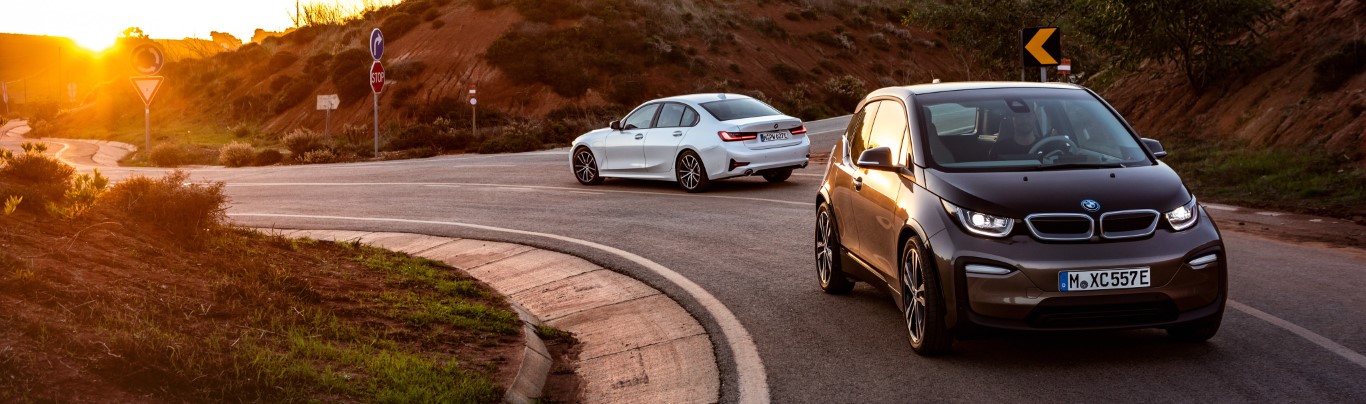


More than a Car, A Revolution on Wheels
The BMW i3 was not just another electric car; it was a declaration of intent, an audacious turning point for one of the most traditional automobile manufacturers in the world. Launched in 2013, it represented a radical departure from everything known about automotive design, engineering, and production, positioning itself as the cornerstone of BMW's electric future. It was the brand's first mass-produced zero-emissions vehicle, inaugurating the "BMW i" sub-brand and a new chapter in the history of mobility.
Unlike many of its contemporaries, which adapted combustion car platforms to accommodate batteries, the i3 was conceived from a "blank sheet" (clean sheet design). Every component, every line, and every material was thought out exclusively for electric mobility. This approach allowed for innovations that would be impossible in an adapted project. Its production, which spanned from September 2013 to August 2022, is a testament to its relevance and the fundamental role it played in the industry's transition.
However, the creation of the i3 was a high-risk bet. For BMW, whose identity and reputation were built on the excellence of its combustion engines, the decision to embark on a multi-billion euro project focused on batteries was, to say the least, brave. Internally, priorities were redefined: the most valuable component was no longer the engine, but the battery. The initial working group, known as "Project i", started as an "exotic troupe" of engineers and strategists, operating almost unnoticed in the corners of the company's headquarters. The decision to advance from the prototype phase to volume production, despite the immense technological and manufacturing risks, demonstrated a visionary commitment from BMW's top management. The i3 was not just a new model; it was a calculated bet on the future of mobility, a move that would redefine the very soul of the company.
The Genesis: "Project i" and the Vision of Urban Mobility
The roots of the BMW i3 date back to 2007, a time when the automotive industry was beginning to face an unprecedented confluence of challenges. Under the leadership of the then-chairman of the board, Norbert Reithofer, BMW initiated "Project i", a strategic initiative to find radical answers to the issues that would shape the future: climate change, the growing congestion of megacities, and the new needs and values of consumers.
"Project i" was not a conventional development department. It was structured as an independent think tank, a laboratory of ideas with the freedom to break conventions and explore disruptive solutions for urban mobility, far from the restrictions and established processes for developing traditional cars. This autonomy was crucial for the project to be able to think "outside the box".
The development that culminated in the i3 was uniquely driven by real-world data, not just laboratory simulations. BMW launched two large-scale testing phases that were fundamental to the project. The first was with the MINI E, a fleet of 500 vehicles distributed to real customers in cities like Los Angeles and New York. The second phase came with the BMW ActiveE, based on the 1 Series, which deepened the studies with an internally developed electric motor and advanced batteries from a joint venture between Samsung and Bosch.
These pilot programs were not mere marketing exercises; they were large-scale social and technical experiments. They provided an immense volume of raw and unfiltered data on charging habits, the perception of range, and the daily usability of an electric vehicle. It was in these tests that the concept of "range anxiety" manifested itself as the main psychological barrier to EV adoption. BMW learned directly from thousands of real users what their fears and practical everyday needs were. This iterative and user-centered approach was innovative for a traditional automaker and directly influenced the final design of the i3. The decision to offer the Range Extender (REx) version was not just an engineering solution, but a direct and strategic response to a proven market fear, serving as a psychological and practical safety net to convince consumers to take the leap into electrification.
Design and Construction: The Architecture of Innovation
The BMW i3 stood out from all other cars on the road not only for its futuristic design but for its fundamentally revolutionary construction. Material science and vehicle architecture were the pillars that allowed it to be so light, efficient, and spacious.
The LifeDrive Structure: Two Modules, One Vision
At the heart of the i3 is the LifeDrive architecture, a concept developed specifically for electric vehicles that divides the car into two distinct and independent modules.
- Life Module: This is the passenger cell, the cabin where the driver and occupants sit. It was built almost entirely with Carbon Fiber Reinforced Plastic (CFRP), an extremely lightweight and, at the same time, incredibly rigid and safe material.
- Drive Module: Made of aluminum, this lower chassis houses all the driving-related components: the high-voltage battery, the electric motor, the suspension, and the power electronics. By concentrating the heaviest parts at the base of the car, this architecture ensures a very low center of gravity, improving agility and stability.
Carbon Fiber for the Masses: The Light Heart of the i3
The extensive use of carbon fiber was, perhaps, the i3's greatest technical innovation. It was the first mass-produced car to use an internal structure and body made of CFRP. This material, previously restricted to supercars and Formula 1 race cars, is as strong as steel but with about 50% of the weight.
The choice of carbon fiber was an engineering necessity. To "cancel out" the extra weight of the heavy lithium-ion battery, BMW needed to make the rest of the car as light as possible. The result was a remarkable feat: an electric car that did not suffer from an excessive weight penalty compared to its combustion equivalents, something that, even a decade later, many EVs still struggle to achieve.
The production process was also pioneering. The carbon fiber was manufactured in a plant in Moses Lake, Washington (USA), a joint venture between BMW and SGL Carbon, which was powered by hydroelectric energy, reinforcing the commitment to sustainability right from the origin of the raw material. From there, the material was sent to Germany, where, at the Leipzig plant, 173 robots assembled the Life Module using only high-tech adhesives, without traditional welds.
The decision to use CFRP, motivated by the need to compensate for battery weight, had a ripple effect that directly defined the user experience and practicality of the i3. The immense structural rigidity of the Life Module made a central pillar (the B-pillar) structurally unnecessary. The absence of this pillar allowed for the implementation of the iconic "clamshell" (or suicide) rear doors, which open in the opposite direction to the front ones. This created a huge, unobstructed side opening, greatly facilitating entry and exit, especially for rear-seat passengers and in tight parking spaces.
At the same time, the Drive Module architecture, which housed the entire powertrain in a flat chassis, eliminated the need for a central transmission tunnel that typically runs through the interior of combustion cars. The result was a completely flat floor and a surprisingly open and airy interior, with a sense of space compared to a "modern living room", amplified by the elevated seating position. Therefore, the choice of an avant-garde material was not just an engineering exercise; it was what made possible the unique interior design, accessibility, and sense of spaciousness that were essential for its mission as a "Mega City Vehicle".
Sustainability as a Pillar: A Conscious Interior
The i3's commitment to sustainability was visible and tangible in every detail of its interior, where recycled and renewable materials were used in innovative ways.
- Dashboard and Trims: The dashboard could be finished with eucalyptus wood from FSC-certified forests. This type of fast-growing wood is naturally moisture-resistant and requires 90% less surface treatment than conventional woods.
- Door Panels: They were made with kenaf fibers (a plant from the hibiscus family), which, mixed with plastic, reduced the weight of each panel by about 10% and left an exposed natural texture as a design element.
- Upholstery: Upholstery options included leather tanned with olive leaf extract, a byproduct of olive farming. The fabric seats were made from nearly 100% recycled polyester (derived from PET bottles) or a blend with 40% pure wool.
- Plastics: About 25% of the plastics used in the interior and bodywork came from recycled or renewable sources.
In total, up to 95% of the BMW i3 was recyclable at the end of its useful life, closing a sustainability cycle that ranged from production with clean energy to the reuse of its components.
Evolution of the i3: Generations and Battery Updates
The trajectory of the BMW i3 over its nine years of production is a direct reflection of the rapid evolution of battery technology in the 2010s. Capacity updates were not just incremental improvements; they represented significant leaps that made the car increasingly practical and viable for a broader audience. The i3 served as a real-time barometer of the progress of the electric vehicle industry.
2013–2016: The Launch (60 Ah)
The first generation of the i3 hit the market with a 60 Ah lithium-ion battery, which had a gross capacity of 21.6 to 22 kWh and a usable capacity of approximately 18.8 kWh. At the time, these were respectable numbers for a compact electric car.
Range: The official range according to the US Environmental Protection Agency (EPA) cycle was 130 km (81 miles). In real-world daily use conditions, BMW estimated a range between 130 and 160 km.
2016–2018: The First Major Update (94 Ah)
In 2016, the i3 received its first major update, which marked a turning point for the model. The new 94 Ah battery represented a capacity increase of over 50%, jumping to 33.2 gross kWh and about 27.2 usable kWh. The most impressive thing was that this improvement was achieved by increasing the energy density of the lithium cells, without altering the physical dimensions of the battery pack. The car gained much more range without sacrificing space or adding significant weight.
Range: The official (EPA) range increased to 183 km (114 miles), a jump of more than 40% that made it much more competitive and practical for daily use.
2018–2022: Maturity (120 Ah)
The final iteration of the i3 battery arrived in 2018 with the 120 Ah version. This update raised the capacity to 42.2 gross kWh and approximately 37.9 usable kWh, almost double the capacity of the original model, again maintaining the same physical format of the battery pack.
Range: With this battery, the i3 achieved an official (EPA) range of 246 km (153 miles), making it a fully capable urban electric vehicle, with enough range for most daily needs and short trips without worry.
This constant and rapid progression in energy density, demonstrated so clearly within the life cycle of a single model, was tangible proof to consumers and the industry that battery technology was advancing at an accelerated pace. The i3 became a living showcase, showing year after year that the viability of electric cars was improving exponentially.
Special Versions: REx and i3s
In addition to battery updates, BMW offered two distinct variants of the i3 to cater to different customer profiles. One was designed to eliminate range anxiety, while the other injected the brand's characteristic sporty DNA into the small EV.
The Range Extender (REx): The Solution for Anxiety
Aware that the fear of running out of battery was the biggest barrier to the adoption of electric cars, BMW offered an ingenious solution: the Range Extender (REx). This version was, in practice, a series hybrid.
- Operation: The REx system consisted of a small two-cylinder, 647 cc gasoline engine, derived from a BMW Motorrad scooter, mounted at the rear of the vehicle. Crucially, this engine had no mechanical connection to the wheels. Its sole function was to act as an energy generator to recharge the battery when its charge level dropped below a certain point (usually 7.5%), maintaining it at a constant state of charge and allowing the car to continue running on electric propulsion.
- Specifications: The gasoline engine produced between 25 kW and 28 kW (34 to 38 hp) and was fed by a small fuel tank (initially 7.2 liters in the US and later standardized at 9 liters).
- Impact: The REx system added between 120 and 150 kg to the car's weight, which resulted in slightly slower acceleration (for example, the 0 to 100 km/h time on the 94 Ah version increased from 7.3 to 8.1 seconds). In return, it practically doubled the total range of the vehicle, eliminating range anxiety and transforming the i3 into a car capable of making longer trips without relying exclusively on charging infrastructure.
The BMW i3s: The Sporty Touch
In 2017, alongside a Life Cycle Impulse (LCI) facelift, BMW introduced the i3s, a version that sought to satisfy brand enthusiasts who desired a more dynamic driving experience.
- Performance: The electric motor of the i3s was recalibrated to deliver more power and torque. Maximum power rose from 170 hp (125 kW) to 184 hp (135 kW), and torque increased from 250 Nm to 270 Nm. This reduced the 0 to 100 km/h acceleration time to 6.9 seconds (down from 7.3s) and raised the top speed from 150 km/h to 160 km/h.
- Chassis and Suspension: The changes were not just in software. The i3s received a dedicated sports suspension, with exclusive springs, shock absorbers, and anti-roll bars. The car's height was lowered by 10 mm and the track (distance between the wheels on the same axle) was widened by 40 mm. These alterations drastically improved stability at high speeds and cornering handling, reducing the sensitivity to crosswinds that affected the standard model.
- Design: The i3s was easily identifiable by its exclusively designed 20-inch wheels and wider tires, as well as gloss black wheel arches and bumper details, which gave it a more aggressive and planted stance.
- Driving Mode: The "s" version also featured an exclusive "SPORT" driving mode, which made throttle response more immediate and the steering firmer, intensifying the sporty feel.
Detailed Technical Sheet: All Versions Side by Side
To fulfill the promise of an exhaustive report, the following tables consolidate the technical specifications of all the main versions of the BMW i3, allowing for a direct and clear comparison of its evolution and the differences between models.
Evolution of the 100% Electric (BEV) Versions
| Version | Production Years | Battery (Gross / Usable) | Power | Torque | Acceleration 0-100 km/h | Top Speed | Range (Cycle) | Weight (DIN) |
|---|---|---|---|---|---|---|---|---|
| i3 60 Ah | 2013–2016 | 22 kWh / 18.8 kWh | 170 hp (125 kW) | 250 Nm | 7.2 s | 150 km/h | 130 km (EPA) | 1,195 kg |
| i3 94 Ah | 2016–2018 | 33.2 kWh / 27.2 kWh | 170 hp (125 kW) | 250 Nm | 7.3 s | 150 km/h | 183 km (EPA) | 1,245 kg |
| i3 120 Ah | 2018–2022 | 42.2 kWh / 37.9 kWh | 170 hp (125 kW) | 250 Nm | 7.3 s | 150 km/h | 246 km (EPA) | 1,270 kg |
Comparison: BMW i3 (120 Ah) vs. BMW i3s (120 Ah)
| Specification | BMW i3 (120 Ah) | BMW i3s (120 Ah) |
|---|---|---|
| Power | 170 hp (125 kW) | 184 hp (135 kW) |
| Torque | 250 Nm | 270 Nm |
| Acceleration 0-100 km/h | 7.3 s | 6.9 s |
| Top Speed | 150 km/h | 160 km/h |
| Suspension | Standard | Sport (lowered by 10 mm) |
| Track (Width) | 1,571 mm (front) / 1,576 mm (rear) | 1,592 mm (front) / 1,578 mm (rear) |
| Standard Wheels | 19 inches (155/70 tires) | 20 inches (175/55 front, 195/50 rear tires) |
| Weight (DIN) | 1,270 kg | 1,290 kg |
| Turning Circle | 9.86 m | 10.31 m |
REx Version Specifications (Range Extender - 94 Ah Model)
| Feature | Specification |
|---|---|
| Combustion Engine | Inline 2-cylinder, 647 cc |
| Power (Combustion Engine) | 38 hp (28 kW) @ 5,000 rpm |
| Torque (Combustion Engine) | 56 Nm @ 4,500 rpm |
| Tank Capacity | 9 liters |
| Additional Weight (approx.) | +120 kg (compared to the BEV version) |
| Acceleration 0-100 km/h | 8.1 s |
| Total Range (Electric + REx) | Up to 330 km (NEDC cycle) |
Production and Market: The i3 in Numbers
The journey of the BMW i3, from radical concept to market product, can be quantified by its production and sales numbers, which tell the story of a pioneer in an emerging market.
Over its nearly nine-year lifespan, exactly 250,000 units of the BMW i3 were produced. All of them rolled off the assembly line at BMW's Leipzig plant in Germany. Consistent with the car's sustainability philosophy, the Leipzig plant was adapted to be a model of ecological production, being powered by wind turbines installed on site, ensuring that the manufacturing of the i3 was as clean as its operation.
The i3 achieved a remarkable global reach, being sold in 74 countries around the world. In its early years, it quickly established itself as one of the best-selling electric vehicles on the planet, ranking in the global top 3 between 2014 and 2016. Its largest markets were Germany, its home country, and the United States, which together absorbed a significant portion of production. The United Kingdom also proved to be a strong market, with over 10,000 units sold by early 2018. Annual sales data in Europe and the US confirm the sale of tens of thousands of units per year during its peak.
It is crucial to contextualize the figure of 250,000 units. By the standards of a high-volume BMW model, like the 3 Series, which can sell that amount in less than a year, the i3's total may seem modest. However, this comparison is inappropriate. The i3 was a niche product: a compact, premium electric car with a polarizing design and a high initial cost, largely due to its complex and expensive carbon fiber construction. It was launched into an electric vehicle market that, in the first half of the 2010s, was tiny and dominated by consumer skepticism, especially regarding range and charging infrastructure.
In this scenario, selling a quarter of a million units and becoming one of the three best-selling electric cars in the world was a resounding success. It proved that there was a viable and growing market for an innovative premium EV. The commercial success of the i3, even if moderate on an absolute scale, validated the multi-billion dollar bet of "Project i" and provided BMW not only with a financial return, but more importantly, an invaluable capital of experience and knowledge. This experience was the foundation upon which the company would build its entire subsequent electrification strategy.
The End of an Era and the Beginning of Another
Production of the BMW i3 came to an end in August 2022, not for lack of relevance, but as part of a strategic evolution. The Leipzig plant was reorganized to produce the new generation of the MINI Countryman, including its electric version, marking the passing of the baton to the group's next generation of electrified vehicles. To celebrate its farewell, BMW produced a special and exclusive edition called the "HomeRun Edition", limited to just 10 units. Based on the i3s, these final units featured exclusive paint jobs from the BMW Individual program and a complete equipment package, serving as a final tribute to an iconic model.
An Award-Winning Pioneer
Since its launch, the BMW i3 has been critically acclaimed and has accumulated an impressive collection of international awards, which validated its innovative approach in design and engineering.
- In 2014, shortly after its debut, it won two of the most prestigious World Car of the Year titles: "World Green Car" and "World Car Design of the Year", a rare feat that highlighted both its sustainability and its revolutionary aesthetics.
- In 2017, the i3 won the inaugural edition of the World Urban Car award, a recognition that crowned its perfect suitability for the environment for which it was designed: cities.
- In addition to these, the i3 received dozens of other awards in key markets such as Germany and the UK, including "Car of the Year" titles and numerous recognitions for its innovation in design and sustainability.
The Lasting Legacy: Seeds for the "Neue Klasse"
The true legacy of the i3 lies not in its sales numbers, but in its role as a technological laboratory on wheels. It was the platform where BMW learned, on an industrial scale, to master the technologies that would define the future of the automotive industry. The knowledge gained with "Project i" in CFRP manufacturing, thermal and chemical battery management, electric motor design (eDrive technology), and sustainable production processes became the foundation for BMW's entire current electrification strategy.
The lessons from the i3 directly paved the way for BMW's "Power of Choice" platform (which allows the production of combustion, hybrid, and electric models on the same line) and, more importantly, for the "Neue Klasse" (New Class), BMW's future architecture dedicated exclusively to electric vehicles. Symbolically, the very name "i3" is destined to be revived in a future fully electric sedan built on this new and advanced platform, ensuring that the pioneer's name continues to be synonymous with innovation.
Ultimately, the BMW i3 did more than introduce BMW to the electric age; it transformed BMW from an engine company into a technology company. To build the i3, BMW had to become a world leader in carbon fiber manufacturing on an industrial scale. It had to master battery chemistry, power electronics, and energy management software, developing its own eDrive technology in-house. It pioneered vehicle connectivity, becoming the "world's first fully connected electric car", with an integrated SIM card for smart services like dynamic range mapping.
This forced diversification of skills — from material science to battery chemistry and software development — represented a fundamental transformation. The i3 was the catalyst that pushed BMW beyond its comfort zone as "the engine company" and prepared it to compete in the 21st-century automotive landscape, which is defined by software, battery technology, and advanced materials. Its legacy is not just the car it was, but the very existence of today's electrified and technologically advanced BMW Group.