1st Generation
(2022 - 2025)
Eletric (Two motors)
619 cv

Technical specifications, versions, and history for the Bmw iX.
Select a generation to see available versions
Select a powertrain to view full technical specifications
The history of the BMW iX does not begin with a production line, but with a bold vision encapsulated in a concept car: the BMW Vision iNext. Unveiled in 2018, the iNext was not just a prototype of a future electric SUV; it was a manifesto regarding the direction BMW would take in the era of autonomous, connected, and electric mobility. This project represented the beginning of what the company internally called "Project i 2.0," a fundamental reassessment of its electrification strategy.
Following the pioneering, yet niche, BMW i3 and i8, BMW realized that the next phase of electrification would require vehicles that appealed to a broader audience. The conclusion, after a reanalysis in 2016, was that customers wanted long-range electric cars in familiar and desirable formats, such as SUVs and sedans, rather than exotic designs. The Vision iNext was the answer to this demand, conceived to be the brand's new technological flagship, integrating all of the company's strategic areas of innovation into a single vehicle.
The philosophy behind the Vision iNext was based on four strategic pillars, known by the acronym ACES: Autonomous, Connected, Electric, and Services. This framework defined the project's goal: to create a vehicle that not only transported people but also offered a new quality of life on board.
The most radical proposal of the Vision iNext was the redefinition of the automobile's interior. BMW introduced the concept of "My Favorite Space," transforming the cabin from a simple cockpit into a personal sanctuary of well-being and relaxation. The idea was that, with the advent of autonomous driving, the time spent inside the car could be used in entirely new ways. The interior was designed to resemble a "lounge" or a "boutique hotel lobby," featuring rich materials, calm colors, and a layout that promoted social interaction. The absence of a B-pillar and doors that opened in opposite directions created an expansive and inviting environment, flooded with light.
This duality of purpose was materialized in the "Boost" and "Ease" driving modes. In "Boost" mode, the focus was on the driver, with the steering wheel and displays clearly positioned for an active and engaging driving experience. When switching to "Ease" mode, activated by voice command or a simple touch on the BMW logo on the steering wheel, the car transformed. The steering wheel and pedals retracted, creating an open space and allowing the front seat occupants to turn and converse with the rear passengers, redefining the social dynamics within the vehicle.
To achieve this atmosphere of calm and luxury, BMW introduced another fundamental innovation: "Shy Tech". The concept was simple, yet revolutionary: technology should be integrated almost invisibly, manifesting itself only when requested by the driver or passengers. This approach was a direct response to the increasing complexity and visual pollution of automotive interiors, which were becoming overloaded with screens and buttons. BMW proposed that the best technology is that which does not impose itself, but is always available.
Practical examples of this philosophy in the Vision iNext included:
The design development of the Vision iNext was a meticulous process that lasted up to 18 months, culminating in the selection of a winning design from an internal competition among BMW designers. The exterior, with its innovative Liquid Greyrose Copper paint that changed shade from copper to dark rose, reflected the dynamic and futuristic nature of the concept. With the Vision iNext, BMW was not just showing a car; it was signaling a fundamental shift in its philosophy. The focus was shifting from the "Ultimate Driving Machine" to the "Ultimate Experience on Board," indicating that the future of automotive luxury would be defined as much by the quality of time spent inside the car as by driving dynamics.
The transition of the BMW Vision iNext from a concept car to the production model, the BMW iX, was a remarkable exercise in engineering and design, preserving the essence of the original vision while adapting it for the real world. Launched globally in 2021, the iX materialized the promises of technology, sustainability, and a new kind of luxury.
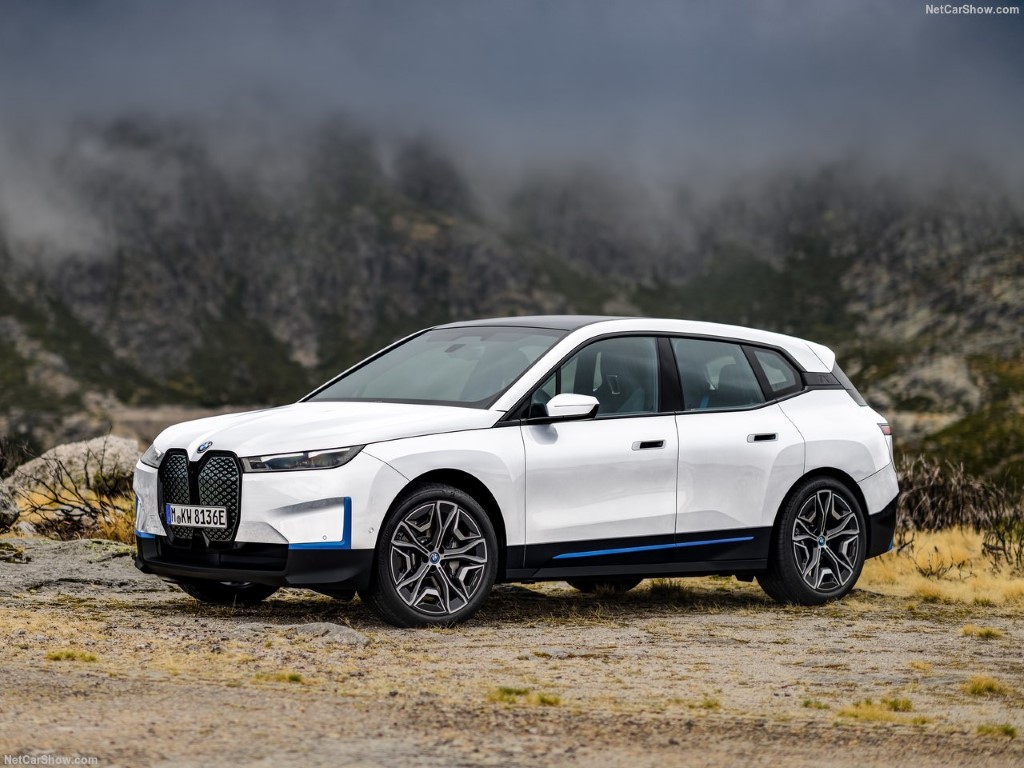
The iX was conceived to redefine the concept of the Sports Activity Vehicle (SAV), BMW's term for its SUVs. Its proportions are a calculated fusion of other models in the X lineup: it has a length and width comparable to the BMW X5, the roof height of a BMW X6, and the imposing wheel size (up to 22 inches) of a BMW X7.
The most discussed and controversial design element is, without a doubt, the large vertical front grille. However, its shape is not merely a stylistic choice, but a direct consequence of the vehicle's electrification. Since the electric propulsion system requires significantly less air cooling compared to a combustion engine, the traditional function of the grille became obsolete. BMW, therefore, reinvented it as an "intelligence panel". Behind its transparent surface, the grille houses a range of essential technologies for the semi-autonomous driving systems, including cameras, radar, and other sensors. To ensure these sensors remain fully functional at all times, the surface of the grille is coated with a polyurethane layer that features a "self-healing" capability. Minor scratches and chips disappear over time or with the application of heat, ensuring the car's "vision" is never obstructed. Thus, the design of the grille is a physical expression of BMW's transition from a mechanical era to a digital and electric era, where form follows the new function.
Aerodynamic efficiency was a top priority in the development of the iX. With a drag coefficient (Cd) of just 0.25, the iX became the most aerodynamic SUV ever built by BMW. This feat was achieved through a clean surface design, flush door handles, frameless windows, and aerodynamic wheels. The low air resistance is not just a technical achievement; it has a direct and significant impact on the vehicle's range, adding about 65 km in the WLTP test cycle.
The foundation of the iX is an entirely new electric drivetrain architecture, yet designed to be highly compatible with BMW's modular CLAR platform. This compatibility is a crucial strategic decision. Instead of investing in factories dedicated exclusively to electric vehicles, BMW opted for a flexible manufacturing approach. This allows the iX to be produced on the same assembly line as combustion cars at the Dingolfing plant in Germany. This strategy offers resilience, allowing the company to adjust production based on market demand and make a more gradual transition to electrification, mitigating financial risks.
The structure of the iX is an example of advanced materials engineering. It utilizes an aluminum spaceframe combined with what BMW calls the "Carbon Cage", an evolution of the "Carbon Core" seen in the 7 Series. Carbon Fiber Reinforced Plastic (CFRP) is used extensively in critical areas like the side frame, roof, and rear window opening to increase rigidity and reduce weight. The rest of the body is a mix of high-strength steel, aluminum, and thermoplastics, optimizing safety and efficiency.
Inside the iX, the "Shy Tech" philosophy of the Vision iNext is evident. The design is minimalist and human-centric, with a reduced number of physical buttons. The focal point of the dashboard is the impressive BMW Curved Display, a single curved piece of glass that floats above the dashboard and unites a 12.3-inch digital instrument cluster with a 14.9-inch infotainment screen. The iX was the first BMW model to debut this display alongside the iDrive 8 operating system, which offers customizable graphics and an enhanced voice assistant.
Another distinctive design element is the hexagonal steering wheel, a functional choice designed to improve visibility of the instrument panel and facilitate entry and exit from the vehicle. Luxury in the iX is defined as much by technology as by sustainability. Materials include FSC-certified open-pore wood trims, "Crafted Clarity" glass controls for the gear selector and iDrive controller, and upholstery options ranging from leather tanned with olive leaf extract to a sustainable fabric called "Loft," which uses microfiber.
One of the most innovative features is the panoramic "Sky Lounge" roof. Instead of a physical sunshade, it uses Polymer Dispersed Liquid Crystal (PDLC) technology. At the touch of a button, an electrical current is applied to a film layer within the glass, causing the liquid crystals to align and the roof to become transparent. When the current is turned off, the crystals scatter and the glass becomes opaque, providing shade and privacy. This is a unique feature in the automotive industry and a perfect example of the "Shy Tech" philosophy in action.
The BMW iX hit the global market in 2021, with its launch in Brazil taking place in early 2022. Reception in the Brazilian market was immediately positive, with the initial pre-sale batch of 30 units selling out in just 12 hours, a clear sign of the strong demand for luxury electric SUVs in the country.
The heart of all iX versions is the fifth-generation BMW eDrive propulsion technology. This highly integrated system combines the electric motor, power electronics, and single-speed transmission in a single compact housing, resulting in a power density 30% higher than the brand's previous systems. A notable feature of these motors is that they are electrically excited synchronous motors, meaning they do not use permanent magnets. This eliminates the need for rare-earth metals, such as cobalt, in their construction, making production more sustainable. BMW claims the entire propulsion system achieves a remarkable efficiency of 93%.
The initial iX lineup was structured into three distinct versions, each with a clear positioning in terms of performance, range, and price.
BMW's product strategy for the iX line was clear and effective. The substantial difference in range between the xDrive40 and xDrive50 was the primary deciding factor for consumers. "Range anxiety" is one of the biggest barriers to electric vehicle adoption, and BMW used this to its advantage. The xDrive50 was positioned as the ultimate choice for those desiring maximum peace of mind for long trips, justifying its higher price tag with the promise of a segment-leading range. In contrast, the xDrive40 was presented as a more suitable option for urban use or for families who own a second car for travel, making the iX technology more accessible. The M60, in turn, occupied the top of the range, appealing to enthusiasts seeking the maximum in electric performance without compromising on luxury.
| Characteristic | BMW iX xDrive40 | BMW iX xDrive50 | BMW iX M60 |
|---|---|---|---|
| Power (hp) | 326 | 523 | 619 |
| Torque (kgfm) | 64.2 | 78.0 | 112.2 |
| Battery (Gross, kWh) | 76.6 | 111.5 | 111.5 |
| Range (Inmetro, km) | 327 | 528 | 431 |
| Acceleration 0-100 km/h (s) | 6.1 | 4.6 | 3.8 |
| Top Speed (km/h) | 200 | 200 | 250 |
The electric vehicle market evolves at a breakneck pace, where advances in battery technology, motor efficiency, and software can make a model feel dated in just a few years. Aware of this dynamic, BMW implemented a significant mid-cycle update, known as LCI (Life Cycle Impulse), for the iX, to be launched for the 2025/2026 model year. This update was not a simple cosmetic touch-up; it was a strategic response to keep the iX at the forefront of the segment, with substantial improvements in power, range, and technology.
The external visual changes were deliberately subtle, focused on refining the existing design for a "cleaner" and more modern look. Key changes include new headlights with a redesigned light signature and bumpers with fewer cutouts, giving it a more cohesive appearance. A notable novelty is the introduction of the "Iconic Glow" illuminated grille as an optional item, which becomes standard on the top-of-the-line M70 version, adding an extra touch of visual presence.
The most important change in this update was the restructuring of the model lineup, with a new nomenclature that reflects the significant increase in performance and capacity. BMW used this name change (from 40 to 45, 50 to 60) as an effective marketing tool to communicate that this was a substantial advancement, not a mere incremental update.
The increase in range was not solely due to larger batteries. BMW implemented a series of efficiency improvements, including low rolling resistance tires, optimized bearings, and new silicon carbide inverters, which helped reduce energy consumption. Fast charging (DC) speed was also improved in the entry version, which now accepts up to 175 kW (previously 150 kW), while the higher versions maintain a capacity of up to 195 kW, allowing a recharge from 10% to 80% in about 35 minutes.
| Characteristic | BMW iX xDrive45 | BMW iX xDrive60 | BMW iX M70 xDrive |
|---|---|---|---|
| Power (hp) | 408 | 544 | 660 |
| Torque (kgfm) | 71.4 | 78.0 | 112.2 |
| Battery (Gross, kWh) | 100.1 | 113.4 | 112.8 |
| Range (WLTP, km) | up to 602 | up to 701 | up to 600 |
| Acceleration 0-100 km/h (s) | 5.1 | 4.6 | 3.8 |
| Top Speed (km/h) | 200 | 200 | 250 |
The BMW iX is not just a technological flagship, but also a large-scale industrial product, whose production and sales performance offer a clear view of BMW's electrification strategy and its reception in the global market.
The BMW iX is produced exclusively at the BMW Group plant in Dingolfing, Germany. This is the company's largest production plant in Europe, an advanced industrial complex where BMW has implemented its flexible manufacturing strategy, allowing the iX to be assembled alongside combustion models such as the 5 and 7 Series. Serial production of the iX began in July 2021.
Production reached major milestones in a short period. In November 2023, just over two years after production began, BMW celebrated the manufacturing of the 100,000th unit of the iX. By March 2025, the number of units sold globally had already surpassed 130,000, demonstrating consistent demand for the model.
The iX has played a crucial role in the growth of BMW's electrification. In 2023, a record sales year for the BMW Group with over 2.5 million vehicles delivered, sales of fully electric vehicles (BEVs) grew by 74.4%, reaching 376,183 units and representing 15% of the company's total sales. The iX was one of the main drivers of this growth, being one of the brand's most sought-after electric models, alongside the i4, iX1, and i7.
The United States market emerged as one of the most important for the iX. In 2023, about 32% of all iX production was destined for the North American market. Sales in the US reflected a classic pattern of adoption for new technologies. After selling around 17,301 units in 2023, an explosive growth of 205% over the previous year, driven by technology enthusiasts and luxury customers eager for novelty, the model faced a slowdown. In 2024, global sales of the iX fell 24.8% to 38,365 units. This drop can be attributed to a combination of factors: the saturation of the "early adopters" market, intensifying competition in the luxury electric SUV segment, and hesitation from potential buyers who were waiting for the already announced mid-cycle update of the model. This accelerated sales cycle suggests that, in the luxury EV segment, technological novelty and cutting-edge specifications are crucial sales drivers, making product updates even more critical to maintaining commercial momentum.
In Brazil, the iX arrived in early 2022 and quickly established itself as an object of desire. The launch prices were R$ 654,950 for the xDrive40 version and R$ 799,950 for the xDrive50, with the high-performance M60 version arriving later for R$ 1,101,950. The success was immediate, with the first pre-sale batch of 30 units sold out in just 12 hours, which led BMW to increase the production quota allocated to the country.
In terms of volume, in 2024, the iX was BMW's second best-selling electric car in Brazil, with 236 units registered. It was just behind the iX1 (252 units), a more accessible entry-level model, and ahead of the iX3 (151 units). This is a solid sales performance for a vehicle in its price range, confirming its position as one of the top luxury electric SUVs in the Brazilian market.
Since its launch, the BMW iX has been a vehicle that provokes strong reactions, both from specialized critics and its owners. It is simultaneously one of the most advanced and comfortable vehicles on the market and one of the most controversial in terms of design, embodying a paradox that defines its place in the automotive industry.
In Brazil, the iX has accumulated a series of important awards that validated its innovative proposition. It was elected the "Best Premium SUV" by Car Magazine Brazil, received the "Imported Vehicle" award at the 2022 AutoData Awards, and was crowned "Car of the Year" in the Superpremium Electric category by the prestigious Auto Esporte magazine. At the latter awards ceremony, the model also took home the unprecedented "Innovation of the Year" award, a direct recognition of its disruptive technologies, such as "Shy Tech" and the Curved Display.
The global automotive press has been, for the most part, extremely positive regarding the engineering and driving experience of the iX.
This duality between cutting-edge engineering and polarizing aesthetics suggests that BMW made a deliberate choice. With the iX, the company prioritized making a bold technological statement, breaking with design conventions, even if it meant alienating a part of its more traditional customer base. The iX forces the consumer to decide what they value most: an avant-garde driving experience and interior environment, to the point of accepting (or even appreciating) an exterior that challenges norms.
Owners of the iX generally echo the sentiments of the critics.
However, more serious problems have also been reported, especially in the early years of production.
The BMW iX represents much more than just a new model in the brand's portfolio; it is a watershed, a vehicle that encapsulates BMW's transition into a new era of mobility. Its legacy will not be measured merely in sales numbers, but in the lasting impact it has had on the company's strategy, technology, and design philosophy.
As BMW's "technological flagship," the iX was the proving ground for a series of innovations that have since spread throughout the product line. The BMW Curved Display and the iDrive 8 operating system, which debuted in the iX, have become the new benchmark for the interiors of the brand's models, redefining the interaction between driver and vehicle. The fifth generation of eDrive technology, with its efficient, rare-earth-free motors, and the "Shy Tech" philosophy established new standards in engineering and human-centric design.
The iX fundamentally redefined what a luxury SAV from BMW could be. It shifted the focus from pure driving dynamics, the historical pillar of the brand, to a holistic experience that balances driving pleasure with well-being, comfort, and onboard connectivity. In doing so, it not only challenged established rivals like the Audi Q8 e-tron, the Mercedes-Benz EQS SUV, and the Tesla Model X, but also paved the way for BMW's next generation of electric vehicles, including the highly anticipated "Neue Klasse".
Despite its controversial design, which sparked heated debates, the iX proved to be a success on its own terms. It demonstrated BMW's ability to innovate radically and take calculated risks, even if it meant challenging the expectations of its more traditional fanbase. It was the vehicle that signaled to the market that BMW was not just participating in the electric revolution, but that it had the ambition and the capability to lead it.
In retrospect, the BMW iX will be remembered as a bold, imperfect, but absolutely necessary step. It is the bridge between BMW's past, focused on the combustion engine, and its all-electric future. A vehicle that, with all its complexities and contradictions, managed to capture the essence of a moment of profound transformation in the automotive industry.
Images of the Bmw iX