
Introduction – The Genesis of a New Electric Icon
The BMW iX2 represents a strategic milestone in the ongoing electrification of the Bavarian brand. Launched globally in late 2023 for the 2024 model year, this vehicle is not just another addition to BMW's growing portfolio of electric cars; it materializes, for the first time, the Sports Activity Coupé (SAC) concept in a 100% electric format for the premium compact segment. With this debut, BMW fills a vital market niche, targeting a consumer profile that seeks the combination of expressive design, sportiness, and driving with zero local emissions.
The model is part of a broad electrification offensive by the BMW Group, whose goal is to offer a fully electric variant in each of its main market segments. The iX2 emerges as the electric counterpart of the second-generation BMW X2 (internal code U10), sharing the same platform and much of its structure. This approach establishes a fundamental strategic duality in the segment: on one side, the more traditional and practicality-focused SUV, the BMW iX1, and on the other, the iX2, which appeals to emotion and style with its coupé silhouette.
This strategy, offering different types of propulsion under the same bodywork, reveals a philosophy of "power of choice" by BMW. Unlike direct competitors such as Mercedes-Benz and Audi, which created sub-brands (EQ and e-tron) with distinct visual identities and sometimes dedicated platforms for their electric vehicles, BMW opted for a smoother transition for its customer base. The iX2 and the gasoline X2 are visually almost identical, with the main differences limited to details like the closed front grille and specific badging. This decision suggests that the brand is betting on the strength of its design and consumer loyalty, treating the powertrain as just another configuration option. Such an approach can be particularly effective in attracting more conservative buyers to the world of electric vehicles, offering a familiar experience in a technologically advanced package.
History and Concept – The Evolution of the X2 into the Electric Era
To understand the essence of the iX2, it is necessary to analyze the evolution of its combustion sibling. The first-generation BMW X2 (codename F39), launched in 2018, was the model that introduced the Sports Activity Coupé concept to the premium compact segment. However, its design was closer to a rugged, lifted hatchback than a coupé proper, a characteristic that, although distinct, did not completely align it with the visual language of its larger siblings, the X4 and X6.
With the development of the second generation (U10), BMW promoted a radical philosophical shift. The new X2 grew significantly in all dimensions, becoming 194 mm longer, 21 mm wider, and 64 mm taller than its predecessor. The most notable change, however, was the adoption of an unmistakable coupé silhouette, with a flowing roofline and an imposing rear, which clearly and cohesively positions it within BMW's family of SACs.
The most important strategic decision in this transition was to integrate a fully electric variant from day one. The BMW iX2 was born alongside the new X2, leveraging the flexibility of the FAAR platform (an evolution of the UKL2 architecture), which was designed to accommodate both combustion engines and electric propulsion systems. This platform is the same one used by the BMW iX1, allowing BMW to optimize development and production costs while offering two distinct products for different customer profiles. The global launch was made official in late 2023, with sales scheduled to begin in March 2024, consolidating another step in accelerating the BMW Group's electric mobility strategy.
The First Generation of the iX2 (U10) – Detailed Analysis of the Versions
Since its launch, the BMW iX2 has been presented in two distinct variants, each designed to meet different performance and efficiency priorities, but sharing the same design base, technology, and electrical architecture.
BMW iX2 xDrive30 – The High-Performance Launch
The model's debut version was the iX2 xDrive30, strategically positioned to establish the performance and capability image of the new electric Sports Activity Coupé. This variant is equipped with two electric motors, one on each axle, forming the BMW xDrive intelligent all-wheel-drive system.
Technical Data: The powertrain delivers a combined output of 230 kW (313 hp), including a temporary boost function, and a maximum torque of 494 Nm. This configuration allows acceleration from 0 to 100 km/h in just 5.6 seconds, with the top speed electronically limited to 180 km/h to preserve range.
Battery and Range: The iX2 xDrive30 uses a lithium-ion battery with a gross capacity of 66.5 kWh and a usable capacity of 64.8 kWh. According to the WLTP cycle, the claimed range varies between 417 and 449 km, depending on the configuration and usage conditions.
BMW iX2 eDrive20 – The Efficiency-Focused Option
Shortly after the initial launch, BMW expanded the range with the iX2 eDrive20, an entry-level version designed to maximize efficiency and accessibility. Announced for the summer of 2024, this variant targets an audience that prioritizes cost-effectiveness and greater range in daily use.
Technical Data: The iX2 eDrive20 is equipped with a single electric motor on the front axle, resulting in front-wheel drive (FWD). This motor generates 150 kW (204 hp) and 250 Nm of torque. Performance is more moderate, with 0 to 100 km/h acceleration in 8.6 seconds and a top speed limited to 170 km/h.
Battery and Range: Utilizing the same 64.8 kWh usable battery pack, the eDrive20 benefits from lower weight and energy demand. This results in a superior range, with WLTP figures between 439 and 478 km, making it ideal for those seeking longer distances between charges.
| Feature | BMW iX2 eDrive20 | BMW iX2 xDrive30 |
|---|---|---|
| Powertrain | 1 electric motor (front) | 2 electric motors (front + rear) |
| Power | 204 hp (150 kW) | 313 hp (230 kW) |
| Torque | 250 Nm | 494 Nm |
| Drivetrain | Front-Wheel Drive (FWD) | All-Wheel Drive (xDrive) |
| Acceleration 0–100 km/h | 8.6 s | 5.6 s |
| Top Speed | 170 km/h | 180 km/h |
| Battery (Usable Capacity) | 64.8 kWh | 64.8 kWh |
| Range (WLTP) | 439 – 478 km | 417 – 449 km |
| Consumption (WLTP) | 15.3 – 16.9 kWh/100 km | 16.3 – 17.7 kWh/100 km |
| DC Charging (Max. Power) | 130 kW | 130 kW |
| Charging Time 10–80% (DC) | ≈ 29 min | ≈ 29 min |
| Weight (EU) | 1,960 kg | 2,095 kg |
Design and Construction – The Visual Identity of the SUV Coupé
The BMW iX2 is a vehicle that bets heavily on its design as the primary differentiating factor. The brand sought to create a strong and athletic visual identity that distinguishes it not only from its predecessor but also from its platform sibling, the iX1.
Exterior Design
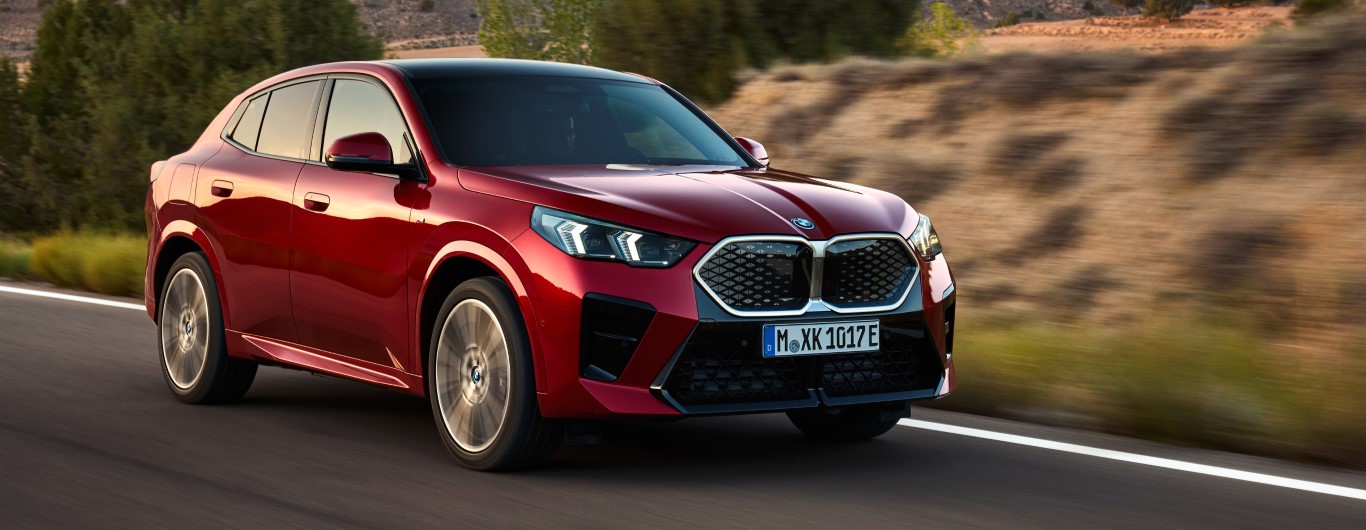
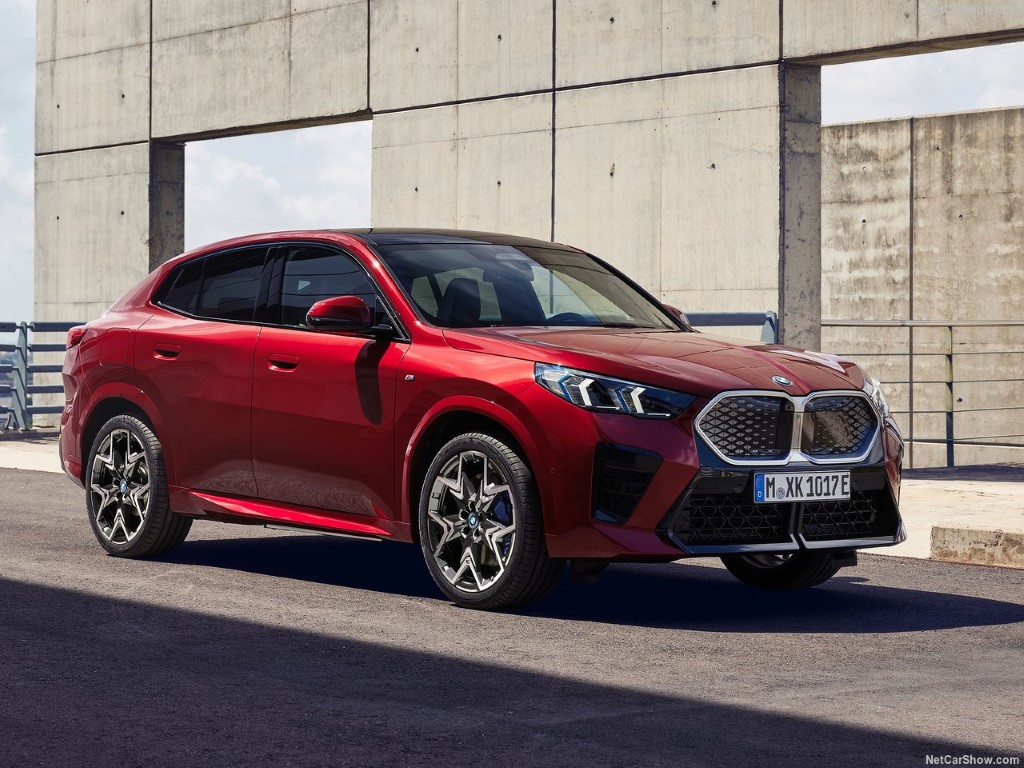
The iX2's silhouette is its most striking element. The Sports Activity Coupé profile, with a roofline that slopes smoothly towards a robust and elevated rear, finished with a prominent spoiler, gives the car a dynamic and sporty character, aligned with larger models in the family, such as the X4 and X6.
At the front, the electric identity is evidenced by the closed kidney grille with a diamond pattern. One of the highlights is the optional Iconic Glow illuminated contour, which accentuates the vehicle's visual presence, especially at night, becoming a signature of BMW's latest electric models. The Full LED headlights have an angular and sharp design, and can be equipped with adaptive technology as an option.
The dimensions of the iX2 are 4,554 mm in length, 1,845 mm in width, and 1,560 mm in height, with a wheelbase of 2,692 mm. The flared fenders and straight character lines on the sides reinforce the muscular appearance, complemented by alloy wheels ranging from 17 to 20 inches, depending on the version and equipment packages.
Interior Design, Ergonomics, and Practicality
The interior of the iX2 follows BMW's latest design philosophy, marked by technology and minimalism. The focal point of the cockpit is the BMW Curved Display, a single piece of curved glass that integrates the 10.25-inch digital instrument cluster and the 10.7-inch multimedia center screen, creating a modern and driver-centric environment.
With the introduction of the BMW Operating System 9, interaction with the vehicle has been optimized for touch and voice commands. A significant change is the removal of the traditional iDrive rotary controller on the center console. To compensate, BMW implemented the QuickSelect interface, which keeps essential functions always accessible on the screen, in addition to enhancing the “Hey BMW” voice assistant.
In terms of materials, the iX2 offers high-quality finishes, with an increasing focus on sustainability. Options such as Veganza upholstery, a premium synthetic leather, and Alcantara applications are available, especially in the M Sport packages. Among the options that elevate the feeling of luxury are the panoramic glass sunroof and the Harman Kardon premium sound system.
Despite the sloping roofline, practicality has been well preserved. The trunk offers 525 liters of capacity, expandable up to 1,400 liters with the rear seats folded down, a competitive value in the segment. Still, as expected in an SUV coupé, rear-seat headroom is more restricted than in a straight-roofed SUV like the iX1, which is a point of attention for those who frequently transport tall adults.
Onboard Technology and Equipment Packages
The BMW iX2 arrives on the market with a high level of technology and the possibility of personalization through equipment packages that reinforce its sporty and premium character.
M Sport Package
In many markets, this package is offered as standard, defining the visual identity of the iX2. It includes front and rear bumpers with a more aggressive design, side skirts, 19-inch alloy wheels (with a 20-inch option), M adaptive suspension lowered by 15 mm, sports seats with better lateral support, and an M leather-wrapped steering wheel with stitching in the sports division's colors. This decision to standardize the sporty look, even on the entry-level eDrive20 version, reinforces BMW's intention to position the iX2 as the more dynamic and stylish alternative to the iX1, even if the firmer suspension may seem like a counterpoint for those seeking only maximum efficiency and comfort.
M Sport Pro Package
As an upgrade, this package adds an extra touch of exclusivity and aggressiveness. It includes high-gloss black exterior trims (Shadowline), such as the grille and window surrounds, M Shadowline headlights with darkened details, a more pronounced M rear spoiler, an M Sport braking system with red-painted calipers, and seatbelts with the traditional M division stripes.
Driver Assistance Systems
The iX2 is equipped with a comprehensive suite of safety and convenience technologies. The Driving Assistant Professional, available as an option, offers semi-autonomous driving functionalities, such as adaptive cruise control with Stop & Go function and lane-keeping assist, which aid the driver on long trips and in congested traffic.
The Parking Assistant Plus uses a camera system to create a 360° view of the vehicle's surroundings, facilitating maneuvers in tight spaces.
Connectivity and Infotainment
BMW Operating System 9 is the brains behind the digital experience. It offers native integration with wireless Apple CarPlay and Android Auto, navigation with real-time traffic information, and access to an app store for entertainment and productivity.
Another standout feature is the BMW Digital Key Plus, which allows the owner to use a compatible smartphone as the vehicle's primary key, and even share access digitally with other people.
Production, Sales, and Market Context
The manufacturing and commercial performance of a vehicle are crucial indicators of its acceptance and the success of the automaker's strategy. In the case of the iX2, these aspects reveal a calculated and flexible approach to the electric transition.
Production at the Regensburg Plant
The BMW iX2 is an exclusive product of the BMW Group plant in Regensburg, Germany, from where it is exported to all global markets. One of the most significant aspects of its production is the flexibility of the assembly line. The iX2 is manufactured alongside the combustion-engine X2, the X1, and its electric version, the iX1. This capability to produce different models and powertrain types on the same line allows BMW to dynamically adjust to fluctuations in market demand, without the need to invest in factories dedicated exclusively to electric vehicles. The high-voltage batteries used in the iX2 are also assembled at a nearby facility, ensuring integrated logistics.
This flexible platform approach is a strategic hedge against market volatility. In a scenario of regulatory uncertainties and varying EV adoption rates across different regions, BMW can scale up or scale down the production of electric models versus combustion models with relative ease. Although this strategy may entail minor design compromises — such as the lack of a front trunk ("frunk"), common in cars built on dedicated electric platforms — it grants the company remarkable operational and financial resilience.
The Regensburg plant has the capacity to produce more than 300,000 vehicles per year. For 2024, the projection was that at least one-third of this production would consist of fully electric models (iX1 and iX2), which would represent over 100,000 electric units rolling out of the factory in a single year.
Sales Performance and Production Volume
BMW, like many other automakers, does not publicly disclose sales or production numbers for each individual model. Data is generally aggregated, whether by model line (e.g., total X Series sales) or by powertrain type (total battery electric vehicles - BEVs).
Despite the absence of specific numbers for the iX2, the BMW Group's financial and sales reports provide a clear context of its performance. The company has recorded robust and consistent growth in BEV sales. In 2023, fully electric vehicles accounted for 15% of the group's total sales, a significant increase from the previous year. In the first quarter of 2024, global BEV sales for the BMW brand grew by 40.6% compared to the same period in 2023.
In its communications, the BMW Group specifically mentioned the iX2 as a newly launched model that has received a positive response from customers, contributing to this growth trajectory. The model's recurrent mention in corporate reports, despite the lack of detailed data, signals that it is fulfilling its strategic role: attracting a new customer profile to BMW's electric range and strengthening the brand's presence in the competitive premium electric SUV segment.
Competitive Analysis – The iX2 Against Its Rivals
The BMW iX2 enters one of the most hotly contested segments in the luxury electric vehicle market: that of premium compact SUVs. Its main competitors are models from traditional brands that also bet on design, technology, and performance. The most direct rivals identified are the Audi Q4 Sportback e-tron, the Volvo C40/EC40 Recharge, and the Mercedes-Benz EQA.
vs. Audi Q4 Sportback e-tron: The primary competitor with a coupé silhouette. The Audi Q4 Sportback e-tron stands out by offering a higher capacity battery (about 77 kWh usable), which in some versions translates into slightly superior WLTP range. Furthermore, its architecture allows direct current (DC) charging speeds of up to 175 kW, surpassing the iX2's 130 kW. In contrast, the BMW iX2 xDrive30 is more powerful (313 hp vs. 295 hp in the Q4 50 e-tron) and accelerates faster. Trunk space is very similar, with a slight advantage for the Audi (535 liters vs. 525 liters for the BMW), but the iX2 compensates with a driving experience traditionally more focused on dynamics.
vs. Volvo C40/EC40 Recharge: The Swedish rival bets on a minimalist design and a strong reputation for safety. In its Twin Motor versions, the Volvo is significantly more powerful than the iX2 xDrive30 (exceeding 400 hp) and offers superior towing capacity, an important factor for some consumers. However, the iX2 generally offers an interior perceived as more technological, with its Curved Display and latest operating system, and driving dynamics that specialized critics consider more engaging and faithful to BMW's sporty tradition.
vs. Mercedes-Benz EQA: The EQA, although lacking a coupé silhouette, competes directly for the same customer. Its primary focus is comfort, with a softer suspension and a smoother ride. The longer-range EQA versions ("+") can surpass the iX2 in range thanks to larger batteries and a calibration geared towards efficiency. The BMW iX2, on the other hand, holds an advantage in practicality, with a considerably larger trunk (525 liters vs. 340 liters in the EQA), and reaffirms its position as the sportiest and most agile option of the German trio.
The following table consolidates the technical data of the main competitors, allowing a direct comparison of each model's attributes.
| Feature | BMW iX2 xDrive30 | Audi Q4 55 Sportback e-tron | Volvo EC40 Twin Motor | Mercedes-Benz EQA 350 4MATIC |
|---|---|---|---|---|
| Power | 313 hp | 340 hp | 408 hp | 292 hp |
| Torque | 494 Nm | 545 Nm | 670 Nm | 520 Nm |
| Acceleration (0-100 km/h) | 5.6 s | 5.4 s | 4.7 s | 6.0 s |
| Battery (Usable Capacity) | 64.8 kWh | 77 kWh | 79 kWh | 66.5 kWh |
| Range (WLTP) | 417 - 449 km | up to 562 km | up to 550 km | 411 - 438 km |
| DC Charging (Max. Power) | 130 kW | 175 kW | 200 kW | 100 kW |
| Charging Time 10-80% (DC) | ~29 min | ~28 min | ~27 min | ~32 min |
| Trunk | 525 L | 535 L | 413 L | 340 L |
| Drivetrain | All-Wheel | All-Wheel | All-Wheel | All-Wheel |
Note: Competitor data corresponds to the most recent and comparable versions. Specifications may vary slightly depending on the market and equipment packages.
Conclusion – Critical Evaluation and Future Perspectives
The BMW iX2 arrives on the market as a well-defined and executed proposition. It does not seek to be the most practical electric vehicle, nor the one with the longest range in the segment. Its mission is different: to be the electric Sports Activity Coupé that offers a driving experience and visual appeal that resonate with the BMW brand's historical values.
Strengths:
Driving Dynamics: Critics and users agree that the iX2 offers agile and engaging driving, with precise steering and a firm suspension that prioritizes sportiness, maintaining the brand's tradition.
Interior Quality and Technology: The interior finish is of a high standard, with quality materials and solid assembly. The BMW Curved Display and Operating System 9 place the iX2 at the forefront of infotainment technology.
Distinct Design: For those looking to stand out, the iX2's aggressive design and coupé silhouette are a major draw, clearly distinguishing it from more conventional SUVs.
Weaknesses:
Polarizing Design: The same design that attracts some may deter others. The iX2's aesthetic is bold and, according to BMW itself, "is not for everyone."
Suspension Comfort: The M Sport suspension, especially when combined with the optional 20-inch wheels, can be considered overly firm for daily use on uneven surfaces, compromising comfort.
Competitive, but Not Exceptional Range and Charging: Although its range and charging speed figures are adequate for most uses, the iX2 does not set new standards in the segment, being surpassed by some direct competitors in these aspects.
Rear Practicality: The coupé design inevitably compromises rear-seat headroom, making it less ideal for frequently transporting tall adults.
Final Verdict:
The BMW iX2 is an excellent choice for the consumer who prioritizes style, brand image, and driving pleasure in an electric package. It masterfully fulfills the role of being the more emotional and niche alternative to the iX1. However, this choice requires the acceptance of certain compromises, primarily in ride comfort and rear-seat space. It is not the best electric SUV in a purely objective analysis of numbers, but it may be the most desirable for those who identify with its proposition.
Future Perspectives:
The future of the iX2 looks promising. Industry reports indicate that BMW plans updates for the powertrain of the iX1 and iX2 starting in March 2026. These improvements may involve new batteries or more efficient electric motors, resulting in an increase in power, range, or both. Such updates will be crucial to keeping the model competitive and attractive in a market that evolves at an impressive speed.