
F06
(2013-2015)
4.4 V8 Twin-turbo
575 cv
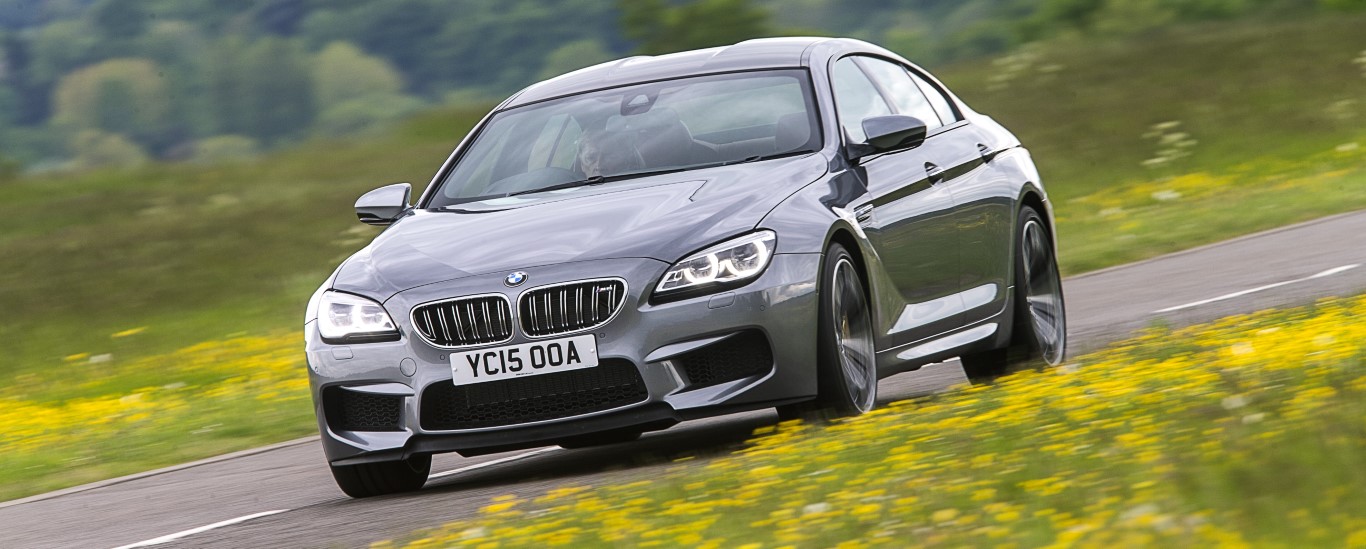
The peak of M aesthetics: the perfect fusion of Gran Coupe elegance and the untamable fury of the twin-turbo V8.
Select a generation to see available versions
(2013-2015)

(2016-2018)
Select a powertrain to view full technical specifications
The BMW M6 Gran Coupé, with the chassis code F06, represents a milestone in the history of BMW's high-performance division. Launched in 2013, it was the first four-door coupe to receive the full BMW M treatment, creating a new niche that merged the overwhelming performance of a super sedan with the elegance and flowing lines of a luxury coupe.
Produced between 2013 and 2018, the M6 Gran Coupé positioned itself at the pinnacle of the 6 Series family of its generation (F06/F12/F13), uniquely combining four-door practicality with the performance of a pure sports car. With the end of its production, the model paved the way for the reintroduction of the 8 Series, which became its spiritual successor, inheriting the mantle of the brand's top "gran turismo".
The idea of a "Gran Coupé" within BMW did not emerge from nowhere. It was a strategic and stylistic response to the success of competitors, primarily the Mercedes-Benz CLS, which inaugurated the "four-door coupe" segment. Inspired by the 2007 BMW CS Concept, BMW introduced the Gran Coupé body style to the 6 Series in 2012, offering a more stylized and exclusive alternative to its traditional sedans. The M6 Gran Coupé was the ultimate expression of this philosophy, applying all the engineering and power of the M division to a longer, lower, and visually striking body, designed for those who desired the performance of an M5, but with a much more dramatic design.
Mechanically, the M6 Gran Coupé shared its underpinnings with the acclaimed F10 generation M5. Both cars utilized the same engine, the S63 V8, the same dual-clutch transmission, and many chassis components. However, it would be a mistake to call it a simple "disguised M5". The M6 Gran Coupé had the same wheelbase as the M5, but its body was 112 mm longer and 23 mm lower. The most crucial difference, however, was the carbon fiber roof, a standard item that not only gave it an exotic look but also lowered the car's center of gravity, improving its dynamics.
This differentiation in design was directly reflected in the car's reception. While the F10 generation M5 was immensely powerful, it was sometimes criticized for being a car that isolated the driver too much, feeling less engaging than its predecessors. The M6 Gran Coupé, in turn, was seen as a subtle course correction. With its lower center of gravity and a more focused chassis setup, it was consistently praised in comparative tests for its superior stability and agility, even being described as "a better M car than the M5" and an "unexpected improvement from the M division". This suggests that the M6 Gran Coupé was not just a body style variation, but an opportunity for BMW M engineers to refine the platform and deliver an even more honed driving experience.
In the market, the M6 Gran Coupé was placed in direct confrontation with the Audi RS7 and the Mercedes-Benz CLS 63 AMG. Each brought a distinct proposition. The Audi RS7 stood out for its Quattro all-wheel drive, which gave it brutal acceleration in any condition, and the practicality of its hatchback body style. The CLS 63 AMG, on the other hand, was the embodiment of brute force, with a charismatic engine and an intimidating sound. The M6 Gran Coupé found its space by offering what many considered the best balance between the worlds: rear-wheel drive provided a more purist and fun driving dynamic, while its design was frequently cited as the most elegant and well-resolved of the trio.
The heart of the M6 Gran Coupé was the 4.4-liter V8 engine, bearing the code S63B44B (also known as S63Tü), an evolution of the S63 powerplant. This engine was a masterpiece of BMW M engineering, equipped with M TwinPower Turbo technology, which included two twin-scroll turbochargers housed in the "V" of the engine, a cross-bank exhaust manifold to optimize gas flow, high-precision direct injection, and the VALVETRONIC and Double-Vanos variable valve timing systems.
In its standard version, the engine delivered 560 hp (412 kW) of power between 6,000 and 7,000 rpm, and a massive torque of 680 Nm (502 lb-ft) that was available across an extremely wide range, from 1,500 to 5,750 rpm. This flat torque curve guaranteed vigorous acceleration and roll-on speed at practically any rpm.
Power was sent exclusively to the rear wheels, a characteristic that differentiated it from its main competitors with all-wheel drive. The standard transmission for most markets was the 7-speed M Double Clutch Transmission (M-DCT) with Drivelogic. This gearbox was known for its extremely fast and responsive gear changes, capable of operating smoothly in automatic mode or aggressively and instantaneously in manual mode. For a small group of purists, mainly in the North American market, BMW offered a very rare 6-speed manual gearbox option, a detail that makes these examples extremely coveted today.
The M6 Gran Coupé's chassis was extensively reworked to handle high performance. The front suspension was a double-wishbone type, and the rear was an Integral-V multi-arm setup, both with M division-specific geometry and components, such as forged aluminum arms to reduce unsprung weight.
As standard, the car came equipped with Dynamic Damper Control, which allowed the driver to adjust suspension stiffness, and M Servotronic variable-ratio hydraulic steering. One of the most important components for the car's dynamics was the Active M Differential. This electronically controlled limited-slip differential was capable of proactively distributing torque between the right and left rear wheels, optimizing traction when exiting corners and in low-grip conditions.
The standard braking system consisted of large ventilated compound discs, 400 mm in diameter at the front, bitten by six-piston calipers, and 396 mm at the rear. For the most demanding drivers, there was the option of carbon-ceramic brakes, which not only offered superior resistance to fade under heavy use but also reduced unsprung weight by almost 20 kg (43 lbs), contributing to better suspension and steering response.
| Feature | Standard BMW M6 Gran Coupé (F06) Specification |
|---|---|
| Engine | S63B44B Twin-Turbo V8 |
| Displacement | 4395 cm³ |
| Power | 560 hp (412 kW) @ 6,000–7,000 rpm |
| Torque | 680 Nm @ 1,500–5,750 rpm |
| Transmission | 7-speed M-DCT with Drivelogic |
| Drivetrain | Rear-Wheel Drive |
| Acceleration (0–100 km/h) | 4.2 seconds |
| Top Speed | 250 km/h (limited) / 305 km/h (with M Driver's Package) |
| Weight (unladen DIN/EU) | 1875 kg / 1950 kg |
| Dimensions (L x W x H) | 5011 mm x 1899 mm x 1393 mm |
| Wheelbase | 2964 mm |
| Front Brakes | Ventilated compound discs (400 mm) with 6-piston calipers |
| Rear Brakes | Ventilated compound discs (396 mm) with 1-piston calipers |
| Tires (Front/Rear) | 265/35 R20 / 295/30 R20 |
The design of the M6 Gran Coupé is frequently cited as one of BMW's high points in the modern era. It managed to be both aggressive and elegant at the same time. The front end was dominated by large functional air intakes, the M kidney grille with double bars, and adaptive LED headlights, which gave it a focused stare. In profile, the elongated, low silhouette, with a roofline that flowed smoothly to the rear, created a dynamic appearance even when the car was standing still. The flared wheel arches, the side air vents ("M gills"), and the exclusive 20-inch wheels (which were standard on the Gran Coupé, unlike the Coupe and Convertible) reinforced its muscular stance. At the rear, the carbon fiber diffuser and the four exhaust tailpipes were the unmistakable signature of an authentic M car.
The Carbon Fiber Reinforced Polymer (CFRP) roof deserves special mention. This component was not just an aesthetic detail; it served a critical engineering function. The visible carbon weave gave it a race car look, while its light weight helped to reduce overall weight and, more importantly, lower the vehicle's center of gravity. This resulted in less body roll in corners and greater agility, being a fundamental element for the enhanced dynamics of the M6 Gran Coupé compared to the M5.
Inside, the M6 Gran Coupé offered an environment that perfectly blended BMW's typical driver focus with opulent luxury. The finish was of the highest level, with extended Merino leather covering the dashboard, doors, and console as standard, something that was optional on many competitors. The headliner was swathed in Alcantara, and the interior trims were genuine carbon fiber.
The seating configuration was officially "4+1", with two very comfortable individual rear seats, separated by a center console extending from the front, and a smaller third center seat for occasional use. The car came packed with technology, such as the Head-Up Display with M-specific information, multifunctional M seats with multiple adjustments (optional), and the acclaimed Bang & Olufsen premium sound system, whose tweeters rose from the dashboard when turned on, a true visual and auditory spectacle.
This attention to detail in design and materials was no accident. The M6 Gran Coupé commanded a considerably higher price tag than the M5, with which it shared its mechanics. BMW used the exclusive exterior design, the carbon roof, and the more luxurious interior as strategic justifications for this premium positioning. The M6 Gran Coupé was sold not just as a performance car, but as a luxury "gran turismo", a stylistic flagship for the M brand. It was an exercise in brand expansion, designed to attract a customer who valued aesthetics and exclusivity as much as performance numbers, a different profile from the traditional M5 buyer.
In 2015, the M6 Gran Coupé received a mid-cycle update (LCI - Life Cycle Impulse), which brought subtle but welcome changes. On the outside, the standard full-LED headlights were redesigned internally, and the front grille was slightly tweaked, going from 10 to 9 vertical bars. Inside, the main change was the update to the iDrive infotainment system, which received a higher-resolution screen and a new controller on the center console with a touch-sensitive surface. Mechanically, the base model's power remained the same, but all gasoline models, including the M6, started coming standard with a sports exhaust system with adjustable valves, allowing for a fuller sound.
The Competition Package, a crucial option for enthusiasts, was offered in two distinct phases, an evolution that further enhanced the car's performance.
Phase 1 (from 2014): The first iteration of the package raised engine power to 575 hp (423 kW), keeping torque at 680 Nm. In addition to the stronger engine, the package included a sports exhaust system with black chrome tailpipes, stiffer suspension (firmer springs, dampers, and anti-roll bars), and a more direct and communicative steering calibration.
Phase 2 (from July 2015, post-LCI): With the LCI update, the Competition Package was significantly enhanced. Power jumped to 600 hp (441 kW) and torque to 700 Nm (516 lb-ft). With this, the 0 to 100 km/h acceleration time was reduced to an impressive 3.9 seconds. The updated package also brought exclusive 20-inch forged wheels (style 601M) and even more focused tuning for the chassis, steering, and the M Dynamic Mode of the stability control, making it the definitive version of the M6 Gran Coupé.
| Version | Standard Model | Competition Package (Phase 1) | Competition Package (Phase 2) |
|---|---|---|---|
| Years | 2013–2018 | 2014–2015 | 2015–2018 |
| Power | 560 hp (412 kW) | 575 hp (423 kW) | 600 hp (441 kW) |
| Torque | 680 Nm | 680 Nm | 700 Nm |
| Acceleration (0–100 km/h) | 4.2 s | 4.1 s | 3.9 s |
| Standard Wheels | 20" Style 343M | 20" Style 343M | 20" Style 601M (exclusive) |
| Chassis Highlights | Adaptive M Suspension | Stiffer suspension, steering, and anti-roll bars | Even more focused chassis, steering, and DSC settings |
| Exhaust Details | Standard M exhaust | M sports exhaust with black chrome tailpipes | M sports exhaust with black chrome tailpipes |
The exclusivity of the M6 Gran Coupé was amplified by extremely limited special editions.
"BANG & OLUFSEN Edition" (2014): Launched to celebrate the partnership with the Danish audio brand, this was one of the rarest editions. Only 10 units were produced for the M6 Gran Coupé. They came in BMW Individual Brilliant White or Dark Graphite II colors, with Merino leather interior featuring contrasting stitching, Piano Black trim with the "BANG & OLUFSEN" logo, and, crucially, came factory-equipped with the 575 hp Competition Package.
"Competition Edition" (2016): It's important to clarify a point that causes confusion: this special edition, famous for its M-color body stripes, was exclusive to the M6 Coupé (F13). Although the M6 Gran Coupé could be equipped with the 600 hp Competition Package, it did not receive this specific trim version, and therefore, a factory "M6 Gran Coupé Competition Edition" does not exist.
BMW never officially released the total specific production number for the M6 Gran Coupé (F06). It is known that the total production of the 6 Series (F06/F12/F13) was 129,678 units, but without a breakdown by body style or powertrain. However, partial data on the rarest versions reveals the model's true exclusivity.
Manual Transmission: Only 103 units of the M6 Gran Coupé were produced with a manual transmission, all destined for the North American market. Of these, 61 were pre-LCI and 42 post-LCI.
Competition Package (Automatic): The production of models with the Competition Package and M-DCT gearbox is known: 1,475 units for North America, 632 for Europe (left-hand drive), and 287 for right-hand drive markets (like the UK).
The Rarest Configuration: The pinnacle of rarity is the combination of the two characteristics most desired by purists. Of the 103 manual units, only 23 were also equipped with the Competition Package, making this the rarest and most collectible configuration of all.
These numbers create a clear "hierarchy of rarity" for the M6 Gran Coupé. The value and collector interest are not uniform across the lineup. At the base is the standard model; above it, the LCI model with the 600 hp package. At the top of the pyramid are the manual transmission versions, with the combination of a manual gearbox and Competition Package being the true "holy grail" for collectors, one of the rarest modern M cars ever produced. Understanding this hierarchy is fundamental to evaluating the value and historical importance of a specific example.
The BMW M6 Gran Coupé (F06) left a lasting legacy. It wasn't just a high-performance car; it was a trailblazer that proved a four-door vehicle could possess the soul, style, and beauty of a sports coupe without compromising luxury and presence. The model's success and acclaim validated the "Gran Coupé" format within the BMW M portfolio, paving the way for its spiritual successor, the acclaimed BMW M8 Gran Coupé (F93), which continues this tradition today.
Today, the M6 Gran Coupé is seen as a future classic. It was the first of its kind, a car with a timeless design, powerful mechanics, and, in certain configurations, extreme rarity. It represents a special moment in BMW M history, a perfect balance between the brute force of the turbo era and a sculptural elegance that few cars have managed to achieve.
Images of the BMW M6 Gran Coupé