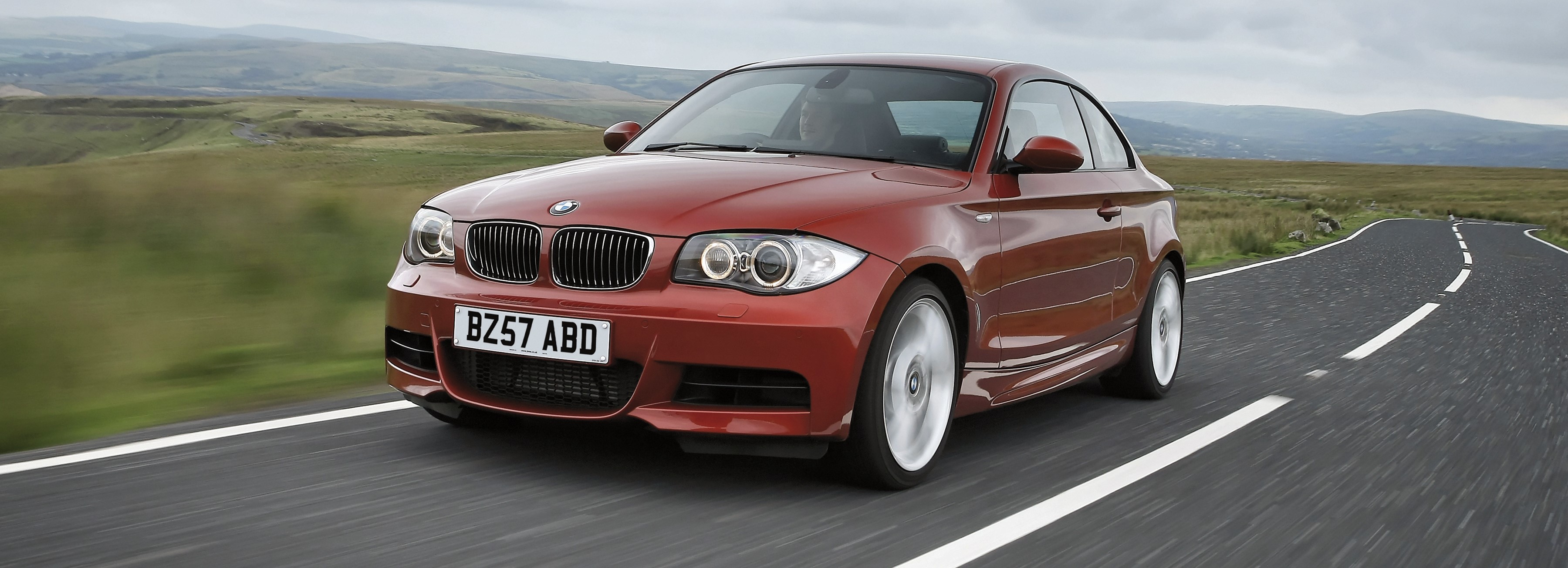
Exterior Design and Proportions
The design of the BMW 1 Series Coupé (E82) was a celebration of the brand's classic proportions. The long
hood, the set-back cabin, the short overhangs, and the characteristic "Hofmeister Kink" on the C-pillar
created an unmistakably sporty and muscular silhouette. Every line was drawn to visually emphasize the
rear-wheel-drive configuration, conveying a sense of agility and dynamism even when the car was stationary.
For the Cabriolet (E88), BMW made a deliberate and purist choice: a classic soft top. Unlike the contemporary
3 Series (E93), which used a retractable hardtop, the fabric roof of the E88 was chosen to save weight,
preserve trunk space, and maintain a more elegant and traditional silhouette when open. The roof operation
was quick, taking about 22 seconds to open or close, and could be operated at speeds up to 50 km/h, adding a
touch of practicality to the pleasure of open-air driving.
Interior and Features
Inside, the cockpit layout was typically BMW: driver-focused, with intuitive ergonomics and high-quality
materials for the segment. The configuration was a 2+2, with the front seats offering excellent support, but
with limited rear space, more suitable for children or short trips. The introduction of technologies such as
the iDrive infotainment system, a feature previously reserved for more expensive models, raised the bar for
the 1 Series in the premium compact category.
Initial Powertrains and the Acclaimed N54
The initial engine range was comprehensive, with four- and six-cylinder options, both gasoline and diesel,
catering to different consumer profiles. However, the undisputed star of the lineup was the 135i model.
Equipped with the N54B30 engine, a 3.0-liter inline-six with two low-inertia turbochargers and
high-precision direct injection, the 135i was a true force of nature.
This engine, which received the coveted "International Engine of the Year" award in 2007, produced 306 hp and
a massive 400 Nm of torque, available flatly between 1,200 and 5,000 rpm. This torque curve virtually
eliminated "turbo lag," providing instant and vigorous acceleration at any rpm. The performance was
impressive: the 135i Coupé accelerated from 0 to 100 km/h in just 5.3 seconds, with the top speed
electronically limited to 250 km/h.
Critical Reception and First Impressions
The specialized press and enthusiasts received the E82 and E88 with acclaim. The pure driving dynamics,
communicative steering, chassis balance, and, especially, the explosive performance of the 135i were widely
praised. The car was quickly dubbed the "baby M," a sign of its potential and a foreshadowing of what BMW M
GmbH would do later. Criticisms, when they existed, focused on predictable points: the restricted interior
space, especially in the rear seat, and maintenance costs, which could be high.
Despite its brilliance, the N54 engine carried a dilemma. Its performance and enormous tuning potential were
undeniable, but it also became known for reliability issues, especially related to the high-pressure fuel
pump (HPFP) and, in some cases, the turbochargers. These recurring failures led to recalls and generated a
complex reputation for the engine. This experience was fundamental to BMW's decision to evolve the
powertrain in the facelift, seeking a more robust balance between performance and long-term durability.