

F44
(2020 - 2024)
2.0 Turbo
306 cv
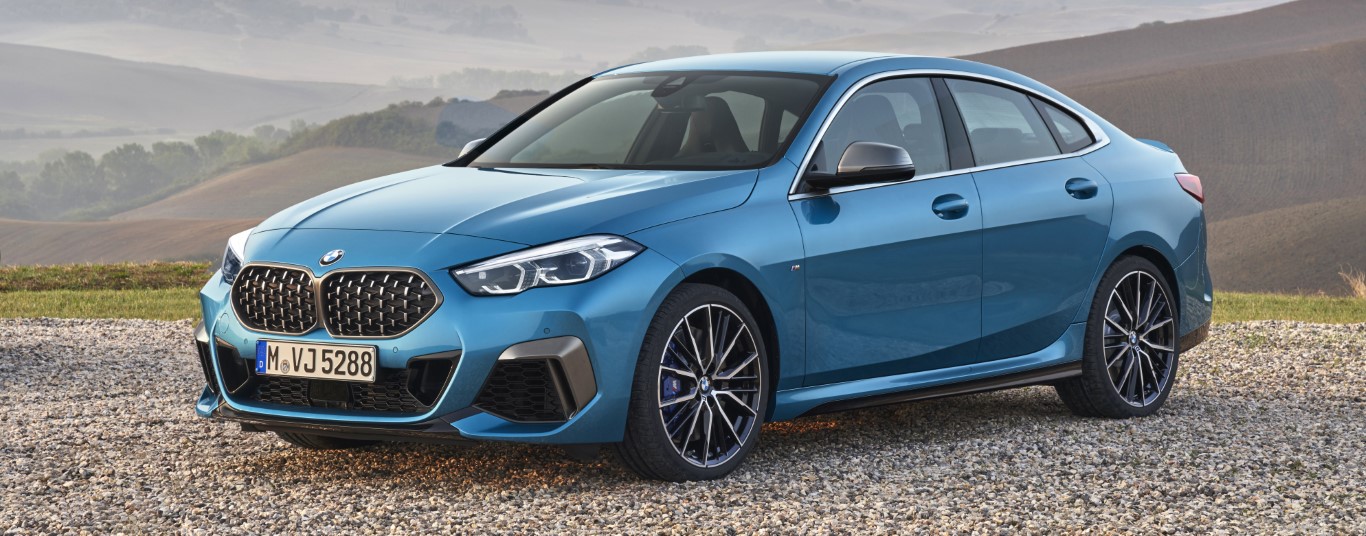
Technical specifications, versions, and history for the Bmw Série 2 Gran Coupé.
Select a generation to see available versions
(2020 - 2024)

(2025-)
The launch of the BMW 2 Series Gran Coupé in 2019 marked a turning point for the Bavarian manufacturer. For the first time, BMW assertively entered the competitive premium compact sedan segment with a front-wheel-drive model, a territory hitherto dominated by consolidated rivals such as the Mercedes-Benz CLA and the Audi A3 Sedan. The introduction of this vehicle was not just the addition of another car to the portfolio, but a strategic declaration that redefined the boundaries of the brand's identity, aiming to capture a new consumer profile.
The "Gran Coupé" nomenclature was already an established marketing tool in BMW's vocabulary, used to designate its four-door sedans that exhibit a lowered roofline and a style that emulates the fluidity of a coupe. This choice of name for the new compact sedan was deliberate, seeking to distance it from the image of a traditional sedan and confer an aura of sportiness and exclusivity right from its christening.
However, the most profound and controversial change was under the bodywork. Despite carrying the "2 Series" name, the Gran Coupé, with its F44 chassis code (and later F74), has no mechanical relationship with the BMW 2 Series Coupé (F22/G42). While the Coupé remained true to the brand's heritage, featuring a longitudinal engine platform and rear-wheel drive, the Gran Coupé was built on the UKL2 architecture. This platform, shared with the BMW 1 Series and MINI models like the Countryman, utilizes a transverse engine configuration and front-wheel drive (with the option of xDrive all-wheel drive), a pragmatic decision that optimizes interior space and production costs, crucial elements for success in the entry-level segment.
This decision exposed a strategic dilemma for BMW. The brand, whose reputation was forged on the pillar of rear-wheel drive and the slogan "The Ultimate Driving Machine", was now embracing the architecture of its main competitors. The reason for such a move was clear: to compete in volume and price in the compact sedan segment, it was necessary to adopt a platform that offered "packaging" advantages. Front-wheel drive allows for a more compact engine compartment, resulting in more space for occupants, especially in the rear seat, with greater knee room and a significantly lower central tunnel, making the car more practical for daily use. By adopting the UKL2 platform, BMW consciously accepted "diluting" its purist philosophy in its entry-level models to win over an audience that values design, onboard technology, and practicality more than the driving dynamics traditionally associated with the brand. This move generated a palpable tension between BMW's heritage and its need for market expansion, a theme that would become central to the critical and commercial reception of the 2 Series Gran Coupé.
The first generation of the BMW 2 Series Gran Coupé, identified by the chassis code F44, represented the materialization of BMW's new strategy for the compact segment. The model was officially revealed to the world in October 2019, with its public debut taking place at the Los Angeles Auto Show in November of the same year. The launch in global markets began in March 2020, with a production cycle that extended until 2024.
The design of the F44, penned by Nicolas Guille, was conceived to make an impact and communicate the brand's new proposition. The exterior is defined by an elongated and low silhouette, characteristic of a "four-door coupe", with striking elements such as frameless windows, which reinforce the elegance and sportiness of the profile. The front end is dominated by a wide, horizontal kidney grille and angled LED headlights, giving the car an aggressive expression. The rear, in turn, stands out for its wide stance, accentuated by thin, horizontal LED taillights that extend towards the center of the vehicle.
In terms of dimensions, the F44 measured 4,526 mm in length, 1,800 mm in width, and 1,420 mm in height, with a wheelbase of 2,670 mm. Thanks to the front-wheel-drive platform, practicality was one of its strong suits. The trunk offered a capacity of 430 liters, a volume 40 liters greater than that of the 2 Series Coupé (F22) of the same era, demonstrating one of the tangible benefits of the new architecture.
Internally, the F44 shared its dashboard and overall layout with the 1 Series (F40), featuring a clearly driver-oriented cockpit, a BMW design signature. The focus on technology was evident, with the model being equipped with the iDrive 7 infotainment system. The highest-trim versions, featuring the BMW Live Cockpit Professional, had two 10.25-inch digital screens, one for the instrument cluster and another for the multimedia center, which could be operated by touch, gestures, or by the voice assistant activated by the "Hello BMW" command. The system also allowed for remote software updates (over-the-air), keeping the vehicle consistently up to date.
Another important innovation was the introduction of the BMW Digital Key. Using near-field communication (NFC) technology, the owner could unlock the doors and start the engine using only a compatible smartphone, eliminating the need for a physical key. This digital key could be shared with up to five other people, adding a layer of convenience and modernity.
This heavy investment in technology was not a mere accessory, but a centerpiece of the F44's value proposition. In a segment where BMW could no longer use rear-wheel drive as its main selling point, technology emerged as a crucial differentiator. The target audience for premium compact sedans is generally younger and highly connected, valuing the digital experience just as much as driving dynamics. By equipping the F44 with the most modern tools in its technological arsenal at the time, BMW positioned the car not just as a design alternative to the CLA and the A3, but as a technologically superior proposition. This strategy signaled a shift in the brand's philosophy, where digital innovation would become a fundamental pillar of the driving experience across all segments, including entry-level models.
The first generation's engine lineup was comprehensive, offering gasoline and diesel options to suit different markets and legislations. All engines complied with the Euro 6d-TEMP emissions standard and came equipped with particulate filters. The diesel engines also featured the AdBlue catalytic reduction system.
The following table details the main engine options available globally for the BMW 2 Series Gran Coupé (F44) during its production cycle.
| Model | Engine | Displacement | Power | Torque | 0-100 km/h |
|---|---|---|---|---|---|
| Gasoline Engines | |||||
| 218i | 1.5L 3-Cylinder Turbo (B38) | 1,499 cm³ | 140 hp @ 4,600-6,500 rpm | 220 Nm @ 1,480-4,200 rpm | 8.7 s |
| 220i | 2.0L 4-Cylinder Turbo (B48) | 1,998 cm³ | 178 hp @ 5,000-5,500 rpm | 280 Nm @ 1,350-4,200 rpm | 7.1 s |
| M235i xDrive | 2.0L 4-Cylinder Turbo (B48) | 1,998 cm³ | 306 hp @ 5,000-6,250 rpm | 450 Nm @ 1,800-4,500 rpm | 4.9 s |
| Diesel Engines | |||||
| 216d | 1.5L 3-Cylinder Turbo (B37) | 1,496 cm³ | 116 hp @ 4,000 rpm | 270 Nm @ 1,750-2,250 rpm | 10.3 s |
| 218d | 2.0L 4-Cylinder Turbo (B47) | 1,995 cm³ | 150 hp @ 4,000 rpm | 350 Nm @ 1,750-2,500 rpm | 8.5 s |
| 220d | 2.0L 4-Cylinder Turbo (B47) | 1,995 cm³ | 190 hp @ 4,000 rpm | 400 Nm @ 1,750-2,500 rpm | 7.5 s |
Transmission options varied according to the engine, including a 6-speed manual gearbox (available for the 218i in some markets), a 7-speed dual-clutch automated transmission (DCT), and an Aisin 8-speed automatic for the more powerful versions, such as the M235i xDrive.
The second generation of the BMW 2 Series Gran Coupé, bearing the chassis code F74, was officially revealed on October 15, 2024. Production began at the Leipzig plant late that same year, with the global launch scheduled for March 2025. This new generation represents a significant evolution in design, technology, and performance, seeking to refine the formula introduced by the F44.
The design of the F74 is an evolution of its predecessor, featuring more expressive lines and a more imposing stance. The front end was redesigned, presenting a kidney grille with a new structure of vertical and diagonal bars. One of the most striking new features is the option of an illuminated contour for the grille, the "Iconic Glow", which has become a prominent design element in BMW's most recent models. The LED headlights were also redesigned, now featuring vertical elements for the daytime running lights, giving the car a more modern and aggressive look. The rear was simplified, with a cleaner design and exhaust tailpipes elegantly integrated into the bumper on most versions.
The F74 grew slightly compared to the F44. Length increased by 20 mm, reaching 4,546 mm, and height grew by 25 mm, to 1,445 mm. The width (1,800 mm) and wheelbase (2,670 mm) remained unchanged, indicating that the UKL2 platform was retained and optimized.
The new generation's biggest revolution is on the inside. The F74 abandons the traditional dashboard layout of the F44 and adopts the BMW Curved Display, a large single piece of curved glass that integrates the digital instrument cluster (10.25 inches) and the multimedia center screen (10.7 inches). This change resulted in the elimination of a large portion of physical buttons, including the iconic iDrive rotary controller, which had been a mainstay of BMW's interface for decades. Interaction is now focused on touch, voice control, and steering wheel commands.
The brain behind this new interface is BMW Operating System 9, which debuts the "QuickSelect" feature. This system was designed to simplify menu navigation, offering quick access to frequently used functions directly on the home screen, without the need to dive into complex submenus.
Another significant change is in the materials philosophy. The interior of the F74 is, by default, "completely leather-free". BMW opted for high-quality synthetic materials, such as Veganza and Alcantara, in an initiative that aligns the model with the growing demands for sustainability in the luxury market.
The engine lineup was updated for the new generation, with power outputs ranging from 150 hp to 300 hp. A major innovation is the introduction of 48-volt mild-hybrid technology in some versions, such as the 220 Gran Coupé. This system uses a small electric motor to assist the combustion engine during acceleration, improving fuel efficiency and reducing emissions.
All versions of the F74 are equipped with a 7-speed Steptronic dual-clutch transmission, abandoning the manual gearbox option and the 8-speed automatic from the previous generation. The top-tier M235 xDrive version had its 2.0-liter four-cylinder engine revised, delivering 300 hp in Europe and up to 317 hp in specific markets, such as Brazil, maintaining the focus on high performance.
| Characteristic | First Generation (F44) | Second Generation (F74) |
|---|---|---|
| Production Period | 2020–2024 | 2025–Present |
| Length | 4,526 mm | 4,546 mm (+20 mm) |
| Height | 1,420 mm | 1,445 mm (+25 mm) |
| Infotainment System | iDrive 7 with separate screens (up to 10.25") | BMW Operating System 9 with Curved Display |
| Control Interface | Touch, voice, physical buttons, iDrive rotary controller | Touch, voice, steering wheel buttons (no rotary controller) |
| Standard Interior Material | Fabric / Synthetic Leather / Dakota Leather | Veganza (completely leather-free) |
| Engine (Top Version) | M235i: 2.0L Turbo, 306 hp | M235: 2.0L Turbo, 300-317 hp |
| Hybrid Technology | Not available | 48V Mild-Hybrid (on selected versions) |
The trajectory of the 2 Series Gran Coupé in Brazil reflects the nuances and challenges of the premium car market in the country, with a clear strategic evolution between the first and second generation.
The model landed in Brazil in March 2020, shortly after its global launch. The entry-level version chosen for the market was the 218i Gran Coupé Sport GP, equipped with the 1.5-liter 3-cylinder turbo engine, which delivered 140 hp and 22.4 kgfm of torque, mated to a 7-speed automated transmission. Later, the lineup was complemented by the high-performance M235i xDrive Gran Coupé version, with its 2.0 turbo engine boasting 306 hp and 45.9 kgfm, offering an option for performance enthusiasts.
The 218i version was sold in different trim packages, such as the Sport GP and the M Sport. By the end of its life cycle in 2024, prices for the 218i M Sport version started at R$ 320,950.
The arrival of the new generation (F74) in Brazil was confirmed for the second half of 2025, with a launch strategy that demonstrates lessons learned from the previous generation. The versions announced for the Brazilian market are:
The decision to replace the 1.5 3-cylinder engine of the 218i with the 2.0 4-cylinder of the 220i as the entry model, while maintaining the same price level, represents a clear strategic repositioning. The performance of the old 218i, with its 140 hp, was frequently considered modest for a BMW brand vehicle and placed it in a delicate position. It suffered from internal competition with the 3 Series 320i, which, with 184 hp and traditional rear-wheel drive, was perceived by many consumers as a "more authentic" BMW car, often for a price difference that justified the investment in the larger model. Consequently, sales of the first-generation Gran Coupé in Brazil were never substantial.
By introducing the 220i with 204 hp, BMW substantially raises the performance level of the entry model, making it more competitive not only against its direct rivals, but also within the brand's own showroom. This change seeks to resolve a fundamental weakness of the previous generation in Brazil, aiming to bring the 2 Series Gran Coupé "out of the shadow of the 3 Series" and increase its relevance and sales volume in the country.
A notable fact about the BMW 2 Series Gran Coupé is that both generations were and are produced exclusively at the BMW Group plant in Leipzig, Germany. This plant is one of the pillars of BMW's flexible production strategy. On the same assembly line, the 1 Series, the 2 Series Active Tourer, the 2 Series Gran Coupé, and the MINI Countryman are manufactured, including their electric variants. This flexibility allows the company to adjust production according to the demand for different models and markets.
The production capacity of the Leipzig plant has been expanded in recent years, capable of reaching up to 350,000 vehicles per year, with a daily cadence that can reach 1,300 units.
It is important to emphasize that the BMW Group's annual and sales reports do not detail production or sales numbers by individual model, such as the 2 Series Gran Coupé. The data is generally aggregated by brand (BMW, MINI) or by region.
Despite the lack of specific numbers, it is possible to contextualize the model's performance. The "Gran Coupé" concept as a whole has been a success for BMW, with over 400,000 units sold adding up all the series that adopt this body style (2 Series, 4 Series, 6 Series, and 8 Series). However, the 2 Series Gran Coupé plays a niche role. In a key market like the United Kingdom, for example, 7,800 units of the model were sold in 2024, a considerably smaller number than the 24,500 units of the 1 Series sold in the same period, illustrating its more exclusive position compared to the hatchback from which it derives.
In Brazil, as already mentioned, sales of the first generation were not significant, with reports indicating very low volumes, reinforcing the perception that the model faced difficulties in establishing itself in the local market.
The BMW 2 Series Gran Coupé was designed to compete directly with the Mercedes-Benz CLA and the Audi A3 Sedan, the three forming the German triad in the premium compact sedan segment. Each of these models has a distinct positioning and appeal.
| Model | BMW 218i Gran Coupé (F44) | Mercedes-Benz CLA 200 | Audi A3 Sedan 35 TFSI |
|---|---|---|---|
| Engine | 1.5L 3-Cylinder Turbo | 1.3L 4-Cylinder Turbo | 1.4L 4-Cylinder Turbo |
| Power | 140 hp | 163 hp | 150 hp |
| Torque | 220 Nm | 250 Nm (27.5 kgfm) | 250 Nm |
| 0-100 km/h | 8.7 s | 8.2 s (8.4 s) | 8.2 s |
| Length | 4,526 mm | 4,688 mm | 4,495 mm |
| Trunk capacity | 430 L | 460 L (470 L) | 425 L |
Note: Data based on comparable market specifications. Values may vary slightly across sources and markets.
The comparative analysis reveals the different philosophies:
BMW 2 Series Gran Coupé: Even with the front-wheel-drive platform, BMW sought to infuse the model with more sporty and agile driving dynamics compared to its competitors. The steering is frequently praised for its precision, and the chassis offers a good compromise between comfort and control. Its appeal is directed at those seeking the most engaging driving experience of the trio, along with a technology-rich interior.
Mercedes-Benz CLA: The CLA stands out strongly for its design. Its more dramatic and fluid silhouette and an interior that, for many, conveys a perception of greater luxury and sophistication, are its main assets. The driving experience, however, can be perceived as firmer and less focused on driver pleasure compared to the BMW.
Audi A3 Sedan: The A3 Sedan traditionally positions itself as the choice of balance. It offers a more sober and timeless design, an interior with extremely high build quality, and a comfortable, refined driving experience. It is often seen as a more rational value option within the premium segment.
The history of the BMW 2 Series Gran Coupé is a narrative about adaptation and evolution. Born out of a controversial strategic decision — the adoption of front-wheel drive in a BMW sedan —, the model faced initial skepticism from brand purists, but fulfilled its primary objective: opening a new gateway to the BMW universe, attracting an audience that prioritizes style, technology, and practicality. The first generation (F44) established BMW's presence in this crucial segment, even if with moderate commercial success in some markets, such as Brazil.
The arrival of the second generation (F74) demonstrates that BMW listened to criticisms and learned from experience. The new model is not just an aesthetic update; it is a profound overhaul that tackles the main shortcomings of its predecessor. The interior, now dominated by the Curved Display and Operating System 9, raises the bar for technology and modernity, while the decision to adopt a leather-free interior as standard reflects an alignment with the new sustainability trends of the luxury market.
For the Brazilian market, the change in the powertrain strategy is particularly significant. By replacing the 218i with the more powerful 220i as the entry-level version, BMW repositions the 2 Series Gran Coupé, making it a much more attractive and competitive value proposition. This evolution has the potential to finally pull the model out of the shadow of the 3 Series and allow it to carve out its own space.
The 2 Series Gran Coupé may not be the "Ultimate Driving Machine" in the most traditional sense of the term, but it represents the pragmatic future of BMW: a brand that, without abandoning its performance DNA in its top models, knows how to adapt to market realities to continue growing and innovating. The future of the compact Gran Coupé therefore looks more solid and promising than ever.