

F46
(2016 - 2018)
2.0 Turbo
192 cv
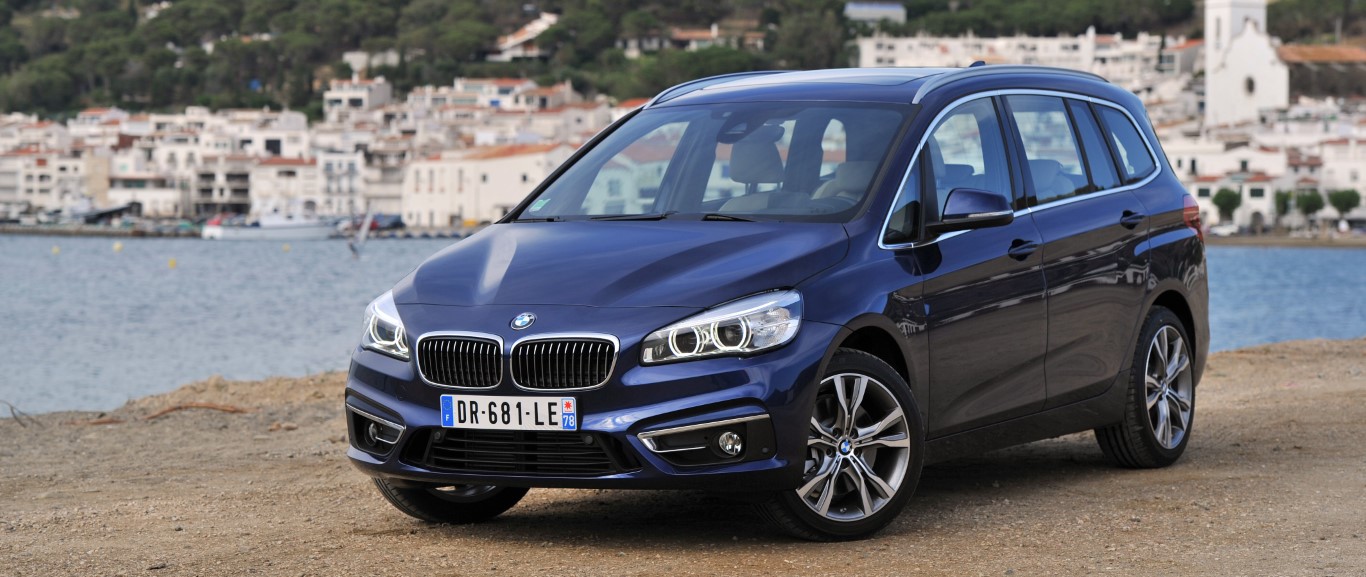
Technical specifications, versions, and history for the Bmw Série 2 Gran Tourer.
Select a generation to see available versions
(2016 - 2018)

(2019 - 2022)
Select a powertrain to view full technical specifications
In 2014, BMW, a century-old brand synonymous with rear-wheel-drive sports sedans, did something that for many purists was unthinkable: it launched a front-wheel-drive minivan (MPV). The BMW 2 Series Active Tourer was not just another model in the company's portfolio; it was a watershed, a paradigm shift that signaled a new strategic direction for the Bavarian giant. Until that moment, the idea of a family BMW with a transverse engine and front-wheel drive seemed like heresy for a brand that built its reputation under the motto "The Ultimate Driving Machine".
The vehicle's proposition was audacious: to combine the comfort, versatility, and functionality of an MPV with BMW's pillars – dynamism, style, and elegance. The goal was clear: to create a family car that wouldn't force the driver to give up the engaging driving experience characteristic of the brand. Launched in a market increasingly dominated by SUVs, the 2 Series Active Tourer was a direct response to rivals like the Mercedes-Benz B-Class and an attempt to expand BMW's presence in the lucrative premium compact segment.
This report details the complete journey of the Active Tourer models and its larger sibling, the Gran Tourer. We will analyze everything from their conception and the culture shock they represented, going through each generation, engine, and version, to their market impact and the lasting legacy they left for the brand.
The decision to create the 2 Series Active Tourer was deeply strategic. Internally, the model earned the nickname "conqueror," as it was specifically designed to attract a new customer profile: one who needed space and practicality but had never before considered a BMW. Later data would confirm the success of this bet, with about 80% of buyers being new to the brand.
The technical foundation that made this revolutionary project possible was the UKL2 platform (from the German Untere Klasse, or "entry class"). This architecture, developed jointly with sister brand MINI, was designed for transverse engines and primarily front-wheel drive, although it also supported all-wheel drive (xDrive).
The adoption of the FWD platform was what allowed for a radically different interior design from traditional BMWs. With the engine and transmission taking up less longitudinal space, engineers were able to maximize the cabin, resulting in unprecedented passenger and luggage space for a car with such compact external dimensions. This also allowed for a higher driving position, improving visibility and facilitating entry and exit from the vehicle, highly valued features in the family segment.
However, the challenge was to maintain BMW's dynamic DNA. To this end, engineers employed lightweight, high-strength materials in the chassis and a front axle with single-joint spring struts, ensuring agile and precise steering. The suspension, featuring a MacPherson strut system at the front and a multilink setup at the rear, was carefully calibrated to offer a balance between comfort and the sporty response expected from a BMW.
The UKL2 platform represented more than just an engineering choice; it was a profound philosophical and business model shift. By sharing development costs and components with MINI, BMW was able to profitably enter higher-volume segments, where margins are traditionally lower. The 2 Series Active Tourer served as a "Trojan horse" for the acceptance of front-wheel drive within the brand's portfolio. Its commercial success validated the platform, paving the way for other high-volume models, such as the 1 Series (F40), the X1 (F48), and the 2 Series Gran Coupé (F44), to also adopt it, making BMW's transition to an FWD architecture in its entry-level models a calculated and successful risk.
The first generation was marked by the launch of two body variants, each targeting a slightly different audience, but sharing the same innovative base.
Launched in September 2014, the F45 was the first to hit the market, establishing the new segment for BMW. The design, penned by Michael de Bono, was an exercise in adaptation. He sought to incorporate classic brand elements, such as the forward-leaning double-kidney grille, the dual circular headlights, the iconic "Hofmeister kink" in the rear window, and short overhangs, into a minivan body, something that had never been done before.
At 4,342 mm long, the F45 was compact on the outside but surprisingly roomy on the inside. The focus was on versatility: the trunk offered from 468 to 1,510 liters of capacity, and the rear seat, besides being foldable in a practical 40:20:40 split, could also slide forward and backward, allowing the space for passenger legs or luggage to be modulated.
Presented in February 2015, the Gran Tourer (F46) was BMW's answer for larger families, becoming the first and only seven-seater MPV ever produced by the brand. To accommodate the optional third row of seats, BMW stretched the UKL2 platform. The wheelbase grew by 110 mm, going from 2,670 mm to 2,780 mm, and the overall length increased to 4,556 mm.
This expansion resulted in an even more generous interior space. Trunk capacity was significantly larger, ranging from 645 to 1,905 liters in the five-seat configuration. With the seven seats in use, there were still 560 liters left for luggage, a respectable volume. The third row was designed primarily for children or for use on short trips and could be completely folded into the trunk floor, creating a flat loading surface.
The first generation was equipped with the new family of BMW TwinPower Turbo engines, featuring 3- and 4-cylinder units, both gasoline and diesel, designed to offer a balance between performance and efficiency.
Gasoline Engines: The range started with the 216i, featuring a 1.5-liter three-cylinder engine and 109 hp, and the popular 218i, with the same engine but tuned for 136 hp. At the top of the line were the 2.0-liter four-cylinder engines: the 220i, with 192 hp, and the 225i, which delivered a robust 231 hp and could be combined with xDrive all-wheel drive.
Diesel Engines: The diesel options were equally varied, starting with the ultra-economical 214d (1.5 three-cylinder, 95 hp) and the 216d (116 hp). The 2.0-liter four-cylinder engines powered the 218d (150 hp) and the 220d (190 hp), both available with front-wheel drive or xDrive all-wheel drive.
Plug-in Hybrid (225xe iPerformance): Available exclusively for the Active Tourer, the 225xe was the most technologically advanced version. It combined the 136 hp 1.5 gasoline engine, which drove the front wheels, with an 88 hp electric motor on the rear axle. The result was a combined output of 224 hp and an "electric" xDrive all-wheel-drive system, with no mechanical connection between the axles. The 7.7 kWh battery (later upgraded to 10.0 kWh) allowed for an electric range of about 40-50 km.
Transmission options included a 6-speed manual gearbox, a 6- or 8-speed Steptronic automatic (supplied by Aisin), and, following the 2018 update, a modern 7-speed dual-clutch transmission (DCT).
| Model | Engine Code | Cylinders/Displacement | Power (hp) | Torque (Nm) | Acceleration 0-100 km/h (s) | Drivetrain | Body Style |
|---|---|---|---|---|---|---|---|
| Gasoline | |||||||
| 216i | B38 | 3 / 1.5L | 109 | 190 | 11.7 (GT) | FWD | GT |
| 218i | B38 | 3 / 1.5L | 136-140 | 220 | 9.2 (AT) / 9.5 (GT) | FWD | AT, GT |
| 220i | B48 | 4 / 2.0L | 192 | 280 | 7.5 (AT) / 7.6 (GT) | FWD | AT, GT |
| 225i | B48 | 4 / 2.0L | 231 | 350 | 6.6 (AT) | FWD | AT |
| 225i xDrive | B48 | 4 / 2.0L | 231 | 350 | 6.3 (AT) | xDrive | AT |
| Diesel | |||||||
| 214d | B37 | 3 / 1.5L | 95 | 220 | 12.9 (AT) | FWD | AT |
| 216d | B37 | 3 / 1.5L | 116 | 270 | 11.1 (AT) / 11.5 (GT) | FWD | AT, GT |
| 218d | B47 | 4 / 2.0L | 150 | 330-350 | 8.9 (AT) / 9.4 (GT) | FWD, xDrive | AT, GT |
| 220d | B47 | 4 / 2.0L | 190 | 400 | 7.6 (AT) / 8.0 (GT) | FWD, xDrive | AT, GT |
| Plug-in Hybrid | |||||||
| 225xe | B38 + Electric | 3 / 1.5L | 224 (comb.) | 385 (comb.) | 6.7 (AT) | xDrive | AT |
To allow for customization, BMW offered four main trim lines, in addition to the entry-level version:
In March 2018, both models received a mid-life update (Life Cycle Impulse - LCI). The changes were subtle but effective in modernizing the look and technology:
Exterior: The most notable change was at the front, with a larger and more imposing double-kidney grille. The headlights received a new internal design, with the option of adaptive LED technology. The bumpers were redesigned, and the four-cylinder engines began to feature dual exhaust tailpipes, giving a more robust appearance.
Interior: Internal updates were discreet, including a new gear lever for automatic transmissions and new finishing materials.
Mechanics: The main novelty was the introduction of the 7-speed dual-clutch transmission (DCT) in some versions, replacing the old 6-speed automatic gearbox, and the updating of the engines to optimize efficiency and reduce emissions.
The sales split between the two body styles over the life cycle of the first generation, with the Active Tourer accounting for approximately 70% of the total, revealed an important market characteristic. The buyer of a "premium MPV" was indeed looking for more versatility and space than a traditional sedan could offer, but preferred it within a compact, agile format that was aesthetically closer to a sporty hatchback. The main audience was not large families who necessarily needed seven seats, but rather smaller families who valued practicality without the bulk of a traditional van. This market perception was fundamental and directly influenced BMW's decision not to continue the Gran Tourer in the next generation, focusing its efforts on the format that proved to be more successful.
Launched in October 2021, the second generation, with the code U06, hit the market with a renewed proposition, focusing exclusively on the Active Tourer body style and abandoning the Gran Tourer. Production was centralized at the Leipzig plant in Germany.
If the first generation was a mechanical revolution, the second was a digital and design revolution.
Exterior: The exterior design evolved to align with BMW's new visual identity. The double-kidney grille grew significantly in height and width, becoming the dominant element of the front end. The LED headlights became thinner and sharper, and the door handles were flush-mounted to the bodywork to improve aerodynamics. The overall dimensions grew slightly in length, width, and height, but the 2,670 mm wheelbase was maintained.
Interior: The real technological leap occurred in the cabin. The U06 was one of the first models in the compact range to receive the BMW Curved Display, an impressive single piece of curved glass that integrates the 10.25-inch digital instrument cluster and the 10.7-inch multimedia center screen. This innovation, which debuted in the BMW iX luxury electric vehicle, completely transformed the internal environment, making it cleaner, more modern, and technological.
iDrive 8/9 Operating System: With the new display came the eighth-generation iDrive operating system (later updated to version 9). It drastically reduced the number of physical buttons on the dashboard, concentrating most controls on the touch screen or through the advanced BMW Intelligent Personal Assistant, which responds to natural voice commands.
This adoption of cutting-edge technologies, previously reserved for the brand's more expensive models, represented a shift in positioning. The Active Tourer ceased to be just a practical MPV and became a technology and electrification platform for families, serving as an ambassador of the new BMW digital experience for a wider audience.
The second generation deepened the commitment to electrification, offering state-of-the-art mild-hybrid and plug-in hybrid technologies.
Mild-Hybrid Technology (48V): The 220i and 223i gasoline engines, as well as the 223d diesel, now incorporate a 48-volt mild-hybrid system. A small electric motor integrated into the transmission provides an extra boost of power (up to 19 hp), improving acceleration response and fuel efficiency by allowing the combustion engine to be turned off in certain situations.
Next-Generation Plug-in Hybrids: The plug-in hybrid offering was expanded and significantly improved. The new 225e xDrive (245 hp combined power) and 230e xDrive (an impressive 326 hp) use the fifth generation of BMW eDrive technology. The high-voltage battery, now with 16.3 kWh and positioned in the vehicle's floor, allowed for a drastic increase in electric range, which can now exceed 90 km in the WLTP cycle. Furthermore, the charging capacity was doubled to 7.4 kW, allowing for a full charge in about 2.5 hours on an appropriate charger.
With this performance and range, BMW repositioned the Active Tourer to compete not only with other MPVs but also with electrified premium compact SUVs, offering a versatile and family-friendly alternative.
| Model | Technology | Combined Power (hp) | Combined Torque (Nm) | Battery (kWh) | Electric Range (km) | Acceleration 0-100 km/h (s) |
|---|---|---|---|---|---|---|
| Gasoline | ||||||
| 218i | Gasoline | 136 | 230 | - | - | 9.0 |
| 220i | Mild-Hybrid | 170 | 280 | 0.9 | - | 8.1 |
| 223i | Mild-Hybrid | 218 | 360 | 0.9 | - | 7.0 |
| Diesel | ||||||
| 218d | Diesel | 150 | 360 | - | - | 8.8 |
| 223d xDrive | Mild-Hybrid | 211 | 400 | - | - | 7.3 |
| Plug-in Hybrid | ||||||
| 225e xDrive | PHEV | 245 | 477 | 16.3 | 83-92 | 6.7 |
| 230e xDrive | PHEV | 326 | 477 | 16.3 | 82-93 | 5.5 |
The commercial success of the first-generation 2 Series Active Tourer and Gran Tourer was undeniable and fundamental to BMW's future in the compact segment.
Between 2014 and 2021, over 400,000 units of the first generation were sold globally. The Leipzig plant produced the vast majority of Active Tourers (over 368,000), while the Gran Tourer was assembled in Regensburg. The sales split confirmed the market's preference for the more compact model, with the Active Tourer accounting for about 70% of total sales.
The main markets were Germany (with approximately 25% of sales), followed by China and the UK. However, the most significant figure was the conquest rate: about 80% of buyers were new customers to the BMW brand, a clear testament that the model fulfilled its mission of expanding the company's customer base.
Reception from specialized critics and consumers was, in general, quite positive, albeit with some caveats.
Positives: The interior build quality and premium materials were universally praised, putting the car a notch above any other MPV on the market. The iDrive infotainment system was consistently cited as the best in its class. Practicality, with solutions like the sliding rear seat and ample cargo space, also received high marks. Above all, many noted that, despite the front-wheel drive, the car maintained superior dynamic behavior to its direct competitors, being genuinely enjoyable to drive.
Negatives: The most common criticisms centered on the price, which was considerably higher than rivals from mainstream brands like the Volkswagen Touran or the Citroën C4 SpaceTourer. The M Sport package suspension was frequently described as excessively firm for a family car, compromising comfort on uneven surfaces. In the Gran Tourer, the third-row seat space was considered cramped and suitable only for children.
The greatest legacy of the 2 Series Active Tourer and Gran Tourer was proving that BMW could, indeed, build front-wheel-drive cars that were not only commercially successful but also accepted by the market without diluting the brand's image of prestige and sportiness. They validated the UKL2 platform strategy and paved the way for BMW's entire compact range to adopt this architecture, making the company more agile and competitive. In a market surrendering to SUVs, the Active Tourer survived by adapting, evolving from a simple practical MPV to a technological and electrified vehicle, showing a path of resilience for a declining segment.
The story of the BMW 2 Series Active Tourer and Gran Tourer is a lesson in strategic pragmatism and engineering excellence. Born out of a market need, these models challenged the brand's most sacred conventions. In the end, they not only achieved success on their own merits but also allowed BMW to transform itself to face the challenges of the 21st century.
While they may not be the most celebrated models by traditional enthusiasts, the Active Tourer and Gran Tourer are undoubtedly two of the most important vehicles in BMW's modern history. They demonstrated the brand's ability to reinvent itself, attract new audiences, and thrive in uncharted territories, redefining what a premium family car could be.
Images of the Bmw Série 2 Gran Tourer