
The Birth of a New Segment
The BMW 5 Series Gran Turismo, with the internal code F07, represents one of the most audacious and controversial bets by BMW in the 21st century. Launched in 2009, this was not just a new body variant of the acclaimed 5 Series, but a deliberate attempt to create an entirely new market niche. The Bavarian brand's proposal was to fuse, in a single vehicle, the most desirable characteristics of three distinct worlds: the elegance and prestige of a luxury sedan, the versatility and elevated driving position of a Sports Activity Vehicle (SAV), and the long-distance comfort of a classic Gran Turismo.
Set in a period of great formal experimentation under the design leadership of Adrian van Hooydonk, the F07 was the first model of the sixth generation of the 5 Series (codename "F") to hit the market, preceding even the sedan (F10) and the wagon (F11). Its mission was clear: to offer the luxury and space of a 7 Series with the practicality of an X5 and the elegant silhouette of a coupe. However, from its presentation, the model generated a polarized reception. While its engineering and functionality were widely praised, its design became the main point of debate, dividing the opinions of critics and consumers and defining its trajectory in the market. This report details the complete history of the BMW F07, from its ingenious conception to its legacy as one of the brand's most misunderstood cars.
Concept, Platform and Engineering – The Soul of a 7 Series
To understand the essence of the 5 Series Gran Turismo, it is fundamental to analyze its technical and conceptual foundations, which reveal an identity much more complex than its name suggests.
The Genesis of the Project: "Progressive Activity Sedan" (PAS)
The origin of the F07 dates back to the "BMW Concept 5 Series Gran Turismo" prototype, revealed with great prominence at the Geneva Motor Show in 2009. The vision behind the project, internally called "Progressive Activity Sedan" (PAS), was to create a vehicle for a customer who sought more space, luxury, and versatility than a traditional sedan could offer, but who did not identify with the rugged image of an SUV. The focus was on creating an automobile that stood out for its supreme comfort on long journeys, functionality in daily use, and a level of finish and sophistication comparable to BMW's top models.
The 7 Series (F01) Base: The Key Decision
Despite being named and marketed as part of the 5 Series family, the Gran Turismo was, in its essence, built on the platform of its larger sibling, the BMW 7 Series (F01). This engineering decision is the most crucial point to understand the character of the F07.
The car shares with the standard-wheelbase 7 Series the same wheelbase of 3,070 mm, as well as the width of 1,901 mm and track widths. This base resulted in rear-seat legroom identical to that of the 7 Series and headroom comparable to that of the X5 SUV, fulfilling the promise of a vast and airy interior.
This choice, however, generated a fundamental paradox. The name "5 Series" evokes the image of an executive sedan focused on dynamics and agility. However, the engineering of the F07, inherited from the 7 Series, prioritized comfort, isolation, and ride smoothness, resulting in a vehicle significantly heavier and less agile than the 5 Series sedan (F10). This discrepancy between the car's name and soul created an identity crisis that confused the market. Consumers expecting the sportiness of a 5 Series found the weight and comfort of a 7 Series, packaged in a hatchback body. This confusion about the vehicle's purpose was one of the greatest challenges to its acceptance.
Exterior Design: The Controversial Silhouette
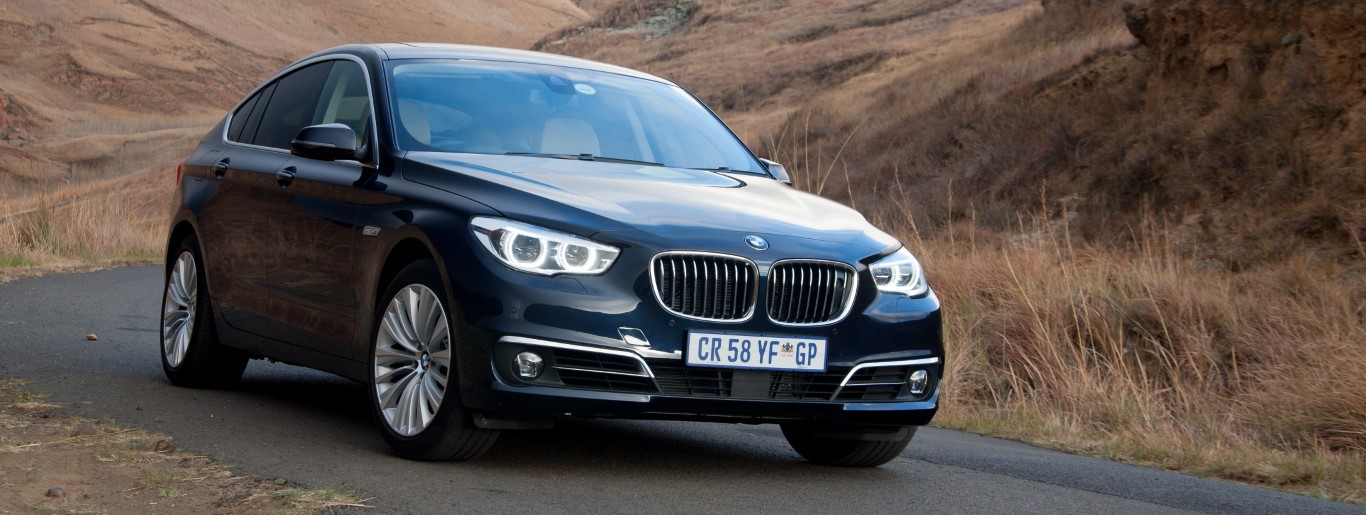
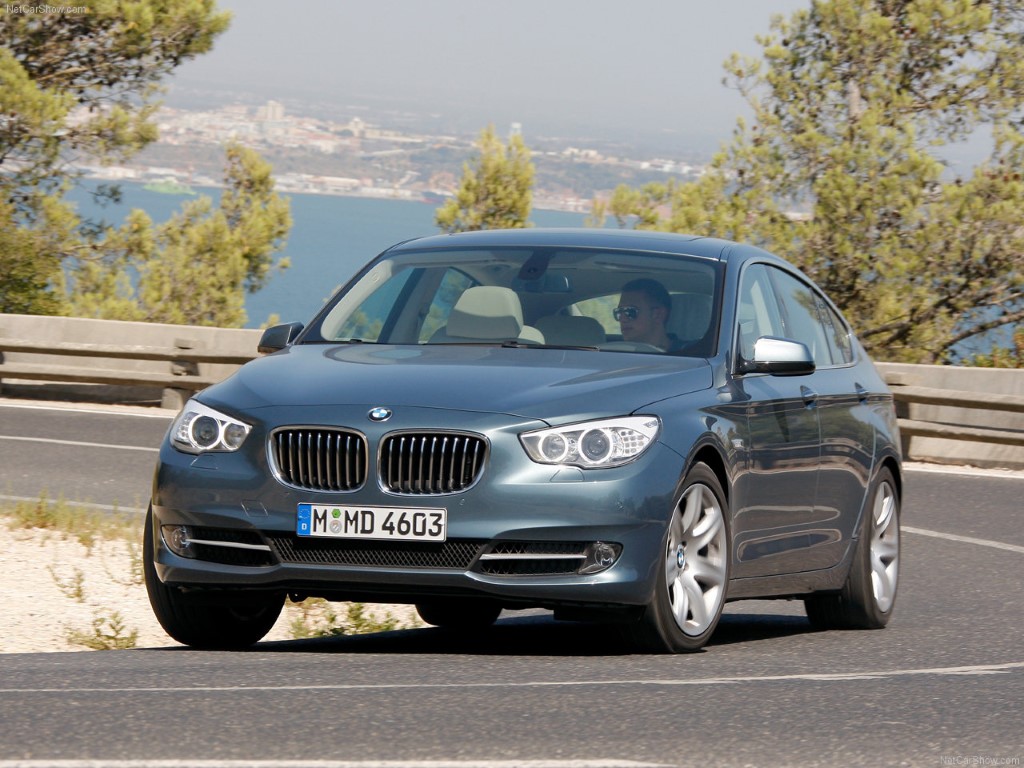
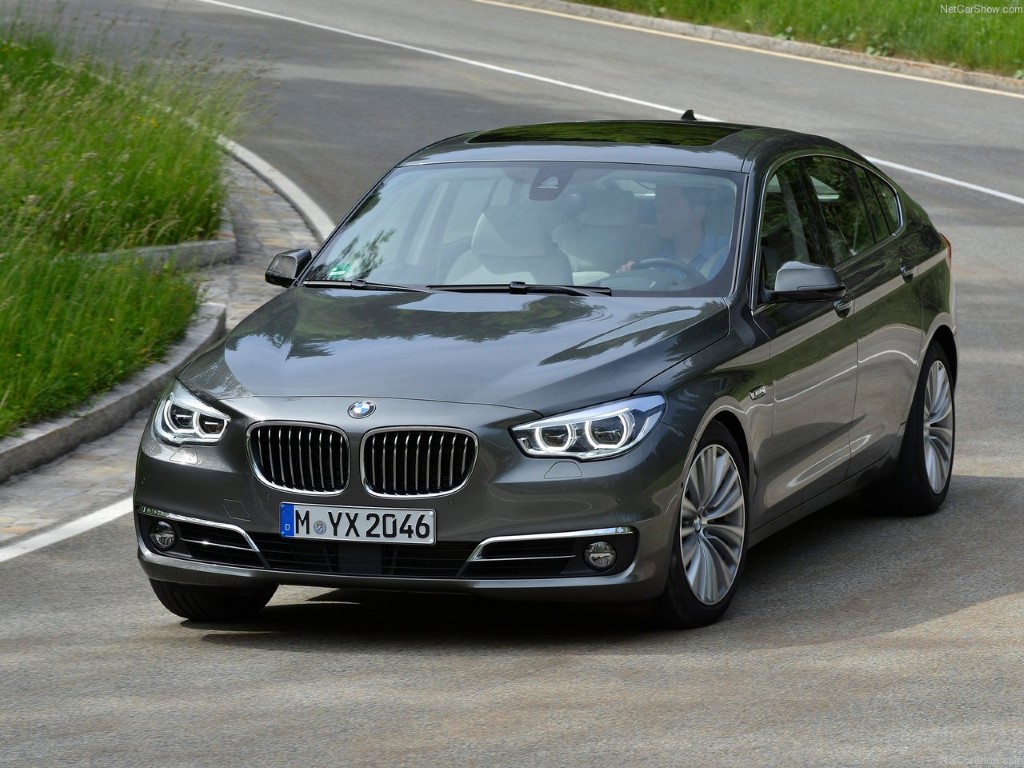
The design of the F07, penned by Christopher Weil, was an attempt to harmonize elements from different vehicle typologies. The body combined an elongated silhouette with a descending, coupe-style roofline, and four frameless doors — a novelty for a four-door BMW model at the time. The front was imposing, with a prominent and verticalized "double kidney" grille, and it was the brand's first model to use LED rings ("corona rings") as daytime running lights.
The rear, however, was the most controversial point. With tall proportions and considerable volume, it was frequently described by critics as awkward and visually heavy. This shape, however, was not an isolated aesthetic mistake, but a direct consequence of its ambitious functional proposal. To achieve the promised interior space and accommodate the complex trunk mechanism, the rear needed to have that volume. BMW, in this case, prioritized function over conventional form, resulting in a design that, although polarizing, was dictated by engineering.
Functional Innovation: The Dual-Opening Trunk Lid
One of the most ingenious and distinctive features of the F07 was its trunk lid, which had a two-way opening mechanism, a complex and highly functional engineering solution.
- Sedan Mode: It was possible to open only a lower section of the lid, like in a traditional sedan. This function was ideal for quickly placing smaller objects, without exposing the entire interior of the car to noise, wind, or temperature changes, maintaining the thermal and acoustic insulation of the cabin.
- Hatchback Mode: For large and bulky objects, the entire lid, including the rear window, could be opened, revealing a wide cargo opening typical of a hatchback. The operation could be fully electric, controlled by buttons on the key, inside the vehicle, or on the lid itself.
Interior: First-Class Space and Luxury
If the exterior was controversial, the interior was universally acclaimed. The cabin of the F07 was its greatest asset, offering a level of space, luxury, and comfort that far exceeded the traditional 5 Series and directly rivaled the 7 Series. The dashboard, largely inherited from the 7 Series, and the quality of the materials conveyed a sense of belonging to a higher segment.
The seating position was slightly elevated ("semi-command"), providing superior visibility compared to a sedan without the full height of an SUV. The true highlight, however, was in the rear seat. The seats could slide longitudinally by up to 100 mm and had reclining backrests, allowing passengers to adjust legroom or prioritize luggage capacity. As an option, it was possible to configure the rear seat with two individual luxury seats ("executive class seating"), separated by a center console, transforming the F07 into a true limousine.
Cargo capacity was equally impressive: the trunk offered 440 liters in the standard configuration, which could be expanded to 590 liters with the rear seats moved forward, and reached a maximum of 1,700 liters with the seats folded down — a volume greater than that of many station wagons.
Key Technical Specifications of the BMW F07 Gran Turismo
| Feature | Measurement / Value | |
|---|---|---|
| Length | 4,998 mm (LCI: 5,004 mm) | |
| Width | 1,901 mm | |
| Height | 1,559 mm | |
| Wheelbase | 3,070 mm | |
| Front Track | 1,611 mm | |
| Rear Track | 1,654 mm | |
| Curb Weight | 1,940 kg - 2,215 kg | |
| Trunk Capacity | 440 L (LCI: 500 L) | |
| Maximum Trunk Capacity | 1,700 L |
Model Evolution: Generations and Powertrains
The life of the BMW 5 Series Gran Turismo can be divided into two distinct phases: the original model, launched in 2009, and the updated version (LCI) that arrived in 2013, bringing aesthetic and technological refinements.
Phase 1: The Original Model (Pre-LCI, 2009–2013)
The F07 debuted in the European market in late 2009 with an initial range of three powerful and modern engines, all mated as standard to the then-new 8-speed automatic transmission from ZF, which stood out for its smoothness and efficiency. The initial options were:
- 535i Gran Turismo: Equipped with the new N55 engine, a 3.0-liter inline-six with a single twin-scroll turbo, direct injection, and Valvetronic system. This engine, which debuted in the F07, produced 306 hp and 400 Nm of torque.
- 550i Gran Turismo: The top of the range, equipped with a 4.4-liter twin-turbo V8 engine (N63) that delivered 407 hp and 600 Nm of torque.
- 530d Gran Turismo: The diesel option, with a 3.0-liter inline-six engine (N57) that generated 245 hp and 540 Nm of torque, combining good performance with efficiency.
In 2010, the range was expanded with the introduction of the xDrive all-wheel-drive system as an option for most powertrains, increasing safety and versatility in different weather conditions. That same year, the 535d version was added, with a more powerful version of the 3.0 diesel engine, reaching 300 hp and 600 Nm of torque.
| Model | Years | Engine | Type | Power | Torque | Drivetrain |
|---|---|---|---|---|---|---|
| 535i GT | 2009–2013 | 3.0L I6 Turbo (N55) | Gasoline | 306 hp | 400 Nm | RWD / xDrive |
| 550i GT | 2009–2013 | 4.4L V8 Biturbo (N63) | Gasoline | 407 hp | 600 Nm | RWD / xDrive |
| 530d GT | 2009–2013 | 3.0L I6 Turbo (N57) | Diesel | 245 hp | 540 Nm | RWD / xDrive |
| 535d GT | 2010–2013 | 3.0L I6 Turbo (N57) | Diesel | 300 hp | 600 Nm | RWD / xDrive |
Note: Power and torque data may have slight variations depending on the year and market. xDrive all-wheel drive was added in 2010.
Phase 2: The Update (LCI - Life Cycle Impulse, 2013–2017)
In mid-2013, for the 2014 model year, BMW applied a facelift, known as LCI (Life Cycle Impulse), to the entire 5 Series lineup. The Gran Turismo received important updates aimed at refining its styling and modernizing its technology.
The exterior changes were subtle but effective. The front gained a bumper with new lines and contours. Xenon headlights became standard, with the option of adaptive LED headlights, and the turn signals were integrated into the exterior mirrors.
The most significant alteration, however, occurred at the rear. The trunk lid was redesigned, becoming visually longer and lower. This modification aimed to soften the car's silhouette, which was its most criticized point, and impart a more elegant appearance. As a functional bonus, this change increased the trunk capacity by 60 liters, going from 440 to 500 liters with the seats in their normal position.
Inside, the iDrive infotainment system was updated to version 4.2, which included a new rotary controller with a touch-sensitive surface (touchpad) for character input. New options for interior trims, exterior colors, and wheel designs were also made available.
The engine range was also updated. For the European market, the 520d version was introduced, equipped with a 2.0-liter four-cylinder diesel engine with 184 hp, becoming the entry point for the model. Existing engines received improvements: the V8 in the 550i now developed 450 hp and 650 Nm, while the 535d was updated to 313 hp and 630 Nm.
| Model | Years | Engine | Type | Power | Torque | Drivetrain |
|---|---|---|---|---|---|---|
| 535i GT | 2013–2017 | 3.0L I6 Turbo (N55) | Gasoline | 306 hp | 400 Nm | RWD / xDrive |
| 550i GT | 2013–2017 | 4.4L V8 Biturbo (N63TU) | Gasoline | 450 hp | 650 Nm | RWD / xDrive |
| 520d GT | 2013–2017 | 2.0L I4 Turbo (N47) | Diesel | 184 hp | 380 Nm | RWD |
| 530d GT | 2013–2017 | 3.0L I6 Turbo (N57) | Diesel | 258 hp | 560 Nm | RWD / xDrive |
| 535d GT | 2013–2017 | 3.0L I6 Turbo (N57) | Diesel | 313 hp | 630 Nm | RWD / xDrive |
Note: Power and torque data may have slight variations depending on the year and market.
Equipment, Technology and Dynamics
The 5 Series Gran Turismo was not just a bodywork experiment; it was also a technological showcase. Because it was positioned between the 5 Series and the 7 Series, it democratized access to many of the cutting-edge technologies reserved for the brand's luxury sedan, making it an interesting value proposition for those seeking maximum comfort and innovation.
Onboard Technology and Luxury
The F07 could be equipped with virtually all the most advanced features BMW offered at the time, many of them inherited directly from the 7 Series. The list of standard and optional equipment was vast and included:
- Head-Up Display: Projected important information, such as speed and navigation directions, directly onto the windshield.
- BMW Night Vision: A night vision system with an infrared camera capable of detecting pedestrians and animals in the dark.
- Comfort and Ambience: Four-zone digital air conditioning, panoramic glass sunroof (standard in most markets), rear-seat entertainment system with individual screens, and high-fidelity sound systems, including options from Harman Kardon and, later, Bang & Olufsen.
- Instrument Cluster: The F07 used "Black Panel" technology, where the instruments remained dark until the car was turned on, then revealing digital dials with a sophisticated look.
The BMW ConnectedDrive technology package offered a complete suite of driver assistance systems, such as adaptive cruise control with Stop & Go function (capable of stopping and starting the car in traffic), lane departure warning, blind spot monitoring, and a camera system that provided a 360-degree view around the vehicle (Top View and Side View), making maneuvering in tight spaces easier.
Driving Dynamics: The Focus on Comfort
The driving experience of the F07 was dominated by its focus on comfort, a direct consequence of its 7 Series platform. The front suspension was a double-wishbone type and the rear an Integral-V, both constructed largely of aluminum to reduce unsprung weight. A crucial element was the self-leveling rear air suspension, which came standard on all versions. This system ensured that the rear ride height remained constant regardless of the load, contributing to stability and comfort on long journeys.
As standard, the F07 came with Dynamic Drive Control, a selector that allowed the driver to choose between COMFORT, NORMAL, SPORT, and SPORT+ driving modes. Each mode adjusted throttle response, automatic transmission shift speeds, and power steering weight.
For those who desired more refined dynamics, BMW offered two cutting-edge optional systems:
- Integral Active Steering: An active steering system that included rear-wheel steering. At low speeds, the rear wheels turned in the opposite direction to the front ones to reduce the turning circle and increase agility. At high speeds, they turned in the same direction to improve stability during lane changes.
- Adaptive Drive: This system combined electronically controlled shock absorbers with active anti-roll bars that acted to counteract body roll in corners, trying to mask the vehicle's higher weight and center of gravity.
Despite these technological aids, the critical consensus was clear: the F07 lacked the characteristic agility of a 5 Series. Its behavior was that of a large, heavy, and imposing car that prioritized comfort and straight-line stability. It was a vehicle meant to "float" on highways, absorbing imperfections masterfully, but not to attack winding roads with the same enthusiasm as its sedan siblings.
Production, Sales and Market Reception
The commercial trajectory of the 5 Series Gran Turismo was as complex as its concept, marked by modest sales numbers and a critical reception that praised the function while questioning the form.
Production and Sales Numbers
The F07 was produced exclusively at BMW's modern Dingolfing plant in Germany, on the same assembly line as the 7 Series and, later, the 5 Series sedan.
Obtaining an exact number of total F07 production is a challenge, as BMW traditionally does not release detailed production data by body style for its high-volume models. However, the available partial data paints a picture of a niche model with limited sales:
- In its first months on the market, from late 2009 to mid-2010, around 15,000 units were sold globally, a number considered reasonable for the initial phase of a niche car.
- In the United States, an important market, 2,848 units were sold in 2010.
- BMW's internal goal was for the Gran Turismo to represent approximately 10% of the total sales mix for the 5 Series family (which includes the sedan and the wagon).
Although the sixth generation of the 5 Series as a whole was a huge success, with over 2 million units sold, industry sources consistently describe the F07's sales as "sluggish" throughout its entire life cycle.
Critical and Public Reception: A Car of Dualities
The reception of the F07 was a study in contrasts. The specialized critics and the general public were divided into two clear camps:
- Negative Criticism: The overwhelming majority of negative criticism focused on the design. Terms like "awkward", "clunky", and "one of BMW's biggest mistakes" were common in publications of the time. The tall and voluminous rear end was the main target, considered disproportionate and unappealing.
- Praise: Conversely, the same critics who disapproved of the aesthetics were quick to praise the car's intrinsic qualities. The immense interior space, the luxury of the materials, the limousine-like ride comfort, and the brilliant versatility of the dual-opening trunk were universally acclaimed. The phrase "a brilliant car, if you can get past the looks" summed up the general sentiment well.
Used Market and Points of Attention
Slow sales and negative aesthetic reception led to a strong depreciation in the used market. Years after its launch, this high depreciation transformed the F07 into a "luxury bargain." Buyers of pre-owned cars discovered they could have the space, comfort, and technology of a 7 Series for a much more accessible price. This created a new audience for the car: pragmatic customers who valued substance and functionality over aesthetics, willing to ignore the controversial design in exchange for exceptional cost-benefit. The same factor that limited its success as a new car — its appearance — became the key to its attractiveness in the used market.
In the pre-owned market, owners report some points of attention, the most common being issues related to the complex rear air suspension and sometimes premature wear of the tires, especially the run-flat type, which are stiffer.
Legacy and the Successor, the 6 Series Gran Turismo (G32)
Despite its modest commercial career, the F07 left an important legacy and gave rise to a successor that attempted to correct its flaws and refine its concept.
The Legacy of the F07
The 5 Series Gran Turismo proved that there was an audience, albeit a niche one, for a luxury vehicle that offered more versatility than a traditional sedan, but with driving dynamics and refinement superior to those of an SUV. It was a bold experiment that, although it did not become a sales success, provided BMW with valuable lessons about creating new segments, product positioning, and, above all, the importance of aesthetic harmony.
The Transition to the 6 Series Gran Turismo (G32)
In 2017, with the end of F07 production, BMW did not abandon the concept. Instead, it launched its successor with a fundamental strategic shift: the car was renamed the BMW 6 Series Gran Turismo (G32).
This name change was, in practice, an admission that the original positioning within the 5 Series family had been a mistake. By moving the model to the 6 Series — a line historically associated with elegant coupes and more exclusive models — BMW sought to create a distinct identity for the concept. The goal was to distance the car from the sporty image of the 5 Series and associate it with luxury and style, justifying a higher price and, crucially, leaving behind the negative aesthetic baggage of the F07. It was a strategic course correction to try and save the "Gran Turismo" idea.
F07 vs. G32 Comparison
The 6 Series GT (G32) was a significant evolution compared to its predecessor:
- Design: The G32 was universally considered a huge aesthetic improvement. It was 87 mm longer, 21 mm lower, and about 150 kg lighter than the F07. These new proportions, combined with more fluid lines, resulted in a much more harmonious and elegant silhouette, especially at the rear.
- Platform and Technology: Built on the modern CLAR modular platform, shared with the 5 Series (G30) and 7 Series (G11), the G32 maintained the focus on comfort, with air suspension on both axles in some versions, and incorporated BMW's latest infotainment and driver assistance technologies.
- Functionality: Practicality was improved, with an even larger trunk reaching 610 liters. However, one of the F07's most iconic features, the dual-opening trunk lid, was abandoned in favor of a conventional hatchback tailgate, likely for reasons of cost, weight, and complexity.
Despite all the improvements, the 6 Series Gran Turismo also failed to captivate a broad audience. Sales remained modest, and in 2023, BMW discontinued the model without announcing a direct successor, marking the end of the large "Gran Turismo" experiment that began with the F07.
A Verdict on the Gran Turismo
The BMW 5 Series Gran Turismo (F07) will be remembered in automotive history as a car of deep contradictions. On the one hand, it was a triumph of engineering, a vehicle that materialized a vision of versatility and comfort in a way that no other competitor could match at the time. It offered a combination of limousine space, hatchback practicality, and first-class luxury that was, in theory, the solution to many dilemmas of the modern consumer.
However, its functional ambition came at an aesthetic cost. The design, dictated by the need to accommodate so much space and functionality, did not resonate with the public, proving the industry maxim that the emotion of aesthetics often overrides the logic of function. The F07 was not a bad car; on the contrary, for its specific purpose, it was an excellent car. Its mistake was not one of engineering or quality, but rather of communication, positioning, and, for many, appearance. It remains a fascinating and misunderstood chapter in BMW's history — a car that dared to be radically different and that, because of its audacity, became a cult classic for those who value substance over style.