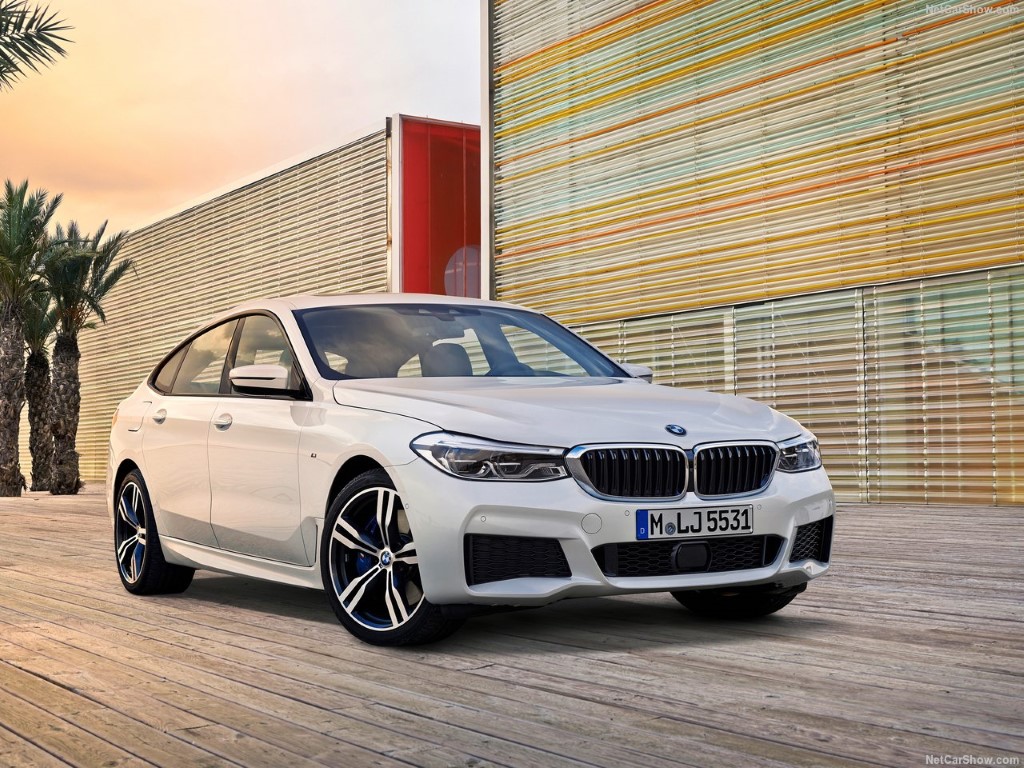
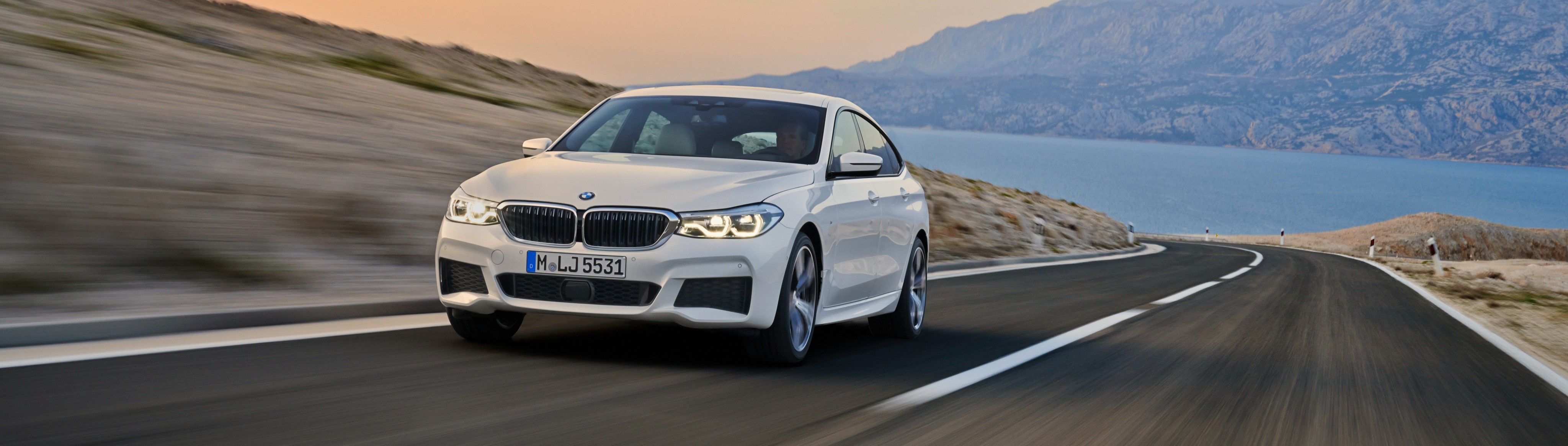
With the launch of the G32 in 2017, BMW presented a significant evolution of the Gran Turismo
concept, focused on correcting the shortcomings of its predecessor and refining its qualities.
Design, Platform, and Dimensions – The Aesthetic Correction
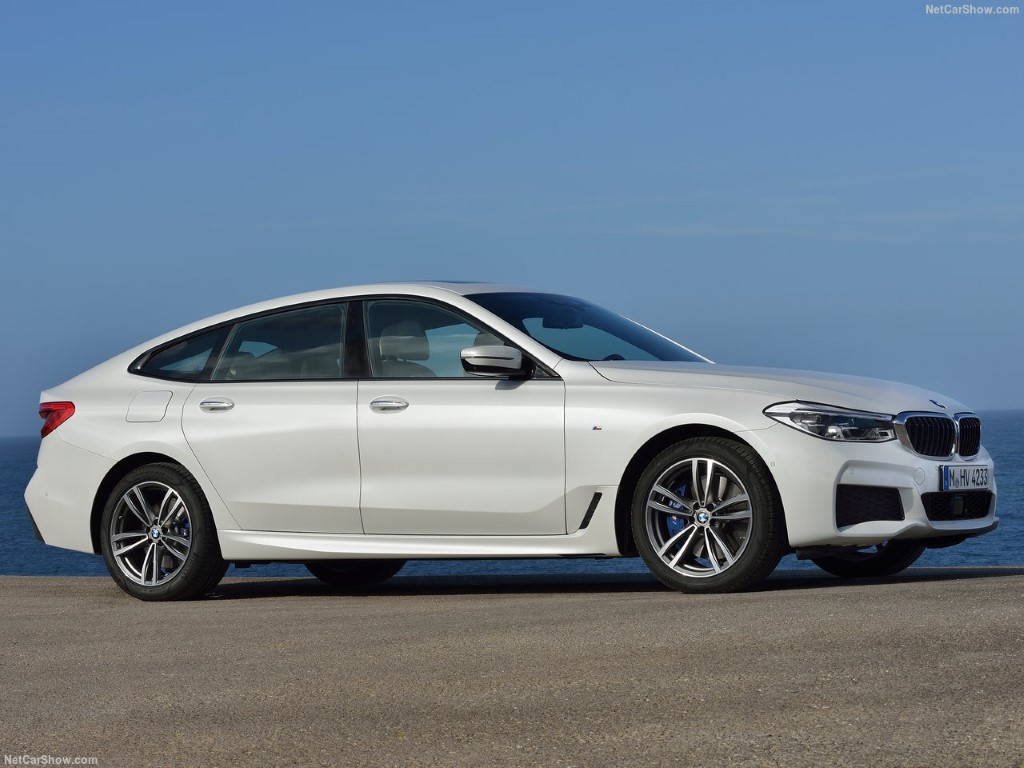
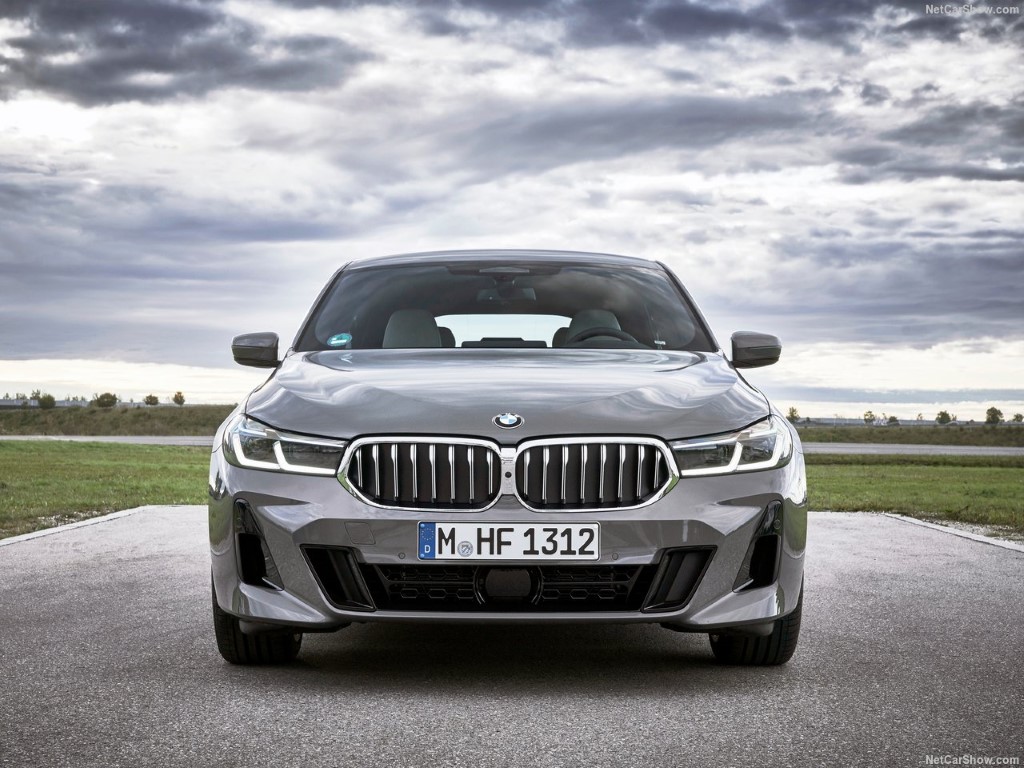
The exterior design, penned by Hussein Al-Attar, was the centerpiece of the redesign. The G32 was
sculpted to be visibly more elegant and proportionate than the F07. To achieve this sleeker silhouette, the
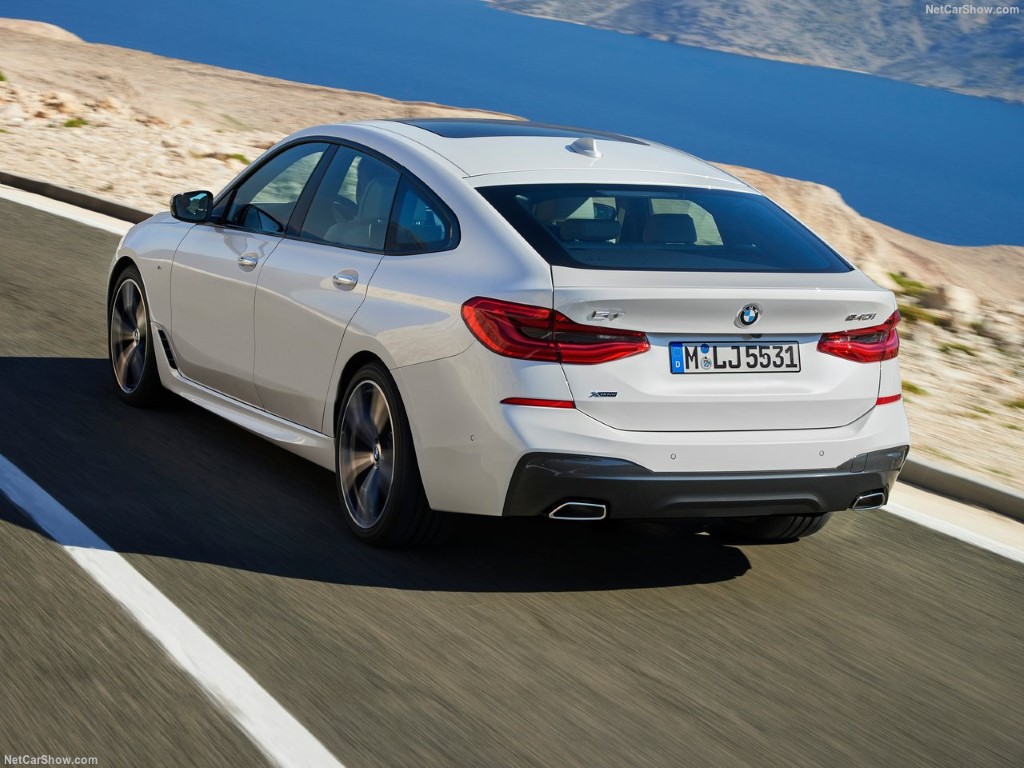
car became 87 mm longer and 21 mm lower, with a roofline that sloped more smoothly towards a rear end that
was 6 cm lower. The result was a remarkably improved aerodynamic drag coefficient (Cd), dropping from 0.29
in the F07 to just 0.25 in some versions of the G32, an excellent number for a vehicle of its size.
The basis for this transformation was the adoption of the modular Cluster Architecture (CLAR)
platform, shared with the 5 Series (G30) and the 7 Series (G65). The extensive use of aluminum and
high-strength steels in this architecture allowed for a weight reduction of up to 150 kg compared to the
F07, which contributed to both improved driving dynamics and efficiency.
Among the notable design features were the doors with frameless windows, a styling touch that harkens back to
classic coupes, and an active rear spoiler. This spoiler automatically raised at speeds above 120 km/h to
increase downforce and improve stability, retracting when the speed dropped below approximately 70 km/h.
Although functional, this mechanism could present faults, generating a specific error code (80172F-HKFM)
that indicated a malfunction in the system.
In terms of dimensions, the G32 was an imposing car, with 5,091 mm in length, 1,902 mm in width,
1,538 mm in height, and a generous wheelbase of 3,070 mm, fundamental for its spacious interior.
Interior and Practicality – The Luxury of Space
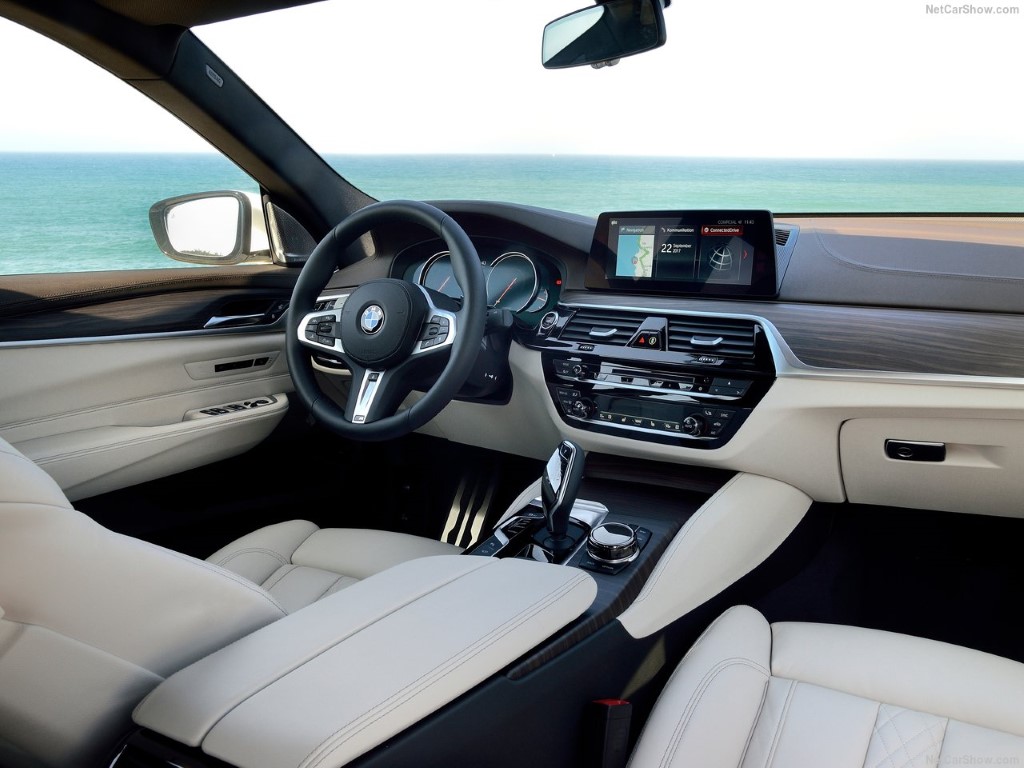
If the exterior was a correction, the interior was an enhancement of what was already a strong point in the
F07. The G32's cabin combined the modern design and high-quality materials of the 5 Series (G30) with
rear-seat legroom that rivaled that of the 7 Series, a direct result of its long wheelbase. The ergonomics,
precise assembly, and feeling of luxury were widely praised, establishing the interior as one of the car's
biggest attractions.
Comfort was, without a doubt, the main virtue of the G32. All models came standard with self-leveling
air suspension on the rear axle, ensuring the car maintained its ride height and balance regardless of the
load. For an even more refined experience, adaptive air suspension on both axles, known as Executive
Drive, was available as an option, providing an exceptionally smooth and quiet ride, filtering
out road imperfections and making the G32 an ideal vehicle for long journeys.
Practicality was another pillar of the concept. The trunk capacity was one of the model's greatest
assets: 610 liters with the rear seats in the normal position (an increase of 110 liters over the F07) and
an impressive 1,800 liters with the seats folded down. The large opening of the trunk lid, in the
liftback style, greatly facilitated the loading of large and bulky objects, offering a
versatility that neither the 5 Series sedan nor the station wagon could match.
Technology, Engines, and Versions (Pre-LCI)
In its initial phase, the 6 Series GT was equipped with the iDrive 6.0 infotainment system, displayed
on a 10.25-inch screen, which could be operated by touch, the iDrive controller on the center console, or
gesture control. The BMW Active Driving Assistant driver assistance package, which included
blind-spot monitoring and lane departure warning, was standard equipment, reinforcing the car's focus on
safety and long-distance comfort. To improve maneuverability in the city and stability at high speeds, the
Integral Active Steering system was available, which steered the rear wheels by up to 3
degrees.
The initial engine range offered gasoline and diesel options, with inline four or six cylinders, all
turbocharged. Notably, and unlike its predecessor, the G32 never received a V8 engine option. All variants
were coupled to the acclaimed 8-speed ZF automatic transmission, with xDrive all-wheel drive available for
most engines and being standard on the top-tier diesel models.
The versions available in the period from 2017 to 2020 included:
- Gasoline: 630i (B48 2.0L 4-cylinder engine with 258 hp) and 640i (B58 3.0L
6-cylinder engine with 340 hp).
- Diesel: 620d (B47 2.0L 4-cylinder engine with 190 hp, launched in 2018),
630d (B57 3.0L 6-cylinder engine with 265 hp), and 640d (B57 3.0L 6-cylinder engine with 320 hp).