1st Generation
(2018-2020)
3.0 L6 Turbo
340 cv
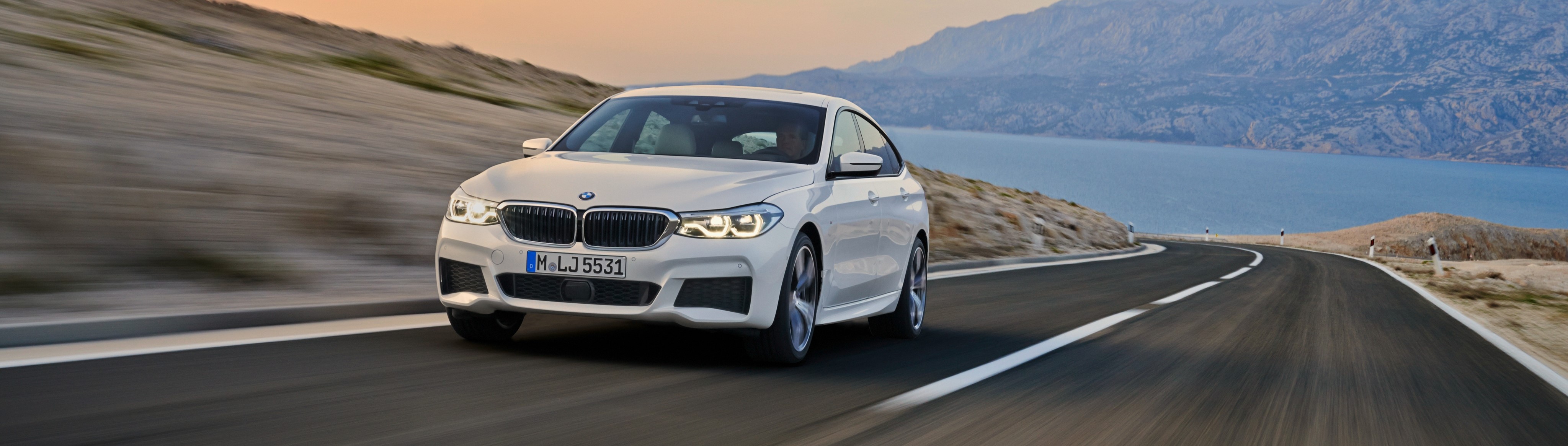
The sophisticated traveler: a masterful combination of limousine comfort and luxury hatchback versatility.
Select a generation to see available versions
(2018-2020)
(2021-2023)
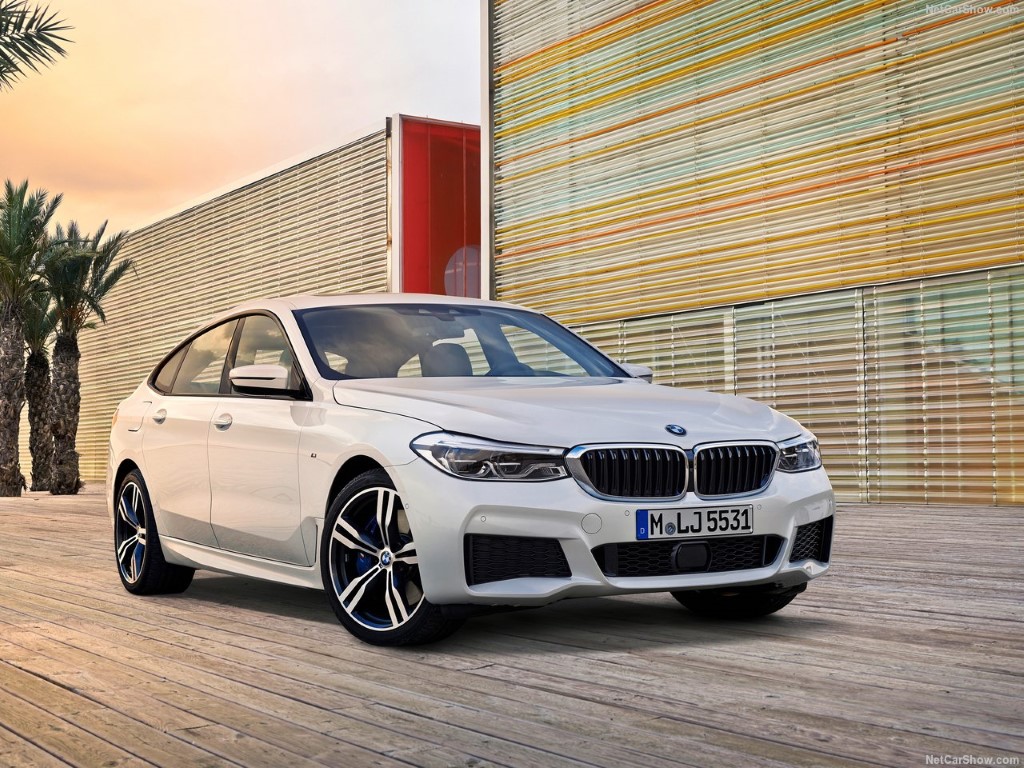
The BMW 6 Series Gran Turismo, identified by the model code G32, was introduced in 2017 as a unique proposition from BMW in the luxury executive segment. Its central philosophy was ambitious: to merge three distinct automotive worlds into a single, cohesive five-door liftback body style. The goal was to combine the long-distance comfort of a luxury sedan, like the 7 Series, the elegance and style of a coupe, and the functional practicality of a station wagon (Touring). This vehicle was designed to be a solution for a very specific customer, one who sought more space and versatility than a traditional sedan could offer, but who did not wish to migrate to the growing trend of SUVs.
In the brand's portfolio, the G32 was strategically positioned as a bridge between the dynamic 5 Series and the opulent 7 Series. It utilized the modern platform of the 5 Series (G30), but offered rear-seat legroom comparable to that of the 7 Series, thanks to an elongated wheelbase. This approach reflects a BMW strategy to identify and fill very specific market niches. The company perceived a potential customer who desired the luxury of the 7 Series, the dynamics of the 5 Series, and the practicality of an X5, all consolidated into a single automobile. The 6 Series GT was the technically brilliant answer to this challenge. However, the subsequent analysis of its commercial performance would reveal that this "problem" to be solved did not exist on a commercially viable scale. The G32, in its essence, was an impeccable engineering solution to a question that few consumers were, in fact, asking.
The model also carried the shadow of its predecessor, the controversial BMW 5 Series Gran Turismo (F07). The G32 was a deliberate attempt by BMW to refine and correct the formula that did not achieve the expected success in its first iteration. One of the most significant changes was the nomenclature itself. The transition from "5 Series GT" to "6 Series GT" was not accidental; it was a calculated marketing maneuver to disassociate the new vehicle from the problematic image of its predecessor and, at the same time, align it with the prestige and sportiness of the elegant coupes and convertibles of the 6 Series of the time (F06/F12/F13).
To fully understand the 6 Series Gran Turismo, it is fundamental to analyze its starting point: the BMW 5 Series Gran Turismo (F07), produced between 2009 and 2017. This model pioneered the concept that BMW internally called the "Progressive Activity Sedan" (PAS), an attempt to create a new segment that merged the qualities of a sedan, an SUV, and a grand tourer. Built on the platform of the F01 generation 7 Series, the F07 sought to offer the luxury of an executive sedan with the versatility of a hatchback and a higher driving position.
The design of the F07, however, was its biggest obstacle and the main source of controversy. Frequently described by critics and consumers as awkward, with a "humpback" rear end and unbalanced proportions, its look was a decisive factor that limited its commercial appeal. The high rear and the overall volume of the car created a silhouette that many considered unattractive, especially when compared to the elegance of the 5 Series sedan (F10) and the station wagon (F11) of the same generation.
Despite its aesthetic flaws, the F07 was an innovative and extremely comfortable vehicle. It introduced unique features, such as a dual-opening trunk lid system: it was possible to open just a small section, like in a sedan, or the entire lid, like in a hatchback. This engineering solution, although ingenious, was complex and heavy, and ended up being abandoned in its successor, the G32. The interior was its greatest asset, offering generous space, especially for rear-seat passengers, with a level of comfort and materials that were closer to the 7 Series than the 5 Series. However, these qualities were not enough to overcome the design barrier, and the model registered a low sales volume throughout its life cycle.
Even with a facelift (LCI) in 2013 that attempted to soften its lines and modernize the appearance, the F07 never took off commercially. BMW learned a valuable lesson: a functionally superior concept cannot succeed if its aesthetics do not resonate with the target audience. The decision to rename its successor to "6 Series Gran Turismo" was, therefore, a strategic measure to create a clear break from the negative image of the F07. The brand sought to associate the new model with the sportiness and elegance of the 6 Series lineup, which at the time consisted of highly acclaimed coupes and convertibles. However, this choice of nomenclature created a paradox. By applying the name "6 Series," traditionally linked to two-door cars with a focus on dynamics, to a large, heavy vehicle focused on comfort, BMW created a dissonance. Enthusiasts of the 6 Series did not see the GT as a legitimate member of the family, while potential GT buyers, who sought luxury and practicality, might be intimidated by a name associated with less practical cars. This strategy, instead of elevating the G32, may have deepened its identity crisis, leaving it in a limbo between two distinct audiences.
With the launch of the G32 in 2017, BMW presented a significant evolution of the Gran Turismo concept, focused on correcting the shortcomings of its predecessor and refining its qualities.
The exterior design, penned by Hussein Al-Attar, was the centerpiece of the redesign. The G32 was sculpted to be visibly more elegant and proportionate than the F07. To achieve this sleeker silhouette, the car became 87 mm longer and 21 mm lower, with a roofline that sloped more smoothly towards a rear end that was 6 cm lower. The result was a remarkably improved aerodynamic drag coefficient (Cd), dropping from 0.29 in the F07 to just 0.25 in some versions of the G32, an excellent number for a vehicle of its size.
The basis for this transformation was the adoption of the modular Cluster Architecture (CLAR) platform, shared with the 5 Series (G30) and the 7 Series (G65). The extensive use of aluminum and high-strength steels in this architecture allowed for a weight reduction of up to 150 kg compared to the F07, which contributed to both improved driving dynamics and efficiency.
Among the notable design features were the doors with frameless windows, a styling touch that harkens back to classic coupes, and an active rear spoiler. This spoiler automatically raised at speeds above 120 km/h to increase downforce and improve stability, retracting when the speed dropped below approximately 70 km/h. Although functional, this mechanism could present faults, generating a specific error code (80172F-HKFM) that indicated a malfunction in the system.
In terms of dimensions, the G32 was an imposing car, with 5,091 mm in length, 1,902 mm in width, 1,538 mm in height, and a generous wheelbase of 3,070 mm, fundamental for its spacious interior.
If the exterior was a correction, the interior was an enhancement of what was already a strong point in the F07. The G32's cabin combined the modern design and high-quality materials of the 5 Series (G30) with rear-seat legroom that rivaled that of the 7 Series, a direct result of its long wheelbase. The ergonomics, precise assembly, and feeling of luxury were widely praised, establishing the interior as one of the car's biggest attractions.
Comfort was, without a doubt, the main virtue of the G32. All models came standard with self-leveling air suspension on the rear axle, ensuring the car maintained its ride height and balance regardless of the load. For an even more refined experience, adaptive air suspension on both axles, known as Executive Drive, was available as an option, providing an exceptionally smooth and quiet ride, filtering out road imperfections and making the G32 an ideal vehicle for long journeys.
Practicality was another pillar of the concept. The trunk capacity was one of the model's greatest assets: 610 liters with the rear seats in the normal position (an increase of 110 liters over the F07) and an impressive 1,800 liters with the seats folded down. The large opening of the trunk lid, in the liftback style, greatly facilitated the loading of large and bulky objects, offering a versatility that neither the 5 Series sedan nor the station wagon could match.
In its initial phase, the 6 Series GT was equipped with the iDrive 6.0 infotainment system, displayed on a 10.25-inch screen, which could be operated by touch, the iDrive controller on the center console, or gesture control. The BMW Active Driving Assistant driver assistance package, which included blind-spot monitoring and lane departure warning, was standard equipment, reinforcing the car's focus on safety and long-distance comfort. To improve maneuverability in the city and stability at high speeds, the Integral Active Steering system was available, which steered the rear wheels by up to 3 degrees.
The initial engine range offered gasoline and diesel options, with inline four or six cylinders, all turbocharged. Notably, and unlike its predecessor, the G32 never received a V8 engine option. All variants were coupled to the acclaimed 8-speed ZF automatic transmission, with xDrive all-wheel drive available for most engines and being standard on the top-tier diesel models.
The versions available in the period from 2017 to 2020 included:
In May 2020, BMW revealed the mid-life cycle update (LCI - Life Cycle Impulse) for the 6 Series Gran Turismo, introducing aesthetic refinements, a significant technological leap in the interior, and, most importantly, the electrification of its entire engine range.
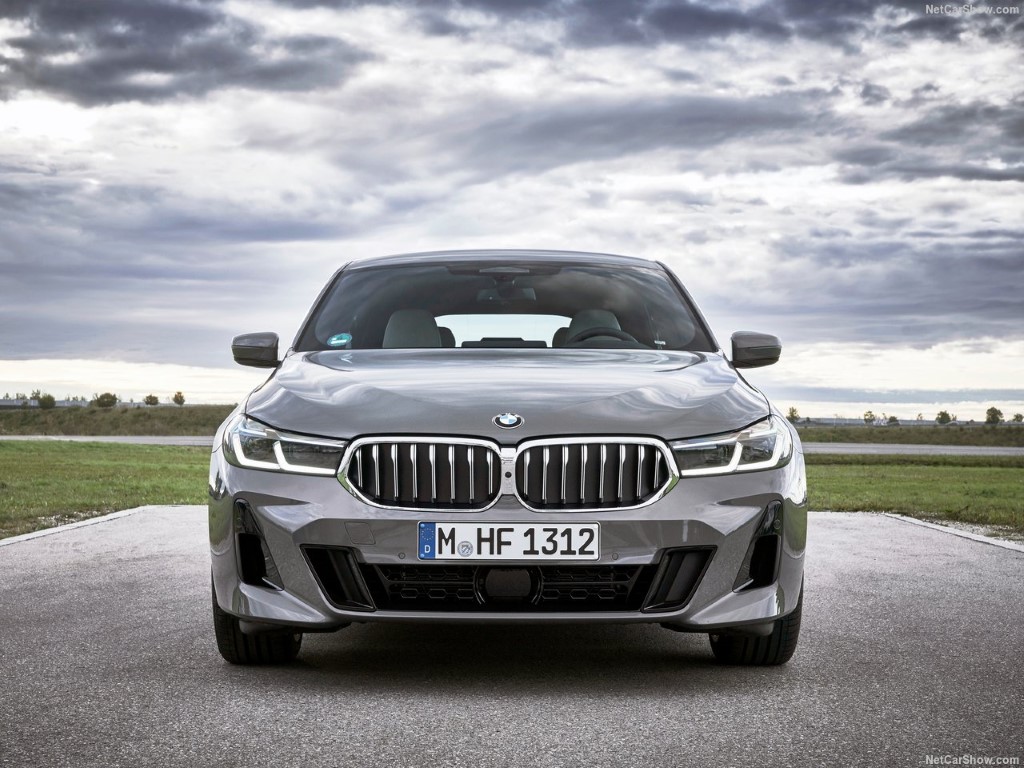
The changes to the exterior design were subtle but effective in modernizing the car's appearance. The double-kidney front grille became wider and more angular, aligning with the brand's latest design language. The headlights were redesigned, adopting a new "L" shaped daytime running light signature and coming standard with adaptive LED technology. As an option, the BMW Laser Light system was available, with superior illumination range. The front and rear bumpers were also redesigned, and trapezoidal-shaped exhaust tailpipes became standard on all versions, providing a sportier look.
Inside, the update was more profound. The G32 LCI received the BMW Live Cockpit Professional as standard equipment, which replaced the previous layout with a set of two 12.3-inch screens: one for the fully digital instrument cluster and another for the central infotainment system. This new hardware was managed by BMW Operating System 7, which offered a faster interface, improved graphics, and greater connectivity. Android Auto integration was finally added, joining the wireless Apple CarPlay that was already offered. New exterior color options, such as Phytonic Blue and Bernina Grey, and new 19- and 20-inch wheel designs were also made available.
The most important technical change of the LCI was the standard implementation of 48-volt mild-hybrid technology across the entire engine range, both gasoline and diesel. This system uses a 48V starter-generator that acts as a small electric motor, providing an additional boost of 11 hp (8.1 kW) to assist the combustion engine.
The benefits of this technology are multiple. The electrical boost helps to smooth out power delivery during acceleration, reduces "turbo lag," and allows the combustion engine to be turned off more frequently in low-demand situations (such as when stopping at a traffic light or at cruising speeds), improving fuel efficiency. The start-stop system also becomes faster and smoother. With this update, all engines now comply with the strict Euro 6d emissions standard.
The introduction of the mild-hybrid system was accompanied by minor adjustments to the power and torque of some engines, further optimizing their performance and efficiency. The LCI engine range was configured as follows:
Despite being a technically superior and aesthetically more resolved product than its predecessor, the BMW 6 Series Gran Turismo faced a harsh commercial reality. Although BMW celebrated the milestone of over 50,000 units sold globally by May 2020, sales performance in crucial markets was consistently low. In Germany, its domestic market, the model sold only 509 units in all of 2022 and 237 units in the first half of 2023, making it the brand's lowest-selling car in the country.
Failure in key markets was evident early on. BMW withdrew the G32 from the United States market after the 2019 model year and from the United Kingdom in 2020, right after announcing the facelift for the rest of Europe. This rapid decision indicates that the company promptly identified the lack of demand and chose to cut losses rather than insist on a product that could not find its audience.
Interestingly, the 6 Series GT found an unexpected niche of success in India. In contrast to its global performance, the model was a sales hit in the Indian market, even surpassing popular SUVs and becoming one of the best-selling luxury products in the country. This phenomenon highlights the fragmentation of luxury consumer preferences on a global scale. In markets like India, where many luxury car owners are chauffeured, rear-seat space and comfort are primary purchasing factors. The 6 GT's value proposition, with its vast legroom and smooth ride, aligned perfectly with the needs of this customer profile. Conversely, in Western markets, where owners generally drive their own cars, BMW buyers tended to prioritize the more traditional design and sharper driving dynamics of sedans, or the commanding presence and versatility of SUVs. The 6 GT did not fail universally; it failed in markets that did not value its unique proposition, while it thrived in the one market where its specific qualities were exactly what the consumer desired.
Faced with weak global performance, BMW decided to end production of the 6 Series Gran Turismo in August 2023, without planning a direct successor. In India, its discontinuation coincided with the launch of the new 5 Series in a long-wheelbase (LWB) version, a model designed specifically for the Asian market that effectively took over the role the 6 GT played so successfully in the region.
The BMW 6 Series Gran Turismo (G32) concludes its trajectory as one of the most paradoxical vehicles in the brand's recent history. In its virtues, it was an exceptional automobile: it offered superb ride comfort, interior space comparable to a luxury limousine, and immense practicality thanks to its versatile trunk, making it one of the best cars for long trips ever produced by BMW. The build quality, onboard technology, and mechanical refinement were unquestionable.
However, its weak points were decisive for its fate. The design, although a vast improvement over the F07, remained polarizing. It possessed neither the timeless elegance of a sedan nor the imposing presence of an SUV, sitting in a stylistic middle ground that failed to captivate a broad audience. Furthermore, its driving dynamics, while competent and safe, were perceived as less engaging and "heavier" than expected for a BMW, especially one bearing the prestigious number "6" on its trunk lid.
The final verdict is that the 6 Series Gran Turismo was a triumph of engineering, but a failure of product strategy. It represents the end of BMW's short and bold experiment with large "Gran Turismos," an experiment that proved that, even with near-perfect technical execution, a vehicle concept needs a clear and well-defined market demand to survive. Its legacy is that of a brilliant car that few bought, but those who did enjoyed one of the most comfortable, versatile, and underrated vehicles in its class.