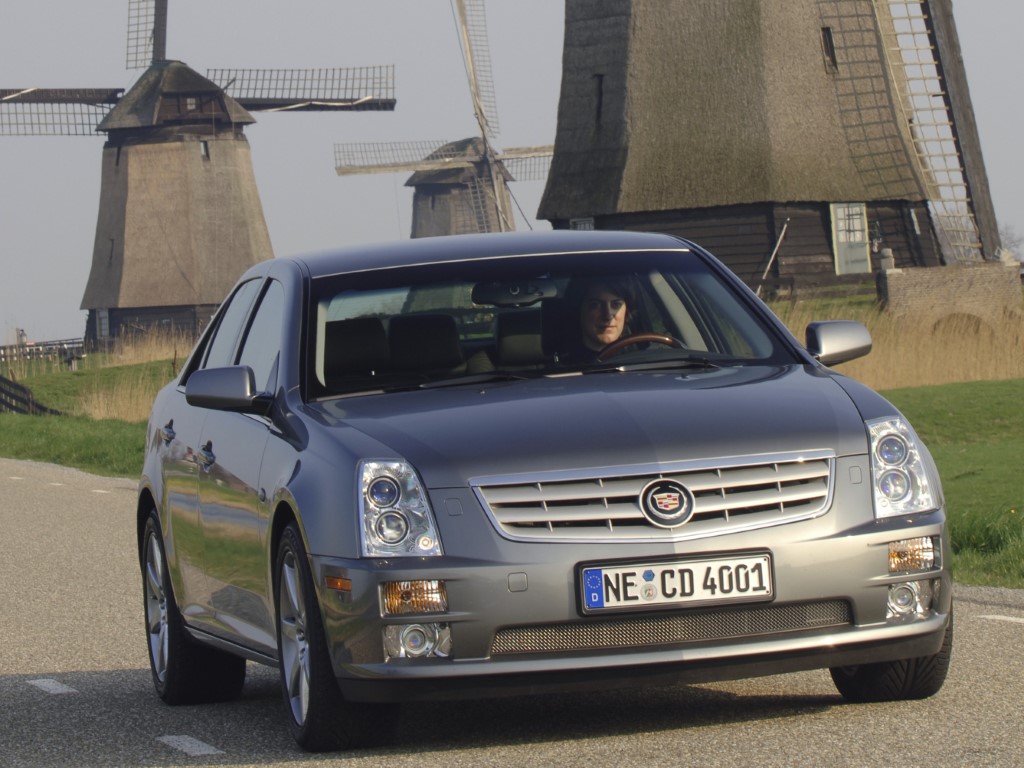
1st Generation
(2004-2007)
4.4 V8 Supercharged Northstar (LC3)
476 cv

Executive precision: the luxury sedan that merged technological sophistication with high-level driving dynamics.
Select a generation to see available versions
(2004-2007)
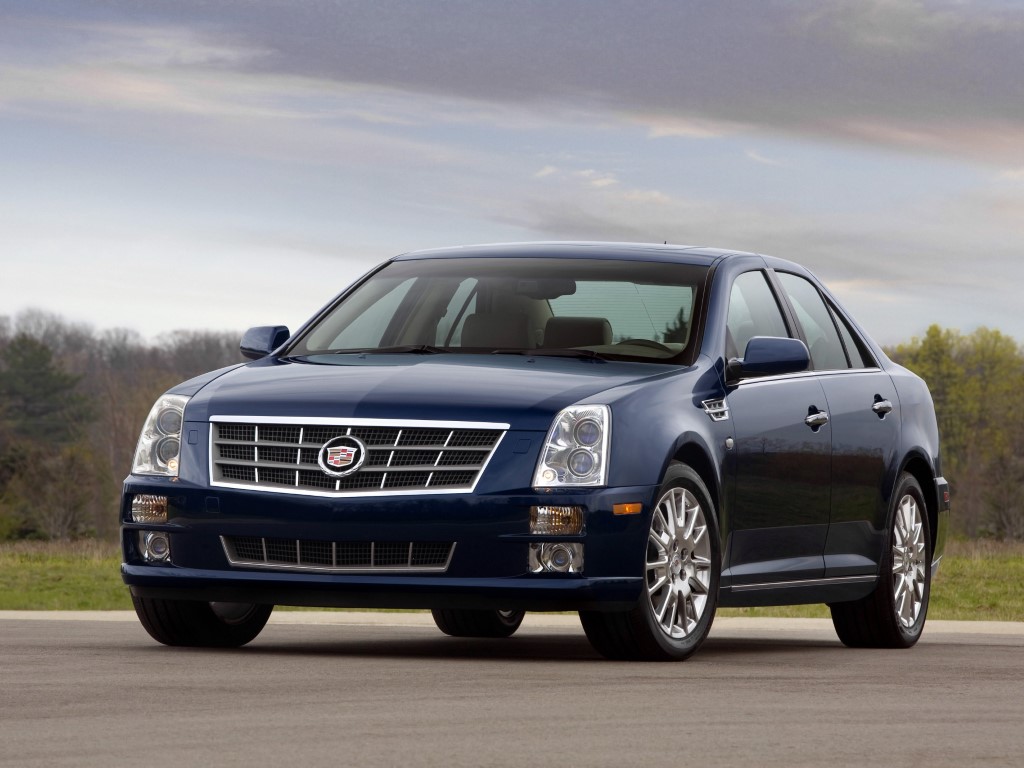
(2008-2011)
The trajectory of the Cadillac STS transcends the simple history of an automobile model; it narrates the complex journey of the United States' luxury automotive industry in its attempt to regain global relevance against German and Japanese engineering. The acronym STS, which originally stood for Seville Touring Sedan, emerged not as an independent model, but as a statement of intent within the Cadillac lineup: that an American car could offer dynamic precision, cutting-edge technology, and robust performance, without abandoning the brand's traditional comfort.
This report analyzes the evolution of this vehicle from its origins as a trim package in the 1980s, through its apex as the most powerful front-wheel-drive sedan in the world in the 90s, to its complete reinvention as a rear-wheel-drive sports sedan in the 2000s. Engineering aspects will be detailed, such as the introduction of the Northstar engine and magnetic suspension, as well as the market analysis and production numbers that sealed the model's fate.
To understand the STS, it is fundamental to understand the Cadillac Seville, the model from which it originated. In the mid-1980s, Cadillac was facing an identity crisis. The third generation of the Seville (1986–1991) had undergone a drastic reduction in size, an unsuccessful attempt to respond to the oil crisis and European competition. The market rejected the compact dimensions and controversial styling, demanding a course correction.
In 1987, as part of the strategy to recover lost prestige and attract a younger, more enthusiast audience, Cadillac introduced the "Seville Touring Sedan" (STS) package to the existing Seville lineup.
This initial package distinguished itself from the base model and the comfort-focused version (Elegante/SLS) through specific modifications to the suspension. Cadillac equipped the original STS with the so-called "touring suspension", which included stiffer sway bars, firmer shock absorber calibration, and a quicker steering ratio to provide a more agile response at the wheel. Aesthetically, the model differentiated itself with exclusive 15-inch wheels and an interior configured specifically for four occupants, featuring a center console that extended to the rear seat, emphasizing individual exclusivity over passenger carrying capacity.
Although sales were modest, the concept proved there was demand for a Cadillac with a "sporty soul." This experiment paved the way for the revolution that would come in the following decade.
The fourth generation of the Seville, launched in 1992, marked the consolidation of the STS as the brand's performance flagship. The design was radically altered, abandoning the formal, boxy lines of the 80s in favor of a European, aerodynamic, and aggressive aesthetic, inspired by the 1988 Cadillac Voyage concept car.
General Motors positioned the new Seville, and specifically the STS version, as an "Import Fighter". The goal was to compete directly with the BMW 5 Series, the Mercedes-Benz E-Class, and the emerging Lexus LS and Infiniti Q45.
The vehicle grew significantly compared to its predecessor, with an increase of almost 33 centimeters in overall length, reaching 5.18 meters (203.9 inches). The wheelbase was extended to 2.82 meters (111 inches), which drastically improved interior space and directional stability at high speeds.
Starting in 1992, Cadillac divided the Seville lineup into two distinct personalities, a strategy that would last for over a decade:
The technological milestone of this generation was the introduction of the Northstar powertrain system.
To handle the power sent solely to the front wheels, Cadillac developed advanced suspension systems. The highlight was the CVRSS (Continuously Variable Road Sensing Suspension). The system used sensors to read the road surface and adjusted the stiffness of the shock absorbers individually in milliseconds. This allowed the car to be soft over bumps, but instantly stiffen in corners or during hard braking to prevent body roll.
The fifth generation of the Seville (and its STS version) was launched in 1998 with an ambitious mission: to be the first truly global Cadillac. Built on General Motors' "G" platform, which offered vastly superior structural rigidity to the old "K" platform, the new model was designed from the outset to be sold in export markets, including right-hand-drive versions for Japan and the United Kingdom.
Although visually similar to the 1992-1997 model, the 1998 car was completely re-engineered. The overall length was slightly reduced to under 5 meters (in export versions) to fit European garages and taxes, although the wheelbase was increased to improve interior space.
The interior received special attention to ergonomics, abandoning the complex digital dashboards of the 80s/90s in favor of easy-to-read analog instruments and soft-touch materials, attempting to emulate the build quality of Audi and Lexus.
The greatest technological legacy of this generation, and perhaps of Cadillac's entire modern history, was the introduction of the Magnetic Ride Control system on the STS in mid-2002.
Unlike previous adaptive suspensions that used mechanical valves to adjust oil flow, Magnetic Ride used a magneto-rheological fluid. This fluid contains microscopic iron particles.
Despite all the technology, the Seville STS suffered from an inherent physical limitation: Front-Wheel Drive (FWD). With 300 horsepower going to the front wheels, the car battled against the phenomenon of "torque steer," where the engine's force pulls the steering to the sides during hard acceleration. It became clear to Cadillac that, to compete on equal footing with the BMW 5 Series and the Mercedes E-Class (both rear-wheel drive), a radical architectural change was necessary.
Production of the STS model (as a version of the Seville) ended in May 2003. The SLS model continued in production until December 2003 as a 2004 model, marking the definitive end of the "Seville" name in the United States.
In 2005, Cadillac dropped the Seville name and launched the Cadillac STS as a standalone model. This launch was the pinnacle of the brand's "Art & Science" strategy, characterized by straight lines, sharp creases, and an aggressive stance.
The most critical change was the adoption of the GM Sigma platform. For the first time in decades, Cadillac's mid-size luxury sedan featured Rear-Wheel Drive (RWD), with an option for All-Wheel Drive (AWD).
The 2005 STS offered unprecedented mechanical flexibility for the model:
The 2005 STS was a technological showcase. Cadillac integrated features that, at the time, were found only in ultra-luxury vehicles or concepts:
To combat the European sports divisions (BMW M and Mercedes-AMG), GM handed the STS over to the Performance division's engineers. The result was the Cadillac STS-V.
The heart of the STS-V was the supercharged 4.4L Northstar V8 engine (LC3). Unlike the naturally aspirated V8, this engine was extensively modified:
Performance Numbers:
The STS-V received oversized Brembo brakes, 10-spoke alloy wheels (18 inches in the front, 19 in the rear), and stiffer suspension calibration (although without Magnetic Ride in some years, to prioritize direct mechanical feel).
Visually, it distinguished itself by its domed hood (to accommodate the supercharger), the stainless steel wire mesh front grille (a trademark of the V-Series), and an interior trimmed in extended leather from the German brand Dräxlmaier, with Alcantara suede accents.
The STS-V is today an extremely rare vehicle. Its total global production was a mere 2,503 units over four years.
| Model Year | Units Produced (Global Total) | Export Details |
|---|---|---|
| 2006 | 1,306 | 55 exported |
| 2007 | 642 | 65 exported |
| 2008 | 459 | 32 exported |
| 2009 | 96 | 4 exported to the Gulf |
| Total | 2,503 |
In 2008, Cadillac applied a mid-cycle update (facelift) to the STS to visually align it with the newly launched second-generation CTS.
The most significant change was not aesthetic, but mechanical. The old V6 was replaced by the 3.6L V6 SIDI (LLT) with direct fuel injection.
Visually, the 2008 STS received a larger, more detailed grille inspired by the Cadillac Sixteen concept, chrome door handles, and side air vents on the fenders.
In terms of safety, Blind Spot Alert and Lane Departure Warning systems were added, utilizing cameras and radar sensors to monitor the vehicle's surroundings, pioneering technologies for GM at the time.
To combat the perception that the STS's interior was inferior to European rivals, Cadillac launched the Platinum version. This version featured a fully hand-stitched leather-wrapped dashboard, Alcantara headliner, real Olive Ash wood, and exclusive chrome accents. The 18-inch wheels had a specific bright chrome finish.
While STS sales were declining in the US, the model found a second life in China, where luxury culture values rear-seat space for owners who use private drivers.
Cadillac, in partnership with Shanghai GM, created the SLS (Seville Luxury Sedan). The chassis was cut and lengthened by 100 millimeters (approximately 3.9 inches) in the area between the B and C pillars. All this extra space was dedicated to rear passenger legroom.
The SLS's interior was dramatically superior to the American STS. The dashboard design was exclusive, featuring higher quality materials. The rear seat offered:
Many automotive critics noted that the SLS's interior was what the American STS should have been from the beginning.
Due to Chinese taxation based on engine displacement, the SLS offered unique mechanical options:
SLS production continued in China until 2013, outliving its American sibling by two years.
An analysis of STS sales numbers in the United States reveals the brutality of the 2008 financial crisis and the impact of internal competition (cannibalization) from the Cadillac CTS model.
The table below compiles annual sales data in the North American market, illustrating the lifecycle of the STS model (2005-2011):
| Calendar Year | Total Sales (USA) | Market Context and Evolution |
|---|---|---|
| 2005 | 33,497 | Full launch year. Strong initial demand for the new design and rear-wheel drive. |
| 2006 | 25,676 | Introduction of the STS-V performance model. The market begins to stabilize. |
| 2007 | 20,873 | Competition from the new BMW 5 Series and Mercedes E-Class increases. |
| 2008 | 14,790 | Global financial crisis. Launch of the facelift and DI V6 engine (302hp). Launch of the new CTS which steals sales. |
| 2009 | 6,037 | Post-crisis collapse. GM files for bankruptcy. The STS-V is discontinued. |
| 2010 | 4,473 | Lineup reduction. The Northstar V8 engine is discontinued at the end of the year. |
| 2011 | 3,338 | Final year of production. Available only with the V6. |
| 2012 | 164 | Sale of remaining inventory after the end of production. |
| Total | ~108,850 |
To assist in identifying and understanding the differences between models, we present the detailed specifications of the main versions from the Sigma era (2005-2011).
| Engine Code | Configuration | Displacement | Power | Torque | Years of Availability |
|---|---|---|---|---|---|
| LY7 | V6 VVT | 3.6L | 255 hp @ 6500 rpm | 252 lb-ft @ 3200 rpm | 2005–2007 (Base) |
| LLT | V6 Direct Injection | 3.6L | 302 hp @ 6300 rpm | 272 lb-ft @ 5200 rpm | 2008–2011 (Base/Luxury) |
| LH2 | Northstar V8 | 4.6L | 320 hp @ 6400 rpm | 315 lb-ft @ 4400 rpm | 2005–2010 (Luxury/Platinum) |
| LC3 | Supercharged V8 | 4.4L | 469 hp @ 6400 rpm | 439 lb-ft @ 3900 rpm | 2006–2009 (STS-V) |
| Model | Wheelbase | Overall Length | Weight (Approx.) |
|---|---|---|---|
| STS (2005-2011) | 2,957 mm | 4,986 mm (05-07) / 4,996 mm (08-11) | 1,779 kg (RWD V6) |
| STS-V | 2,957 mm | 5,019 mm | 1,948 kg |
| SLS (China) | 3,056 mm (+100mm) | 5,093 mm | 1,905 - 1,930 kg |
The end of Cadillac STS production in 2011 marked the closing of a vital chapter in General Motors' history. The model was responsible for introducing technologies that define the brand to this day. Without the STS, there would have been no validation of the Northstar engine as a performance force in the 90s, and there would be no Magnetic Ride Control technology equipping modern Cadillacs (CT4-V and CT5-V Blackwing series) and even global competitors.
The STS and DTS were replaced in 2012 by the Cadillac XTS, a car that returned to a front/all-wheel-drive platform focused on interior space, serving as a bridge until the arrival of the STS's true spiritual successor: the Cadillac CT6 and the current CT5.
For the enthusiast or collector, the STS represents a moment of courage in American engineering. Especially in the Northstar V8 versions and the rare STS-V, the model offers a combination of raw power, ride comfort, and sophisticated technology that few contemporary sedans managed to replicate with the same distinct personality. It was proof that Cadillac could look to the future without forgetting the opulence of its past.