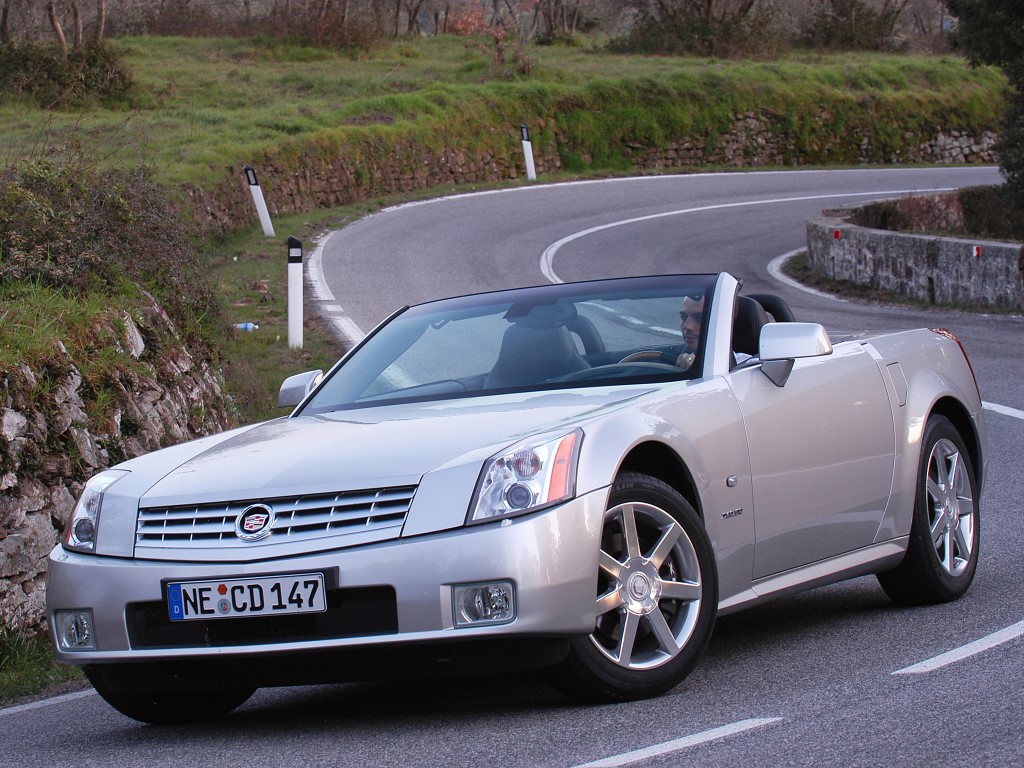
1st Generation
(2004-2008)
4.4 V8 Supercharged Northstar (LC3)
449 cv

The polished diamond: the luxury roadster that fused Corvette performance DNA with Cadillac's supreme elegance.
Select a generation to see available versions
(2004-2008)
(2009-)
At the threshold of the 21st century, General Motors (GM) found itself facing a monumental strategic challenge: revitalizing Cadillac, its most prestigious luxury brand. For decades, Cadillac had been synonymous with automotive excellence, boasting the slogan "Standard of the World". However, by the end of the 1990s, the brand had lost significant ground to European competitors, such as Mercedes-Benz and BMW, and Asian ones, such as Lexus. Cadillac's public perception had aged along with its customer base, and the vehicles were frequently seen as large, soft, and disconnected from the modern driving experience. GM's response to this identity crisis was a radical and audacious shift in design and engineering direction, a philosophy dubbed "Art and Science".
The Cadillac XLR, launched as a 2004 model, was not just another vehicle in the brand's portfolio; it was conceived as the standard-bearer, the "halo car", destined to lead this revolution. The XLR's mission was clear and ambitious: to compete directly in the high-performance luxury roadster segment, a territory almost exclusively dominated by the Mercedes-Benz SL (R230), alongside rivals like the Lexus SC430 and the Jaguar XK8. Unlike its spiritual predecessor, the Cadillac Allanté (1987-1993), which suffered from a complex and expensive logistical process involving the air transport of bodies between Italy and the US, the XLR was designed to be a showcase of North American engineering and manufacturing capability, built on a proven performance platform, but with an unmistakably Cadillac aesthetic and dynamic identity.
The visual and conceptual genesis of the XLR dates back to the Cadillac Evoq concept car, presented at the 1999 Detroit Auto Show. Designed under the leadership of Kip Wasenko, the Evoq shocked the automotive world with its razor-sharp lines, flat surfaces, and an aggressive stance that violently broke away from the rounded shapes and "bio-design" prevalent in the automotive industry at the time. The transition from the Evoq concept to the production XLR was remarkably faithful, maintaining the wedge-shaped silhouette, the imposing front grille, and, crucially, the innovative retractable hardtop that would become one of the model's technological signatures.
The development of the XLR represented a significant investment in technology and infrastructure. Produced at the Bowling Green, Kentucky plant — the spiritual and physical home of the Chevrolet Corvette —, the XLR benefited from a dedicated assembly line, operating almost like an artisanal manufacture within a mass production plant. This report exhaustively details the trajectory of this fascinating vehicle, from the engineering of its platform and powertrain to the year-by-year evolution, the rare special editions, and the analysis of its market performance.
The technical foundation of the Cadillac XLR is General Motors' Y-body platform, specifically the architecture designated as GMX215. This is the same backbone used by the sixth-generation Chevrolet Corvette (C6), which was launched one year after the XLR. However, labeling the XLR merely as a "Corvette in a suit" would be an oversimplification and technically inaccurate. Although they shared the fundamental suspension geometry and chassis layout, the two cars had radically different missions, dynamics, and executions.
The XLR's structure utilized hydroformed steel perimeter side rails, a technology that allowed for the creation of complex and robust shapes from single steel tubes, eliminating welds and increasing structural rigidity. The vehicle's backbone consisted of a folded steel center tunnel, which housed the driveshaft and contributed to torsional resistance. Where the XLR began to diverge significantly from the Corvette was in the choice of materials for specific components, aiming for the refinement and ideal weight distribution for a luxury roadster.
One of the most notable structural characteristics shared with the Corvette was the use of balsa and aluminum composite floor panels. This sandwich technology, derived from the aerospace industry, provided exceptional rigidity with minimal weight, in addition to offering superior sound insulation properties, something critical for the Cadillac's luxury positioning. Furthermore, the XLR utilized a windshield frame made of aluminum and magnesium steering column supports, noble materials chosen to reduce weight and lower the center of gravity, improving steering response and stability.
The XLR's body was composed entirely of composite material panels (reinforced plastic). This decision was not just a weight reduction measure, but an aesthetic necessity. The complex shapes, sharp creases, and acute angles of the "Art and Science" design would be extremely difficult, if not impossible, to stamp in conventional steel with the required precision. The use of composites allowed Cadillac's designers to translate the radical vision of the Evoq concept into production reality without dilution.
One of the most significant technological innovations introduced in the XLR was the standard inclusion of the Magnetic Ride Control suspension system. At the time of its launch, this technology was revolutionary and placed Cadillac at the forefront of vehicle dynamics, competing directly with complex systems such as Mercedes-Benz's Active Body Control (ABC).
The operating principle of Magnetic Ride Control is based on magnetorheology. The XLR's shock absorbers were filled with a synthetic fluid containing tiny suspended iron particles. The system operated as follows:
This continuous adjustment capability allowed the XLR to solve the eternal dilemma of suspension engineers: comfort versus performance. On straight, imperfect roads, the fluid remained less viscous, absorbing impacts and providing the "magic carpet" ride expected from a Cadillac. However, when entering a corner or performing an evasive maneuver, the system instantly stiffened the shock absorbers, controlling body roll and providing a precise and flat response. This technology was so successful that it was later licensed and used by supercar manufacturers like Ferrari.
The central element of the XLR's appeal and silhouette was its power retractable hardtop. Developed in partnership with Car Top Systems, a renowned German company that also supplied roof systems for Mercedes-Benz and Porsche, the XLR's roof was a marvel of automotive kinematics.
Built with an aluminum and magnesium structure and composite outer panels, the roof was designed to be light enough not to compromise the car's center of gravity when retracted. The mechanism operated with the touch of a single button on the center console or via the remote key fob, completing the opening or closing cycle in under 30 seconds. The process involved opening the trunk lid (which hinged backward), folding the roof and rear window into a compact configuration, and storing the entire assembly in the luggage compartment.
This system transformed the XLR from a hermetic, safe, and quiet coupe into an open roadster, without the need for manual latches or canvas covers. However, the complexity and volume of the system required a significant sacrifice in cargo space, a frequent point of criticism.
Unlike the Corvette, which utilized the legendary pushrod "LS" V8 engines, the XLR was equipped with the crown jewel of GM engine engineering at the time: the Northstar V8 engine. This choice was fundamental in differentiating the character of the two cars. While the Corvette represented brute force and efficient mechanical simplicity, the XLR sought the technical sophistication, smoothness, and complexity associated with European dual-overhead-cam luxury engines.
The standard Cadillac XLR was powered by the 4.6-liter Northstar V8 engine, production code LH2. This specific version of the Northstar was adapted for the rear-wheel drive (RWD) and longitudinal mounting configuration, differing substantially from the transverse versions used in the brand's front-wheel drive sedans, such as the DTS and STS.
The technical specifications of the LH2 engine were impressive for the time:
The power delivery of the Northstar LH2 was characterized by its linearity and refinement. At cruising speed, the engine was practically inaudible, operating with a smoothness described as "glassy". However, under heavy acceleration, the active exhaust system allowed the V8 to emit a distinct and sophisticated rumble, fitting for a luxury Grand Tourer.
A critical characteristic inherited from the Corvette architecture was the use of a transaxle layout. In this arrangement, the engine is mounted up front, but the transmission is mounted on the rear axle, connected to the engine by a rigid torque tube containing the driveshaft. This configuration is mechanically more complex than a transmission mounted directly behind the engine, but it offers undeniable dynamic benefits.
The main benefit of the transaxle is weight distribution. By moving the mass of the transmission to the rear, the XLR achieved an almost perfect 50/50 weight balance between the front and rear axles. This resulted in neutral and predictable handling, allowing the car to change direction with agility despite its weight and focus on comfort.
The transmission evolution in the XLR occurred in two distinct phases:
Although not a pure race car, the standard XLR offered respectable performance, aligned with its GT proposition:
In the mid-2000s, the "arms race" in the luxury segment was in full swing. Mercedes-Benz offered the AMG models with massive power, and BMW had its M division. For the XLR to be taken seriously as a global competitor, Cadillac needed a high-performance response. That response arrived in 2006 with the launch of the XLR-V, part of the brand's acclaimed V-Series.
The beating heart of the XLR-V was a radically modified version of the Northstar engine, designated as LC3. To support forced induction, the displacement was reduced from 4.6 to 4.4 liters, which allowed for thicker cylinder walls and improved structural integrity of the block under high pressure.
The major addition was a Roots-type supercharger (blower), manufactured by Eaton, mounted directly in the valley of the V-engine. This system included intercoolers integrated into the intake manifold to cool the air charge and increase oxygen density.
The XLR-V was not just a powerful engine in a standard chassis; the entire vehicle was recalibrated by GM's performance division:
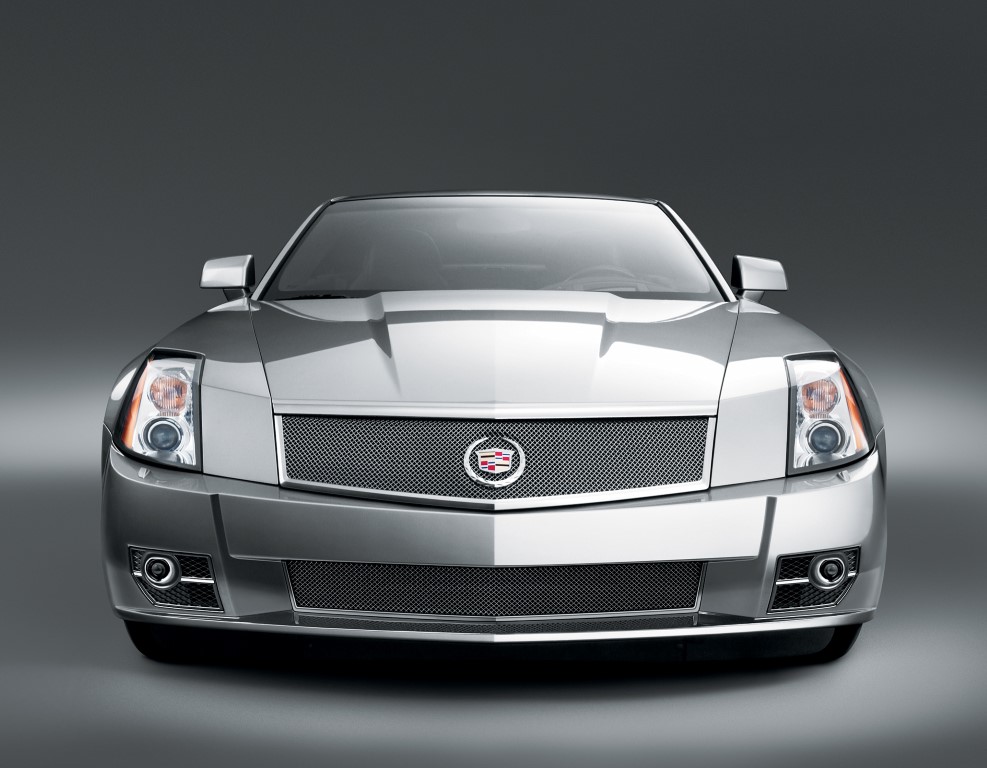
Visually, the XLR-V distinguished itself with stainless steel wire mesh grilles in both the upper and lower bumper openings, a visual signature of distinction for the V-Series line. The hood featured a pronounced central dome (power bulge) necessary to accommodate the extra height of the supercharger. At the rear, four polished stainless steel exhaust tips completed the aggressive look.
The performance numbers placed the XLR-V among the elite roadsters of its era, competing closely with the Mercedes SL55 AMG and the BMW M6 Convertible:
The XLR's interior was an area where Cadillac invested heavily to differentiate the car from the Corvette and justify its significantly higher price. The cabin was designed to be a modern luxury environment, combining natural materials with advanced technology.
One of the most unique and widely publicized features of the XLR's marketing was its exclusive partnership with Italian luxury jeweler Bulgari. Bulgari was responsible for designing the vehicle's instrument panel. The main dials featured anodized aluminum rings and exclusive graphics, with the Bulgari logo discreetly positioned on the speedometer. Additionally, the key fob (remote access control) was also designed by the Italian brand, adding a touch of "jewelry" to a purely functional item.
Cabin materials included real wood trim — Eucalyptus on the base model or Zingana (Zebrawood) on the V model — and genuine aluminum accents, moving away from the plastic imitations common in GM vehicles of the era. The seats were upholstered in perforated leather and featured heating and ventilation (cooling) systems, an essential comfort feature for a convertible used under strong sun.
Technologically, the XLR was ahead of its time. It featured a standard Heads-Up Display (HUD), which projected vital information like speed, RPMs, and navigation instructions directly onto the windshield, allowing the driver to keep their eyes on the road. The entertainment system included DVD navigation and a premium 9-speaker Bose sound system, specifically tuned for the acoustics of the small cabin.
The XLR's production extended from 2003 (as a 2004 model) until early 2009. Although considered a single generation, the car underwent constant evolution in response to market feedback and the need for technological updates.
The year 2005 saw minimal changes compared to the launch model. Cadillac's focus was to establish the car's presence in the market and iron out any initial quality issues. This was the model's highest-volume sales year.
For its final year of production, the XLR received a significant visual and content update (facelift), making the 2009 models the most distinct and rare.
Cadillac utilized a strategy of numbered and limited special editions to maintain interest in the XLR and offer additional exclusivity to collectors. These versions are today the most valued and sought-after in the classic car market.
This was the XLR's launch edition, sold exclusively through the famous Christmas catalog of luxury department store Neiman Marcus in 2003.
Launched to inject a dose of aggressiveness and nocturnal sophistication into the model.
Initially launched as a special edition in 2007, the "Platinum" designation became the standard trim for the base model in 2009.
An edition focused on aesthetic purity and elegance.
To understand the historical trajectory of the XLR, it is imperative to analyze the hostile competitive environment into which it was launched. The XLR's price point (starting at around $75,000 and surpassing $100,000 for the V model) placed it in dangerous territory, where brand and prestige counted as much as engineering.
The Mercedes SL was Cadillac's primary target. It was the absolute benchmark of the category, combining luxury, history, and performance.
One of the biggest hurdles to the XLR's success came from within GM itself. Although the company tried to differentiate the buyers, the Corvette C6 (launched in 2005) offered superior performance, the same platform, and more robust engines for a fraction of the price. The XLR had to justify its extra cost through luxury, the retractable hardtop, and the exclusivity of the Cadillac brand. For many enthusiasts, the raw performance of the Corvette made the XLR a tough proposition to swallow, unless the buyer absolutely insisted on the hardtop and Cadillac brand status.
The XLR was designed to be a niche vehicle, but actual sales consistently fell short of GM's initial projections, which expected to move between 5,000 and 7,000 units per year. Market reality, combined with the high price tag and the 2008 financial crisis, resulted in more modest numbers.
Overall Total Production (2004–2009): 15,460 units.
The following table illustrates the vehicle's commercial life cycle in the United States, showing the initial peak and the sharp decline:
| Calendar Year | Total Sales (USA) | Context and Observations |
|---|---|---|
| 2003 | 875 | Early launch of the first units (Model Year 2004). |
| 2004 | 3,665 | Peak production year and sales stabilization. |
| 2005 | 3,730 | Best sales year in the model's history. |
| 2006 | 3,203 | Launch of the XLR-V helps sustain numbers. |
| 2007 | 1,750 | Significant drop (-45%), signaling niche saturation. |
| 2008 | 1,250 | Severe impact of the global economic crisis on the luxury sector. |
| 2009 | 787 | End of production in March; sales of the facelift model. |
| 2010 | 188 | Sale of remaining inventory at dealerships. |
| 2011 | 12 | Last "zero km" units sold. |
| Total | 15,460 |
The high-performance XLR-V model is considerably rarer and today represents the "holy grail" for collectors of the model.
The Cadillac XLR was discontinued in 2009 without leaving a direct successor. GM briefly considered using the C7 Corvette platform for a new roadster, but the plans never materialized, with the brand redirecting its focus to sports sedans (CTS and ATS series) and the lucrative SUV market.
Commercially, the XLR can be seen as unsuccessful, having failed to meet its sales goals or dethrone the Mercedes SL. However, as a brand-building exercise ("Halo Car"), it played a crucial role. The XLR proved that Cadillac was capable of producing a vehicle with cutting-edge technology (Magnetic Ride, Radar Cruise Control, HUD, Retractable Hardtop) and avant-garde design that bowed to none in terms of stage presence against Europe's best.
Today, the XLR occupies an interesting and rising place in the modern classic ("Youngtimers") market.
Ultimately, the Cadillac XLR remains a bold monument to an era when Cadillac decided to stop looking at the past and bet everything on a future of sharp design and advanced technology, creating a roadster that, despite its commercial flaws, will never be accused of being ordinary.