


Introduction: The Pinnacle of the "Art and Science" Philosophy
Historical Context and Launch
The history of the Cadillac CTS Coupe is inseparable from the rebirth movement of the Cadillac brand at the beginning of the 21st century. After decades of losing relevance to European and Japanese rivals, General Motors initiated a design and engineering revolution under the banner of the "Art and Science" philosophy. The original Cadillac CTS (sedan), launched in 2003, was the first vector of this change, replacing the Cadillac Catera and introducing a visual language based on sharp lines, vertical edges, and bold geometric shapes.
However, it was only with the second generation of the CTS family, based on the Sigma II platform, that Cadillac decided to expand the lineup beyond the traditional sedan. In January 2008, at the Detroit Auto Show (North American International Auto Show), General Motors revealed the CTS Coupe concept. The vehicle shocked the public and the specialized press due to its dramatic proportions and visual aggressiveness. Unlike many concepts that are "softened" before reaching dealerships, the production version of the CTS Coupe, confirmed in November 2009 and started in the spring of 2010 as a 2011 model, remained incredibly faithful to the prototype.
This launch marked Cadillac's return to the luxury coupe segment, filling a void left by the discontinuation of the legendary Cadillac Eldorado in 2002. Unlike the Eldorado, which prioritized traditional American comfort, the CTS Coupe was positioned as a direct competitor to German precision machines, such as the BMW 3 Series Coupe and the Mercedes-Benz E-Class Coupe, targeting a younger audience focused on design and performance.
Strategic Significance
The launch of the CTS Coupe occurred at a critical moment, right after the 2008 global financial crisis that deeply shook General Motors' economy. The decision to proceed with a niche vehicle, focused on style and emotion, demonstrated the resilience of the brand's strategy to rejuvenate its image. The car was designed to be an accessible "Halo Car", attracting attention to dealerships and validating Cadillac as a manufacturer capable of producing world-class avant-garde designs.
Design and Aesthetics: Geometry in Motion
The Exterior Design Philosophy
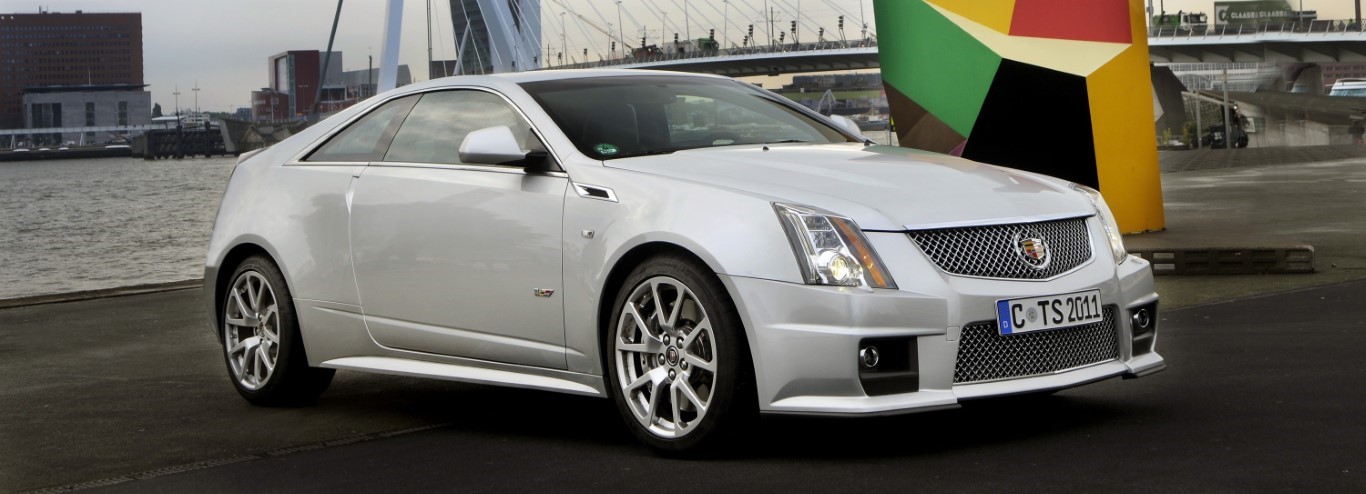
The design of the CTS Coupe is frequently described as "fractal geometric". Cadillac's design team adopted a radical approach, sharing very few body panels with the CTS sedan. Although the 2,880 mm (113.4 inches) wheelbase was kept the same as the sedan to preserve interior space and stability, the external proportions were drastically altered.
The coupe is about 50 mm (2 inches) lower and 50 mm (2 inches) shorter in overall length than the sedan. The roofline has a classic "fastback" profile, sloping smoothly to the rear in an almost continuous arc, without the clear definition of a traditional third volume (trunk). The windshield was raked at a sharper (faster) angle to improve aerodynamics and sporty aesthetics.
One of the most distinctive visual elements is the C-pillar (the rear part of the roof), which is wide and solid, giving an appearance of robustness and privacy to the rear occupants, although this resulted in significant rear visibility challenges, which the brand tried to mitigate with parking assistance technology.
Innovation of the Hidden Door Handles
To keep the car's side lines clean and uninterrupted, Cadillac's designers eliminated traditional door handles. The CTS Coupe utilizes a "hidden" or electronic door handle system.
Technical Operation:
- External Opening: At the rear of the door, there is a "shell" or recess sculpted into the bodywork. Inside this recess, there is a touchpad (pressure-sensitive button). Upon pressing this pad, an electrical signal activates a motor that unlocks and slightly pushes the door outward, allowing the user to pull it.
- Emergency Access: A common concern with fully electric systems is access in case of a dead battery. Cadillac included a physical mechanical key hidden inside the remote control (key fob). There is a discreet slot located under the driver's door, accessible only by looking underneath the car, where this key can be inserted to mechanically open the door in case of an electrical failure.
- Emergency Exit: On the inside, opening is also done by a button. If the electrical system fails with occupants inside, there is a manual release lever located on the floor, next to the seat, which allows for the mechanical opening of the door.
Lighting and Rear Details
The rear of the CTS Coupe is perhaps its most controversial and memorable angle. The car features a dual center exhaust (especially notable on V-Series versions and with performance packages), molded into geometric shapes that mirror the bumper's design. The vertical taillights use LED technology and "light pipes" to create an unmistakable nighttime signature, paying homage to the classic fins of 1950s Cadillacs, but with a futuristic execution. The third brake light also functions as an aerodynamic spoiler integrated into the trunk lid.
Interior and 2+2 Configuration
Internally, the CTS Coupe adopts a strict 2+2 seating configuration. This means that, unlike the sedan which can accommodate three people in the back, the coupe has two sculpted individual rear seats, separated by a fixed center console.
The materials used in the interior aimed to elevate the brand's perception of luxury. The instrument panel, console, and doors could be wrapped in hand-stitched leather (a procedure known as "cut-and-sew"). Real wood (Sapele Pommele or Midnight Sapele) and satin metal accents were standard or optional depending on the version. LED ambient lighting, hidden behind the trims, created a sophisticated atmosphere at night.
Engineering and Sigma II Platform
Chassis Architecture
The CTS Coupe was built on the GM Sigma II platform. This rear-wheel drive (RWD) architecture was developed to compete in rigidity and dynamics with the best European platforms. Sigma II utilized high-strength steels and advanced welding techniques to ensure a rigid structure, essential for both acoustic isolation and suspension precision.
Suspension and Dynamics
- Front: Independent Short Long Arms (SLA) suspension, which allows precise camber control during aggressive cornering.
- Rear: Independent Multilink system, mounted on a subframe isolated by hydraulic rubber mounts to filter road vibrations before they reach the cabin.
The rear track (distance between the wheels on the same axle) of the coupe was widened compared to the sedan to improve lateral stability and fill the wider wheel wells, contributing to the car's "planted" stance on the asphalt.
Powertrain and Performance: The V6 Evolution
During its production cycle (2011-2014), the standard version of the CTS Coupe exclusively used V6 engines, but there was an important technical evolution between the first and second years of production.
3.6L LLT V6 Engine (2011 Model)
In its debut year, the CTS Coupe came equipped with the 3.6L Direct Injection V6 engine (LLT code).
- Technology: This engine utilized direct fuel injection, which allowed for a higher compression ratio (11.3:1) for greater efficiency and power, without the risk of detonation.
- Power: Produced 304 horsepower (hp) at 6,400 rpm.
- Torque: Generated 273 lb-ft (370 Nm) of torque at 5,200 rpm.
3.6L LFX V6 Engine (2012-2014 Models)
Starting with the 2012 model, Cadillac replaced the LLT engine with the new 3.6L V6 (LFX code). Although the displacement was the same, the LFX brought significant engineering improvements.
- Improvements: The LFX featured exhaust manifolds integrated directly into the cylinder head (reducing weight and complexity), larger intake valves, and a quieter high-pressure fuel pump. The use of composite materials in the intake manifold and front covers helped reduce the engine's weight by about 20.5 lbs (9 kg).
- Increased Power: Power rose to 318 horsepower at 6,800 rpm.
- Torque: Torque increased slightly to 275 lb-ft (372 Nm) at 4,900 rpm, available over a broader rev range.
Transmissions and Traction
The CTS Coupe offered flexibility in the choice of transmission and traction system, something rare in its segment.
- Automatic Transmission (Hydra-Matic 6L50): A 6-speed transmission with electronic control, offering the "Driver Shift Control" system that allowed manual shifts via steering wheel buttons or the shifter. It was the standard option for most buyers.
- Manual Transmission (Aisin AY-6): A 6-speed manual transmission was available for the V6 models. This option is extremely rare in the used market, as demand was low. It offered a direct-actuation clutch and short throws for a more purist experience.
- All-Wheel Drive (AWD): The coupe was available with rear-wheel drive (RWD) as standard, but offered an intelligent all-wheel drive (AWD) system as an option. The AWD system actively monitored grip and could transfer torque to the front wheels instantly upon detecting slip, making the car viable for use in snowy and rainy climates.
The Cadillac CTS-V Coupe: A Class Apart
Launched simultaneously with the base model in 2010 (as a 2011 model), the CTS-V Coupe represented the pinnacle of Cadillac's engineering. It was designed to humiliate dedicated sports cars on racetracks.
The LSA Supercharged Engine
The heart of the CTS-V is the legendary LSA 6.2-liter Supercharged V8 engine. This engine is a variation of the LS9 engine used in the Chevrolet Corvette ZR1 of the time.
- Power Specifications: The engine delivers a massive 556 horsepower and 551 lb-ft (747 Nm) of torque.
- Supercharger: Utilizes a 1.9-liter four-lobe Eaton compressor (Roots-type), mounted on top of the engine. The compressor forces air into the cylinders, ensuring immediate throttle response at any rpm, eliminating the "lag" associated with turbocharged engines.
- Intercooling: Features an integrated air-to-water intercooler system to cool the compressed air before it enters the engine, maintaining consistent power even under intense use.
High-Capacity Transmissions
To handle the V8's brutal torque, the CTS-V did not use the same transmissions as the V6 model.
- Manual (Tremec TR-6060): A "heavy-duty" 6-speed manual transmission, equipped with a twin-disc clutch to withstand the engine's force and offer precise shifts. It included "no-lift shift" technology (shifting without letting off the gas pedal) under certain conditions.
- Automatic (Hydra-Matic 6L90): A reinforced version of the 6-speed automatic gearbox, programmed with performance algorithms that detected when the car was on a track (through G-forces) and held the gears in corners.
Magnetic Ride Control Suspension
The CTS-V came standard with Magnetic Ride Control (MRC) suspension.
- How it works: The shock absorbers are filled with a synthetic fluid containing microscopic magnetic particles. Sensors read the road surface up to 1,000 times per second. When an electrical current is applied to the fluid, the particles align instantly, altering the fluid's viscosity.
- Benefit: This allows the suspension to change from "soft" to "extremely stiff" in milliseconds, offering comfort on trips and absolute control on racetracks without the need for moving mechanical components.
Brembo Brakes and Wheels
To stop the vehicle, Cadillac partnered with Brembo.
- Front: 6-piston calipers with massive ventilated discs.
- Rear: 4-piston calipers.
- Tires: The car came with high-performance Michelin Pilot Sport PS2 tires, mounted on 19-inch wheels with different widths front and rear (staggered fitment) to maximize rear traction.
CTS-V Performance Data
- 0-60 mph (0-96 km/h) Acceleration: 3.9 to 4.0 seconds.
- Top Speed: Approximately 174 mph (280 km/h) (automatic) to 190 mph (305 km/h) (manual).
- Nürburgring: Although the famous "under 8 minutes" record (7:59.32) was established by the CTS-V sedan, the coupe shares the same mechanics and similar aerodynamics, being considered capable of equal or better times due to its slightly lower center of gravity.
Versions and Equipment (Trim Levels)
For the V6 model (non-V), Cadillac offered three main "Collections" or trim levels.
Standard (Base)
Despite being the entry-level range, it was well-equipped.
- Standard Items: "Leatherette" (high-quality synthetic leather) seats, 18-inch wheels, 8-speaker Bose sound system, satellite radio, rear parking sensors, and dual-zone air conditioning.
- Transmission: Available with manual or automatic, RWD or AWD.
Performance Collection
The mid-level, focused on technology and comfort.
- Additions: Xenon (HID) headlights with adaptive forward lighting (the headlights turn with the steering wheel to illuminate curves), genuine leather seats, heated and memory front seats for the driver, rearview camera (displayed in the rearview mirror or on the navigation screen if equipped).
- Touring Package (Optional): Available from 2012, it added a dark grille, metal pedals, sueded microfiber shifter, and exclusive wheels.
Premium Collection
The luxury top-of-the-line.
- Technology: Included navigation with a "pop-up" touchscreen (which rose from the dashboard), Bose 5.1 Cabin Surround sound system with a 40GB hard drive for music storage, panoramic sunroof (optional or standard depending on the year), heated steering wheel, ventilated (in addition to heated) seats, and advanced ambient interior lighting.
Special Editions and Exclusive Colors
Cadillac launched several limited editions to maintain interest in the model and offer exclusivity to collectors.
Black Diamond Edition (2011-2012)
This special edition was available for the CTS-V and focused on a revolutionary paint job.
- The Paint: The "Black Diamond" color utilized a SpectraFlair pigment supplied by JDSU. Instead of simple metal flakes, the paint contained aluminum flakes encapsulated in magnesium fluoride (similar to glass). This created a prism effect, where the black paint sparkled with rainbow colors under direct sunlight, resembling the brilliance of a diamond.
- Extras: Included yellow (Saffron) Brembo brake calipers, 19-inch wheels in satin graphite, and an interior with Midnight Sapele wood.
Silver Frost Edition (2013)
One of the rarest and most technically interesting editions.
- Matte Paint: Limited to just 100 units of the CTS-V Coupe, this edition featured a factory-original matte silver paint job. Cadillac used a low-sparkle clear coat ("30-gloss") to achieve the effect.
- Maintenance: The car came with a special addendum in the owner's manual prohibiting the use of waxes, polishes, or automatic car washes, as this would ruin the matte finish, making it glossy.
Stealth Blue Edition (2013)
An edition focused on discreet elegance.
- Color: An exclusive blue-gray shade.
- Interior: Offered a "Twilight Blue" (dark blue) interior option, creating a very sophisticated "tone-on-tone" combination.
Production Numbers and Rarity
The CTS Coupe's production numbers reveal its niche nature, especially in the high-performance versions.
CTS-V Coupe Production (2011-2015)
Total production of the second-generation CTS-V (V2) was split between Sedan, Coupe, and Wagon.
- Total CTS-V Coupe: Approximately 8,567 units were produced over the model's entire life.
- Comparison: The coupe was more common than the wagon (V-Wagon: ~1,764 units), but slightly less common than the sedan (V-Sedan: ~10,764 units).
Manual Transmission Rarity
One of the most important factors for collectors today is the transmission. It is estimated that the adoption rate of the manual transmission in the CTS-V Coupe was low, hovering around 15% to 20% of total production. This makes the manual examples ("3-pedal cars") extremely valued and rare in today's market.
General Sales Context
Annual sales data for the CTS family show a peak in 2005 (before the coupe's launch), followed by a stabilization. The launch of the coupe in 2010/2011 helped sustain CTS family sales at around 50,000 to 55,000 units annually in the US during the post-crisis years, attracting an audience that would have otherwise migrated to German brands.
Detailed Year-by-Year Chronology
Below, we present the detailed evolution of the model by manufacturing year:
| Model Year | Main Details and Changes |
|---|---|
| 2011 | Launch: Debut of the CTS Coupe and CTS-V Coupe. Standard 3.6L LLT V6 engine (304 hp). Introduction of the Black Diamond color late in the year. |
| 2012 | New Engine: Replacement of the LLT V6 with the LFX V6 (318 hp). Aesthetics: New front grille with a more refined mesh design and new Cadillac logo (still with the laurel wreath). Technology: Addition of blind spot detection (Side Blind Zone Alert). Touring Package introduced for the V6. |
| 2013 | Special Editions: Launch of the limited Silver Frost (matte) and Stealth Blue editions. Subtle changes to the CTS-V brakes (two-piece rotors for weight reduction in some configurations). |
| 2014 | Last Year of the V6: The "standard" CTS Coupe enters its final year. Simplified colors and trim options. The CTS Sedan moves to the new generation (Gen 3), but the Coupe remains on the old platform (Gen 2) for one more year. |
| 2015 | Final V-Series: The V6 CTS Coupe is discontinued. Only the CTS-V Coupe is produced as a 2015 model in a limited run (about 500 units) to celebrate the end of the generation. Introduction of the new Cadillac emblem (without the laurel wreath) and exclusive Ebony interior trim with red stitching for this farewell. |
Legacy and Discontinuation
The Cadillac CTS Coupe was discontinued after the 2014 model year (with the special extension of the V until 2015). Its removal from the lineup was due to a complete restructuring of Cadillac's product line. The brand introduced the Cadillac ATS, a smaller and more agile car, which gained its own coupe version (ATS Coupe) to occupy the "entry-level sports coupe" space. The CTS Sedan grew in size in its third generation to compete with the BMW 5 Series, and Cadillac opted not to develop a coupe version for this new larger car, focusing later on the Cadillac ELR (electric) and the future CT5 and CT4 models.
Conclusion
The Cadillac CTS Coupe remains an American design and engineering landmark. It proved that Cadillac could create a vehicle that not only competed in numbers with European rivals, but that surpassed them in visual audacity. Today, the model is celebrated for its design that has aged surprisingly well, still looking futuristic years after its discontinuation, and for the raw performance and reliable mechanics of the V-Series versions, which represent the pinnacle of the era of large supercharged V8 engines with a manual gearbox option.