
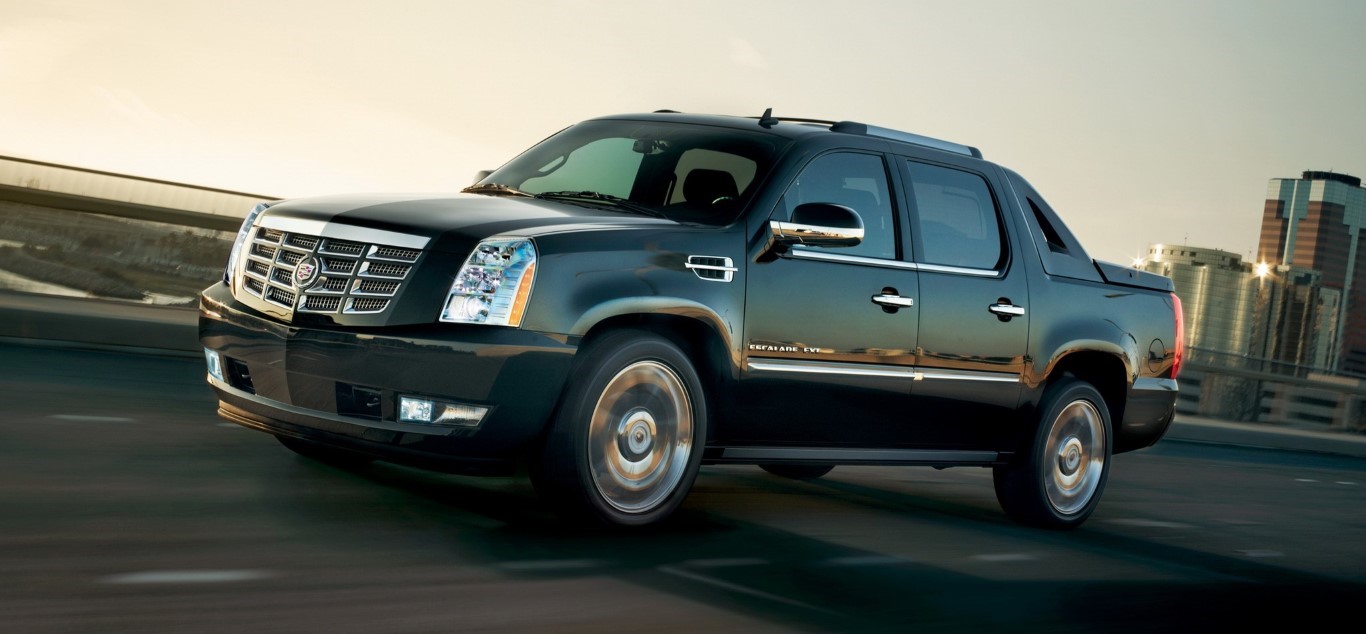


Introduction: The Emergence of the Luxury SUT
The turn of the millennium marked a seismic transformation in the North American automotive industry, characterized by the meteoric rise of sport utility vehicles (SUVs) as symbols of status and opulence. Historically, Cadillac, General Motors' prestige brand, dominated the luxury market with large sedans and coupes. However, the launch of the Lincoln Navigator by rival Ford in 1998 exposed a critical gap in Cadillac's portfolio, precipitating a strategic response that would culminate not just in an SUV, but in a radical redefinition of luxury utility: the Cadillac Escalade EXT.
This report dissects the trajectory of the Escalade EXT, a "Sport Utility Truck" (SUT) that merged the cabin of an elite SUV with the functionality of a pickup truck, operating through an innovative transformable body engineering. Produced over two distinct generations — from 2002 to 2013 — the EXT was not just a niche product; it was an engineering exercise that challenged market segmentation conventions, offering a deep analysis of its technical conception, year-by-year mechanical evolution, and the market dynamics that dictated its rise and eventual discontinuation.
The GMT800 Platform Context and the Response to Lincoln
The genesis of the Escalade EXT lies in General Motors' GMT800 architecture. While the first generation of the Escalade (1999-2000) was a rushed response based on the GMC Yukon Denali, the 2002 lineup was developed from the ground up to restore Cadillac's leadership. Ford had announced the Lincoln Blackwood, a luxury pickup based on the F-150, but with severely compromised utility (rear-wheel drive only and a non-functional carpeted bed). Cadillac saw an opportunity to surpass its rival by offering real versatility. Utilizing the foundation of the Chevrolet Avalanche, launched in 2001, Cadillac applied its "Art & Science" design language and high-quality materials to create the EXT, ensuring it was functionally robust (standard AWD) and aesthetically dominant.
Engineering and Innovation: The Midgate System and Structural Versatility
The backbone of the Escalade EXT's value proposition was the patented Midgate system. This innovation allowed the vehicle to transcend the physical limitations of crew cab pickup trucks, which traditionally sacrifice cargo bed space in favor of passenger comfort.
Midgate System Architecture
Unlike a conventional pickup where the cabin and bed are separate structures mounted on the chassis, the Escalade EXT featured a unified body (although still on a ladder frame chassis). The Midgate is a movable structural bulkhead located behind the rear seat.
- Passenger Mode (Standard): In this configuration, the EXT accommodates five occupants in total luxury. The cargo bed, hermetically isolated from the cabin, offers a length of 1,600 mm (5.3 feet or 63 inches). Acoustic and thermal insulation was a priority, ensuring that the road noise typical of pickup trucks was eliminated.
- Extended Cargo Mode: To transport long loads, the user could fold down the rear seat and open the Midgate inward into the cabin. The rear window was removable and stowable in a dedicated compartment within the Midgate itself. This expanded the load floor length to 2,479 mm (8.1 feet or 97.6 inches), allowing the transport of items such as construction plywood (4x8 feet) or motorcycles with the tailgate closed, keeping the cargo protected under the rigid cover (tonneau cover) composed of three removable panels.
Cargo Dimensions Comparison
The following table illustrates the tactical advantage of the Midgate system over fixed dimensions.
| Bed Configuration | Length (mm / in) | Volume (Liters / Cubic Feet) | Practical Utility |
|---|---|---|---|
| Midgate Closed | 1,600 mm / 63.3 in | 1,288 L / 45.5 cu.ft | Suitcases, groceries, golf equipment. |
| Midgate Open | 2,479 mm / 97.6 in | 2,860 L / 101 cu.ft | Motorcycles, kayaks, lumber, large furniture. |
| Maximum Width | 1,270 mm / 50.0 in | - | Space between the wheel wells. |
This engineering allowed the EXT to offer the security of a closed SUV for sensitive cargo and the raw capability of a long-bed pickup when necessary, something that the competitor Lincoln Blackwood could never replicate.
First Generation (2002–2006): Setting the Standard
The first generation of the Escalade EXT hit the market in 2002 (there was no 2001 Escalade model), immediately solidifying Cadillac's presence in the truck segment.
Design and "Art & Science" Visual Identity
The first-generation EXT was one of the first vehicles to fully adopt Cadillac's "Art & Science" design philosophy, characterized by sharp lines, vertical headlights, and a shield-shaped front grille. Unlike the Chevrolet Avalanche, which used matte gray plastic body cladding (often criticized for fading), the Escalade EXT utilized body-colored painted cladding, giving it a monochromatic and sophisticated appearance that distanced it from its utilitarian origins.
Technical and Mechanical Specifications (GMT800)
Under the hood, the EXT distinguished itself by offering only the most powerful engine available on the platform.
- Engine: High Output 6.0L Vortec V8 (VIN Code 'N', LQ9 engine). This engine was a performance-tuned version, featuring flat-top pistons for a higher compression ratio compared to the standard LQ4 of Chevrolet trucks.
- Power: 345 hp (257 kW) at 5,200 rpm.
- Torque: 515 Nm (380 lb-ft) at 4,000 rpm.
- Transmission: 4-speed automatic (Hydra-Matic 4L60-E / 4L65-E), known for its robustness, although it limited fuel efficiency at high speeds.
- Drivetrain: Full-time All-Wheel Drive (AWD) with a viscous center differential, optimally distributing torque (38% front / 62% rear) to ensure stability and traction in any weather.
- Chassis: Rear self-leveling air suspension and StabiliTrak stability control system were standard, crucial for maintaining the composure of a vehicle with a high center of gravity.
Detailed Year-by-Year Evolution (2002–2006)
- 2002: Inaugural launch. The model surprised the market with sales of 13,494 units, validating the luxury SUT concept. Towing capacity was approximately 3,583 kg (7,900 lbs), comparable to dedicated pickup trucks of the era.
- 2003: This was a critical year of "mid-cycle" updates. Cadillac completely
redesigned the interior, replacing the generic GM dashboard with an exclusive design featuring a Bulgari
analog clock (a trademark at the time) and superior materials.
- Technology: Introduction of High-Intensity Discharge (HID/Xenon) headlights for better night visibility.
- Safety: The StabiliTrak system was improved to intervene more subtly and effectively. Side airbags became available.
- 2004: Comfort refinements dominated this year. Tire pressure monitoring became standard, a response to industry safety concerns following the Firestone/Ford tire incidents. XM satellite radio was integrated as standard on all trims. Although the "Platinum" trim was launched for the Escalade ESV (long SUV), the EXT received many of the content upgrades but maintained a simplified trim structure.
- 2005: Updates to the cooling system (new electric fan system for fuel economy and noise reduction). The navigation system with a 6.5-inch touchscreen became a central object of desire on the dashboard.
- 2006: The final year of the GMT800 platform. Production continued steady while the Silao plant in Mexico prepared for the transition to the new generation. Cumulative sales for the generation reached 62,289 units, a resounding success for a niche vehicle with a base price in the $50,000 range (values of the time).
Second Generation (2007–2013): The Apex of Performance and Refinement
Launched in 2007, the second generation of the Escalade EXT was based on the GMT900 platform. This iteration represented a quantum leap in aerodynamics, structural efficiency, and power. The design became more fluid, with a 57-degree raked windshield to reduce the drag coefficient and wind noise, common criticisms of the first generation.
Advanced Powertrain: The L92/L9H/L94 Engine Family
The biggest evolution of the second generation was the 6.2-liter V8 engine, built entirely in aluminum. This engine introduced technologies that were unprecedented in mass-production GM trucks, such as variable valve timing (VVT) in an overhead valve (OHV) engine.
| Period | Engine Code | Technological Details | Power / Torque |
|---|---|---|---|
| 2007–2008 | L92 Vortec 6.2L | Introduction of VVT (Variable Valve Timing) to optimize the torque curve. | 403 hp @ 5,700 rpm / 565 Nm |
| 2009 | L9H Vortec 6.2L | Addition of FlexFuel (E85) capability. The injection system was modified to handle ethanol while maintaining power. | 403 hp / 565 Nm |
| 2010–2013 | L94 Vortec 6.2L | Introduction of Active Fuel Management (AFM). Allowed deactivating 4 cylinders while cruising for fuel economy. | 403 hp / 565 Nm |
Transmission: The old 4-speed gearbox was replaced by the 6-speed 6L80-E. With two overdrive gears, it allowed the engine to operate at much lower RPMs on the highway, improving fuel economy and acoustic comfort, while the shorter first gear provided vigorous launches (0-100 km/h in less than 7 seconds).
Trims and Finish Levels
Unlike the previous generation, the second generation structured the EXT into more defined trim levels, especially in its final years of production.
- Base (Standard): Despite the name, it was richly equipped with leather upholstery, 14-way power seats, Bose 5.1 Surround sound system, navigation, and the Midgate system. 18-inch wheels were standard, with 22-inch optional.
- Luxury: Added magnetic suspension (Magnetic Ride Control), which read the road surface 1,000 times per second and adjusted the dampers instantaneously with magneto-rheological fluid. It also included a power sunroof, heated steering wheel, power-folding second-row seats, and Side Blind Zone Alert.
- Premium: The top of the EXT line. It included power-retractable assist steps, a rear entertainment system with a drop-down DVD screen and wireless headphones, and exclusive 22-inch chrome wheels.
Note on the Platinum trim: Although the Escalade SUV and ESV had a "Platinum" version with full LED headlights and exclusive Tehama leather, records indicate that the EXT officially culminated in the Premium version, although it shared 95% of the Platinum's features, except for some specific aesthetic details of the SUVs.
Detailed Year-by-Year Evolution (2007–2013)
- 2007: Launch of the GMT900 platform. The EXT stood out with iconic chrome side vents on the front fenders. Chassis torsional rigidity increased significantly (49% stiffer), improving handling.
- 2008: Consolidation of sales prior to the crisis.
- 2009: Connectivity became a focus. The OnStar system was updated to include hands-free Bluetooth (previously absent). The navigation system received real-time traffic updates via XM NavTraffic. The engine gained FlexFuel (E85) capability. A limited edition in "Black Cherry" color was offered.
- 2010: Focus on efficiency and safety. The engine received the cylinder deactivation system (AFM) to try to mitigate high fuel consumption. Seat-mounted side airbags for the front seats were added for thorax and pelvic protection, complementing the side curtains. A USB port was added to the center console for integration with iPods/iPhones, replacing simple auxiliary cables.
- 2011: Noise insulation improvements with upgraded laminated glass and new headrest options for the rear entertainment system.
- 2012: Update to the navigation system for a faster interface. Minor aesthetic changes to the wheel center caps and grille. Introduction of a new anti-theft system.
- 2013: The final year. The model remained largely unchanged, with new exterior colors like "Silver Coast Metallic" and "Midnight Plum Metallic". The brakes received a new calibration for better pedal feel. Production was discontinued mid-year.
Production Analysis, Sales, and Discontinuation
The commercial trajectory of the Escalade EXT is a case study in how macroeconomic factors can destroy a market niche.
Sales and Production Numbers
Sales data reveal a steep decline directly correlated with the 2008 financial crisis and the spike in fuel prices.
| Model Year | Estimated Sales (USA) | Market Context |
|---|---|---|
| 2002 | 13,494 | Launch. Immediate success, exceeding forecasts. |
| 2003-2006 | ~48,795 (Total for period) | Golden era. The EXT was the vehicle of choice for celebrities and athletes. |
| 2007 | ~7,967 | Strong start for the 2nd generation, but signs of saturation. |
| 2008 | ~4,774 | Abrupt drop. Oil prices skyrocket; housing crisis. |
| 2009 | ~2,423 | Global recession. Sales of large SUVs collapse. |
| 2010 | ~2,082 | Stabilization at a low level. |
| 2011 | ~2,036 | The niche becomes unsustainable for mass production. |
| 2012 | ~1,934 | Continued decline. |
| 2013 | ~1,972 | Final year. Residual sales to collectors and brand loyalists. |
Estimated Global Total: The first generation sold 62,289 units. The second generation struggled to reach the 25,000 total unit mark, totaling a historic production of approximately 87,000 vehicles over 12 years.
The Reasons for Discontinuation
GM's decision to kill the Escalade EXT in 2013 was purely rational and based on three pillars:
- End of the Chevrolet Avalanche: The EXT shared the complex and expensive Midgate structure with the Avalanche. When GM decided to discontinue the Avalanche in 2013 due to falling sales, the economy of scale disappeared. Producing the Midgate solely for the EXT's low volume (less than 2,000 units/year) would be financially disastrous.
- Cannibalization by Luxury Pickups: In 2002, the EXT was the only truly luxurious pickup. By 2013, the Ford F-150 Platinum, the Ram Laramie Longhorn, and even the GMC Sierra Denali offered comparable levels of luxury, superior towing capacities (over 4,500 kg), and improved ergonomics, making the EXT's short-bed compromise less attractive.
- CAFE Efficiency: Corporate Average Fuel Economy (CAFE) standards were getting stricter. Eliminating a heavy, thirsty model like the EXT helped GM's corporate average.
Technical Specifications and Dimensions (2013 Reference)
For the purpose of precise technical reference, we present the final specifications of the model, which represent the apex of the EXT's development.
Exterior Dimensions and Capacities
| Measurement | Value (Metric System) | Value (Imperial) | Reference |
|---|---|---|---|
| Overall Length | 5,639 mm | 222.0 in | |
| Width (without mirrors) | 2,009 mm | 79.1 in | |
| Height | 1,892 mm | 74.5 in | |
| Wheelbase | 3,302 mm | 130.0 in | |
| Curb Weight | 2,648 kg | 5,840 lbs | |
| Fuel Tank | 117 Liters | 31 Gallons | |
| Towing Capacity | 3,447 kg | 7,600 lbs |
Bed Dimensions (Midgate System)
| Configuration | Length | Cargo Volume | Description |
|---|---|---|---|
| Standard (Midgate Closed) | 1,608 mm (63.3 in) | 1,288 L (45.5 cu.ft) | Short bed with a lockable rigid cover. |
| Extended (Midgate Open) | 2,479 mm (97.6 in) | 2,860 L (101 cu.ft) | Rear seats folded, window removed. |
Legacy and Collector Status
Despite its discontinuation, the Cadillac Escalade EXT enjoys a "cult" status in the used market today. Its uniqueness ensures that it has no direct successor. GM never produced another Cadillac vehicle with a bed, and attempts to revive the concept (rumors of 2026) remain speculative.
For collectors, the 2011 to 2013 models are the most valued due to low production, navigation system improvements, and the presence of the L94 engine upgrades (AFM). The EXT remains the definitive symbol of an era where Cadillac dared to blend raw American utility with executive luxury, creating a vehicle that, for a brief moment, was the undisputed king of urban roads.