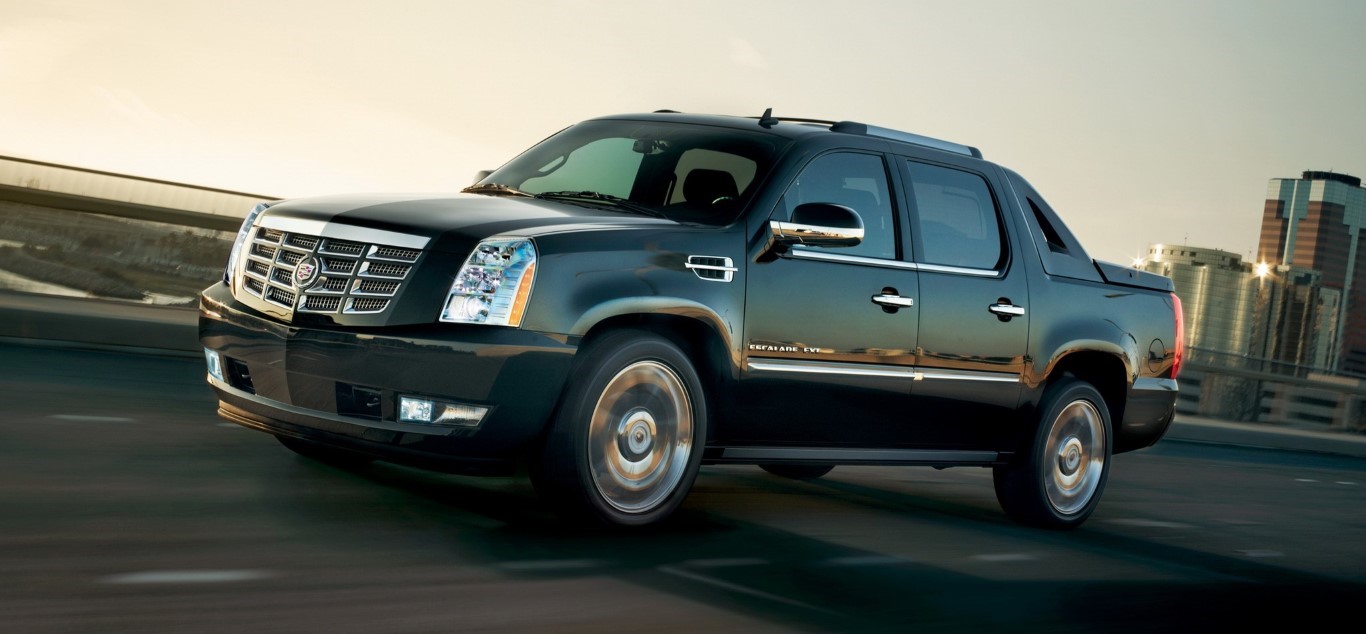
1st Generation
(2002 - 2006)
Technical specifications, versions, and history for the Cadillac Escalade EXT.
Select a generation to see available versions
(2002 - 2006)
(2007 - 2013)
Select a powertrain to view full technical specifications
The turn of the millennium marked a seismic transformation in the North American automotive industry, characterized by the meteoric rise of sport utility vehicles (SUVs) as symbols of status and opulence. Historically, Cadillac, General Motors' prestige brand, dominated the luxury market with large sedans and coupes. However, the launch of the Lincoln Navigator by rival Ford in 1998 exposed a critical gap in Cadillac's portfolio, precipitating a strategic response that would culminate not just in an SUV, but in a radical redefinition of luxury utility: the Cadillac Escalade EXT.
This report dissects the trajectory of the Escalade EXT, a "Sport Utility Truck" (SUT) that merged the cabin of an elite SUV with the functionality of a pickup truck, operating through an innovative transformable body engineering. Produced over two distinct generations — from 2002 to 2013 — the EXT was not just a niche product; it was an engineering exercise that challenged market segmentation conventions, offering a deep analysis of its technical conception, year-by-year mechanical evolution, and the market dynamics that dictated its rise and eventual discontinuation.
The genesis of the Escalade EXT lies in General Motors' GMT800 architecture. While the first generation of the Escalade (1999-2000) was a rushed response based on the GMC Yukon Denali, the 2002 lineup was developed from the ground up to restore Cadillac's leadership. Ford had announced the Lincoln Blackwood, a luxury pickup based on the F-150, but with severely compromised utility (rear-wheel drive only and a non-functional carpeted bed). Cadillac saw an opportunity to surpass its rival by offering real versatility. Utilizing the foundation of the Chevrolet Avalanche, launched in 2001, Cadillac applied its "Art & Science" design language and high-quality materials to create the EXT, ensuring it was functionally robust (standard AWD) and aesthetically dominant.
The backbone of the Escalade EXT's value proposition was the patented Midgate system. This innovation allowed the vehicle to transcend the physical limitations of crew cab pickup trucks, which traditionally sacrifice cargo bed space in favor of passenger comfort.
Unlike a conventional pickup where the cabin and bed are separate structures mounted on the chassis, the Escalade EXT featured a unified body (although still on a ladder frame chassis). The Midgate is a movable structural bulkhead located behind the rear seat.
The following table illustrates the tactical advantage of the Midgate system over fixed dimensions.
| Bed Configuration | Length (mm / in) | Volume (Liters / Cubic Feet) | Practical Utility |
|---|---|---|---|
| Midgate Closed | 1,600 mm / 63.3 in | 1,288 L / 45.5 cu.ft | Suitcases, groceries, golf equipment. |
| Midgate Open | 2,479 mm / 97.6 in | 2,860 L / 101 cu.ft | Motorcycles, kayaks, lumber, large furniture. |
| Maximum Width | 1,270 mm / 50.0 in | - | Space between the wheel wells. |
This engineering allowed the EXT to offer the security of a closed SUV for sensitive cargo and the raw capability of a long-bed pickup when necessary, something that the competitor Lincoln Blackwood could never replicate.
The first generation of the Escalade EXT hit the market in 2002 (there was no 2001 Escalade model), immediately solidifying Cadillac's presence in the truck segment.
The first-generation EXT was one of the first vehicles to fully adopt Cadillac's "Art & Science" design philosophy, characterized by sharp lines, vertical headlights, and a shield-shaped front grille. Unlike the Chevrolet Avalanche, which used matte gray plastic body cladding (often criticized for fading), the Escalade EXT utilized body-colored painted cladding, giving it a monochromatic and sophisticated appearance that distanced it from its utilitarian origins.
Under the hood, the EXT distinguished itself by offering only the most powerful engine available on the platform.
Launched in 2007, the second generation of the Escalade EXT was based on the GMT900 platform. This iteration represented a quantum leap in aerodynamics, structural efficiency, and power. The design became more fluid, with a 57-degree raked windshield to reduce the drag coefficient and wind noise, common criticisms of the first generation.
The biggest evolution of the second generation was the 6.2-liter V8 engine, built entirely in aluminum. This engine introduced technologies that were unprecedented in mass-production GM trucks, such as variable valve timing (VVT) in an overhead valve (OHV) engine.
| Period | Engine Code | Technological Details | Power / Torque |
|---|---|---|---|
| 2007–2008 | L92 Vortec 6.2L | Introduction of VVT (Variable Valve Timing) to optimize the torque curve. | 403 hp @ 5,700 rpm / 565 Nm |
| 2009 | L9H Vortec 6.2L | Addition of FlexFuel (E85) capability. The injection system was modified to handle ethanol while maintaining power. | 403 hp / 565 Nm |
| 2010–2013 | L94 Vortec 6.2L | Introduction of Active Fuel Management (AFM). Allowed deactivating 4 cylinders while cruising for fuel economy. | 403 hp / 565 Nm |
Transmission: The old 4-speed gearbox was replaced by the 6-speed 6L80-E. With two overdrive gears, it allowed the engine to operate at much lower RPMs on the highway, improving fuel economy and acoustic comfort, while the shorter first gear provided vigorous launches (0-100 km/h in less than 7 seconds).
Unlike the previous generation, the second generation structured the EXT into more defined trim levels, especially in its final years of production.
Note on the Platinum trim: Although the Escalade SUV and ESV had a "Platinum" version with full LED headlights and exclusive Tehama leather, records indicate that the EXT officially culminated in the Premium version, although it shared 95% of the Platinum's features, except for some specific aesthetic details of the SUVs.
The commercial trajectory of the Escalade EXT is a case study in how macroeconomic factors can destroy a market niche.
Sales data reveal a steep decline directly correlated with the 2008 financial crisis and the spike in fuel prices.
| Model Year | Estimated Sales (USA) | Market Context |
|---|---|---|
| 2002 | 13,494 | Launch. Immediate success, exceeding forecasts. |
| 2003-2006 | ~48,795 (Total for period) | Golden era. The EXT was the vehicle of choice for celebrities and athletes. |
| 2007 | ~7,967 | Strong start for the 2nd generation, but signs of saturation. |
| 2008 | ~4,774 | Abrupt drop. Oil prices skyrocket; housing crisis. |
| 2009 | ~2,423 | Global recession. Sales of large SUVs collapse. |
| 2010 | ~2,082 | Stabilization at a low level. |
| 2011 | ~2,036 | The niche becomes unsustainable for mass production. |
| 2012 | ~1,934 | Continued decline. |
| 2013 | ~1,972 | Final year. Residual sales to collectors and brand loyalists. |
Estimated Global Total: The first generation sold 62,289 units. The second generation struggled to reach the 25,000 total unit mark, totaling a historic production of approximately 87,000 vehicles over 12 years.
GM's decision to kill the Escalade EXT in 2013 was purely rational and based on three pillars:
For the purpose of precise technical reference, we present the final specifications of the model, which represent the apex of the EXT's development.
Exterior Dimensions and Capacities
| Measurement | Value (Metric System) | Value (Imperial) | Reference |
|---|---|---|---|
| Overall Length | 5,639 mm | 222.0 in | |
| Width (without mirrors) | 2,009 mm | 79.1 in | |
| Height | 1,892 mm | 74.5 in | |
| Wheelbase | 3,302 mm | 130.0 in | |
| Curb Weight | 2,648 kg | 5,840 lbs | |
| Fuel Tank | 117 Liters | 31 Gallons | |
| Towing Capacity | 3,447 kg | 7,600 lbs |
Bed Dimensions (Midgate System)
| Configuration | Length | Cargo Volume | Description |
|---|---|---|---|
| Standard (Midgate Closed) | 1,608 mm (63.3 in) | 1,288 L (45.5 cu.ft) | Short bed with a lockable rigid cover. |
| Extended (Midgate Open) | 2,479 mm (97.6 in) | 2,860 L (101 cu.ft) | Rear seats folded, window removed. |
Despite its discontinuation, the Cadillac Escalade EXT enjoys a "cult" status in the used market today. Its uniqueness ensures that it has no direct successor. GM never produced another Cadillac vehicle with a bed, and attempts to revive the concept (rumors of 2026) remain speculative.
For collectors, the 2011 to 2013 models are the most valued due to low production, navigation system improvements, and the presence of the L94 engine upgrades (AFM). The EXT remains the definitive symbol of an era where Cadillac dared to blend raw American utility with executive luxury, creating a vehicle that, for a brief moment, was the undisputed king of urban roads.
Images of the Cadillac Escalade EXT