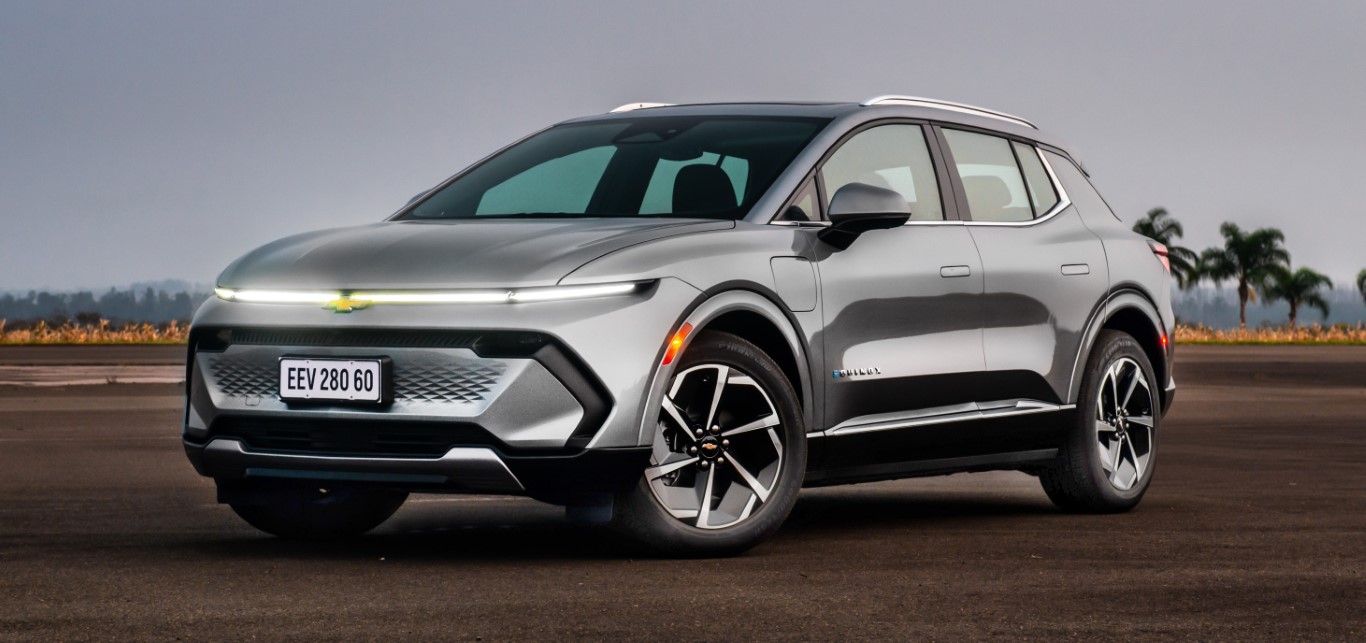
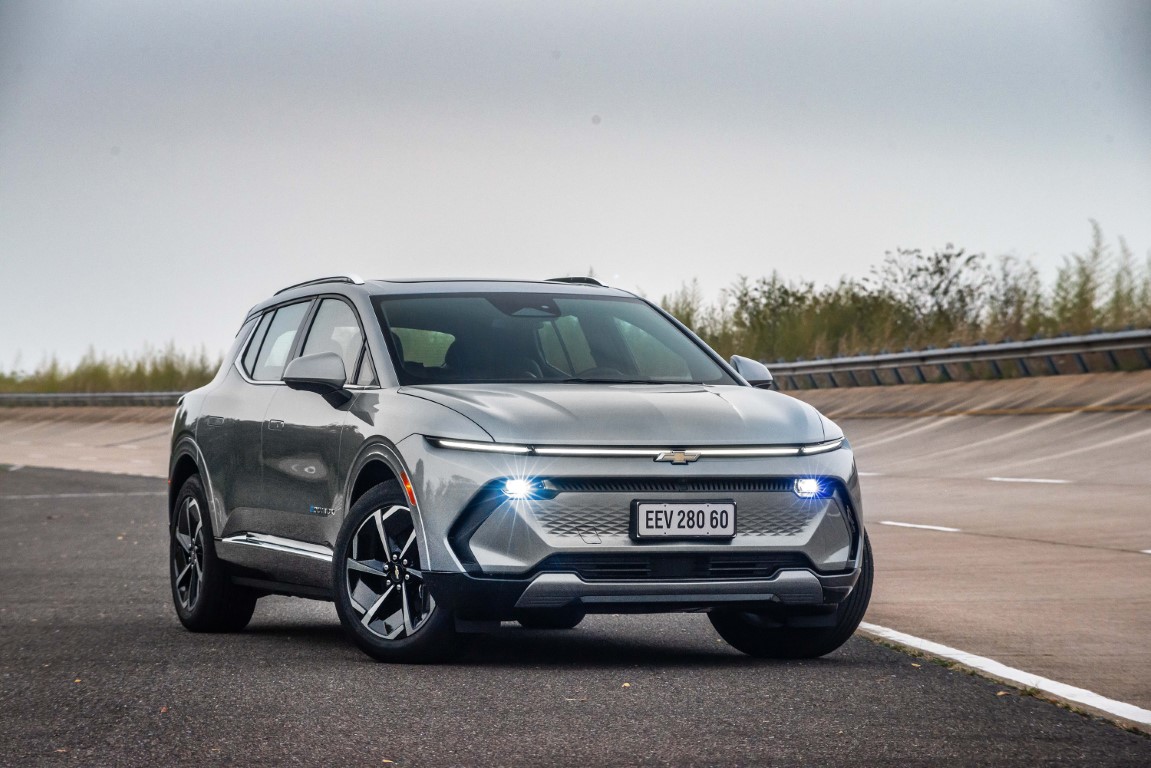
1st Generation
(2024-)
Electricity for everyone: the tech-forward SUV that balances generous range and futuristic design for everyday life.
Select a generation to see available versions
(2024-)
The global automotive industry's transition to electrification has required traditional automakers to profoundly restructure their portfolios and market strategies. For General Motors (GM), the development and launch of the Chevrolet Equinox EV represent the culmination of technological evolution and brand building established over the last 30 years. The electric Equinox project is not a simple adaptation of a combustion-powered vehicle to accommodate batteries, but rather a sport utility vehicle (SUV) designed entirely from scratch, using an architecture dedicated exclusively to electric propulsion.
The name "Equinox" carries significant marketing weight, especially in North America. Historically, the internal combustion engine Equinox has been one of Chevrolet's most popular and highest-volume compact SUVs. By transferring this established nomenclature to a fully electric vehicle, the automaker's strategy aims to reduce average consumer hesitation and friction regarding the adoption of new technologies. Offering familiarity in a segment where doubts about infrastructure and range are still prevalent has proven to be a calculated move to attract both loyal brand customers and new buyers.
It is crucial to note that the arrival of the electric model has not extinguished the traditional lineage. General Motors adopted a parallel production strategy. Almost simultaneously with the launch of the electric vehicle, the company introduced the fourth generation of the combustion Equinox (designated as the 2025 model). While the gasoline model focuses on updates to already known mechanics, the Equinox EV points to the future with the clear promise of being the most affordable mass-market electric SUV with a range of over 500 kilometers (310 miles). This portfolio duality allows the automaker to cater to different paces of technological adoption, respecting the charging infrastructure limitations of different geographical regions.
The backbone of the entire Chevrolet Equinox EV project is the Ultium platform. It is a modular architecture of batteries, motors, and power electronics developed by General Motors to support a wide variety of vehicles, from compact SUVs to large pickup trucks and luxury vehicles.
Regardless of the drivetrain configuration chosen by the customer or the vehicle's trim level, all Equinox EV models share the same battery pack, which has a storage capacity of 85 kilowatt-hours (kWh). The decision to standardize the physical size and chemical capacity of the battery for the entire lineup is a strategic engineering choice. This optimizes the supply chain, simplifies the assembly line, and substantially reduces large-scale manufacturing costs. The performance differentiation between the cheapest and most expensive versions is achieved primarily through the addition of physical electric motors and software calibrations, rather than changes to the core energy pack.
The vehicle was designed to be offered in two main mechanical configurations: Front-Wheel Drive (FWD, which uses a single motor on the front axle) and Electronic All-Wheel Drive (eAWD, which adds a second motor on the rear axle). The model's evolution demonstrates a pattern of continuous refinement. Between the initial launch year (2024) and subsequent updates (2025 and 2026), Chevrolet engineers managed to extract more power from the same battery and inverters.
The front-wheel-drive model uses an AC permanent magnet synchronous motor. This configuration prioritizes energy efficiency and maximizing the distance the car can travel on a charge. On the other hand, the all-wheel-drive version completely transforms the SUV's dynamic behavior. The addition of the rear motor raises the combined power and drastically reduces the time needed to accelerate the vehicle, giving it much sportier and safer driving characteristics in low-grip conditions.
The following table consolidates the exact performance specifications and illustrates the power gain implemented by the automaker across model-year transitions:
| Mechanical Configuration | Maximum Power (2024 Models) | Maximum Power (2025/2026 Models) | Maximum Torque (2025/2026 Models) | Acceleration 0 to 60 mph (0-96 km/h) |
|---|---|---|---|---|
| Front-Wheel Drive (FWD) | 213 horsepower (hp) | 220 horsepower (hp) | 243 lb-ft (pound-feet) | 7.7 Seconds |
| All-Wheel Drive (eAWD) | 288 horsepower (hp) | 300 horsepower (hp) | 355 lb-ft (pound-feet) | 5.8 Seconds |
Aggregated and consolidated technical data based on the model's engineering reports.
The gain of 7 horsepower in the entry-level version and 12 horsepower in the all-wheel-drive version from 2024 to 2025 reflects the maturity of the Ultium platform's electronic management, allowing for more vigorous acceleration without penalizing component wear. The time of 7.7 seconds to reach 60 miles per hour in the FWD model is considered adequate and comparable to traditional gasoline compact SUVs, while the 5.8-second mark of the AWD model places it on a higher performance tier.
The acceptance of an electric vehicle by the general public is closely linked to its ability to travel long distances and the speed at which it can replenish its energy. The advanced thermal management and aerodynamic efficiency of the Equinox EV allow the model to achieve highly competitive range figures for its price segment.
Official data certified by the United States Environmental Protection Agency (EPA) establish clear parameters for the vehicle's maximum range. The FWD configuration, being lighter and having less mechanical drag, delivers the highest range in the lineup. The eAWD version sacrifices a small portion of this range in exchange for a significant increase in power. Energy consumption is measured in MPGe (Miles Per Gallon Equivalent), a metric that facilitates the comparison of efficiency with combustion vehicles.
| Configuration and Model Year | Estimated Range (EPA) | City Consumption (MPGe) | Highway Consumption (MPGe) | Combined Consumption (MPGe) |
|---|---|---|---|---|
| FWD (Front-Wheel Drive) | 319 Miles (Approx. 513 km) | 117 MPGe | 100 MPGe | 108 MPGe |
| eAWD (All-Wheel Drive) | 307 Miles (Approx. 494 km) | 112 MPGe | 95 MPGe | Not specified in detail |
Certified range and efficiency data.
Independent tests conducted on highways confirmed that, at real cruising speeds (75 miles per hour), both versions achieve a practical range of about 260 miles (418 km). The minor real-world variations are often attributed to differences in wheel size and the type of tire used on the sportier versions, which generate higher rolling resistance.
The Equinox EV's charging ecosystem was designed to cover both daily needs and extended trips. For fast charging on highways, all models support direct current (DC Fast Charging) with a maximum absorption rate of 150 kW. Under ideal battery temperature and charging station power conditions, this capacity allows the vehicle to recover approximately 70 miles (112 km) of range in just 10 minutes plugged in.
For everyday use at homes or workplaces, charging is done with alternating current (Level 2 AC). The entry-level and mid-range versions come factory-equipped with an onboard charger with an 11.5 kW capacity. This configuration allows recovering up to 34 miles of range per hour of charging, being perfectly adequate for fully recharging the battery overnight. The top-of-the-line version in the catalog (3RS) features a considerable technical differentiator: a 19.2 kW onboard charger. This component allows for substantially faster charging at home, provided the owner's residence has a robust enough electrical infrastructure to supply this power.
Active energy recovery is also an engineering highlight of the model. The vehicle integrates the One Pedal Driving system coupled with Regen on Demand braking technology. This system uses the electric motor as a generator during deceleration, converting kinetic energy back into electricity for the battery. In controlled practical evaluations, the system demonstrated an exceptional conversion rate; when driving through an urban stretch of just one kilometer using regeneration heavily, the SUV was able to recover energy equivalent to more than 400 meters of extra travel.
The Equinox EV's structural design reflects the need to accommodate the large battery pack in the floorpan, which alters the vehicle's classic proportions compared to its gasoline equivalent. The result is a visually planted vehicle, with a very low center of gravity that favors stability.
The wheelbase is a determining factor for internal space and ride comfort. The electric model features a long wheelbase, which maximizes legroom for occupants, ensuring comfortable seating for up to five adult passengers. Although the cabin is extremely spacious, the total trunk volume with the rear seats folded down is marginally lower than that of the combustion model due to the raised rear floor to protect the batteries. Still, the cargo capacity is generous for family trips or utilitarian use. The suspension uses an independent strut setup at the front and a multilink system at the rear, ensuring a proper balance between comfort and directional control.
| Physical Measurement | Imperial System (US) | Metric System (Approximate/Brazil) |
|---|---|---|
| Overall Length | 190.6 inches | 4,840 millimeters |
| Width (with mirrors) | 84.9 inches | 1,954 millimeters |
| Overall Height | Not detailed (US) | 1,646 millimeters |
| Wheelbase | 116.3 inches | 2,954 millimeters |
| Ground Clearance | 6.4 inches | 162 millimeters |
| Legroom (Front) | 41.7 inches | 1,059 millimeters |
| Cargo Volume (Seats Folded) | 57 cubic feet | 1,614 liters |
| Trunk Volume (Standard) | Not detailed (US) | 441 liters |
| Maximum Towing Capacity | 1,500 pounds | 680 kilograms |
Consolidation of dimensions and operational measurements from factory specifications.
The interior environment is dominated by an expansive digital interface that signals the model's technological advancement. Regardless of the chosen version, the driver interacts with a fully digital 11-inch diagonal information center (instrument cluster). In the center of the dashboard, the models feature an impressive 17.7-inch touchscreen for infotainment.
Connectivity is guaranteed by an operating system based on Google Built-In, which allows natural voice commands to control navigation, media, calls, and adjust the car's own functions. There is also internet connectivity with an integrated 5G Wi-Fi hotspot. Notably, the vehicle opted to abandon classic mirrored interfaces in favor of this native system, which is deeper and integrated with the battery data. The gear selector was moved to an electronic stalk mounted on the steering column, freeing up valuable space in the lower center console for storage and wireless charging pads.
The Equinox EV's arrival on the market was not a singular event, but rather a phased rollout process that adapted to production realities and consumer response. A chronological analysis of the generations and model years reveals precise adjustments to Chevrolet's offering structure.
Although expectations surrounding the vehicle were immense due to initial announcements of an affordable electric vehicle in the thirty-thousand-dollar range, the reality of the first year of production was different. The first units of the Equinox EV only truly began arriving at dealerships in May 2024. In the original planning, the brand had outlined five trim options: 1LT, 2LT, 2RS, 3LT, and 3RS. However, the cheapest base version (1LT) ended up not being produced or made available during this first fiscal year, which in practice made the mid-range 2LT version the financial entry point for buyers.
To mark the start of sales, Chevrolet also offered a special series called the "Launch Edition RS". This launch edition was configured with almost all available options, including massaging seats, ensuring that early adopters had the most premium experience possible of the new architecture. Starting prices this year fluctuated significantly, with the available base model costing around US$ 43,295 at stores, well above the original promise of affordability.
With the initial production bottlenecks overcome, the 2025 model year brought the first major restructuring of the portfolio. General Motors opted to aggressively simplify the assembly line, consolidating the catalog into just two main family designations: the LT line and the RS line. This reduction in manufacturing complexity helped accelerate the volume of vehicles delivered. It was in this year that engineers implemented the software update that resulted in the power increase (going to 220 hp in FWD and 300 hp in AWD) and the fine-tuning that guaranteed the certification of 319 miles of maximum range.
For the 2026 model year, the brand felt the necessary confidence in the scale of its supply chain to resume the three-tier structure within the trim families, establishing the LT1, LT2, and RS versions. The biggest news of this cycle was the materialization of the promised entry-level version. The 1LT (or LT1) model finally began appearing in US dealership inventories, boasting a starting MSRP of US$ 34,995, fulfilling, years late, the role of democratizing electric technology.
In addition to expanding the versions, the brand introduced aesthetic improvements to attract different customer profiles. The LT line received a new optional package called "Midnight", which replaces chrome with darkened finishes and black-painted wheels, giving a sportier look to the cost-benefit-oriented model. On the RS versions, which were previously obligatorily produced with a two-tone paint job (colored body with a black roof), the manufacturer started allowing a single-color paint option, answering requests from consumers who preferred a more discreet look.
Chevrolet's commercial strategy divides the Equinox EV into two distinct visual and equipment identities. The LT (Luxury Touring) series is designed for everyday use, prioritizing efficiency, family comfort, and cost-benefit. The RS (Rally Sport) series appeals to emotion, with a sports-inspired design, differentiated interior materials, and a higher level of finish.
The following table presents the main differences in equipment and features between the trim divisions available throughout the production generations:
| Feature / Characteristic | LT Family (1LT, 2LT, 3LT) | RS Family (2RS, 3RS) |
|---|---|---|
| Target Audience and Focus | Daily commuting, efficiency, value, and essential comfort. | Sporty styling, premium materials, cutting-edge technology, and aggressive looks. |
| Wheel Options | 19 inches (Standard and 2LT) up to 21 inches in aluminum on the 3LT version. | 20-inch darkened (Dark Aero) on the 2RS up to 21 inches with high-performance tires on the 3RS. |
| Seat Material | Standard high-resistance cloth, with manual adjustment options on base versions. | Premium sporty cloth or luxury synthetic "Evotex" upholstery in exclusive colors like "Adrenaline Red". |
| Front and Exterior Design | Simple LED headlights (1LT). The 2LT adds a continuous LED light bar and chrome roof rails. | Gloss black painted front grille, exclusive lower moldings with sporty aerodynamic flow, and black accents. |
| Climate Comfort | Heated seats, steering wheel, and mirrors starting from the 2LT. 3LT adds ventilated seats. | Heated flat-bottom steering wheel (sporty). The Convenience II package adds ventilated seats. |
| Safety Technology | Standard Chevy Safety Assist. Optional 360-degree cameras starting from the 2LT. 3LT has reverse braking. | Standard HD Surround Vision (high-definition 360 cameras) on fully loaded versions. Easier access to Super Cruise. |
Compilation of official trim equipment lists.
The progression within the LT line starts pragmatically. The 1LT model delivers the essence of the electric experience, being praised for already including the giant center screen and collision prevention safety technologies, but falling short by lacking power-adjustable seats. The jump to the 2LT is considered by market analysts as the best price-to-added-value ratio in the lineup. This version introduces crucial amenities for colder regions (heated seats and steering wheel) and the convenience of wireless phone charging, in addition to the 360-degree view that facilitates parking in tight spots. For buyers of the LT line who want advanced features without paying the price of sports models, Chevrolet offers packages like "Comfort and Active Safety 2", which allows adding heated seats and driving assists to simpler versions for a fraction of the price. The 3LT version caps off the basic line offering levels of mechanical and safety sophistication similar to the more expensive options, such as the Head-Up display and automatic reverse braking, catering to the customer who wants discreet luxury without the sporty visual appeal.
On the other hand, the RS line differentiates itself immediately through its visual presence. The black grille and darkened wheels give the SUV an aggressive attitude. The interior is treated with the "Adrenaline Red" color palette and the use of Evotex material ensures a sophisticated touch to the seats. The 2RS and 3RS versions not only bring style but concentrate the best of technology. The 3RS model, being the pinnacle of the portfolio, integrates the ultra-fast Level 2 wall charger (19.2 kW) and giant 21-inch wheels fitted with smooth-tarmac-focused tires (Continental CrossContact RX), distancing the model from any off-road pretension the Equinox name might have suggested in the past.
A massive technological differentiator that spans the top trims (available on both the 3LT and the RS line) is the Super Cruise system. Developed by GM's core engineering, this system allows for genuinely autonomous driving (where the driver can take their hands off the steering wheel) on over 189,000 miles (about 304,000 kilometers) of previously mapped and compatible highways across the United States and Canada, representing one of the model's greatest competitive advantages against Eastern manufacturers.
The grandeur of the Equinox EV project demanded a colossal manufacturing effort. All global production of the vehicle, along with models based on the same platform, such as the Chevrolet Blazer EV and the Honda Prologue, was centralized at the Ramos Arizpe industrial facilities, located in the state of Coahuila, Mexico.
The Mexican complex is a reflection of the complexities and flexibility required in the energy transition. The factory has lines dedicated to building vehicles equipped with internal combustion engines, operating in parallel with entirely new sections designed specifically for the Ultium battery architecture. To support the surge in demand anticipated by corporate planners, GM conducted a massive human resources campaign. Since the factory began adaptations to build electric vehicles, the corporation has hired and trained over 2,700 workers, aiming to accelerate the production cadence and meet aggressive volume targets. Official commercial assembly of the Equinox EV began in the first quarter of 2024, shortly after the release of the Blazer EV line.
Specific production data from the Mexican assembly lines reveals an individual success story that, paradoxically, was not enough to sustain the operation as a whole. The Mexican Automotive Industry Association recorded the following volumes of manufactured units (not to be confused with final sales):
| Production Volume (Ramos Arizpe) | Year 2024 | Year 2025 | Production Variation |
|---|---|---|---|
| Chevrolet Equinox EV | 61,002 Units | 75,912 Units | + Substantial Increase |
| Chevrolet Blazer EV | 33,765 Units | 16,826 Units | - Drastic Drop |
Industrial production statistics from the Mexican Automotive Industry Association.
The table exposes the severe volatility of the emerging EV market. While production of the Equinox EV grew vigorously, fueled by its more affordable price and strong initial demand in the United States, the larger and more expensive model, the Blazer EV, suffered a collapse in its assembly volumes, with production dropping by half from one year to the next.
This imbalance generated heavy social and operational consequences. Claiming that the overall weakening of EV demand in the US market after the end of government incentives reduced the need for maximum capacity, General Motors was forced to cancel the second production shift on the factory's EV lines. This efficiency adjustment measure culminated in the layoff of approximately 1,900 employees over a single weekend. Local executives pointed out that despite the growth of the Equinox lines, the combined total volume was not enough to sustain two daily shifts.
The event underscores a critical aspect of current automotive electrification: the vulnerability of supply chains to fluctuations in public policies and subsidies in foreign markets. Despite the localized labor crisis, the automaker confirmed that its long-term strategy remains unchanged, ensuring the injection of US$ 1 billion in investments into the Mexican operation planned for the 2026-2027 biennium, aiming to optimize manufacturing and guarantee cost competitiveness on the global stage.
The sales journey of the Chevrolet Equinox EV is notable for having achieved internal leadership very quickly and for demonstrating acute sensitivity to the fiscal incentive instruments of the US economy.
Despite not physically arriving at dealerships until mid-year (May 2024), market acceptance was dizzying. In its incomplete debut year, the model had already surpassed all other electric options offered by General Motors, consolidating itself as the group's best-selling EV.
| Region / Market | Sales Recorded in 2024 | Sales Recorded in 2025 | Growth / Variation |
|---|---|---|---|
| United States | 28,874 Units | 57,945 Units | + 100.7% |
| Canada | 16,989 Units | 10,059 Units | Volume Drop |
| Mexico | 181 Units | Restricted Data | N/A |
Consolidated table of reported annual registrations.
The US market absorbed the SUV in large volumes, doubling sales from 2024 to 2025. The year 2025 was marked by historic quarterly peaks that defined the product's success. During the third quarter (Q3) of 2025, sales skyrocketed atypically. The automaker reported selling 25,085 units of the Equinox EV in that quarter alone, an explosive growth of 156.7% compared to the same period the previous year (which saw 9,772 units sold). In July 2025 alone, the vehicle accounted for more than 8,500 deliveries out of a total of 19,000 EVs that GM sold that month (a 115% year-over-year increase for the group).
The driving force behind this monumental volume was, in fact, tax legislation. Consumers rushed their purchasing decisions to take advantage of the imminent end of a US government program that granted up to US$ 7,500 in tax credits or benefits for acquiring qualified zero-emission vehicles. Retail executives noted the phenomenon at dealerships. Dealers in South Florida reported that the model actively functioned as a "conquest vehicle", attracting not only consumers from rival brands but mainly young buyers and those new to battery technology, seduced by the promise of a low initial cost combined with over 315 miles of travel capacity.
The efficiency of this mid-year sales campaign allowed General Motors to surpass Ford and secure the position of the second-largest seller of electric vehicles in the United States, behind only Tesla. GM's full portfolio, bolstered by the Equinox numbers, reached a market share in the EV segment of about 15.5% in the first half of 2025, a considerable slice and very close to the 17% the brand holds considering all engine types.
To understand the SUV's real impact relative to its direct peers at the close of 2025, the competitive landscape among volume models shows the technical leadership established by Chevrolet among traditional brands:
| Vehicle Model | US Sales (Year 2025) | Annual Variation (vs 2024) |
|---|---|---|
| Tesla Model Y | 357,528 Units | - 4.0% (Drop) |
| Tesla Model 3 | 189,903 Units | + 1.3% |
| Chevrolet Equinox EV | 57,945 Units | + 100.7% (Accelerated Growth) |
| Ford Mustang Mach-E | 51,620 Units | - 0.2% (Stagnation) |
| Hyundai IONIQ 5 | 47,039 Units | + 6.0% |
| Honda Prologue | 39,194 Units | + 18.7% |
Comparative deliveries of automakers in the United States.
The data reveals that the model closed 2025 as the best-selling non-Tesla electric vehicle in the US market, unseating the popular Ford Mustang Mach-E and imposing a comfortable lead over the Asian models from Hyundai and partner Honda (whose Prologue model is assembled on the same production line as the Equinox).
However, long-term dynamics pose challenges. The expiration of the US$ 7,500 subsidies creates an affordability gap that current models will struggle to fill purely organically in the following months. Furthermore, internal competition will increase. General Motors has already confirmed that, for 2026 and 2027, it will bring the next generation of the Chevrolet Bolt EV to market. This compact model is expected to have a starting price below US$ 30,000. With the arrival of the new Bolt, the Equinox EV's role will undergo a mandatory transition: it will no longer be promoted solely as the company's entry-price electric option and will begin to establish itself in the mid-range luxury utility tier, where the consumer's demand for technical refinement and family travel capability are the defining factors of the purchase.
If in North America the model functions as the commercial vanguard to massify battery-powered vehicles, the marketing strategy undergoes a dramatic alteration when crossing the borders of the Brazilian market. Due to a complex matrix of high import costs, currency devaluation, and progressive taxation on alternative technologies, Chevrolet repositioned the product in Brazil. On national soil, it abandons the label of a subsidized popular car and adopts the unquestionable status of a technological luxury item.
While in the US sales communication revolves around the basic LT version as a "budget-friendly" product, in Brazil, the SUV was launched with a suggested retail price starting at a steep R$ 349,990. The specialized Brazilian automotive press quickly highlighted this dichotomy, pointing out that the vehicle offers the consumer the imposing physical size of the brand's massive models (comparable to the size of the veteran Trailblazer), but demands an investment corresponding to premium cars from traditionally luxurious brands, with fully optioned versions approaching the R$ 420,000 barrier, a level considered out of touch with the common buyer and even exaggerated for the Equinox name's category of origin.
This pricing structure puts the US-Mexican SUV on a direct collision course in Brazil with established options from the European premium market. Among its main direct competitors cataloged in the country are Audi models (like the Q3), BMW mid-size SUVs (X1 series), Mercedes-Benz options (like the GLA 200), and electrified Volvos (like the EC40). Competing against the intrinsic prestige of these brands requires the model to offer an impeccable and abundant specification package.
To justify the high purchase value, Chevrolet's Brazilian subsidiary opted to bring the model with the most powerful mechanical configuration available on the platform and with the most loaded equipment selection from the assembly line. The specifications homologated for Brazilian highways demonstrate the power of the battery architecture.
| Technical Specification / Functionality | Official Data of the Model Imported to Brazil |
|---|---|
| Declared Power (Adjusted) | 292 horsepower (cv). |
| Drivetrain System | Electronic All-Wheel Drive (AWD). |
| Homologated Range (Inmetro) | Up to 443 km on a single full charge (Strict local standard). |
| Trunk Capacity | 441 liters up to the rear window cut-off line. |
| Direct Current Charging Capacity (Super Charger) | 150 kW (Ultra-fast charging). |
| Alternating Current Charging Capacity (Residential Wallbox) | Up to 22 kW peak allowable. |
Compilation of official technical sheets and national homologations for the model sold in Brazil.
It is worth noting that the declared power of 292 horsepower is a slight variation from the American measurement (300 hp) due to the engine power measurement norms and protocols currently enforced in Brazilian regulations. Similarly, the official range does not use the forgiving standard of the American EPA (which marks over 500 km), but rather the strict protocol of the Inmetro labeling program, which defines the range at a more realistic 443 km for mixed terrain conditions and chaotic traffic common in Brazil. Notably, the national specification mentions support for charging up to 22 kW through Wallbox-type chargers, indicating that the units destined for Brazil might be based on the top-tier electrical infrastructure that equips the 3RS version abroad (capable of handling bidirectional power and robust electrical grids).
The standard equipment portfolio of the commercialized version does not skimp on visual technology or comfort. The car comes factory-equipped with robust 19-inch alloy wheels (or larger depending on the package), an expansive panoramic sunroof, and full seats upholstered in premium leather-like material, equipped with heating systems. The front of the vehicle displays uniquely designed bumpers with 3D geometric visual details, gloss black painted inserts, chrome side moldings, and the distinct LED optical signature on the daytime running light that unifies the headlights from end to end.
The cockpit reflects this hyper-connectivity trend focused on the high-income customer. All interaction is dominated by the 17.7-inch MyLink screen associated with connected Google Built-in services, suppressing the need for manual controls for most trip settings. The safety arsenal includes a redundant set of 6 airbags, advanced camera systems forming a 360-degree view, automatic emergency braking, and adaptive cruise controls, completed by purely electric parking brakes.
This detailed technical construction confirms that Chevrolet's South American subsidiary operated a pragmatic transition: knowing that importing electric vehicles makes it impossible to practice mass-market prices in the country, it opted to deliver a technological jewel assembled to the maximum level of the Mexican factories to compete for aspirational status against European sedans and SUVs.
For the North American middle-class consumer, the decision to adopt electric technology relies inexorably on the return on investment compared to traditional gasoline engines. The coexistence of the fourth generation of the Equinox powered by internal combustion engines (ICE) with the new electric model offers a perfect laboratory for a comparative analysis of maintenance costs and capabilities.
The new generation of the combustion model (2025) uses a refined version of the established 1.5-liter turbocharged four-cylinder engine. This engine delivers 175 maximum horsepower and 203 lb-ft of torque, numbers substantially lower than the 220 horsepower and 243 lb-ft of the most basic electric model, resulting in much milder acceleration in the traditional vehicle. The transmission on the front-wheel-drive ICE model is now a continuously variable transmission (CVT), focused on better fuel efficiency, while the combustion AWD models employ a modern 8-speed automatic gearbox, retiring the 6-speed system of the 2024 generation.
The following table outlines the raw differences in mechanical performance and technological interface between the two worlds under the same brand:
| Comparative Specification | ICE Equinox (Combustion Year 2025) | Chevrolet Equinox EV (Year 2025) |
|---|---|---|
| Main Powertrain | 1.5-Liter Turbocharged Inline 4-cylinder. | AC Synchronous Electric Motor. |
| Base Power and Torque | 175 horsepower / 203 lb-ft of torque. | 220 horsepower / 243 lb-ft of torque (Up to 300 hp in AWD). |
| Gear Transmission | CVT (FWD Models) or 8-Speed Automatic (AWD). | Single-speed (Fixed ratio reducer) automatic transmission. |
| Infotainment Center | 11.3-inch multi-touch screen. | 17.7-inch panoramic screen. |
| Estimated Efficiency and Source | Regular fuel. Average of 26 mpg (city) and 28 mpg (highway). | Chargeable battery electric energy. Range exceeding 315 miles and high-speed charging. |
Powertrain comparison based on launch sheets for the North American market.
In terms of physical utility, there is an interesting concession on the combustion model's side. The 2025 model update limited the gasoline vehicle's maximum towing capacity to the same 1,500 pounds (approximately 680 kg) that the electric architecture supports, indicating a convergence in the cargo capacity designed for buyers in the category, who do not require the severe effort of large trailers.
The true analytical turning point lies in the long-term financial usage projection. Studies based on the cost of energy and the reduced maintenance of the electric system show that the cost depreciation curve aggressively favors the Ultium platform for drivers who make regular trips.
| Driving Scenario and Mileage | Total Projected Cost Savings (Over 10 Years of Use) |
|---|---|
| Average Commute: 15,000 km driven per year | Savings in favor of the EV model of $10,160 dollars relative to fuel. |
| Heavy Commute: 20,000 km driven per year | Savings in favor of the EV model of $16,040 dollars relative to fuel. |
Independent estimates of running costs (fuel versus electricity) and maintenance plan.
These data confirm that the premium paid in the entry price of electric models is sharply diluted with continuous use, making the higher initial investment in the platform a step that yields net dividends as the mechanics' durability exempts the consumer from traditional oil changes, filters, CVT transmission belts, and typical wear and tear of the turbocharged 1.5 engine under the traditional hood.
The engineering, industrial deployment, and commercialization trajectory of the Chevrolet Equinox EV draws a fundamental roadmap for understanding the technological maturity of the contemporary automotive industry.
From a structural standpoint, the consolidation of the Ultium platform has proven to be a success for General Motors. Maintaining a standard 85 kWh battery module across all lines reduced inventory complexity. The substantial performance jumps observed — the acceleration gain that reduced zero-to-sixty times to a sporty 5.8 seconds with rear motors, and the calibration that allowed updated software to add extra horsepower between the 2024 and 2025 model years — reveal that the car has become a continuous smart device, where heavy hardware is surpassed by the tuning of computer systems. The support for 150 kW DC charging, and the robust 19.2 kW Level 2 wall chargers on the 3RS line, attest that the designed onboard infrastructure is capable of demystifying range anxiety, especially when combined with the strong kinetic recovery during braking promoted by one-pedal driving technology.
From a marketing perspective, the data is cruel in demonstrating government volatility. The year 2025 recorded the model's sales peak, reaching 57,945 registrations, crowning it as the market leader above competing proposals from Ford and Hyundai, with an anomalous and spectacular spike in the third quarter. However, the artificiality of this peak, massively driven by tax regulations and the end of US government allowances, imposed deep collateral damage on the workforce. The Ramos Arizpe paradox will serve as future study material: a factory that vigorously expanded the assembly of a vehicle that was a tremendous success in showrooms (Equinox EV jumping beyond 75,000 produced units), but which had to cancel entire assembly lines and lay off almost two thousand workers due to the commercial failure of sister models manufactured on the line next to it.
Finally, the Equinox's international case demonstrates that global brands no longer produce a single-intent product. In showroom aisles in the United States and Canada, the gradual evolution of trims from the stripped-down 1LT version to the sports packages of the 2RS family dictates the future of mass transit for pragmatic families, supported by superb semi-autonomous technologies like the Super Cruise suite. Conversely, in dealerships under the strict import tax of Brazil and emerging markets, this same machine converts into an artifact of prestige and a demonstration of luxurious status. By keeping the redesigned gasoline-powered generation alive simultaneously with the foray into EVs, the company perfectly calibrates its balance on the tightrope of the global energy matrix. The model is, undeniably, the physical demonstration of the past century's heavy engineering's capacity to adapt to the climate urgency and the volatile fluctuations of the present digital economy.