1st Generation
(2003 - 2006)
6.0 V8 LS2
406 cv
Technical specifications, versions, and history for the Chevrolet SSR.
Select a generation to see available versions
(2003 - 2006)
Select a powertrain to view full technical specifications
The Chevrolet SSR, an acronym that stands for Super Sport Roadster, is frequently classified by automotive historians and market analysts as one of the most peculiar, audacious, and unique vehicles ever produced in the contemporary history of General Motors (GM). Manufactured between the years 2003 and 2006, the model was not born out of a practical need to fill a utilitarian gap in the pickup truck market, but rather from a corporate strategy aimed at creating a "halo vehicle." The primary function of a halo vehicle is to attract public attention, generate traffic in dealerships, and demonstrate a brand's creative and technological capabilities, projecting an image of innovation that, ideally, reflects on the sales of the fleet's conventional models.
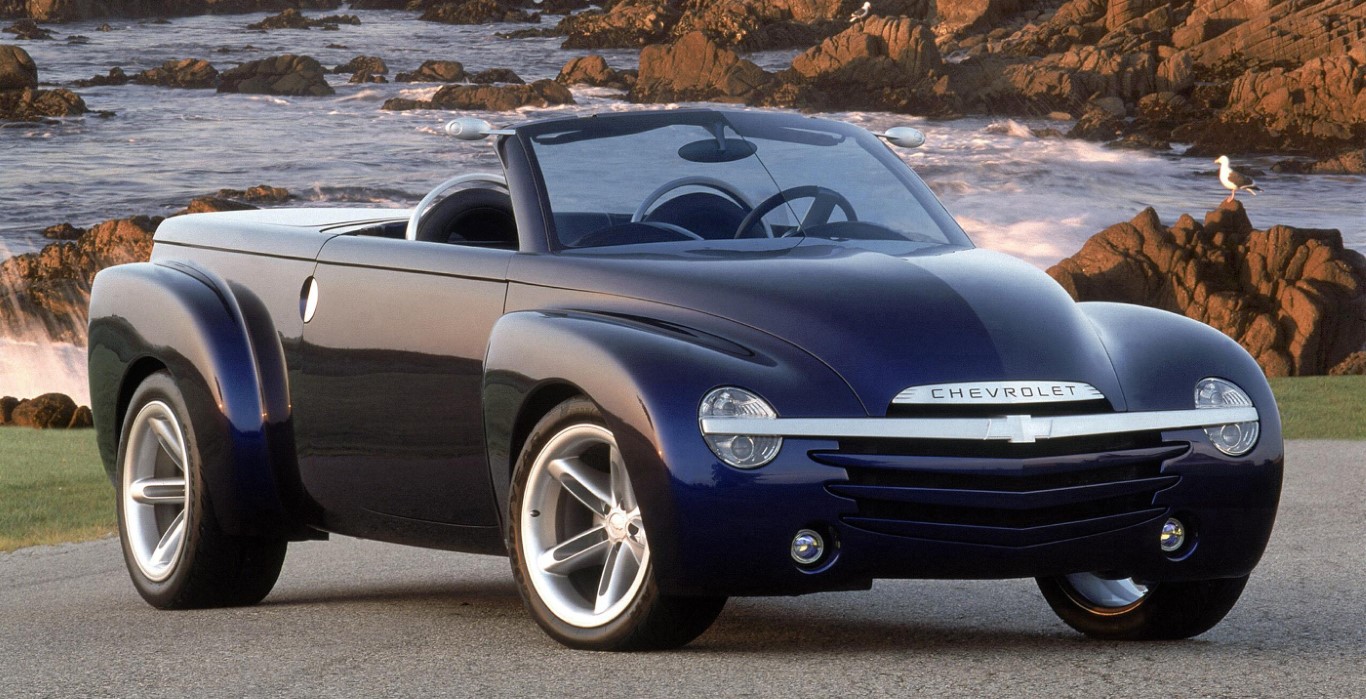
The conception of the SSR took place at the end of the 1990s, a period when the global automotive industry was deeply immersed in the retro design trend. Manufacturers sought inspiration from their historical catalogs to create modern vehicles that evoked nostalgia. In this context, Wayne Cherry, then Vice President of GM's Design Centers, envisioned a unique opportunity: to create a modern and radical interpretation of classic Chevrolet pickup trucks, specifically the Advance Design series models produced between 1947 and 1955. These classic mid-20th-century pickups had become the preferred blank canvas for customizers and street-rod enthusiasts in the United States, and Cherry's vision was to capture exactly that customized and aggressive aesthetic, delivering it straight from the factory.
The project that would give rise to the SSR was formally initiated on May 26, 1999, when Wayne Cherry presented the conceptual directive in a morning meeting with Ed Welburn, design executive of GM's newly created Corporate Brand Center (CBC). The objective was clear: to conceptualize an unprecedented hybrid that combined the proportions of a lowered classic pickup truck with the dynamics and open-air experience of a sports roadster. From that moment on, General Motors embarked on one of the most complex engineering and manufacturing processes in its recent history, culminating in a vehicle that defied the industry's traditional categories.
The journey of the Chevrolet SSR from paper to the auto show spotlight was remarkably fast and characterized by innovations in General Motors' design methods. The team tasked with materializing Wayne Cherry's vision included notable designers such as Brian Baker, Bill Davis, Glen Durmisevich, and Doug Ungemach, with Ed Welburn overseeing the operations of the Corporate Brand Center.
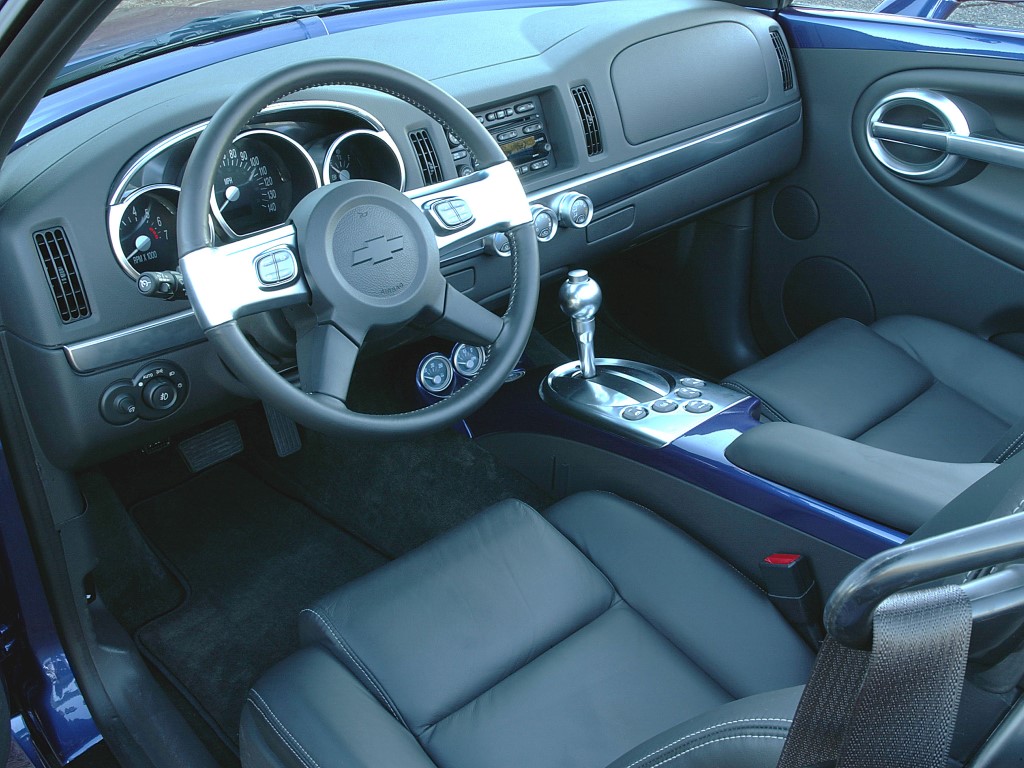
The initial development of the SSR marked a technological turning point for GM. The vehicle was the first to be developed in the company's specialized SpeedVision studio, which abandoned traditional two-dimensional drawing boards in favor of cutting-edge computerized mathematical modeling. Instead of relying exclusively on full-scale clay models from day one, designers utilized a Virtual Reality Room, wearing 3D glasses to visualize, evaluate, and refine the vehicle's proportions in a fully digital environment. This approach allowed the team to iterate quickly on different visual themes, evaluating everything from a traditional pickup look with an elevated stance to the "slammed" (lowered and aggressive) stance that was ultimately chosen. The final exterior design, characterized by a low, curved roof and massive, flared fenders, was heavily influenced by the work of designer Doug Mac, while the interior, with its twin-dial layout evoking the 1948 to 1953 Chevy trucks, was conceived by Andre Hudson.
Driven by the efficiency of digital design, the project went from initial sketches to two full-size physical models sculpted in foam (manufactured by Metalcrafters in California, due to a lack of capacity in the Detroit shops at the time) in a record timeframe of just seven weeks. The concept vehicle, dubbed the SuperSport Roadster, was revealed with great fanfare at the North American International Auto Show (NAIAS) in Detroit in January 2000.
The impact of the reveal exceeded all corporate expectations. The automotive media and the public reacted with extreme enthusiasm to the proposal of a pickup truck with a high-performance V8 engine, five-spoke alloy wheels with wide-profile tires, and a profile that looked like it came out of a custom shop. The SSR concept graced more than a dozen automotive magazine covers, and approximately 350,000 scale models of the concept were quickly sold, proving the emotional viability of the design. At that time, Chevrolet had announced the imminent discontinuation of the Camaro (which occurred in 2002), and the brand's enthusiasts were eager for a new vehicle focused on emotional performance. Faced with this overwhelmingly positive reception, and needing to prove that GM was not just a manufacturer of conservative utility and passenger vehicles, then-CEO Rick Wagoner announced in August 2000 that the SSR would proceed to the commercial production phase.
Transforming the 2000 concept car into a mass-production homologated vehicle capable of meeting strict safety, emissions, and durability standards proved to be a colossal engineering challenge. The solutions adopted in this phase would directly shape the vehicle's driving characteristics and final weight.
The most significant divergence between the concept car and the production version lay in the chassis architecture. The concept displayed in Detroit had been built on the platform of the Chevrolet S-10 compact pickup, an expedient choice to create a functional prototype quickly. However, GM engineers soon concluded that the S-10 platform was inadequate for the production model for two critical reasons: first, it lacked the structural space and cooling capacity needed to house a large-displacement V8 engine; second, it lacked the torsional rigidity required for a convertible vehicle. Vehicles without a fixed roof suffer from significant structural flex, requiring an exceptionally rigid chassis to avoid the phenomenon known as cowl shake (excessive vibration of the dashboard and hood).
The solution from GM's portfolio development team was to utilize the GMT360/370 architecture, originally designed for the company's new generation of mid-size SUVs, such as the extended-wheelbase Chevrolet TrailBlazer (GMT370). This platform would provide the necessary robust structure and enough space for a 25-gallon fuel tank and the V8 engines. The specific variation developed for the SSR was designated as the GMT368 platform, maintaining the traditional body-on-frame layout.
Although this choice solved the engineering problems and allowed for the sharing of carryover parts, it generated a serious side effect on design and dynamics: the vehicle grew considerably. The production version became longer, wider, and taller than the original concept, forcing the design team to make meticulous adjustments to the exterior surfaces to disguise the extra volume and maintain the fluid proportions that had captivated the public. The official dimensions settled at a 2,946 mm (116.0 inches) wheelbase and 1,996 mm (78.6 inches) in width. The length in the early years was 4,862 mm (191.4 in.), undergoing a millimeter adjustment to 4,864 mm (191.5 in.) in 2006, while the height went from 1,631 mm (64.2 in.) to 1,621 mm (63.8 in.) in the final year of production. The most severe side effect of this SUV architecture was the curb weight, which reached an astonishing 2,159 kg (4,760 pounds).
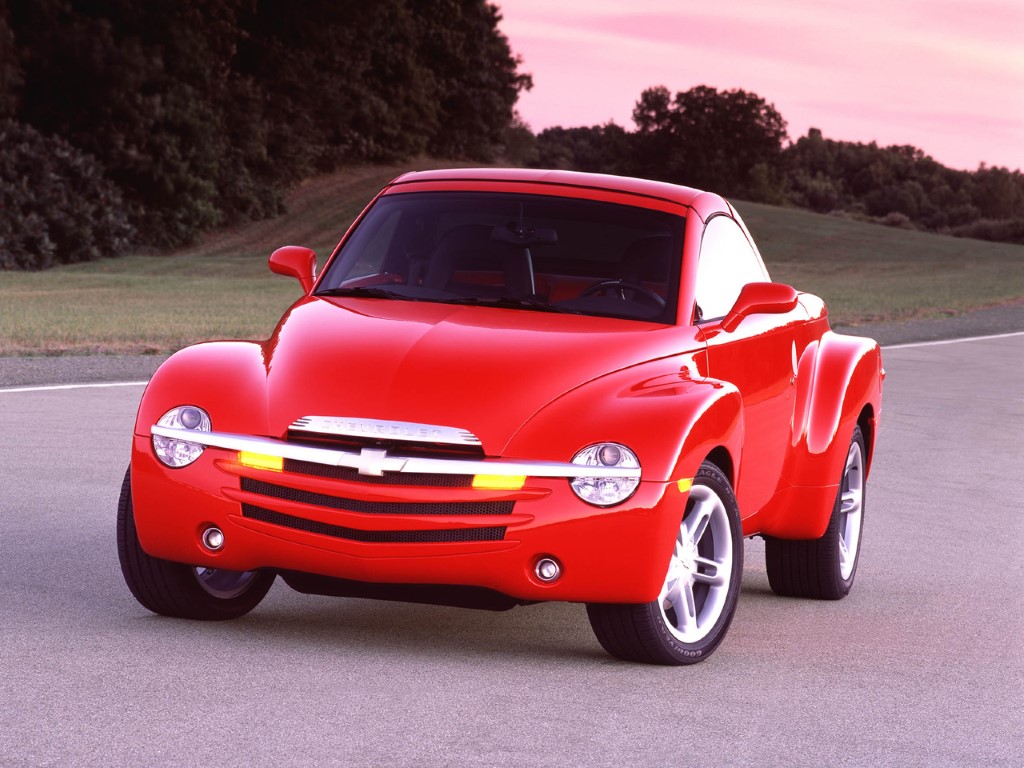
The SSR's retro look depended entirely on its massive, curved, and prominent fenders. However, translating these curves into steel sheets on a modern assembly line proved to be a logistical and technical nightmare. Over the previous decades, automotive production techniques had evolved to maximize efficiency, favoring designs with flatter surfaces, shallow curves, and sharp creases, which are easier and cheaper to stamp in hydraulic presses.
To replicate the bulbous fenders of the 1950s Advance Design trucks, GM was forced to resurrect a metal-forming technique known as deep draw stamping. This process requires the press to pull and stretch the steel sheet deeply and continuously — reaching a remarkable 18-inch "draw" on the front fenders — without the metal breaking, tearing, or creating structural wrinkles. Being a technique that had not been applied on a large scale in the automotive industry for many decades, the manufacturing engineering had to undergo an intense "relearning" process, which delayed the schedule and inflated the vehicle's development costs.
To fuse the pickup and convertible identities, GM outsourced the development of the roof. The company partnered with the American Sunroof Company (ASC), a renowned convertible engineering specialist founded by Heinz Prechter, and the German manufacturer Karmann. ASC had a proven track record of designing high-quality roofs for lower production volumes, filling a niche that the big Detroit automakers found too complex and costly to integrate into high-volume assembly lines.
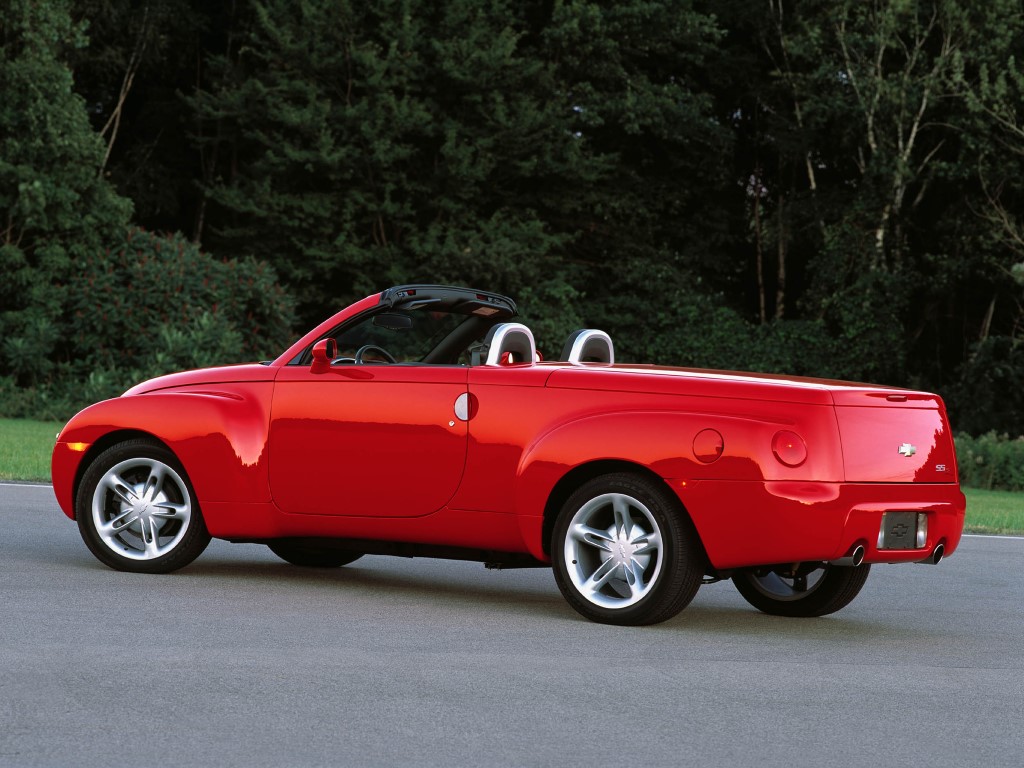
The SSR's steel retractable hardtop was a marvel of mechatronic engineering at the time. It operated through two separate mechanisms, allowing the roof panels to split and be stored vertically in a special compartment located in a narrow bulkhead between the passenger cabin and the bed. The system was operated electronically by a button on the center console and did not intrude into the bed's cargo space. When lowered, the roof was elegantly hidden by a body-color hard tonneau cover, creating a smooth, aerodynamic profile without visual interruptions.
The Chevrolet SSR demanded a level of attention to detail and assembly techniques incompatible with factories designed to produce hundreds of thousands of conventional vehicles per year. Therefore, assembly was assigned to the Lansing Craft Center (LCC), located in Lansing Township, Michigan.
The choice of the LCC was no accident; the facility had a rich history of specialized productions. Originally built in 1919 as a foundry and differential plant for Oldsmobile, the massive 91,500 square meter (985,000 square feet) building was repurposed by GM in 1984. Initially renamed the Reatta Craft Centre, the site received a new assembly, body shop, and stamping area to manufacture the exclusive Buick Reatta starting in 1988. Following the end of the Reatta, the space was consolidated as GM's center of excellence for low-volume niche vehicles, becoming the birthplace of unique models like the pioneering EV1 electric car (1997-1999), the Chevrolet Cavalier and Pontiac Sunfire convertibles, and the Cadillac Eldorado.
The official announcement that the SSR would be built at the LCC was made by Gary Cowger, GM Group Vice President of Manufacturing and Labor Relations, on January 16, 2001. The news was celebrated by manufacturing executives such as John Buttermore and Wayne McDonald, and by UAW Local 1618 union leaders Tim Driver and Butch Hauser. The plant, which employed around 400 skilled and meticulous workers, had to temporarily suspend its conventional operations to adapt its machinery to the SSR's complexities, such as the deep stamping and the integration of the ASC roof mechanism. The first marketable model was completed on July 29, 2003, marking the beginning of the vehicle's commercial life.
The life cycle of the Chevrolet SSR is neatly divided into two technological phases, defined by the engine and transmission setup. This evolution was a direct response to severe market criticism regarding the vehicle's initial performance.
In its debut in the 2003 and 2004 model years, the SSR was equipped with GM's 5.3-liter Vortec 5300 V8 engine, specifically the LM4 engine code. Belonging to the revered Generation III LS small-block engine architecture, the LM4 was an aluminum block version (for weight reduction, in contrast to the iron block versions like the LM7, very common in the full-size pickups of the era). The engine delivered 300 horsepower (224 kW; 304 PS) and 331 lb-ft of torque, mandatorily mated to a four-speed automatic transmission (the veteran 4L60-E).
Although the power seemed adequate on paper, physics proved to be unforgiving. When moving the 4,760-pound (2,159 kg) chassis, the 5.3L engine's performance proved to be discouragingly lethargic, completely undermining the promise embedded in the "Super Sport" badge. Acceleration from 0 to 60 miles per hour took 7.7 seconds, and the quarter-mile was covered in a bureaucratic 15.9 seconds at 86.4 mph (139 km/h). The specialized media and consumers quickly pointed out that the SSR exhibited the appearance of a drag strip vehicle but the agility of a heavy family SUV, frustrating the public that expected a high-performance machine.
Aware of the lukewarm reception and wavering sales, General Motors applied an aggressive course correction for the 2005 model year. The 5.3L engine was summarily retired and replaced by the monstrous 6.0-liter LS2 V8 engine (Generation IV of the LS family). This was exactly the same aluminum powerplant that equipped that year's Chevrolet Corvette and the newly launched Pontiac GTO.
The leap in performance was transcendental. Power jumped to 390 horsepower (291 kW; 395 PS) in 2005. Beyond the massive power increase, Chevrolet finally answered the prayers of purists and began offering an optional six-speed manual transmission, the robust Tremec T-56, while upgrading the automatic option to the sturdier four-speed 4L65-E.
The integration of the LS2 engine and the Tremec manual gearbox radically transformed the SSR's behavior. The 0 to 60 mph time plummeted by an impressive 2.4 seconds, recording an official factory time of 5.29 seconds. For the 2006 year, the engine received additional refinements, raising its output to an official 395 horsepower (295 kW; 400 PS).
Driving dynamics were also refined. The suspension utilized an independent setup at the front and a 5-link rear setup. To handle the 395 horsepower transferred to the rear wheels, GM installed a Zexen-Torsen limited-slip rear differential, complemented by an electronic traction control system, ensuring that the torque was applied to the pavement with minimal loss through wheel spin. This second iteration of the SSR is universally considered the definitive and mechanically resolved version of the model.
The debate between the 5.3 and 6.0 engines of the LS family is central to understanding the SSR. As noted by experts in the LS architecture, the 5.3-liter engine (like the LM7 and L33 series) has huge acceptance in the aftermarket and modification market due to its abundance, resistance to high turbo pressures in iron blocks, and low acquisition cost for budget-limited projects. However, in a scenario of a naturally aspirated engine moving an excessively heavy chassis — which was exactly the situation of the factory SSR —, the smaller displacement of the 5.3L struggled to generate sufficient immediate torque at low RPMs.
The 6.0L LS2 engine, on the other hand, with its larger bore cylinders, high-performance aluminum block, and better intake flow, offered a substantially flatter and more robust torque curve, resolving the GMT368's inherent weight deficit without the need to resort to factory forced induction.
Chevrolet positioned the SSR as a luxury and prestige vehicle, reflected not only in its base price of over $42,000 (frequently approaching $50,000 with options), but also in the extensive list of equipment offered in three main packages (PEGs): 1SA, 1SB, and 1SC.
The base equipment level provided an already refined experience. Standard items included: power windows, locks, and mirrors; remote keyless entry; bucket seats with luxurious leather trim; power-adjustable driver's seat; leather-wrapped tilt-adjustable steering wheel; cruise control; dual-zone manual air conditioning; and a driver information system.
On the audio and safety side, the 1SA featured dual front and side airbags, and an AM/FM stereo radio with a cassette player, CD player, and four speakers. The standard external appearance included cast-aluminum wheels (19 inches at the front with 255/45R19 tires, and 20 inches at the rear with 295/40ZR20 tires), the hard tonneau cover, and the power retractable roof.
The overwhelming majority of buyers opted to skip the base package and select the 1SB package, which added strong technological and comfort appeal. Analysis of 2004 production data shows that an astonishing 98.8% of assembled vehicles included the 1SB package, evidencing the target consumer's luxury profile.
The following table illustrates the penetration rate of some of the most relevant options on the production models (based on 2004 records):
| RPO Code | Option/Package Description | Installation Rate (USA/Total) | Volume |
|---|---|---|---|
| 1SA | Base Model | ~ 1.2% | 128 |
| 1SB | Luxury Package (Heating, Memory, Bose) | ~ 98.8% | 10,548 |
| BCP | Satin Chrome Engine Insert | 97.0% | 3,314 |
| UQA | Bose Premium Audio System | 97.0% | 3,314 |
| UC6 | In-Dash 6-Disc CD Changer | 97.0% | 3,314 |
| BKF | Custom Floor Mats with SSR Logo | 82.0% | 2,801 |
| ERK | Cargo Compartment Trim | 70.0% | 2,391 |
| CTD | Cargo Net Package | 60.9% | 2,080 |
| BVE | Satin Chrome Running Boards | 54.7% | 1,869 |
| VR4 | Towing Package | 51.4% | 1,756 |
| RAE | Rigid Side Storage Saddle Bags | 46.3% | 1,582 |
Source: SSR MY 2004 Production History - Option Penetrations.
The 1SB package encompassed heated seats, driver's seat memory, auto-dimming rearview mirrors, special interior lighting (Halo Lighting), the OnStar telematics system, XM satellite radio, and the omnipresent six-speaker Bose system with steering wheel controls.
Introduced later in the vehicle's life cycle, the 1SC package consolidated the 1SB and inserted details geared towards visual performance. The differentiator of this level was the Running Board Package integrated in satin chrome with a non-slip surface, and a set of auxiliary gauges located on the center console. With satin chrome bezels, these analog dials reported voltage, engine torque delivered, and outside or transmission temperature.
One of the most revered and exclusive features of the SSR was the way the bed was treated, not as a work area, but as an extension of the cabin's luxury. The compartment's lid concealed a fully carpeted interior as standard. In addition, Chevrolet offered extremely expensive and aesthetically exquisite options, such as a bed floor made of authentic Teak wood slats, separated by polished metal strips — a direct reminiscence of classic wooden boats or the bed floors of the Advance Design pickups. Molded storage bags (saddle bags) that attached to the rigid sides of the bed allowed for the secure stowage of small items, as the absence of a conventional trunk demanded.
The commercial history of the SSR is documented by exact production numbers that reflect its adoption curve and eventual decline. Although general analytical estimates cite 24,150 or 24,112 units sold, the rigorous compilation of General Motors' spreadsheets attests to the total manufacturing of 24,180 units during the four assembly model years.
The year-by-year distribution demonstrates strong optimism in the main production year (2004), followed by a sharp decline as market fatigue set in:
| Production Year | USA Manufacturing | Canada Export | Total Global Production |
|---|---|---|---|
| 2003 | 3,255 | 161 | 3,416 |
| 2004 | 10,315 | 361 | 10,676 |
| 2005 | 7,196 | 83 | 7,279 |
| 2006 | 2,718 | 91 | 2,809 |
| Cumulative Total | 23,484 | 696 | 24,180 |
Data source: General Motors Production Statistics.
The design's vibrant personality was reflected in a range of highly saturated chromatic paint options and evocative color names. Historical data reveals consumer preference for solid, traditional colors over the two-tone paint schemes (code ZY7) available in later years. The standard interior trim for almost all models was Ebony leather (code 192), contrasting with Sterling Silver finished wheels (code 73P).
The exterior color options available during the vehicle's lifespan included:
General Motors' strategy to keep the SSR relevant involved the launch of limited batches, commemorative editions, and the vehicle's integration onto the most sacred motorsport tracks in the United States, taking advantage of its robust appearance for Pace Car duties.
When production was initiated, GM decided to create an instant collector's artifact. The first 25 marketable vehicles — bearing Vehicle Identification Numbers (VINs) from #0001 to #0025 — were designated as the "Signature Series." These examples were mandatorily finished in the Ultra Violet color and contained the premium wood-slat bed trim, exclusive interior lights, and folding storage.
The major differentiator was an identification plaque affixed to the "waterfall" panel divider (waterfall badge). Each of the 25 vehicles carried a different plaque, containing authentic engraved autographs from crucial corporate personalities in the SSR's development, celebrities associated with the model, or top executives of the brand. The Signature Series units were actively used in promotional campaigns across the country before being auctioned off at prestigious events sponsored by GM and the Kruse International auction house.
The aggressive and unique appearance made the SSR an obvious choice for parade and pace vehicle duties.
On November 21, 2005, GM sent shockwaves to fans of the model by announcing that the doors of the Lansing Craft Center would close forever in mid-2006, which meant the premature death of the SSR. Originally, the marketing planning aimed for the launch of a colorful "Spring Edition" for the early months of 2006. However, the stagnant sales volume and the severe financial problems that General Motors faced in the global macroeconomic scenario forced the company to abruptly cancel the special project.
As a final tribute to the creative effort that produced the truck, GM designated the vehicles assembled in the final two months (February and March 2006) as members of a special batch dubbed the Final Production Run 2006. Fewer than 1,000 units share this designation. To identify a true "Final Edition," the factory installed a specific commemorative plaque on the "waterfall" between the seats, ensuring its historical status for future collectors.
The ultimate unit built in history — bearing the highest VIN number of the series (1GCES14H06B126138) — was finished on Friday, March 17, 2006. The historic model carried an elegant two-tone paint job, crossing Black-on-Silver colors. With the completion of this vehicle in front of a crowd of nostalgic spectators and workers, the presses and assembly lines of the Lansing Craft Center went silent. Operations were shut down and the 400 skilled employees were relocated to larger facilities, such as the Lansing Grand River Assembly and the Lansing Delta Township Assembly. The historic industrial complex, which dated back to 1919, met its physical end shortly after, being demolished throughout 2008 and 2009, leaving an empty lot where the SSR was conceived.
The dissection of the Chevrolet SSR's commercial failure reveals a collision of technical factors, frustrated consumer expectations, positioning error, and pure free market dynamics. As innovative and aesthetically breathtaking as the conceptual model was, the practical aspects of owning the SSR severely hindered its purchase justification.
The SSR's immediate Achilles heel was price shock. As discussed by analysts and the specialized press of the time, the entry price was pegged in the mid-$40,000 range ($42,620 documented for base mid-production), but quickly surpassed the $50,000 psychological mark with the mandatory addition of the luxury and towing equipment packages. In the early days of marketing, aggressive dealership tactics further complicated acceptance; speculators and the voracity of early adopters led dealers to apply massive price gouging, alienating potential buyers with unrealistic prices that pushed them toward German luxury SUVs or the venerable Corvette sports car from in-house.
The second pillar of the adoption failure resided in the vacuum of functional utility and the chronic identity problem. While investing tens of millions of dollars in engineering, General Motors failed to deliver on the two essential aspects of the identities the vehicle claimed to possess. On the one hand, its form emulated a cargo truck. However, the severe physical limitations of the convertible platform, combined with a narrow rear bed meticulously adorned with exotic wood slats that no owner would dare scratch by transporting concrete blocks, nullified the utility capacity inherent to a pickup. On the other hand, its sporty claim ("Super Sport") was overshadowed in corners and bumps by the cowl shake characteristic of the bodywork devoid of a structural upper roof, undermining the immersive experience expected of a genuine, lightweight roadster. It was, fundamentally, a glorified rolling sculpture, too heavy (4,760 lbs) to compete with purist sports cars, but inadequate to carry or tow utility fleets.
Furthermore, the introduction with the 5.3L LM4 V8 engine took a deep toll on its long-term reputation. The enthusiast public has a long market memory. The assessment that an incredibly heavy vehicle offered monotonous and disappointing performance in the crucial launch years of 2003 and 2004 sealed the judgment of many potential interested parties. When GM surgically intervened by infusing the monstrous vitality of the 6.0L Corvette LS2 engine in 2005 and offering enthusiast engagement through the Tremec manual gearbox, the media momentum was lost. The improved reviews failed to reverse the stagnation in the face of the perception of unrealistic cost and impracticality.
The evidence of market lethargy was painfully tangible. At the end of the first year, which started in a troubled manner, sales overwhelmingly failed to cross the 9,000 unit threshold. The situation on the lots became frightening in the fall and winter of 2003, when GM's operational records indicated that the supply chain had stalled. It had accumulated a staggering 301 days' supply of sitting SSR inventory (healthy industry volume usually fluctuates in the 60-day range). In an immediate response to the financial hemorrhaging and unliquidated stock, executive directors ordered a mandatory shutdown and temporary layoffs of workers for five long weeks at the LCC, aiming to cool overproduction. Eventually, with sluggish sales persisting in the face of the severe shocks that US automakers suffered heading into the 2008 crisis, the project lost steam and was sentenced to commercial execution.
Analyzing through the harsh lens of corporate accountant spreadsheets, the Chevrolet SSR failed in its capitalization metric. The costly development, forced through bespoke engineering innovations like the reestablished deep draw stamping process, the difficult adaptations on the TrailBlazer architecture, and the outsourced design of the ingenious dual top operated by ASC, produced a highly customized marvel, economically unviable at the modest final quantity of 24,180 global units.
Nevertheless, it is precisely this technical excess that assures its current value in the pantheon of American neoclassics. In retrospect, automotive historians and enthusiasts appreciate the SSR as a rare captured fragment from the era of "desire and power" of General Motors under Rick Wagoner and Wayne Cherry — a time capsule before the credit collapse and the industry's irrevocable transition to tiny engines with extreme focus on efficiency erased this kind of styling risk from the engineering calendar.
The model's abrupt depreciation curve allowed a new enthusiastic base (commonly grouped in networks like the SSR Fanatic) to acquire these utility vehicles over the last decade for fractional values of those demanded in 2005, without incurring a new "depreciation dive". The vehicle is increasingly seen as a protected investment, with a stabilization in the recent classic market values and online auctions registering considerable margins for low-mileage configurations, specifically the final editions with the coveted six-speed manual package associated with the robust and reliable architecture of the high-performance LS2 V8. The dichotomy remains clear: if the Chevrolet SSR failed to convince the masses during its troubled life cycle due to its high price and polarizing utility, it has its legacy undeniably preserved today, perpetuating the noisy charisma and the customization bravado that originated its sketch at the dawn of the new millennium.
Images of the Chevrolet SSR 5.3 V8