
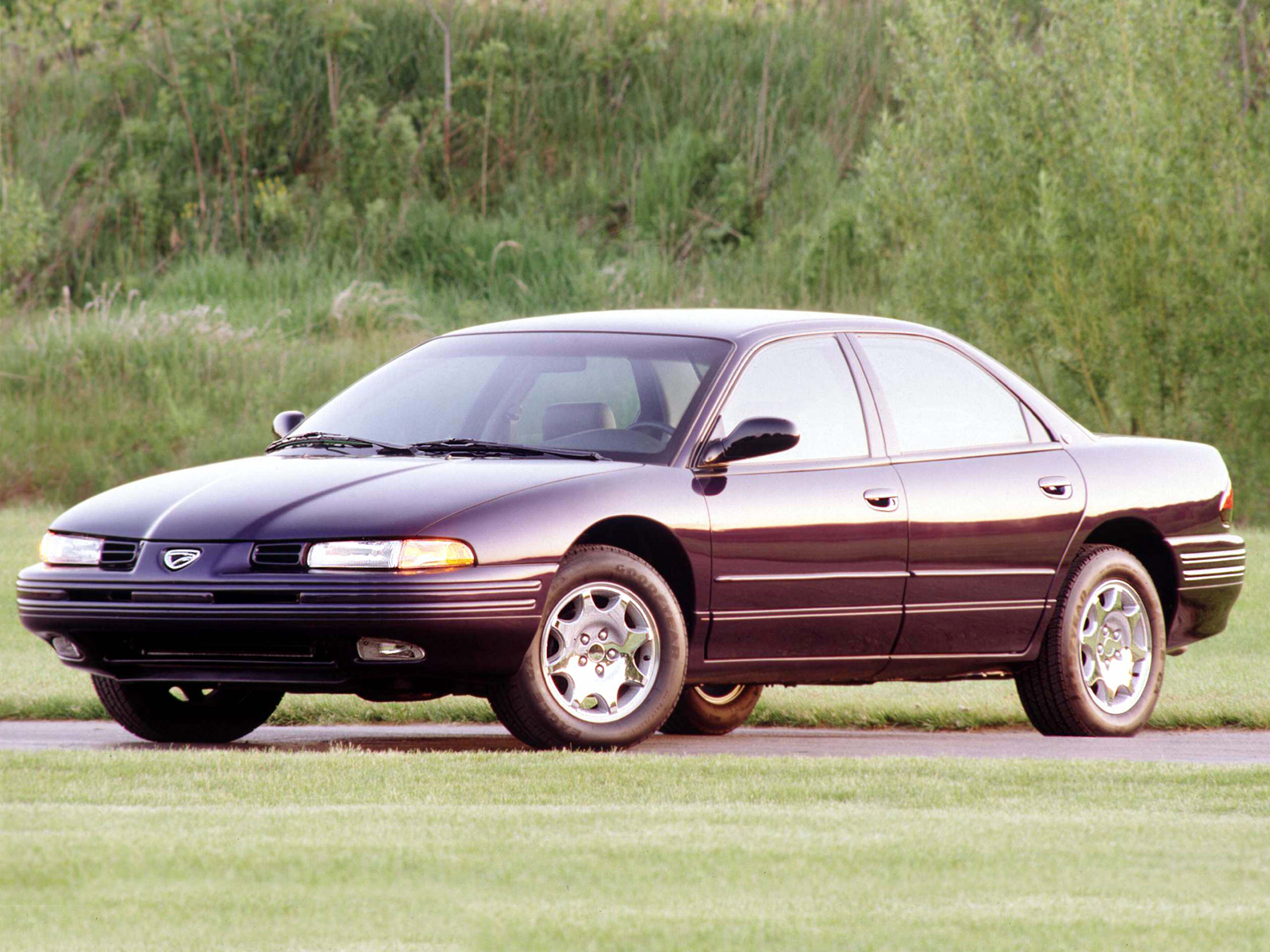
1st Generation
(1993 - 1998)
3.5 V6 24V
214 cv
Technical specifications, versions, and history for the Chrysler Vision.
Select a generation to see available versions
(1993 - 1998)
Select a powertrain to view full technical specifications
The transition from the 1980s to the 1990s represented a period of profound restructuring for the North American automotive industry, and in particular for the Chrysler Corporation. After avoiding bankruptcy in the early eighties thanks to the commercial success of the K platform (an architecture focused on compact, economical, and front-wheel drive vehicles), the company found itself, at the end of the decade, dependent on aging technologies and rectilinear designs that were rapidly losing their appeal. The global market for luxury and full-size sedans was being aggressively redefined by European and Japanese manufacturers, who were introducing vehicles with advanced aerodynamics, ample interior space, and superior driving dynamics.
It was faced with this urgent need for a generational leap that Chrysler began the development of the LH platform, an architecture that would change the company's course. The model conceived to be the technological and aesthetic showcase of this new platform was a large sports sedan that took on two strategic identities. In the North American market, it was named the Eagle Vision, integrating a newly created brand to attract younger consumers and enthusiasts of European dynamics. In the international market, which included Europe and Brazil, the vehicle was marketed under the corporation's primary emblem, adopting the name Chrysler Vision.
This technical report offers an exhaustive analysis of the history, the development process, the mechanical engineering, the technical specifications, the trim levels, and the production numbers of the Chrysler Vision. It is important to emphasize, to clarify the model's generations, that the Vision was produced in only a single generation, encompassing the 1993 to 1997 model years. All evolutions and versions detailed in this document refer to the annual updates applied to this single and revolutionary generation.
The conception of the Chrysler Vision did not occur in an isolated engineering vacuum; it was the direct result of a series of strategic corporate acquisitions and a radical change in the company's design philosophy during Lee Iacocca's management. The vehicle's development united three fundamental pillars: Chrysler's advanced aesthetic vision, Lamborghini's exotic influence, and the pragmatic chassis engineering inherited from the American Motors Corporation (AMC) and Renault.
The seeds of the Vision's design were planted in 1985, within the facilities of Chrysler's Advanced Concepts Studio. Chief designer Kevin Verduyn received the directive to conceptualize an "exotic four-passenger grand touring" concept. Breaking with traditional design methodologies of the time, which focused primarily on the exterior proportions of the engine and trunk, Verduyn's team adopted an inside-out design approach. The main objective was to maximize the cabin volume and passenger comfort.
This method of prioritizing human space resulted in the development of the "cab-forward" concept, a visual architecture characterized by a long, steeply raked windshield, and extremely short front and rear overhangs (the distance between the center of the wheel and the end of the bumper). The wheels were pushed to the extreme edges of the chassis. The first life-size physical model utilizing this language, sculpted in fiberglass in 1986, received the development codename "Navajo".
In 1987, the Chrysler Corporation made a bold move by acquiring the Italian supercar manufacturer Lamborghini. Chrysler's board of directors, seeking to capitalize on the prestige of the newly acquired brand and demonstrate to the world the synergy between American design and European engineering, instructed Kevin Verduyn to rework the lines of the Navajo concept. The goal was to transform it into a concept car bearing the golden bull emblem.
Using various mechanical and chassis components from the Lamborghini Jalpa, the concept was dramatically modified and renamed the Lamborghini Portofino. The vehicle was revealed to the public and the specialized press at the 1987 Frankfurt Motor Show. Featuring antagonistic opening doors (suicide doors) and a fluid evolution of the cab-forward language, the Portofino was received with almost universal critical acclaim. The resounding success of this display concept definitively convinced Chrysler's top-level executives that the revolutionary "cab-forward" aesthetic must be the non-negotiable foundation for the company's next generation of mass-production sedans, paving the aesthetic way for the Chrysler Vision.
While the aesthetic direction was defined by the success of the Portofino, Chrysler faced the complex challenge of developing a mechanical architecture and a chassis capable of supporting this new design. The solution emerged through another monumental corporate move: the purchase of the American Motors Corporation (AMC) in 1987. Chrysler's primary interest in this acquisition was the lucrative Jeep brand and its coveted assembly facilities. However, the incorporation of AMC brought invaluable collateral benefits to Chrysler's passenger car engineering.
Along with AMC, Chrysler absorbed a highly skilled and innovative cadre of engineers, led by François Castaing. Castaing, a former engineer at Renault and AMC itself, was quickly promoted to the position of Vice President of Vehicle Engineering at Chrysler. He implemented a revolutionary system of cross-functional platform teams, breaking down traditional development silos.
To design the new LH platform sedans, Castaing and his team did not start from scratch. They used the Eagle Premier as a fundamental starting point. The Premier was a large sedan that had been developed by AMC in close cooperation with Renault (being largely based on the French Renault 25). The Premier possessed an unusual and highly beneficial mechanical layout: a longitudinally mounted engine, but driving the front wheels.
Chrysler's team inherited this longitudinal configuration, as well as the advanced geometry of the Premier's front suspension and brake system layout. This brilliant fusion—the stunning "cab-forward" design inspired by the Lamborghini Portofino resting on the pragmatic, European-inspired engineering base of the AMC/Renault axis—gave rise to the LH platform. The Vision, being the most direct descendant of the Premier, became the only model of the Eagle brand to be entirely designed and built internally by Chrysler, serving as the purest representation of this technological synthesis.
To understand why the vehicle was called the Eagle Vision in North America and the Chrysler Vision in the rest of the world, it is necessary to analyze the contractual and dealership network complexities of the time.
When Chrysler acquired AMC, the contract with Renault (AMC's former French partner) stipulated that Chrysler must continue to produce and market jointly developed passenger car models, in addition to absorbing AMC's dealer network. Furthermore, state franchise laws in the United States prohibited Chrysler from simply transferring Jeep's coveted SUV line to its existing Chrysler-Plymouth or Dodge dealerships. Similarly, former AMC dealers could not sell traditional Chrysler products.
The corporate solution was the creation of the Jeep-Eagle division. The Eagle brand was established in 1988 to house passenger vehicles derived from AMC/Renault and, later, captive import vehicles from Mitsubishi, creating a portfolio aimed at combating General Motors' newly created Saturn brand and attracting import car buyers. The brand's emblem was a stylized eagle's head. The Eagle Vision was positioned as the pinnacle of this brand, a genuine attempt to build a European-style sports sedan on American soil.
However, the Eagle brand possessed no recognition, heritage, or sales infrastructure outside North America. For export markets, the introduction of an unknown brand would be a gross strategic error. Consequently, the corporation opted to market the sedan using the strength of its primary global brand. In Europe, the Middle East, Asia, and South America, the car was rebadged and sold as the Chrysler Vision. All eagle head emblems were removed, replaced by Chrysler's traditional five-pointed star (the Pentastar) or the Chrysler wings logo, applied to the front grille, trunk lid, steering wheel, and wheel centers.
The implementation of the "cab-forward" architecture in the Chrysler Vision was not a mere styling exercise, but a complete overhaul of the automobile's spatial dynamics.
The advanced cabin allowed engineers to expand the usable space of the passenger compartment, shifting the engine bay forward and reducing dead spaces at the extremities of the vehicle. The most notable consequence of this decision was the provision of legroom for occupants that rivaled conventional limousines, without the need to excessively stretch the car's wheelbase.
Aesthetically, the Chrysler Vision featured the sportiest and most aggressive profile among all sedans on the LH platform (a family that included the Chrysler Concorde, Dodge Intrepid, Chrysler LHS, and Chrysler New Yorker). The Vision's front end was characterized by slim headlights and a slender divided front grille, which many automotive journalists compared to "nostrils," giving the vehicle a predatory visual stance. This wedge-shaped silhouette, combined with a gently curving roof and flush-mounted glass, resulted in an exceptionally low aerodynamic drag coefficient (Cd) of 0.31. For engineering comparison purposes, this coefficient was identical to many high-performance sports cars of the era, such as contemporary generations of the Porsche 911, which guaranteed the Vision minimal wind noise in the cabin and excellent fuel efficiency at cruising speeds.
From a mechanical standpoint, the Eagle Premier heritage proved to be the greatest technical advantage of the LH platform. Most high-volume front-wheel drive vehicles utilized (and still utilize) transversely mounted engines. This transverse configuration often mandates the use of unequal-length driveshafts (half-shafts) to connect the differential to the front wheels. Under hard acceleration, this asymmetry causes the phenomenon known as torque steer, where mechanical force causes the steering wheel to pull violently to one side, impairing the driver's directional control.
The Chrysler Vision, by adopting the longitudinal engine mounting (positioned front-to-back in the engine bay) in conjunction with front-wheel drive, allowed the use of half-shafts of exactly equal length. This engineering nullified torque steer, providing the Vision with linear acceleration, electrically stable steering, and neutral, predictable driving dynamics—fundamental characteristics for a car that set out to compete with refined European sedans. Additionally, this longitudinal layout was designed with an eye on the future; the architecture greatly facilitated a possible conversion to rear-wheel drive, a potential that Chrysler engineers explored extensively and which would serve as the structural foundation for the later LX platform in the 2000s.
The physical dimensions of the Chrysler Vision attested to its classification in the full-size luxury car category. The vehicle possessed a generous wheelbase ranging between 2,870 mm and 2,873 mm (113.0 inches), which ensured imperturbable directional stability on highways.
| Dimensional Specification | Measurement |
|---|---|
| Overall Length | 5,121 mm (201.6 inches) |
| Overall Width | 1,890 mm (74.4 inches) |
| Height (1993-1994 Models) | 1,417 mm (55.8 inches) |
| Height (1995-1997 Models) | 1,430 mm to 1,434 mm (56.3 inches) |
| Front and Rear Track | 1,574 mm |
| Curb Weight | 1,529 kg to 1,680 kg (depending on package and market) |
| Trunk Capacity | Approximately 473 to 509 liters |
| Fuel Tank Capacity | 68 liters |
Sources consolidated from technical data and catalogs.
The relatively contained weight (between 1,529 kg and 1,680 kg, depending on engine and equipment) evidenced advanced structural optimization work.
The vehicle's connection to the ground was managed by a fully independent suspension system on all four wheels, using overlapping arms and coil springs. Emphasizing its nature oriented towards the enthusiast driver, the Vision was the only sedan in the LH platform family to leave the factory with the suspension calibrated to the "Touring" standard as standard equipment in all its basic configurations. For buyers who demanded an even sharper dynamic behavior and less body roll in sharp curves, Chrysler made an even stiffer sports suspension available, called "Performance," offered as an option or as part of dynamic packages on higher trims.
The braking system relied on disc brakes, with the front and rear ones being ventilated on the most complete versions, supported by an anti-lock braking system (ABS) as standard equipment. A traction control system was available on the optional equipment list to mitigate drive wheel spin on low-friction surfaces.
The heart of the Chrysler Vision rested in its offering of V6 engines, which were designed to cover a spectrum ranging from the consumer seeking innovative aesthetics to the driver focused purely on high performance.
The Vision's entry-level mechanical configuration was equipped with the 3.3-liter (3,301 cc) V6 engine belonging to Chrysler's EGA family. This powerplant utilized a more traditional mechanical architecture, characterized by a cast iron block with an in-block camshaft (OHV, or pushrod architecture) and operation via two valves per cylinder.
Despite its conservative design, it was a highly reliable engine. In its debut year (1993 model), this V6 delivered an output of 153 horsepower (bhp) (114 kW) and a torque of 177 lb-ft (240 N⋅m). Thanks to continuous engineering refinement, the models produced in 1994 and 1995 received intake flow adjustments that raised output to 162 bhp (121 kW) and torque to 194 lb-ft (263 N⋅m). For the years 1996 and 1997, in response to the requirements for compliance with the new OBD-II emissions diagnostic standard, the engine underwent a subtle remapping. Maximum power suffered a very slight drop to 158 bhp (118 kW), but engineers prioritized the delivery of power at low RPMs, increasing peak torque to a robust 203 lb-ft (275 N⋅m).
The standout powertrain, which equipped the top-of-the-line version in North America and practically all units destined for international export (including Brazil), was the advanced 3.5-liter (3,518 cc) V6 engine from the EGE family.
This powerplant represented the state-of-the-art of Chrysler engineering at the time. It maintained the base of a cast iron block to ensure durability and noise control but employed high-flow cylinder heads made of aluminum alloy. The great respiratory revolution of this engine lay in its valvetrain system: it featured a single overhead camshaft (SOHC) managing four valves per cylinder, totaling 24 valves.
The injection system was multi-point and sequential. The combined operation of a specially tuned intake manifold allowed this engine to breathe freely at high RPMs, while simultaneously delivering abundant power from idle. Power reached a notable 214 horsepower (bhp) (160 kW) at 5,800 rpm — a value also measured as 211 hp to 215 ps depending on the regional homologation standard. The peak torque of 221 lb-ft (300 N⋅m, or 30.8 kgfm) was reached linearly, available predominantly in the 2,800 to 3,350 rpm range.
The resulting power-to-weight ratio of about 10.41 kg/kW transformed the Vision into a vehicle with vigorous re-acceleration. The sedan was capable of going from a standstill to the 100 km/h (62 mph) mark in approximately 9.5 seconds, reaching a top speed of over 210 km/h (about 133 mph).
Regardless of the chosen powerplant, the responsibility of transferring mechanical force to the front wheels was entrusted to the four-speed automatic transaxle transmission, coded as 42LE. This gearbox was designed using the fundamental architecture of Chrysler's own A604 "Ultradrive" electronic transmission but was extensively modified, reinforced, and resized to operate in the longitudinal layout of the LH platform, also drawing inspiration from the reliability parameters of the automatic transmissions supplied by ZF and Audi for the older Eagle Premier.
The absolute technological milestone related to the Vision's transmission occurred in the 1996 model year. Chrysler engineering introduced a revolutionary gear control system dubbed AutoStick. The system was conceptualized and invented by engineer Peter Gruich, functioning as a direct American response to the Tiptronic transmission recently introduced by the German Porsche.
AutoStick merged the convenience of a fully automatic transmission with the capability for manual intervention and gear holding typical of a conventional manual transmission. The selector lever, mounted on the lower center console, displayed the standard gear progression: P (Park), R (Reverse), N (Neutral), and D (Drive). The genius of the mechanism lay at the base of the selection track. By positioning the lever at the end of its travel and pushing it sideways, the driver entered the manual-sequential mode. From this point, a slight directional tap on the lever instructed the electronic module to upshift or downshift to the immediately lower gear, with almost instantaneous shifts. The 1996 Vision TSi was historically the first automobile aimed at the mass consumer market to offer a transmission with sequential manual/automatic control as factory equipment, paving the way for what would become a standard in the global industry in the following decades.
In the North American market, the vehicle was subdivided into two trim nomenclatures that determined its technological and mechanical package: ESi and TSi. It is crucial to note that the Vision was strictly positioned as a sports-handling sedan. As evidence of this directive, unlike its platform sibling, the Chrysler Concorde, the Vision was never offered with the option of a front bench seat with a column-mounted gear shifter; all units produced were equipped with anatomical bucket seats divided by a center console integrating the floor shifter. Furthermore, fake wood interior trim appliqués, popular in conservative luxury vehicles of the era, were strictly vetoed in the Vision to preserve its aura of a driver-focused, dynamic machine.
The ESi trim level served as the entry rung for the Vision lineup, having been priced at approximately $19,545 in 1996. This version was invariably powered by the 3.3-liter EGA V6 engine. Far from being a basic model, the ESi offered a level of comfort that included high-capacity air conditioning, power windows and door locks, power steering, an anti-lock braking system (ABS), and independent suspension with "Touring" calibration as standard, a package that prioritized an exceptionally smooth highway ride.
The TSi trim represented the state-of-the-art of the model, requiring an initial investment of about $23,835 in 1996. The primary distinction of the TSi was the exclusive adoption of the powerful 3.5-liter, 24-valve V6 engine. This version transformed the sedan into a highway devourer, equipped with a catalog of equipment geared towards ostentation and sophistication:
The corporate decision to suppress the Eagle brand in markets outside North America dictated that export-bound units receive Chrysler emblems. However, renaming the vehicle required more than just swapping stickers and logos. Exportation to Europe required strict adherence to vehicle safety and visual signaling regulations inherent to that continent.
The most obvious alteration was implemented in the optical groups. United States legislation historically allows rear turn signal lamps to flash red, frequently using the same illuminated area as the brake light. In contrast, stringent European regulations mandate the mandatory use of amber (yellow-orange) turn signal lights, ensuring immediate visual contrast against the red brake and position lights. The Chrysler Vision received redesigned taillight assemblies that housed exclusive amber center sections for the turn signals.
Beyond the rear, side turn signal repeaters (small amber lenses) were drilled and added to the front fenders to alert drivers in the blind spot during lane changes. The internal design of the headlights was altered in its light deflector and the type of bulb used, so as to emit an asymmetrical light beam suited to European highway standards, avoiding blinding oncoming drivers. Additionally, the fixed side marker lights (retro-reflective side markers) present on the bumpers of American models were removed on export units to clean up the bodywork's aesthetics.
Regarding the powertrain, international markets were privileged. Almost all vehicles sent for export under the Chrysler Vision name left the factory equipped with the most powerful mechanical combination available: the 3.5-liter 24-valve EGE V6 engine and the trims corresponding to the American TSi line.
The history of the Chrysler Vision intersects with one of the most remarkable moments in the Brazilian automotive economy: the period of reopening the national market to imported vehicles in the early 1990s, instituted during the administration of President Fernando Collor. The opening of borders ended years of protectionism that isolated Brazilian streets from global technological evolution. It was under this wave of customs liberalization that the Chrysler Corporation resumed its official import operations in Brazil, landing a fleet that represented the American technological pinnacle of the time, with the Chrysler Vision as one of its flagships.
In Brazil, the Chrysler Vision was not treated as a simple transport car, but immediately positioned in the upper echelon of the "Large Sedan" category. Far from being a vehicle for the masses, it was sold at a premium price, serving as a manifesto of social status, sophistication, and appreciation for high-capacity mechanics. The model competed directly against the conservatism of traditional European luxury sedans (from brands like Mercedes-Benz and BMW) and with other imposing North American models, such as the Ford Taurus. The stylistic contrast of the Vision's aerodynamic "cab-forward" profile shocked and enchanted the Brazilian consumer, who until recently had been limited to outdated domestically produced designs, such as the Chevrolet Opala or the Volkswagen Santana.
Official imports of the model by Chrysler do Brasil occurred most strongly between the 1994 and 1995 model years, although it is possible to find units manufactured in 1993, 1996, or 1997 on national soil brought through independent import methods (where private buyers brought the vehicles through unofficial channels using brokers).
All official import documentation confirms that Chrysler exclusively selected the superior powertrain for Brazil. The units available in the domestic market are powered by the 3.5-liter naturally aspirated transverse V6 engine, aluminum cylinder head with 24 valves, and multi-point electronic fuel injection system.
According to the metric measurement in Brazilian technical data sheets, the powerplant generates about 211 hp (horsepower) at 5,850 rpm and produces a solid torque curve that reaches its peak of 30.8 kgfm at 3,350 revolutions per minute. Pulling the total weight of 1,680 kg through the 4-speed automatic gearbox, the performance was formidable for Brazilian roads. The vehicle broke the 100 km/h barrier in 9.5 seconds and reached cruising speeds with extreme smoothness, possessing a declared top speed of 210 km/h.
Considering it is a 90s V6 engine moving a heavy car, fuel consumption reflected the technological standard of the period. The Vision registered an average of 5.5 km per liter in the heavy Brazilian urban cycle. However, in its natural habitat — the highway cycle —, the aerodynamic design helped the engine achieve a respectable 8.5 km per liter. Combined with the vast fuel tank with a capacity of 68 liters, the sedan possessed a formidable highway range of about 578 kilometers, allowing for long interstate trips with minimal interruptions for refueling. The generous luggage compartment, holding 509 liters of volume, reinforced its vocation for luxury family touring.
As the decades passed, the Chrysler Vision transitioned from the status of a daily-use luxury vehicle to the pantheon of the so-called "neo-collectibles" or "youngtimers" in Brazil. Units that survived time, when well preserved, are coveted by enthusiasts of American engineering and those passionate about the history of the opening of imports.
Financially, the valuation of the vehicles reflects the brutal depreciation curve typical of luxury imports of that era; models from the year 1995 appear in historical valuation tables with an approximate base price of R$ 11,220. This pricing, however, is merely a guide, since examples maintained in collection condition command much higher values in the niche market. The economic appeal to own this classic nowadays is strengthened by Brazilian tax legislation; because they have been manufactured for more than 20 years, Chrysler Visions enjoy full exemption from the annual IPVA charge in states like São Paulo and in most of the national territory, considerably lowering the bureaucratic cost of maintenance.
The great challenge of owning the model today in Brazil lies in the scarcity of certain interior and exterior trim pieces and specific electronic components. Even so, for owners who keep these sedans running, the unparalleled comfort provided by the long 2,870 mm wheelbase, the smoothness and unwavering power of the 3.5-liter V6, and the auditory experience of the exhaust systems ensure that maintaining the Vision is worth every effort put into preserving this fragment of global automotive history.
As noted earlier, the Vision consisted of a single generation cycle. However, engineering carried out extensive iterative updates and refinements in each production model year.
The quantitative analysis of the Eagle and Chrysler Vision production reveals a product that obtained solid acceptance at launch but fell victim to an accelerated erosion of demand in the second half of the decade.
Factory record tables from the Brampton assembly plant and historical corporate data conservatively total the construction of 94,550 units between 1993 and 1997, distributed according to the volumes broken down in the annual evolution segment.
| Model Year | Units Produced |
|---|---|
| 1993 | 28,678 |
| 1994 | 22,064 |
| 1995 | 25,128 |
| 1996 | 12,806 |
| 1997 | 5,874 |
| Total Recorded Production | 94,550 units |
Statistical recording technical note: Although the strict count, based on the closing of factory model years, tallies 94,550 cars, aggregate documentation frequently published by the corporation reports that the Vision model "sold respectable numbers, with 115,699 built." This numerical variance of just over 21,000 units may be due to the parallel accounting of variants exported under the Chrysler brand, fleets built for Canada, or inventories held over in transition from the Chrysler Corporation's fiscal year in contrast to the official chassis model year.
The discontinuation of the Vision in September 1997 did not stem from a mechanical failure or design flaws of the product, which remained highly rated by the specialized media until the end of its days. The vehicle was strangled by a generalized crisis of the brand itself that housed it in the United States.
The Eagle brand, artificially created from the spoils of AMC, never managed to root a solid identity in the imagination of the North American consumer. The biggest bottleneck was found on the showroom floor and inside the dealerships. Dealerships franchised by the Jeep-Eagle network concentrated the overwhelming majority of their sales efforts, incentives, and showroom space on the lucrative and popular SUVs of the Jeep line. Selling an import-fighting luxury sedan to a customer who visited the store attracted by the rugged image of the Jeep Grand Cherokee proved to be a futile effort.
Furthermore, the Eagle Vision suffered from what experts call "internal cannibalization." Due to the overlaps of the Chrysler-Plymouth dealer network, the Vision vied for space in the same commercial parking lot and competed for the same market share as its LH platform siblings: the Dodge Intrepid and the Chrysler Concorde. The latter were backed by century-old brands, millionaire advertising budgets, and a legion of loyal consumers. Without a clear allocation of identity or advertising that explained to the public what Eagle represented compared to its sister brands, the Vision was overshadowed.
Faced with a continuous hemorrhaging of resources and almost a decade of dismal sales and confusing strategies, Chrysler executives made the inevitable decision to definitively shut down the Eagle brand. After the Vision's retirement in 1997, Eagle survived for only one more year, selling off final stocks of the Talon compact sports car in 1998, culminating in the official extinction of the division and the automobile brand on July 4, 1999.
The intellectual and engineering heritage invested in the LH platform and the Vision project, however, did not disappear with the end of the Eagle brand. Ironically, the model's discontinuation ended up precipitating the birth of one of Chrysler's most successful cars at the turn of the millennium.
During the years 1996 and 1997, Chrysler's development teams were already working at a fast pace on the second generation of the LH architecture, with substantial budgets invested in what would be the redesigned "1998 Eagle Vision." When Chrysler's upper management pulled the plug on the Eagle brand, the development department acted quickly to salvage the billions of dollars spent on the platform. The bodywork that was finalized in wind tunnels, tested, and ready to bear the eagle logo, received urgent alterations to its front grille, chrome details, and was entirely rebadged.
To keep Chrysler in the lucrative segment of large sports sedans focused on competing with European brands, the corporation launched this "renegade Vision" on the market in the 1999 model year, naming it the Chrysler 300M. The 300M was deliberately designed with extremely shortened front and rear overhangs, ensuring that the length of the car remained strictly under the 5 meters (197 inches) length stipulated by the rigorous regulatory taxation standards of the European export market, perfectly assuming the global mission that its ancestor Chrysler Vision had started years earlier.
In the medium term, the audacity of the Vision's engineering and the LH platform transcended the 20th century itself. The irrefutable proof that the AMC-inherited longitudinal engine layout, coupled to the front axle, was the most balanced architecture on the market, provided Chrysler with the exact structural foundation its engineers needed to effect the corporation's definitive transition to rear-wheel drive cars in the early 2000s. The chassis rails and geometries refined throughout the existence of the Vision and the LH evolved linearly into the acclaimed and monumental rear-wheel drive LX platform. Thus, massive horsepower sedans revered in the modern era, such as the Chrysler 300C, the Dodge Charger, and the legendary sporty reincarnation of the Dodge Challenger, intrinsically carry the Vision's pioneering technological DNA in their structural side members. Without the empirical validations provided by this "cab-forward" machine in the 90s, the triumphant return of Chrysler's American muscle cars would have required vastly superior development cost and time.
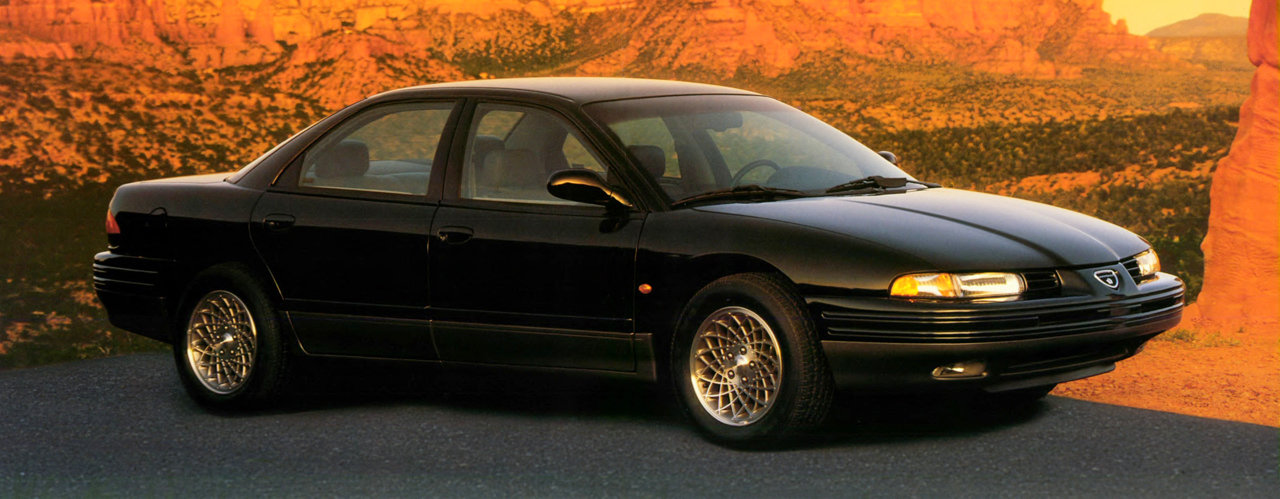
Images of the Chrysler Vision