

FC/FN
(2003 - 2008)
1.6 L4 16V
110 cv
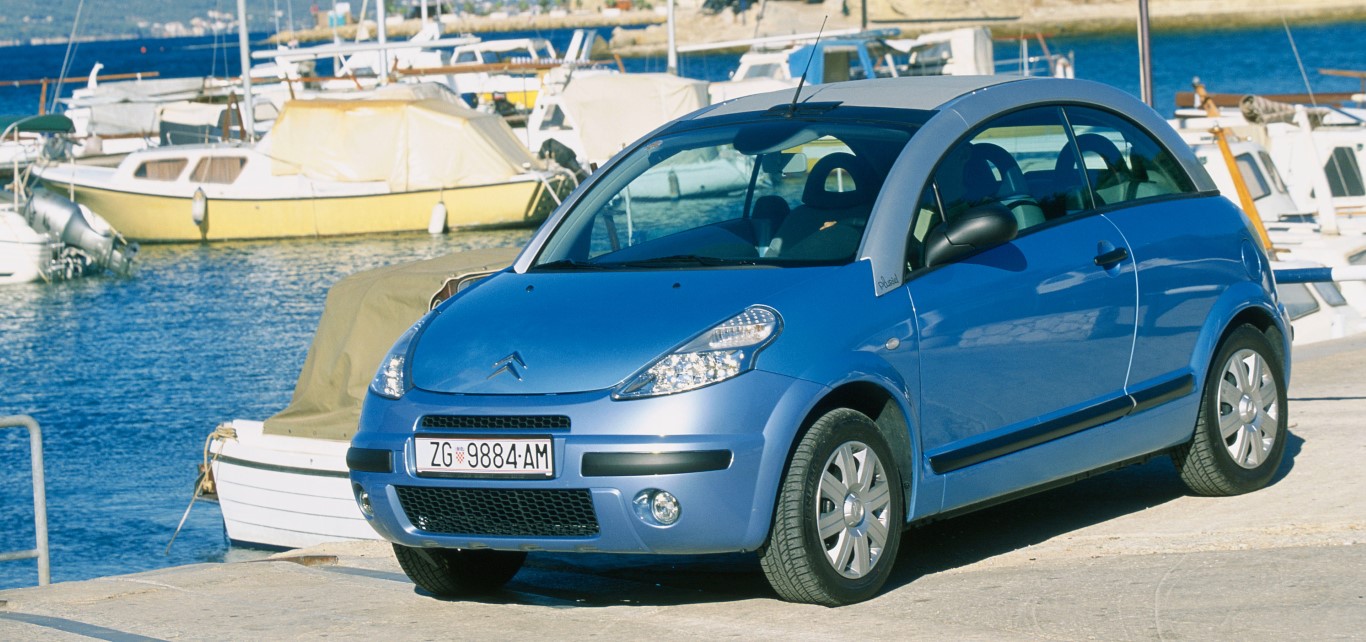
Technical specifications, versions, and history for the Citroen C3 Pluriel.
Select a generation to see available versions
(2003 - 2008)
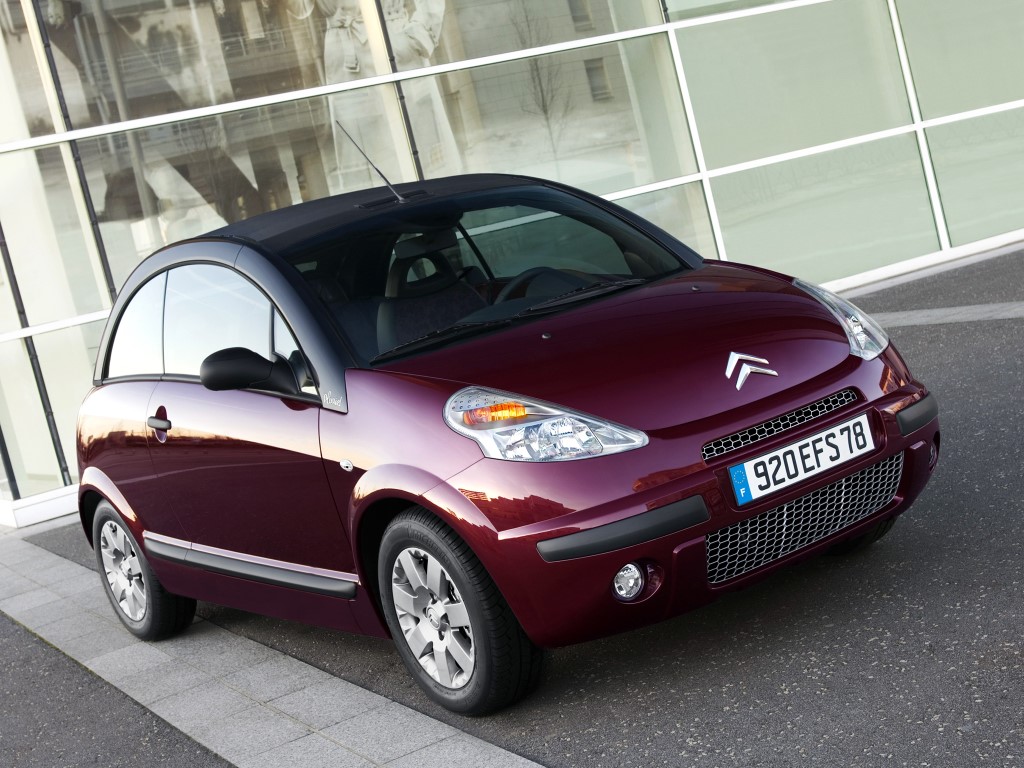
(2008 - 2010)
The history of the Citroën C3 Pluriel represents one of the most audacious moments in the French automotive industry, marking a deliberate attempt to merge urban utilitarianism with the recreational freedom of iconic past models, such as the Citroën 2CV and the rustic Méhari. Officially launched in May 2003, just one year after the launch of the first generation of the conventional C3 hatchback, the Pluriel was not merely a convertible variant, but a complex engineering project that sought to offer five different vehicles in a single modular structure. During its seven-year life cycle, the model challenged the design conventions of the PSA group's PF1 platform, resulting in a total production of 115,097 units at the Villaverde plant in Spain. This analysis explores in detail the trajectory of this vehicle, from its conception as a prototype to the limited editions that tried to capture the spirit of European fashion and nostalgia.
The development of the Citroën C3 Pluriel was not a linear process, but rather the result of a strategic vision to reaffirm the brand's identity as innovative and irreverent in the late 1990s. The genesis of the project dates back to 1998, with the presentation of the C3 Air Concept. This initial prototype exhibited a four-door design with a vertical windshield and an aesthetic that resembled a modern buggy, signaling Citroën's intention to create a leisure-focused vehicle. In 1999, at the Frankfurt Motor Show, the project evolved into the Pluriel Concept. This version already featured the two doors and the rounded silhouette that would be retained in the production model, winning over the public with the promise of unprecedented modularity.
The transition from concept to the final product involved the dedicated work of approximately 150 specialists, who faced the challenge of maintaining the essence of the prototype while adapting the structure to meet stringent safety requirements and industrial feasibility. The main objective was to democratize innovation, offering a car that could transform according to the owner's daily needs, without the typical compromises of traditional convertibles.
The C3 Pluriel was built on the PSA Group's PF1 platform, shared with the Peugeot 206 and the Citroën C2. However, the absence of a fixed rigid roof required extensive structural modifications to ensure the necessary torsional rigidity. Citroën engineering used high and ultra-high-strength steels to reinforce the bodywork, especially in the windshield pillars and the rear seat backrests, allowing the safety level to be comparable to that of a closed car, even in its most open configuration.
The table below details the basic technical specifications that defined the model's structure throughout its production.
| Specification | Technical Detail |
|---|---|
| Length | 3,934 mm |
| Width | 1,700 mm |
| Height | 1,559 mm to 1,563 mm |
| Wheelbase | 2,460 mm |
| Curb Weight | 1,158 kg to 1,280 kg |
| Trunk Capacity | 266 to 267 liters |
| Aerodynamic Coefficient | Optimized for open configurations |
The name "Pluriel", derived from the French term for plural, was chosen to reflect the vehicle's ability to assume multiple personalities. This versatility was achieved through a multi-layer canvas roof system and removable side arches, allowing the driver to choose between five main body variations.
The first configuration was the Saloon (Berlina), which kept the roof and windows closed, providing an environment with superior acoustic and thermal insulation, suitable for everyday use in any season. The second variant, the Panoramic Saloon, was created by sliding the canvas roof backward via an electric switch, opening a wide slit in the roof that extended to the rear seats.
The transformation became more radical in the third configuration, the Cabriolet. At this stage, the canvas roof continued its movement until the assembly, including the rear glass window, folded completely into a sealed compartment under the trunk floor. This operation freed up the entire upper area between the arches, keeping the vehicle's side silhouette intact.
The fourth configuration was the Spider style, where the C3 Pluriel lost its reinforcing side arches. These arches, which weighed about 12 kg each, had to be removed manually via latches on the A and C pillars. Once removed, the car transformed into a pure convertible, with fluid lines extending from the windshield to the rear. However, this configuration imposed a practical challenge: there was no space inside the vehicle to store the arches, forcing the owner to leave them in a safe place, such as a garage.
The fifth and final configuration was the Spider Pick-up. By folding down the rear seats and opening the trunk lid downwards (hinged similarly to a pickup truck), the Pluriel offered a flat load platform for transporting bulky objects or leisure equipment, such as surfboards or bicycles.
To cater to the European market, Citroën equipped the C3 Pluriel with a range of engines that balanced fuel efficiency with the performance needed for a lifestyle vehicle. All versions used front-wheel drive and independent front suspension (MacPherson type) with a torsion beam at the rear.
The entry-level engine was the 1.4i gasoline, from the TU family, delivering 73 hp (54 kW). This powertrain was exclusively mated to a five-speed manual gearbox, being the preferred choice for urban use due to its low maintenance cost. The higher-performance option was the 1.6i 16v engine with 110 hp (81 kW), which came obligatorily equipped with the SensoDrive transmission. The SensoDrive was an automated manual gearbox that allowed automatic or manual shifts via paddle shifters behind the steering wheel, eliminating the clutch pedal.
In 2004, Citroën introduced the 1.4 HDi diesel version with 70 hp (50 kW), focused on fuel economy for long distances. With a maximum torque of 160 Nm available at just 2000 rpm, this version offered elastic drivability, ideal for coastal drives.
Engine Performance Comparison
| Engine | Power | Maximum Torque | 0-100 km/h | Top Speed |
|---|---|---|---|---|
| 1.4i (Gasoline) | 73 hp | 118 Nm | 13.9 s | 160 km/h |
| 1.6i 16v (Gasoline) | 110 hp | 147 Nm | 11.3 s - 13.0 s | 185 - 188 km/h |
| 1.4 HDi (Diesel) | 70 hp | 160 Nm | 16.1 s | 158 km/h |
The steering featured variable electric assistance, becoming lighter for maneuvers and firmer at high speeds to ensure the necessary precision on winding roads. The braking system included ventilated discs at the front and solid discs or drums at the rear, depending on the engine and the market, always assisted by ABS and Emergency Brake Assist (EBA).
The production of the C3 Pluriel was marked by three distinct phases that followed the life cycle of the first-generation C3, bringing improvements in materials, electronics, and external design.
The launch phase is characterized by an interior with a two-tone dashboard (usually black and light gray). The electrical architecture was of the multiplexed CAN/VAN type, and the central dashboard display used segment technology to show basic radio and trip computer information. Externally, the side turn signal repeaters were translucent.
In September 2005, the Pluriel received its first major internal update. The dashboard became entirely black, with aluminum gray accents in the central section and on the air vents, giving it a more modern and sophisticated appearance. The electronics were migrated to the CAN/CAN standard, allowing for more complex functions, and the central display was replaced by a higher-resolution pixel screen.
The final phase, launched in March 2008, focused on external visual changes to align the car with the brand's new identity. The headlights gained orange turn indicators and the taillights received dark masks. The Citroën logo (the chevrons) on the hood and tailgate became larger and more prominent. The exterior rearview mirrors were resized to be larger, significantly improving peripheral visibility. Internally, decorative elements that were gray became chrome.
The youthful and customizable nature of the C3 Pluriel allowed the creation of several special series, some focused on niche markets like fashion, others paying homage to Citroën's rich history.
The most emblematic edition was the C3 Pluriel Charleston, presented at the 2008 Paris Motor Show to celebrate the 60th anniversary of the 2CV. This version used the classic two-tone paint scheme (Bordeaux and Obsidian Black), separated by a silver adhesive trim that followed the curves of the arches and fenders. The interior was refined with leather seats, a leather-wrapped steering wheel, and chrome details. 15-inch alloy wheels with red centers completed the nostalgic look.
The Pluriel also partnered with Italian luxury brands. The "Gold by Pinko" edition (2008) featured arches, door handles, and mirrors painted in gold, with a luxurious interior where the stitching on the leather seats used real gold thread. Another famous collaboration was with the Dolce & Gabbana brand in 2004, resulting in a series limited to 1000 units with chrome finishes on the arches and side moldings, as well as exclusive logos on the fenders.
Different European markets received versions adapted to their local tastes, as detailed in the special series table below.
| Series Name | Main Market | Exclusive Features |
|---|---|---|
| Graphit (2004) | Central Europe | Metallic gray tones, body-colored arches, limited to 1000 units. |
| Côté Sud (2006) | France | Exclusive blue upholstery, gray or blue body colors. |
| So Chic (2006) | France | Focus on luxury, "Claudia" leather seats, automatic air conditioning. |
| Sundek (2007) | Italy | "Bianco Mandoria" color, Sundek beach kit, and iPod connectivity. |
| Kiwi (2009) | United Kingdom | Vibrant "Lacerta Yellow" color, focused on the young audience. |
| Freeride (2008) | Switzerland | Geared towards the outdoor lifestyle, air conditioning, and CD radio. |
| Latte (2009) | United Kingdom | Cream-toned colors and sober interior finish. |
Despite its innovative proposal, the C3 Pluriel was not free from chronic problems that affected its perception in the used car market. The roof system was the most sensitive point; over time, the rubber seals could dry out, leading to water leaks into the cabin. Furthermore, the electrical mechanism of the canvas roof, composed of complex tracks and cables, required preventive maintenance and, if misaligned, could jam or cause excessive noise.
The SensoDrive transmission also required attention. Problems with the clutch actuators were common if the system did not receive the software updates recommended by the factory. Another important technical detail was the plastic thermostat housing, which tended to warp with thermal variation, resulting in coolant leaks.
The Citroën C3 Pluriel ended its production in 2010, leaving a legacy of boldness in an automotive segment that was becoming increasingly conservative. Although it was the target of criticism for its practical complexity (especially the issue of the removable arches), the model was fundamental for Citroën to demonstrate its capacity for accessible innovation.
The brand celebrated the model's 20th anniversary in 2023, reinforcing its position as a "modern classic" that symbolized the joy of living and freedom of choice. The Pluriel influenced successors like the Citroën DS3 Cabrio, which, although using a simpler sliding canvas roof, maintained the personalization and style proposal that the Pluriel pioneered years earlier.
Today, the C3 Pluriel is appreciated by collectors who value its unique modularity and its rounded design that harkens back to the golden years of French automotive creativity. Its limited editions, such as the Charleston and the partnerships with designers, remain sought-after examples in the niche market, serving as a reminder of a time when function followed form in a delightfully plural way.