
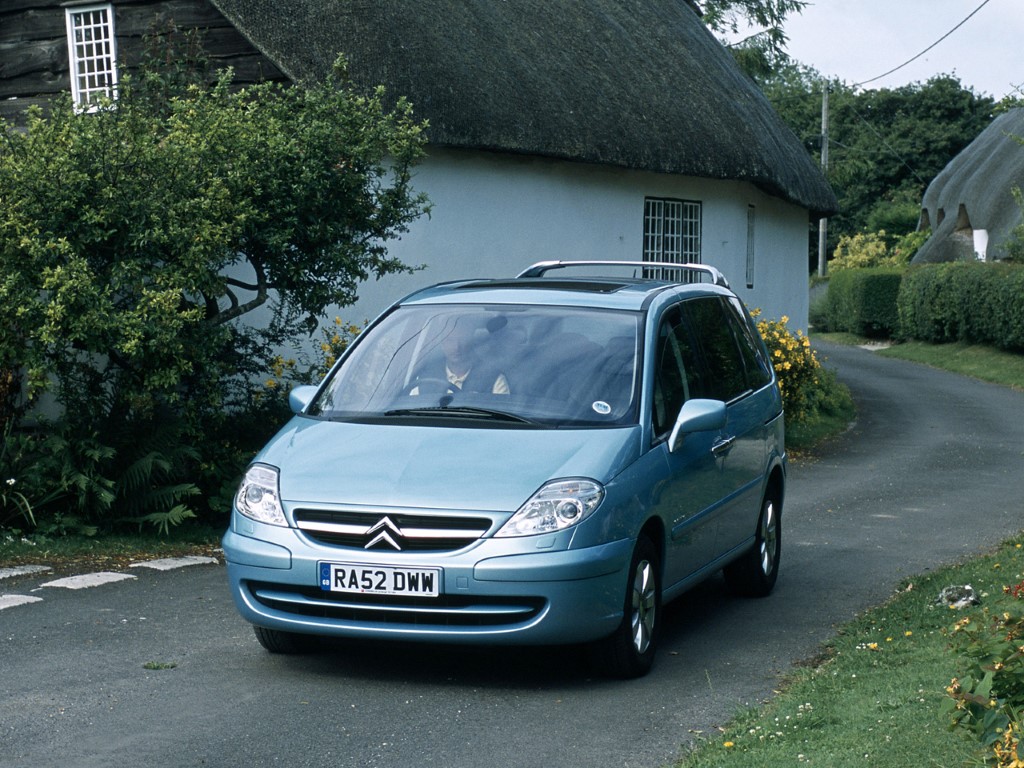
EA/EB
(2002 - 2008)
3.0 V6 24V
204 cv
Technical specifications, versions, and history for the Citroen C8.
Select a generation to see available versions
(2002 - 2008)
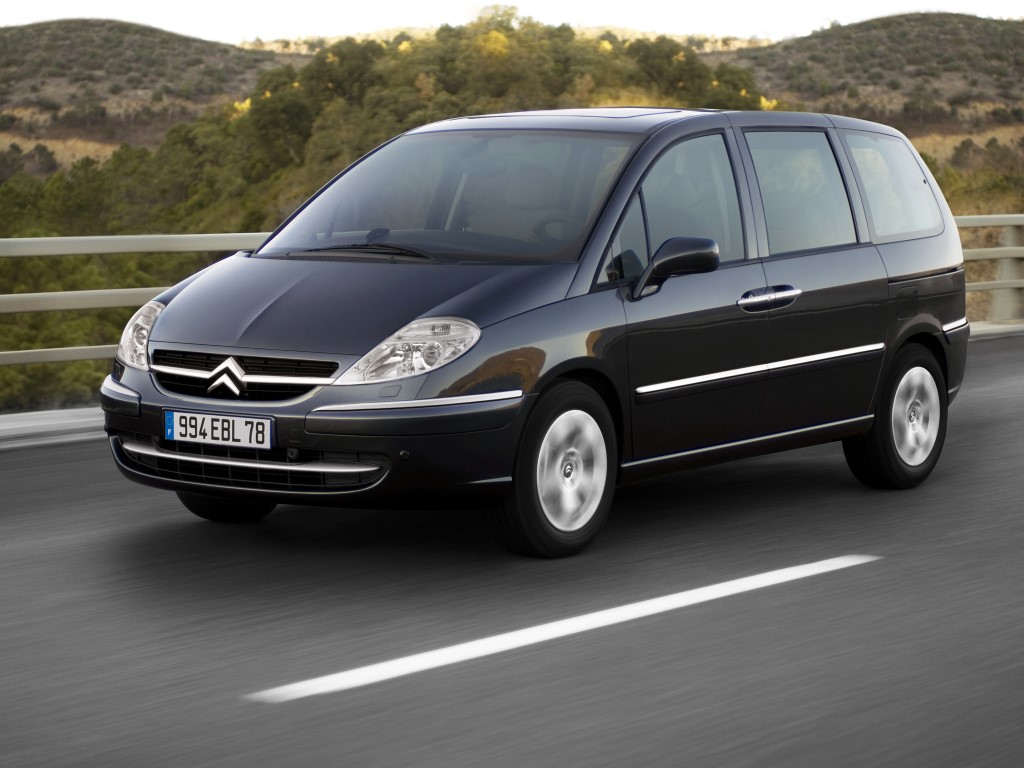
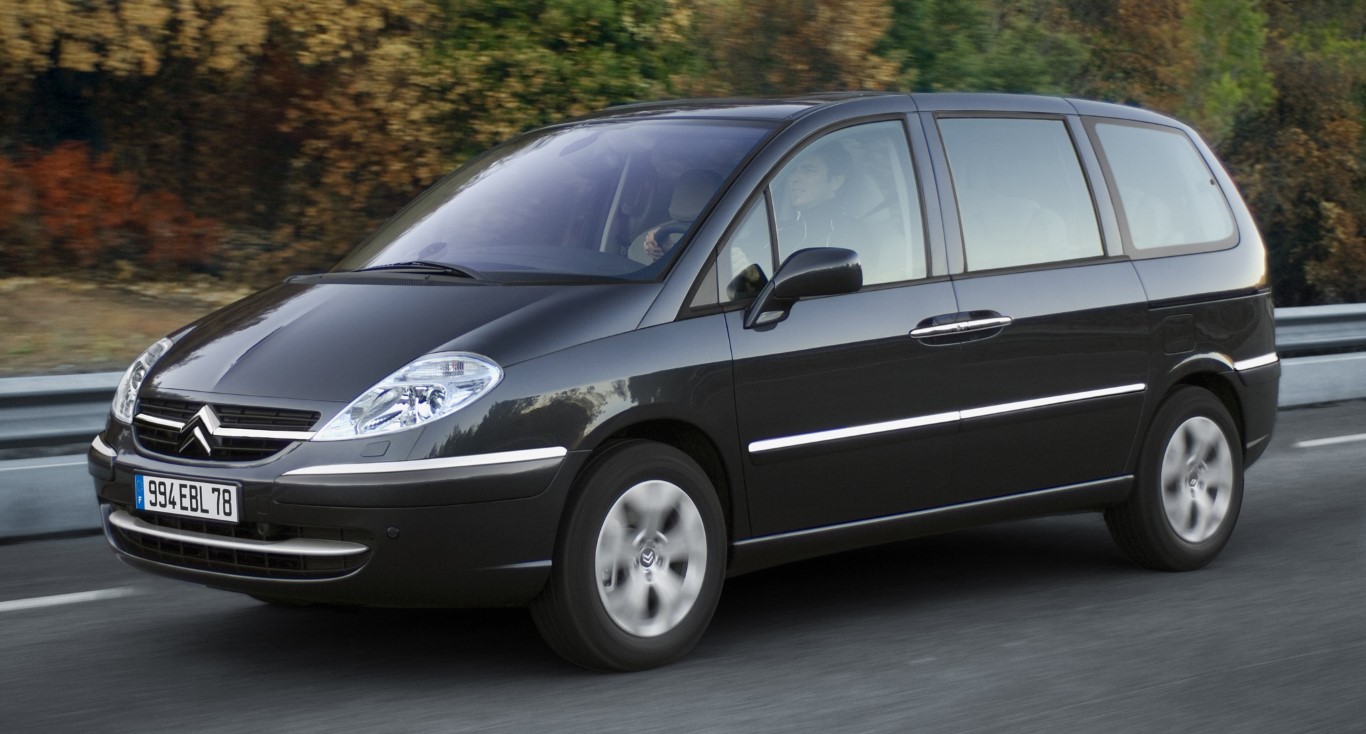
(2008 - 2014)
Select a powertrain to view full technical specifications
The Citroën C8 represents one of the most significant milestones in the history of large passenger transport vehicles in Europe. Launched in mid-2002 to replace the Citroën Evasion, the C8 was not just an aesthetic evolution, but a complete redefinition of what the French brand considered to be the pinnacle of family comfort and executive versatility. This report details the complete trajectory of the model, from its conception in the Sevel Nord alliance to the end of its production in 2014, covering technical specifications, market variants, and global production data.
The existence of the Citroën C8 is the direct result of deep technical and industrial cooperation between the PSA Group (Peugeot and Citroën) and the Fiat Group (Fiat and Lancia). Known as "Eurovan", this partnership was established to share the massive development costs of a platform dedicated to minivans (MPVs), a segment that was gaining strength in the 1990s with the success of the Renault Espace.
The first generation of Eurovans, marketed as the Citroën Evasion, Peugeot 806, Fiat Ulysse, and Lancia Zeta, focused on raw functionality. With the arrival of the second generation in 2002, the brands sought a clearer visual differentiation and a higher level of refinement. While Fiat kept the Ulysse name, Citroën renamed its model to C8, aligning it with the brand's new alphanumeric nomenclature initiated by the C5 and C3. Development was centered at the Sevel Nord plant in Valenciennes, France, where the production of the C8 and its siblings was maintained for over a decade.
Launched in July 2002, the Citroën C8 introduced a design language radically different from the "boxy" style of the Evasion. The design was characterized by fluid and rounded lines, with a front that featured teardrop-shaped headlights with a straight cut on the top edge, integrating perfectly with the bulging hood. The front grille displayed the "Double Chevron" supported by a chrome blade, a visual identity that defined Citroën in the early 2000s.
The transition from the first to the second generation of Eurovans brought a substantial increase in external dimensions. Although the wheelbase remained at 2,823 mm to ensure urban agility, the total length was extended to 4,727 mm, an increase of almost 30 cm compared to its predecessor. This volume increase allowed for a more generous internal configuration and an unprecedented cargo capacity in the segment.
| Technical Specification | Value | Note |
|---|---|---|
| Length | 4,727 mm | Provided ample space for 7 or 8 occupants |
| Width | 1,854 mm | Not counting the rearview mirrors |
| Height | 1,752 mm | Reaching up to 1,856 mm with roof bars |
| Wheelbase | 2,823 mm | Fundamental for highway stability |
| Aerodynamic Coefficient (Cd) | 0.34 | Competitive value for a large vehicle |
| Tank Capacity | 80 liters | Guaranteed range of over 1,000 km in diesel versions |
The interior of the C8 was designed to maximize comfort and versatility. The instrument panel was moved to the center of the cabin, an ergonomic decision that made it easier for all passengers to read and simplified the production of left-hand or right-hand drive versions. Behind the steering wheel, there was only a small display for the tachometer and essential warning lights.
The most celebrated feature of the C8 was the "Quickfix" seating system. All seats in the second and third rows were individual, mounted on rails, allowing them to be slid, folded, or completely removed independently. This modularity allowed transforming the interior from a luxurious passenger transport into a cargo van with a volume of up to 2,948 liters.
Another highlight was the electric sliding side doors, which could be operated via remote control or by buttons on the roof console. This functionality was particularly useful in tight parking spaces, where conventional doors would be difficult to open.
During the period from 2002 to 2008, the Citroën C8 offered one of the most varied engine ranges on the market, catering to everyone from families who prioritized fuel consumption to executives who demanded performance and smoothness.
The gasoline engines were known for their quiet operation. The entry-level engine was the 16-valve 2.0i (EW10J4), delivering 136 hp and 190 Nm of torque. Later, this was replaced by the 140 hp EW10A version, which brought improvements to the torque curve and lower emissions.
For those who needed more breath without reaching the cost of the V6, Citroën offered the 16-valve 2.2i engine (EW12J4), capable of generating 158 hp and 217 Nm of torque. At the top of the pyramid was the imposing 24-valve 3.0 V6 engine (ES9J4S), producing up to 208 hp. This engine, available only with an automatic transmission, transformed the C8 into a high-speed cruiser, capable of reaching 205 km/h, albeit with a high urban consumption of approximately 15.8 liters per 100 km.
The Diesel High-pressure Direct Injection (HDi) technology was the backbone of C8 sales in Europe. These engines used the common rail system to provide high torque at low revs and superior energy efficiency.
| Diesel Engine | Power | Torque | Transmission | Technical Note |
|---|---|---|---|---|
| 2.0 HDi | 107/109 hp | 270 Nm | 5-speed Manual | Robust engine, focus on economy |
| 2.2 HDi | 128 hp | 314 Nm | 5/6-speed Manual | Ideal balance for long trips |
| 2.0 HDi | 120 hp | 300 Nm | 6-speed Manual | Introduced to replace older versions |
| 2.0 HDi | 136 hp | 320 Nm | 6-speed Manual | Modern version with particulate filter (DPF) |
| 2.2 HDi Biturbo | 170 hp | 370 Nm | 6-speed Manual/Auto | Launched at the end of Phase I, V6 performance |
The introduction of the particulate filter (FAP or DPF) in many of these engines reinforced the brand's commitment to reducing solid pollutant emissions, a pioneering technology of the PSA Group at the time.
The launch of the Citroën C8 in Brazil took place in 2003, positioning the model as a niche vehicle for high-income families. The Brazilian market received the Exclusive version, the most luxurious available, equipped with the 138 hp 2.0i gasoline engine and a sequential automatic transmission.
With a starting price of approximately R$ 135,000.00, the C8 offered items that were an absolute rarity in Brazil at the time. The quad-zone air conditioning allowed each occupant of the first two rows to adjust their own temperature, and the six airbags guaranteed total protection for the three rows of seats. Citroën Brazil's strategy, under the leadership of Sérgio Habib, foresaw the sale of about 300 units annually, focusing on consumers who valued functionality without giving up the status of a premium import.
In 2008, the C8 underwent its first major renovation to remain competitive against the rise of SUVs and the renewal of traditional rivals. The focus of the facelift was updating the visual identity and substantially improving the quality of interior materials.
Externally, the C8 received new enlarged chevrons on the front grille, now integrated with more pronounced chrome blades. The headlights kept their shape but adopted new internal projectors, and the lower air intakes gained chrome "smile" shaped contours on the upper versions. At the rear, the reverse lights became translucent, and the taillights adopted a smoked red tone.
The interior was refined with soft-touch plastics in frequently contacted areas, such as the door handles and center console. The navigation system was updated to a color unit integrated into the dashboard, offering more accurate maps and enhanced connectivity.
With the update, the 170 hp 2.2 HDi Biturbo engine gained prominence, being coupled to a new six-speed automatic transmission from Aisin, which offered smooth and adaptive shifts. The 2.0 HDi engine also evolved, now offering 136 hp versions and the powerful 163 hp variant, which became the preferred choice for fleet operators and families due to its excellent 340 Nm of torque and combined consumption of 5.9 L/100 km.
The C8 version structure was designed to cater to everything from pragmatic family use to VIP transport.
The LX version was the entry point, but already included ESP, multiple airbags, and air conditioning. The SX added convenience items like swivel seats and parking sensors. The Exclusive was the top of the range, featuring xenon headlights, electric seat adjustment with memory, and Alcantara or leather upholstery.
One of the most emblematic versions was the "Captain Chair". Designed for executive transport, it abdicated the seven or eight-seat configuration in favor of six individual armchairs with armrests. This arrangement created a center aisle that facilitated internal circulation and provided an unmatched level of individual comfort for the second-row occupants.
The C8's last breath of innovation occurred in 2012. With the global market already migrating heavily towards SUVs, Citroën applied final touches focused on efficiency and visual modernity.
The most visible change was the new "Double Chevron" logo with a rounded finish and black and chrome contours, aligning the model with the new Citroën identity initiated with the DS line. Inside, the dashboard adopted dark tones and piano black finishes to give a more contemporary feel.
Technically, the big news was the introduction of e-HDi technology. This Stop & Start system used a reversible alternator capable of shutting off the engine when the car stopped in traffic and restarting it in just 400 milliseconds. To support the constant starting cycles, the system was accompanied by high-performance AGM batteries and an energy recovery system during braking.
The MyWay infotainment system was replaced by the eMyWay (RT6), which offered maps loaded on internal memory, Bluetooth with audio streaming, and real-time traffic information via the TMC radio channel.
The production trajectory of the Citroën C8 reflects the rise and fall of the large MPV segment in Europe. Produced entirely at the Sevel Nord plant, the model peaked in its first three years on the market.
| Year | Global Production (C8) | Market Context |
|---|---|---|
| 2002 | 11,970 | Launch and transition from the Evasion |
| 2003 | 27,728 | Most commercially successful year |
| 2004 | 24,049 | Model consolidation |
| 2005 | 22,998 | Sales stability |
| 2006 | 20,038 | Start of segment saturation |
| 2007 | 11,976 | Pre-facelift drop |
| 2008 | 8,448 | Launch of Phase II |
| 2009 | 5,298 | Impact of the global financial crisis |
| 2010 | 5,525 | Slight recovery with new Diesel engines |
| 2011 | 5,731 | Maintenance of loyal niche |
| 2012 | 3,721 | Launch of Phase III |
| 2013 | 3,790 | Final cycle phase |
| 2014 | 2,726 | Closure in June 2014 |
At the end of 12 years, the total cumulative production of the Citroën C8 reached approximately 150,000 units. Adding the units of its predecessor produced on the same platform, the total volume of Citroën's large minivan lineage reached 269,216 vehicles. Although the number seems modest compared to popular hatchbacks, it represents an expressive volume for a vehicle of high added value and considerable dimensions.
The C8's commitment to safety was validated by the Euro NCAP program, where the model obtained five stars for adult occupant protection, an elite score at the time of its launch.
The suspension was calibrated to prioritize comfort over sporty dynamics. At the front, it used the pseudo-MacPherson system with lower wishbones, while the rear employed a torsion beam with stabilizer bars. This arrangement allowed the C8 to masterfully absorb ground irregularities, keeping the internal noise level extremely low.
The braking system was sized for the vehicle's weight, which ranged from 1,600 kg to over 1,800 kg in loaded versions. Large-diameter ventilated discs at the front and solid discs at the rear were standard on all versions. The auxiliary electronics included the electronic stability program (ESP) and traction control (ASR) as standard items across almost the entire range, which helped mitigate the understeer tendency inherent in tall and heavy vehicles.
The interruption of the Citroën C8's production in June 2014 was not caused by product flaws, but by a seismic shift in consumer habits. European families, who previously saw minivans as the ideal vehicle, began to prefer SUVs and Crossovers, which offered a more adventurous image, even if with less internal space and inferior modularity.
The legacy of the C8 remains alive in Citroën's engineering. Many of the internal modularity solutions were adapted for the C4 Picasso and, later, for the SpaceTourer. The C8 proved that it was possible to build a vehicle capable of transporting eight people with the same level of safety and technology as a luxury sedan.
For enthusiasts and owners, the C8 is remembered as Citroën's "Lounge on Wheels" — a vehicle that not only transported people from one point to another, but made the journey an experience of shared comfort. Its history in the Sevel Nord alliance closed an important chapter of European automotive cooperation, leaving a trail of practical innovations that are still references in vehicular ergonomics today.
Images of the Citroen C8