Citroen Evasion

Citroen Evasion

Technical specifications, versions, and history for the Citroen Evasion.

Citroen Evasion Generations

Select a generation to see available versions

Citroen Evasion G1

1st Generation

(1994 - 1998)

2.0 L4 8V Turbo C.T. 150 cv
Citroen Evasion G1F

1st Generation Facelift

(1998 - 2002)

2.0 L4 8V Turbo C.T. 147 cv

Technical Data and History: Citroen Evasion

Citroën Evasion: The Pioneer of Practicality and Cooperative Engineering in the Minivan Era

The history of the Citroën Evasion is not just the narrative of an isolated model, but rather the account of a fundamental strategic movement in the European automotive industry in the 1990s. During this period, the market began to undergo a profound transformation, moving away from traditional family station wagons and seeking vehicles that could offer an unprecedented combination of internal space, sedan comfort, and modular versatility. The Citroën Evasion, launched in March 1994, was the French manufacturer's response to this growing demand, positioning itself as one of the pillars of the ambitious "Eurovan" project.

Historical Context and the Sevel Nord Alliance

To understand the origin of the Evasion, it is necessary to observe the gap that existed in Citroën's portfolio in the early 90s. Although the brand had a respectable history of seven-seater vehicles, such as the "Familiale" versions of the Traction Avant, the DS, and the CX, there were no immediate plans for a similar variant of the XM estate. Meanwhile, Renault had already dominated the large minivan segment with the Espace since 1984, a vehicle originally designed by Matra.

PSA (Peugeot-Citroën) and the Fiat Group decided to join forces to compete in this new territory, expanding their existing light commercial vehicle partnership at SEVEL (Société Européenne de Véhicules Légers). This union resulted in the creation of the Sevel Nord plant in Lieu-Saint-Amand, France, where four technically identical models would be produced, but with distinct visual identities: the Citroën Evasion, the Peugeot 806, the Fiat Ulysse, and the Lancia Zeta.

The Eurovan project was a classic example of "badge engineering". All vehicles shared the same body structure, mechanics, and internal components, varying only in aesthetic details such as the front grille, headlights, and taillights. Because PSA was the senior partner in the technical development of the Sevel Nord plant, most of the components used were of PSA origin, including the renowned XU and XUD engine families.

Eurovan Alliance Details

Launch Date March 1994
Production Location Sevel Nord (Lieu-Saint-Amand, France)
Main Partners PSA (Peugeot/Citroën) and Fiat Group
Derivative Models Citroën Evasion, Peugeot 806, Fiat Ulysse, Lancia Zeta
Related Commercial Vehicles Citroën Jumpy, Peugeot Expert, Fiat Scudo
Design and Architecture of the Minivan

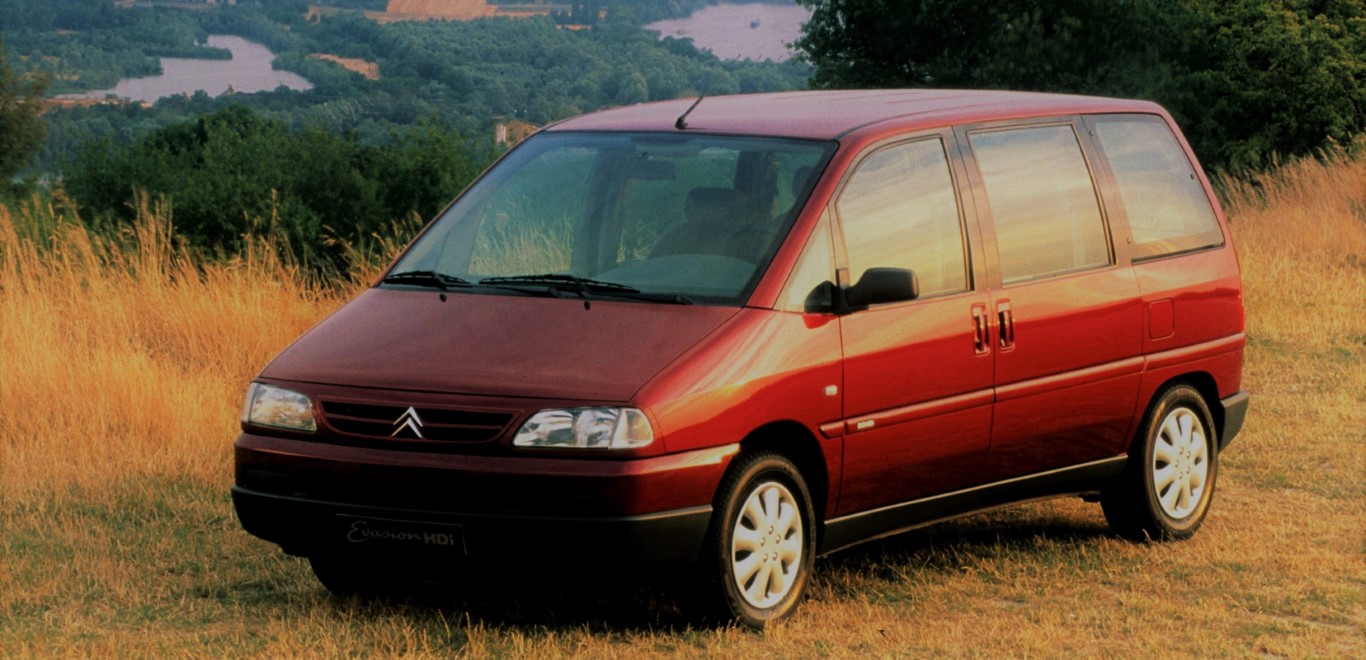
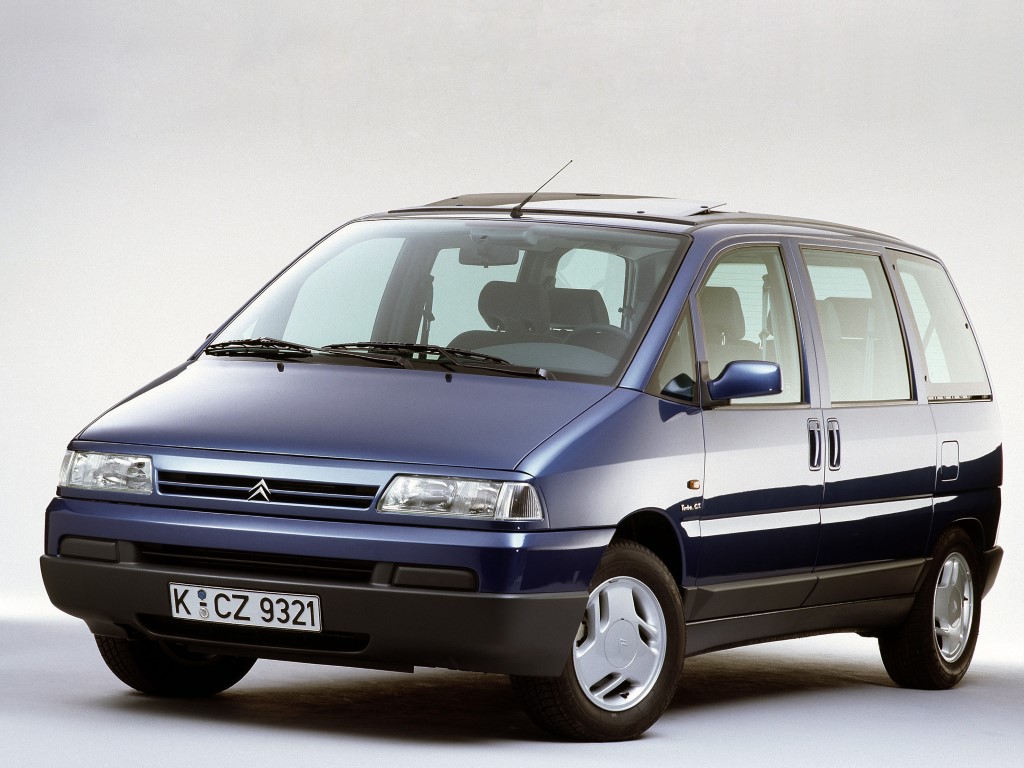
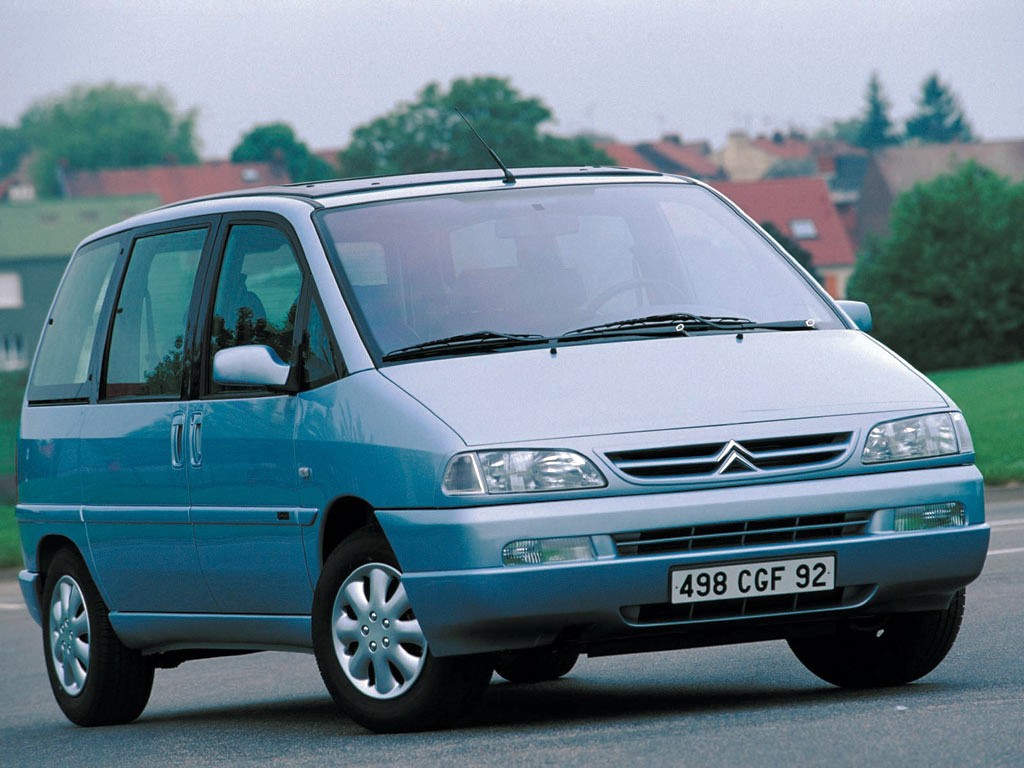
The Citroën Evasion was designed with an absolute focus on volumetric efficiency. Unlike traditional vans of the time, it featured a more aerodynamic profile and a height that allowed access to standard underground parking garages, remaining at about 1.71 meters. The exterior styling of the Evasion was characterized by sober and functional lines. At the front, the headlights had a rectangular shape, less aggressive than that of its sibling the Peugeot 806, with slightly rounded corners to align with the Citroën brand image at the time.

One of the biggest design innovations that differentiated the Evasion from the Renault Espace was the use of sliding rear doors on both sides. This technical choice was fundamental to the model's success among families, as it greatly facilitated the entry and exit of passengers in tight parking spaces, in addition to offering wider access to the third row of seats.

Internally, Citroën and its partners sought to maximize the feeling of space. To achieve this, the gear lever was mounted on the elevated center console (dashboard), and the handbrake was repositioned to the driver's door side. This configuration freed up the floor between the front seats, allowing passengers to move from front to back without having to exit the vehicle.

Technical Dimensions

Measurements (Phase 1)
Length 4,450 mm to 4,454 mm
Width 1,811 mm to 1,834 mm
Height 1,709 mm to 1,714 mm
Wheelbase 2,819 mm to 2,824 mm
Curb Weight 1,418 kg to 1,615 kg
Trunk Capacity 340 L (7/8 seats) to 3,300 L (seats removed)
Internal Modularity and Versatility

The Citroën Evasion's great triumph lay in its adaptability. The model was offered with configurations ranging from five to eight individual seats. With the exception of the two front seats, all the others could be moved, folded, or completely removed from the cabin using a quick-release rail system.

Citroën promoted the Evasion as a "mobile lounge". The front seats could rotate 180 degrees in some versions, transforming the cabin into a small meeting room or dining space during travel stops. The rear seats, once removed, had integrated feet that allowed them to be used as picnic chairs on the ground, a creative solution for family leisure.

The total cargo volume with the seats removed reached 3,300 liters, which allowed the owner to use the vehicle for moving or transporting large volumes, far exceeding the capacity of any sedan or station wagon of the time.

First Generation and Engines (1994 - 1998)

In its initial phase, the Evasion used robust engines from PSA's XU family. The initial focus was the balance between reliability and torque, necessary to move a vehicle that, when loaded, could exceed two tons of gross weight.

The gasoline engine range started with the 8-valve 1.8i, producing about 100 horsepower. Although economical, it was considered the entry-level engine and could struggle on inclines with a full load. The 121-122 horsepower 2.0i engine became the most balanced choice for the European market, offering performance more in line with the car's purpose.

For drivers demanding higher performance, Citroën made available the 2.0 Turbo C.T. (Constant Torque) engine. This engine used a low-pressure turbocharger designed to offer maximum torque at very low revs (2,500 rpm), mimicking the delivery curve of a diesel engine, but with the refinement and power of a 147 to 150 horsepower gasoline engine.

In the diesel segment, vital in Europe, the 1.9 Turbo D engine (XUD9 family) was the initial flagship, delivering 92 horsepower. In 1996, the 12-valve 2.1 TD engine was added, offering 110 horsepower and significantly higher torque, making highway trips much more comfortable.

Engine Table - Phase 1 (1994-1998)

Engine Displacement Type Power Torque Injection
1.8i 1,761 cc Gasoline (XU7) 100 hp @ 6000 147 Nm @ 2800 Multipoint
2.0i 1,998 cc Gasoline (XU10) 122 hp @ 5750 170 Nm @ 2750 Multipoint
2.0 Turbo C.T. 1,998 cc Gasoline (XU10) 147-150 hp @ 5300 235 Nm @ 2500 Multipoint
1.9 Turbo D 1,905 cc Diesel (XUD9) 90-92 hp @ 4000 196 Nm @ 2250 Indirect
2.1 TD 12v 2,088 cc Diesel (XUD11) 110 hp @ 4300 250 Nm @ 2000 Indirect
The 1998 Facelift and Mid-Life Evolutions

In October 1998, Citroën applied a restyling to the Evasion to keep it competitive against new rivals, such as the Volkswagen Sharan and the Ford Galaxy. External changes included a redesigned front grille with a larger and more pronounced logo (chevron), along with revised bumpers and new body colors.

Inside, refinement was the watchword. The dashboard received material improvements and the list of convenience equipment was expanded, including the option of a dual panoramic sunroof that illuminated the entire length of the cabin. It was during this phase that internal ergonomics were subtly refined, consolidating the position of the gear lever on the dashboard for all versions, which facilitated operation.

Safety was also improved. The use of front airbags became more common, and the ABS brake systems were refined. On the mechanical side, the Evasion received the new generation of PSA engines, known by the acronyms EW and DW, which gradually replaced the old XU and XUD engines.

The 138-horsepower 2.0i 16V (EW10) engine replaced the old 8-valve naturally aspirated engine, offering greater fuel efficiency and lower CO2 emissions. Furthermore, Citroën began offering an optional four-speed auto-adaptive automatic transmission for this engine, catering to a growing demand for comfort in urban traffic.

The HDi Revolution: The Technological Milestone

The most significant mechanical turning point occurred in January 2000, when Citroën introduced the 2.0 HDi (High-pressure Direct Injection) engine in the Evasion. This engine utilized high-pressure direct injection technology via Common Rail, developed in partnership with Bosch.

The introduction of the HDi engine solved the main problems of previous diesel engines: excessive noise, idle vibration, and lack of low-end torque. With 110 horsepower and 250 Nm of torque available right at 1,750 rpm, the HDi engine transformed the Evasion into the ideal vehicle for long-distance trips, offering remarkable fuel economy for its size.

Post-Facelift Engines

Engine Type Power Torque Notes
2.0i 16V (EW10) Gasoline 138 hp @ 6000 190 Nm @ 4100 New cylinder head, more efficient
2.0 HDi (DW10) Diesel 110 hp @ 4000 250 Nm @ 1750 Common Rail Technology
2.0 HDi 16v (DW10) Diesel 110 hp @ 4000 270 Nm @ 1750 Version with higher torque
Special Editions: The "Mobile Office" and Windows 95

One of the most fascinating episodes in the history of the Evasion was the collaboration between Citroën and Microsoft in 1995. To celebrate Bill Gates's visit to France for the global launch of Windows 95, Citroën transformed two units of the Evasion into what it called the "Mobile Office".

These rare units were designed to demonstrate how a minivan could serve as an extension of the workspace. The interior featured custom wooden furniture that housed a Siemens Nixdorf multimedia suite, including a laptop running Windows 95, a laser printer, and a Siemens S3 mobile phone with a hands-free system.

Although these units were prototypes for the event, they marked the beginning of Citroën's interest in integrating information technology into automobiles, which led to the later development of models such as the Citroën Xsara Intel in 1997 and the Citroën XM Multimedia in 1998.

The Citroën Evasion in Brazil

Brazil got to know the Citroën Evasion in the second half of the 90s, a period of market opening for high-end imported vehicles. The model arrived to compete in a luxury segment, facing rivals such as the Chrysler Caravan (which dominated the minivan market in the country) and the Chevrolet Zafira (which would arrive slightly later in the mid-size segment).

In the Brazilian market, the most common versions were equipped with the 2.0 16-valve engine (XU10J4R), offering good performance for national roads. The model was praised for its suspension, which although not hydropneumatic, offered a ride comfort far superior to that of vans based on cargo chassis.

The seven-seater configuration was its biggest attraction, with all seats equipped with headrests and seatbelts, which made it an aspirational vehicle for large families and executives needing VIP transport.

Evasion Specifications in Brazil

Popular Version GLX 2.0 16V
Common Engine 2.0 Petrol (132-138 hp)
Fuel Tank 80 Liters (Great range)
Acceleration (0-100 km/h) Approx. 13.4 to 13.7 seconds
Standard Equipment ABS, Airbag, Dual-zone air conditioning (in some versions)
Safety and Dynamic Behavior

Unlike many of its contemporaries, the Citroën Evasion did not use Citroën's famous hydropneumatic suspension, but rather a conventional coil spring system with MacPherson strut front suspension and a torsion beam rear axle with trailing arms. This decision was made to maintain compatibility between the four Eurovan alliance brands and reduce manufacturing and maintenance costs.

Despite the lack of the hydropneumatic system, the suspension tuning done by PSA was recognized for its excellent absorption of irregularities, a typical characteristic of French cars of the time. The braking system consisted of ventilated discs on the front axle and drums on the rear axle for most versions, while the more powerful Turbo and HDi versions could come equipped with solid discs at the rear to ensure greater braking power.

Passive safety evolved gradually. In mid-1997, models began to feature seat-mounted side airbags and seatbelts with pyrotechnic pretensioners, reflecting the growing concern for family safety.

Global Production and Strategic Nomenclatures

Production of the Citroën Evasion officially ended in July 2002, making way for its successor, the Citroën C8. During its eight years on the market, the model consolidated itself as a pillar of Sevel Nord. It is estimated that more than 120,000 units of the Evasion (including the Synergie versions) were produced.

It is important to note that the name "Synergie" was used exclusively in the UK and Ireland markets. Citroën decided to avoid the name "Evasion" in these countries due to the negative connotations of the English word, which is frequently associated with "tax evasion" or shirking responsibilities, which generated a humorous reception from the British motoring press at launch. In New Zealand, curiously, the original name "Evasion" was retained despite it being a right-hand drive market.

Production Data and Succession

Total Units (Evasion/Synergie) > 120,000
Sevel Nord Plant Capacity 200,000 vehicles/year (total Eurovans)
Start of Successor Production (C8) 2002
End of Eurovan 1 Project Production 2002
The Legacy of the Evasion: From Necessity to Collectibility

Today, the Citroën Evasion is viewed with nostalgia and respect by brand enthusiasts. It was the vehicle that allowed Citroën to offer a transport solution for large families without compromising dynamic comfort. Its "flat floor" architecture and the position of the gearshift on the dashboard became standards that would be followed by almost all subsequent European minivans, including the Citroën Xsara Picasso and future generations of the C4 Picasso.

The Evasion also demonstrated that cooperation between rival brands (PSA and Fiat) could be fruitful, resulting in a robust product that shared development costs and components, something that is now the norm in the global automotive industry, currently under the Stellantis umbrella.

In the classic and used car market, the Evasion is valued for its durability, especially the versions equipped with XUD and HDi diesel engines, known to easily surpass the 300,000 or 400,000 kilometer mark without major mechanical interventions. For Brazilian collectors, finding a well-preserved unit with the 2.0 16V engine or the extremely rare Turbo versions is the challenge of keeping alive an important fragment of Citroën's history in the country, representing an era when luxury was measured by the amount of space and the intelligence of internal solutions.

Conclusion and Perspectives

The Citroën Evasion ended its cycle as a practical engineering success. It did not seek to be the fastest or the most beautiful car, but rather the smartest. Through the Eurovan alliance, Citroën managed to deliver a vehicle that was simultaneously an efficient cargo van, a luxury technological office, and the preferred vehicle of large families in Europe. The model paved the way for the Citroën C8, which would refine these concepts with a more contemporary design and power sliding rear doors, but which would never hold the same status as "pioneer of practicality" that the Evasion conquered. The Evasion remains a testament to a time when the French automotive industry focused on human-centric engineering solutions and family coexistence on board.

Technical data based on: • Official manufacturer catalogs • EPA / WLTP documentation when available • Official press releases

Editorial content produced by Gabriel Carvalho. | Última revisão: Dezembro/2025.