1st Generation
(2006 - 2009)
Technical specifications, versions, and history for the Dodge Caliber.
Select a generation to see available versions
(2006 - 2009)
(2010 - 2013)
Select a powertrain to view full technical specifications
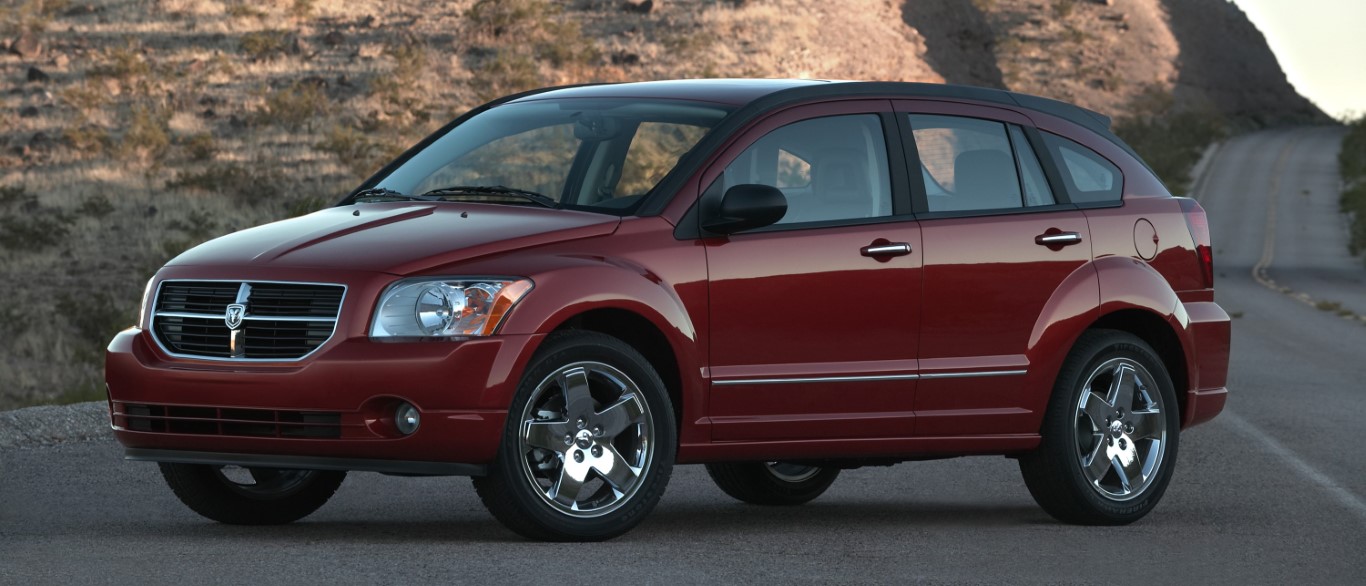
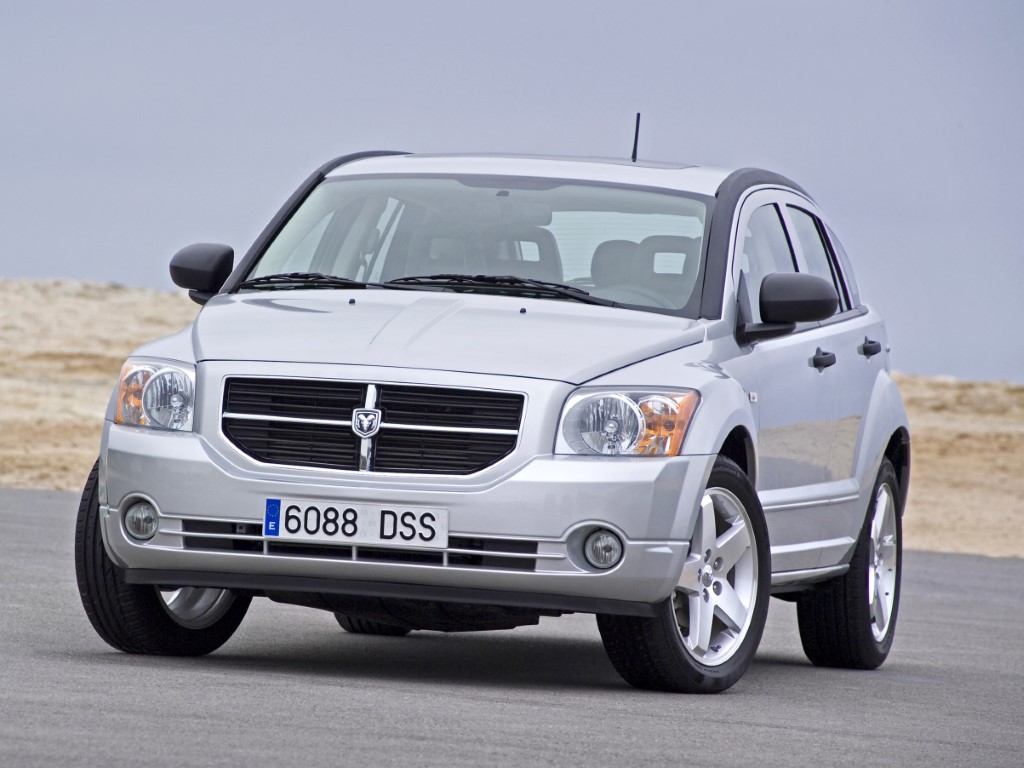
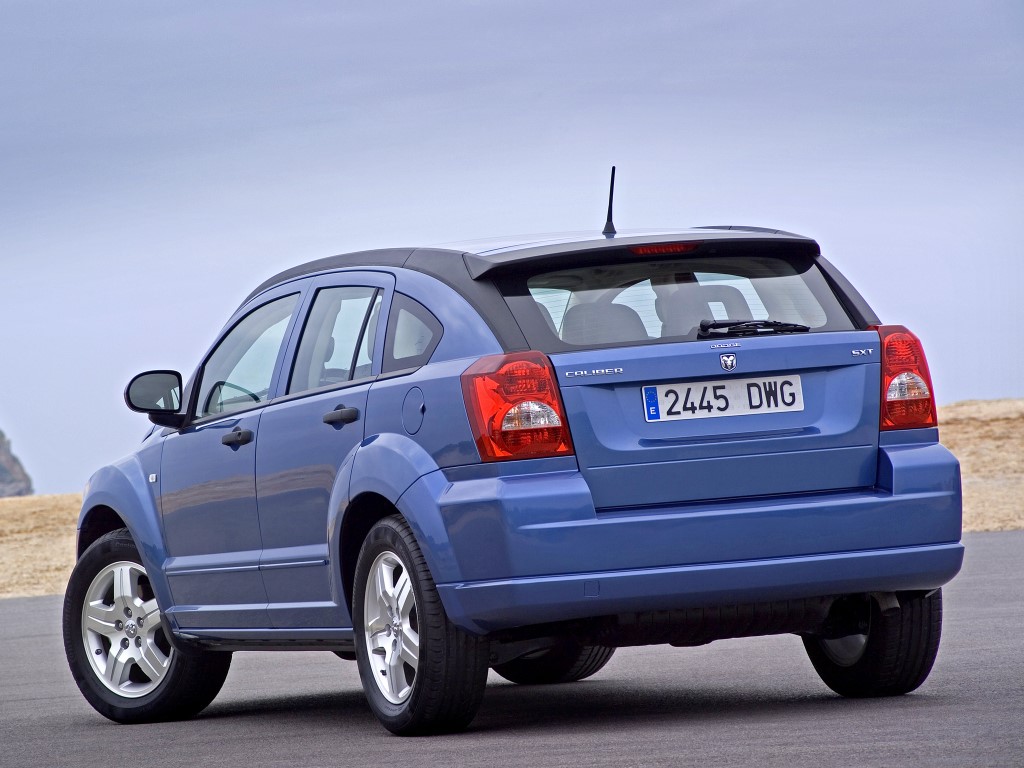
The Dodge Caliber represents one of Chrysler's most complex and transformative periods during the transition from the DaimlerChrysler era to the subsequent management. Commercially launched in March 2006 as a 2007 model, the vehicle was conceived to replace the Dodge Neon, a successful compact sedan, but one that no longer met the new demands for versatility and aggressive design of the global market at the beginning of the 21st century. The Caliber was not just a new car; it symbolized a paradigm shift at Dodge, abandoning the traditional three-box silhouette to adopt a five-door configuration that blended hatchback, station wagon, and crossover elements.
The decision to design the Caliber as a "global vehicle" was strategic, targeting markets outside North America, including Europe, Australia, and Japan. To make such a project viable under financial pressures, Chrysler utilized a shared architecture and an engine alliance that united industry giants like Mitsubishi and Hyundai. This report details the technical evolution, engineering nuances, production cycles, and cultural impact of this model which, although facing severe criticism regarding its internal execution and transmission, anticipated the compact crossover trend that would dominate the automotive industry in the following decade.
The genesis of the Dodge Caliber lies in the need to create a modular platform that could support various models of the group, reducing development and manufacturing costs. The vehicle's design was penned by Mike Nicholas in 2005, with the concept's first appearance occurring at the Geneva International Motor Show that same year. Public response was closely watched, leading to the presentation of a pre-production version at the North American International Auto Show in 2006, shortly before its official launch.
Mechanically, the Caliber was built on the Chrysler PM/MK platform, which was a heavily modified derivation of the GS platform, co-developed with Mitsubishi Motors. This architecture was the backbone of a generation of vehicles that included the Mitsubishi Lancer, the Jeep Compass, and the Jeep Patriot, in addition to the Caliber itself. The use of this base allowed the Caliber to offer superior structural rigidity to its predecessor, the Neon, besides enabling the implementation of all-wheel-drive systems that would be crucial for its positioning as a "sport-tourer" or crossover.
Production was centralized at the Belvidere Assembly Plant in Illinois, United States, with additional assembly carried out in Valencia, Carabobo, in Venezuela, to serve specific markets. The Belvidere plant underwent extensive modernizations to handle the complexity of the new platform, which required a more refined integration of electronic components and passive safety systems.
One of the most significant pillars of the Caliber's development was the Global Engine Manufacturing Alliance (GEMA). This joint venture between Chrysler, Mitsubishi, and Hyundai was established to manufacture an advanced family of inline four-cylinder engines, operating under a lean manufacturing and high-technology philosophy. The resulting engines, known by Chrysler as the "World Engine", were designed to be cost-efficient, competitive in fuel consumption, and capable of meeting global emissions regulations.
The basic design of these engines involved a high-pressure die-cast aluminum block, aluminum cylinder heads, and siamesed cast iron cylinder liners. The use of these liners allowed Chrysler to alter the bore and stroke to produce different displacements (1.8L, 2.0L, and 2.4L) using the same basic block architecture. All gasoline engines in the Caliber featured dual overhead camshafts (DOHC), 16 valves, and a Dual Variable Valve Timing (Dual VVT) system. This electronic system continuously adjusted the timing of the intake and exhaust valves, optimizing torque and power across the entire rev range.
The GEMA plant in Dundee, Michigan, became a model of industrial efficiency, celebrating the production of the millionth engine just three years after starting operations in 2005. However, the alliance was dissolved in August 2009, when Chrysler acquired Mitsubishi's and Hyundai's stakes, integrating GEMA as a wholly-owned subsidiary after the new partnership with Fiat.
| Technical Attribute | 1.8 L World I4 Engine | 2.0 L World I4 Engine | 2.4 L World I4 Engine |
|---|---|---|---|
| Power (hp) | 148 @ 6,500 rpm | 158 @ 6,400 rpm | 172 @ 6,000 rpm |
| Torque (lb⋅ft) | 125 @ 5,200 rpm | 141 @ 5,000 rpm | 165 @ 4,400 rpm |
| Bore x Stroke | 86 mm x 77 mm | 86 mm x 86 mm | 88 mm x 97 mm |
| Compression Ratio | 10.5:1 | 10.5:1 | 10.5:1 |
| Standard Transmission | 5-speed Manual | CVT2 / Manual (2010+) | CVT2 / Manual |
| Availability | 2007–2009 (SE, SXT) | 2007–2012 (SE, SXT) | 2007–2011 (R/T, Rush) |
The 1.8-liter engine served as the entry-level option focused on fuel economy, while the 2.0-liter balanced performance for daily use. The 2.4-liter engine was reserved for top trims, such as the R/T, providing power delivery comparable to small-displacement V6 engines of the time.
For high-performance enthusiasts, Dodge launched the Caliber SRT4 in 2008, developed by the Street and Racing Technology division. This model was designed to push the compact platform to its technical limits, utilizing a turbocharged and heavily modified version of the 2.4L World Engine, internally referenced as "Warhawk".
The SRT4's engine engineering involved cast aluminum pistons, forged steel connecting rods, and a high-pressure fuel injection system. The Mitsubishi TD04HL4S-20 turbocharger was the heart of the system, providing enough pressure for the engine to generate 285 hp and 265 lb⋅ft of torque. In certain regional configurations, power figures reached an impressive 303 hp, making it one of the most powerful front-wheel-drive hatchbacks of its era.
Unlike the civilian versions, the SRT4 exclusively used a six-speed manual transmission from Getrag, designed to handle the massive torque and ensure precise shifts under stress. The suspension was lowered by approximately 28 mm at the front and 23 mm at the rear, receiving gas-pressure shock absorbers and stiffer sway bars to contain body roll.
| Parameter | SRT4 Specification (2008-2009) |
|---|---|
| Engine | 2.4 L Turbo I4 DOHC 16V Dual VVT |
| Maximum Power | 285 hp @ 5,700–6,400 rpm |
| Maximum Torque | 265 lb⋅ft @ 2,000–5,600 rpm |
| 0-100 km/h Acceleration | ~6.0 seconds |
| Top Speed | 250 km/h (electronically limited) |
| Front Brakes | 340 mm ventilated discs (dual-piston calipers) |
| Rear Brakes | 302 mm solid discs |
| Wheels and Tires | 19" x 7.5" aluminum with 225/45R19 tires |
| Drag Coefficient | 0.396 Cd |
The SRT4's exterior featured a functional hood scoop for intercooler cooling, an oversized rear spoiler, and brake cooling ducts integrated into the front bumper. Internally, the dashboard included a turbo boost gauge and sports seats with pronounced side bolsters to keep the driver stable during high-speed maneuvers.
One of the most divisive aspects of the Dodge Caliber's engineering was the adoption of the continuously variable transmission (CVT2) supplied by Jatco, a Nissan subsidiary. Chrysler was one of the first American manufacturers to adopt this technology on a large scale for the domestic market, aiming for the theoretical advantages of fuel economy and operational smoothness.
The CVT2 used a steel belt and variable-diameter pulleys to provide an infinite range of gear ratios, eliminating the traditional "hiccups" of automatic gear shifts. In models equipped with the 2.4L engine and the R/T version, the transmission included the "AutoStick" function, which allowed the driver to simulate six fixed ratios, providing a more direct sense of control on winding roads.
Besides the CVT, the Caliber offered robust manual options. The standard transmission for the 1.8L and 2.0L engines was the Magna T355 five-speed manual, known for its durability. For diesel versions sold internationally, Chrysler used six-speed manual gearboxes from Aisin or Volkswagen, depending on the year and specific engine.
In terms of traction, the Caliber innovated with an electronically controlled all-wheel-drive (AWD) system, available exclusively on the R/T version between 2007 and 2008. This system was not permanent; it operated on demand, sending torque to the rear wheels only when it detected a loss of grip or during hard acceleration between 40 km/h and 105 km/h to stabilize the vehicle's trajectory.
The trajectory of the Dodge Caliber was marked by constant updates that attempted to respond to consumer criticism and changing market conditions. The vehicle went through two main moments of aesthetic and functional evolution.
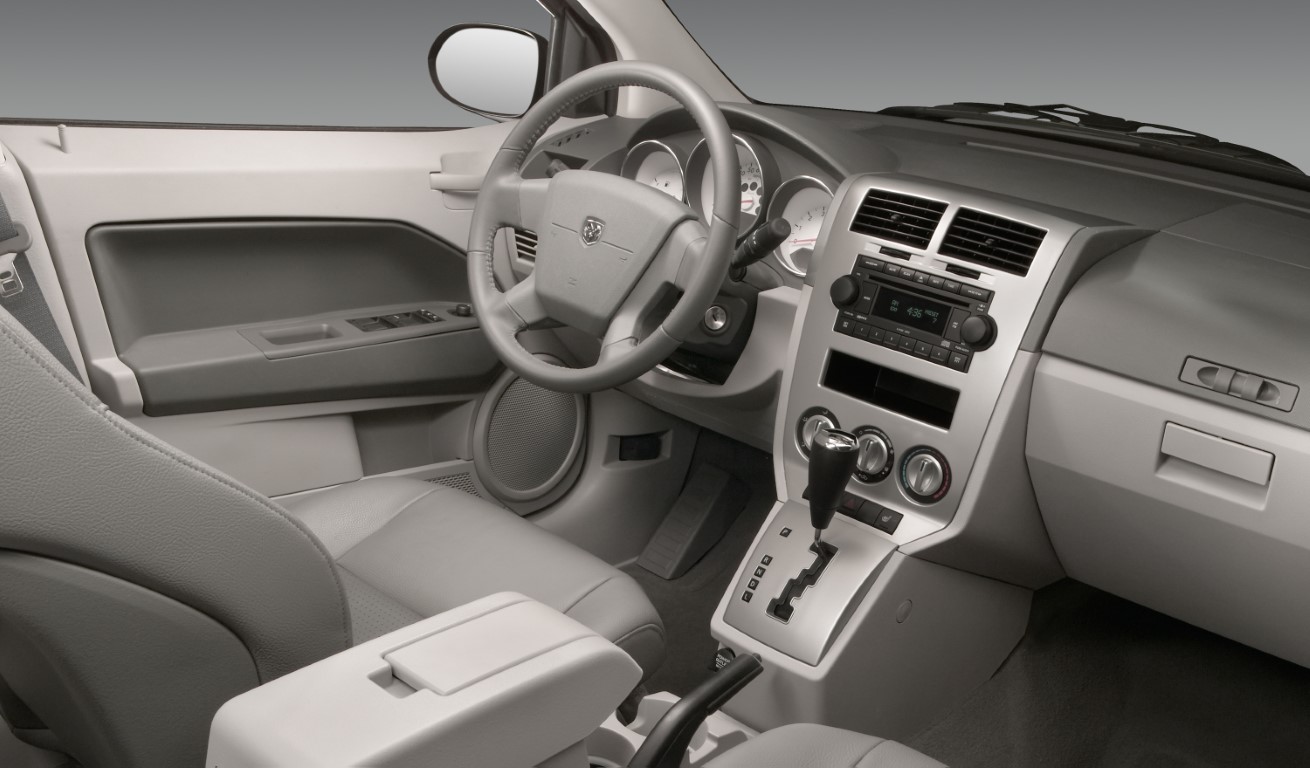
The 2010 update was Chrysler's most direct response to criticism about the Caliber's interior finish, which was frequently described as excessively plasticky and outdated compared to European and Japanese competitors. Unveiled at the 2009 Frankfurt Motor Show, the new cockpit was designed to offer a more harmonious aesthetic and higher quality materials.
Main changes included:
Mechanically, for the European market, the facelift brought the new 2.2L CRD diesel engine, which was 16% more powerful and 5% more efficient than the previous 2.0L TDI engine of Volkswagen origin.
As a global product, the Caliber needed competitive diesel options for the European and Australian markets. The initial partnership with Volkswagen provided the robust 2.0 L Turbo-Diesel engine with Pumpe-Düse (PD) unit injector technology.
| Period | Engine | Power | Torque | Origin / Notes |
|---|---|---|---|---|
| 2006–2007 | 2.0 L I4 Turbo | 138 hp (103 kW) | 229 lb⋅ft | VW (BKD) - Without DPF |
| 2008–2011 | 2.0 L I4 Turbo | 168 hp (125 kW) | 229 lb⋅ft | VW (BMR) - With DPF |
| 2010–2011 | 2.2 L I4 Turbo | 163 hp (120 kW) | 236 lb⋅ft | Mercedes/GEMA - Common Rail |
The 2.2 L CRD engine introduced in 2010 was a significant evolution, using forged steel connecting rods and an aluminum cylinder head to reduce weight and increase durability. This powertrain gave the Caliber a towing capacity of up to 1,500 kg, a 25% increase over the previous model, making it more practical by European standards.
In Australia, the 2010 Caliber SXT was simplified to a single 2.0L gasoline engine offering with CVT, following the discontinuation of manual and diesel variants in that market, aiming to focus on sales volume in urban centers.
To offset criticism about material quality, Dodge equipped the Caliber with a series of convenience features that were unique in its class and aimed at the young and active demographic. The philosophy was that the interior should be an entertainment and practicality space, not just a driving cabin.
Versatility was enhanced by a front passenger seat that folded completely flat forward, allowing for the transport of long objects (such as a ladder or surfboard), and by rear seats that not only folded in a 60/40 split but also offered recline for greater passenger comfort.
The Dodge Caliber launch campaign in 2006 was one of Chrysler's most ambitious and aggressive of that decade. With a budget representing 20% of the entire Dodge brand advertising spend for that year, the focus was on "irreverence" and the rejection of the "cute" design that characterized many compacts of the time, such as its predecessor, the Neon.
The slogan "Anything But Cute" was the basis of advertisements showing the Caliber in highly unconventional situations. One of the most memorable TV commercials, titled "Moon Dog," featured a mutt in a Caliber "mooning" purebred dogs in competing cars. Another ad showed the Caliber being tattooed or having its rear end "photocopied" on an office machine.
The strategy aimed to attract young men between 25 and 35, but it also resonated with women seeking an image of strength and safety. Dodge also invested in pioneering digital marketing, creating the "Caliber Buzz" game in Adobe Shockwave, where users controlled a mosquito flying through the car's interior to discover its technological features. This multimedia approach attempted to offset the perception that the Caliber was a mechanically simple vehicle, highlighting its lifestyle and attitude.
Despite the innovations, the Dodge Caliber faced a mixed track record regarding safety and reliability, which eventually weighed on its long-term reputation.
The Insurance Institute for Highway Safety (IIHS) gave the model varied ratings. In moderate overlap front impacts, the Caliber was rated "Good". However, in side impacts, the score dropped to "Marginal" due to the lack of torso side airbags in some tested versions. The National Highway Traffic Safety Administration (NHTSA) awarded the 2011 model an overall 3-star rating, with solid 4-star performance in rollovers and frontal impacts, but only 2 stars for driver protection in side impacts.
The model was the subject of several significant recalls that affected quality perception:
Mechanically, the CVT transmission was a constant source of complaints. "Whining" or "groaning" noises were common, often signaling fluid overheating or internal wear of the pulleys. Furthermore, leaks in the sunroof drain tubes could cause severe electrical damage and mold in the interior.
Although the Dodge Caliber was never officially sold in the Brazilian market, its technical influence in the country is profound. Mercedes-Benz's decision not to import the model to Brazil during the DaimlerChrysler era left a gap that was later filled by other vehicles based on the same platform.
The most tangible legacy for Brazil is the 2.4L World Engine. With Fiat's acquisition of Chrysler, this engine evolved into the "Tigershark" family. This new generation retained the basic GEMA block but introduced Fiat's MultiAir 2 system, which uses electro-hydraulic control of the intake valves.
This 2.4L Tigershark engine became the primary power unit for models manufactured in Brazil, such as the Fiat Toro and the Jeep Compass (second generation) between 2016 and 2021. Furthermore, the Caliber's PM/MK platform served as the basis for the Dodge Journey and Fiat Freemont, which were sales successes in the Brazilian used car market. Thus, the mechanical DNA of the Caliber circulated extensively on Brazilian roads, even if the hatchback itself remained a rarity of independent importation.
The Caliber had a vigorous sales performance in its first two years, surpassing 100,000 annual units in the US alone. However, the 2008 economic recession and increased competition from models like the Mazda 3 and Honda Civic led to a steady decline.
| Calendar Year | US Sales | Canada Sales | Europe Sales | Est. Total Sales |
|---|---|---|---|---|
| 2006 | 92,224 | 19,524 | 10,657 | 122,405 |
| 2007 | 101,079 | 18,553 | 16,956 | 136,588 |
| 2008 | 84,158 | 19,544 | 11,056 | 114,758 |
| 2009 | 36,098 | 9,802 | 6,055 | 51,955 |
| 2010 | 45,082 | 7,275 | 3,444 | 55,801 |
| 2011 | 35,049 | 4,919 | 835 | 42,060 |
| 2012 | 10,176 | 282 | 24 | 10,892 |
| Cumulative Total | 403,866 | 79,899 | 49,027 | ~534,459 |
Note: Sales data for 2013 and 2014 represent only the liquidation of remaining inventory units at dealerships after the official end of production.
At the end of its life cycle, the Caliber had sold just over 400,000 units in the United States alone and surpassed the half-million mark globally. Although these numbers did not reach the historical volume of the Dodge Neon, they sustained Chrysler's operations during years of extreme corporate turbulence.
The Dodge Caliber ended its career as a vehicle of contrasts. It was simultaneously a pioneer of the compact crossover concept and a victim of the engineering limitations of its time. Its greatest contribution to the automotive industry was the validation of the "rugged hatchback" format, which today is the norm in almost all entry-level segments.
Technically, the GEMA Alliance proved that global collaboration could produce high-performance, low-cost engines, a lesson that Chrysler/Stellantis would continue to apply in its subsequent Tigershark and Pentastar engines. Culturally, the Caliber remains a milestone of Dodge's "angry" marketing, an identity the brand doubled down on with the later launch of models like the Challenger and Charger SRT.
For the modern used vehicle owner, the Caliber offers a value proposition based on its internal versatility and affordable resale price, although it requires vigilant maintenance, especially regarding the CVT transmission and suspension components. The end of its production in 2011 and its replacement by the Dodge Dart marked the conclusion of a bold experiment by Dodge in trying to redefine what an American compact car could and should be in a globalized landscape.
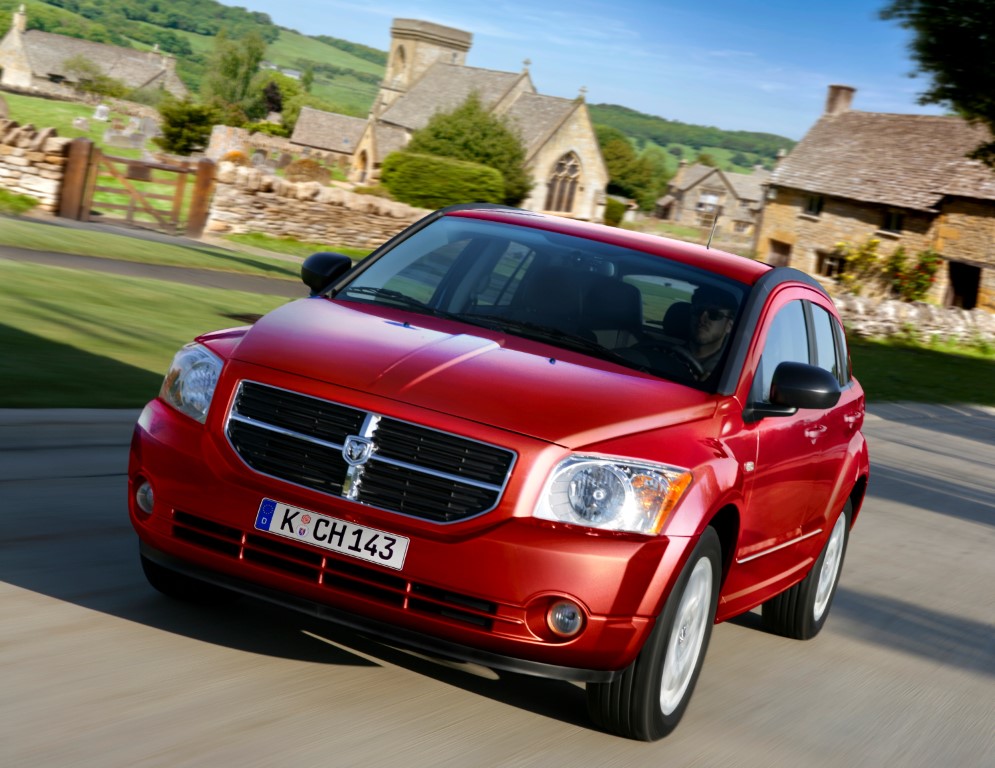
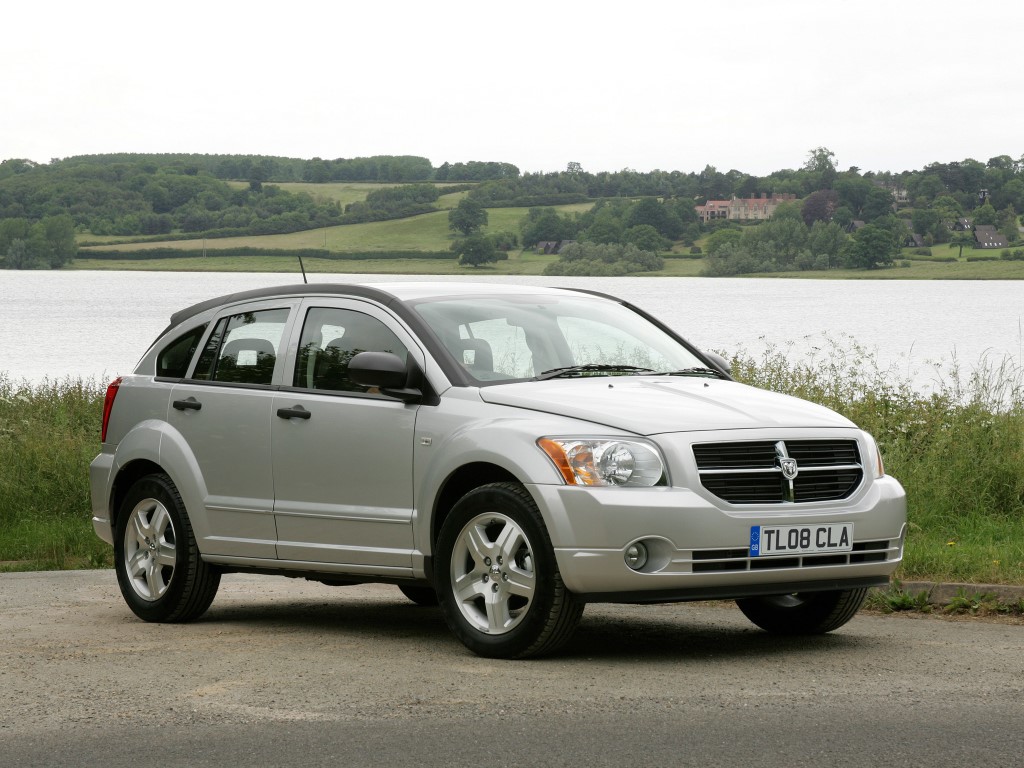
Images of the Dodge Caliber 1.8 16V (Manual)