
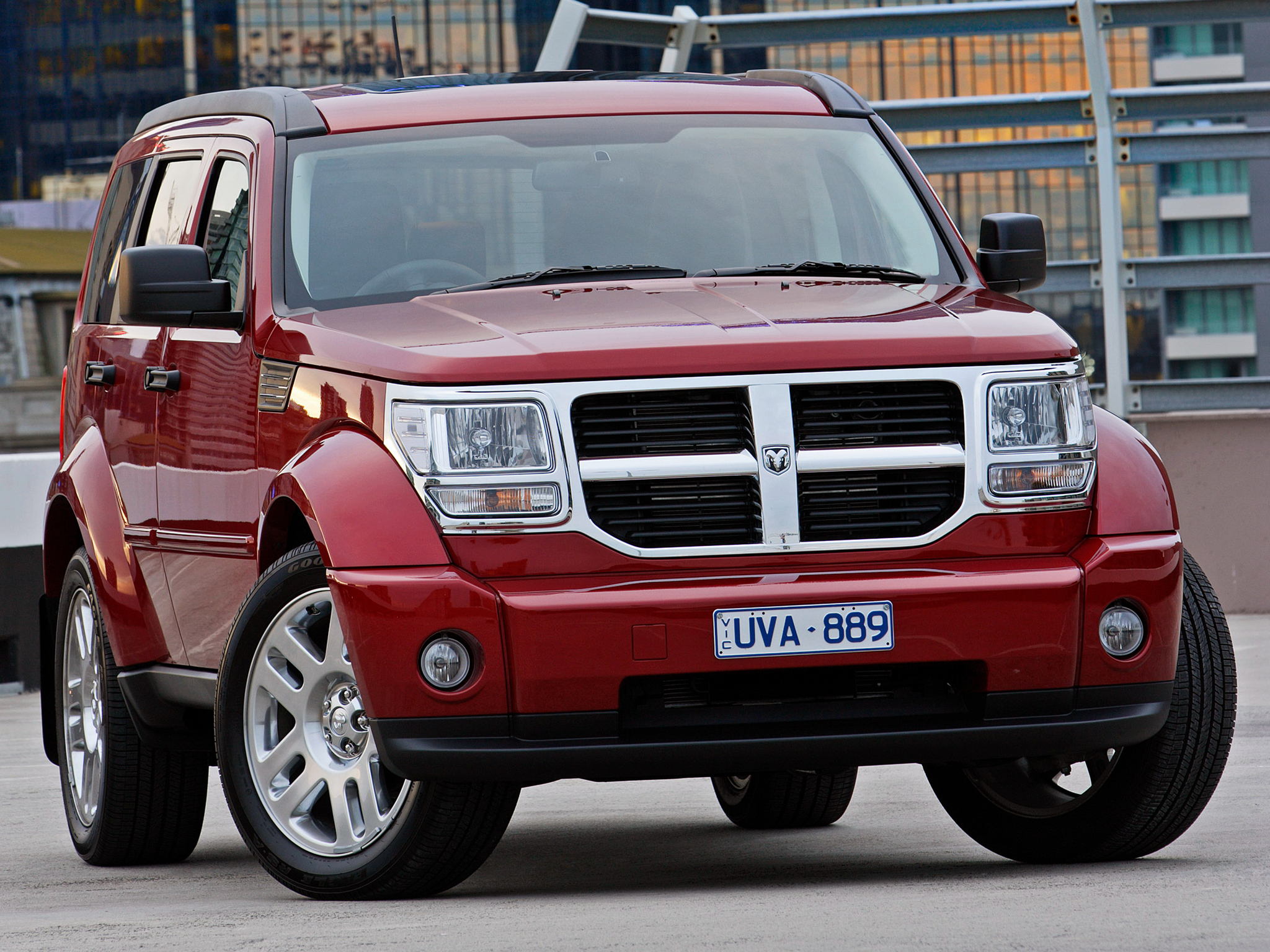
1st Generation
(2006 - 2011)
4.0 V6 24V
260 cv
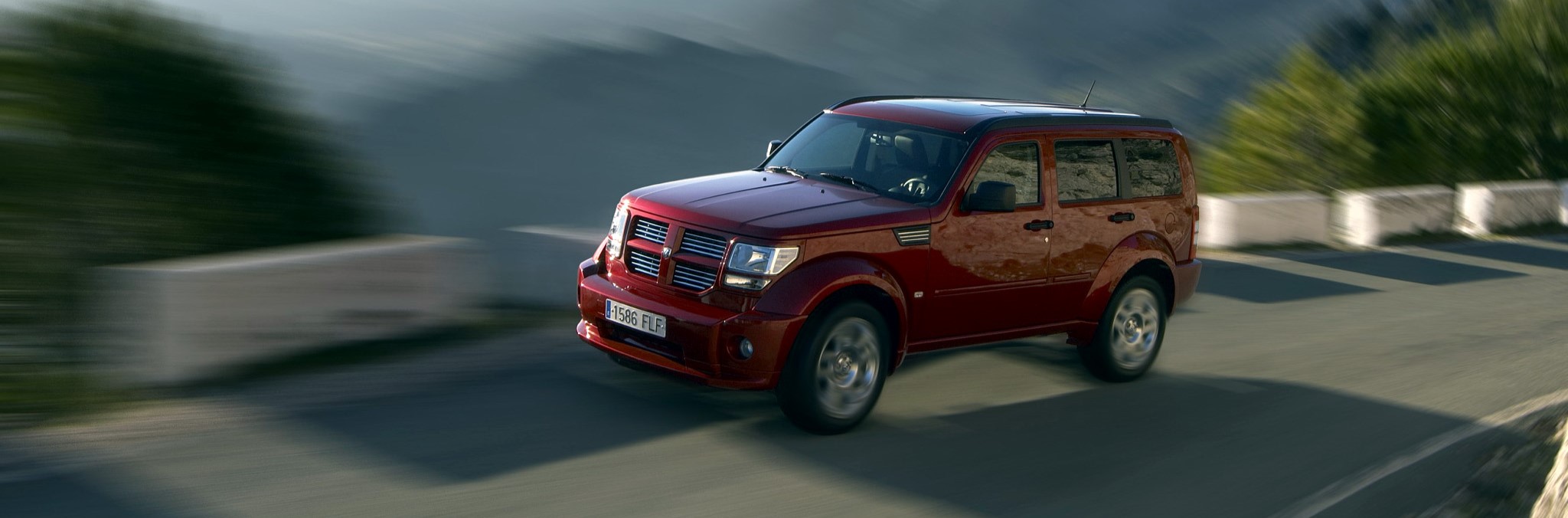
Technical specifications, versions, and history for the Dodge Nitro.
Select a generation to see available versions
(2006 - 2011)
The emergence of the Dodge Nitro on the global automotive scene, in the mid-2000s, represented a bold attempt by the Chrysler Group to redefine aesthetic and functional expectations in the compact and mid-size sport utility vehicle (SUV) segment. In a period marked by automotive designs that prioritized smooth and rounded lines to optimize aerodynamics and urban appeal, the Nitro emerged as a visual antithesis, boasting boxy proportions, flared fenders, and an aggressive stance that recalled the ruggedness of Ram trucks. This report details the complete trajectory of the model, from its conception as a prototype to its discontinuation, analyzing its technical specifications, regional variations, and the commercial impact of its "brash practicality" proposition.
The genesis of the Dodge Nitro goes back to the early 2000s, when Dodge sought to expand its portfolio to include a smaller SUV that could compete in an increasingly fragmented market. Since the discontinuation of the Dodge Raider in 1990 — which was, in fact, a rebadged Mitsubishi Montero/Pajero —, the brand lacked a representative of its own in this category. The development of the Nitro was conducted under the aegis of DaimlerChrysler, using the platform-sharing strategy to optimize engineering resources.
The model was built on the Chrysler KA platform, which served as the basis for the second generation of the Jeep Liberty (known as the Jeep Cherokee in international markets). Although they shared the fundamental architecture and the assembly line at the Toledo North Assembly Plant in Ohio, the Nitro was designed for a distinct purpose. While the Liberty maintained the focus on Jeep's legendary off-road capability, the Nitro was tuned to offer superior performance on paved roads, targeting an urban audience that valued rugged styling but rarely ventured onto severe trails.
The first public appearance of the Nitro occurred at the 2005 Chicago Auto Show, in the form of the Dodge Nitro Concept. The prototype, penned by designer Dennis Myles, captured the public's attention with its anodized red paint and industrial design elements, such as aluminum-finished air vents and a chrome front grille with Dodge's characteristic crosshair motif. The concept was not just a styling exercise; it served to test the public's reaction to a design that avoided subtlety.
The name "Nitro" was inspired by the heavy-caliber "Nitro Express" ammunition cartridges used for big-game hunting, evoking a sense of power and explosive precision. The transition from the concept to series production, initiated in August 2006, preserved almost all of the prototype's aggressive lines, including the pronounced wheel arches and the high beltline that gave the vehicle a dominant visual presence.
The structure of the Dodge Nitro used what Chrysler called unitized construction, which integrated the body with full-length frame rails. This approach aimed to balance the torsional rigidity necessary for towing with weight reduction to improve efficiency and dynamic behavior.
To accommodate the production of two distinct models (Nitro and Liberty) in the same facility, Chrysler invested $600 million in modernizing the Toledo plant. The investment included the addition of 150 robots and a 160,000-square-foot expansion of the factory area, allowing for flexible manufacturing where the assembly line could alternate between models according to market demand.
The dimensions of the Nitro were designed to offer a balance between urban maneuverability and interior space for five passengers. The table below details the vehicle's fundamental measurements:
| Dimension | Measurement (Metric) | Measurement (Imperial) | Reference |
|---|---|---|---|
| Wheelbase | 2,763 mm | 108.8 in | |
| Overall Length | 4,544 - 4,584 mm | 178.9 - 180.5 in | |
| Overall Width | 1,856 - 1,857 mm | 73.1 in | |
| Height (without roof rack) | 1,755 mm | 69.1 in | |
| Track (Front/Rear) | 1,549 mm / 1,549 mm | 61.0 in / 61.0 in | |
| Ground Clearance | 210 - 221 mm | 8.1 - 8.7 in |
The Dodge Nitro was offered with three main engine options, varying according to the model year and regional market. Engineering focused on providing enough torque for towing, one of the vehicle's main selling points at the time, which boasted a class-leading towing capacity of 5,000 pounds (2,270 kg).
This powertrain served as the base unit for the SXT and SLT versions in North America. It was a 90-degree, 12-valve SOHC engine, with a cast iron block and aluminum cylinder heads. Revisions to the valvetrain and combustion chamber were implemented to smooth the idle and reduce engine noise.
| Specification | Detail | Reference |
|---|---|---|
| Displacement | 3,701 cm³ (226 cu in) | |
| Maximum Power | 210 hp (157 kW) @ 5,200 rpm | |
| Maximum Torque | 319 Nm (235 lb-ft) @ 4,000 rpm | |
| Compression Ratio | 9.7:1 | |
| Fuel System | Sequential Multiport Electronic Fuel Injection |
Exclusive to the R/T version (and later available in performance packages), this engine was an evolution of Chrysler's 3.5-liter unit. It used a three-plenum intake manifold with short-runner valves (electronic control valves) to optimize airflow across different rev ranges, resulting in a flatter torque curve and better mid-range response.
| Specification | Detail | Reference |
|---|---|---|
| Displacement | 3,952 cm³ (241 cu in) | |
| Maximum Power | 260 hp (191 kW) @ 6,000 rpm | |
| Maximum Torque | 360 Nm (265 lb-ft) @ 4,200 rpm | |
| Compression Ratio | 10.3:1 | |
| Construction | Aluminum block with cast iron liners |
For markets outside North America, including Europe and Brazil, Chrysler made available a four-cylinder diesel engine manufactured by VM Motori. This engine, known as the "Panther", featured third-generation common-rail direct injection operating at 1600 bar and a variable geometry turbocharger.
| Specification | Detail | Reference |
|---|---|---|
| Displacement | 2,768 cm³ (169 cu in) | |
| Maximum Power | 177 hp (130 kW) @ 3,800 rpm | |
| Torque (Automatic) | 460 Nm (339 lb-ft) @ 2,000 rpm | |
| Torque (Manual) | 410 Nm (303 lb-ft) | |
| Valvetrain | Belt-driven 16-valve DOHC |
The Nitro's mechanical diversity extended to its transmission and drivetrain systems. Initially, the model offered a six-speed manual transmission (NSG370), standard for the 3.7L engine in 4x2 and 4x4 configurations until the 2008 model year. Automatic options included the veteran four-speed 42RLE gearbox for the 3.7L engine and the more modern five-speed W5A580 for the 4.0L and 2.8L diesel engines.
The drivetrain systems were divided into two categories:
Unlike the Jeep Liberty, the Nitro did not offer a transfer case with low range, a deliberate engineering decision to emphasize its on-road vocation and reduce technical complexity for the average urban SUV user.
The Dodge Nitro's trajectory was marked by incremental updates and a significant reorganization of versions in 2010. The model never received a profound exterior redesign, maintaining its original silhouette until the end of production.
The launch introduced the SXT, SLT, and R/T versions. The SXT version was the base, focused on value, while the SLT added comforts like the "Load 'N Go" system. This system was a sliding cargo floor that could be extended out of the rear by 18 inches, supporting up to 400 pounds (181 kg), immensely facilitating the loading of heavy objects without the user needing to bend into the trunk. The R/T version, in turn, featured the 4.0L engine, sport suspension, and 20-inch chrome wheels.
Dodge added the "SXT C" package, which brought body-color moldings and fascias, conferring a more sophisticated look. Inside, the R/T version gained two-tone seats with inserts in vibrant colors like Inferno Red, Electric Blue, or Sunburst Orange. In terms of safety, Trailer Sway Control became standard, and the ParkSense rear park assist system was made available as an option.
The lineup was simplified to the SE (replacing the SXT) and SLT levels. The manual transmission was discontinued on all North American models, making the four-speed automatic the standard for the 3.7L engines. Mechanical improvements included suspension tuning for a smoother ride and revisions to the braking system to improve pedal feel and effectiveness. The R/T ceased to be a standalone trim and became an upgrade package for the SLT version.
This was the year of the most drastic nomenclature change. The traditional versions gave way to the names:
Technically, the 2010 Nitro introduced interactive Decel Fuel Shut Off (iDFSO), aiming to improve fuel economy, and active head restraints to increase protection against whiplash injuries in rear-end collisions. The Load 'N Go system was discontinued this year.
In its final year of full production for the public, all Nitro models came equipped with 20-inch wheels as standard, reinforcing the brand's "aggressive" aesthetic identity. The interior received new upholstery materials, and the "Heat 4.0 Lifestyle" package was launched, democratizing the more powerful engine in a more affordable price configuration.
Mass production for the general public ended on December 16, 2011. The models designated as 2012 were produced in limited quantities exclusively for the fleet market (rental companies and government fleets), maintaining the 2011 specifications without significant changes.
The trajectory of the Dodge Nitro in Brazil was discreet but relevant for Chrysler's positioning in the country during the 2000s. The model was imported mainly in the versions equipped with the 2.8 CRD Turbo Diesel engine and the 4.0 V6 gasoline. In Brazil, the towing capacity and rugged design were the main selling points against competitors like the Chevrolet Captiva or the Hyundai Santa Fe.
However, the vehicle did not escape recall campaigns on Brazilian soil. Recently, in 2020 and 2021, FCA (Fiat Chrysler Automobiles) summoned owners of units from the years 2007 and 2008. The identified problem lay in the attachment of the emblem and its internal clips in the center of the steering wheel. In the event of the driver's airbag deploying in a collision, the emblem or its clips could come loose and be hurled at the occupants, causing serious or fatal injuries. In total, hundreds of units of the Town & Country, Grand Caravan, and Nitro models were involved in this recall.
The Dodge Nitro had a promising sales start in the United States, but faced a sharp decline that culminated in its early discontinuation. The following table details the annual sales in the North American market, which reflect the model's reception by the public:
| Calendar Year | US Sales (Units) | Notes | Reference |
|---|---|---|---|
| 2006 | 16,990 | Late-year launch | |
| 2007 | 74,825 | Best sales year | |
| 2008 | 36,368 | Start of the financial crisis and high fuel prices | |
| 2009 | 17,443 | Chrysler reorganization and drop in demand | |
| 2010 | 22,618 | Partial recovery with new trim names | |
| 2011 | 24,434 | Last full year of production | |
| 2012 | 3,269 | Remaining fleet units | |
| Total | 195,947 | Cumulative total in the United States |
Globally, it is estimated that total production reached the mark of approximately 200,000 units. Although the number seems significant, it fell short of Chrysler's initial expectations, especially when compared to the performance of its direct competitors.
The Nitro operated in one of the industry's most competitive segments. To understand its decline, it is necessary to compare its characteristics with rivals of the time.
| Attribute | Dodge Nitro | Toyota RAV4 / Ford Escape |
|---|---|---|
| Design | Aggressive, industrial, boxy | Conservative, aerodynamic |
| Chassis | Truck-based (stiff) | Car-based (unibody) |
| Efficiency | Low (17-18 combined MPG) | High (21-25 combined MPG) |
| Capability | Towing Focus (5,000 lbs) | Passenger/Light cargo Focus |
| Handling/Maneuverability | Heavy, 36.3 ft turning radius | Agile, easy to park |
The most recurring criticisms of the Nitro focused on the quality of the interior materials, described as low-cost plastics and imprecise assembly, and on the limited visibility due to the narrow windows and wide pillars. Furthermore, the 3.7L engine coupled to the four-speed gearbox was seen as an archaic combination that harmed both performance and fuel consumption at a time when gasoline prices in the US were rising steeply.
Another determining factor for the end of the Nitro was the introduction of the Dodge Journey in 2009. While the Nitro was a rear-wheel-drive SUV with rudimentary aptitudes, the Journey was a modern crossover, based on the Dodge Avenger platform, offering seven seats, better fuel economy, and a much more comfortable ride. The Journey quickly became the preferred choice for families, leaving the Nitro to an increasingly smaller niche of buyers who prioritized only the aggressive look.
The Dodge Nitro ended its life cycle as a vehicle of divided opinions. For some, it was a strategic mistake by a Chrysler in crisis, a product that prioritized style over substance and efficiency. For others, especially enthusiasts of the Dodge brand and the Mopar group, the Nitro is a modern classic, appreciated for its mechanical simplicity, ease of maintenance, and a design that still stands out in traffic today.
Mechanically, the Nitro was one of the last SUVs in its class to offer a five-link solid rear axle, a configuration that ensured durability for cargo but was abandoned by the industry in favor of independent multilink suspension to prioritize comfort. The "Load 'N Go" system remains one of the smartest cargo ergonomics innovations of the decade, rarely replicated with such simplicity and strength.
In short, the history of the Dodge Nitro is the story of a vehicle that tried to "grab life by the horns" in a world that was beginning to demand smoother and more politically correct vehicles. Its discontinuation in favor of the Journey and, more recently, the launch of the Dodge Hornet as the brand's new compact competitor, signal Dodge's definitive shift towards lighter and more technological platforms. However, the Nitro remains a visual milestone of an era of American stylistic boldness that is unlikely to be repeated with the same industrial intensity.