Dodge Stealth

Dodge Stealth

Technical specifications, versions, and history for the Dodge Stealth.

Dodge Stealth Generations

Select a generation to see available versions

Dodge Stealth G1

1st Generation

(1991 - 1993)

3.0 V6 24V Twin-Turbo 300 cv
Dodge Stealth G1F

1st Generation Facelift

(1994 - 1996)

3.0 V6 24V Twin-Turbo 324 cv

Technical Data and History: Dodge Stealth

Introduction and Historical Roots

The trajectory of the Dodge Stealth in the global automotive scene represents one of the industry's most intriguing chapters, symbolizing the peak of the 1990s technological sports car era. This vehicle was not merely a niche model, but rather the result of a deep strategic alliance between Chrysler Corporation and Mitsubishi Motors, designed to compete in a market that was rapidly being dominated by high-performance Japanese engineering. Launched in 1991, the Stealth was a direct response to icons like the Toyota Supra, the Nissan 300ZX, and the Mazda RX-7, bringing a mechanical sophistication to Dodge dealerships that the brand, traditionally focused on large-displacement V8 engines, did not yet possess natively.

Historical Roots and the Chrysler-Mitsubishi Partnership

To understand the existence of the Dodge Stealth, it is necessary to go back to the 1970s when Chrysler acquired a 15% stake in Mitsubishi Motors. This union allowed the American automaker to sell rebadged Japanese vehicles, known as "captive imports," to fill gaps in its catalog, especially in segments where fuel economy or compact technology were paramount. Models like the Dodge Colt and the Dodge Conquest paved the way for what would be the most ambitious project of this partnership.

The Stealth was born from the joint development that also generated the Mitsubishi GTO (known internationally as the 3000GT). Although the car was manufactured entirely at the Mitsubishi plant in Nagoya, Japan, Chrysler's design team played a fundamental role in the aesthetic differentiation of the model. While the Mitsubishi 3000GT exhibited a more aggressive look, with prominent air intakes and active aerodynamic systems, the Dodge Stealth was conceived with a more fluid and futuristic design philosophy, focused on the "cab-forward" concept, which positioned the cabin further forward to optimize airflow and interior space.

Production of the Stealth began in 1990, and its official market introduction occurred in 1991. The model was positioned as an "everyday supercar," offering performance levels that rivaled exotic brands like Ferrari and Lotus, but for a fraction of the cost. However, its foreign origin caused significant political tensions. In 1991, the Stealth was initially selected to be the pace car for the Indianapolis 500, but protests from the United Auto Workers (UAW) union forced Chrysler to replace the model with a Dodge Viper prototype, arguing that a car manufactured in Japan should not lead one of the most traditional races in the United States.

First Generation (1991–1993): Innovation and Variety

The initial launch of the Dodge Stealth in 1991 brought four distinct trim levels, allowing the model to reach a broad base of consumers, from those looking just for a stylish coupe to extreme performance enthusiasts.

Model Structure and Initial Engines

The engine options were all based on Mitsubishi's robust 6G72 block, a 3.0-liter V6, but with significant variations in terms of cylinder heads and aspiration.

Version Engine Configuration Power (hp) Torque (lb-ft) Transmission Drivetrain
Base 3.0L V6 SOHC 12v 164 185 5-MT / 4-AT Front (FWD)
ES 3.0L V6 DOHC 24v 222 201 5-MT / 4-AT Front (FWD)
R/T 3.0L V6 DOHC 24v 222 201 5-MT / 4-AT Front (FWD)
R/T Twin Turbo 3.0L V6 DOHC 24v Twin Turbo 300 307 5-MT All-Wheel (AWD)

The Base model served as the entry point, utilizing a single overhead camshaft (SOHC) cylinder head. While not a performance monster, it offered reliable drivability and the Stealth's futuristic look for a competitive price. The ES and R/T models stepped up with the dual overhead camshaft (DOHC) head, providing 222 horsepower, putting them ahead of many V8 engines of that era in terms of efficiency and torque delivery.

The true star was the R/T Twin Turbo. Equipped with two turbochargers and two intercoolers, this model delivered 300 horsepower and featured a permanent all-wheel-drive system. It wasn't just fast in a straight line, hitting 0 to 100 km/h (62 mph) in about 5 seconds, but it was also a technological showcase, including four-wheel steering (AWS) and electronically adjustable suspension.

Design and Aerodynamics of the First Phase

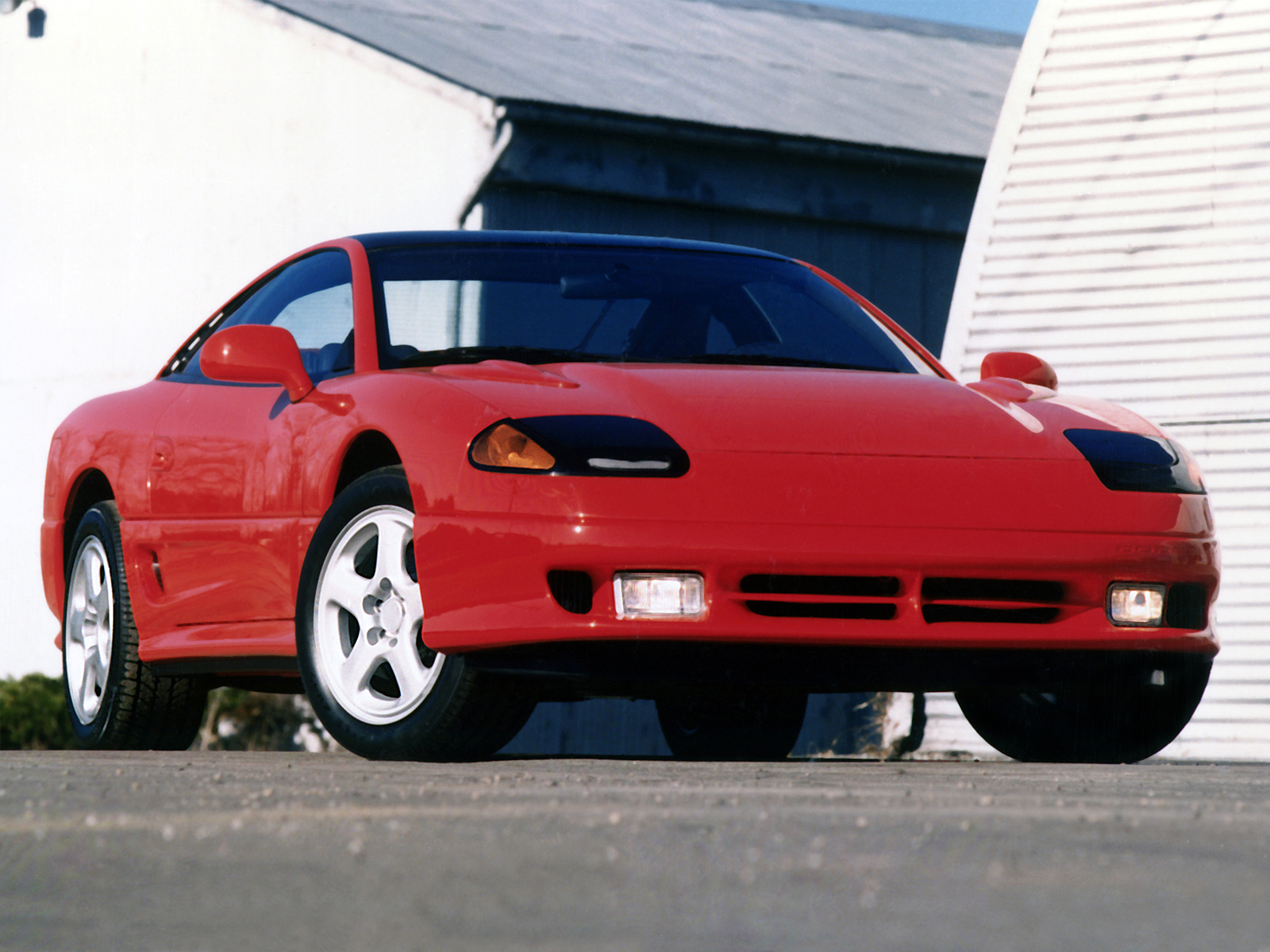
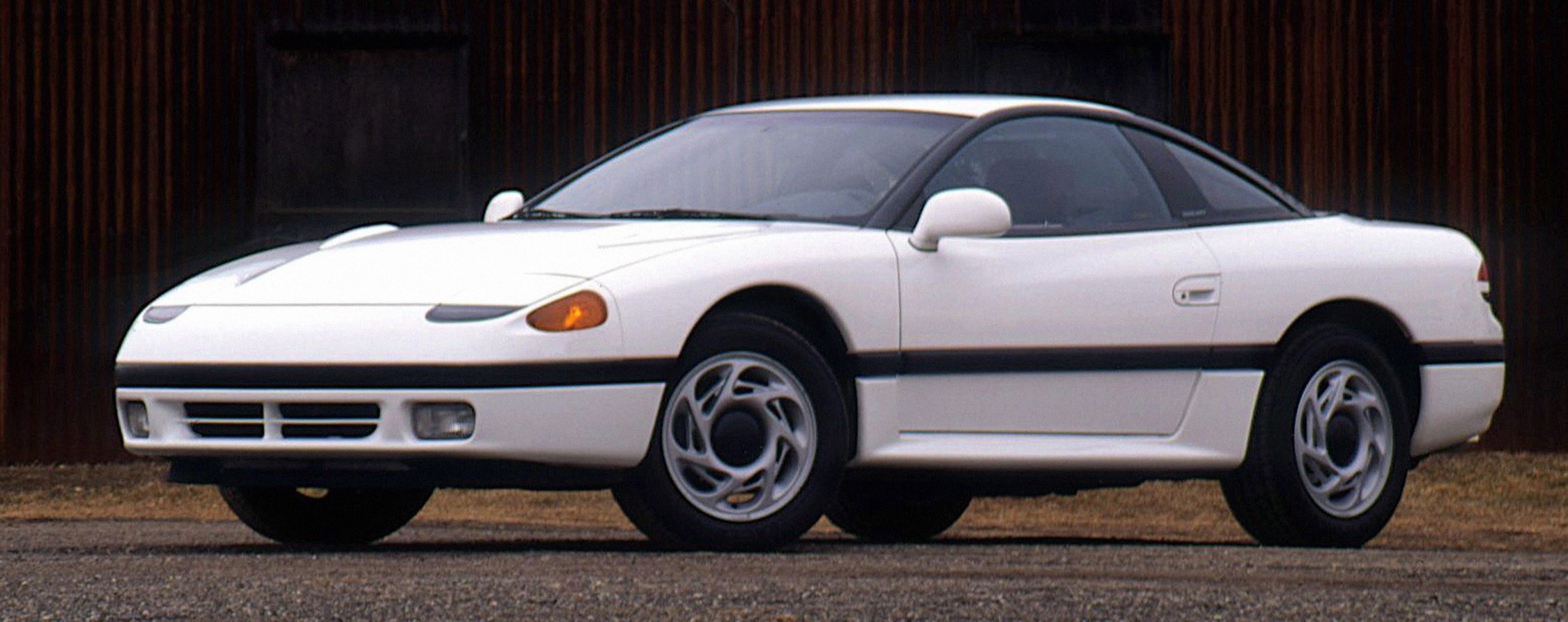
Aesthetically, the 1991 to 1993 models were characterized by pop-up headlights, a hallmark of sports cars of the time. The drag coefficient was a mere 0.33, which was equivalent to much newer and more expensive supercars like the Lamborghini Murciélago. A fundamental difference between the Stealth and its Mitsubishi 3000GT sibling was the absence of the active aerodynamics system on the Dodge; while the 3000GT had moving spoilers, the Stealth used a fixed hoop spoiler that was integrated into the design of the rear decklid.

Inside, the car offered a driver-focused environment, with instruments angled towards the driver and the option of a digital instrument cluster that reinforced the high-tech image. Rear space was limited, configured as a 2+2, more suitable for children or small luggage.

1993 Mechanical Evolutions

The year 1993 marked an important technical transition for the 6G72 engine. Mitsubishi introduced a forged crankshaft and a reinforced block with four bolts on the main bearings (4-bolt main), replacing the previous two-bolt configuration. This change was crucial for long-term durability, especially for owners who wanted to increase turbo boost in aftermarket modifications. In addition, the air conditioning system began to be updated to R134a fluid, abandoning the old R12 in compliance with new environmental regulations.

Second Generation and Facelift (1994–1996): The Pinnacle of Performance

In 1994, the Dodge Stealth underwent its most significant transformation. This facelift was not just cosmetic; it brought mechanical updates that elevated the car to a new level of performance, solidifying its position as one of the most advanced sports cars in the world at the time.

Aesthetic and Structural Changes

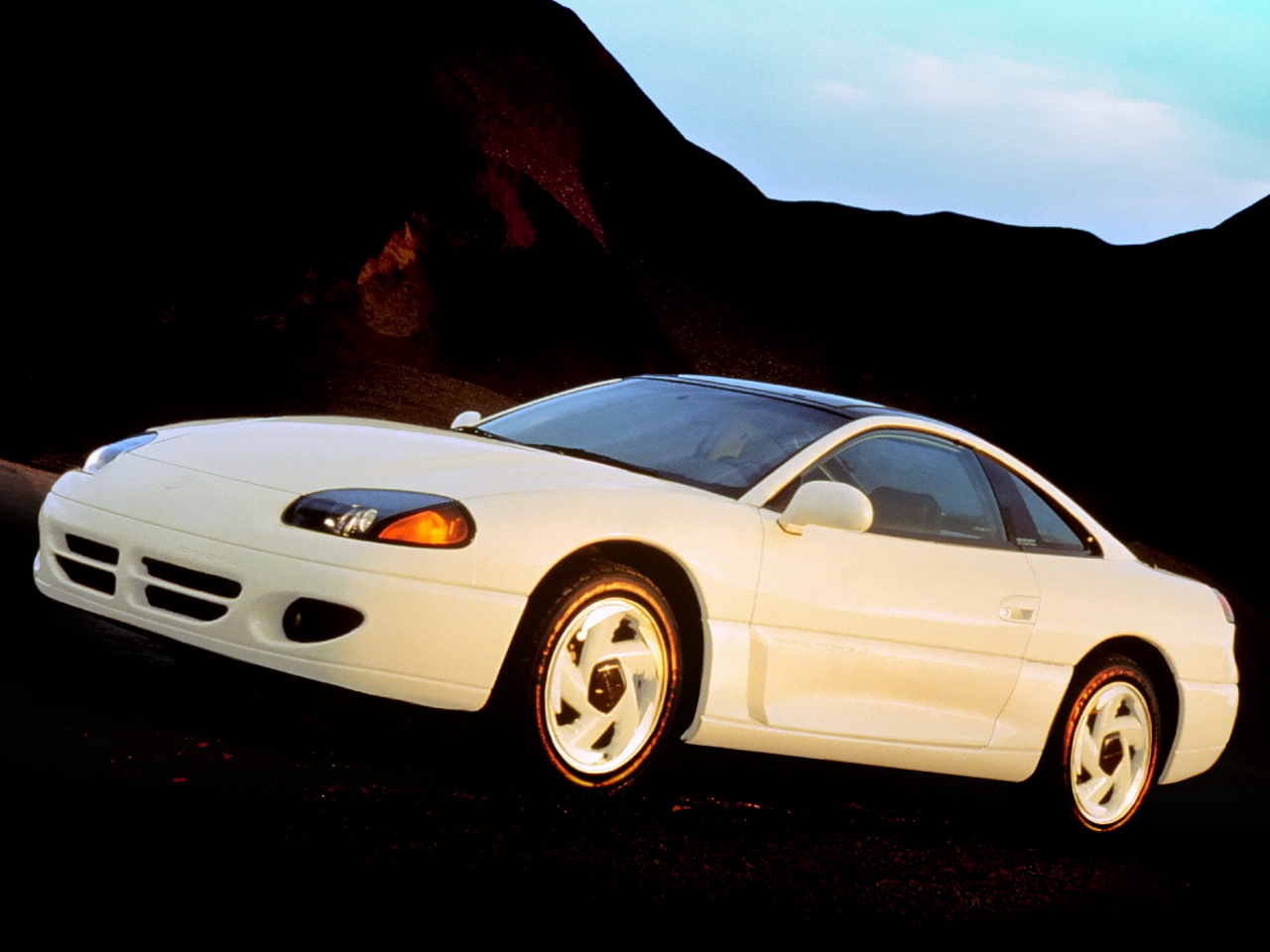
The most obvious visual change was the elimination of the pop-up headlights, replaced by four fixed projector headlights under Lexan lenses. The hood was also redesigned to be flatter, eliminating the blisters that were previously necessary to accommodate the headlight mechanism and suspension towers. The front and rear bumpers gained smoother and more integrated lines, and the side ventilation openings were revised for a more modern look.

During this period, Chrysler simplified the model lineup. The ES trim was discontinued, leaving the Base, R/T, and R/T Twin Turbo models. A new luxury package, the R/T Luxury Equipment Package, was introduced for the naturally aspirated model, including items such as a black roof, dual-mode active suspension, and a premium 150-watt Infinity audio system.

The Power Jump and the New Transmission

The R/T Twin Turbo model's engine received a software update and mechanical tweaks that raised power from 300 hp to 320 hp, while torque rose to 315 lb-ft. However, the change most celebrated by enthusiasts was the replacement of the 5-speed transmission with a new 6-speed gearbox from Getrag. This new transmission allowed for better exploitation of the turbos' powerband, resulting in even faster acceleration times, with the quarter-mile being completed in the 13-second range.

Technical Specification (1994-1996)

R/T Twin Turbo Details Specification
Engine V6 3.0L DOHC 24v Twin Turbo
Maximum Power 320 hp @ 6,000 rpm
Maximum Torque 315 lb-ft @ 2,500 rpm
Transmission Getrag 6-MT (Manual)
Drivetrain System Permanent AWD with Viscous Coupling
Wheels / Tires 18" Chrome / P245/40ZR18 (Optional)
Avant-garde Technologies: A Car Ahead of its Time

The Dodge Stealth R/T Twin Turbo was, in essence, a laboratory on wheels. Many of the technologies it offered in 1991 would only become common in luxury sports cars decades later.

All-Wheel Drive and All-Wheel Steering (AWS)

The all-wheel-drive (AWD) system used a center differential with a viscous coupling that distributed 45% of the torque to the front and 55% to the rear under normal conditions. This guaranteed exceptional traction in any weather, allowing the Stealth to accelerate safely where rear-wheel-drive cars would struggle.

The All-Wheel Steering (AWS) technology was even more impressive. At speeds above 50 km/h (31 mph), the hydraulic system allowed the rear wheels to turn up to 1.5 degrees in the same direction as the front wheels. This was not designed for parking maneuvers, but rather to increase stability in high-speed corners and highway lane changes, combating the car's natural tendency to understeer due to its heavy weight.

Electronic Suspension and Active Exhaust

The Electronically Controlled Suspension (ECS) offered two modes: "Tour" and "Sport". In Tour mode, the computer monitored G-force, braking, and acceleration sensors to automatically adjust the firmness of the shock absorbers between three damping levels in fractions of a second. In Sport mode, the suspension remained permanently in the stiffest setting for maximum track performance.

The Active Exhaust was another unique feature. Via a button on the dash, the driver could actuate a valve in the rear muffler. In quiet mode, gases were routed to reduce noise in urban areas; in sport mode, the flow was opened up for a deeper rumble and a slight reduction in backpressure. Although some critics of the time considered these systems excessive, they demonstrated Mitsubishi and Chrysler's ambition to create the most advanced car in its class.

Production Statistics and Market Decline

Despite its technical excellence, the Dodge Stealth faced significant commercial challenges. After a resounding initial success, sales began to drop drastically starting in 1994. This was due to several factors, including the price increase (the R/T Twin Turbo reached about $38,000 in 1996), the complexity of maintenance, and the shift in American consumer preference towards SUVs and pickup trucks.

Detailed Annual Production by Model

Below, the compiled data shows the Stealth's production trajectory throughout its lifespan.

Year Base ES R/T R/T Turbo R/T Luxury Total Annual
1991 4,529 5,756 3,979 3,016 0 17,280
1992 4,811 5,283 5,247 4,355 0 19,696
1993 6,351 5,282 2,317 1,299 0 15,249
1994 4,346 0 2,493 924 681 8,444
1995 2,856 0 1,418 0* 0 4,274
1996 188 0 115 57 0 360
Total 23,081 16,321 15,569 9,651 681 65,303

*Note: Some sources indicate that no R/T Turbo models were produced for general sale in 1995, returning only for the final 1996 batch.

An analysis of the numbers reveals that the Stealth was more popular than the Mitsubishi 3000GT in the first three years. However, from 1994 onwards, the situation reversed, with the Japanese model maintaining more stable sales while Dodge saw its coupe rapidly lose ground. The volume of just 360 units in 1996 makes examples from this year extremely rare and coveted by collectors.

The Final Year: 1996 and the End of the Line

The year 1996 marked the farewell of the Dodge Stealth. Chrysler decided to end importation of the model, while Mitsubishi continued to produce the 3000GT for a few more years. The few cars produced in 1996 featured exclusive refinements that differentiate them from all other years.

Exclusive Features of the 1996 Model

  • Rear Spoiler: A new spoiler design was introduced, featuring a more pronounced curve at the ends to improve stability and aesthetics.
  • Roof Paint: For the first time, R/T Twin Turbo models could come with a body-colored roof, abandoning the black roof that was standard on previous Turbo models.
  • Rare Colors: Shades such as Orchid Pearl (a metallic purple hue) and Olive Pearl Green were introduced.
  • Wheels and Interior: 18-inch chrome wheels became standard for the Turbo model, shod with high-performance Pirelli P-Zero tires. The interior received updates to the Infinity sound system, now supporting a 6-CD changer in the trunk.

The rarity of the 1996 model is such that well-preserved examples, such as those painted in Galaxy White Pearl (only 17 produced in that configuration), are considered "unicorns" in the enthusiast market.

Driving Dynamics and Owner Experience

Driving a Dodge Stealth R/T Twin Turbo in the 90s was a surreal experience. Due to its weight of nearly 1,800 kg (4,000 lbs), it was not a car of extreme agility like the Mazda RX-7, but rather an imposing "Grand Tourer". Its high-speed stability was comparable to high-speed trains; the combination of AWD traction and electronic suspension allowed the driver to take corners at speeds that defied physics for a car of those dimensions.

However, this complexity came at a price. Maintenance of the Stealth became notorious for its difficulty. The engine bay is so cramped that simple tasks, like changing the rear spark plugs or the timing belt, require small hands and a lot of patience, or often the removal of several auxiliary components. Furthermore, early-generation electronic systems (like the active suspension and AWS) are prone to failure over time, and replacement parts have become scarce and expensive.

Despite this, the 6G72 engine proved to be an exceptional platform for modifications. With simple tweaks to the turbo boost and the fuel system, it was not difficult to extract 450 horsepower from the block, allowing the Stealth to humiliate much newer and more expensive cars on the drag strip.

The Successor and Legacy in Automotive Culture

After the cancellation of the Stealth in 1996, Dodge attempted to fill the void with the Dodge Avenger. Although visually inspired by the Stealth (especially the wraparound taillights), the Avenger was a much more modest car, based on the Chrysler Sebring platform and lacking the all-wheel drive options or high-performance turbo engines of its predecessor.

The Stealth's legacy, however, remains alive among enthusiasts of Japanese cars from the "Bubble Era". It is often seen as the "underdog" of that generation. While the Toyota Supra gained worldwide fame through movies and games, the Stealth remained under the radar (living up to its name), being appreciated by a smaller circle of connoisseurs who value its pioneering technology and its design that still looks modern today.

Recently, rumors have surfaced that Dodge may resurrect the Stealth name for a new model, possibly a hybrid or electric SUV. While this represents a drastic shift in philosophy compared to the original technological coupe, it shows that the name still carries significant weight and an aura of innovation within the brand.

Technical Conclusion and Recommendations

The Dodge Stealth represents the peak of an era where automakers were not afraid to take risks with complex technologies to achieve technical supremacy. For the modern collector, the 1994 to 1996 R/T Twin Turbo model represents the best investment, combining the updated look of the fixed headlights with the robustness of the 6-speed transmission and the 320 hp engine.

Positive Point Negative Point
Exceptional traction in all conditions (AWD) Extremely difficult and expensive maintenance
Futuristic design that has aged very well High weight hinders agility on tight tracks
6G72 engine highly capable of receiving upgrades Scarcity of Dodge brand-specific parts
Comfortable cabin with many technological features Complex electronics prone to age-related failures

The Dodge Stealth was, and remains, a testament to the ambition of the 1990s. It proved that Dodge could offer a world-class vehicle that didn't rely solely on brute force, but on refined mechanical and electronic intelligence. For those seeking a classic that offers real supercar performance with a unique origin story, the Stealth remains one of the most fascinating and technically rich options in the used car market.

Technical data based on: • Official manufacturer catalogs • EPA / WLTP documentation when available • Official press releases

Editorial content produced by Gabriel Carvalho. | Última revisão: Dezembro/2025.