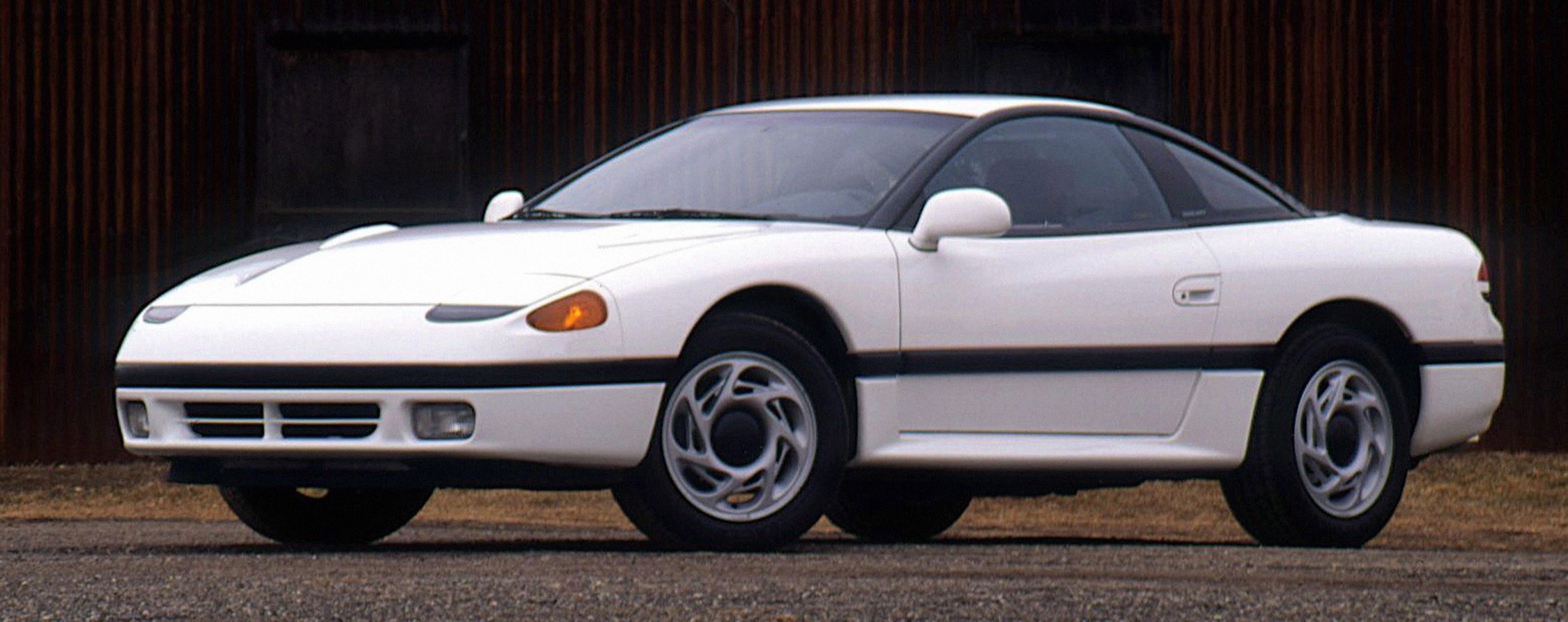
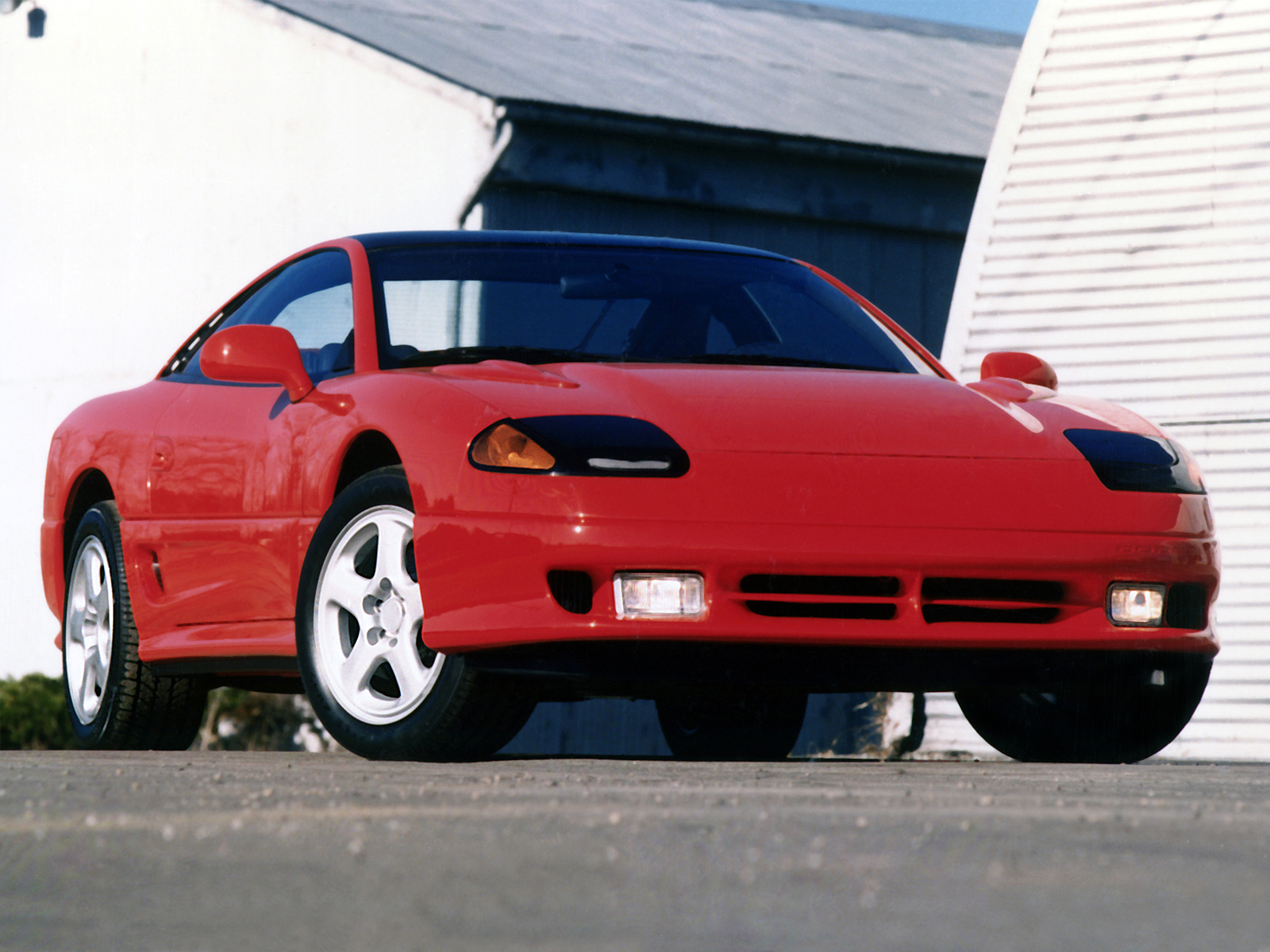
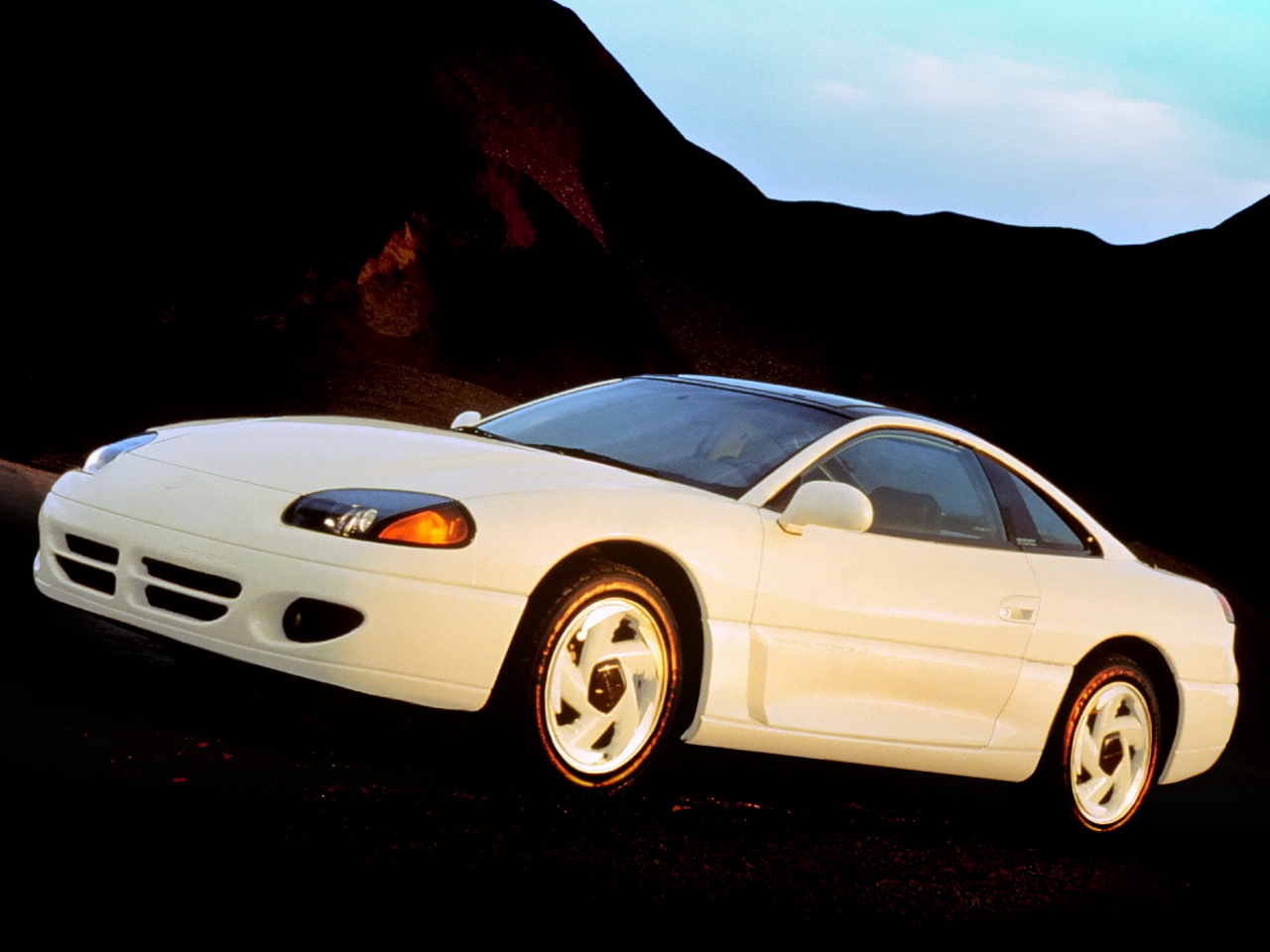
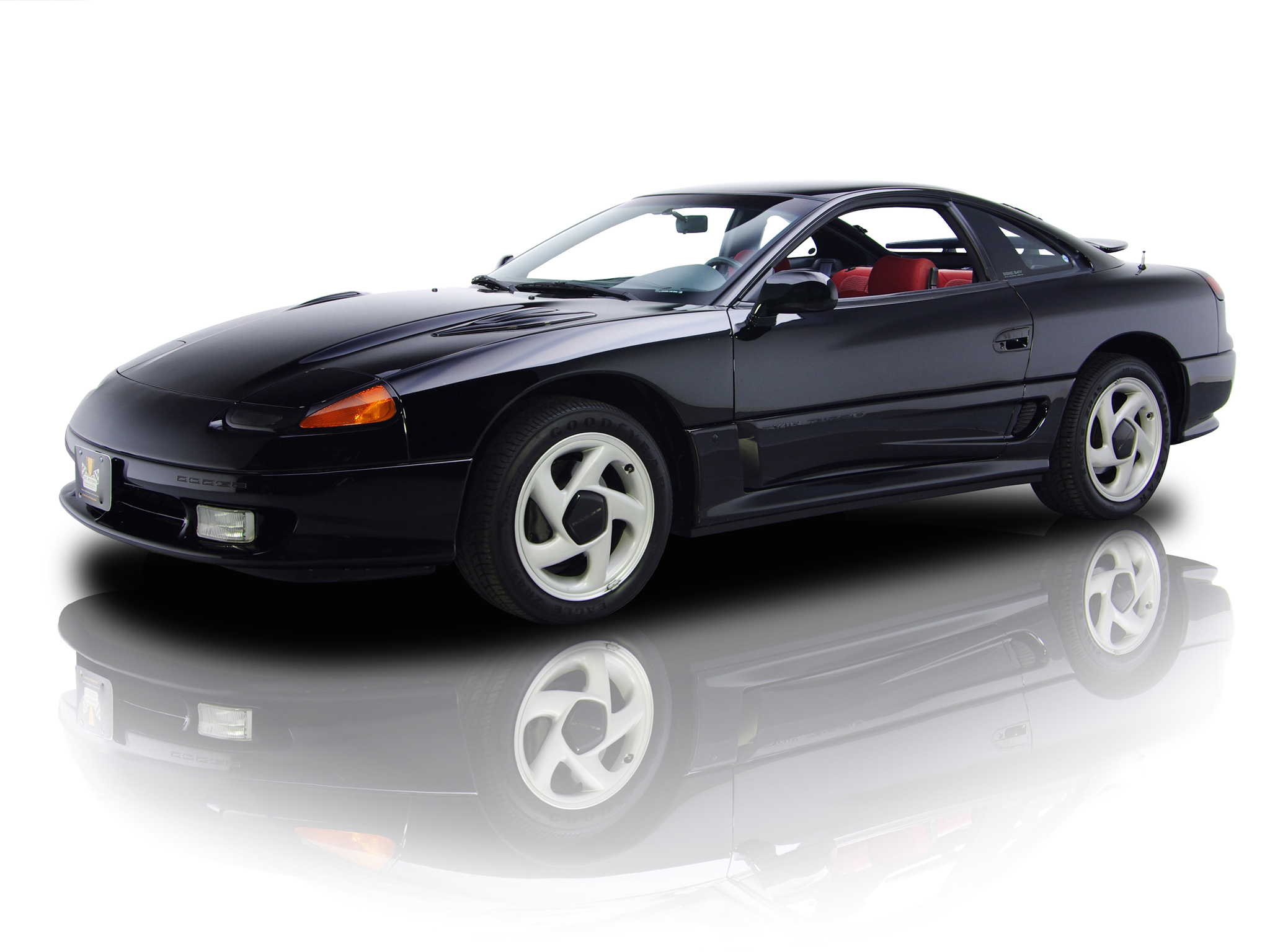
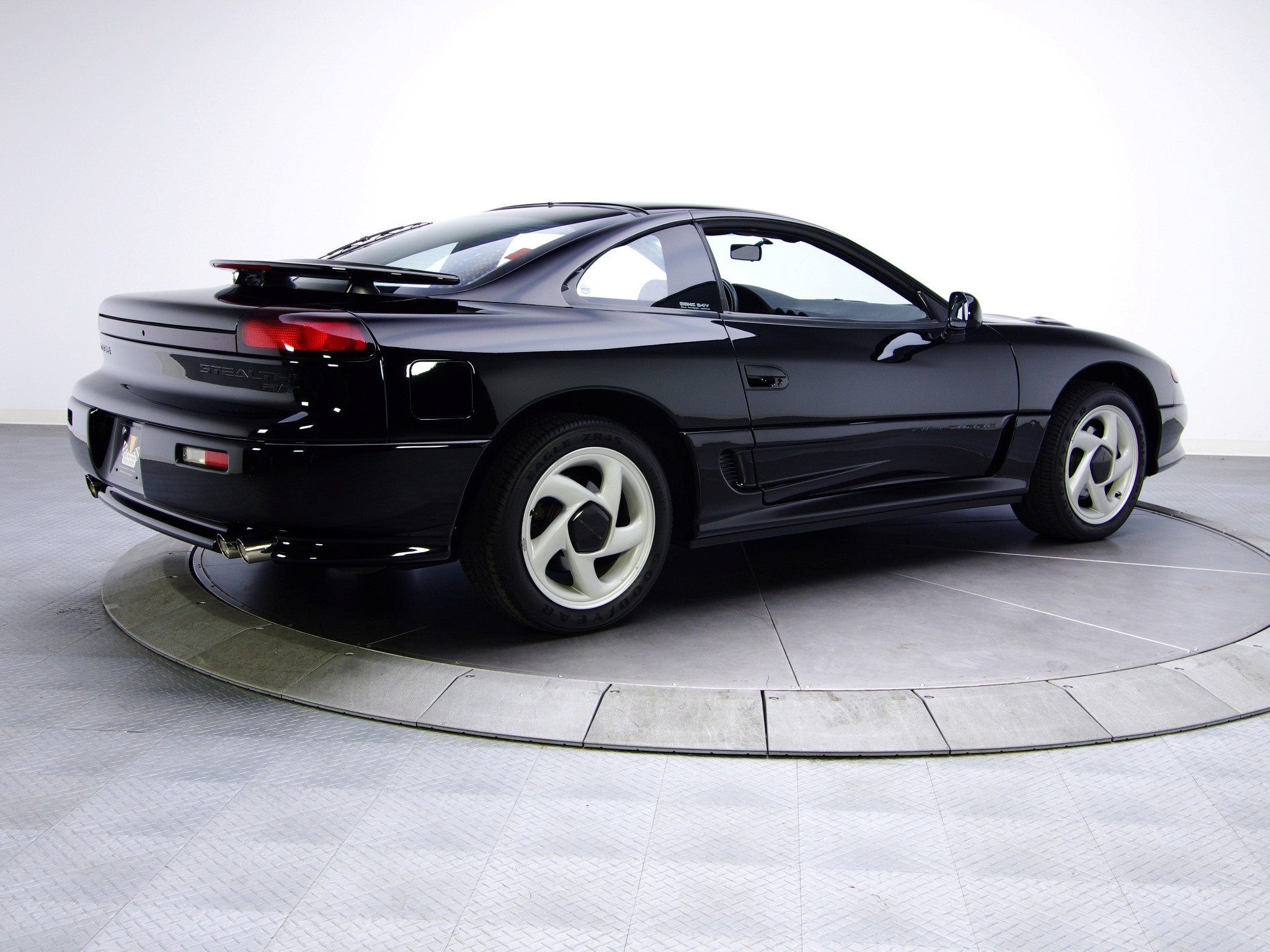
The initial launch of the Dodge Stealth in 1991 brought four distinct trim levels, allowing the model
to reach a broad base of consumers, from those looking just for a stylish coupe to extreme performance
enthusiasts.
Model Structure and Initial Engines
The engine options were all based on Mitsubishi's robust 6G72 block, a 3.0-liter V6, but with
significant variations in terms of cylinder heads and aspiration.
| Version |
Engine Configuration |
Power (hp) |
Torque (lb-ft) |
Transmission |
Drivetrain |
| Base |
3.0L V6 SOHC 12v |
164 |
185 |
5-MT / 4-AT |
Front (FWD) |
| ES |
3.0L V6 DOHC 24v |
222 |
201 |
5-MT / 4-AT |
Front (FWD) |
| R/T |
3.0L V6 DOHC 24v |
222 |
201 |
5-MT / 4-AT |
Front (FWD) |
| R/T Twin Turbo |
3.0L V6 DOHC 24v Twin Turbo |
300 |
307 |
5-MT |
All-Wheel (AWD) |
The Base model served as the entry point, utilizing a single overhead camshaft (SOHC) cylinder head. While
not a performance monster, it offered reliable drivability and the Stealth's futuristic look for a
competitive price. The ES and R/T models stepped up with the dual overhead camshaft (DOHC) head, providing
222 horsepower, putting them ahead of many V8 engines of that era in terms of efficiency and torque
delivery.
The true star was the R/T Twin Turbo. Equipped with two turbochargers and two intercoolers, this model
delivered 300 horsepower and featured a permanent all-wheel-drive system. It wasn't just fast in a straight
line, hitting 0 to 100 km/h (62 mph) in about 5 seconds, but it was also a technological showcase, including
four-wheel steering (AWS) and electronically adjustable suspension.
Design and Aerodynamics of the First Phase
Aesthetically, the 1991 to 1993 models were characterized by pop-up headlights, a hallmark of sports
cars of the time. The drag coefficient was a mere 0.33, which was equivalent to much newer and more
expensive supercars like the Lamborghini Murciélago. A fundamental difference between the Stealth and its
Mitsubishi 3000GT sibling was the absence of the active aerodynamics system on the Dodge; while the 3000GT
had moving spoilers, the Stealth used a fixed hoop spoiler that was integrated into the design of the rear
decklid.
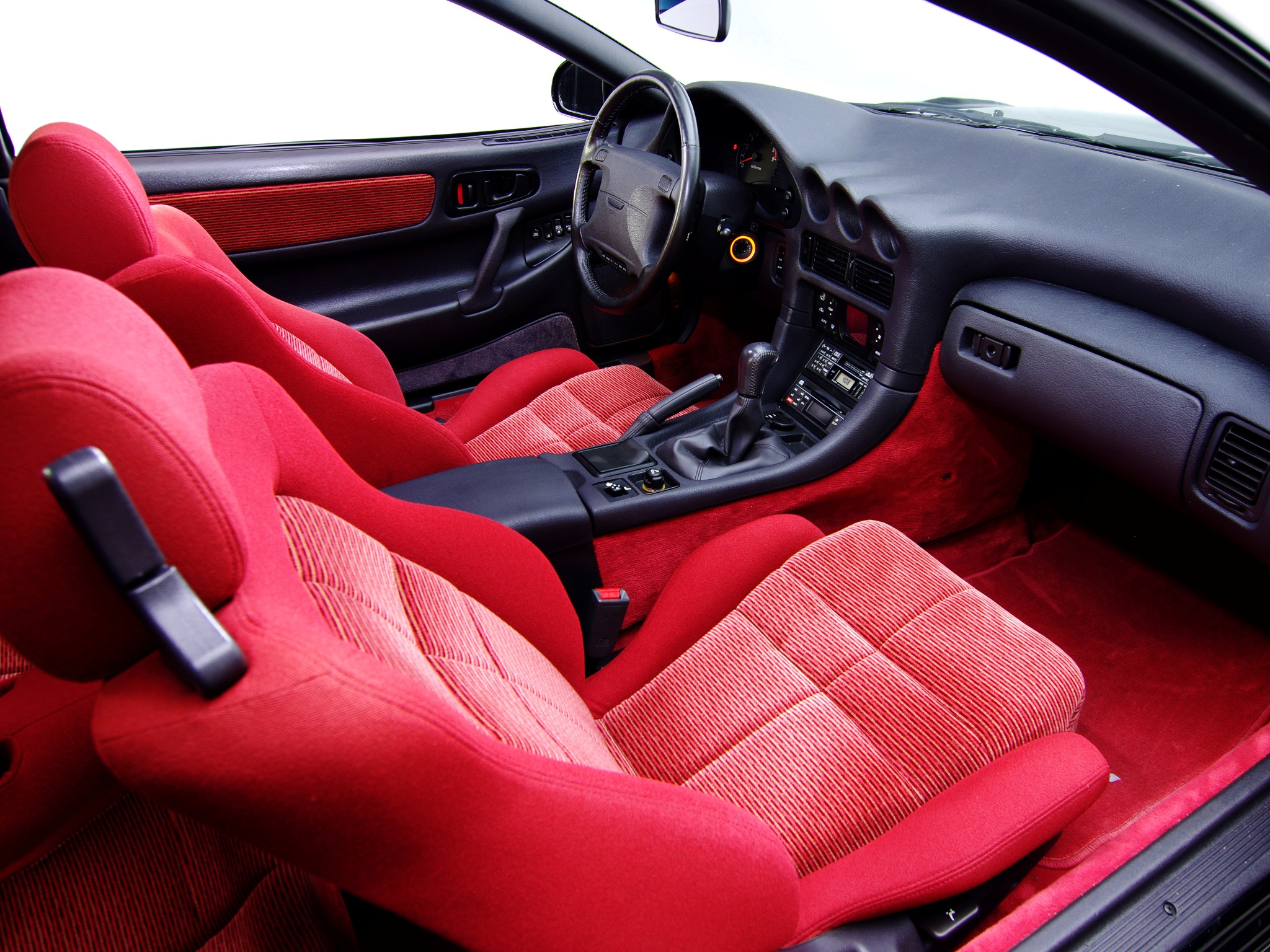
Inside, the car offered a driver-focused environment, with instruments angled towards the driver and the
option of a digital instrument cluster that reinforced the high-tech image. Rear space was limited,
configured as a 2+2, more suitable for children or small luggage.
1993 Mechanical Evolutions
The year 1993 marked an important technical transition for the 6G72 engine. Mitsubishi introduced a
forged crankshaft and a reinforced block with four bolts on the main bearings (4-bolt main), replacing the
previous two-bolt configuration. This change was crucial for long-term durability, especially for owners who
wanted to increase turbo boost in aftermarket modifications. In addition, the air conditioning system began
to be updated to R134a fluid, abandoning the old R12 in compliance with new environmental regulations.