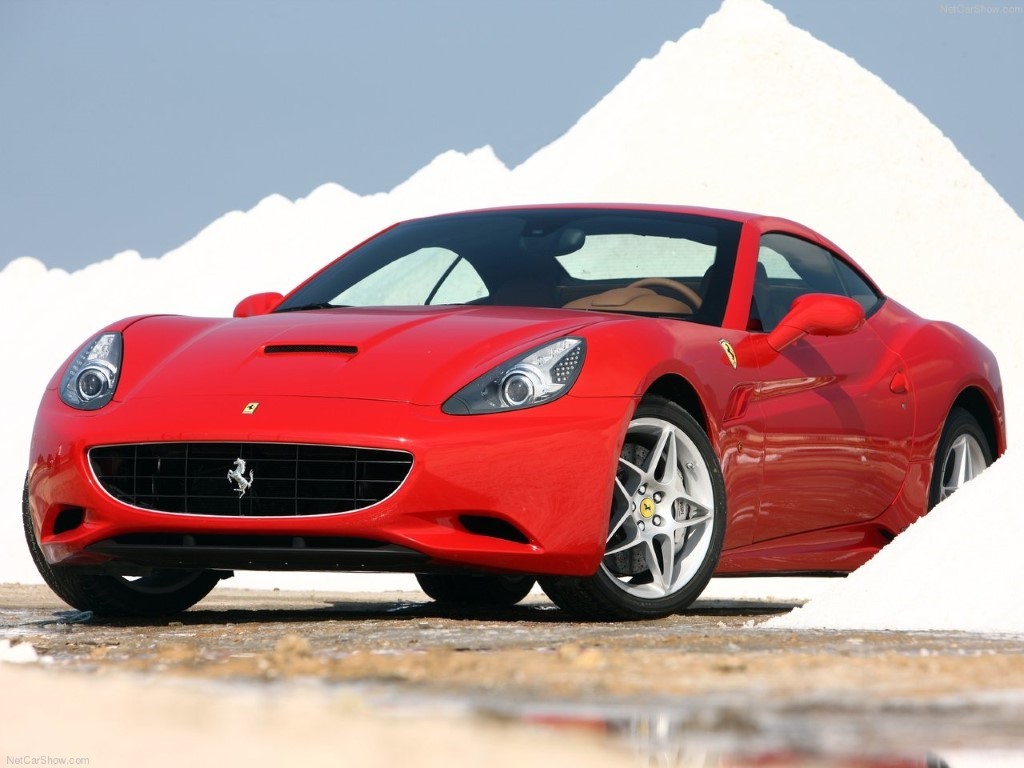
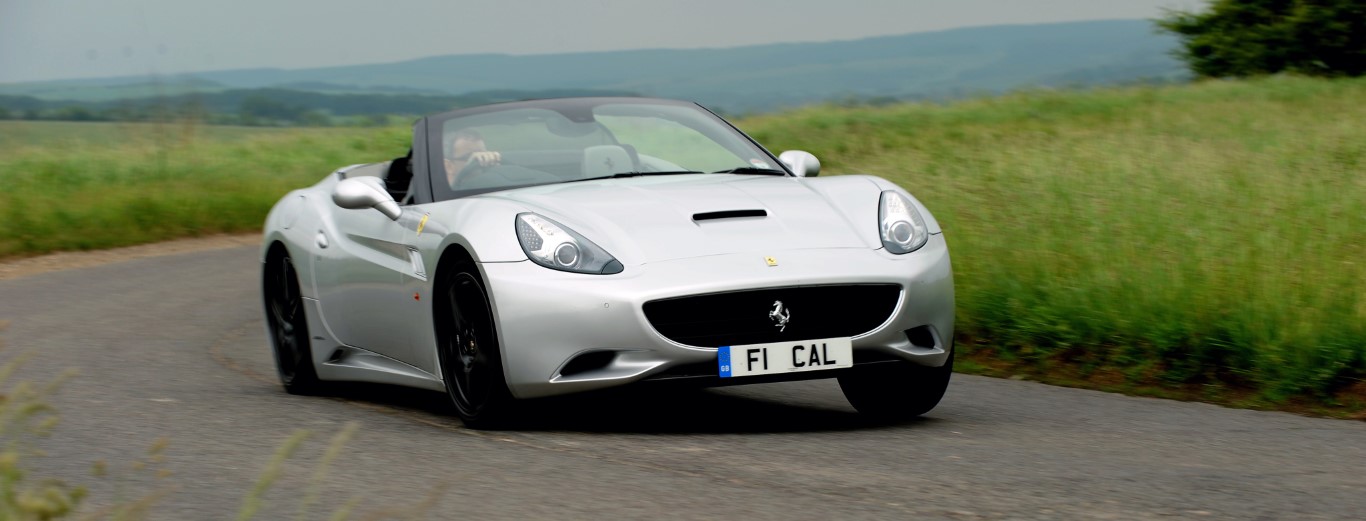
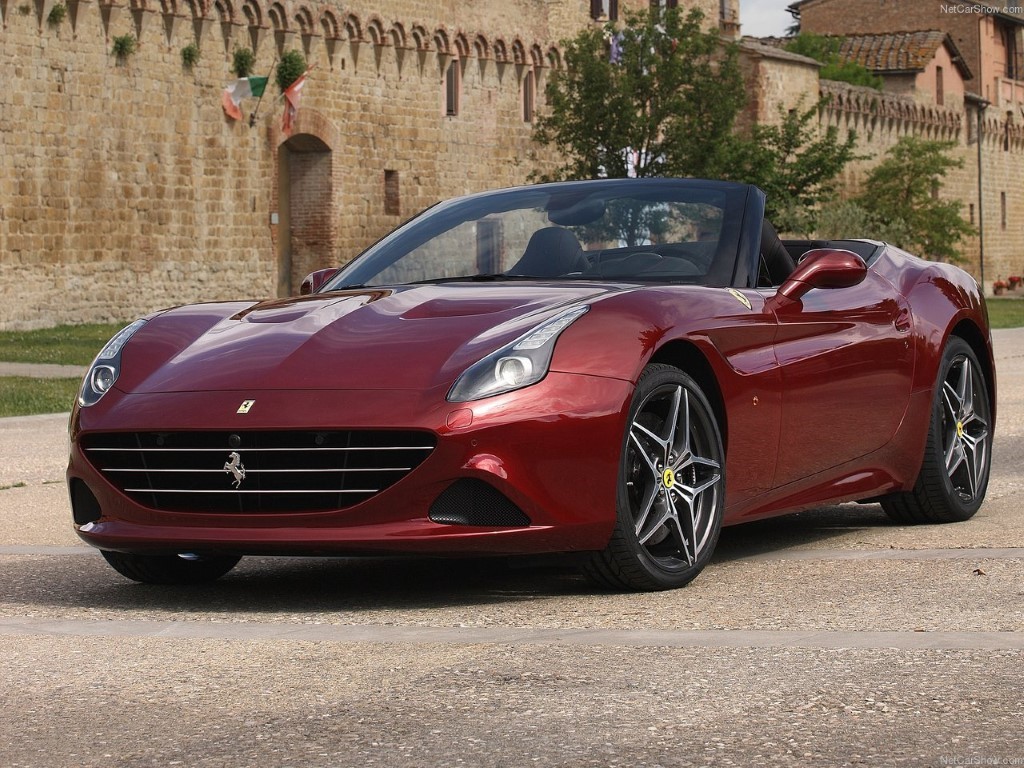
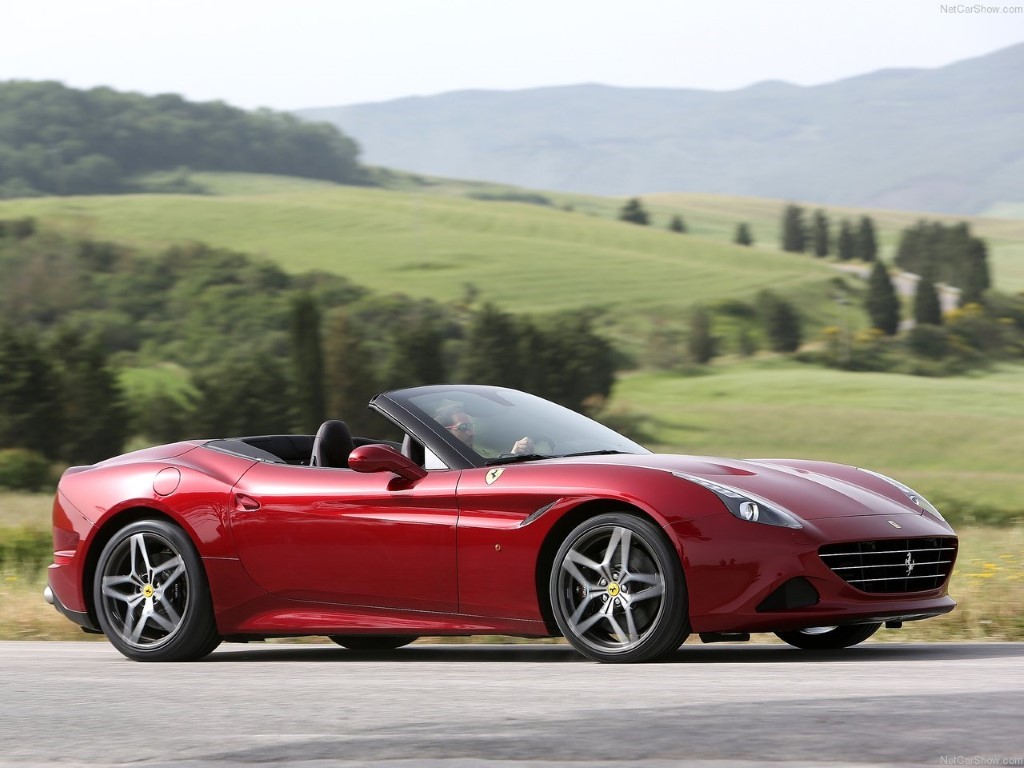
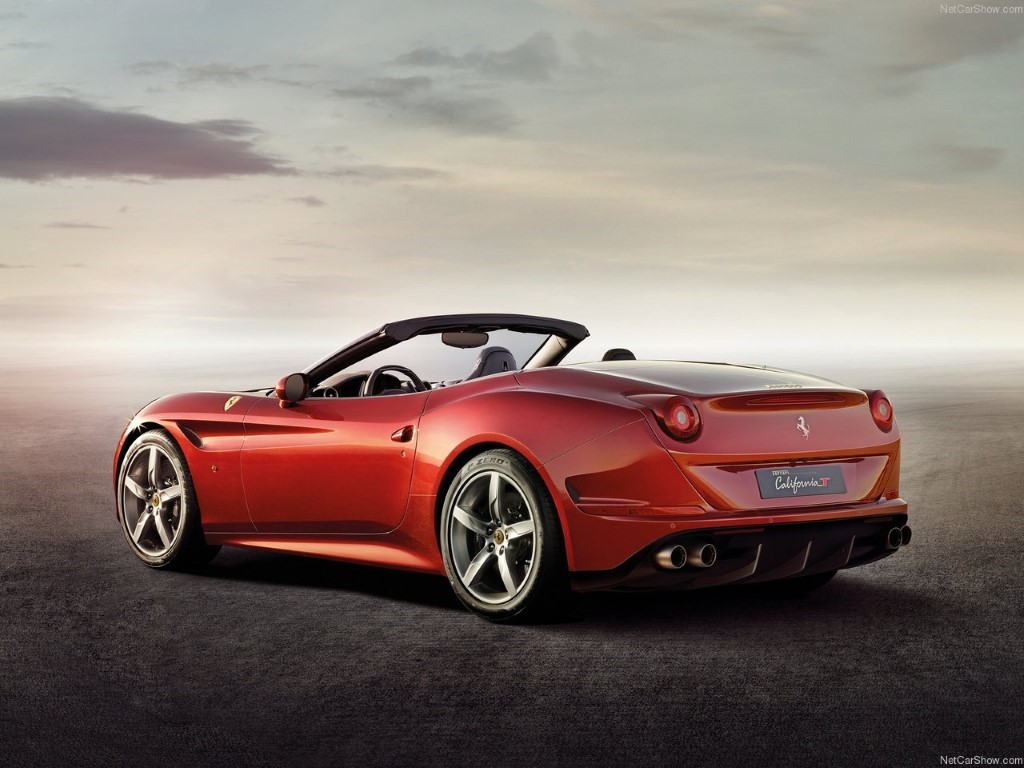
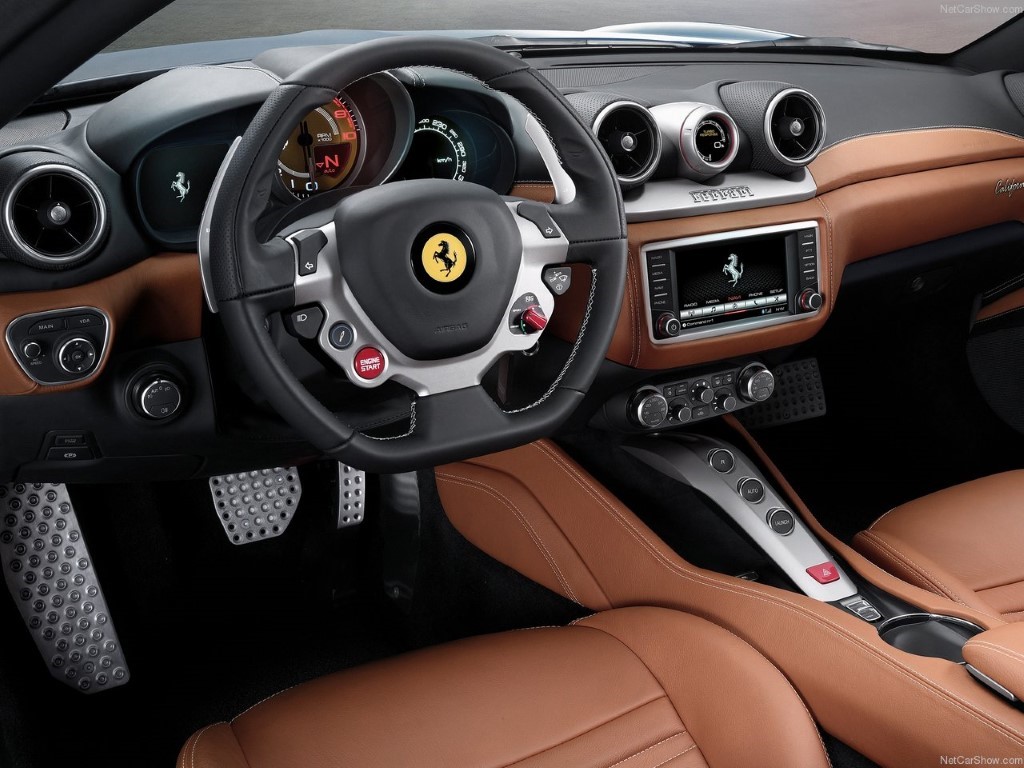
The official launch took place at the Paris Motor Show in October 2008, revealing a vehicle that,
under the bodywork designed by Pininfarina, housed an unprecedented amount of technological innovations for
the brand. The California was not a derivative model; it was a debut platform for technologies that would
define Ferrari in the following decade.
Engineering Innovations and "Firsts"
The Ferrari California holds the title of being the Ferrari production vehicle that introduced the
largest number of "firsts" in a single launch:
- First Front V8: It was the first Ferrari road car to mount a V8 engine in
the front position (technically front-mid, behind the front axle).
- Dual-Clutch Transmission (DCT): It was the first to abandon the "F1"
single-clutch automated transmission in favor of a 7-speed dual-clutch gearbox manufactured by Getrag.
- Gasoline Direct Injection (GDI): The F136 IB engine was the brand's first
to use direct injection to improve efficiency and low-end torque.
- Multi-link Rear Suspension: Designed to offer a superior compromise between
comfort and stability, replacing the traditional double wishbones in the rear.
- Retractable Hard Top (RHT): The first Ferrari convertible to use a folding
metal roof, transforming the car from coupe to spyder in 14 seconds.
The F136 IB Engine: Specifications and Architecture
The heart of the first-generation California is the naturally aspirated 4,297 cc (4.3 liters) V8
engine, part of the acclaimed F136 engine family shared and developed jointly with Maserati.
F136 IB Engine Technical Data
An analysis of the specifications reveals an engine focused on linear power delivery and immediate
response:
- Total Displacement: 4,297 cm³.
- Architecture: 90° V8 with a flat-plane crank, typical of Ferrari to allow
high revs and the characteristic sound.
- Bore x Stroke: 94 mm x 77.4 mm. This "oversquare" configuration favors
high-rpm operation.
- Compression Ratio: 12.2:1. A high ratio requiring high-octane fuel to
maximize thermal efficiency.
- Maximum Power: 460 CV (338 kW / 453 hp) at 7,750 rpm.
- Maximum Torque: 485 Nm (357 lb-ft) at 5,000 rpm.
- Specific Power: Approximately 107 CV per liter, an exceptional value for a
naturally aspirated engine of the time.
The use of direct injection allowed engineers to increase the compression ratio without the risk of premature
detonation (engine knocking), resulting in a more complete burn and lower emissions compared to the F430's
V8.
Exterior Design and Aerodynamics
The California's design, signed by Pininfarina under the supervision of Ken Okuyama, generated
immediate debates due to its proportions. The need to accommodate the folded retractable hard top required a
rear ("deck") that was visibly higher and bulkier compared to traditional soft-top spyders.>
Despite the rear volume, the aerodynamic work was intense. The California's drag coefficient (Cd) is
0.32, making it the most aerodynamic production Ferrari at the time of its launch, until being surpassed by
the F12berlinetta (Cd 0.299) years later.
- Dimensions: Length of 4,563 mm, width of 1,902 mm, and height of 1,308 mm.
- Chassis: Built entirely in aluminum, ensuring lightness and superior
torsional rigidity compared to steel chassis, essential for a convertible.
- Seating Configuration: The car was offered in two configurations: "2+2"
(with small rear seats suitable only for children or extra luggage) and "2+" (where the rear seat was
replaced by a leather bench for luggage).
Chassis Dynamics and Suspension
Weight distribution was a critical point of development. Thanks to the engine placement behind the
front axle (Front-Mid) and the transmission mounted on the rear axle (Transaxle), Ferrari achieved a weight
distribution of 47% at the front and 53% at the rear. This rear bias is ideal for traction under hard
acceleration and balance in corners.
The Multi-link rear suspension was a significant technical novelty. Unlike the double wishbone system
used on the F430, the multi-link system allows a more refined separation between longitudinal forces (impact
absorption comfort) and transversal forces (cornering stability), making the car more docile on uneven roads
without sacrificing precision.
The standard braking system included Brembo carbon-ceramic (CCM) discs on all wheels, a feature that
became standard at Ferrari during the California's production. The front discs measured 390 x 34 mm with
6-piston calipers, and the rear ones 360 x 32 mm with 4-piston calipers. This ensured 100-0 km/h braking
distances in just 34 meters.