1st Generation
(2005 - 2009)
4.3 V8
510 cv
Technical specifications, versions, and history for the Ferrari F430 Spider.
Select a generation to see available versions
(2005 - 2009)
Select a powertrain to view full technical specifications
Officially presented at the 2004 Paris Motor Show, the Ferrari F430 marked a turning point for the Maranello automaker. It arrived with the challenging mission of succeeding the Ferrari 360 Modena, an immensely successful model both commercially and critically that had redefined expectations for the brand's V8 supercars. However, the F430 was not conceived as a mere update of its predecessor. From its launch, Ferrari positioned it as "the beginning of an entirely new generation of V8-powered berlinettas". This declaration of intent manifested itself in every body panel, every mechanical component, and, above all, in the embedded technology, which would establish a new paradigm for the relationship between driver and machine.
The design of the F430 was a collaborative effort between the legendary Pininfarina studio and Frank Stephenson, then Director of Concept Design and Development at Ferrari-Maserati. The central philosophy was clear: form should follow function, with every inch of the car inspired by engineering research conducted at Gestione Sportiva, Ferrari's Formula 1 division. The result was a bodywork that, although it shared basic structural elements with the 360, such as the Alcoa aluminum chassis, the roofline, and the doors, looked drastically different and was functionally superior.
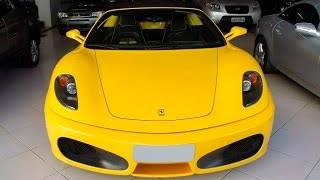
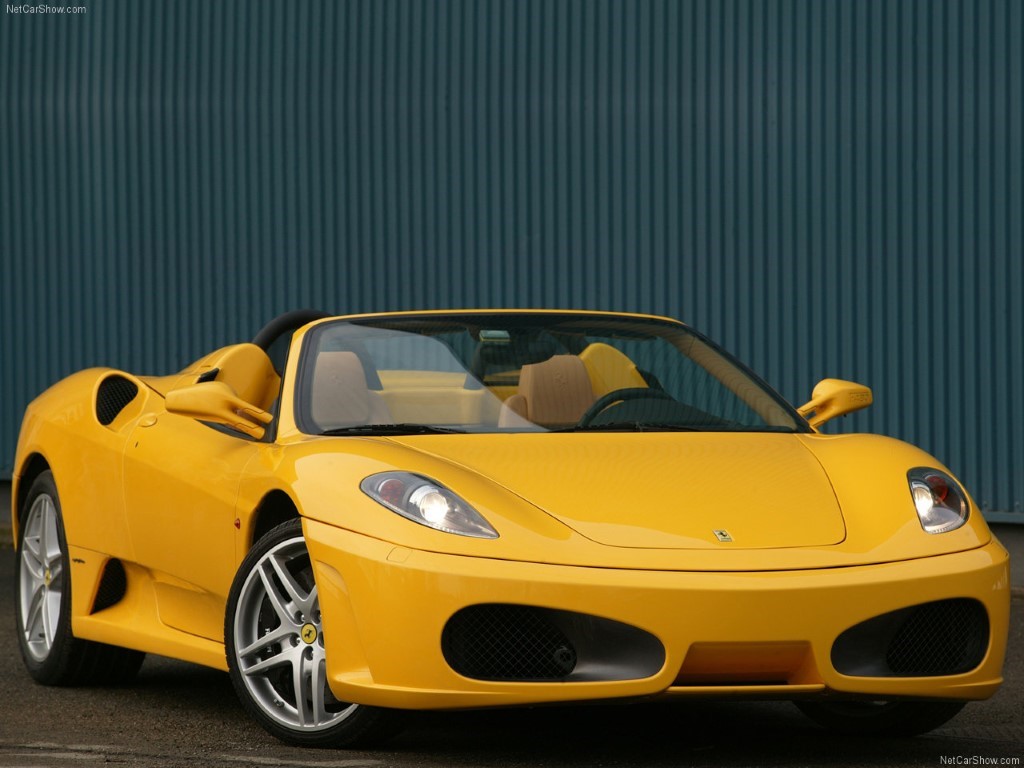
The visual identity of the F430 was carefully crafted to connect the brand's entry-level model to its most revered creations. At the front, the two large oval openings were not just an aesthetic feature, but a direct homage to the 1961 Ferrari 156 F1, nicknamed the "sharknose", which led Phil Hill to the world title. At the rear, the inspiration came directly from the hypercar of the time, the Enzo Ferrari. The elevated taillights protruding from the bodywork and the vents on the engine cover were inherited directly from the Enzo, creating a visual and technological link with the top of the Ferrari pyramid. Even details like the car's name engraved on the driver's side rearview mirror were a reference to the Testarossa's style.
This design approach was a brilliant strategic maneuver. By incorporating visual elements from Formula 1 and its most exclusive hypercar, Ferrari unambiguously communicated that the F430 was a direct beneficiary of the company's most advanced technologies. This served to democratize the aura of exclusivity and the aerodynamic knowledge of the Enzo and the F1 team to a broader customer base, solidifying the message that every Ferrari, regardless of its position in the lineup, is born on the track.
The aerodynamic work was obsessive. Although the drag coefficient (Cd) remained similar to that of the 360, the downforce was "enormously enhanced". Long hours in the wind tunnel influenced the car's muscular lines. The new rear diffuser, integrated into the bumper and featuring dimensions derived from racing, worked in conjunction with the nolder (a small spoiler integrated into the engine cover) to generate a low-pressure zone under the car, increasing stability and grip at high speeds. This meticulous attention to aerodynamic details resulted in a car that was not only more beautiful but fundamentally more capable and safer at its performance limit.
The heart of the F430 was its engine, an all-new 4.3-liter V8 belonging to the "Ferrari-Maserati" F136 family. This powerplant represented a seismic break with Ferrari's engineering past. For over fifty years, all of the brand's V8s were direct descendants of the Dino racing program of the 1950s. The F430 ended this half-century development cycle with a completely new architecture engine, which would go on to replace the Dino-derived engines in almost all other Ferrari models.
With a displacement of 4,308 cc, the engine delivered 490 cv (483 hp) at 8,500 rpm and a torque of 465 Nm at 5,250 rpm. Despite a 20% increase in displacement compared to the 360's engine, the engine's weight increased by only 4 kg. The most notable characteristic, however, was its drivability: 80% of the torque was available below 3,500 rpm, making the car incredibly responsive and flexible at low revs, a stark contrast to its predecessor's more "peaky" engine. The F1 inspiration was direct, featuring four-valve-per-cylinder heads, valves, and intake trumpets derived directly from racing engines for optimal volumetric efficiency.
The F430 stood out not only for its engine but for introducing two revolutionary technologies that forever changed the experience of driving a road-legal supercar.
For the first time on a production Ferrari, the F430 was equipped with the E-Diff, a computer-controlled active limited-slip differential. Derived directly from Formula 1 cars, where it was integrated with stability control systems, the E-Diff could vary the torque distribution between the rear wheels in milliseconds, based on data such as steering angle, lateral acceleration, and wheel rotation. The result was a drastic improvement in traction exiting corners, allowing drivers to apply power earlier and with more confidence, increasing cornering speed and overall vehicle stability.
The other major innovation was the manettino, a rotary selector mounted on the steering wheel, also a direct inheritance from F1. This control allowed the driver to choose between five distinct settings: "Ice", "Low Grip", "Sport", "Race", and "CST Off" (controls off). Each mode simultaneously adjusted the stability control system (ESC), the "Skyhook" electronic suspension, the transmission behavior, the throttle response, and the E-Diff parameters. This placed an unprecedented level of control in the driver's hands, allowing the car to adapt instantly to different driving conditions.
These innovations represented a fundamental philosophical shift in the human-machine relationship. The 360 Modena, with its relatively basic and often intrusive traction control system (ASR), was a car the driver had to tame at the limit. The F430, with the coordinated action of the E-Diff and the manettino, became a car that collaborated with the driver. Technology was no longer just a safety device, but a performance enhancement tool, making the car not only faster but also more accessible and confidence-inspiring, setting the standard for all subsequent Ferrari supercars and influencing the entire industry.
The F430 Berlinetta was the launch model and the foundation for all other variants. As the pure expression of Ferrari's new philosophy, it encapsulated all the design and engineering innovations in a hardtop coupé body. The performance was impressive for the time, with a claimed top speed exceeding 315 km/h and an acceleration from 0 to 100 km/h in just 4.0 seconds, 0.6 seconds faster than the 360 Modena. The car was offered with two transmission options: a traditional 6-speed manual gearbox with the iconic chrome gated shifter, or the more popular 6-speed "F1" automated manual transmission, operated by paddle shifters on the steering wheel. The standard brakes were cast iron, developed in partnership with Brembo, but an optional carbon-ceramic (C/SiC) brake system was available, offering superior fade resistance under extreme use.
| Characteristic | Specification |
| Engine | 4,308 cc V8, naturally aspirated |
| Power | 490 cv @ 8,500 rpm |
| Torque | 465 Nm @ 5,250 rpm |
| Transmission | 6-speed manual or 6-speed F1 automated |
| Drivetrain | Rear-wheel drive with E-Diff |
| 0-100 km/h | 4.0 s |
| Top Speed | > 315 km/h |
| Curb Weight | 1,450 kg |
| Length | 4,512 mm |
| Width | 1,923 mm |
| Height | 1,214 mm |
| Wheelbase | 2,600 mm |
| Brakes | Ventilated discs (Cast iron or Carbon-ceramic) |
| Tires | Front: 225/35 R19, Rear: 285/35 R19 |
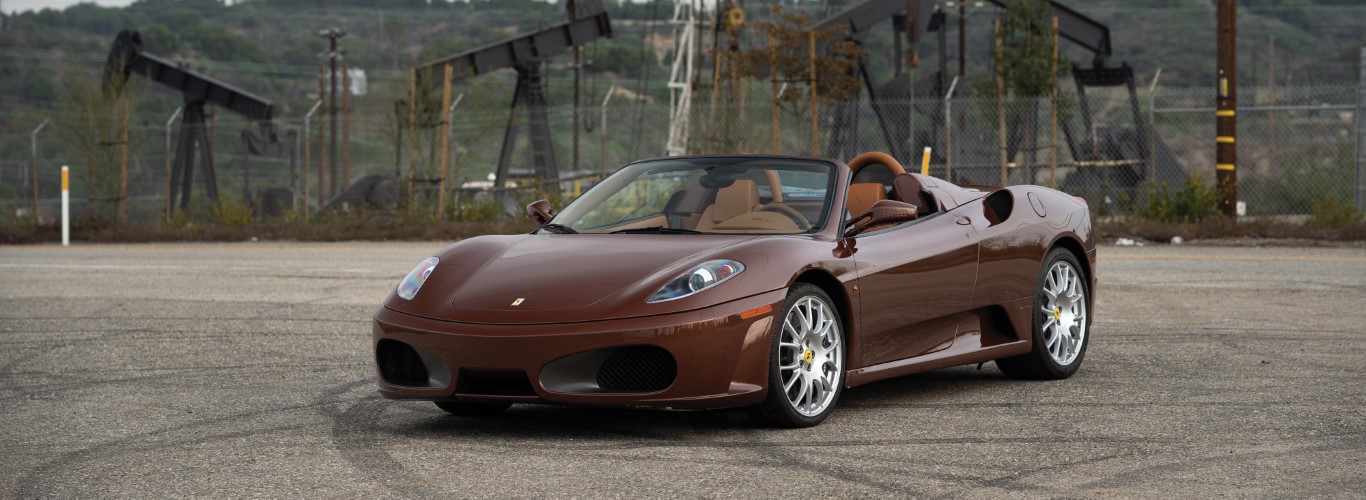
Launched in 2005, the F430 Spider was designed to offer the same thrilling performance as the Berlinetta, but with the added experience of open-top driving. The engineering of the soft top was one of its most notable points. The fabric roof system was fully electric and automated, capable of opening or closing in just 20 seconds.
The most ingenious aspect of the Spider's design was how the roof folded. The mechanism was designed to be extremely compact, allowing the glass engine cover to remain in place, keeping the V8 visible at all times, even with the top down. This seemingly small detail was a major differentiator. Ferrari stated that the F430 Spider was the "only uncompromised mid-engine convertible to boast a compact soft top that keeps the engine visible at all times".
This approach demonstrated a refusal to compromise one of the brand's fundamental principles: the engine as the heart and soul of the car, a piece of mechanical art that must be visually celebrated. By achieving this, Ferrari elevated the Spider from a simple "roofless version" to a distinct model with its own unique appeal, proving that convertible driving did not have to sacrifice the fundamental character of the car.
To compensate for the loss of structural rigidity, the Spider's chassis was reinforced, resulting in a slight weight increase. This was reflected in a 0 to 100 km/h acceleration time of 4.1 seconds, just a tenth of a second slower than the coupé. The aerodynamics were also adjusted specifically for the convertible model in order to manage airflow over the cabin and maintain downforce, ensuring that the high-speed driving experience remained stable and safe.
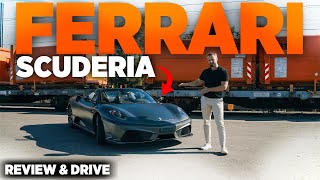
Unveiled in 2007, the 430 Scuderia was Ferrari's answer for customers who desired an even purer, more track-focused driving experience. It was the spiritual successor to the 360 Challenge Stradale, but it elevated the concept to a new level of technological sophistication.
The development of the Scuderia featured the intensive participation of seven-time Formula 1 world champion Michael Schumacher. His contribution was not merely for marketing purposes; he spent countless hours testing prototypes at Fiorano, providing crucial feedback on chassis dynamics, the calibration of electronic systems, and cockpit ergonomics, especially the refinement of the manettino for high-performance use.
The Scuderia's philosophy was based on three pillars:
The result was a car with phenomenal performance. Acceleration from 0 to 100 km/h was accomplished in less than 3.6 seconds, with a top speed of 320 km/h. Even more impressively, its lap time around the Fiorano test track was virtually identical to that of the Ferrari Enzo, a car with 150 cv more, demonstrating the Scuderia's incredible dynamic efficiency.
The 430 Scuderia marked a philosophical turning point for Ferrari's special editions. While earlier models like the 360 Challenge Stradale focused primarily on being "raw and light", the Scuderia added a third element: being "smart". The deep integration of hardware and software, honed by an F1 champion, created a cohesive system that actively helped the driver extract maximum performance. This philosophy of electronic performance aids became the blueprint for all future special series, such as the 458 Speciale and the 488 Pista.
In 2008, to celebrate winning its 16th Formula 1 Constructors' World Championship, Ferrari launched one of its most coveted limited editions: the Scuderia Spider 16M.
Production was strictly limited to 499 units, all pre-sold to selected clients, making it an instant collector's item. The car sported a commemorative plaque on the rear grille and a "limited series" plaque on the dashboard, underlining its exclusivity.
The 16M was the perfect synthesis between the extreme performance of the 430 Scuderia and the sensory experience of the F430 Spider. It utilized the same 510 cv engine, Superfast2 transmission, and lightweight components of the Scuderia, but in a convertible body style. The car was 80 kg lighter than the standard F430 Spider, with a dry weight of 1,340 kg.
The performance was astonishing for a convertible of that era. Acceleration from 0 to 100 km/h took 3.7 seconds, and the top speed was 315 km/h. At the time of its launch, the Scuderia Spider 16M was the fastest road-legal convertible Ferrari had ever produced around its Fiorano test track.
The F430 Challenge was the "client" racing version, a track-only car designed exclusively to compete in Ferrari's one-make championship, the Ferrari Challenge Trofeo Pirelli, succeeding the 360 Challenge. Although it retained the 490 cv V8 engine from the road car, the modifications for competition were extensive. The interior was completely stripped out, equipped with a full roll cage, racing seat, six-point harnesses, and a quick-release steering wheel. The weight was reduced to 1,225 kg (in race trim) through the use of Lexan windows and carbon fiber panels.
Technologically, the car featured center-lock BBS wheels, standard carbon-ceramic brakes, and a mechanical limited-slip differential, which replaced the road car's E-Diff for greater robustness in racing conditions. The 60 ms F1 transmission was retained, but with shortened 5th and 6th gear ratios to optimize track acceleration. Traction and stability controls were permanently disabled, leaving total control in the driver's hands.
If the Challenge was for Ferrari's clients, the F430 GTC was the brand's weapon for professional endurance racing. Developed in collaboration with Michelotto Automobili, the GTC was designed to compete in the fiercely contested GT2 class of international championships such as the FIA GT, the American Le Mans Series (ALMS), and the 24 Hours of Le Mans.
To comply with class regulations, the V8 engine's displacement was reduced to 4.0 liters and, fitted with air restrictors, it produced around 450 cv. The car featured a much more aggressive aerodynamic package than the road version, a sequential racing gearbox, and a lightened chassis that weighed approximately 1,125 kg dry.
The F430 GTC's success on the track was resounding and served as the ultimate validation of the technology Ferrari promoted in its road cars. The car dominated its class, winning constructors' and drivers' titles in the FIA GT championship in 2006 and 2007, the constructors' title in ALMS in 2007, and, most prestigious of all, a GT2 class victory at the 2008 24 Hours of Le Mans. This track record created a powerful feedback loop: the race car's success reinforced the prestige and technological credibility of the road car, while the road car's advanced architecture provided a superb foundation for the race car's development.
Exact Ferrari production numbers are traditionally difficult to confirm, but based on expert records and estimates, it is possible to draw an overview of F430 production.
The following table summarizes the main performance differences between the four road-legal variants of the F430, illustrating the evolution from the base model to the limited-production special editions.
| Characteristic | F430 Berlinetta | F430 Spider | 430 Scuderia | Scuderia Spider 16M |
|---|---|---|---|---|
| Engine | 4.3L V8 Naturally Aspirated | 4.3L V8 Naturally Aspirated | 4.3L V8 Naturally Aspirated | 4.3L V8 Naturally Aspirated |
| Power | 490 cv @ 8500 rpm | 490 cv @ 8500 rpm | 510 cv @ 8500 rpm | 510 cv @ 8500 rpm |
| Torque | 465 Nm @ 5250 rpm | 465 Nm @ 5250 rpm | 470 Nm @ 5250 rpm | 470 Nm @ 5250 rpm |
| Dry Weight | ~1,350 kg | ~1,420 kg | 1,250 kg | 1,340 kg |
| 0-100 km/h | 4.0 s | 4.1 s | < 3.6 s | 3.7 s |
| Top Speed | 315 km/h | 310 km/h | 320 km/h | 315 km/h |
| Units | ~16,750 (total with Spider) | ~16,750 (total with Berlinetta) | ~1,500-2,500 (est.) | 499 |
Production of the F430 ended in 2009 to make way for the 458 Italia. Today, the F430 is viewed as one of the most important models in Ferrari's modern history, occupying a unique position as the bridge between two distinct eras. It was undeniably more modern and technologically superior to the 360 Modena, thanks to its more powerful and flexible engine, the E-Diff, and the manettino.
At the same time, it retained a rawer, more visceral and, for many, more engaging driving experience than its successor, the 458 Italia, which introduced the dual-clutch transmission and an even more sophisticated electronic interface, making the drive smoother and more filtered. The F430, especially with its rare manual transmission option, is frequently celebrated as the last of the "analog" era V8 berlinettas, before ultra-fast transmissions and complex digital systems became the standard.
This positioning in a "sweet spot" — with modern enough technology to be exciting and usable, but with a mechanical purity that has become rare — is what defines its legacy. The F430 is not just an automobile; it is a work of automotive art, a timeless symbol of the Italian passion for speed, and one of the brand's most desired and collectible models. It represents a time when cutting-edge technology served to enhance the driver's connection with the road, rather than isolating them from it.
Images of the Ferrari F430 Spider