Ferrari Portofino

Ferrari Portofino

Technical specifications, versions, and history for the Ferrari Portofino.

Ferrari Portofino Generations

Select a generation to see available versions

Ferrari Portofino F164 Series I

F164 Series I

(2018-2021)

3.9 V8 Twin-turbo 600 cv
Ferrari Portofino F164 Series II

F164 Series II

(2022-2024)

3.9 V8 Twin-turbo 620 cv

Technical Data and History: Ferrari Portofino

Executive Summary and Market Context

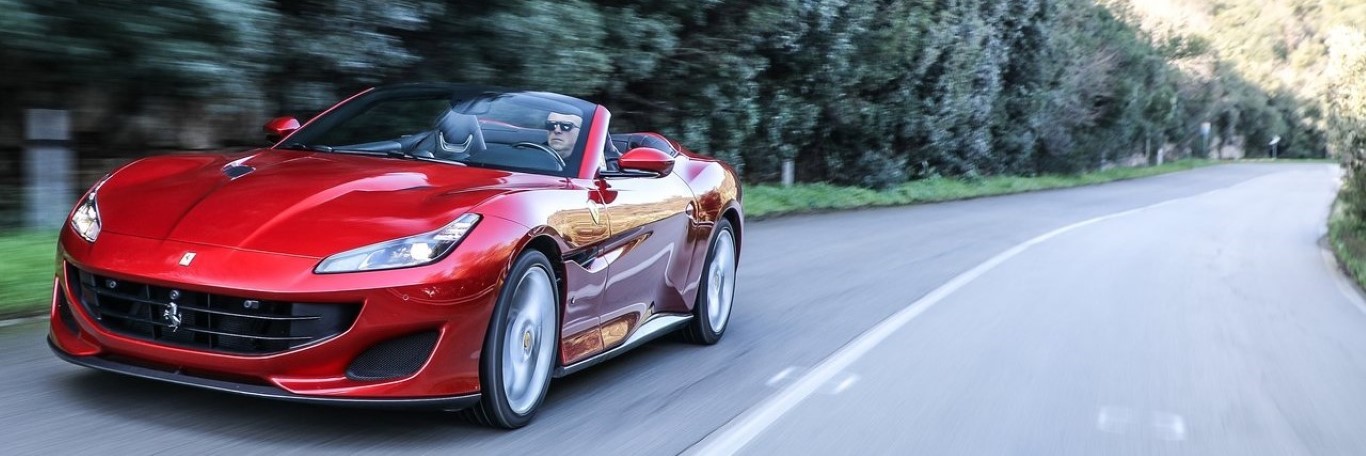
The Ferrari Portofino represents a fundamental chapter in the modern strategy of Ferrari S.p.A., marking the consolidation of the front-engine V8 convertible Grand Tourer (GT) segment. Launched in 2017 as the successor to the Ferrari California T, the Portofino was not just an aesthetic update, but a complete re-engineering aimed at addressing the dynamic and visual criticisms of its predecessor, while expanding the brand's customer base to an audience seeking daily driving versatility without giving up supercar performance. This report exhaustively analyzes the genesis, technical evolution, production variants, and commercial impact of this model, with a particular emphasis on powertrain engineering, chassis dynamics, and its reception in the Brazilian market.

The importance of the Portofino transcends its performance numbers. It served as the "entry-level" model — a relative term in the ultra-luxury universe — during a period of aggressive expansion for Ferrari following its initial public offering (IPO). By combining a retractable hardtop (RHT) with a significantly stiffer and lighter chassis, the Portofino set new standards for the 2+2 convertible category, competing directly with heavy-hitting British rivals like the Aston Martin DB11 and the Bentley Continental GT. The evolution to the "Modificata" variant (Portofino M) in 2020 demonstrated the brand's ongoing commitment to refining the driving experience through technology, introducing eight-speed gearboxes and driving modes previously reserved for track models.

Historical Background and Genealogy

To understand the magnitude of the Portofino project, it is imperative to examine the lineage into which it is inserted. Ferrari has a long tradition of V8 convertibles, but the front-engine configuration with a retractable hardtop is a relatively recent phenomenon, starting with the original Ferrari California in 2008.

The California Legacy and the Turbo Era

The Ferrari California (2008-2014) was a disruptive milestone: it was the first road-going Ferrari to adopt a front-mounted V8 engine, direct injection, a dual-clutch transmission, and a retractable hardtop. Despite its commercial success, the model faced resistance from purists. Its successor, the California T (2014-2017), brought back turbocharging, a necessity driven by emissions regulations and the quest for more torque.

The California T was technically competent, but aesthetically polarizing. The need to store the hardtop resulted in a high and visually heavy rear end, and the driving dynamics, while fast, were often described as less sharp than those of the brand's mid-engine models.

The F164 Project Mandate (Portofino)

The Portofino project, internally codenamed F164, was born with clear objectives: eliminate excess weight, increase structural rigidity, and deliver a design that evoked the elegance of classic berlinettas, but with the functionality of a modern convertible. The chosen name, "Portofino", in honor of the exclusive village on the Italian Riviera, signaled the car's positioning: elegance, luxury touring, and a modern "dolce vita", distancing itself from the American nomenclature of the California to reaffirm its Italian roots.

Ferrari Portofino (2017–2020): First Generation Engineering and Design

The official presentation of the Portofino took place at the 2017 Frankfurt Motor Show, revealing a vehicle that, while maintaining the basic architecture of the California T, was fundamentally new in its execution.

Structural Revolution: Chassis and Bodywork

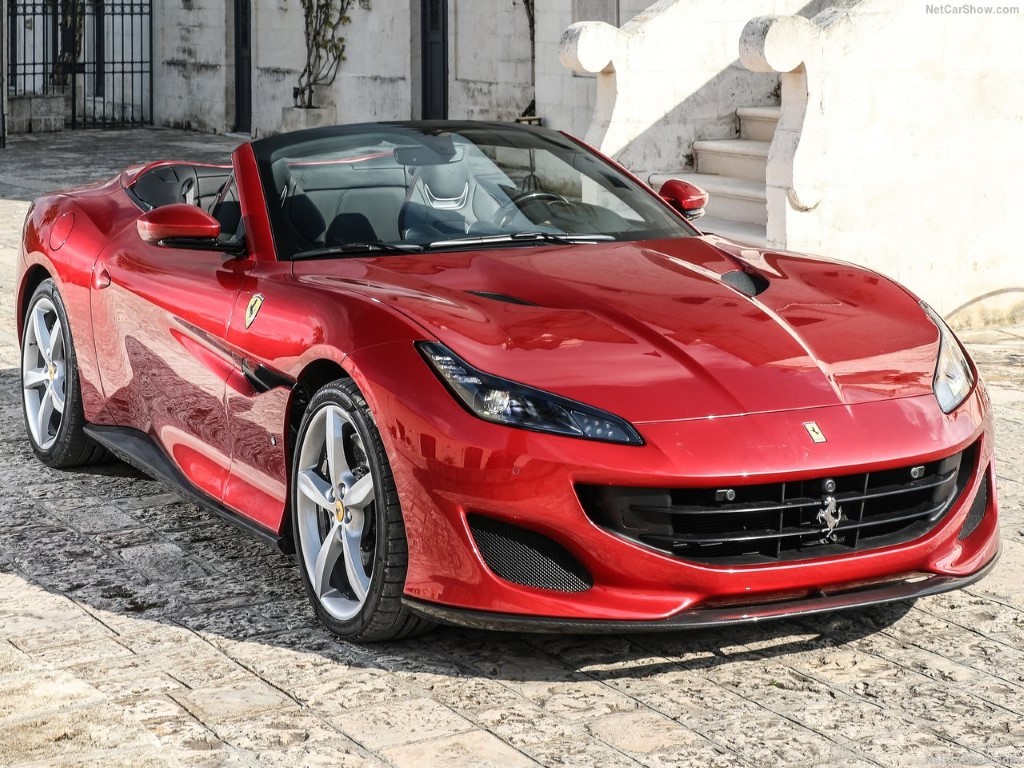
Unlike a simple facelift, the Portofino debuted an entirely new chassis. Ferrari applied advanced production technologies, including the casting of hollow components and the extensive use of state-of-the-art aluminum alloys.

The direct result of these innovations was an impressive weight reduction. The Portofino is approximately 80 kg (176 pounds) lighter than the California T. More crucially for driving dynamics, this weight reduction was accompanied by a 35% increase in torsional rigidity. In convertibles, rigidity is the "Holy Grail"; the removal of the fixed roof generally compromises structural integrity, leading to vibrations and suspension imprecision. By increasing rigidity, Ferrari ensured that the suspension could work more effectively, improving both comfort and cornering response.

Aerodynamic and Aesthetic Design

The design of the Portofino was led by the Ferrari Styling Centre under the direction of Flavio Manzoni, marking a departure from the historical reliance on Pininfarina. Manzoni's team focused on creating a two-box "fastback" silhouette, an unprecedented configuration for a retractable hardtop coupe-convertible.

Integrated Aerodynamic Solutions

The aesthetics of the Portofino are functional. Every crease and opening serves a specific aerodynamic purpose, aiming to reduce drag and manage thermals.

  • Front Air Curtains: A subtle but vital innovation are the air intakes located on the outer edges of the front headlights. These are not just decorative; they capture high-pressure air at the front of the car and channel it through the front wheel arches, expelling it along the flanks. This process creates an "air curtain" that reduces the turbulence generated by the rotation of the wheels, significantly lowering the drag coefficient (Cd).
  • Rear Flow Management: The taillights were positioned further apart compared to the California T. This allowed the rear spoiler to be extended in width, optimizing airflow detachment and reducing overall drag.
  • Fastback Visual: The triumph of the design was disguising the rear volume needed for the roof. The roofline flows smoothly into the trunk lid, eliminating the visual "step" that drew criticism on the California T and giving the car a more planted and aggressive stance.

Powertrain: The F154BE V8 and Boost Management

Under the hood, the Portofino houses the 3.9-liter (3855 cc) twin-turbo V8 engine, belonging to the acclaimed F154 family, winner of the "International Engine of the Year" award for three consecutive years (2016-2018).

Mechanical Innovations and Software

The 40 hp increase over the California T was not achieved solely through electronic reprogramming. The engine received new mechanical components, including reinforced pistons and connecting rods, as well as a revised intake system.

  • Cast Exhaust Manifold: A critical piece of engineering is the new single-piece cast exhaust manifold. This design reduces thermal energy losses from the exhaust gases before they reach the turbines, ensuring the famous "zero turbo lag response" that Ferrari promises.
  • Variable Boost Management: Ferrari implemented sophisticated software that adjusts torque delivery based on the selected gear. In lower gears (1st to 3rd), torque is electronically limited to simulate the linear delivery curve of a naturally aspirated engine and prevent traction loss. The full 760 Nm of torque is only unleashed in 7th gear. This results in progressive and thrilling acceleration, encouraging the driver to use the entire rev range, while allowing for a long gear for highway cruising fuel economy.

Vehicle Dynamics: EPS and E-Diff3

The Portofino marked the transition from hydraulic steering to Electric Power Steering (EPS) in Ferrari's GT models. Although electric steering is often criticized for a lack of "feeling", Ferrari used this technology to integrate the steering with the stability control systems.

  • Integration with E-Diff3: The adoption of EPS allowed integration with the third-generation electronic rear differential (E-Diff3). The system can vary steering assist and differential locking in real-time, improving straight-line stability and agility in corners. The steering became 7% more direct than in the California T, offering faster responses.
  • Magnetorheological Suspension (SCM-E): The damping system was upgraded with "dual-coil" technology, which reduces internal friction and improves the system's ability to absorb asphalt imperfections, minimizing body roll without sacrificing ride comfort.

Interiors and Daily Usability

The interior of the Portofino was designed to be a technologically luxurious environment. The focus on usability is evident in the layout of the controls and comfort systems.

  • Infotainment: A 10.2-inch touchscreen centralizes navigation and media functions. Unlike the California T, where the screen felt like an afterthought, in the Portofino it is elegantly integrated into the dashboard.
  • Passenger Display: A distinctive optional feature is the dedicated passenger screen. This horizontal display allows the co-pilot to monitor speed, RPM, engaged gear, and G-force, as well as interact with the navigation and audio system, transforming the passenger into an active participant in the driving experience.
  • Climate Control and Comfort: The air conditioning system was recalibrated to maintain thermal comfort even with the roof open. A new wind deflector reduces airflow inside the cabin by 30%, allowing normal-volume conversations even at highway speeds.
  • Retractable Hard Top (RHT): The roof mechanism is a work of kinetic engineering. It can be opened or closed in just 14 seconds and operates at low speeds, which is a crucial advantage in urban traffic. The compact design of the mechanism allowed for an increase in trunk space to 292 liters (with the roof closed), enough for three cabin bags. With the roof open, the space accommodates two cabin bags.
Ferrari Portofino M (2020–2023): The "Modificata" Evolution

In September 2020, Ferrari presented the Portofino M. The designation "M" refers to Modificata, a historical nomenclature for the brand used to designate versions that have undergone significant performance and technological evolutions. The launch, held digitally due to the COVID-19 pandemic, symbolized the resilience and return to activities of the Maranello factory.

Technical Justification for the Evolution

The Portofino M was not created just to update the look, but to align the entry-level model with the new technologies developed for supercars like the SF90 Stradale and the Ferrari Roma. The "Modificata" focused on three pillars: powertrain, transmission, and driving dynamics.

New 8-Speed Transmission (DCT)

The most profound mechanical change was the replacement of the 7-speed gearbox with the new 8-speed dual-clutch unit.

  • Architecture: This transmission is based on the unit from the SF90 Stradale, but with a fundamental difference: it has a mechanical gear for reverse (whereas the SF90 uses electric motors for reverse).
  • Benefits: The new clutch assembly is 20% smaller, allowing for a lower installation in the chassis (improving the center of gravity), but is capable of transmitting 35% more torque (up to 1,200 Nm of dynamic capacity during shifts).
  • Efficiency and Performance: The addition of the eighth gear, with a super-long ratio, allowed a drastic reduction in fuel consumption on highways, while the lower gears were shortened to improve acceleration. This translated into a 0-100 km/h time of 3.45 seconds (0.05s faster) and, more impressively, a 0-200 km/h time of 9.8 seconds — a full second faster than the original Portofino.

Engine Enhancements and Particulate Filter

The V8 engine was upgraded to produce 620 hp (a 20 hp gain). This was achieved through new camshaft profiles and a speed sensor on the turbines, which allows them to spin up to their maximum efficiency limit without risk of failure.

Gasoline Particulate Filter (GPF): To meet Euro 6d emissions standards, Ferrari installed a particulate filter in the exhaust system. Historically, this would muffle the engine sound. To compensate, the engineers removed the traditional rear silencers and redesigned the entire exhaust geometry. The result was a cleaner, more direct sound, maintaining the Ferrari acoustic signature despite environmental restrictions.

5-Position Manettino and RACE Mode

One of the criticisms of the original Portofino was the lack of aggressiveness in its driving modes. The Portofino M resolved this by introducing, for the first time on a Ferrari GT Spider, the 5-position Manettino.

  • New Modes: In addition to Wet, Comfort, and Sport, the Portofino M gained RACE mode.
  • Ferrari Dynamic Enhancer (FDE): In Race mode, the FDE system is activated. This technology works by adjusting the braking pressure on individual calipers during dynamic cornering, making the car's lateral behavior more predictable and allowing less experienced drivers to explore the car's limits safely. The brake pedal also had its travel reduced by 10% to offer a more precise and sporty feel.

Aesthetic Refinements of the M Version

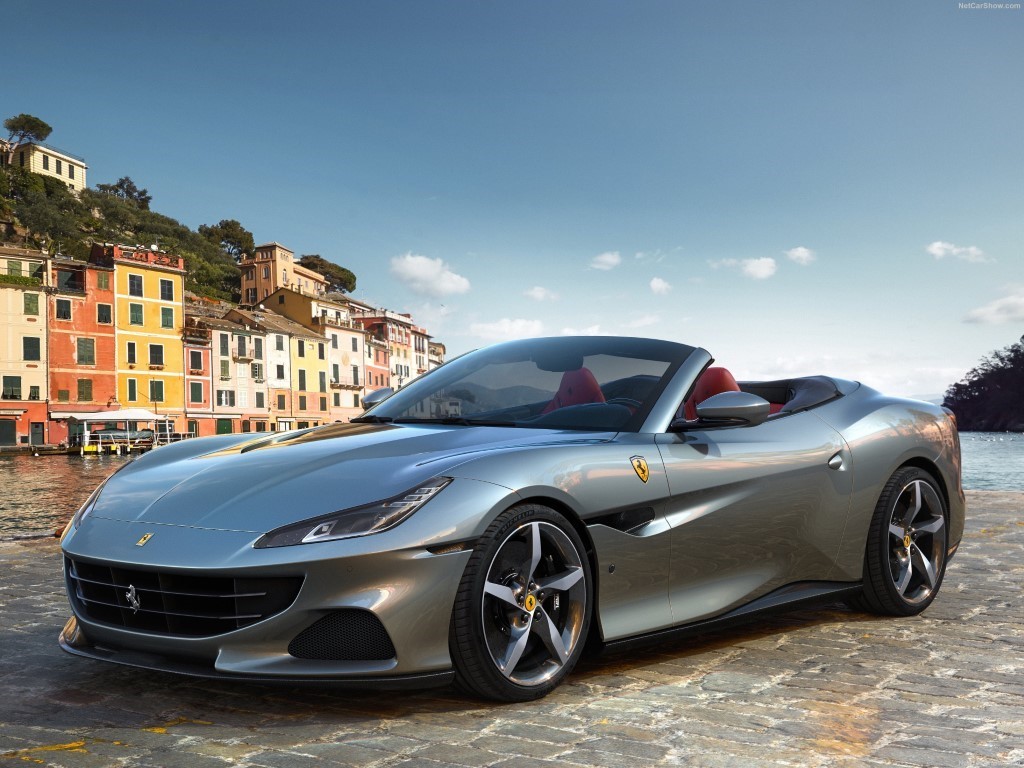
Visually, the Portofino M is distinguished by more aggressive and sculptural front bumpers, with new side air intakes. At the rear, the removal of the silencers allowed the bumper assembly to be more compact and aerodynamic, with a new rear diffuser separated from the bumpers, which can be specified in carbon fiber.

Production Data, Sales, and Corporate Strategy

Analyzing Ferrari's production volumes requires careful investigation, as the company rarely publishes numbers broken down by model in its annual reports. However, by cross-referencing data from global registrations and financial reports, it is possible to draw an accurate picture.

Global Volume Estimates

  • It is estimated that the combined total production of the Portofino and Portofino M series, between 2017 and 2023, is between 9,000 and 12,000 units.
  • Ferrari operates with a "revenue over volume" strategy, limiting production to maintain exclusivity and residual value.
  • During the Portofino's life cycle, Ferrari's total annual production fluctuated between 8,400 and 13,000 cars. V8 models (including the 488/F8 family and Portofino) historically represent the largest share of these sales.
  • The Portofino M had a shorter production cycle (2021-2023) and faced global supply chain constraints, suggesting that this variant is comparatively rarer than the original model.

Discontinuation and Succession

In March 2023, Ferrari officially confirmed the end of production for the Portofino M. The model was replaced by the Ferrari Roma Spider.

Paradigm Shift: The transition to the Roma Spider marked the end of a 15-year era of retractable hardtop (RHT) convertibles in Ferrari's front-engine lineup. The Roma Spider returned to the soft top, a stylistic choice that offers lower weight and greater trunk space, along with a stronger "retro" appeal.

The Brazilian Scenario: Market, Prices, and Ownership

Brazil, although representing a small volume in Ferrari's global sales, has an extremely loyal customer base and a robust secondary market. Via Italia, the brand's official importer, was responsible for introducing both versions to the country.

7-Year Genuine Maintenance Program

A crucial factor for the liquidity and appreciation of the Portofino in the Brazilian market is the 7-Year Genuine Maintenance program.

  • Coverage: This program is standard on all new Ferraris and covers all scheduled maintenance (oil, filters, belts, labor) for the first 7 years of the car's life, with no mileage limit.
  • Transferability: The warranty and maintenance plan are tied to the vehicle's chassis, not the owner. This means that when buying a used 2021 Portofino in 2025, the new Brazilian owner still enjoys free servicing until 2028. This drastically mitigates the fear of the high maintenance costs that historically haunted used Ferrari buyers in Brazil.
  • Extensions: After the seventh year, owners can opt for the Power15 program, which extends the warranty on main components (engine, gearbox) up to the 15th year of the vehicle, ensuring the longevity of the investment.

Equipment and Options in Brazil

Units configured for Brazil generally come with an extensive list of options to maximize resale value.

  • Apple CarPlay: Interestingly, Apple CarPlay was a paid option in many initial configurations, with costs that could reach thousands of dollars for official activation, although aftermarket solutions exist.
  • Passenger Display: The passenger screen is an almost mandatory item in Brazilian configurations due to its novelty factor and social engagement.
Conclusion and Legacy

The Ferrari Portofino has consolidated itself as one of the most important models in the brand's recent history. It achieved the difficult feat of succeeding a popular model (California T) by surpassing it in all measurable and subjective aspects. By combining the practicality of a hardtop, a usable trunk, and the comfort of a GT with the chassis precision and explosive power of a true Maranello sports car, the Portofino redefined what is expected of an "entry-level" convertible.

The introduction of the Portofino M demonstrated that Ferrari does not settle. The technical updates, especially the 8-speed transmission and Race mode, transformed the character of the car, making it genuinely thrilling for demanding drivers, without sacrificing its docile nature in urban use.

In Brazil, the Portofino's legacy is one of success and solidity. Thanks to the 7-year maintenance program and the mechanical robustness of the F154 engine family, the model enjoys a reputation for reliability that sustains high resale values. With the end of its production and the Roma Spider's switch to a soft top, the Portofino M remains the last of its kind: a front-engine V8 convertible with the security and isolation of a hardtop coupe, ensuring its status as a future collectible classic.

Technical data based on: • Official manufacturer catalogs • EPA / WLTP documentation when available • Official press releases

Editorial content produced by Gabriel Carvalho. | Última revisão: Dezembro/2025.