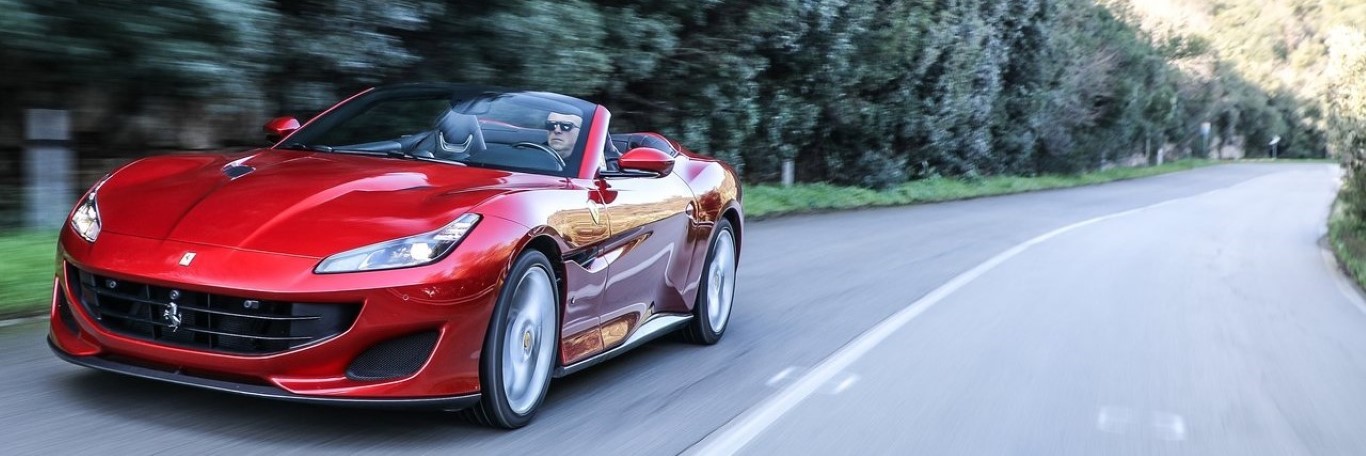
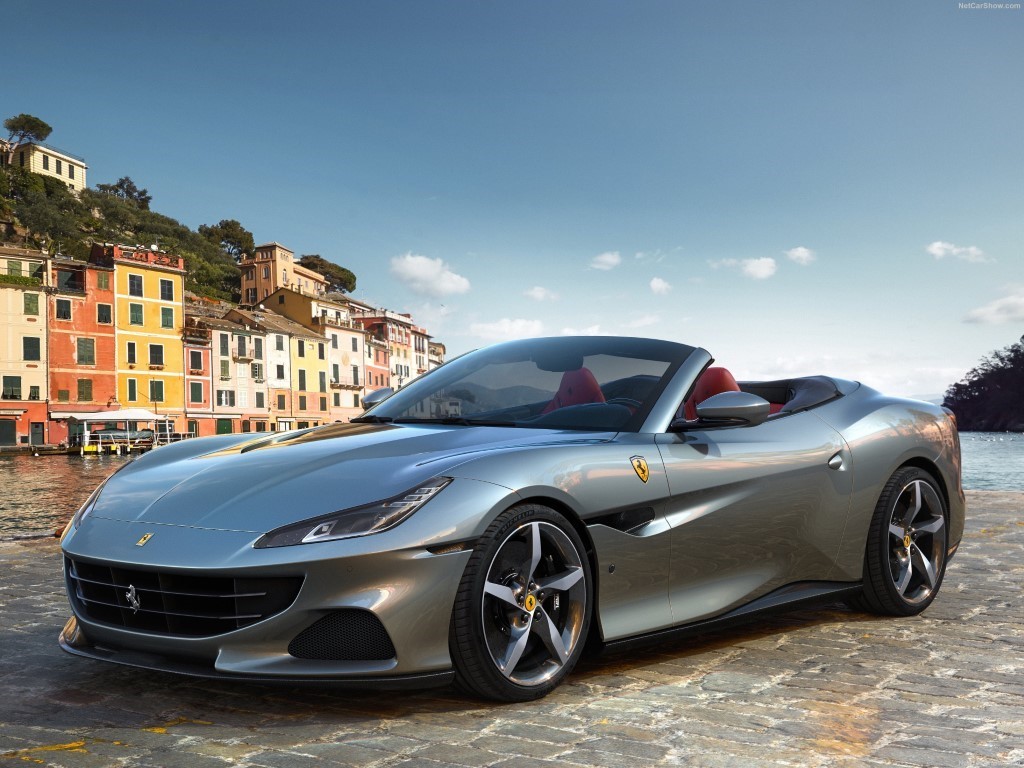
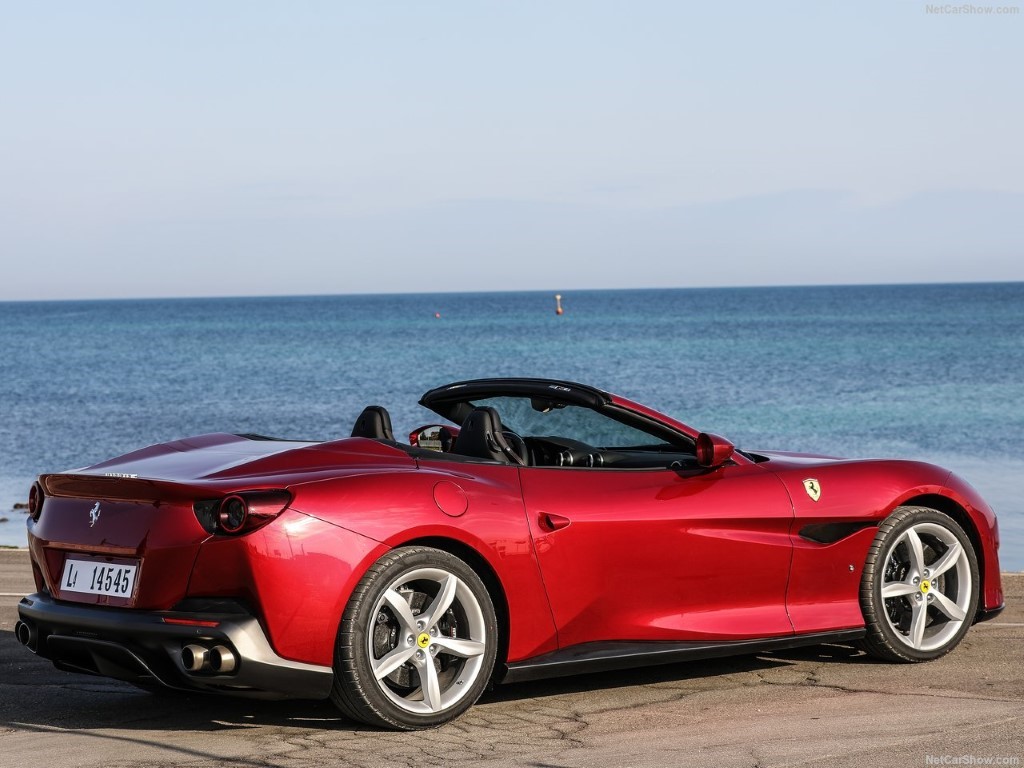
The official presentation of the Portofino took place at the 2017 Frankfurt Motor Show, revealing a
vehicle that, while maintaining the basic architecture of the California T, was fundamentally new in its
execution.
Structural Revolution: Chassis and Bodywork
Unlike a simple facelift, the Portofino debuted an entirely new chassis. Ferrari applied advanced
production technologies, including the casting of hollow components and the extensive use of
state-of-the-art aluminum alloys.
The direct result of these innovations was an impressive weight reduction. The Portofino is
approximately 80 kg (176 pounds) lighter than the California T. More crucially for driving dynamics, this
weight reduction was accompanied by a 35% increase in torsional rigidity. In convertibles, rigidity is the
"Holy Grail"; the removal of the fixed roof generally compromises structural integrity, leading to
vibrations and suspension imprecision. By increasing rigidity, Ferrari ensured that the suspension could
work more effectively, improving both comfort and cornering response.
Aerodynamic and Aesthetic Design
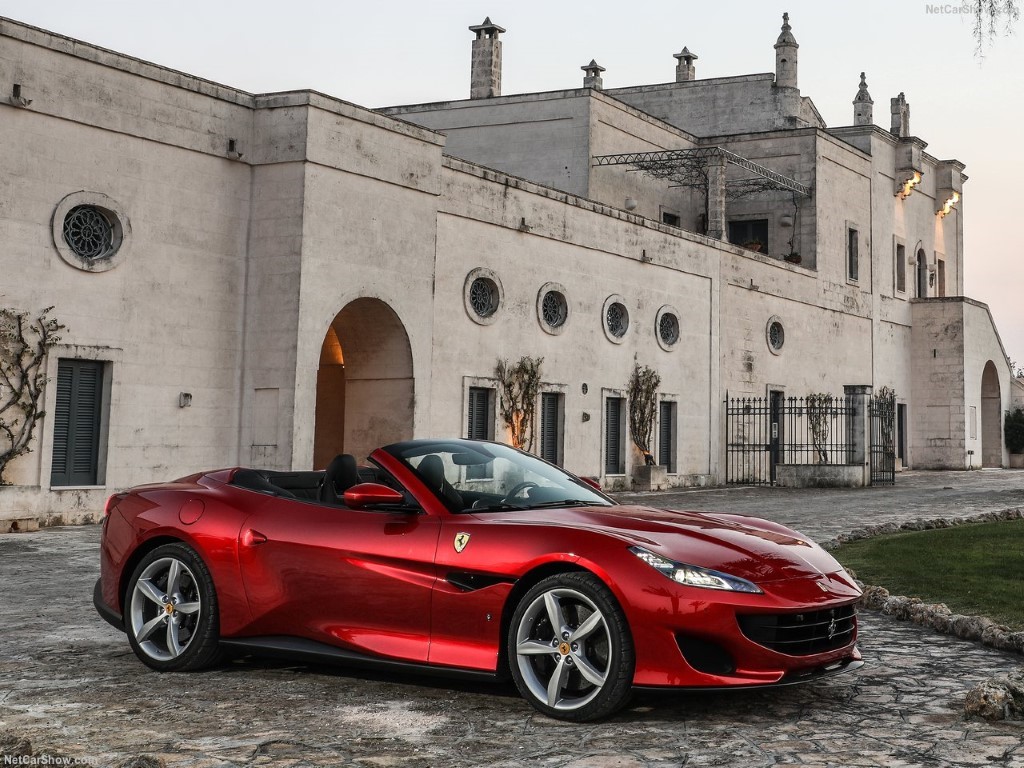
The design of the Portofino was led by the Ferrari Styling Centre under the direction of Flavio
Manzoni, marking a departure from the historical reliance on Pininfarina. Manzoni's team focused on creating
a two-box "fastback" silhouette, an unprecedented configuration for a retractable hardtop coupe-convertible.
Integrated Aerodynamic Solutions
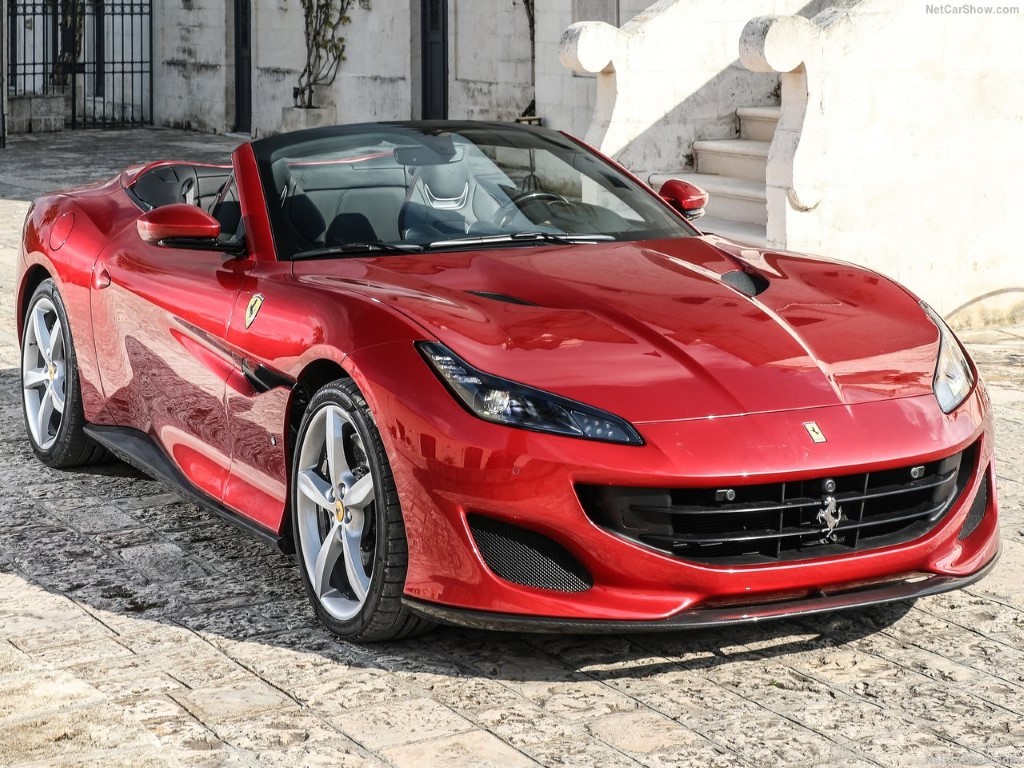
The aesthetics of the Portofino are functional. Every crease and opening serves a specific
aerodynamic purpose, aiming to reduce drag and manage thermals.
- Front Air Curtains: A subtle but vital innovation are the air intakes
located on the outer edges of the front headlights. These are not just decorative; they capture
high-pressure air at the front of the car and channel it through the front wheel arches, expelling it
along the flanks. This process creates an "air curtain" that reduces the turbulence generated by the
rotation of the wheels, significantly lowering the drag coefficient (Cd).
- Rear Flow Management: The taillights were positioned further apart compared
to the California T. This allowed the rear spoiler to be extended in width, optimizing airflow
detachment and reducing overall drag.
- Fastback Visual: The triumph of the design was disguising the rear volume
needed for the roof. The roofline flows smoothly into the trunk lid, eliminating the visual "step" that
drew criticism on the California T and giving the car a more planted and aggressive stance.
Powertrain: The F154BE V8 and Boost Management
Under the hood, the Portofino houses the 3.9-liter (3855 cc) twin-turbo V8 engine, belonging to the
acclaimed F154 family, winner of the "International Engine of the Year" award for three consecutive years
(2016-2018).
Mechanical Innovations and Software
The 40 hp increase over the California T was not achieved solely through electronic reprogramming.
The engine received new mechanical components, including reinforced pistons and connecting rods, as well as
a revised intake system.
- Cast Exhaust Manifold: A critical piece of engineering is the new
single-piece cast exhaust manifold. This design reduces thermal energy losses from the exhaust gases
before they reach the turbines, ensuring the famous "zero turbo lag response" that Ferrari promises.
- Variable Boost Management: Ferrari implemented sophisticated software that
adjusts torque delivery based on the selected gear. In lower gears (1st to 3rd), torque is
electronically limited to simulate the linear delivery curve of a naturally aspirated engine and prevent
traction loss. The full 760 Nm of torque is only unleashed in 7th gear. This results in progressive and
thrilling acceleration, encouraging the driver to use the entire rev range, while allowing for a long
gear for highway cruising fuel economy.
Vehicle Dynamics: EPS and E-Diff3
The Portofino marked the transition from hydraulic steering to Electric Power Steering (EPS) in
Ferrari's GT models. Although electric steering is often criticized for a lack of "feeling", Ferrari used
this technology to integrate the steering with the stability control systems.
- Integration with E-Diff3: The adoption of EPS allowed integration with the
third-generation electronic rear differential (E-Diff3). The system can vary steering assist and
differential locking in real-time, improving straight-line stability and agility in corners. The
steering became 7% more direct than in the California T, offering faster responses.
- Magnetorheological Suspension (SCM-E): The damping system was upgraded with
"dual-coil" technology, which reduces internal friction and improves the system's ability to absorb
asphalt imperfections, minimizing body roll without sacrificing ride comfort.
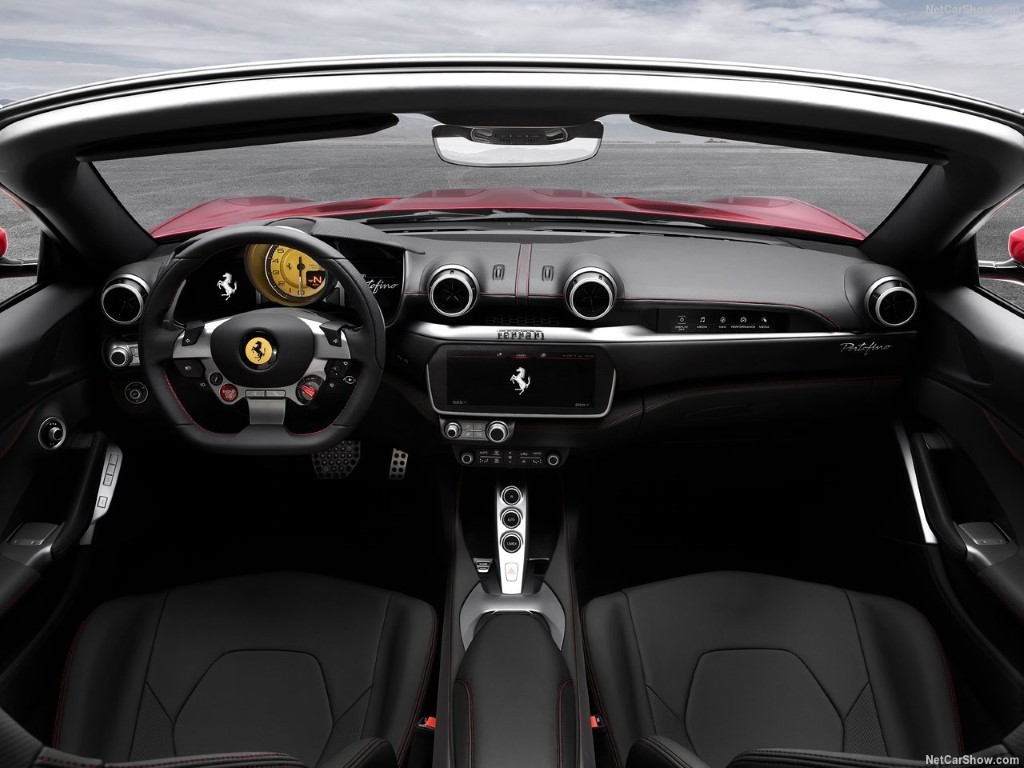
Interiors and Daily Usability
The interior of the Portofino was designed to be a technologically luxurious environment. The focus
on usability is evident in the layout of the controls and comfort systems.
- Infotainment: A 10.2-inch touchscreen centralizes navigation and media
functions. Unlike the California T, where the screen felt like an afterthought, in the Portofino it is
elegantly integrated into the dashboard.
- Passenger Display: A distinctive optional feature is the dedicated
passenger screen. This horizontal display allows the co-pilot to monitor speed, RPM, engaged gear, and
G-force, as well as interact with the navigation and audio system, transforming the passenger into an
active participant in the driving experience.
- Climate Control and Comfort: The air conditioning system was recalibrated
to maintain thermal comfort even with the roof open. A new wind deflector reduces airflow inside the
cabin by 30%, allowing normal-volume conversations even at highway speeds.
- Retractable Hard Top (RHT): The roof mechanism is a work of kinetic
engineering. It can be opened or closed in just 14 seconds and operates at low speeds, which is a
crucial advantage in urban traffic. The compact design of the mechanism allowed for an increase in trunk
space to 292 liters (with the roof closed), enough for three cabin bags. With the roof open, the space
accommodates two cabin bags.