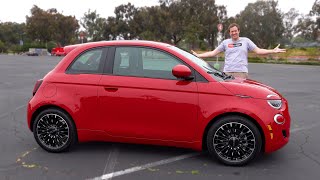
1st Generation
(2013 - 2019)
Technical specifications, versions, and history for the Fiat 500e.
Select a generation to see available versions
(2013 - 2019)
(2020-)
The Fiat 500e represents much more than just a battery-powered version of a popular car; it is the materialization of a historical transition for the Fiat brand and the Stellantis group in the global mobility scenario. The trajectory of this vehicle is divided into two fundamental acts: a phase of adaptation and compliance in the North American market and a phase of complete reinvention on a dedicated platform, designed to lead urban electrification in Europe and other international markets. The detailed analysis of its evolution allows us to understand how Italian engineering managed to preserve the "charm" of a 1957 design while integrating Level 2 autonomous driving technologies and next-generation electric propulsion systems.
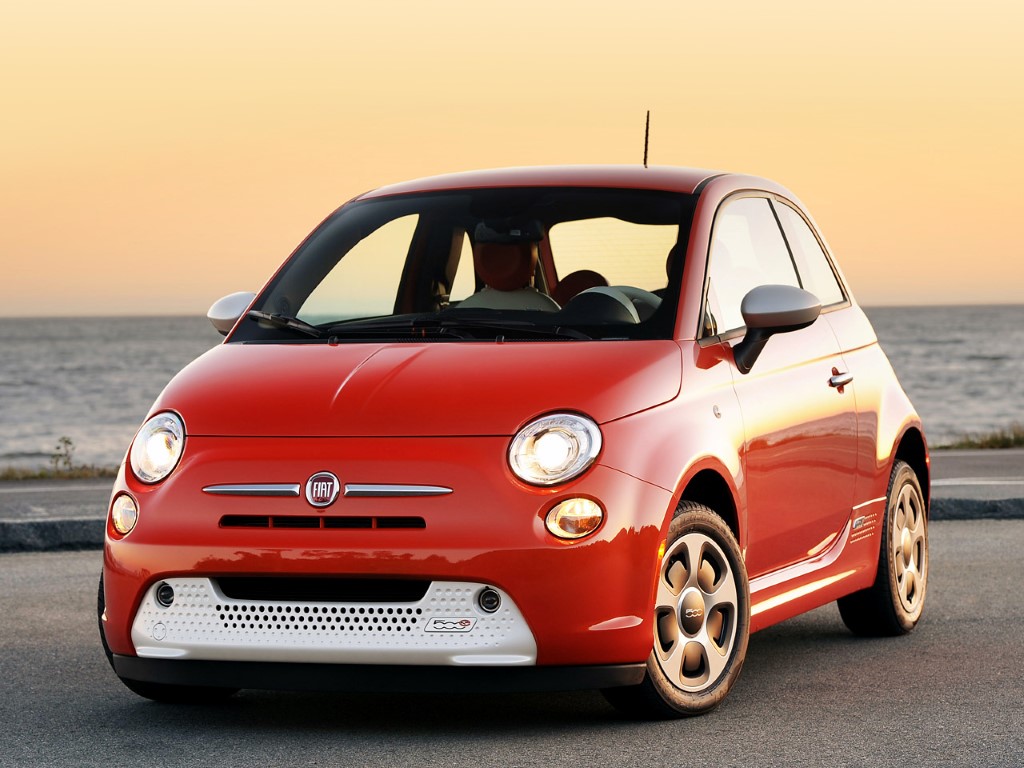
The history of the Fiat 500e begins in a curious and somewhat reluctant way. Launched in 2013, the model was primarily developed to meet the strict emissions regulations of the state of California, in the United States. Unlike current electric models, which are born from exclusive projects, the first 500e was what the industry calls a "compliance car". It was essentially a conventional Fiat 500, manufactured at the Toluca plant in Mexico, which underwent deep re-engineering to replace the combustion engine with an electric powertrain.
Transforming a compact car designed for gasoline engines into an electric vehicle required creative solutions. Since the original chassis did not provide space for batteries, Fiat had to position the lithium-ion pack under the rear seat and the floor, which ended up slightly affecting the internal space but helped lower the center of gravity, improving the vehicle's stability in corners.
One of the most critical points in the development of this first generation was aerodynamics. The standard Fiat 500 had a drag coefficient (Cd) of 0.359, which is considered high for an electric car that relies on efficiency to maximize range. To solve this, Fiat engineers spent hours in wind tunnels to create what they called "specific aerodynamic refinements." The 500e received an exclusive front bumper with circular holes to optimize airflow, side skirts that directed the wind away from the wheels, and a larger rear spoiler. These changes reduced the drag coefficient to 0.311, an improvement that allowed the car to gain precious kilometers of range without needing a larger battery.
The heart of the first 500e was a permanent magnet electric motor that delivered surprising performance for the time. With 111 horsepower (83 kW) and an instantaneous torque of 201 Nm (147 lb-ft), the small hatchback was capable of accelerating from 0 to 100 km/h in approximately 8.2 seconds, outperforming many of its gasoline-powered siblings.
| Component | Technical Specification (2013–2019) |
|---|---|
| Engine Type | 83 kW (111 hp) Electric |
| Maximum Torque | 201 Nm (148 lb-ft) |
| Battery | 24 kWh (lithium-ion) |
| Range (EPA Cycle) | 84 miles (approx. 135 km) |
| Top Speed | 137 km/h (85 mph) |
| Level 2 Charging | Approx. 4 hours (6.6 kW) |
The 24 kWh battery consisted of 97 individual cells and featured a sophisticated thermal management system to ensure the longevity of the cells, something not all electrics of that era possessed. However, Fiat always made it clear that this model was aimed at the urban environment and small daily tasks, such as going to school or the supermarket, due to its limited range of about 135 km.
Although it maintained the same mechanical base for nearly seven years, the first generation of the 500e underwent important technological updates to remain competitive in the urban electric car niche.
Despite critical acclaim for its agile handling, Fiat ended production of this generation in 2019, paving the way for something much more ambitious.
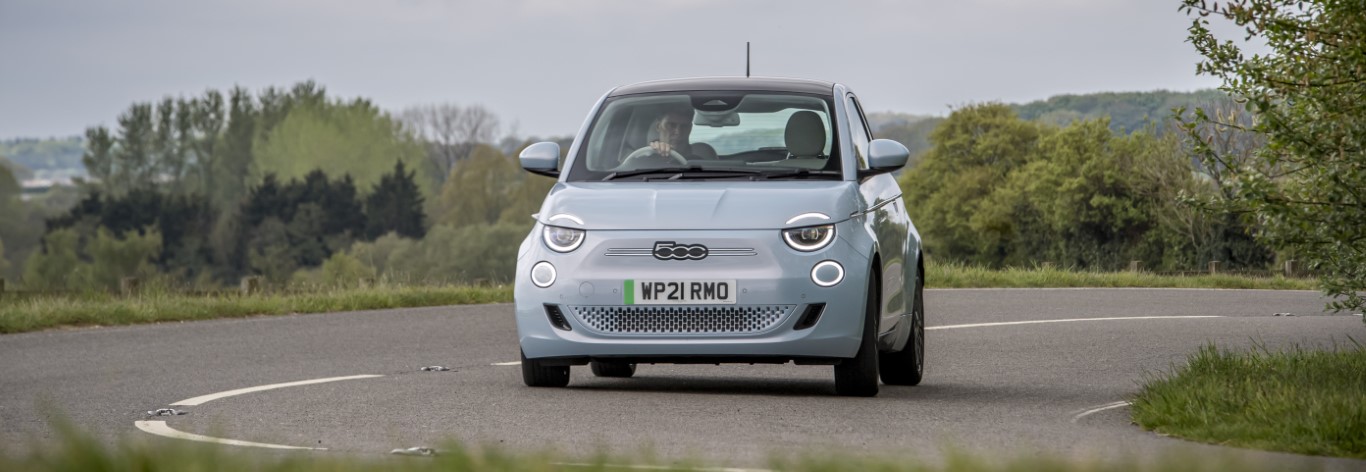
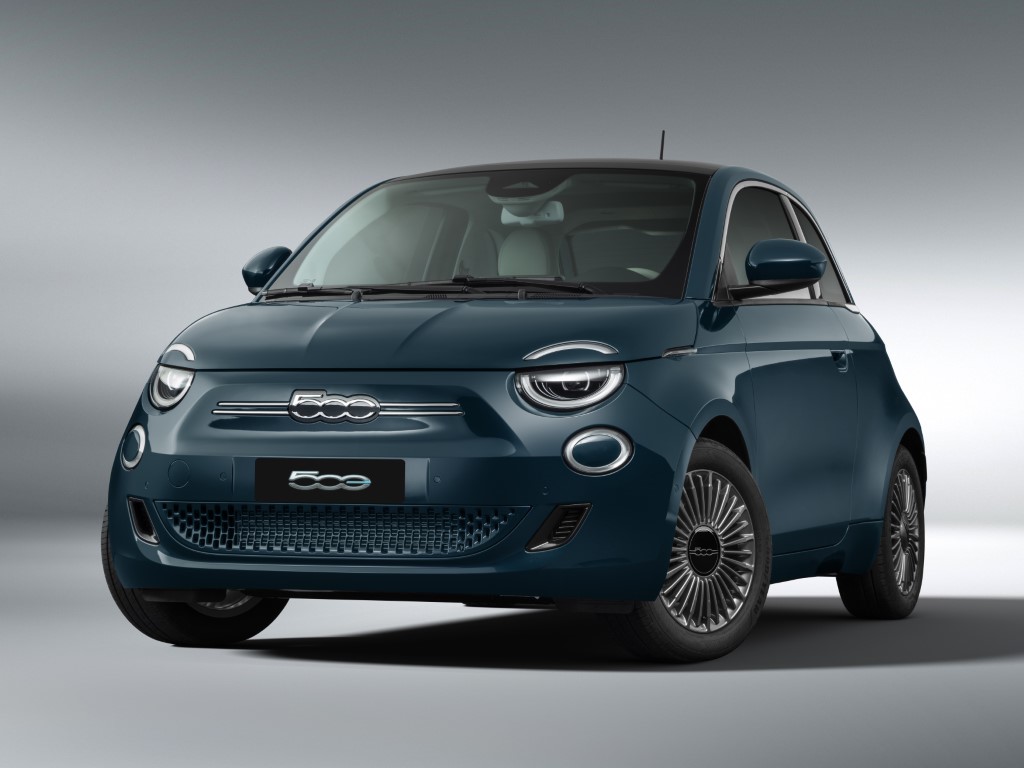
In March 2020, amid the global challenges of that year, Fiat revealed the "New 500" to the world, known internally by the project code 332. This model was not just an update; it was a complete break with the past. For the first time in the brand's history, a car was designed from scratch to be exclusively electric, utilizing the new STLA City platform.
The design team, led by Lorenzo Battisti and Dario Pellegrino, faced the challenge of modernizing an icon without destroying its essence. The New 500e became 60 mm longer, 60 mm wider, and 40 mm taller than the previous generation. The wheelbase also grew by 20 mm, which, although it seems little, made a significant difference in stability and the use of internal space.
Aesthetically, the car introduced elements that became its signature: the front headlights are now divided by the hood, creating a more "technological" look, and the door handles are now flush with the bodywork, improving aerodynamics and giving a cleaner look. Inside, the change was drastic. The dashboard now sports a 10.25-inch horizontal screen with the Uconnect 5 system, and the materials were chosen with a focus on sustainability, including seats made of Seaqual yarn (recycled plastic taken from the oceans).
Unlike the first generation, the New 500e expanded its shapes to meet different needs.
Fiat understood that not every urban car user needs road-trip range. Therefore, the second generation offers two distinct powertrains:
| Specification | 500e (24 kWh) | 500e (42 kWh) |
|---|---|---|
| Engine Power | 95 hp (70 kW) | 118 hp (87 kW) |
| Torque | 220 Nm | 220 Nm |
| WLTP Range (Combined) | 185-190 km | 311-320 km |
| WLTP Urban Range | ~240 km | ~400 km |
| Top Speed | 135 km/h | 150 km/h |
| 0–100 km/h Acceleration | 9.5 s | 9.0 s |
The New 500e was designed to teach the driver to be efficient. It offers three driving modes accessible via a selector on the center console:
The evolution of the model reached a new level in 2023 with the launch of the Abarth 500e, the first fully electric model from the scorpion brand. For Abarth, electrification was not seen as a limitation, but as an opportunity to improve low-speed performance.
The Abarth 500e uses the larger 42 kWh battery, but with a 155 hp (114 kW) motor and 235 Nm of torque. Thanks to the instantaneous torque delivery, it is able to outperform the old combustion Abarth 695 in several metrics: it is 1 second faster in 20 to 40 km/h pickups and also 1 second faster in fast laps at the Balocco test circuit.
One of the biggest challenges was the loss of the iconic exhaust sound. To solve this, the brand installed a high-fidelity "Sound Generator" at the rear of the vehicle that faithfully reproduces the roar of an Abarth combustion engine, varying according to the vehicle's speed and engine load.
| Characteristic | Abarth 500e |
|---|---|
| Power | 155 hp (114 kW) |
| Torque | 235 Nm |
| 0–100 km/h | 7.0 seconds |
| Battery | 42.2 kWh (total) |
| DC Charging | 85 kW |
| Differential | Rear brake discs (replacing the drums of the regular 500e) |
The second-generation Fiat 500e is the first urban car to offer Level 2 autonomous driving. This means it can independently control acceleration, braking, and lane centering on highways and in traffic jams, under the driver's supervision. The system uses a set of sensors and cameras to read traffic signs and maintain a safe distance from the vehicle ahead via Intelligent Adaptive Cruise Control (iACC).
In the software field, the vehicle is equipped with the Uconnect 5 system, which allows for remote (Over-the-Air) updates. This is crucial for the car's evolution over the years, as it allows Fiat to fix bugs or improve battery management efficiency without the owner having to visit a repair shop.
Production of the New 500e is centralized at the Mirafiori plant in Turin, Italy, returning the production of this model to its historic home. Since 2020, the model has been a sales success in Europe, frequently leading the urban electric car segment in markets such as Germany, Italy, and France.
However, the journey is not without its obstacles. In 2023 and 2024, Stellantis had to halt production at Mirafiori several times due to falling demand for electric vehicles in Europe, caused in part by the end of government incentives and rising prices.
| Year | Sales/Production (Approx. Global) | Market Notes |
|---|---|---|
| 2013-2019 | ~185,000 units (Total) | Focus on the US compliance market |
| 2020 | ~10,000 units | Launch year of the New 500e |
| 2021 | ~44,000 units | International expansion and new markets |
| 2022 | ~66,732 units | Record sales year for the second generation |
| 2023 | ~65,000 units | Production stabilization and launch of the Abarth |
| 2024 | ~25,000 (Expected) | Significant drop in demand and factory pauses |
One of the most interesting twists in the history of the 500e was the announcement, in 2024, of the development of the Fiat 500 Ibrida (Hybrid). Due to the slower-than-expected adoption of fully electric cars in some markets, Fiat decided to use the modern 500e platform to create a new hybrid version that will be launched in 2025/2026.
This new hybrid model will use the 3-cylinder 1.0 FireFly engine with a 12V or 48V mild-hybrid system, producing about 70 hp. The goal is to offer a more financially accessible alternative that does not rely exclusively on charging infrastructure, maintaining the design and advanced technology of the 500e platform.
Additionally, for 2025 and 2026, the 500e is expected to undergo a technical update to include more efficient and cheaper batteries, possibly adopting LFP (Lithium Iron Phosphate) chemistry for entry-level versions, which would help reduce the final price and increase competitiveness against Chinese models and new European rivals.
To consolidate the 500e as an object of desire, Fiat launched several special editions that raised the standard of the urban car:
The history of the Fiat 500e is an example of how a brand can evolve without losing its identity. From the "forced compliance" of the first generation to the "design leadership" of the second, the 500e proved that electric cars can be fun, stylish, and technologically advanced, even in small dimensions. Although the electric market faces turbulence and Fiat is pivoting to include hybrid versions on the same platform, the legacy of the 500e as Stellantis's pioneer in the transition to sustainable mobility is already secured. The model continues to be the benchmark by which all other urban electric cars are measured, balancing the nostalgia of the past with the technological demands of the future.